Designing the perfect kitchen cabinets for your Singapore home—whether it's a new HDB BTO or a condo—is all about striking that perfect balance between style, functionality, and space. When done right, your kitchen transforms from just a place to cook into the vibrant heart of your home, making daily life smoother and way more enjoyable.
Crafting Your Ideal Kitchen Starts Here
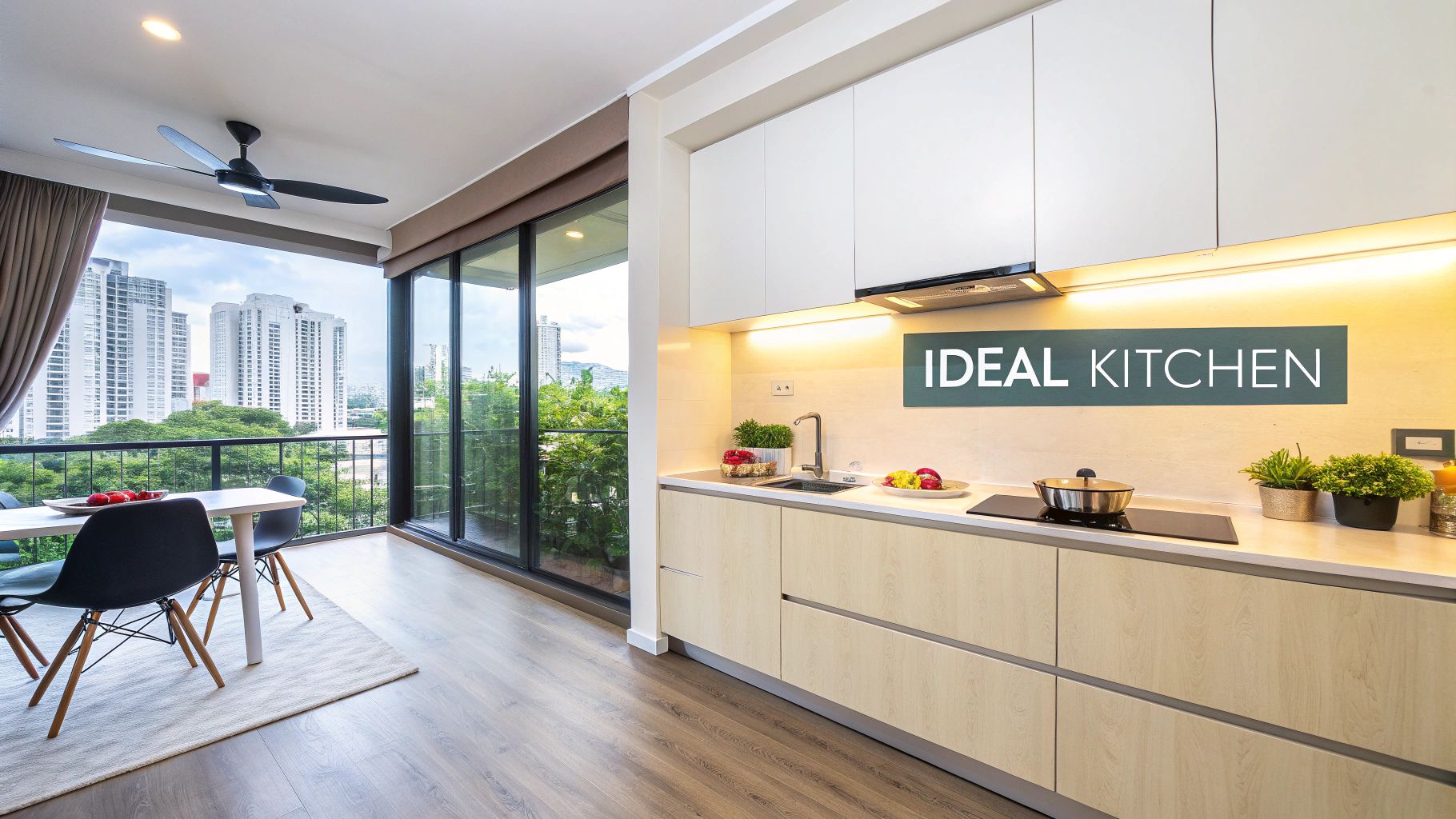
Starting a kitchen renovation journey really begins with getting a grip on the core ideas that make a design great, especially in the unique context of Singaporean homes. Space is almost always at a premium here, so every single choice has to be deliberate. The real goal isn't just to pick out some cabinets; it's to create a whole system that genuinely works for you.
This guide will walk you through the essentials of kitchen cabinet design in Singapore. We'll dive into how to create a kitchen that not only looks stunning but also fits your lifestyle, cooking habits, and family needs like a glove.
Key Considerations for Your Kitchen Design
Before you even think about materials and trends, you need to lay a solid foundation. From our experience with countless clients, the most successful kitchen projects always begin with a crystal-clear understanding of these fundamentals:
- Maximising Space Utilisation: In our typically compact HDB and condo kitchens, every centimetre counts. Smart design isn't about cramming in more storage; it's about making the space you have work harder with clever layouts and innovative cabinet solutions.
- Enhancing Workflow Efficiency: A well-designed kitchen should feel intuitive. It follows a logical flow, often called the "kitchen work triangle." The placement of your sink, stove, and fridge should create a seamless path that makes prepping, cooking, and cleaning feel almost effortless.
- Reflecting Personal Style: Your kitchen should feel like you. Whether you’re drawn to a minimalist, modern look or a warm, traditional vibe, your cabinet design is the number one way to express your personal style.
A great kitchen cabinet design is more than just storage. It’s the backbone of your kitchen's functionality and the canvas for its aesthetic appeal, directly impacting how you experience your home every single day.
Navigating Your Design Choices
As you move forward, you'll hit a few key decision points. One of the first is choosing between custom carpentry and pre-designed modular systems. Custom work offers incredible personalisation, allowing you to fit cabinets perfectly into awkward corners and meet very specific dimensions.
On the other hand, modular systems can offer a more straightforward and budget-friendly solution with predictable installation times. We’ll get into the nitty-gritty of this choice later, helping you weigh the pros and cons based on your specific needs. This foundational knowledge will empower you to have productive chats with your interior designer and make choices you'll love for years to come.
Mastering Kitchen Layouts for HDB and Condo Spaces
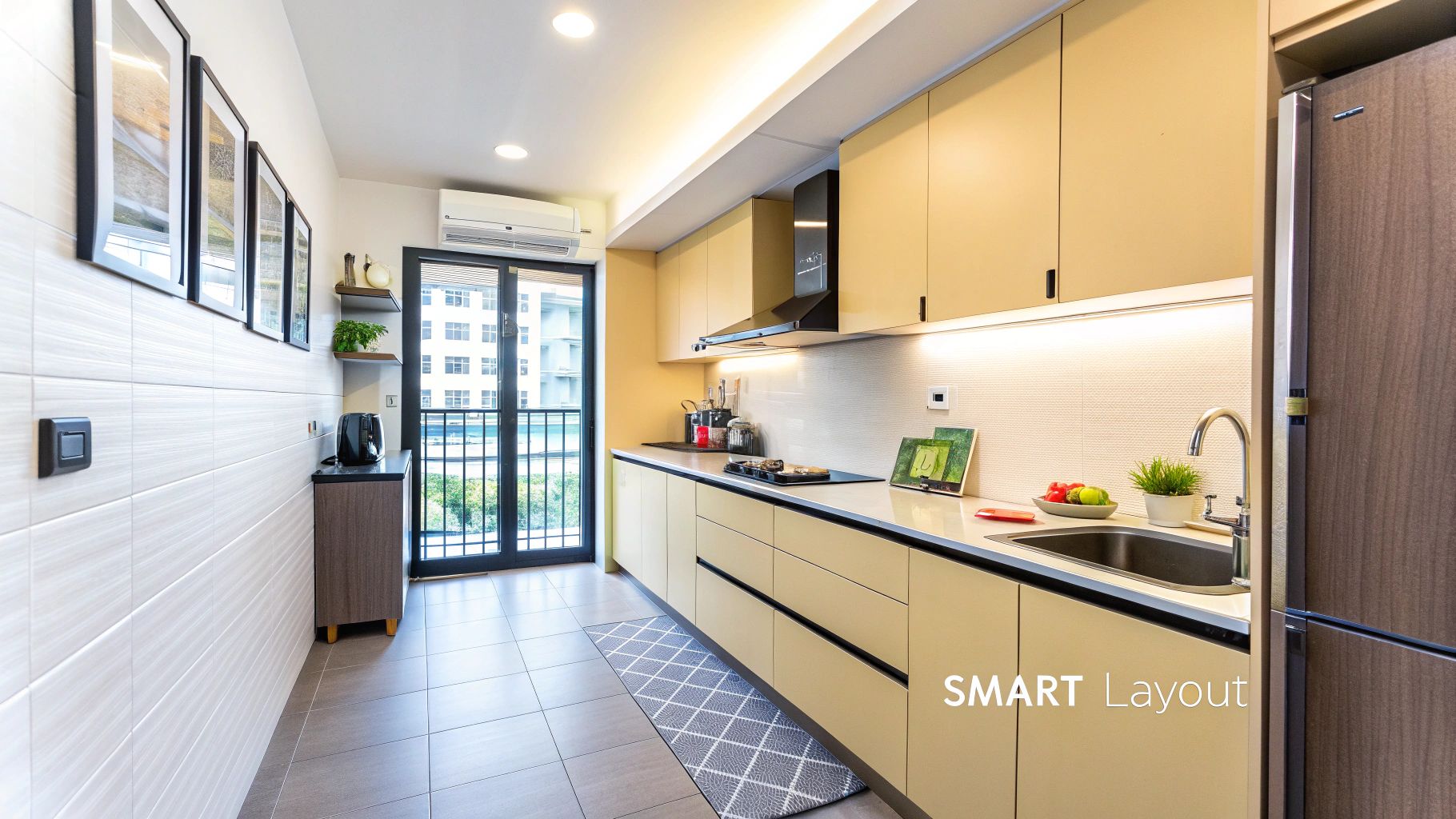
Let's be honest, the foundation of a great kitchen isn't just about beautiful cabinets; it's the layout. In Singapore, where every square metre is precious, your kitchen layout is the single most critical decision you'll make. It dictates your workflow, how much you can store, and ultimately, how the space feels during your daily routine.
A smart layout can make a compact HDB kitchen feel surprisingly spacious and intuitive. Get it wrong, and even a larger condo kitchen can feel cramped and chaotic. The goal is simple: create a seamless environment that works for you, not against you.
Optimising the Kitchen Work Triangle
At the heart of every functional kitchen is a classic design principle: the kitchen work triangle. Think of it as the invisible path you walk between the three main work zones: the sink (for cleaning), the stove (for cooking), and the refrigerator (for storage). When this triangle is efficient, cooking and cleaning feel effortless because you're taking fewer steps.
For a typical Singaporean kitchen, the sweet spot for the work triangle—that is, the sum of its three sides—is between 4 and 7.9 metres. Any less, and you'll feel cramped. Any more, and you'll be running a mini-marathon just to prepare a meal.
This principle is the cornerstone of our approach at Kivo. We meticulously plan the placement of these three points to ensure a logical and comfortable flow, no matter the kitchen's size or shape. This is where clever kitchen cabinet design in Singapore truly shines, as the cabinets are used to define and support this crucial workflow.
Popular Layouts for HDB and Condo Kitchens
Different layouts suit different spaces and lifestyles. Based on our hands-on experience with local homes, these are the most practical and popular choices that just work.
The Galley Kitchen: Often found in older HDB flats, this layout features two parallel runs of cabinets. It's incredibly efficient for a single cook, keeping everything just a step or two away. The key is to maintain a clear corridor of at least 1.2 metres to avoid that boxed-in feeling.
The L-Shaped Kitchen: This is easily one of the most versatile layouts for Singaporean homes. By using two adjacent walls, it opens up the remaining space for a small dining nook or just a more airy feel. It naturally creates an efficient work triangle and is a fantastic way to handle those tricky corner spaces.
The U-Shaped Kitchen: If you need maximum counter space and storage, the U-shape is your best friend. It uses three walls to create a contained and highly functional cooking zone. It works best in slightly larger kitchens, though, so it doesn't feel too enclosed.
Overcoming Common Space Challenges
Many Singaporean kitchens come with their own unique quirks, from narrow profiles to awkward corners and unavoidable structural pillars. This is where strategic cabinet design moves from being decorative to being a real problem-solver.
For instance, in a narrow galley kitchen, we often recommend using shallower base cabinets on one side—say, around 40cm deep instead of the standard 60cm—to widen the walkway. Pair that with upper cabinets in a lighter finish or with glass fronts, and you instantly create an illusion of height and openness.
Struggling with an L-shaped kitchen's "dead space" corner? We can solve that with clever solutions like a LeMans pull-out unit or a carousel system. These mechanisms turn an inaccessible void into prime, easily reachable storage for all your pots and pans. By treating the layout and cabinet design as one integrated system, we ensure that even the most compact kitchen can be both beautiful and highly functional.
Choosing Cabinet Materials for Style and Durability
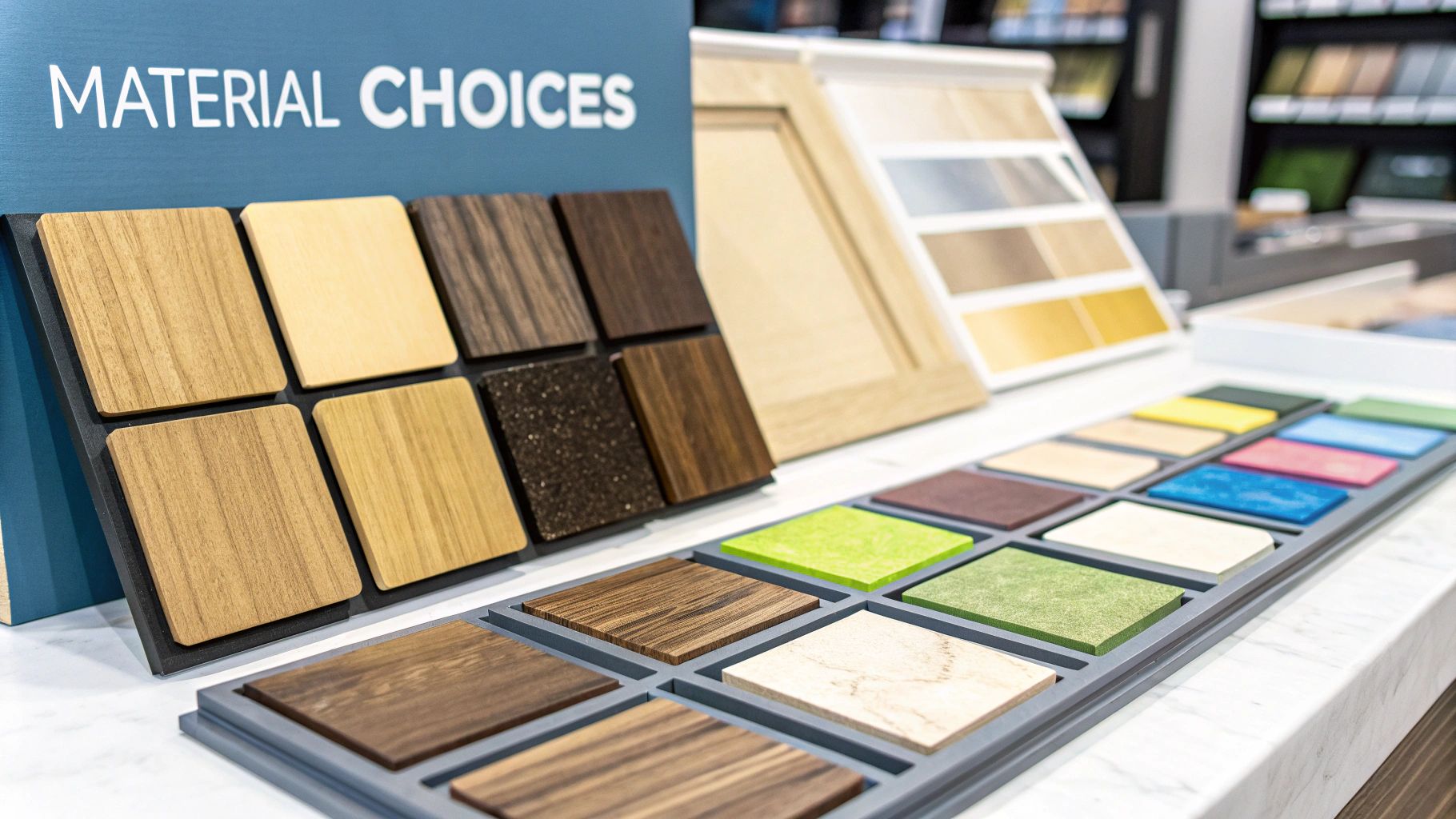
Once you've nailed down the layout, the next big decision is your choice of materials. This is where your kitchen's personality really starts to shine through, defining its look, feel, and—crucially—how it holds up to daily life in Singapore’s humid climate.
Finding the right materials for your kitchen cabinet design is all about striking a balance between aesthetics, durability, and your budget. From the cabinet core to the countertop surface, every choice plays a part in the final outcome.
The Foundation: Your Cabinet Carcass
The unseen hero of your kitchen is the cabinet's internal structure, often called the carcass. For Singaporean homes, this is one area where you absolutely cannot compromise on quality. The constant humidity is relentless.
This is why we almost exclusively recommend solid plywood for cabinet carcasses. Unlike cheaper alternatives like MDF or particleboard which can swell and fall apart when exposed to moisture, plywood is made from multiple layers of wood veneers glued together. This cross-grain construction gives it incredible structural strength and a fantastic resistance to warping, making it the most reliable choice for our climate.
Think of your cabinet carcass as the foundation of a house. A weak foundation will compromise everything built on top of it. Investing in moisture-resistant solid plywood ensures your entire kitchen structure remains stable and secure for years.
The Face of Your Kitchen: Cabinet Doors and Finishes
The cabinet doors and drawer fronts are what everyone sees first—this is where you get to express your personal style. In our experience, Singaporean homeowners gravitate towards materials that are both beautiful and a breeze to maintain.
Here’s a breakdown of the most popular options we work with day in and day out:
- Laminates: By far the most popular choice, and for good reason. They offer incredible versatility and value. Modern high-pressure laminates (HPL) come in thousands of colours, textures, and patterns—from realistic wood grains to sleek, solid colours. They're also highly durable, scratch-resistant, and easy to clean, making them perfect for busy family kitchens.
- Acrylic Panels: If you're after a high-gloss, contemporary look, acrylic doors are an excellent option. They provide a reflective, almost glass-like finish that brightens up a space and feels very modern. While they are moisture-resistant and easy to wipe down, be prepared for them to show fingerprints more easily than matte finishes.
- Fenix NTM: This is a premium, next-generation material we’re seeing more clients ask for. It has a stunning ultra-matte, soft-touch surface that is anti-fingerprint and features thermal healing for superficial micro-scratches. It creates a sophisticated, minimalist aesthetic that is both beautiful and remarkably tough.
To help you navigate these choices, here’s a quick comparison of the most common materials we recommend for cabinets and countertops in Singapore.
Comparison of Popular Kitchen Cabinet Materials
| Material | Best For | Durability | Maintenance | Average Cost |
|---|---|---|---|---|
| Laminate | Budget-conscious homeowners wanting maximum design flexibility. | High | Low - Easy to clean with a damp cloth. | $$ |
| Acrylic | A modern, high-gloss aesthetic that brightens up the kitchen. | Moderate - Can scratch if not careful. | Low - Wipes clean easily but shows fingerprints. | $$$ |
| Fenix NTM | A premium, ultra-matte look with superior performance features. | Very High - Anti-fingerprint and scratch-resistant. | Very Low - Features thermal healing for minor scratches. | $$$$ |
| Quartz | A durable, low-maintenance countertop with a luxurious feel. | Very High - Resists stains, scratches, and heat. | Very Low - Non-porous, so no sealing needed. | $$$$ |
| Sintered Stone | The ultimate in performance for high-use kitchens. | Extreme - Resistant to heat, UV, and scratches. | Very Low - Non-porous and incredibly tough. | $$$$$ |
This table should give you a clearer picture of how each material stacks up in terms of performance and investment, helping you decide where to splurge and where to save.
The Workhorse: Your Countertop
Your countertop is arguably the hardest-working surface in your entire kitchen. It has to handle hot pots, spills, chopping, and all sorts of daily prep work. While laminate countertops are a budget-friendly option, most homeowners find it worthwhile to invest in more durable materials here.
Two materials consistently stand out for both performance and style in Singapore kitchens:
- Quartz: This is an engineered stone made from around 90% ground natural quartz and 10% resins and pigments. It's completely non-porous, which means it resists staining from coffee, wine, or curry without ever needing to be sealed. Its toughness and vast range of colours and patterns make it a top contender for most projects.
- Sintered Stone: A newer material on the block that offers truly exceptional performance. It's created from natural minerals compacted under immense heat and pressure, resulting in an ultra-dense, non-porous slab. This process makes it incredibly resistant to scratches, heat (you can place hot pans directly on it!), and UV rays, so it won’t fade over time.
The kitchen and dining furniture market in Singapore, which includes cabinets, is projected to hit US$94.13 million in revenue by 2025. This growth signals a strong interest from homeowners in investing in quality materials. We're also seeing a significant push for eco-friendly options, with 35% of recent renovators choosing sustainable finishes—a telling statistic in environmentally-conscious Singapore. You can find more insights into Singapore's furniture market trends on Statista.com. This shift towards sustainability and durability shows that homeowners aren't just thinking about looks; they're investing wisely for the long haul.
Custom Carpentry or Modular Systems: Deciding What's Best
Right, let’s get down to one of the biggest decisions you'll make for your kitchen renovation: are you going for custom-built carpentry or a pre-designed modular system? This choice sets the tone for everything—your budget, your timeline, and the final look and feel of the space. Both routes have their pros, and the best fit really boils down to your personal priorities.
Custom carpentry is all about total freedom. It's a completely bespoke solution, meaning every single cabinet is built from scratch to your exact needs. This is the way to go if you're dealing with an unconventional layout, funky corners, or have specific storage ideas that off-the-shelf options just can't handle.
I remember a project we did in a Joo Chiat conservation shophouse. The kitchen had slanted walls and an exposed support beam cutting right through the space. A modular system would have left all sorts of weird, unusable gaps. With custom carpentry, we built cabinets that hugged the wall's angle perfectly and even integrated the beam into the design. The result was a seamless look that squeezed out every last inch of storage.
The Case for Custom Carpentry
The biggest draw of custom work is having complete control over your kitchen cabinet design. You’re not stuck with standard sizes or a limited catalogue of finishes.
- A Perfect Fit: Cabinets are built to the exact millimetre of your space. That means no awkward filler panels or dead corners, which is a massive plus in compact HDB and condo kitchens.
- Your Unique Stamp: You get total freedom to pick your materials, finishes, colours, and hardware. Fancy a specific shade of Fenix laminate paired with a unique handle you found online? No problem.
- Storage That Works for You: Need a drawer that's precisely the height of your favourite cereal box? Or a special nook for your stand mixer? Customisation makes it all possible.
Of course, this level of personalisation has its price. Custom carpentry is generally more expensive and takes longer, since every piece is made to order. You’re typically looking at a lead time of four to eight weeks from the moment you sign off on the design to the final installation.
The Appeal of Modular Systems
Modular systems, on the other hand, are made up of pre-manufactured cabinet units in standard sizes. Think of them as high-quality building blocks you can arrange to create your kitchen. They might offer less customisation, but their benefits are hard to ignore, especially for homeowners looking for efficiency and value.
The demand for these systems is really taking off, particularly in new BTO flats. The trend is clear: up to 85% of renovation clients in public housing are now choosing modular cabinet packages over traditional carpentry. This is mainly because they're more affordable and make complying with HDB regulations straightforward, with packages often starting from around S$5,590. You can dive deeper into this trend and see some modern kitchen designs in Singapore on RenovationContractorSingapore.com.
Modular systems are a brilliant choice for standard kitchen layouts. They offer a predictable outcome, faster installation, and great value, making them a practical and stylish solution for many Singaporean homes.
Here’s why they’re so popular:
- Cost-Effective: Because they’re mass-produced, the cost comes down, making them a much more budget-friendly option.
- Quick Turnaround: The cabinets are already fabricated, so installation is much faster. It's often done and dusted within a week or two.
- Consistent Quality: Reputable modular systems are made in controlled factory settings, which means you get a consistent level of quality and finish.
- Future-Proofing: If a door gets damaged a few years down the line, ordering a standard-sized replacement is simple and hassle-free.
The main trade-off is the limitation in sizes and design options. You might need to use filler panels to bridge gaps between cabinets and walls, which can eat into your usable space a little. Ultimately, the choice hinges on what you value most: the bespoke perfection of custom carpentry or the efficient, cost-effective practicality of a modular system.
Innovative Storage Solutions for Modern Kitchens
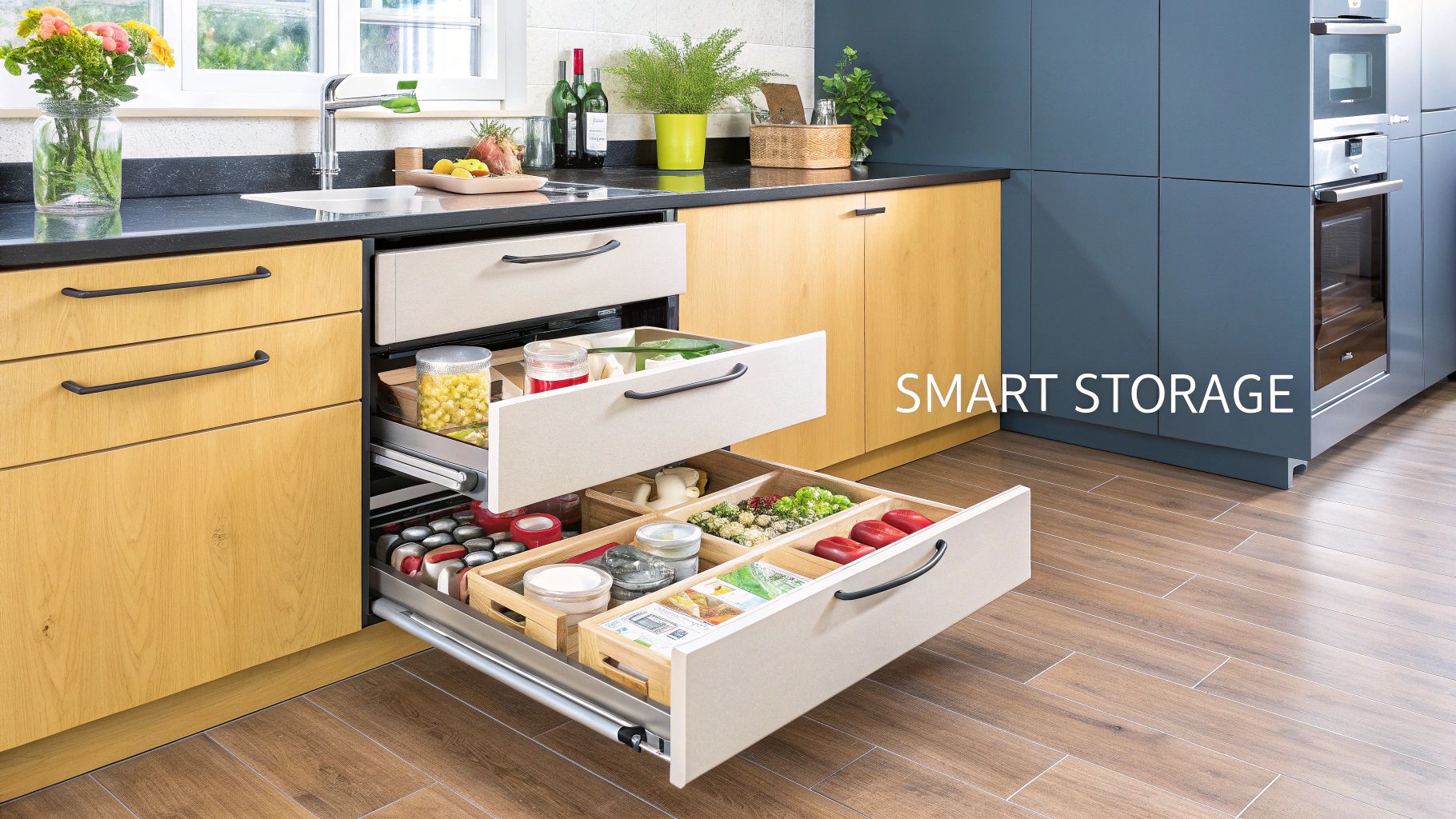
A truly fantastic kitchen cabinet design is about more than just what you see on the surface. It’s about creating a space that’s intelligent, ergonomic, and blissfully free of clutter. Here in Singapore, where kitchens can be quite compact, smart storage isn’t just a nice-to-have—it’s absolutely essential for a functional, enjoyable space.
The right internal fittings and hardware can completely change the way you use your kitchen. They turn chaotic cupboards into organised zones and put every single item within easy reach. This is where clever design really makes a difference in your daily routine, transforming cooking from a chore into a seamless experience.
Maximising Every Inch with Smart Cabinetry
Let's be honest, traditional shelves can be a nightmare. They often leave deep, hard-to-reach spaces where things get pushed to the back and forgotten. Modern storage solutions are designed to do the opposite: they bring the contents of your cabinets out to you, ensuring nothing is ever out of sight or out of mind.
Drawing from our experience across countless HDB and condo projects, these are the solutions that consistently deliver the biggest impact:
- Tall Pull-Out Pantries: These are absolute game-changers, especially for narrow kitchens. A tall, slim cabinet fitted with a pull-out mechanism lets you store an incredible amount of groceries in a tiny footprint. With one smooth motion, you can see everything from spices to canned goods at a glance.
- Corner Cabinet Solutions: The corner cabinet is notoriously tricky. We solve this common problem with systems like LeMans or Magic Corner units. These clever swing-out trays glide right out of the cabinet, bringing bulky pots and pans directly to you. That once "dead" space is now fully functional.
- Deep Drawer Systems: If there's one upgrade I recommend to every client, it's replacing lower cabinets with deep, wide drawers. They allow you to store plates, bowls, and even small appliances far more efficiently than standard cupboards. No more kneeling on the floor and rummaging around—just pull the drawer out for a perfect top-down view of everything.
The Finishing Touches That Elevate Functionality
Beyond the big storage units, it’s the smaller details and hardware choices that truly refine your kitchen’s workflow. These features aren’t just add-ons anymore; they are essential components of a quality kitchen cabinet design in Singapore.
Think about integrating organisers directly into your drawers. Cutlery trays are a given, but you can also add customisable dividers for utensils, spice racks, and knife blocks. This keeps your countertops clear and every tool exactly where you need it. Similarly, vertical dividers in a deep drawer or a narrow cabinet are perfect for organising baking trays and chopping boards, preventing that frustrating clatter.
Good design is about removing friction from your daily life. Features like soft-closing hinges and integrated lighting aren't just details; they are fundamental to creating a kitchen that feels calm, organised, and effortless to use.
Modern hardware is what completes the picture of a high-functioning kitchen. Here’s what we consider standard for any quality build today:
- Soft-Closing Hinges and Runners: This is a non-negotiable feature for us. They stop cabinet doors and drawers from slamming shut, which not only reduces wear and tear but also creates a much quieter, more peaceful kitchen.
- Handleless Push-to-Open Mechanisms: For that clean, minimalist look, handleless designs are incredibly popular. High-quality push-to-open systems give you reliable access with just a gentle touch, maintaining those sleek, uninterrupted lines across your cabinetry.
- Integrated LED Lighting: Installing LED strips under your upper cabinets is one of the most practical additions you can make. It provides brilliant task lighting for your countertops, making food prep safer and easier. It also adds a beautiful layer of ambient light that makes the whole kitchen feel more inviting.
By thoughtfully combining these solutions, we create a kitchen that isn't just beautiful but also incredibly ergonomic and perfectly suited to the demands of modern living in Singapore. It’s all about designing a space that works intelligently for you.
A Realistic Guide to Budgeting Your Kitchen Cabinets
Getting a handle on the costs is one of the most important first steps in any renovation. It saves a ton of stress down the road and makes sure your dream kitchen doesn't have to be compromised later on. When it comes to budgeting for kitchen cabinets in Singapore, it’s not about finding the rock-bottom cheapest price; it's about making smart investments that look great and last for years.
The final price tag on your cabinetry hinges on a few key things. The biggest factor is simply the total length of your cabinets, which is measured in feet run (pfr). The more cabinet space you need, the more it’ll cost. After that, your choice of materials for the doors and countertops will make the next biggest splash in your budget.
Breaking Down the Main Cost Drivers
To put together a realistic budget for your kitchen cabinet design in Singapore, you need to understand how these different elements play off each other:
- Cabinet Length and Configuration: A simple, straight galley kitchen is naturally going to be more affordable than a sprawling U-shaped layout with a full-sized island. It just requires less material and less labour to build.
- Material Selection: As we've touched on, laminates are your most wallet-friendly finish. On the other end of the spectrum, you have premium options like Fenix or solid wood which carry a higher price. The same logic applies to countertops—a tough, durable quartz top will be a bigger slice of the budget than a basic laminate one.
- Hardware and Internal Fittings: This is where the magic happens inside your cabinets. Good quality soft-closing hinges, smooth drawer runners, and clever storage solutions like pull-out pantries will add to the cost, but they make a world of difference to how your kitchen actually works day-to-day.
- Design Complexity: A clean, flat-panel cabinet is straightforward and more affordable to make. But if you're after something with more detail, like intricate shaker-style doors or custom-routed grooves, that requires more skilled carpentry and will be reflected in the price.
Realistic Price Ranges for Singaporean Kitchens
Drawing from our own project experience, we can group most kitchen renovations into a few common tiers. For a new BTO flat, a basic, budget-friendly setup often using modular systems and standard laminate finishes might start from S$6,000 to S$9,000.
Most homeowners land in the mid-range. This typically involves custom carpentry, high-quality laminates, and a solid quartz countertop, with costs usually falling between S$10,000 and S$18,000. If you're aiming for a high-end, premium kitchen with top-tier materials like Fenix, sintered stone countertops, and all the best internal hardware, your budget will likely start from S$20,000 and go up from there.
A great way to visualise this is with a simple cost breakdown.
Estimated Kitchen Cabinet Cost Breakdown
Here’s a sample budget showing where the money typically goes. Notice how materials and countertops make up the lion's share of the cost across all tiers.
| Component | Budget Tier (%) | Mid-Range Tier (%) | Premium Tier (%) |
|---|---|---|---|
| Cabinet Carcass & Doors | 35% | 40% | 45% |
| Countertop | 25% | 30% | 30% |
| Hardware & Fittings | 10% | 15% | 15% |
| Labour & Installation | 25% | 10% | 5% |
| Design & Management | 5% | 5% | 5% |
This table helps illustrate why material selection is so critical to your overall budget.
Your countertop and cabinet finishes often account for 60-70% of the total cabinet budget. Allocating your funds wisely here is key. Investing in a durable countertop is one of the smartest decisions you can make for a high-use kitchen.
If you want to save smartly, focus your spending on the areas you touch and use the most. Splurge on a durable countertop that can take a beating and quality hardware that won't fail you after a few years. You can balance this by choosing from the massive range of stylish and hard-wearing laminates for your cabinet fronts instead of more expensive alternatives. This balanced approach is the secret to creating a kitchen that’s both beautiful and built to last, all without any nasty financial surprises.
Answering Your Top Kitchen Cabinet Questions
As you start to lock in the final details for your kitchen cabinets, it's completely normal for a few last-minute questions to surface. To help you feel totally confident in your choices, we've pulled together some of the most common queries we hear from Singaporean homeowners. Here are some straight-talking answers to guide you.
How Long Does Kitchen Cabinet Fabrication and Installation Take?
This is usually one of the first things people ask, and honestly, it all comes down to whether you go for custom-made or modular cabinets.
A modular kitchen is your fast track. Once the final measurements are signed off, the pre-made cabinets are delivered and installed. The whole thing is often done and dusted within one to two weeks. It's a brilliant choice if you’re racing against the clock.
Custom carpentry, on the other hand, is a different ball game. It’s a craft. Because every single piece is built from scratch to fit your home perfectly, it simply takes more time. You should budget for a lead time of four to eight weeks from the day you approve the design to the final installation. Things like how complex your design is or the availability of a specific laminate can nudge this timeline, so it's something we always confirm with you right at the start.
The bottom line: Custom work gives you that one-of-a-kind kitchen, but it demands patience. If getting it done quickly is your top priority, a quality modular system is a very smart and efficient way to go.
Are There HDB Rules for Kitchen Cabinet Installation?
Yes, there absolutely are, and knowing them is critical for a renovation that goes off without a hitch. The Housing & Development Board (HDB) has very specific guidelines designed to protect the building's structural integrity and everyone's safety.
For instance, you can't just knock down a structural wall to create that dream open-concept kitchen without getting HDB's green light first. There are also rules about concealing pipework and even the types of materials you're allowed to use on floors and walls, especially in a wet area like the kitchen.
Your interior designer or contractor needs to know these regulations inside and out. At Kivo, we manage all the necessary checks and paperwork to make sure every part of your kitchen design is fully compliant with the latest HDB rules. It’s all about giving you total peace of mind.
What Is the Most Durable Countertop Material?
For a busy family kitchen that gets a real workout every day, durability and easy maintenance are everything. In our experience, two materials consistently stand head and shoulders above the rest: quartz and sintered stone.
Quartz is an engineered marvel. It’s non-porous, which means it’s incredibly resistant to stains from daily culprits like coffee spills, wine, or that accidental splash of curry. Plus, you never have to seal it.
Sintered stone takes things to another level. It offers incredible resistance to heat, scratches, and even UV light, so it won't fade over time. Both are a breeze to clean—just simple soap and water will do. While they do ask for a higher initial investment compared to something like laminate, their sheer resilience and longevity make them one of the wisest investments you can make for a modern Singaporean kitchen.
Ready to bring your dream kitchen to life with a design that’s perfectly suited to your home and lifestyle? The team at Kivo is here to guide you through every step, from initial concept to flawless execution. Explore our portfolio and learn more about our bespoke services at https://kivo.com.sg.