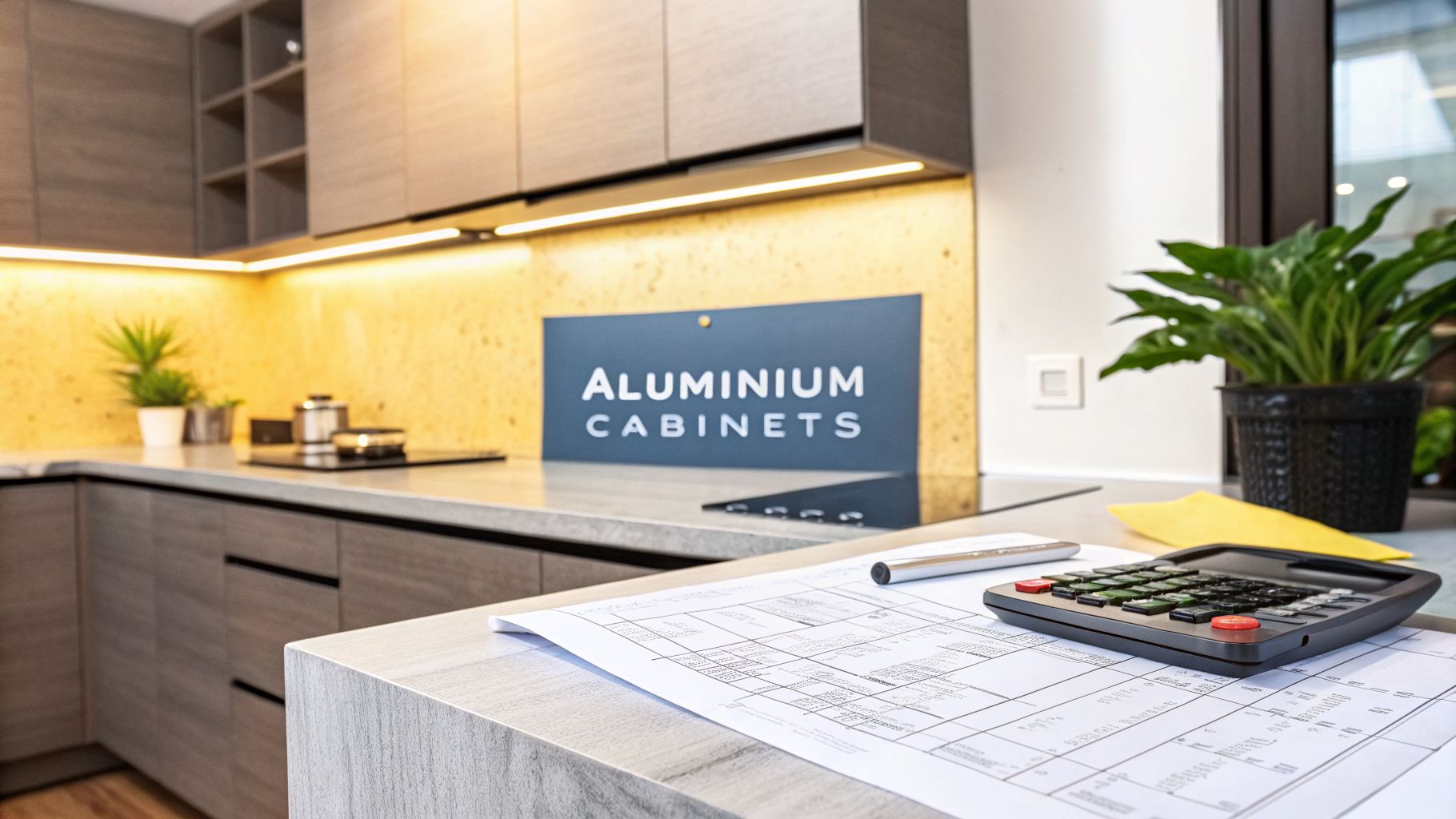
What exactly is an aluminum kitchen cabinet? It's a modern kitchen system where the entire carcass and door structures are built from aluminum. Unlike traditional wood or MDF, these cabinets are engineered for superior durability, complete water resistance, and a clean, sleek aesthetic that doesn't degrade over time.
They will not warp, rot, or get infested by termites, making them a practical, long-term investment, especially in humid climates like Singapore.
Why Aluminum Kitchen Cabinets Are a Smart Choice
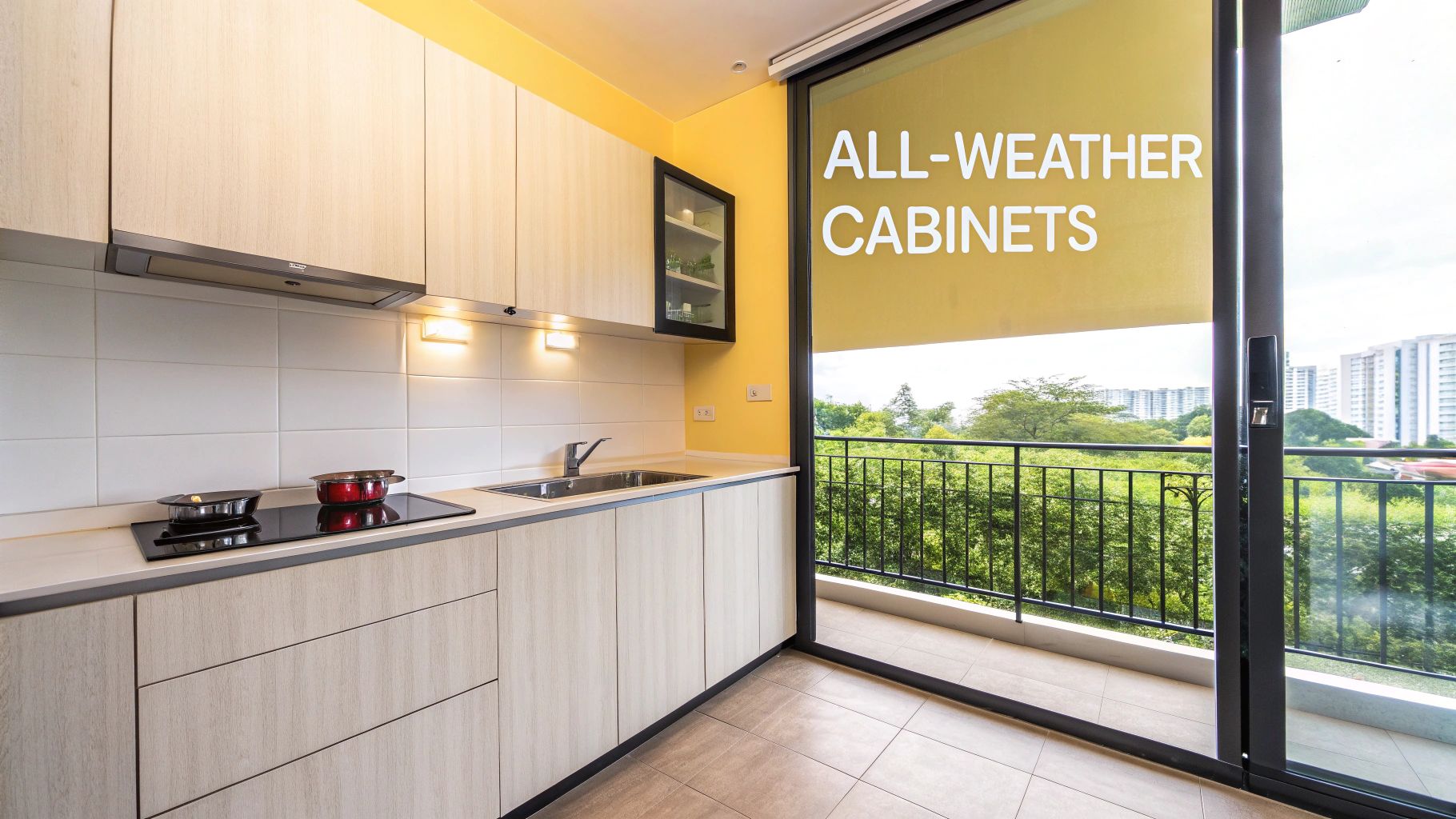
When clients in Singapore ask for a kitchen that’s both stylish and built to survive our tropical climate, the conversation almost always leads to one material: aluminum. This isn't just about a trend; it's about making a practical, forward-thinking choice that solves real-world problems for homeowners.
The relentless humidity here can be brutal on traditional materials like wood and plywood. Many of our clients come to us with common issues—swollen cabinet doors, peeling laminates, and stubborn mould growth in their existing kitchens. Aluminum kitchen cabinets sidestep these issues entirely.
Think of it as the ultimate all-weather material for the heart of your home. As a non-porous material, moisture has nowhere to seep in. That quality alone provides peace of mind that your investment won’t slowly degrade due to the climate.
Built for the Singaporean Home
Whether you’re in a sprawling condo or a compact HDB flat, the challenges are often the same: maintaining a beautiful, functional space with minimal fuss. Aluminum's inherent resilience makes it an ideal solution for the most common renovation headaches.
Here’s why it’s gaining so much traction:
- Pest-Proof: Termites and other pests that feast on wood-based carpentry have zero interest in aluminum. This saves homeowners from potentially devastating and costly repairs.
- Effortless Maintenance: Spills, grease, and sauces wipe away easily without staining. A leaking sink, which can destroy a standard cabinet, is a non-issue for aluminum.
- Hygienic Surface: Because aluminum is non-porous, it doesn’t harbour bacteria or mould. This helps create a much healthier environment for food preparation.
In our experience, we've seen a clear shift in client priorities. Homeowners now value longevity and low maintenance just as much as aesthetics. They want a kitchen that looks fantastic on day one and remains just as functional and beautiful a decade later. Aluminum delivers on this promise.
This change in mindset is reflected across the entire market. In Singapore's modular kitchen sector—valued at 175,472.90 USD Billion in 2024—aluminum is carving out a significant niche.
Independent research shows these cabinets can resist corrosion and warping by up to 90% better than their wood counterparts. It’s a key reason they are becoming the go-to for Singaporean households that demand durable, lasting solutions. For a deeper dive into market dynamics, check out this detailed report on Singapore's modular kitchen market.
The data confirms what we see in our projects: aluminum isn't just a stylish choice, it's a wise investment in a hassle-free kitchen.
The Real Pros and Cons of an Aluminum Kitchen
Picking the right material for your kitchen cabinets is a major decision. We believe in providing a clear, balanced view of every option. While aluminum kitchens offer incredible benefits, especially for homes in Singapore, it’s crucial to look at the whole picture.
Let's cut through the marketing noise and break down the genuine strengths and potential weaknesses. The goal isn't to find a flawless material—it doesn't exist. It's about finding the one whose strengths align with your needs and whose weaknesses are manageable.
The Clear Advantages of Choosing Aluminum
The biggest draw for homeowners switching to aluminum is its sheer resilience and low upkeep. These benefits solve the most common headaches that come with traditional kitchen materials in our humid climate.
Here's what really stands out:
- Impervious to Moisture and Humidity: This is aluminum’s superpower. It’s non-porous, meaning it will never swell, rot, or delaminate, no matter how much steam comes off your stove. A leaking sink, which would be a catastrophe for wood cabinets, is just a minor cleanup job for aluminum.
- Completely Termite-Proof: Unlike wood or MDF, aluminum is totally unappealing to termites. This protects your investment from being silently destroyed from the inside out.
- Exceptional Fire Resistance: Aluminum doesn’t burn. While you hope you’ll never need this feature, it adds a serious layer of safety to your home, helping contain a potential kitchen fire rather than fuelling it.
- Hygienic and a Breeze to Clean: Because the surface is non-porous, there’s nowhere for bacteria or mould to hide. Spills, grease, and food stains wipe away with a damp cloth, making it one of the easiest and most hygienic kitchen surfaces available.
The Other Side of the Coin: Potential Drawbacks
Of course, no material is perfect, and it’s just as important to understand the potential downsides. Knowing these upfront helps set the right expectations and ensures you'll be happy with your kitchen for years to come.
A well-informed decision is always the best decision. By understanding a material's limits, we can design around them—playing up its strengths while using smart engineering and top-quality parts to mitigate potential issues.
The most common concerns we discuss with clients are about dents and noise. While modern manufacturing has largely solved these, they're still worth mentioning.
- Susceptibility to Dents: While tough, aluminum is a softer metal than steel. A heavy impact from a dropped pot could leave a dent. The finish won't chip like paint on wood, but fixing a noticeable dent can be difficult. The solution is to use a thicker grade of aluminum for doors, which significantly increases impact resistance.
- The Sound Factor: Older, poorly made aluminum cabinets had a reputation for being clanky. Today, this is a non-issue with quality systems. We exclusively use premium soft-close hinges and drawer runners, which provide a smooth, silent close every time. The sound is virtually indistinguishable from a high-end wooden cabinet.
To give you a clear, at-a-glance summary, we’ve put together a table that lays it all out.
A Balanced View of Aluminum Kitchen Cabinets
Here’s a side-by-side look at the key advantages and potential considerations when you're thinking about installing aluminum cabinets in your kitchen.
| Attribute | Strengths (The Upside) | Weaknesses (The Considerations) |
|---|---|---|
| Durability | Completely waterproof, rust-proof, and termite-proof. Does not warp or degrade in humid conditions, ensuring exceptional longevity. | Can be prone to denting from heavy, direct impacts. Deep scratches can be more difficult to repair than on solid wood. |
| Maintenance | Extremely easy to clean with just soap and water. The non-porous surface resists stains, mould, and bacteria growth. | Harsh, abrasive cleaners or steel wool should be avoided as they can damage the protective powder-coated finish. |
| Aesthetics | Offers a sleek, modern look with a vast range of finishes, including realistic wood grains and vibrant, consistent colours. | Some people may still associate aluminum with a colder, industrial feel, though this is easily softened with design choices. |
| Acoustics | Modern systems are engineered to be quiet. | Without quality soft-close mechanisms, doors and drawers can produce a metallic sound when closed forcefully. |
Ultimately, understanding both sides of the story is the best way to decide if an aluminum kitchen is the right long-term investment for your home and lifestyle.
Exploring Aluminium Kitchen Design Possibilities
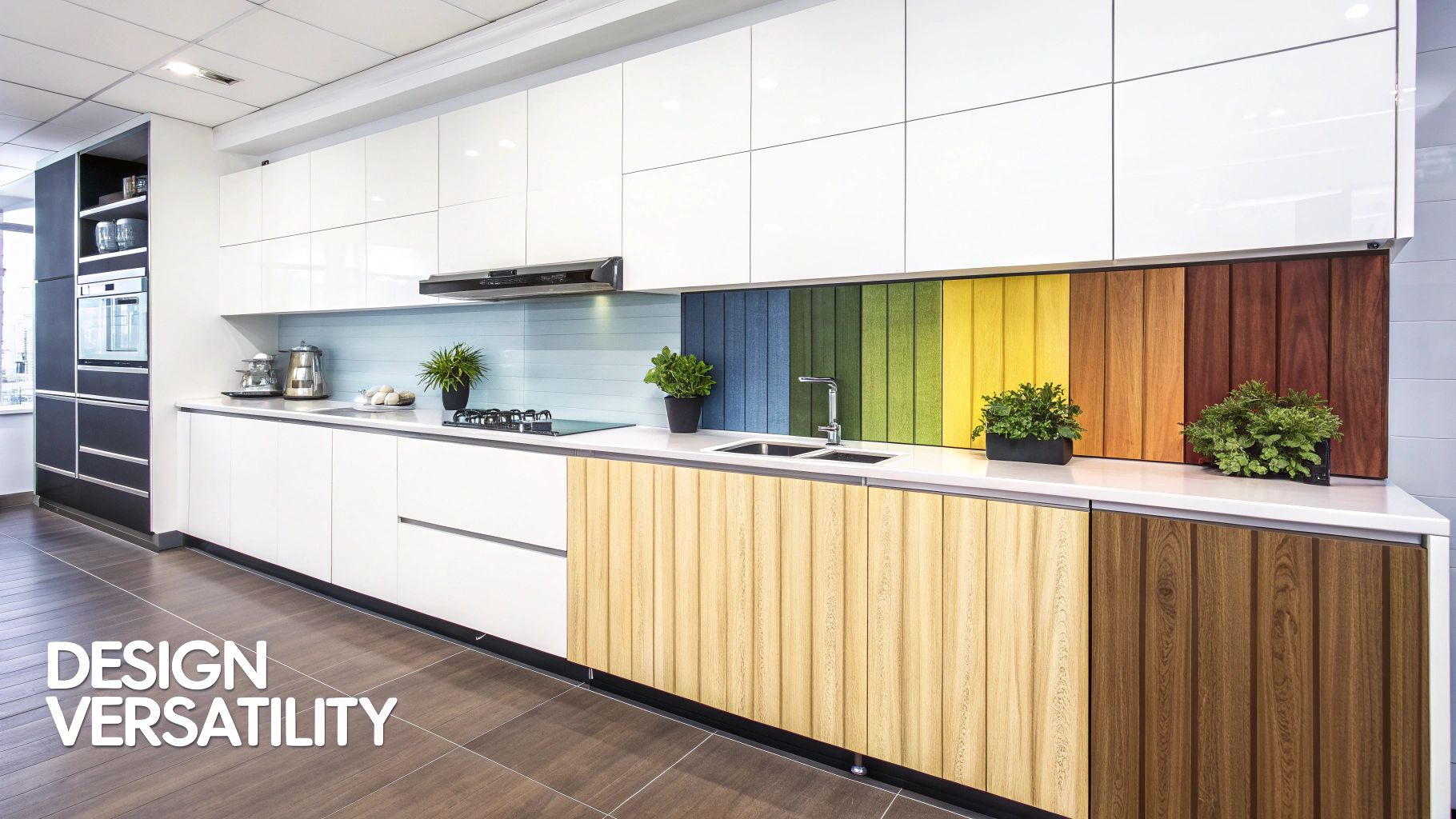
When you hear "aluminium kitchen," what comes to mind? For many, it's a cold, industrial, commercial image. But the reality of modern aluminium cabinetry is a world away from that stereotype.
Thanks to significant advances in finishing technology, aluminium has become one of the most versatile materials in a designer's toolkit. It’s a true chameleon, capable of creating looks that are warm, vibrant, and deeply personal. The era of being stuck with a sterile, metallic look is long gone.
Beyond Silver: The World of Finishes and Colours
The real transformation happens when you explore the finishes. This is where aluminium sheds its industrial skin and can mimic other materials with stunning accuracy or embrace bold, contemporary colours. The key is powder coating, a process that bakes on a durable, seamless finish that lasts for decades without fading or peeling.
Here are the main options we work with:
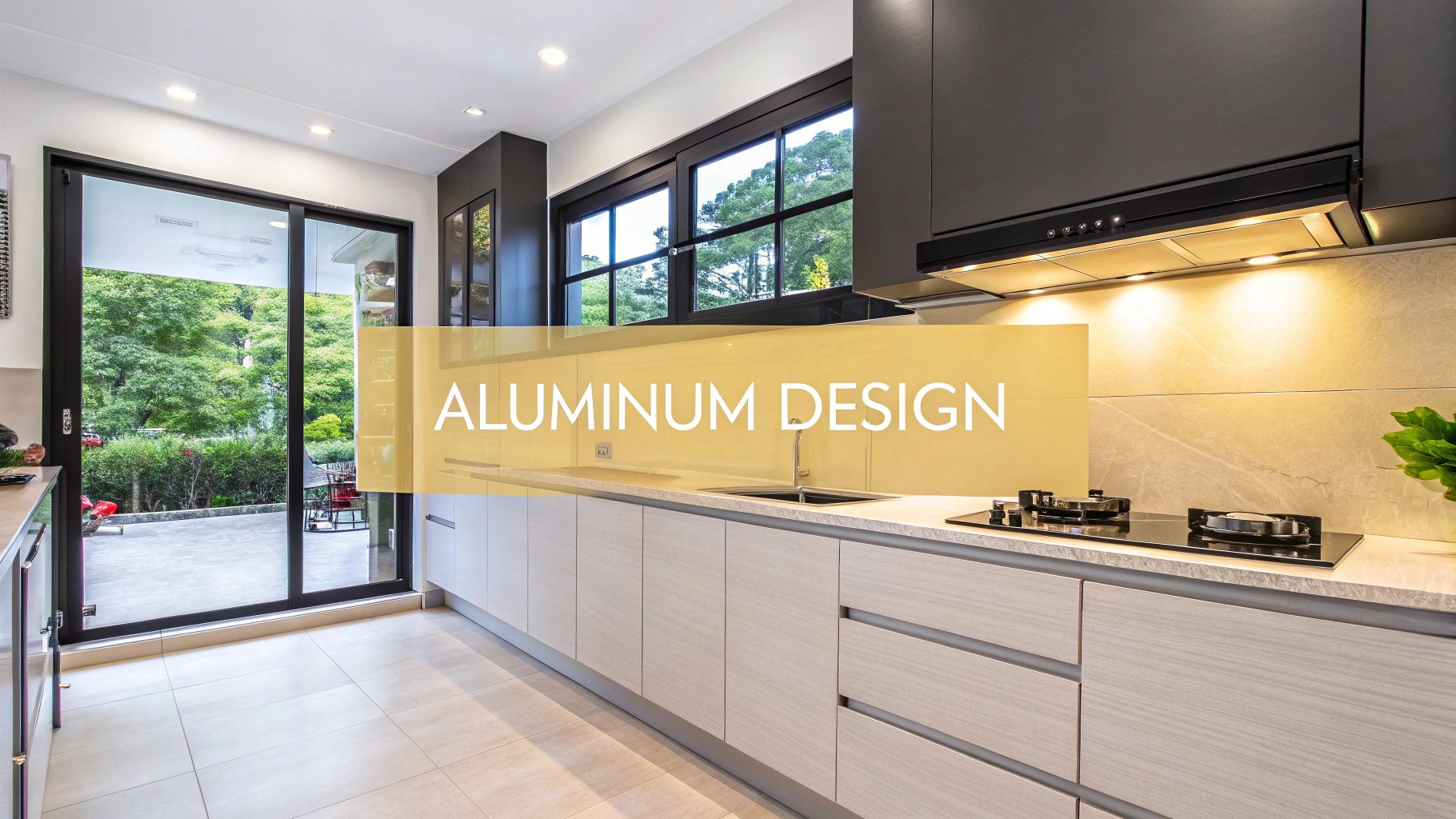
- Convincing Wood Grains: This is a client favourite. Using advanced sublimation techniques, we can create textures that are virtually indistinguishable from natural timber. A practical example is using an oak-grain finish on lower cabinets to add warmth, paired with white uppers for a lighter feel. You get the look of wood without any worries about water damage.
- Solid Powder-Coated Colours: This is your chance to make a statement. The colour spectrum is nearly limitless. A popular trend we're seeing is the use of deep navy blue or forest green on an island or a single wall of cabinets to create a bold focal point.
- Matte vs. Glossy Sheens: The final sheen has a huge impact. A matte finish offers a soft, sophisticated look that’s great at hiding fingerprints, making it ideal for high-touch areas. A high-gloss finish bounces light, making smaller HDB kitchens feel bigger and brighter.
Customisation That Elevates Your Design
An aluminium kitchen isn't an off-the-shelf product. Its beauty lies in how easily it can be customised to build a truly bespoke space. We rarely stick to just standard cabinet fronts; blending different elements adds character.
For instance, we often integrate fluted glass panels into upper cabinet doors. This breaks up a solid wall of cabinetry, adds elegance, and lets you display decorative items while keeping them dust-free.
Another popular choice is a completely seamless, handleless design. By creating cabinets with integrated J-pulls or push-to-open mechanisms, we achieve an ultra-clean, minimalist aesthetic. It puts all the focus on the beautiful finish of the cabinetry itself.
Your cabinet fronts are just one part of the equation. The real artistry comes from pairing them with the right countertop. A crisp white quartz countertop can make a bold, dark blue aluminium cabinet pop, while a richly veined granite can beautifully complement a warm, wood-grain aluminium finish.
Thinking about the big picture is key. Exploring general fresh renovation ideas for kitchens can spark unique combinations that go far beyond just the cabinets.
Adapting to Any Kitchen Style
Because the finishes are so versatile, aluminium can be the star of almost any design theme. We’ve successfully used it to bring a wide range of styles to life.
- For the Minimalist: A handleless design with a matte white or light grey powder-coated finish creates a serene, uncluttered space. The crisp, clean lines of aluminium are a perfect match for this philosophy.
- For the Contemporary Home: We might pair a dark charcoal aluminium finish with a striking marble-effect quartz splashback and countertop. The high contrast creates a dramatic, high-end look that feels both modern and timeless.
- For a Cosy, Warm Vibe: This is where wood-grain finishes really shine. By using a warm walnut-look aluminium for the lower cabinets and a soft off-white for the uppers, we create a kitchen that feels inviting and comfortable—completely defying the "cold metal" stereotype.
How Does Aluminum Stack Up Against Traditional Materials?
Choosing the right cabinet material is one of the most critical decisions in a kitchen renovation. It defines the look of your space and determines how well it will stand up to daily life, especially in Singapore where humidity and pests are a constant battle.
Let's put the modern aluminum kitchen cabinet head-to-head with the materials most homeowners are familiar with: solid wood, engineered woods like plywood and MDF, and its closest metal competitor, stainless steel.
Aluminum Versus Solid Wood
Solid wood cabinets have a timeless, classic appeal. The natural grain and warmth can create a sense of luxury. The problem is, in our tropical climate, that organic beauty comes with serious drawbacks.
Wood is porous, absorbing and releasing moisture from the air. This causes a constant cycle of swelling and shrinking, leading to warped doors, loose joints, and cracked finishes. On top of that, solid wood is a primary food source for termites, requiring constant vigilance or chemical treatments.
An aluminum kitchen cabinet, on the other hand, is completely inorganic. It's 100% immune to warping from humidity and is totally termite-proof. It offers a "set it and forget it" solution to the two biggest headaches for kitchen carpentry in our region.
Aluminum Versus Plywood and MDF
Engineered woods like plywood and Medium-Density Fibreboard (MDF) are the go-to materials for most modern cabinets because they’re more stable and affordable than solid wood. They're made by binding wood fibres or veneers with strong adhesives.
But they still have a wood core, leaving them vulnerable to moisture. A common issue we see is delamination—where the outer decorative layer peels away from the core after exposure to steam, especially around the sink and stove. If MDF's sealed surface gets chipped, it can soak up water like a sponge and crumble, making it irreparable.
Aluminum just doesn't have these problems. Its solid, non-porous structure means there are no layers to peel apart and no core to absorb water. A leak that would destroy a row of MDF cabinets is a simple wipe-down for an aluminum one.
Aluminum Versus Stainless Steel
Functionally, stainless steel is aluminum’s closest rival. It's also waterproof, pest-proof, and incredibly hygienic, which is why you see it in almost every commercial kitchen. It's worth researching the different stainless steel grades for kitchens, as quality can vary.
The main drawback for stainless steel in a home setting is its aesthetic limitation. It generally comes in one look: metallic silver. While that works for an industrial vibe, it can feel cold and clinical in a home. It's also a magnet for fingerprints and smudges, demanding constant polishing.
While stainless steel is fantastic for countertops and appliances, aluminum offers far more creative freedom for cabinetry. Thanks to modern powder coating and sublimation techniques, aluminum can convincingly replicate warm wood grains or come in a massive spectrum of colours.
This is where an aluminum kitchen cabinet pulls ahead. It gives you all the practical benefits of a metal kitchen with the design warmth and personality previously exclusive to wood-based materials.
Kitchen Cabinet Material Showdown
To help you see the differences at a glance, here is a simple comparison table focusing on the factors that matter most for a kitchen in Singapore.
| Feature | Aluminum | Solid Wood | Plywood/MDF | Stainless Steel |
|---|---|---|---|---|
| Humidity Resistance | Excellent; completely waterproof and will not warp or swell. | Poor; prone to warping, swelling, and cracking over time. | Fair to Poor; susceptible to delamination and swelling, especially MDF. | Excellent; fully waterproof and stable. |
| Pest Resistance | Excellent; 100% termite-proof and pest-resistant. | Poor; highly vulnerable to termites and other wood-boring insects. | Poor; vulnerable to termites, particularly the wood core. | Excellent; completely pest-proof. |
| Maintenance | Low; easy to clean, non-porous surface resists stains and mould. | High; requires regular polishing and careful cleaning to avoid water damage. | Moderate; requires gentle cleaning; damaged surfaces are hard to repair. | Moderate; waterproof but shows fingerprints and smudges easily. |
| Design Versatility | Excellent; vast range of colours, sheens, and realistic wood-grain finishes. | Good; offers natural beauty but limited colour options beyond stains. | Good; can be laminated or painted in many colours and finishes. | Limited; primarily available in a standard metallic finish. |
Ultimately, this showdown highlights how each material performs under the unique pressures of our local environment. Aluminum offers a compelling mix of resilience and design flexibility that's perfectly suited for the modern Singaporean home.
Understanding the Cost of an Aluminum Kitchen
When planning a new kitchen, the budget is always a central consideration. It’s helpful to think of the price of an aluminum kitchen not as a single number, but as the sum of all the choices you make.
Understanding these variables is key to planning effectively and seeing where your money goes. From the cabinet carcass to the final handles, every decision shapes the overall investment.
Key Factors That Influence the Final Price
The cost of an aluminum kitchen directly reflects its quality and customisation. Unlike off-the-shelf options, every part can be tailored to your needs, and this level of detail influences the budget.
Here are the key cost drivers:
- Grade and Thickness of Aluminum: We use high-grade alloys known for their strength. Opting for thicker profiles for cabinet frames and doors provides more rigidity and durability, which impacts the price. For example, a 1.8mm thick door profile is more robust and costly than a 1.2mm one.
- Design Complexity: A simple, straight-run kitchen is more budget-friendly than a complex U-shaped layout with corner units, pull-out larders, and an island. More intricate designs require more material and fabrication time.
- Finish and Colour: The finish plays a big part. A standard solid powder-coated colour is the baseline. A hyper-realistic wood grain or a textured metallic effect involves multi-step processes like sublimation, which adds to the cost but also the aesthetic value.
- Hardware and Mechanisms: Good hardware is non-negotiable for a premium feel. We use top-tier soft-closing hinges and drawer systems from trusted brands. Upgrading to advanced features like electronic push-to-open systems or internal organisers will be reflected in the final price.
Realistic Budgeting for Singapore Homes
So, what should you expect to set aside? To give you a practical starting point, here are the typical price ranges for custom aluminum kitchens in Singapore. Remember, these are estimates—the final cost depends on the factors we just covered.
For a standard HDB flat kitchen, a full aluminum cabinet system usually falls between S$10,000 and S$18,000. For larger condo kitchens or those with more complex layouts and premium finishes, the investment is typically in the S$15,000 to S$25,000+ range.
These figures are a good guide for the cabinetry itself (design, fabrication, and installation) before adding countertops, appliances, and other renovation work.
Looking Beyond the Upfront Cost
While the initial investment for an aluminum kitchen might be higher than for standard plywood or MDF, it’s vital to consider the total cost of ownership.
Think about the long-term issues with other materials. In Singapore's climate, it's not uncommon for wood-based cabinets to need repairs from water damage or termite attacks within 10-15 years. This could mean paying thousands to replace entire sections of your kitchen.
In contrast, an aluminum kitchen cabinet system has a practical lifespan that can easily exceed 20+ years with nothing more than simple cleaning. It won't warp, rot, or delaminate. This means you’re making a one-time investment in a kitchen that’s built to last, delivering real savings and peace of mind for decades.
From a Simple Idea to Your Finished Kitchen: How We Work With You
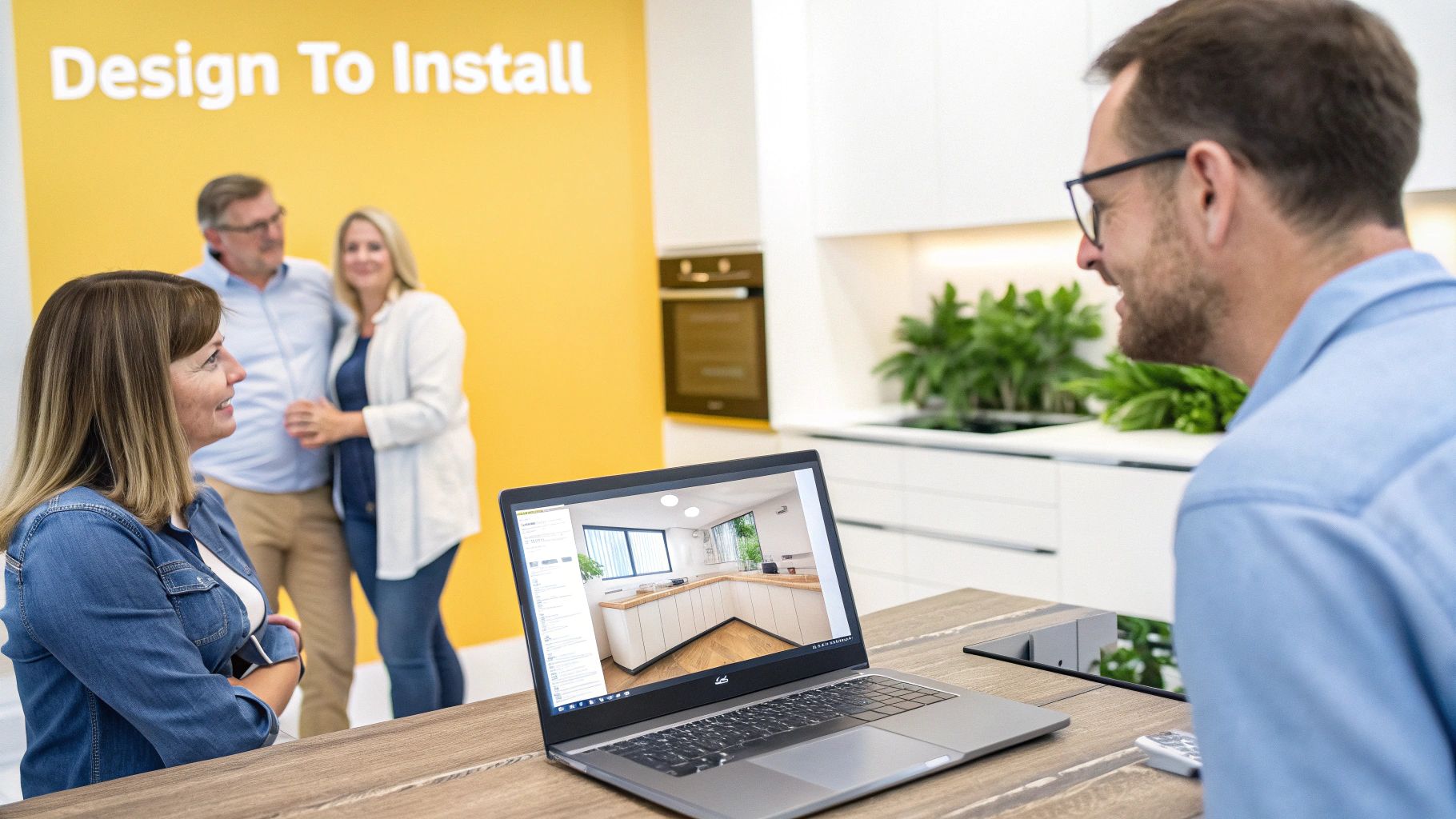
Turning an idea into a stunning, practical kitchen is a collaborative journey. Our process is designed to be transparent and engaging, keeping you involved at every stage.
We move from broad concepts to the tiniest details in logical phases, which prevents mistakes, keeps the project on track, and makes the whole experience enjoyable.
Phase 1: The Design Consultation and Discovery
This first meeting is where it all begins. We sit down with you to understand how you live in your kitchen. What are your daily routines? Your cooking style? What are your storage pain points?
Think of it as a collaborative brainstorming session. You bring the vision, and we bring the expertise. We’ll talk through everything from workflow and ergonomics to the exact look you want to achieve with your aluminium kitchen cabinet system. We will also share physical material samples so you can see and feel the different finishes.
Phase 2: Seeing Your Future Kitchen Come to Life
With a clear understanding of your goals, our design team creates detailed 3D renderings that transform abstract ideas into a photorealistic model of your new kitchen.
You’ll see exactly how the light hits the countertops and what the texture of the cabinet finish looks like in your space. This is your chance to fine-tune every detail, play with different options, and feel completely confident in your choices before any fabrication begins.
This visualisation phase is where it all clicks for our clients. Seeing the design in 3D provides a level of clarity that floor plans just can't match. It’s all about making sure there are no surprises—only excitement for what’s to come.
Phase 3: Precision Fabrication and Flawless Installation
Once you approve the design, our craftsmen take over. Using precision engineering, they build every component of your aluminium kitchen to exact specifications.
Finally, our in-house installation team brings the design to life in your home. They are meticulous, efficient, and respectful of your space. From perfectly levelling every cabinet to fitting each piece of hardware, their focus is on delivering a flawless finish. We’ll keep you updated throughout this final stage as your vision becomes a reality.
Answering Your Questions About Aluminium Kitchens
As you move closer to a decision, it's normal for practical, day-to-day questions to come up. We believe in giving you clear, honest answers so you can feel confident in choosing an aluminium kitchen. Let's tackle some of the most common queries we hear from clients.
These are the real-world details that matter, from noise levels and repairs to the overall look and upkeep.
Are Aluminium Cabinets Noisy to Use?
This is a very common question, rooted in the idea of clunky metal. The short answer is no—modern, high-quality aluminium cabinets are engineered to be whisper-quiet. That metallic clang is a thing of the past.
The solution is in the hardware. We insist on using high-end, soft-closing mechanisms. Every door is fitted with premium hinges, and every drawer glides on robust, silent runners. This guarantees a gentle, controlled close, making the sound identical to that of any luxury kitchen.
Can They Be Repaired if Scratched or Dented?
While aluminum is highly durable, no material is indestructible. Minor surface scuffs on a powder-coated finish can often be carefully buffed out or touched up with a matching repair kit.
A major dent from a heavy blow is tougher to fix seamlessly than on wood. However, an aluminium kitchen cabinet is vastly more resistant to everyday issues that plague other materials—chipping, peeling, or water damage. In normal daily use, significant cosmetic damage is incredibly rare.
Do Aluminium Cabinets Look Too Industrial?
This is probably the biggest myth we get to bust. The old idea that aluminium has to look cold or sterile is completely outdated. Thanks to advances in finishing technology, the design possibilities are incredibly warm, textured, and diverse.
The final look is entirely a matter of design intent. By selecting a highly realistic wood-grain finish and pairing it with a warm-toned quartz countertop, you can create a kitchen that feels cosy and inviting. It’s all about the combination of colours, textures, and surrounding materials.
How Do I Clean and Maintain Aluminium Cabinets?
This is where aluminium truly shines—the maintenance is almost zero. Day-to-day cleaning is as easy as wiping the surfaces down with a soft, damp cloth and a little mild, non-abrasive soap.
Unlike wood, you never have to worry about water damage, warping, or applying special polishes. Spills, grease, and food stains can't penetrate the non-porous surface, which makes cleanup fast and hygienic. This easy-care nature keeps your kitchen looking new for years with minimal effort.
Ready to explore the possibilities for your own home? The team at KIVO is here to bring your vision to life with custom designs and impeccable craftsmanship. Contact us today for a personalised consultation.