Let’s be honest, a bathroom vanity cabinet is so much more than just a box that holds your sink. It's the hardworking centrepiece of the entire room, the unsung hero that corrals all your daily essentials while setting the design tone for your whole bathroom. Think of it as the command centre for your morning and evening routines—it has to look good and work hard.
The True Centerpiece of Your Bathroom
Try to picture your bathroom without a proper vanity. Toothbrushes, skincare bottles, and cleaning supplies would be fighting for space on every available surface. It would be total chaos in a room that’s meant to be a calm retreat. A well-chosen bathroom vanity cabinet acts as the functional anchor, defining the room's flow and feel in the same way a kitchen island commands its space.
This single piece of furniture is a true multitasking champion. It neatly hides away all the unattractive plumbing, gives you a practical countertop for the things you use every day, and provides organised storage to keep your personal sanctuary tidy and clutter-free. But its job doesn’t stop there. The style of the vanity—from its material and colour to the drawer pulls you choose—is what really dictates the bathroom's overall aesthetic.
Finding Your Perfect Fit
Choosing the right vanity is all about striking a balance between what you need, what you love, and the real-world constraints of your home. Whether you're working with a compact HDB flat or a more spacious condominium, the core decisions you need to make are surprisingly similar.
- Functionality First: How much storage do you actually need? Before you shop, do a quick inventory. Lay out everything you need to store—from tall shampoo bottles to small makeup palettes. This simple action will tell you if you need deep drawers, a tall cabinet, or a mix of both.
- Aesthetic Harmony: Your vanity shouldn't stick out like a sore thumb. It needs to complement your home's existing style. For example, if your home has warm wood floors and brass fixtures, a vanity in a similar wood tone with brass handles will create a cohesive, intentional look.
- Spatial Awareness: Size matters, a lot. The vanity must be proportional to your bathroom. A cabinet that’s too big will completely overwhelm the room, but one that's too small will look awkward and won't give you the storage you need. Use painter's tape to mark the footprint of your potential vanity on the floor. This gives you a real-world feel for how much space it will occupy.
A well-chosen bathroom vanity cabinet doesn't just add to the room; it completes it. It's the piece that ties everything together—from the floor tiles to the light fixtures—creating a space that is both cohesive and incredibly functional.
For Singaporean homes, these points are especially crucial. Squeezing maximum storage out of a smaller HDB bathroom calls for clever design, like a taller cabinet or a unit with deep, practical drawers. On the other hand, a larger master bathroom in a condo gives you the chance to go bold with a statement-making double vanity that becomes a luxurious focal point.
Understanding this dual role of form and function is the first step. This guide will walk you through every consideration, ensuring the vanity you choose is the perfect fit for your lifestyle and your space.
Selecting Materials That Last in Singapore's Climate
Choosing the right material for your bathroom vanity cabinet in Singapore is less about chasing the latest trends and more about winning the daily battle against humidity. Make the wrong choice, and you could be looking at warping, peeling, or even mould growth in just a few short years. Think of it as the foundation of your bathroom renovation—it has to be tough enough to handle everything from steamy showers to the ever-present tropical moisture.
Your decision here will directly influence your vanity's lifespan, how much cleaning it needs, and of course, its overall look. It's a classic balancing act between durability, style, and budget. A material that stands up well to moisture might cost a bit more upfront, but it’ll save you the headache and expense of a premature replacement down the road.
Understanding Your Core Material Options
To choose wisely, you need to know the real-world pros and cons of the most common materials on the market. Each one offers a different mix of performance and aesthetics, fitting different needs and bathroom setups.
- Moisture-Resistant Plywood: Often hailed as the gold standard for humid climates like ours, high-quality plywood is made by layering thin wood veneers with waterproof glue. This cross-grain construction makes it incredibly stable and far less likely to warp or shrink. Actionable Tip: When speaking to a contractor, specifically ask for "phenolic" or "marine-grade" plywood for the best moisture resistance.
- Solid Wood: Nothing beats the natural luxury of solid wood like teak or oak for that spa-like vibe. Teak, in particular, is naturally oily, which makes it highly resistant to water and rot—a perfect match for a bathroom retreat. Just remember, solid wood is a premium option and needs proper sealing to keep it looking its best.
- Laminates (on Plywood Core): High-pressure laminates (HPL) give you the best of both worlds: incredible versatility and solid durability. A decorative layer is fused to a sturdy plywood core using intense heat and pressure, creating a non-porous surface that's a breeze to clean. This makes it a fantastic, low-maintenance choice for busy family bathrooms where splashes are a daily occurrence.
- Sintered Stone: If you're after a sleek, modern look, this high-tech option is worth considering for both your countertop and cabinet surfaces. Sintered stone is made by fusing natural minerals under extreme heat and pressure, resulting in a material that's completely non-porous, scratch-proof, and heat-resistant. It's practically indestructible and impervious to moisture and stains.
The most critical factor for any engineered wood product, like MDF or particleboard, is the quality of its seal. Even a tiny chip or crack in the finish can allow moisture to penetrate, causing the material to swell and disintegrate from the inside out. This is why a plywood core is often a safer bet in Singapore.
To help you compare your choices at a glance, we've put together this simple table breaking down the key characteristics of each material.
Bathroom Vanity Cabinet Material Comparison
| Material | Moisture Resistance | Durability | Typical Cost | Best For |
|---|---|---|---|---|
| Plywood | High to Very High | High | Mid-Range | Humid climates; the best all-rounder for long-term value. |
| Solid Wood | High (when sealed) | Very High | High-End | Creating a luxurious, natural aesthetic in well-ventilated bathrooms. |
| Laminates (on Plywood) | Very High | High | Mid to High | Busy family bathrooms needing easy-to-clean, durable surfaces. |
| Sintered Stone | Excellent | Excellent | Premium | Modern, minimalist designs where ultimate durability is key. |
This table should make it clearer which material aligns best with your budget, lifestyle, and the specific demands of your bathroom environment.
Balancing Cost with Long-Term Value
While it’s tempting to focus on the initial price tag, that can be a short-sighted move. A cheaper bathroom vanity cabinet made from standard particleboard might seem like a bargain, but it could easily fail within a couple of years, especially in a bathroom without great ventilation.
Looking at regional market trends gives us some valuable clues. Consumer patterns in the Asia Pacific reveal a strong preference for durable materials. For instance, over 60% of bathroom vanity cabinets sold in Southeast Asia are made from materials like wood and ceramic, which are valued for their longevity and classic style. This preference lines up perfectly with what Singaporean homeowners want: quality finishes that last, particularly in newer residential projects where larger, double-sink vanities are becoming the norm. You can read more about these regional market trends and see how they influence local choices.
This data chart illustrates the most common bathroom vanity cabinet widths found in the market.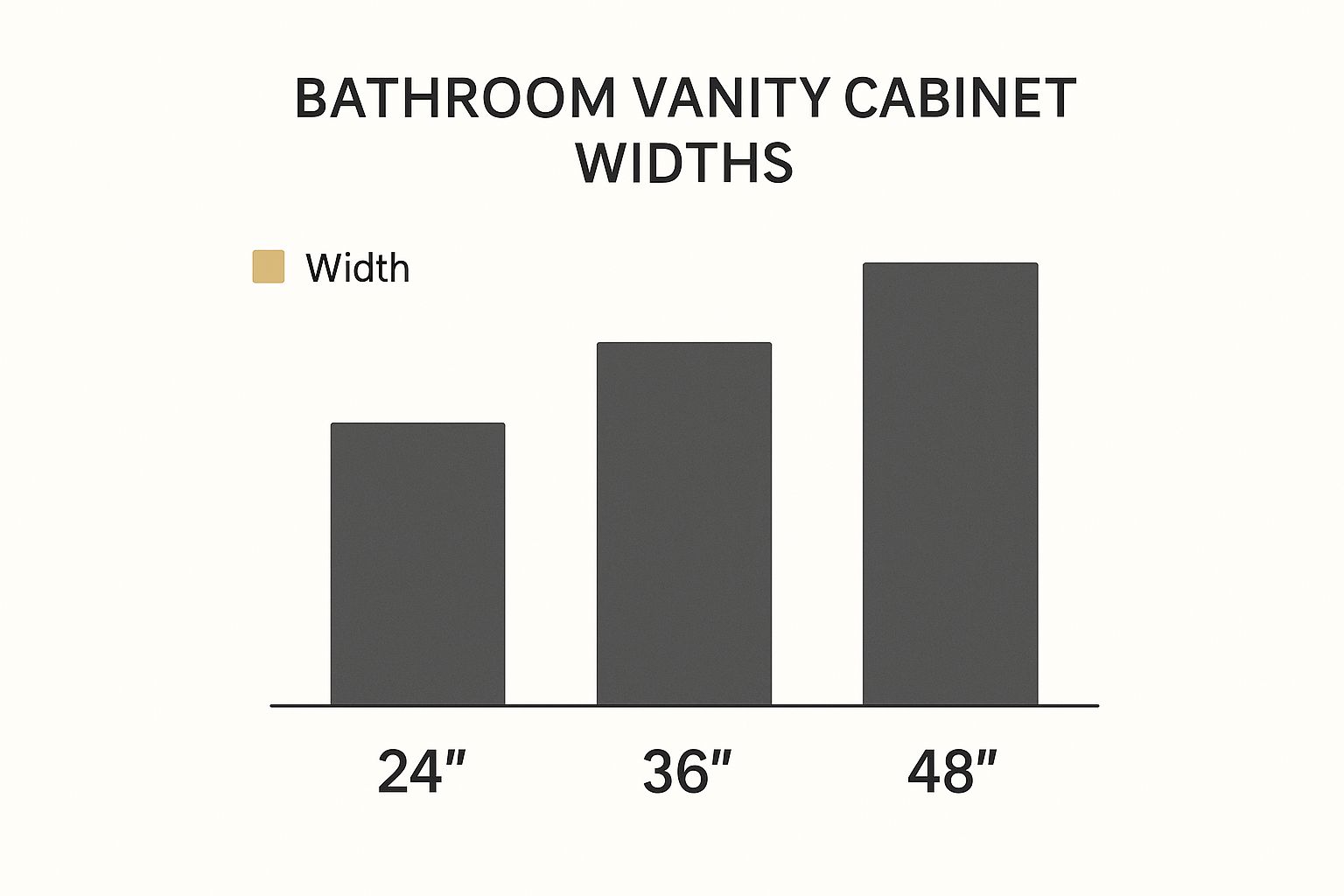
The chart shows that 36-inch and 48-inch vanities are very popular, as they offer a great balance of storage and counter space for the single-sink setups found in many homes.
Ultimately, investing in a moisture-resistant material like marine-grade plywood or a well-sealed solid wood vanity almost always provides better long-term value. It ensures your bathroom’s centrepiece stays functional and beautiful for years, standing up to our demanding climate without needing costly repairs or an early replacement. Your choice of material is a direct investment in the durability of your bathroom design.
Matching Your Vanity to Your Home's Style
Your bathroom vanity cabinet shouldn’t just be a box on the wall—it's a key piece of furniture that anchors the whole room. Think of it less like a fixture and more like a deliberate style statement. When you choose a vanity that echoes your home’s overall personality, you create a seamless flow from one space to the next, making the bathroom feel like it truly belongs.
This goes way beyond just picking a colour you like. It’s about understanding the little details that define a style—the shape, the materials, the hardware, and the overall form. Whether you live in a modern minimalist BTO flat or a classic condo, the right vanity will tie everything together and elevate the entire space.
Unpacking Popular Design Aesthetics
Let's dig into some of the most popular styles you'll see today and what makes them tick. This should help you pinpoint the look that feels right for you and your home, ensuring your new bathroom vanity cabinet is a perfect fit.
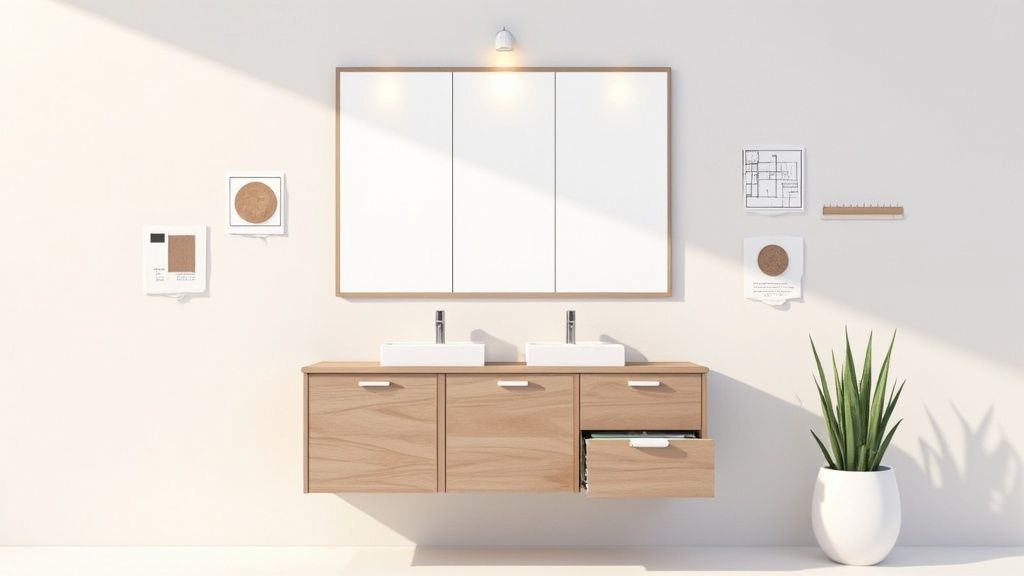
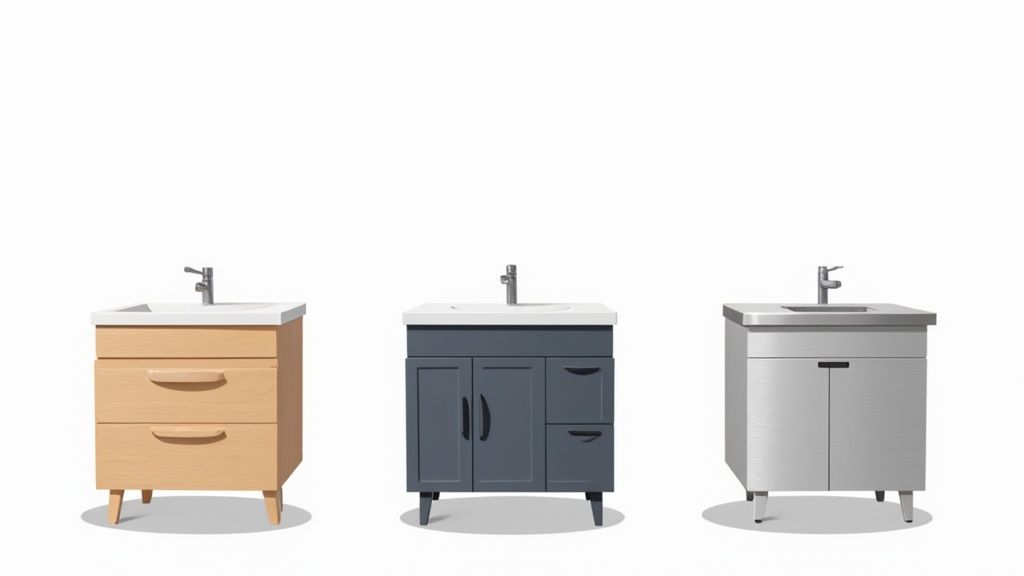
- Minimalist & Scandinavian: This look is all about simplicity, clean lines, and function. Practical example: A wall-mounted oak vanity with integrated finger-pull handles offers a clean profile while making the floor easy to clean—a perfect blend of Scandi form and function. This is a fantastic choice for smaller Singaporean bathrooms where every inch of visual space counts.
- Industrial Chic: Inspired by old warehouses and urban lofts, the industrial aesthetic is defined by raw, honest materials. Practical example: Imagine a matte black steel frame supporting a rustic, reclaimed wood shelf and a concrete-look countertop. Exposed bolts and rugged hardware add a touch of edgy sophistication that can turn the vanity into a powerful focal point.
- Modern Classic: This style is the best of both worlds, blending timeless elegance with clean, contemporary lines. Practical example: A navy blue freestanding vanity with shaker-style doors, topped with a white quartz countertop and finished with brushed brass handles. It feels luxurious and refined without being stuffy, so it won’t look dated in a few years.
Your home’s existing architecture and finishes are your best cheat sheet. A modern classic vanity with ornate handles would feel totally out of place in a stark, industrial-themed BTO, just like a raw metal vanity would clash in a home with traditional, softer details.
Practical Tips for Creating a Cohesive Look
Pulling off a professional, cohesive design is all in the details. It's about making sure every element in the room is telling the same story. Here are a few simple tricks to tie your new bathroom vanity cabinet into your home's existing decor.
- Mirror Your Hardware: Take a photo of the handles on your kitchen cabinets or wardrobe. When shopping for a vanity, use that photo to find hardware with a similar finish (e.g., matte black, brushed gold). This small detail creates a subtle link that makes everything feel connected.
- Match Wood Tones: If you have prominent wood elements nearby, like your flooring or a dining table, try to find a vanity with a similar wood tone or finish. This visual thread helps the bathroom feel like a natural part of the home, not a separate, disconnected room.
- Reflect Architectural Lines: Look at the lines around your home. Are your door frames sharp and modern, or do they have softer, more traditional curves? A vanity with clean, straight lines will feel right at home in a contemporary space, whereas one with rounded edges or detailed mouldings will better suit a classic interior.
At the end of the day, this is about creating a space you genuinely love spending time in. By taking cues from your home's current style and using these simple design principles, you can choose a bathroom vanity cabinet that not only works for you but makes your whole home feel more complete.
A Practical Guide to Sizing and Layout
Picking out a stylish bathroom vanity cabinet is definitely the fun part. But get the sizing and layout wrong, and that dream bathroom can quickly become a daily headache. An oversized vanity will make the room feel claustrophobic and block walkways, while a tiny one just looks lost and won't give you the storage you desperately need. This is where your tape measure and a bit of planning become your best friends.
Think of your bathroom's layout like a dance floor. Everything in it—the door, the toilet, the shower—needs enough room to move without crashing into anything else. Your vanity is one of the main dancers, and where you place it sets the rhythm for the whole space. Getting the size right ensures doors can swing open freely and you can move around without having to squeeze past things.
Measuring Your Space with Confidence
Before you even think about browsing for a bathroom vanity cabinet, you need to measure your space. Accurately. This step isn't optional, and it's the single best way to avoid expensive mistakes down the road. Grab a tape measure and run through this quick checklist.
- Measure Total Wall Space: First things first, measure the entire width of the wall where you plan to put the vanity. This gives you your absolute maximum dimension to play with.
- Check for Obstructions: Take note of where doorways, windows, light switches, and the toilet are. You don't want a vanity drawer or door smacking into the toilet or door frame every time you open it.
- Locate Your Plumbing: Find your existing water supply and drain pipes and measure their location. A plumber can usually move them, but designing around the existing setup can save you a fair bit of time and money.
- Plan for Clearance: This is non-negotiable. Use your tape measure to ensure there's at least 75cm of clear walkway space in front of where the vanity will go. For doors, physically swing them open to check for clearance.
Getting the measurements right is about more than just making the cabinet fit. It’s about creating a space that actually works for you. A beautiful vanity is pretty useless if you have to turn sideways to get past it.
Choosing the Right Vanity Size and Type
Okay, with your measurements sorted, you can start thinking about the perfect size and style for your bathroom vanity cabinet. It's usually a balancing act between how much storage you need and how much space you actually have—a classic challenge in many Singaporean homes.
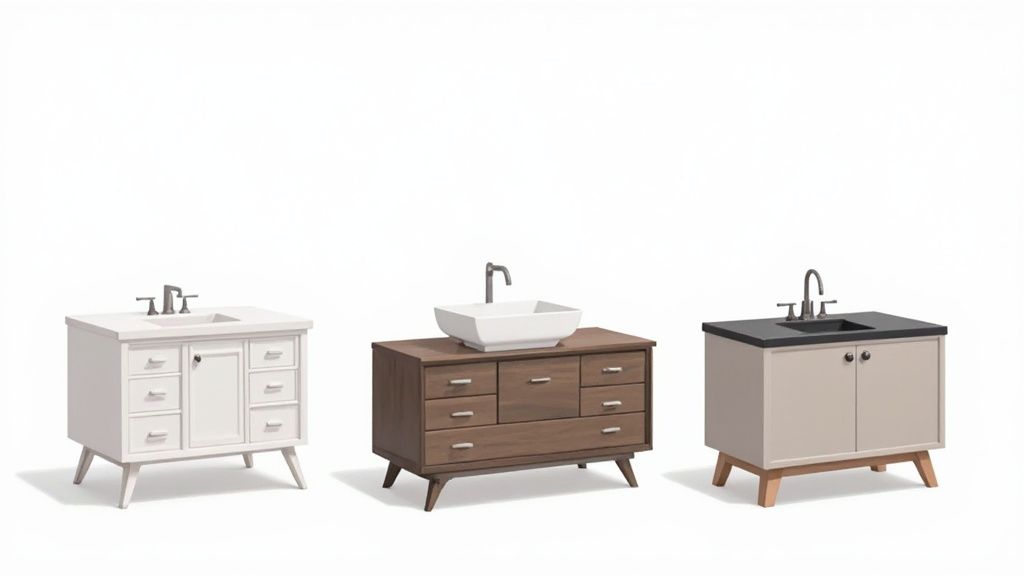
A standard single vanity usually falls between 600mm and 900mm wide. This size is often the sweet spot, offering a good amount of counter space and storage for most HDB bathrooms or powder rooms. If you're lucky enough to have a larger master bathroom, a double vanity—typically 1500mm or wider—is a fantastic luxury, giving couples their own personal space.
The type of vanity you choose also makes a huge difference in how the room feels.
- Wall-Mounted (Floating) Vanities: These are brilliant for smaller bathrooms. Lifting the cabinet off the ground creates an illusion of more floor space, making the whole room feel bigger and brighter. Plus, it's a breeze to clean underneath.
- Freestanding Vanities: These are the more traditional cabinets that sit directly on the floor. They often offer the most storage and can feel like a solid, substantial piece of furniture, adding a classic, grounded feel to the bathroom.
The demand for smart, stylish storage is a big deal across the region. In fact, the bathroom furniture market in Southeast Asia, which includes vanity sets, is expected to hit around USD 2.1 billion by 2025. This growth shows just how much homeowners, especially in cities like Singapore, value high-quality fixtures that make the most of every square centimetre. You can read more about these regional bathroom furniture market trends here.
Ultimately, the best vanity is the one that fits your layout perfectly. A sleek, wall-mounted unit can make a tight HDB bathroom feel open and modern, while a grand freestanding double vanity can become a stunning focal point in a spacious condo. By taking the time to measure carefully and think about these practical layout tips, you'll find a bathroom vanity cabinet that isn't just beautiful, but a perfect fit for your daily life.
Smart Features and Custom Upgrades
A modern bathroom vanity cabinet can be so much more than just a sink with some shelves underneath. Think of it as the functional heart of your bathroom. By weaving in smart features and clever customisations, you can elevate it from a simple piece of furniture into a high-functioning hub that solves those little daily annoyances and makes your routines flow that much smoother. These upgrades aren't just about adding a touch of luxury; they're about making your space work harder for you.
This move towards integrated tech and modular design isn't just a fleeting trend. In Singapore, consumer demand is clearly shifting towards bathroom vanity cabinets that blend smart features with practical design. It’s a global thing, too—the bathroom cabinets market is projected to grow at a CAGR of roughly 6.3% to 6.5% from 2024. This signals a definite preference for more advanced fixtures worldwide. Given Singapore's knack for adopting technology, it’s no surprise that local homeowners are seeking out cabinetry that delivers real, everyday benefits. You can discover more insights about these global market trends and see how they line up with what we’re seeing here at home.
Practical Tech That Makes a Difference
Let's be honest, smart features should solve actual problems. Think about the small frustrations in your morning routine—that's where the right vanity upgrade can be a game-changer. These tech-driven additions aren't just gadgets; they add genuine, practical value.
- Integrated LED Lighting: Say goodbye to shadowy mornings. Lighting built right into the mirror or along the vanity base gives you clear, even illumination that’s perfect for makeup application or shaving. Actionable tip: Look for models with adjustable colour temperature to switch between a cool, bright light for the morning and a warm, relaxing glow at night.
- Built-In Power Outlets: Stop the daily dance of unplugging your hairdryer to charge your electric toothbrush. Having outlets tucked away inside a drawer or cabinet keeps your countertops blissfully clear and all your devices charged and ready to go.
- Anti-Fog Mirrors: We’ve all been there. You step out of a hot shower only to face a completely fogged-up mirror. Vanities with integrated demister pads gently warm the mirror's surface, keeping it crystal clear right when you need it most.
Clever Customisations for a Clutter-Free Life
Beyond the tech, thoughtful internal organisation can completely revolutionise how you use your bathroom vanity cabinet. These custom upgrades are all about maximising every inch of space and keeping your essentials neatly arranged and easy to grab.
A truly well-designed vanity isn't just about how it looks on the outside, but how intelligently it works on the inside. Custom organisation turns a standard cabinet into a personalised storage solution.
Just imagine how these high-impact ideas could transform your space:
- Custom Drawer Dividers: This is how you end countertop clutter for good. Ask your carpenter for adjustable dividers to create specific spots for makeup, skincare, and smaller items, preventing them from becoming a jumbled mess.
- Pull-Out Trays: No more digging around for that one bottle lost at the back of a deep cabinet. Multi-level pull-out trays slide everything out into the open, making it a breeze to grab exactly what you need.
- Hidden Laundry Hamper: A simple tilt-out cabinet can cleverly conceal a laundry basket. This keeps dirty clothes out of sight and helps maintain that serene, spa-like atmosphere in your bathroom.
By thinking through these details, you can elevate your vanity from basic storage into an indispensable part of your home, perfectly tailored to your lifestyle.
Installation Tips and Long-Term Care
Proper installation is the final, crucial step in bringing your design vision to life. It’s what ensures your bathroom vanity cabinet not only looks perfect but functions flawlessly for years. While you should always leave complex plumbing to a licensed professional, understanding the key installation milestones helps you oversee the process and guarantee a quality finish. Think of a successful installation as a direct investment in your vanity’s longevity.
The single most critical step is getting the cabinet perfectly level. An uneven installation can cause doors to hang crookedly or drawers to stick. Over time, it can even put stress on the countertop, potentially leading to cracks. The installer must also anchor the cabinet securely to the wall studs to prevent it from shifting, which is especially important for heavy units or wall-mounted designs.
Securing Your Investment from Water Damage
Once the cabinet is in place, the focus shifts to protecting it from its biggest enemy: moisture. This is where a small detail makes a massive difference.
A continuous bead of high-quality silicone sealant must be applied where the countertop meets the wall and where the sink meets the countertop. This waterproof barrier is your first line of defence against water seeping behind the cabinet, a common issue that causes wood to swell, laminates to peel, and encourages mould growth in Singapore's humid climate.
Actionable Tip: After installation, run your finger along the silicone seal. It should be smooth and continuous. If you feel any gaps, ask your installer to touch it up immediately before they leave. This simple check can save you from costly water damage later.
Simple Maintenance for Lasting Beauty
Keeping your bathroom vanity cabinet looking brand new doesn't require hours of work—just the right approach. Your cleaning routine should always be gentle to protect the cabinet’s finish.
- For Wood and Laminate: A soft, damp microfibre cloth paired with a mild, pH-neutral cleaner is all you need. Always wipe up spills or water splashes promptly to prevent moisture from sitting on the surface.
- What to Avoid: Steer clear of abrasive scourers, bleach, or harsh chemical cleaners. These can strip the protective finish, scratch the surface, and cause irreversible damage. A gentle approach is always best.
By following these simple installation checks and maintenance habits, you'll protect your investment and ensure your bathroom vanity cabinet remains a beautiful, functional centrepiece in your home for years to come.
Frequently Asked Questions
When you're diving into a bathroom renovation, it’s natural for questions to pop up, especially around a centrepiece like the bathroom vanity cabinet. Getting clear, simple answers is the key to making confident choices that fit your home and your personal taste. Think of this section as a quick guide to the most common queries we hear from homeowners.
We’ll cover everything from practical dimensions to keeping your vanity pristine in Singapore’s climate. Nailing these details is often what separates a good renovation from a truly great one.
What Is the Ideal Height for a Bathroom Vanity Cabinet?
You'll find that standard vanity heights usually fall somewhere between 80 cm and 90 cm. But honestly, the "best" height is all about who's using it every day. We're seeing more and more "comfort height" vanities, which stand around 92 cm tall. They’re a game-changer for taller adults because they mean less bending over.
If it's a shared family bathroom, sticking to a standard height is usually the most practical and versatile option. Actionable tip: Before deciding, stand in front of your kitchen counter (typically 90-92cm high) and mimic washing your hands. This will give you a real-life feel for whether a comfort-height vanity is right for you.
Should I Choose a Wall-Mounted or Freestanding Vanity for My HDB?
For most HDB flats, a wall-mounted (or "floating") vanity is almost always the smarter choice. Why? Because it creates an illusion of space. By letting you see the floor underneath, it makes a compact bathroom feel bigger and more open. Plus, cleaning the floor becomes a breeze.
Freestanding vanities have that classic, furniture-like charm and sometimes offer a bit more storage inside. The trade-off is that they can feel bulky in a smaller room. If you're looking to make the most of limited space, a wall-mounted bathroom vanity cabinet is the way to go.
Choosing a wall-mounted vanity is one of the simplest yet most effective design tricks to visually expand a small bathroom. The uninterrupted floor line draws the eye further, creating a sense of spaciousness that freestanding units just can't match.
How Do I Prevent Mould on My Wooden Vanity Cabinet?
In Singapore's humidity, protecting a wooden bathroom vanity cabinet from mould isn't just a good idea—it's essential. The single most important step is ensuring your bathroom has excellent ventilation. Always run the exhaust fan during and after a steamy shower to pull that extra moisture out of the air.
Next, choose your materials wisely. A vanity made from moisture-resistant material like marine-grade plywood or solid teak, sealed with a quality waterproof finish, will stand up to the climate much better. Actionable tip: Once a week, open your vanity cabinet doors for an hour to let the interior air out. This simple habit prevents musty smells and discourages mould growth inside.
Ready to create a bathroom that is both beautiful and perfectly functional? At KIVO, our decades of experience in custom carpentry and interior design ensure your vision is brought to life with precision and artistry. Discover how KIVO can transform your space with a bathroom vanity cabinet designed just for you.