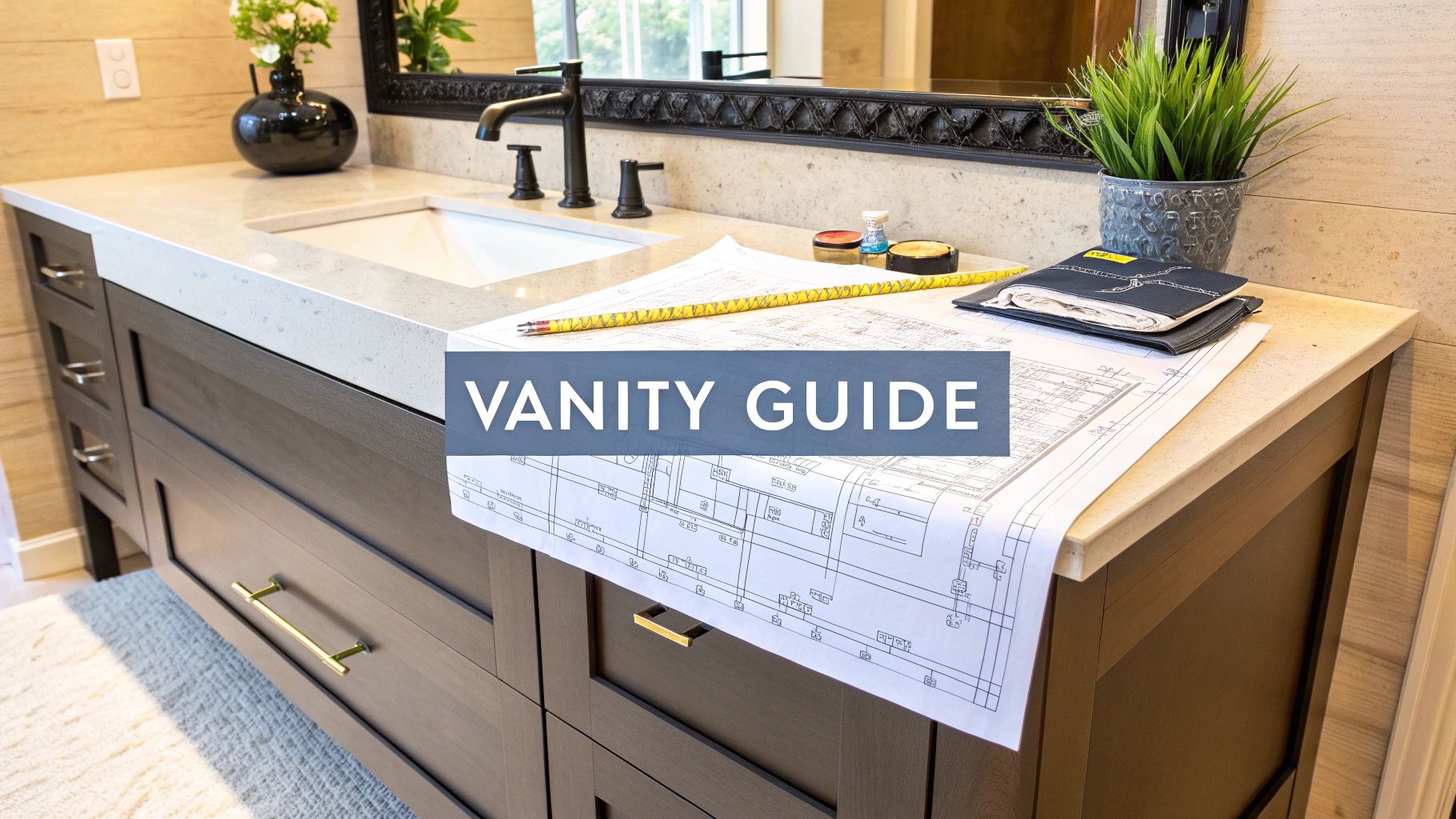
Choosing a bathroom vanity singapore homeowners will love is about balancing style, durability, and smart space planning. For most HDB flats and condos, the vanity isn't just a cabinet; it's the functional and visual anchor of the entire bathroom. Get it right, and the whole space works.
This guide provides actionable insights drawn from our experience designing and building vanities for Singaporean homes. We'll skip the fluff and focus on what truly matters: making a practical choice that stands up to our climate and lifestyle.
Your Guide to the Perfect Bathroom Vanity
Think of your bathroom vanity. It’s not just a sink with storage—it’s the centrepiece that sets the tone for the whole room. For those of us living in Singapore, picking the right one comes with unique challenges, from combating constant humidity to maximising every square centimetre.
This guide is your roadmap, helping you make a decision you’ll be happy with for years. We’ll walk you through measuring your space correctly, comparing climate-ready materials, and understanding the real costs involved.
What This Guide Covers
Our goal is to take the guesswork out of choosing a vanity. We’re sharing practical insights gathered from years of experience to help you get it right the first time. Here’s what we’ll dive into:
- Sizing for HDB & Condos: We'll show you how to measure your bathroom accurately to guarantee a perfect fit and avoid common pitfalls in compact layouts.
- Climate-Ready Materials: A straightforward breakdown of materials like solid plywood and sintered stone that won't warp or fail in Singapore's high humidity.
- Budgeting & Costs: A realistic look at what you can expect to spend, covering everything from off-the-shelf options to custom carpentry.
- Style & Functionality: How to select a design that not only complements your home’s look but also gives you the practical storage you actually need.
From our client projects, we've seen a clear trend: homeowners want compact, multifunctional units. Around 60% of our recent vanity projects have been modern designs with integrated, customised storage, proving that space efficiency is the top priority.
Ready to start? For a great overview, check out these expert tips on how to choose a bathroom vanity. It's a fantastic starting point for figuring out your specific needs.
Finding the Right Vanity Size for Your HDB or Condo
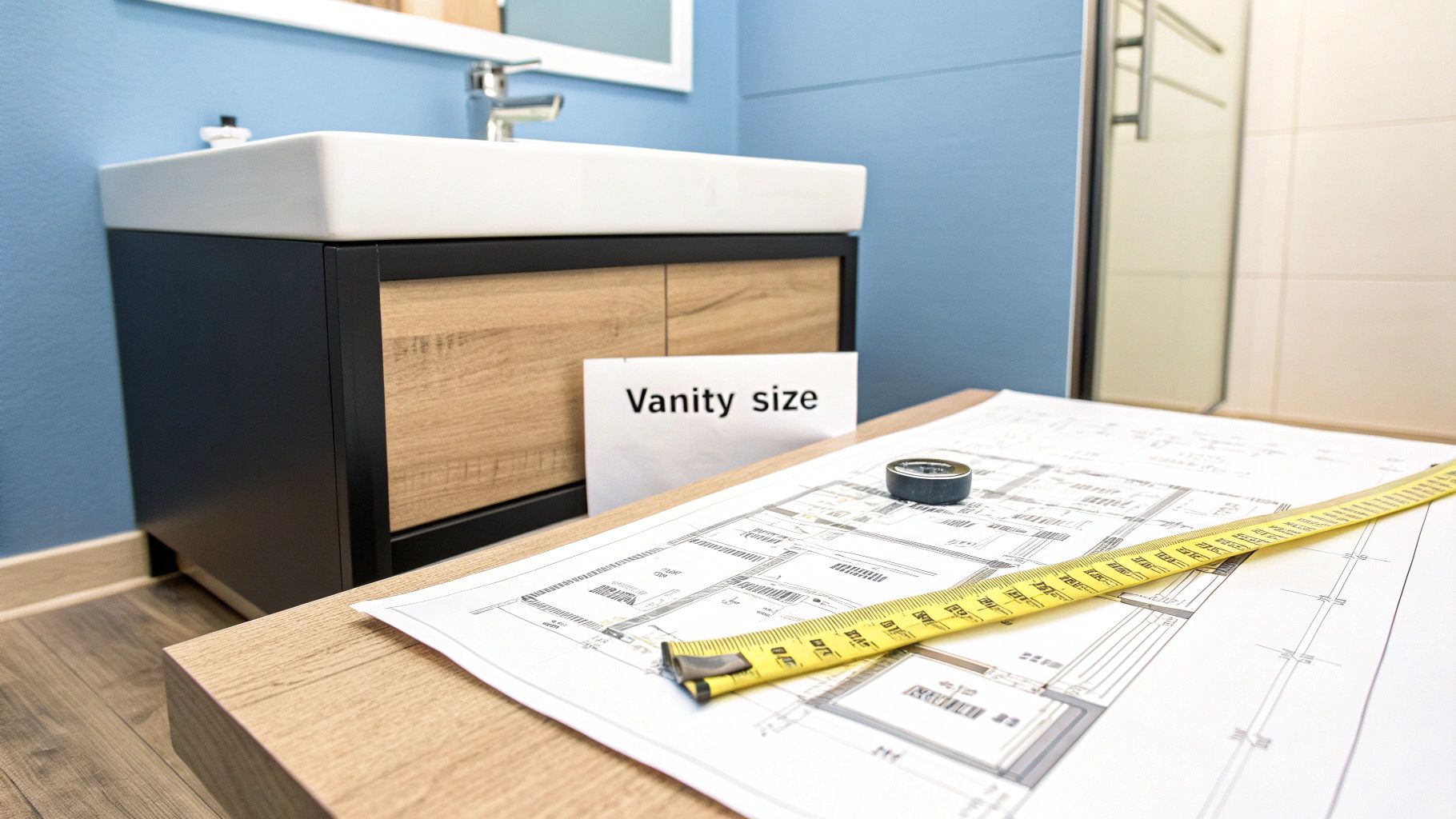
In a Singapore home, choosing a bathroom vanity is a game of millimetres. Getting the dimensions right is the single most important first step. A vanity that’s too bulky will make the room feel cramped; one that’s too small won't provide the necessary storage and will look out of place. The goal is to strike a balance between function and proportion, especially in typical HDB and condo layouts. To get it right, it helps to understand some effective space planning techniques.
Measuring for Width: Your Essential First Step
The width of your vanity has the biggest visual impact. Start by measuring the total wall space allocated for it. From our experience renovating countless local homes, a vanity width between 600mm to 800mm is the sweet spot for a typical HDB common bathroom. This size offers a good amount of counter space and storage without overwhelming the room.
Here are a few practical things to check when measuring for width:
- Door Swing: A classic mistake. Ensure your vanity won't block the bathroom door or shower screen from opening completely.
- Toilet Clearance: Leave at least 200mm of space between the side of the vanity and the toilet. It makes cleaning easier and the space feel less cramped.
- Wall Proximity: If the vanity is in a corner, measure from the corner itself, but remember to account for skirting boards that might push it out slightly.
For master bathrooms in newer BTOs or condos, you might have the luxury of going wider, perhaps from 900mm to 1200mm. But always prioritise clear walkways over a massive cabinet.
Depth and Walkway Clearance
If width impacts how the vanity looks, depth affects how you move around it. Standard vanity depth is typically between 450mm and 550mm, but in a narrow HDB bathroom, every centimetre counts.
A common mistake we see is a vanity that is too deep, creating a bottleneck. You need a comfortable walkway, which means having at least 760mm of clearance. If your space is tight, look for slimline vanities with a depth closer to 400mm. They still offer good storage while giving you back crucial floor space.
Actionable Tip: Use a cardboard box or masking tape on the floor to mark out the dimensions of the vanity you’re considering. Live with it for a day. It’s the best way to get a real feel for how it will impact your daily routine.
Single vs Double Sinks in Singaporean Homes
While a double vanity is a common dream, the reality of Singaporean homes often points towards a single sink. Given that most HDB and condo bathrooms are between 3 to 5 square metres, a single-sink configuration is the most practical choice, accounting for the vast majority of residential installations. Market data confirms this, with single-sink units making up nearly 68% of sales in the local bathroom vanity sector. It’s a choice driven by spatial constraints and functionality.
Recommended Vanity Dimensions for Singapore Homes
This table breaks down typical vanity sizes based on different Singaporean property types. Use it as a starting point to determine what will work best for your space.
| Property or Bathroom Type | Recommended Width | Recommended Depth | Key Consideration |
|---|---|---|---|
| HDB BTO Common Bathroom | 600mm - 800mm | 400mm - 500mm | Maximise storage while maintaining a clear walkway. |
| HDB Resale (Older Layouts) | 500mm - 750mm | 400mm - 480mm | Measure carefully around existing pipes and odd corners. |
| HDB BTO Master Bathroom | 800mm - 1200mm | 450mm - 550mm | Balance a larger vanity with comfortable movement. |
| Private Condominium (Standard) | 700mm - 1000mm | 450mm - 550mm | A wall-hung vanity can create an illusion of more space. |
Ultimately, the best vanity is one that fits your bathroom and your lifestyle perfectly, not just one that looks good in a showroom. Taking the time to measure properly will pay off tenfold.
Choosing Materials That Withstand Singapore's Climate
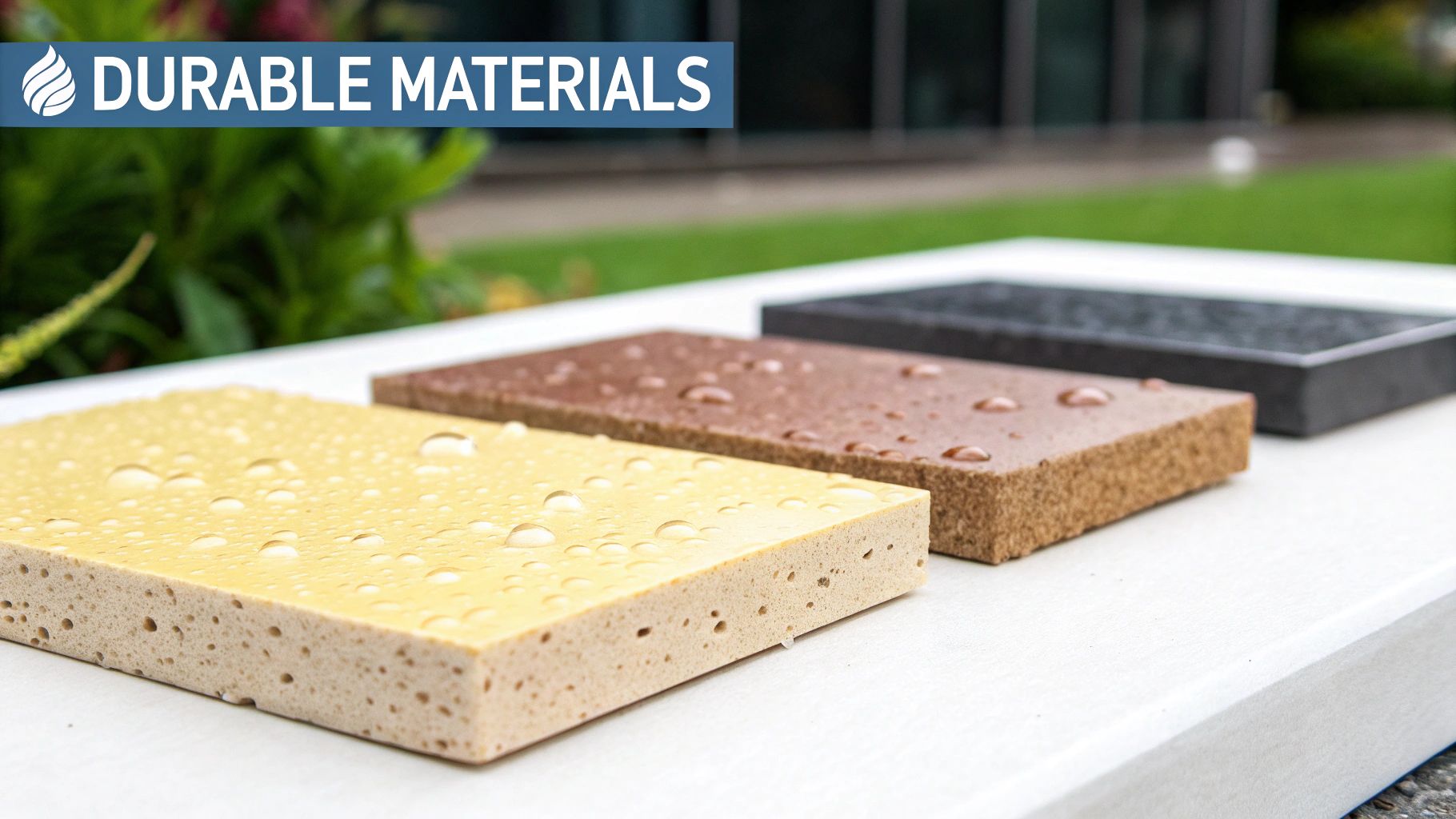
In Singapore, where humidity levels often exceed 80%, choosing the right materials for your bathroom vanity is a critical investment in durability. Make the wrong choice, and you could face warping, mould, and costly replacements. We’ve seen it all in our projects: peeling laminates and swollen cabinet doors. Material selection is a non-negotiable part of our design process. The goal is to build a beautiful bathroom vanity Singapore’s climate cannot defeat.
The Foundation: Your Vanity Cabinet
The cabinet (or carcass) is the structural heart of your vanity and the part most vulnerable to moisture. While there are a few options, the conversation almost always comes down to two materials: moisture-resistant MDF and solid plywood.
From years of hands-on experience, we almost exclusively recommend solid plywood for bathroom projects. Plywood is made from multiple thin layers of wood veneer glued together, with the grain of each layer alternating. This cross-graining gives it superior strength and high resistance to warping when exposed to moisture.
Moisture-resistant MDF is often positioned as a cheaper alternative. However, it's essentially wood fibres and resin pressed into a board. If the protective outer layer gets compromised—even by a tiny scratch—water can seep in and cause the board to swell like a sponge. That damage is irreversible.
Actionable Tip: For a cabinet built to last, pair a solid plywood carcass with a high-quality laminate finish. This combination creates a nearly impenetrable barrier against moisture and is the gold standard for humid environments.
Choosing a Hardworking Countertop
Your vanity countertop faces daily assaults from water, soap, and cosmetics. It needs to be tough, non-porous, and easy to maintain. Here’s a breakdown of the top contenders we recommend for Singaporean homes.
1. Quartz
An engineered stone made from about 90-95% ground natural quartz mixed with polymer resins, quartz is incredibly durable and non-porous. Unlike natural stone like marble, it never needs sealing. It resists stains from makeup and toothpaste, making it a practical, family-friendly option that complements modern and minimalist styles.
2. Sintered Stone
Sintered stone (known by brands like Dekton or Neolith) takes durability to the next level. It’s made by fusing natural minerals under extreme heat and pressure, creating a surface that is virtually indestructible—resistant to scratches, heat, and UV rays. For a master bathroom that sees heavy daily use, sintered stone is an outstanding, though more premium, investment.
3. Cultured Marble
For the classic look of marble without the high maintenance and cost, cultured marble is a solid choice. It's made from a mix of marble dust and resins, protected by a tough gel coat. This top layer makes it non-porous and stain-resistant. The only downside is that the gel coat can be scratched by abrasive cleaners, so it requires gentler care.
Material Comparison for a Singapore Bathroom
To make things easier, here’s a quick comparison to help you weigh your options based on what really matters in our climate.
| Material | Durability & Humidity Resistance | Stain Resistance | Maintenance Level |
|---|---|---|---|
| Quartz | Excellent; non-porous and strong. | Very High; resists common bathroom spills. | Low; just soap and water. No sealing needed. |
| Sintered Stone | Exceptional; heat, scratch, and UV resistant. | Extremely High; almost impervious to staining. | Low; incredibly easy to clean and maintain. |
| Cultured Marble | Good; gel coat protects from moisture. | High; non-porous surface resists stains. | Low to Medium; avoid abrasive cleaners. |
By opting for proven, moisture-resistant solutions like a solid plywood cabinet and a non-porous quartz or sintered stone top, you’re ensuring your bathroom vanity will remain a functional and beautiful centrepiece for years to come.
A Realistic Cost Breakdown for Your Bathroom Vanity
Let's talk numbers. A clear budget is critical for making smart decisions and preventing surprises. The total cost of a bathroom vanity in Singapore isn't a single price; it’s the sum of its parts: the cabinet, countertop, basin, tap, and installation. Understanding how these elements contribute to the final cost helps you decide where to save and where to invest.
The Core Components of Your Vanity Cost
To budget effectively, break down the vanity into its individual components. This helps track where every dollar is going.
- Vanity Cabinet: The main structure. Cost is driven by whether you choose a ready-made unit or custom carpentry. Material choice (e.g., MDF vs. solid plywood) is the other major factor.
- Countertop Material: Materials like quartz and sintered stone are priced per foot run (pfr), so a larger vanity will cost more.
- Basin and Tap: Fixtures can range from a basic set for a few hundred dollars to over a thousand for designer brands.
- Labour and Installation: This includes fitting the cabinet, essential plumbing work, and often haulage fees to dispose of the old unit.
A simple modular cabinet might seem like a bargain, but once paired with a premium countertop and designer fixtures, the final bill will be very different.
Budget Tiers: What to Expect in Singapore
To give you a clearer picture, here are three realistic budget tiers based on a standard 600mm wide vanity—a common size for HDB bathrooms.
Actionable Tip: Don't just budget for the vanity unit itself. Always factor in an additional 20-30% for fixtures, installation, and unforeseen costs like minor plumbing adjustments. This buffer is your best defence against budget blowouts.
The table below provides a sense of how different choices impact the total cost.
Sample Budget for Bathroom Vanities in Singapore
Here’s a look at estimated costs for different vanity setups, breaking down the cabinet, countertop, fixtures, and installation.
| Budget Tier | Vanity Cabinet (600mm) | Countertop | Basin and Tap | Estimated Total Cost (Installed) |
|---|---|---|---|---|
| Entry-Level | Modular MDF/Particleboard (S$200 - S$400) | Included Ceramic/Cultured Marble | Basic Set (S$150 - S$300) | S$450 - S$850 |
| Mid-Range | Custom Solid Plywood (S$700 - S$1,100) | Standard Quartz (S$250 - S$450) | Mid-Tier Brands (S$300 - S$600) | S$1,400 - S$2,500 |
| Premium | Custom Solid Plywood (S$900 - S$1,400) | Premium Quartz/Sintered Stone (S$500 - S$900) | Designer Fixtures (S$700+) | S$2,800+ |
Moving from a basic modular unit to a custom mid-range setup is a significant jump, but it gives you far more control over materials, durability, and function.
Uncovering Potential Hidden Costs
A good plan accounts for the unexpected. When renovating, a few extra costs can appear if you’re not prepared. One of the most common is plumbing alteration. If your new sink's piping doesn't align with the existing water inlet and outlet, your plumber will need to make adjustments, adding to the labour bill. Another is haulage and disposal fees for your old vanity. Lastly, if your walls or floors aren't level, extra work may be needed to install the new vanity securely. Factoring in a small contingency helps you build a realistic budget.
Custom Carpentry Versus Off-the-Shelf Vanities
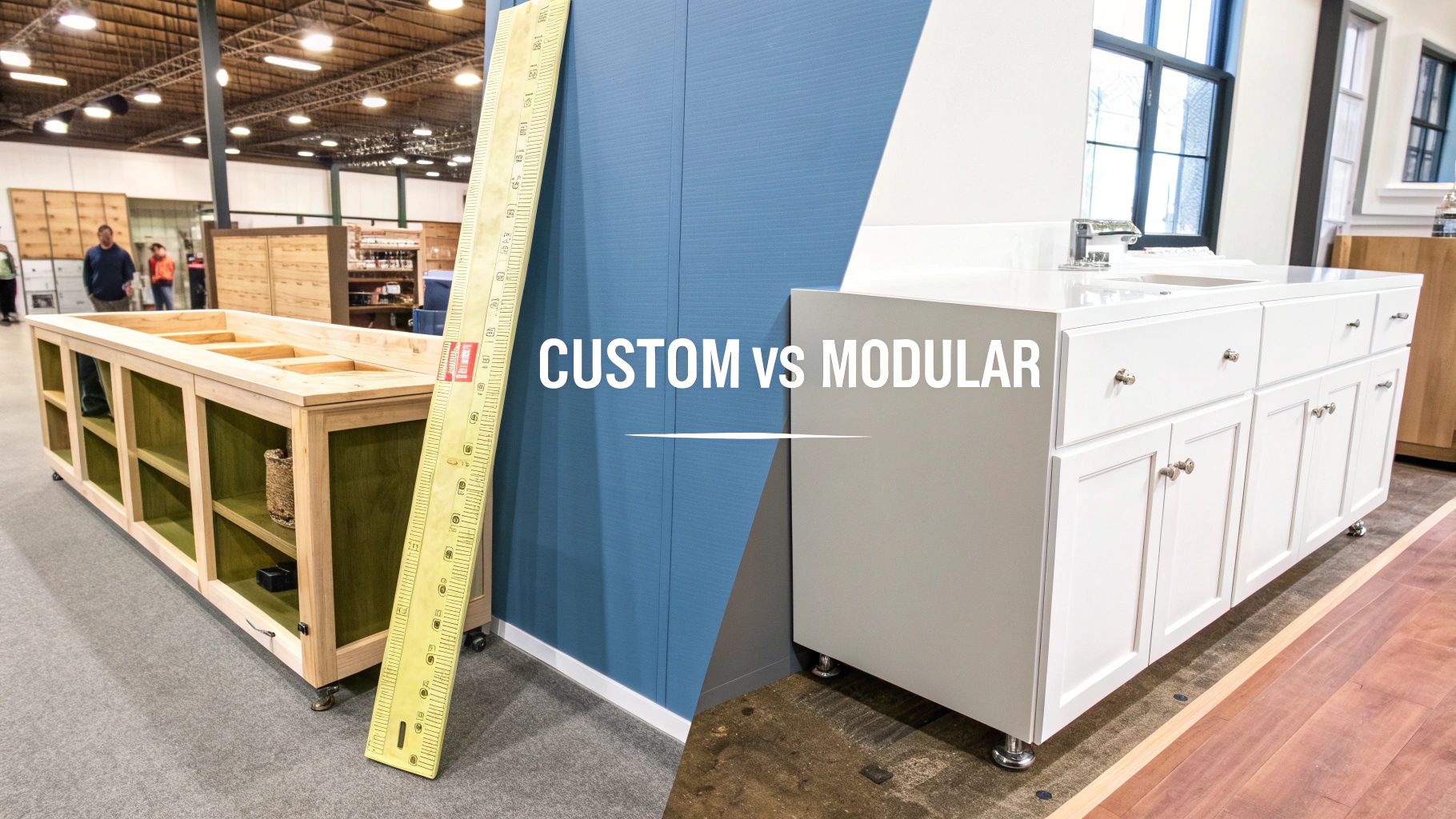
This is one of the biggest decisions for your bathroom renovation: a ready-made vanity or a custom-built one? It’s a debate between convenience and customisation, and the right answer depends on your priorities, space, and budget.
Off-the-shelf vanities offer instant gratification. You can find a design at a big-box store and have it delivered quickly, which is great for tight schedules. However, this convenience comes with trade-offs. You're limited to standard sizes, materials, and storage configurations. This might work for a standard bathroom, but many HDB and condo bathrooms have quirky layouts where a standard unit just won't fit well.
The Appeal of Off-the-Shelf Solutions
The main draw for modular vanities is simplicity. During a stressful renovation, anything that simplifies decisions is a relief.
Here are the pros:
- Lower Upfront Cost: Mass production keeps prices competitive, making them a budget-friendly choice.
- Immediate Availability: No waiting for fabrication means your renovation moves forward without delay.
- Simplified Choice: A limited selection helps avoid decision paralysis.
These units are suitable for rental properties or projects where speed and low cost are top priorities.
The Unmatched Value of Custom Carpentry
Custom carpentry isn't just about building a cabinet; it’s about creating a solution that fits your bathroom and lifestyle perfectly. It’s about solving problems a standard unit cannot address.
Actionable Example: We recently worked on a BTO flat with a structural pillar in the master bathroom, making it impossible to fit any standard vanity. Our solution was a custom L-shaped vanity that wrapped neatly around the pillar. This hid the awkward column and created separate "his-and-hers" storage zones, using every inch of space. An off-the-shelf unit would have left a large, useless gap.
Why Bespoke Bathroom Vanities are a Singapore Homeowner's Best Friend
Opting for custom carpentry for your bathroom vanity in Singapore makes practical sense, especially given our housing context.
- A Perfect Fit, Every Time: We measure your space down to the millimetre. This ensures your vanity fits flawlessly, with no awkward gaps or wasted corners—essential for maximising a compact HDB bathroom.
- Total Material Control: You choose everything, from the moisture-resistant solid plywood for the frame to the exact slab of quartz for the countertop. This lets you build a vanity tough enough for our humid climate.
- Storage That Actually Works for You: Need deep drawers for tall shampoo bottles? Or shallow dividers for makeup? We design the storage around your items, which means less clutter and a smoother morning routine.
This preference for detail aligns with market trends. With a growing focus on sustainability, customisation allows homeowners to choose eco-friendly materials. Over 40% of new vanity units in Singapore are now marketed with sustainable features. To dive deeper, you can explore this bathroom vanities market report.
Ultimately, a custom vanity is an investment in quality, functionality, and a home that truly works for you.
Your Top Bathroom Vanity Questions, Answered
Planning a bathroom renovation brings up many questions. Over the years, we've helped countless Singapore homeowners and noticed the same practical concerns arise time and again. Here are our answers to the most common queries about designing and installing the perfect bathroom vanity Singapore homes deserve.
How Long Does a Custom Vanity Installation Take?
This is a key question as it impacts your renovation timeline. A well-managed custom vanity project typically takes 4 to 6 weeks from our first conversation to final installation.
Here’s a breakdown of the process:
- Design & Finalisation (1 Week): We collaborate with you, take detailed measurements, help select materials, and finalise 3D drawings.
- Fabrication (3-4 Weeks): Once approved, our carpenters craft the vanity cabinet and prepare the countertop in our workshop.
- On-site Installation (1-2 Days): Our team fits the finished vanity into your space, and we coordinate with plumbers to connect the basin and tap seamlessly.
This structured approach guarantees a perfect fit and high-quality craftsmanship.
What Is the Best Waterproof Material for a Vanity Cabinet?
In Singapore’s humidity, the right material is essential. Our top recommendation for vanity cabinets is always high-quality, water-resistant solid plywood. Its layered construction provides incredible structural integrity, preventing it from warping or swelling.
While some contractors suggest moisture-resistant MDF to save costs, we view this as a risky compromise. A single scratch can let moisture in, leading to irreversible bloating. When solid plywood is sealed with a high-pressure laminate (HPL), it creates a tough, waterproof barrier that stands up to mould and daily use for years.
Can I Install a Wall-Hung Vanity in My HDB Bathroom?
Yes, absolutely! Wall-hung, or "floating," vanities are a fantastic and popular choice for HDB bathrooms. Lifting the cabinet off the floor creates an illusion of space, making even a compact bathroom feel larger. Plus, it makes cleaning the floor underneath much easier. The single most important factor is ensuring it’s mounted to a structural, solid wall—not a hollow partition. This is non-negotiable for a safe installation and one of the first things we check during a site visit.
Do I Need an HDB Permit to Replace My Vanity?
For a simple, straightforward vanity replacement, you will not need an HDB permit. If you are just swapping an old unit for a new one without altering the plumbing layout or hacking any walls, HDB considers this minor work.
However, a permit is necessary for more ambitious plans, such as moving water pipes, reconfiguring the bathroom layout, or doing major tiling work that could affect the floor's waterproofing. It's always best to work with a team experienced with these regulations to ensure a smooth process.
Ready to create a bathroom vanity that’s perfectly suited to your Singapore home? The team at KIVO combines decades of design experience with expert craftsmanship to bring your vision to life. Let's start the conversation about your space today.
Explore our custom interior design services at https://kivo.com.sg.