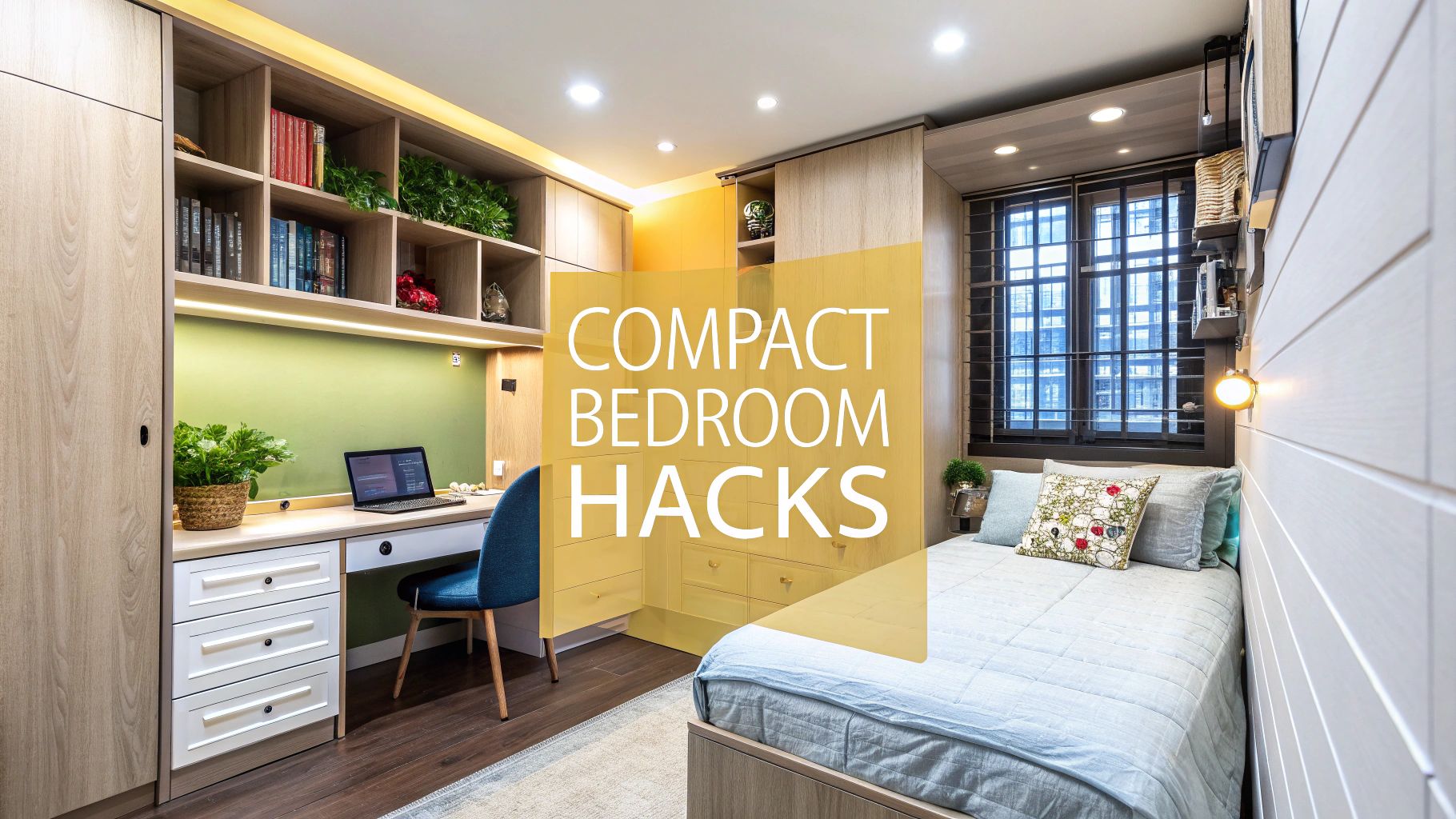
A small bedroom isn't a limitation; it's an opportunity for smart, intentional design. In Singapore, where space is a premium, maximising every square metre is a common challenge. Homeowners often believe a compact room means sacrificing style for function, but the true goal is creating a space that is both a serene sanctuary and a highly functional area for rest, without feeling cluttered.
From our experience with numerous residential projects, the primary concerns for small bedrooms consistently revolve around three key areas: insufficient storage, a cramped layout, and poor lighting. This guide moves beyond generic advice to provide eight practical, actionable bedroom design ideas for small rooms that we have successfully implemented for our clients. Each strategy is organised to help you diagnose a specific problem and implement a high-value solution.
From harnessing vertical space to implementing clever colour palettes, these concepts are designed to transform your small bedroom from confined to curated. We will delve into specific techniques for decluttering, the strategic use of multi-functional pieces, and the impact of light and reflection. To truly maximize your space, exploring innovative game-changing small bedroom furniture ideas can provide practical inspiration for stylish and functional layouts. Our goal is to equip you with professional insights and real-world examples, ensuring you can create a sophisticated and efficient bedroom, no matter its size.
1. Minimalist Design
Minimalism is more than an aesthetic; it's a strategic approach that maximises the sense of space by focusing on the essential. This philosophy revolves around "less is more," creating a serene and uncluttered environment by paring down to only what is necessary and loved. For compact bedrooms, this isn't just a style choice—it’s a powerful tool for enhancing functionality and visual harmony, making it one of the most effective bedroom design ideas for small rooms.
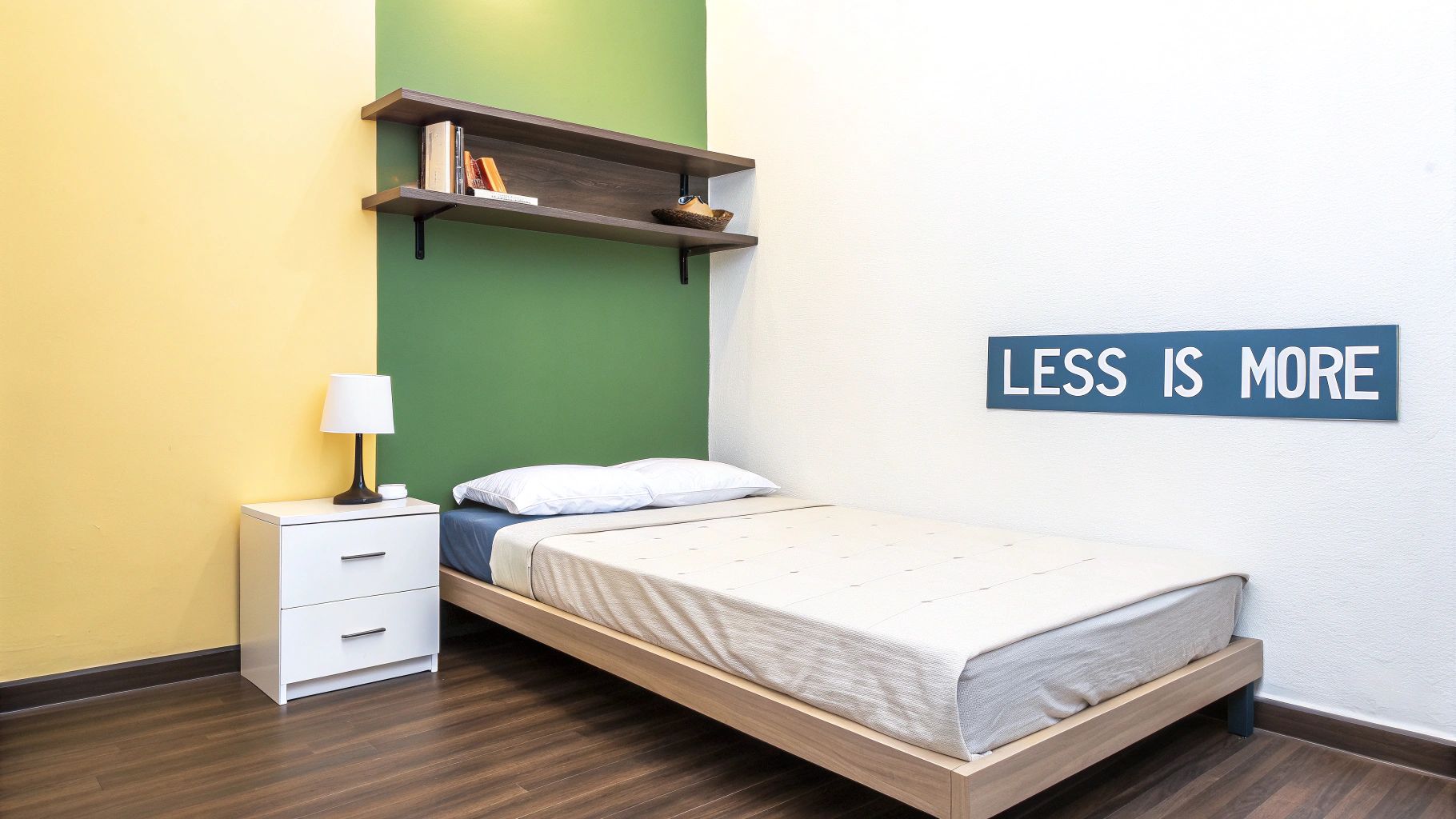
The core benefit of minimalism in a small room is its ability to reduce visual noise. A cluttered space often feels smaller and more chaotic, which can negatively impact rest. By embracing clean lines, a restrained colour palette, and purposeful placement, you create an atmosphere of calm. This approach draws inspiration from Japanese Zen philosophy and Scandinavian design, both of which prioritise simplicity, natural materials, and functional beauty.
Implementation and Actionable Tips
Transitioning to a minimalist bedroom requires a deliberate decluttering process.
- Radical Decluttering: Begin by removing everything that isn't absolutely essential. A good starting point is to aim for a 50% reduction. Once done, reassess what remains and ask if each item serves a functional purpose or brings you joy.
- Invest in Quality over Quantity: Instead of multiple small, inexpensive pieces, opt for a few high-quality, well-designed items. For example, a single, beautifully crafted bed frame with a sleek, floating nightstand makes a stronger statement than a collection of mismatched furniture.
- Controlled Colour Palette: Stick to a neutral base of whites, beiges, or soft greys to create an airy feel. Introduce one accent colour through textiles, like a cushion or a throw, to add depth without overwhelming the space.
- Smart Storage Solutions: Keep surfaces clear. Utilise a single wall-mounted shelf for a book or a decorative item, and choose a bed frame with integrated storage drawers to hide clutter. A nightstand should hold only a lamp and perhaps a phone charger.
By adopting these principles, you can transform a cramped bedroom into a spacious-feeling sanctuary. This philosophy is perfect for homeowners who value a calm, organised, and highly functional living environment.
2. Vertical Storage Solutions
When floor space is limited, the most effective strategy is to look up. Vertical storage utilises walls to their full height, drawing the eye upward and creating an illusion of spaciousness. This approach transforms unused wall areas into highly functional zones for books, decor, and clothing, eliminating the need for bulky, floor-hogging furniture. For those grappling with limited square footage, it is one of the most impactful bedroom design ideas for small rooms.
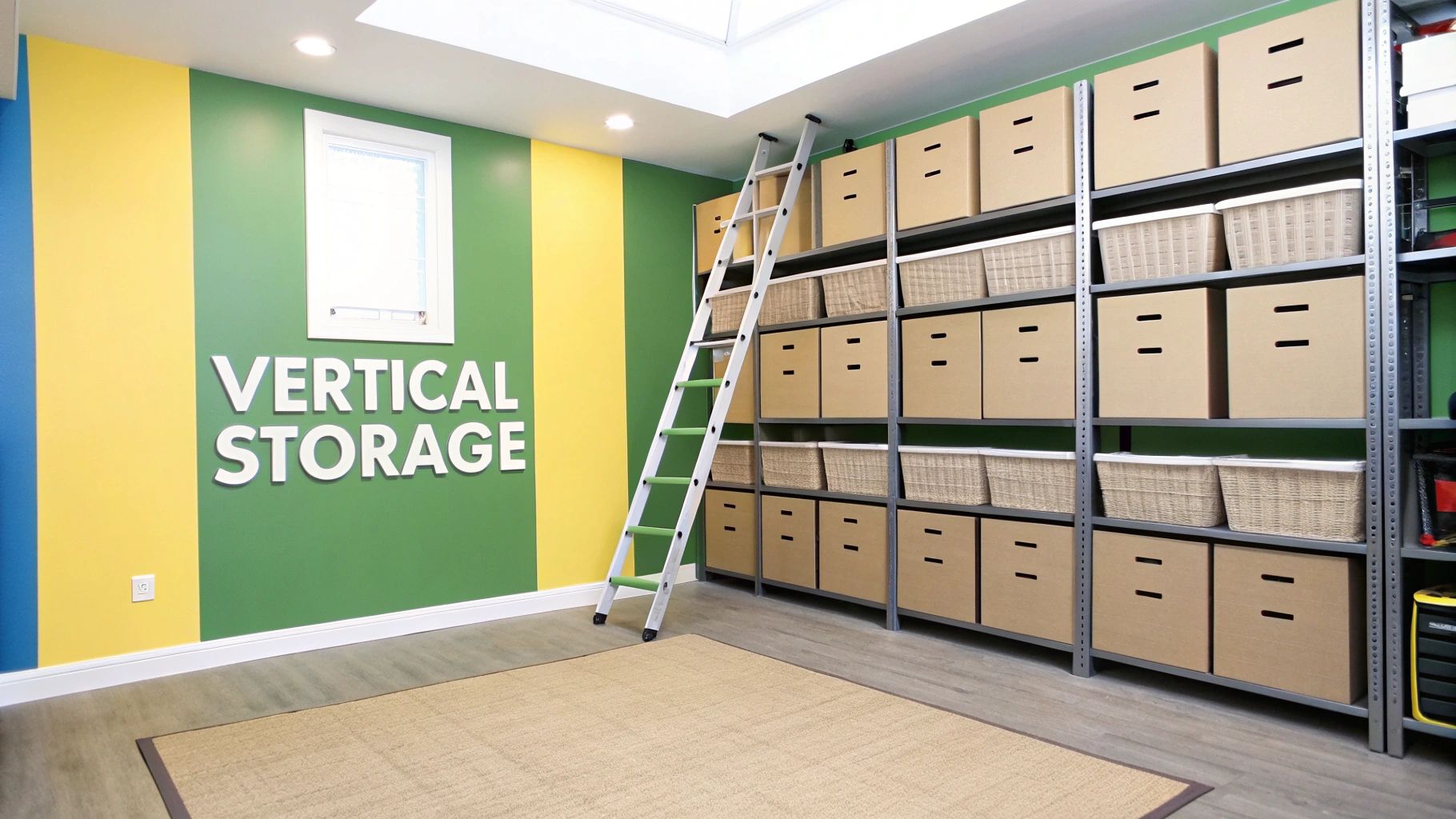
The primary advantage of going vertical is its ability to declutter the floor and create clear pathways, making the room feel more open. Instead of a wide, low dresser that consumes valuable floor space, a tall, slender bookcase or a series of wall-mounted shelves can hold just as much, if not more. This method is particularly useful in Singapore’s compact apartments and HDB flats. Exploring strategies for organising clothes without a dresser, utilizing vertical solutions is crucial for maximising space.
Implementation and Actionable Tips
Successfully integrating vertical storage requires careful planning to ensure both function and aesthetic appeal.
- Go Floor-to-Ceiling: Utilise the full height of the room with custom built-in shelving. This not only provides maximum storage but also creates a sense of grandeur, making the ceiling feel higher. A practical example is building shelving around a doorway or above the bed's headboard.
- Mix Open and Closed Storage: Combine open shelves for displaying curated items like books and plants with closed cabinets or baskets to conceal clutter. This creates a balanced look that is both visually interesting and practical.
- Anchor for Safety: Always secure tall or heavy shelving units to the wall studs. This is a critical safety measure to prevent tipping, especially in homes with children.
- Create Visual Order: Organise items by category or colour to maintain a clean appearance. Use shelf dividers to keep stacks of clothing neat, and label storage boxes for easy identification of their contents.
This strategy is ideal for those who need to store a significant number of items without sacrificing a sense of spaciousness. By building upward, you can craft a bedroom that is both highly organised and beautifully designed.
3. Multi-Functional Furniture
In a compact bedroom, multi-functional furniture is a cornerstone of intelligent design. This approach involves selecting pieces that serve two or more purposes, reducing the furniture footprint while maximising utility. Instead of separate items for sleeping, working, and storage, a single, thoughtfully engineered piece can fulfil all these needs. This strategy is about sophisticated efficiency, making it a powerful solution among bedroom design ideas for small rooms.
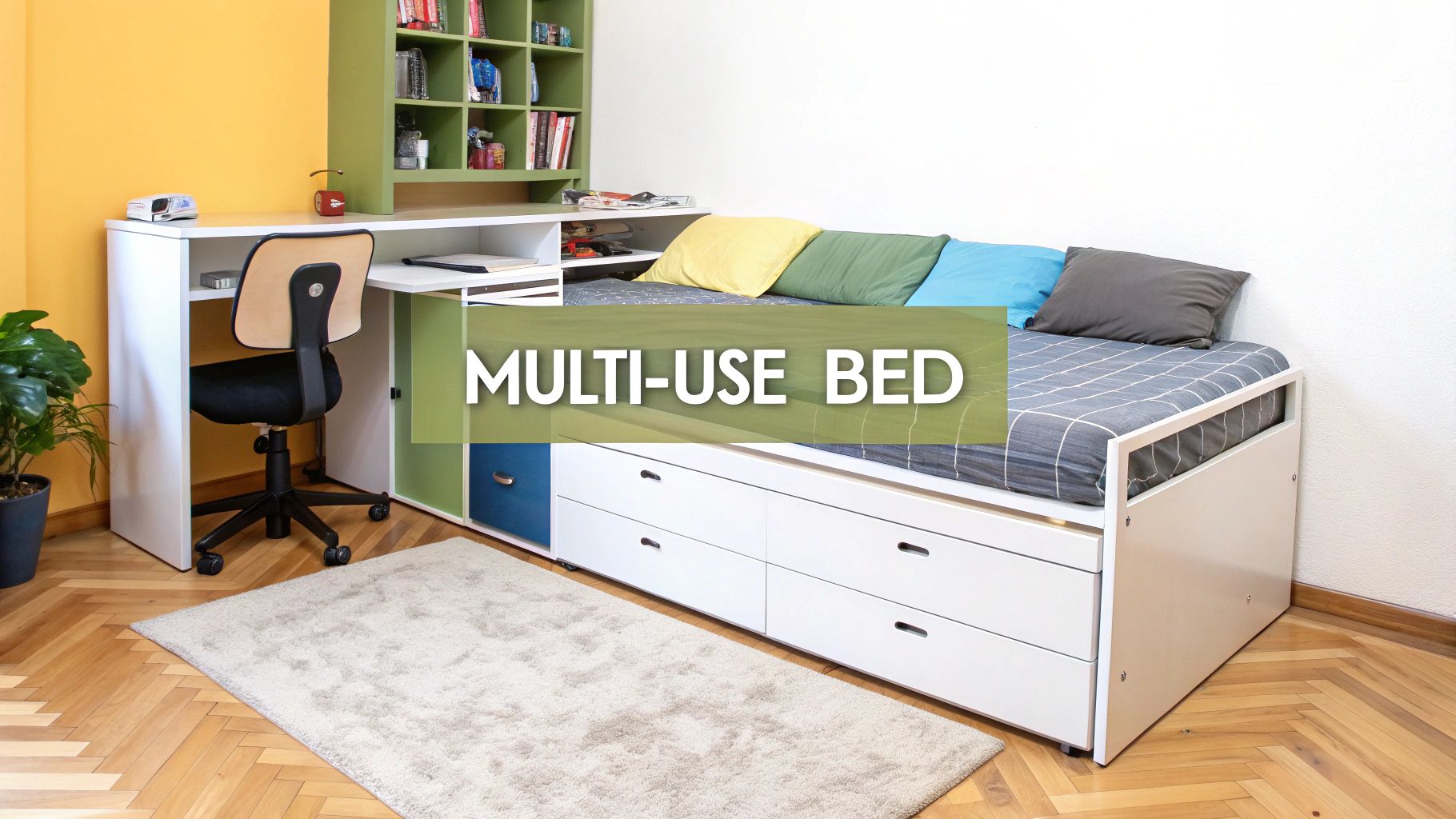
The primary advantage of multi-functional furniture is its ability to reclaim floor space. A bed that folds away to reveal a workspace, or an ottoman at the foot of the bed that opens to store linens, allows the room to adapt to different needs throughout the day. This concept has evolved into high-end, bespoke solutions that integrate seamlessly into modern interiors, offering both practicality and refined aesthetics.
Implementation and Actionable Tips
Integrating multi-functional pieces requires careful planning and a focus on quality.
- Prioritise High-Impact Pieces: Identify the largest items in your room—typically the bed and wardrobe—and seek multi-functional alternatives. A platform bed with built-in drawers or a Murphy bed that converts into a desk can instantly free up significant space.
- Measure with Precision: These pieces are often complex. Measure not only the furniture's dimensions but also the clearance needed for its mechanisms to operate fully. Ensure there is enough room to fold down the bed or pull out a desk without obstruction.
- Invest in Quality Mechanisms: The moving parts are critical. Look for smooth, durable, and easy-to-operate mechanisms, especially for items used daily like a fold-down bed. High-quality hardware ensures longevity and safe operation.
- Choose Versatile Aesthetics: Opt for pieces in neutral colours and timeless designs. This ensures the furniture can adapt to future style updates and doesn't visually overwhelm the small space. A sleek, integrated look is key.
This strategy is ideal for homeowners who need their bedroom to serve multiple roles, such as a guest room or home office. By choosing smart, adaptable furniture, you can unlock the full potential of your room.
4. Light and Mirror Placement
Strategic light and mirror placement is a fundamental design technique that alters the perception of space. It uses reflection and illumination to create an illusion of depth and brightness, making a compact room feel significantly larger and more inviting. This method manipulates how light interacts with surfaces, effectively doubling visual square footage and eliminating shadows that can make a space feel cramped. For anyone seeking impactful bedroom design ideas for small rooms, this is a classic yet highly effective approach.
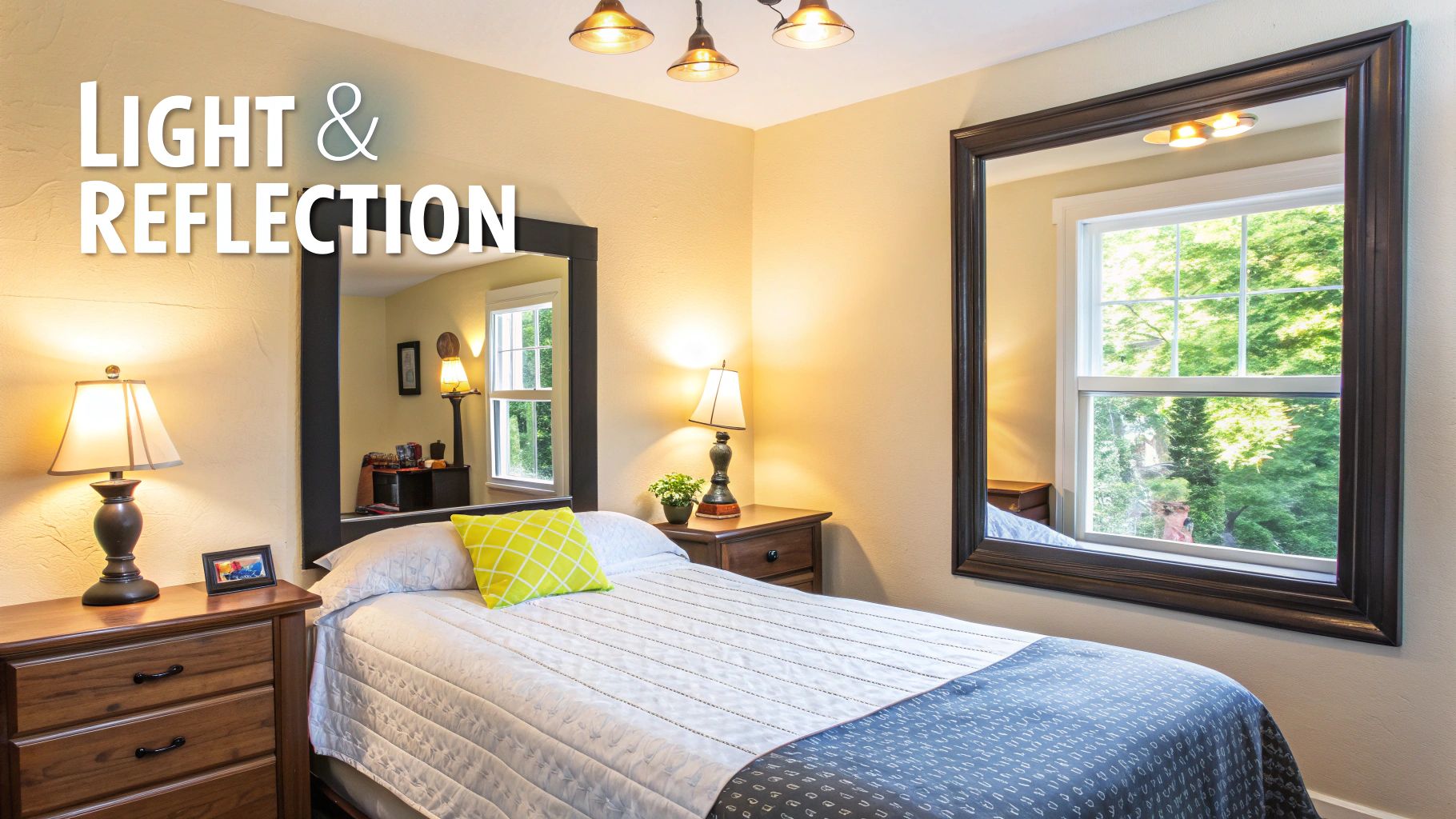
The power of this technique lies in its ability to amplify existing light sources. A well-placed mirror can capture daylight from a window and bounce it into darker corners, enhancing the overall ambience. This concept is masterfully employed in luxury hotel rooms and compact urban apartments where maximising every inch of space is critical. It draws inspiration from both Scandinavian design, which prioritises natural light, and modern interiors that use reflective surfaces to maintain an open feel.
Implementation and Actionable Tips
Successfully implementing this strategy requires careful consideration of placement and scale.
- Reflect Natural Light: Position a large, full-length mirror directly opposite or adjacent to a window. This will not only reflect the light but also the view, creating a sense of openness and bringing the outdoors in.
- Layer Your Lighting: Don't rely on a single ceiling light. Create a layered scheme with ambient (ceiling fixture), task (bedside lamps), and accent (wall sconces) lighting. This provides functional illumination while adding warmth and dimension.
- Choose Warmth and Control: Install dimmer switches to adjust light intensity for different moods. We recommend warm light bulbs (around 2700K) to create a cosy, relaxing atmosphere conducive to rest.
- Go Big with Mirrors: Instead of a small decorative mirror, opt for an oversized floor mirror or consider a wardrobe with mirrored doors. The larger the reflective surface, the greater its impact on the perception of space. A popular placement is along one wall to create the illusion of a wider room.
This approach is ideal for homeowners with limited natural light or those who want to add a touch of glamour and sophistication. By strategically using light and mirrors, you can create a bright, airy, and visually expansive sanctuary.
5. Loft and Platform Beds
Going vertical with the bed is an incredibly effective strategy for reclaiming valuable floor space. Loft and platform beds are architectural solutions that elevate the sleeping area, unlocking a new layer of functionality underneath. This vertical approach fundamentally redefines the room's layout, transforming a single-purpose space into a multi-functional zone, making it a cornerstone of smart bedroom design ideas for small rooms.
The primary advantage of a loft or platform bed is its ability to double the usable area within the same footprint. By lifting the bed, you create space for a study desk, a cosy reading nook, or even a walk-in wardrobe system. This design is particularly popular in studio apartments, children's bedrooms, and urban homes where every square metre counts. Inspired by the efficiency of tiny home innovations, this concept has evolved into a sophisticated solution for modern, space-conscious living.
Implementation and Actionable Tips
Integrating a loft or platform bed requires careful planning to ensure both safety and comfort.
- Customise for Function: Define the purpose of the space below before finalising the design. Popular uses include a home office setup, a compact seating area with a small sofa, or extensive built-in storage cabinets and drawers.
- Prioritise Safety and Accessibility: Ensure the structure is professionally built and secured. Invest in a sturdy ladder with wide, comfortable rungs and consider adding a handrail for safety. The bed itself must feature a robust safety rail.
- Mind the Headroom: A critical measurement is the clearance above the mattress. Aim for a minimum of 90cm (approximately 36 inches) between the mattress and the ceiling to allow for comfortable sitting up without feeling cramped.
- Integrate Lighting and Ventilation: The area underneath the loft can feel dark. Incorporate integrated LED strip lighting or wall-mounted sconces to create a bright, usable zone. Also, ensure the mattress has adequate ventilation; a slatted base is superior to a solid board.
By adopting a vertical strategy, you can dramatically increase the functionality of your bedroom. This approach is ideal for homeowners who need their room to serve multiple purposes without sacrificing style or comfort.
6. Colour Psychology and Light Palettes
The strategic use of colour is one of the most powerful and cost-effective tools for manipulating the perception of space. Light palettes go beyond mere aesthetics; they directly influence how large and airy a room feels. This approach leverages the way our eyes perceive certain hues, using light and cool tones to make walls visually recede, thereby creating an illusion of depth. Mastering this technique is a foundational element of effective bedroom design ideas for small rooms.
The primary benefit of a light colour palette in a compact bedroom is its ability to maximise light reflection. Darker shades absorb light, making a space feel enclosed, while pale shades like soft whites, blues, and greys bounce light around the room. This creates a brighter, more expansive environment. This principle is heavily utilised in Scandinavian design, which prizes bright, light-filled interiors. By choosing the right colours, you can transform a cramped room into a serene retreat.
Implementation and Actionable Tips
Applying colour theory effectively requires a plan that considers the room's fixed elements and light sources.
- Follow the 60-30-10 Rule: To create a balanced scheme, allocate 60% of your room to a dominant, light colour (walls), 30% to a secondary colour (bedding, curtains), and 10% to an accent colour (cushions, art). This prevents the space from feeling flat.
- Raise the Ceiling Visually: Paint your ceiling a crisp, pure white, or a shade that is slightly lighter than your walls. This simple trick draws the eye upward, creating the illusion of higher ceilings.
- Test Colours in Your Space: Never commit to a colour based on a small paint chip. Purchase sample pots and paint large swatches (at least 1m x 1m) on different walls to see how the colour changes with your room's specific lighting throughout the day.
- Incorporate Warmth with Texture: A common concern with light palettes is that they can feel cold. Counteract this by introducing warmth through materials like wooden furniture, plush wool rugs, linen bedding, or a knitted throw to add depth and cosiness.
- Choose the Right Finish: A matte or eggshell finish is ideal for walls in small bedrooms as it diffuses light and helps to hide minor surface imperfections.
This approach is perfect for homeowners who want to create a bright, calm, and visually larger sanctuary. If you are struggling to find the perfect palette, we can help you select a bespoke colour scheme that enhances your bedroom.
7. Zone Division and Room Partitioning
In a small bedroom that must serve multiple functions, creating distinct zones is a sophisticated strategy to enhance organisation. Zone division involves visually and functionally separating a room into areas for sleeping, working, or dressing without constructing permanent walls. This technique cleverly uses furniture, lighting, and partitions to create a sense of order, preventing the space from feeling chaotic. For multifunctional spaces, this is one of the most transformative bedroom design ideas for small rooms.
The primary advantage of zoning is that it brings clarity to a compact floor plan. By dedicating specific areas to different activities, you mentally separate work from rest, which is crucial for relaxation and productivity. This approach is heavily influenced by the needs of modern urban living, particularly in studio apartments and compact HDB flats where a single room must wear many hats. It draws inspiration from Japanese interior design, which masterfully uses elements like shoji screens to create flexible divisions.
Implementation and Actionable Tips
Partitioning a small bedroom requires a strategic approach that balances separation with openness.
- Use Lightweight Partitions: Opt for non-permanent dividers like elegant curtains, folding screens, or open-backed shelving units. A tall, open bookshelf can create a strong visual boundary for a home office nook while still providing storage and allowing light to pass through.
- Define Zones with Rugs: Place a distinct area rug under your bed to anchor the sleeping zone. A different, smaller rug can then define a dressing area or a reading corner, creating clear visual separation at floor level.
- Strategic Furniture Placement: Arrange furniture to create natural divisions. For example, positioning a desk facing a wall at the foot of the bed or placing an armchair in a corner can effectively establish a separate functional zone.
- Vary Your Lighting: Implement a layered lighting scheme. Use soft, warm ambient light in the sleeping area and a focused task light like a desk lamp in the work zone. This helps to set a different mood for each section.
By carefully planning these divisions, you can create a highly efficient, multi-purpose bedroom that feels organised and intentionally designed. This is ideal for homeowners who need their bedroom to be more than just a place to sleep.
8. Decluttering and Smart Storage Systems
Effective storage is a systematic philosophy that combines intentional decluttering with intelligent organisation. This dual approach transforms a small bedroom by first removing unnecessary items and then implementing systems that make the most of every square centimetre. For rooms where space is at a premium, this strategy is fundamental, creating a functional, serene, and visually larger environment, making it one of the most impactful bedroom design ideas for small rooms.
The primary advantage of this method is the immediate reduction of physical and visual clutter. A well-organised space feels calmer and more expansive, promoting restful sleep. By establishing designated zones and systems, you eliminate the chaos of misplaced items. This approach draws inspiration from organisational experts like Marie Kondo, who have popularised the idea that a tidy home contributes directly to a clearer mind.
Implementation and Actionable Tips
A successful transformation hinges on a methodical decluttering process followed by the implementation of smart, sustainable storage solutions.
- Implement Intentional Decluttering: Start with a systematic purge, addressing items by category (e.g., clothes, books). Keep only what serves a purpose or brings you joy. The goal is to curate your possessions, not just hide them.
- Utilise Vertical and Hidden Space: Think beyond the floor. Use under-bed containers with wheels for seasonal clothing, install closet organisers with double-hanging rods, and place labelled storage boxes on high shelves. Vertical drawer dividers can double the usable space in your dressers.
- Create Cohesive Systems: Group similar items together and store them in clearly labelled containers. This creates a visual logic that makes finding things effortless. Consider colour-coordinating items to enhance visual appeal and simplify organisation.
- Adopt Sustainable Habits: To maintain order, implement the 'one in, one out' rule for new purchases. Schedule a quick quarterly review of your storage to reassess what you own and adjust systems as your needs change.
By combining disciplined decluttering with strategic storage, you can achieve a level of organisation that makes your small bedroom feel both spacious and effortlessly functional. This approach is perfect for homeowners who crave order and wish to create a tranquil retreat.
Small Bedroom Design: 8-Point Comparison
| Strategy / Item | Implementation complexity | Resource requirements | Expected outcomes | Ideal use cases | Key advantages |
|---|---|---|---|---|---|
| Minimalist Design | Low–Moderate (decluttering & curation) | Low (fewer, quality pieces) | Room feels larger; calm, uncluttered look | Small rooms; owners seeking simplicity | Easier upkeep, lower decorating costs, serene atmosphere |
| Vertical Storage Solutions | Moderate (planning & wall installation) | Moderate (shelves, anchors; possible pro help) | Significantly increased storage; open floor | Compact apartments, tall-wall spaces | Maximizes vertical space; customizable |
| Multi-Functional Furniture | Low–Moderate (measurement & selection) | Moderate–High (specialized furniture) | Fewer pieces; hidden storage; multifunction | Tiny homes, multipurpose rooms | High functionality; saves floor space |
| Light and Mirror Placement | Low–Moderate (placement; some wiring) | Low–Moderate (mirrors, lighting fixtures) | Enhanced brightness; increased perceived space | Dark or windowed small rooms | Big visual impact for modest cost |
| Loft and Platform Beds | High (construction / clearance requirements) | Moderate–High (sturdy frame; possible custom) | Creates usable space beneath bed; distinct zones | Studios, dorms with high ceilings | Effectively doubles usable floor area |
| Color Psychology & Light Palettes | Low (painting & color selection) | Low (paint and supplies) | Alters perceived size and mood affordably | Any small room needing refresh | Affordable, reversible, influences mood/space perception |
| Zone Division & Room Partitioning | Low–Moderate (setup & layout planning) | Low–Moderate (screens, curtains, rugs) | Distinct functional zones without permanent walls | Studios; multi-use bedrooms / home offices | Flexible separation; maintains adaptability |
| Decluttering & Smart Storage Systems | Low–Moderate (time-intensive organization) | Low (organizers, containers) | Improved order; better access; reduced clutter | Cluttered or overstuffed small spaces | Cost-effective, sustainable organization; prevents repurchasing |
Bringing Your Vision to Life with Bespoke Solutions
Navigating the challenges of a compact bedroom often feels like a puzzle. Throughout this guide, we have explored a comprehensive suite of bedroom design ideas for small rooms, moving from foundational principles to sophisticated, bespoke strategies. We have unpacked how minimalist aesthetics can create a sense of calm and order, and how vertical storage solutions can unlock previously untapped potential in your space.
The journey has shown us that maximising a small room isn't just about making it appear larger; it's about enhancing its functionality and personalising it to your lifestyle. We have seen how multi-functional furniture, like platform beds with integrated drawers or a desk that doubles as a vanity, serves as the cornerstone of smart design. Similarly, strategic placement of lighting and mirrors can manipulate perception, bathing a room in light and creating an illusion of depth that defies its physical dimensions.
Key Takeaways for a Transformed Space
As you move forward, remember these core principles that tie all successful small bedroom designs together:
- Intention is Everything: Every piece of furniture and every design choice must have a clear purpose. Avoid purely decorative items that consume precious floor space.
- Embrace the Vertical Plane: Your walls are your greatest asset. From floor-to-ceiling wardrobes to high-mounted shelving, thinking vertically is non-negotiable for maximising storage and drawing the eye upward.
- Customisation Over Compromise: Off-the-shelf solutions can only take you so far. The most effective strategies often involve bespoke carpentry tailored precisely to your room's unique corners, niches, and dimensions. Standard furniture simply cannot offer the same level of integration and space optimisation.
A Note on Implementation: The most transformative results come from a holistic approach. It is not about applying one idea, but about orchestrating several. A light colour palette works best when paired with excellent lighting; multi-functional furniture is most effective when your space is properly decluttered. Each strategy amplifies the others.
From Ideas to Reality: Your Actionable Next Steps
The true value of these bedroom design ideas for small rooms lies in their application. Begin by conducting a thorough audit of your current space. Identify the primary pain points: is it a lack of storage, poor traffic flow, or inadequate light? With your challenges clearly defined, revisit the solutions discussed in this article and select the ones that directly address your needs.
Start with small, manageable changes. Reorganise your closet using smart storage systems or introduce a new mirror to brighten a dark corner. For larger-scale transformations, such as installing a loft bed or commissioning built-in cabinetry, meticulous planning is key. Measure your space accurately and consider creating a simple floor plan to visualise how new elements will fit. This foundational work is crucial for ensuring a cohesive and functional outcome.
Ultimately, designing a small bedroom is a rewarding exercise in creativity and precision. It challenges you to think differently about space, pushing you to discover solutions that are both intelligent and beautiful. By applying these principles, you can transform a room that feels restrictive into a personalised sanctuary that is organised, comfortable, and a true reflection of your style. The perfect small bedroom is not an impossible dream; it is a well-planned reality waiting to be realised.
Ready to elevate your space beyond standard solutions? KIVO Custom Carpentry And Interior Design Services specialises in creating bespoke furniture and integrated designs that perfectly fit your small bedroom's unique layout, maximising every square centimetre. Let us help you translate these ideas into a beautifully crafted reality with our expert carpentry and 3D visualisation services.
Learn more about KIVO Custom Carpentry And Interior Design Services