Deciding between a freestanding and a built-in wardrobe is a common crossroads for Singaporean homeowners. Think of it as choosing between a standard off-the-rack solution and a custom-tailored one. For HDB flats and condos where space is a premium, a built in wardrobe is the practical choice, designed to fit your room and lifestyle precisely.
Why A Built In Wardrobe Is A Smarter Choice For SG Homes
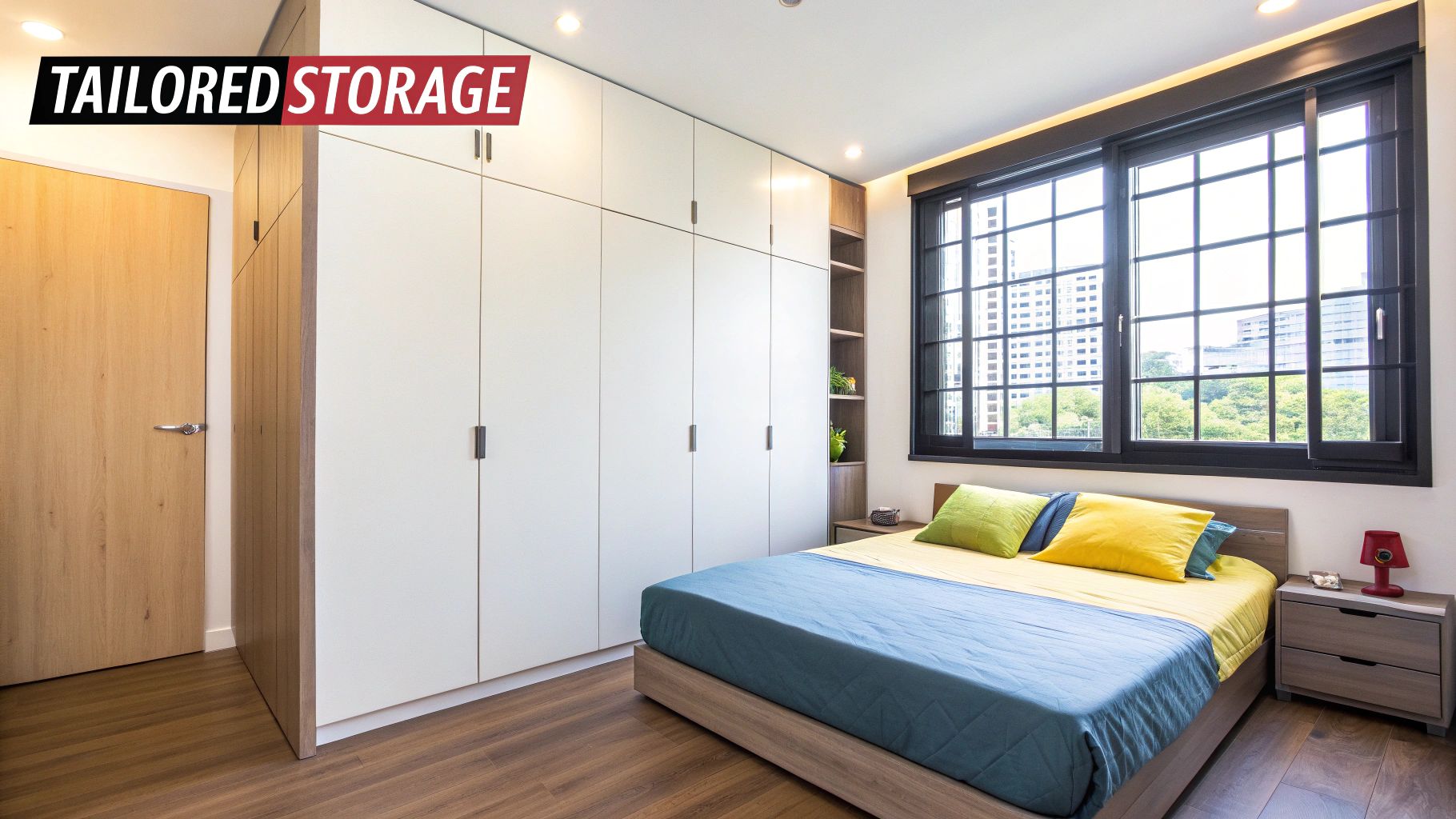
A freestanding wardrobe is a standalone unit. While convenient, it often leaves awkward, dust-collecting gaps between the unit and the walls or ceiling. In the compact homes common across Singapore, that wasted space is a significant drawback.
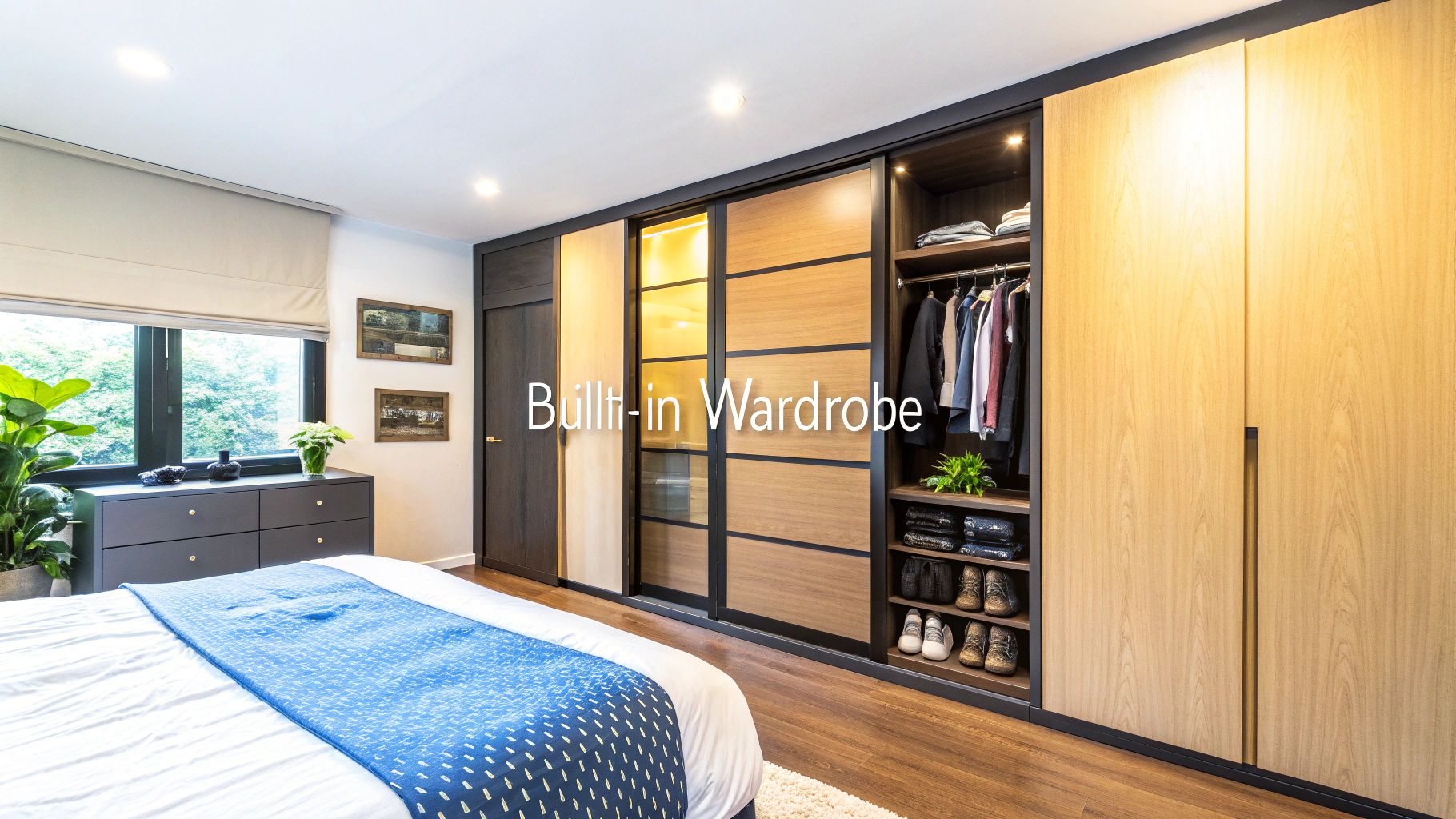
A built in wardrobe, on the other hand, is custom-designed and constructed to fit a specific space, usually an alcove or an entire wall. It’s seamlessly integrated from floor to ceiling and wall to wall, making it a permanent, polished feature of the room. This approach isn't just about storage; it's about smart space planning.
Maximising Every Inch Of Your Space
The biggest advantage of a custom built in wardrobe is its efficiency. By utilising the full height and width of a wall, you can gain up to 30% more storage space compared to a standard freestanding unit. This is a huge difference in a typical BTO bedroom.
For example, that high, hard-to-reach area near the ceiling? We transform that into prime real estate for stashing away luggage, winter wear, or seasonal bedding. We typically design these upper cabinets with separate doors (often with push-to-open latches) to keep them visually distinct and easy to access when needed.
A well-designed built-in wardrobe doesn't just hold your things; it reclaims and optimises your room's layout, making it feel bigger and more organised. It literally transforms dead space into functional storage.
This is crucial in HDB BTO flats and condominiums, where layouts can be tight or feature structural beams. A custom solution turns these architectural quirks into part of a cohesive design, not obstacles you have to work around.
Achieving A Seamless And Cohesive Look
Aesthetics are a major reason our clients opt for built-in solutions. A custom wardrobe allows you to create a look that perfectly matches your home's interior design theme, right down to the details.
- Material and Finish Matching: You can select the exact laminates or veneers that complement your flooring, wall paint, and other furniture. No more settling for a "close enough" match from a retail store.
- Integrated Design: We can design doors without handles for a minimalist look, or integrate full-length mirrors to make the room feel more spacious and bright—a popular request for smaller bedrooms.
- Elimination of Gaps: The flawless fit gets rid of the gaps that trap dust and make cleaning difficult. The result is a cleaner, more streamlined look that feels more premium.
Ultimately, a built in wardrobe sg is an investment in both function and style. It elevates a room from simply being furnished to being thoughtfully designed, adding a sense of permanence and polish that can even boost your property's appeal.
Choosing The Right Materials and Finishes for Singapore's Climate
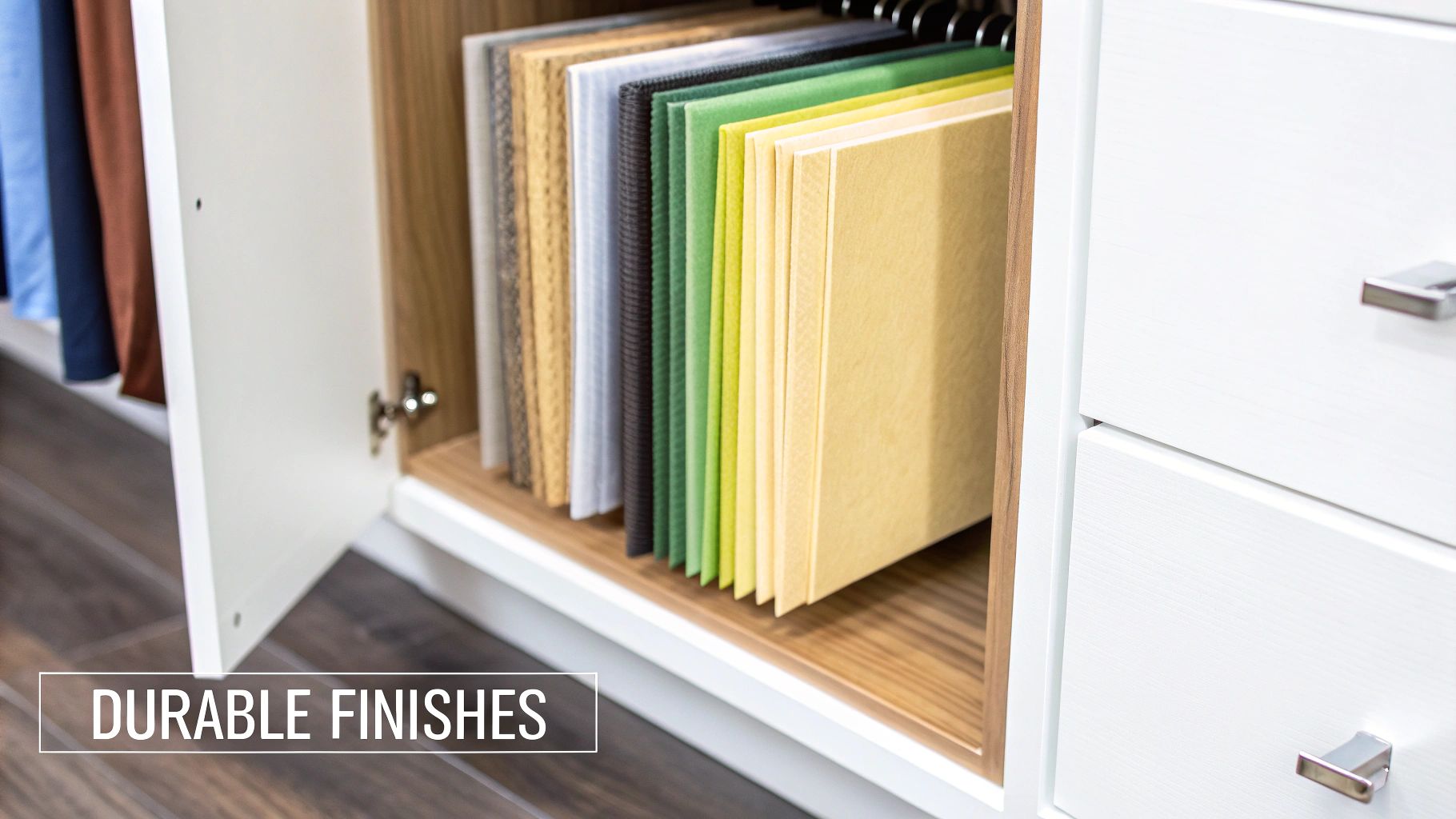
Selecting the right materials for your built-in wardrobe is about more than just aesthetics. It’s about choosing a wardrobe that can withstand Singapore’s humidity without warping or peeling. Getting this right ensures your investment lasts for years.
The internal structure—what we call the carcass—is the wardrobe's skeleton. It needs to be strong, stable, and your first line of defence against our tropical climate.
The Core Structure: Plywood vs. MDF
When it comes to the wardrobe's core, the conversation nearly always comes down to two options: plywood and Medium-Density Fibreboard (MDF). While both are engineered woods, their performance in Singapore's climate is vastly different.
Plywood is our top recommendation for wardrobe carcasses. It's made by gluing thin layers of wood veneer together, with the grain of each layer running perpendicular to the next. This cross-grain construction gives it excellent strength and, crucially, superior moisture resistance. It holds screws tightly and won't sag under the weight of your clothes over time.
MDF, on the other hand, is made from compressed wood fibres and resin. While it has a smooth surface that's good for certain paint finishes, it behaves like a sponge in high humidity. Once moisture penetrates, MDF can swell and lose its structural integrity, making it a poor choice for a durable built in wardrobe sg homeowners can rely on.
Finishes: The Face Of Your Wardrobe
With a strong plywood core, the finish is what defines your wardrobe's style and durability. This is the surface you’ll see and touch every day. For a wider perspective, it helps to understand how to choose the best materials for different climates and lifestyles as the principles often overlap.
Here are the most practical choices we see clients in Singapore select:
- High-Pressure Laminates (HPL): This is the undisputed champion for durability in our climate. Laminates are made from layers of paper and resin fused under intense pressure, creating a surface that’s highly resistant to scratches, moisture, and heat. With thousands of colours and textures available, from matte solids to realistic wood grains, the design possibilities are endless.
- Wood Veneers: If you love the authentic look of real wood, veneers are a fantastic option. A thin slice of actual hardwood is bonded to a stable plywood core, giving you that luxurious look without the high cost or warping risk of solid wood. They do require slightly more care than laminates.
- Paint and Lacquer: A painted finish offers a clean, seamless look perfect for minimalist or classic shaker-style doors. Lacquer can provide a tough, high-gloss coating. However, painted surfaces can chip over time and may require touch-ups, especially in households with young children.
To make the choice easier, here's a quick comparison of the most common materials and finishes we recommend for local homes.
Wardrobe Material and Finish Comparison For SG Homes
| Material/Finish | Pros | Cons | Best For |
|---|---|---|---|
| Plywood (Core) | Excellent moisture resistance, strong, holds screws well, durable. | Surface isn't as smooth as MDF, slightly higher cost. | The internal structure (carcass) of virtually all high-quality wardrobes in Singapore. |
| MDF (Core) | Very smooth surface ideal for paint, lower cost. | Absorbs moisture and swells, not as strong as plywood, can sag. | Dry areas or for decorative panels that won't bear weight; generally not recommended for carcasses. |
| Laminates (Finish) | Extremely durable, scratch-resistant, moisture-resistant, huge variety of designs. | Can feel less premium than real wood, edges can sometimes chip if not installed well. | High-traffic areas, homes with children or pets, and anyone wanting a low-maintenance, stylish finish. |
| Veneers (Finish) | Authentic wood grain and look, feels premium, can be refinished. | Less durable than laminate, can be scratched, requires more careful maintenance. | Master bedrooms or spaces where a sophisticated, natural aesthetic is the priority. |
| Paint/Lacquer (Finish) | Seamless look, unlimited custom colour options, modern or classic appeal. | Can chip or scratch over time, may require touch-ups, shows fingerprints (especially on dark/glossy finishes). | Achieving a specific colour palette, minimalist designs, and shaker-style doors. |
The best choice balances your lifestyle, aesthetic preference, and budget.
A busy family will likely find the near-indestructible nature of laminates a practical choice. A couple designing a serene master suite might prefer the sophisticated elegance of a natural wood veneer.
By starting with a solid, moisture-resistant plywood core and pairing it with a durable finish that suits your lifestyle, you'll create a wardrobe that’s perfectly built for life in Singapore.
Understanding the Cost of a Built-In Wardrobe in Singapore
"How much will my built-in wardrobe cost?" is one of the first questions we hear. While a simple price-per-foot-run (PFR) gives a rough idea, it doesn't tell the whole story. The final cost is determined by several key factors.
The demand for quality, custom storage is growing. Data on Singapore's wardrobe market shows a clear trend towards homeowners investing in personalised solutions that fit their homes perfectly. Let's break down the three main factors that will influence the price of your wardrobe.
1. Material and Finish Selection
The materials you choose are the foundation of your wardrobe's cost and longevity. A carcass built from high-quality, moisture-resistant plywood will cost more upfront than one made from MDF, but it's a worthwhile investment against Singapore's humidity.
The exterior finish also plays a significant role:
- Laminates: The most popular and cost-effective option. They are highly durable and available in a vast range of designs. Prices vary slightly based on brand, texture, and thickness.
- Veneers: Positioned at a higher price point than laminates because you're paying for a thin layer of real wood and the skilled craftsmanship required to apply it.
- Glass or Mirrored Panels: Integrating features like tinted glass or full-length mirrors will increase the cost compared to a standard laminate finish, but they can visually enlarge a room.
2. Internal Configuration and Complexity
What’s inside your wardrobe is just as important as the outside. A simple layout with mainly hanging rods and a few shelves is the most economical. The price increases as you add more complex, functional components.
Think of the interior as an à la carte menu. Each specialised component adds to the final bill, but it also adds immense value by tailoring the storage to your specific needs.
Here’s how different internal fittings affect the price:
- Drawers vs. Shelves: A set of drawers costs significantly more than open shelves. This is because drawers require more material, precise construction, and hardware like soft-closing runners. A client needing six drawers for accessories will have a higher quote than someone happy with two drawers and more shelf space.
- Specialised Accessories: Pull-out trouser racks, tie organisers, accessory trays, and built-in LED lighting are fantastic functional upgrades. They enhance usability but are considered add-ons that contribute to the overall cost.
3. Door Type and Hardware
The type of doors and the quality of the hardware are final key cost factors. For a built in wardrobe sg, the choice is typically between casement (swing-out) doors and sliding doors.
Casement doors are generally the standard and more budget-friendly option. Sliding doors, especially those using high-quality, quiet track systems, can be more expensive. Upgrading hardware to premium soft-closing hinges for swing doors or anti-jump rollers for sliders will also be reflected in the final price.
By understanding how these three elements—materials, internal layout, and hardware—influence the cost, you can make informed decisions that align your storage needs with your budget.
Designing A Functional Wardrobe Layout For Your Lifestyle
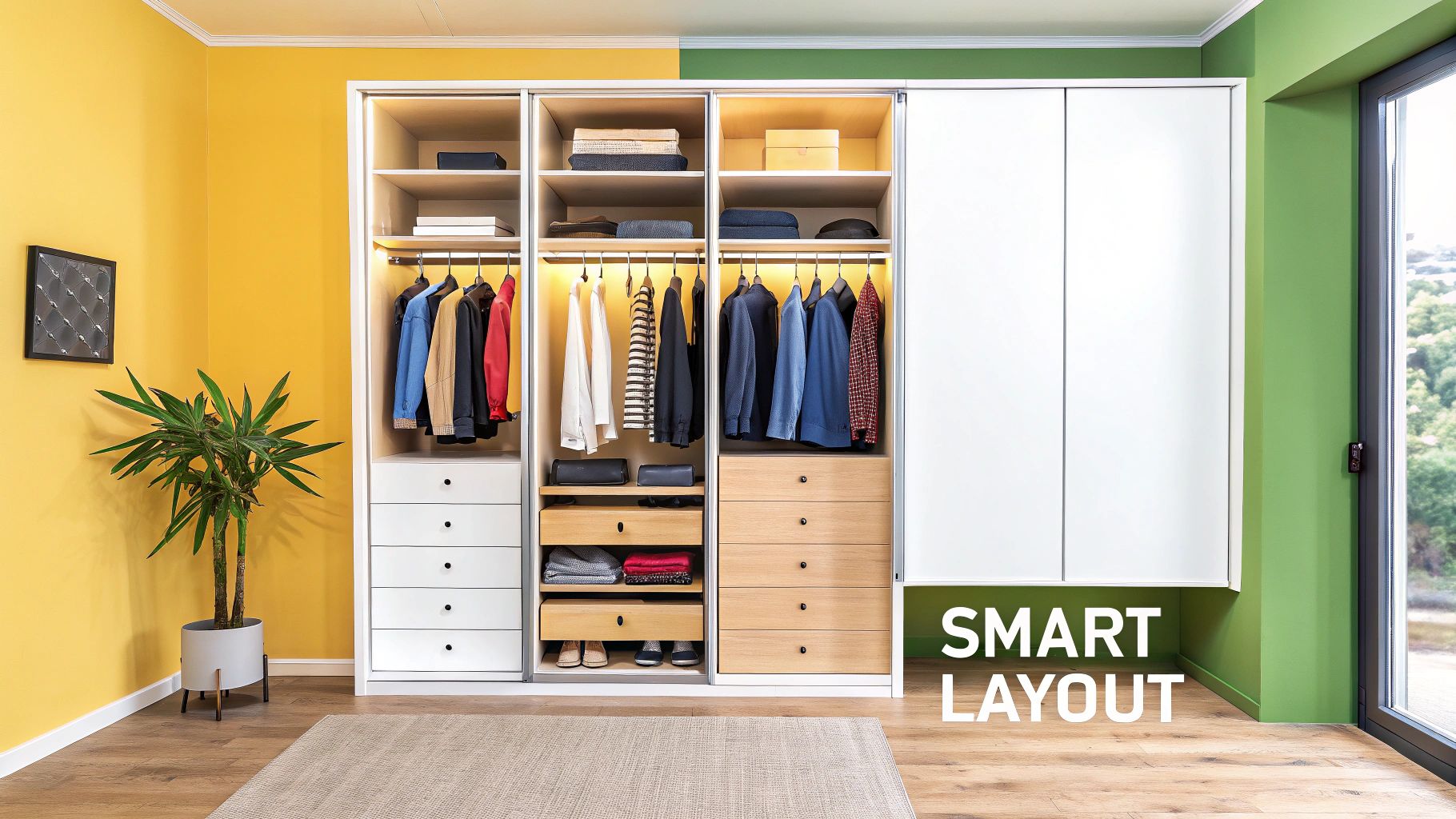
A beautiful wardrobe is one thing, but a wardrobe that functions seamlessly for you every day is the ultimate goal. The true test of any built in wardrobe sg homeowners invest in is how well it works long-term. A layout that doesn't match your personal habits will quickly become a source of daily frustration.
The first step is a practical assessment of your clothing and daily routine. It starts with a simple question: are you primarily a hanger or a folder? Your answer will shape the entire internal design. Someone with many dresses and blazers needs a different setup than someone who lives in t-shirts and shorts.
For example, a client who wears formal shirts to the office will benefit most from double-tiered hanging rods. This simple configuration doubles hanging space for shorter garments. In contrast, a client with many long dresses or jumpsuits needs a dedicated full-length hanging section. The layout must mirror your life.
Tailoring The Interior To Your Possessions
Once you’ve established your core storage style, we can design the components that make a wardrobe truly functional. The goal is to create a specific home for everything you own, which reduces clutter and simplifies your morning routine.
This focus on efficiency is a key trend in the Asia Pacific region, where homeowners in compact urban spaces prioritise smart design. Data shows that sliding door wardrobes are a popular choice in Singapore, reflecting the need for space-saving solutions. You can learn about the market for custom wardrobes in Asia Pacific to see how these preferences are shaping design.
A great layout combines different storage types:
- Multi-Level Hanging Rods: The easiest way to double your hanging space. A top rod for shirts and a bottom one for folded trousers or skirts is a common, effective setup.
- Adjustable Shelving: Provides flexibility for folded items like sweaters and jeans, allowing you to adapt the space as your needs change.
- Dedicated Drawers: Essential for smaller items. We often design shallow drawers with dividers for accessories like watches and belts, and deeper ones for undergarments or gym wear.
- Pull-Out Racks: Excellent for keeping trousers organised and crease-free without the bulk of individual hangers.
Smart Design Details That Elevate Usability
Beyond the basic components, thoughtful details separate a standard wardrobe from a custom one.
One of the most impactful additions is integrated LED lighting. Adding motion-activated or switch-operated light strips inside your wardrobe is a game-changer, especially for deep cabinets. It illuminates your entire collection, so you can easily find what you're looking for without fumbling in the dark.
A practical design principle we follow is ergonomics: what you use most often should be at eye level (between your shoulders and waist). Less-used or seasonal items can be stored higher up or lower down. Your daily work clothes should be easily accessible, not behind winter coats you wear once a year.
Here are a few more actionable tips:
- Zone Your Storage: Group similar items together. Create dedicated zones for work clothes, casual wear, and gym outfits. This creates a mental map that makes finding things fast.
- Use Vertical Dividers: On long shelves, simple vertical dividers keep stacks of folded clothes neat and prevent them from toppling over.
- Plan for Accessories: Don't let bags and shoes be an afterthought. We can incorporate specific compartments or hooks so they don’t end up cluttering the floor.
By carefully planning the layout around your lifestyle, your built-in wardrobe becomes more than just storage. It becomes an intuitive system designed to simplify your routine.
Our Process From First Sketch To Final Installation
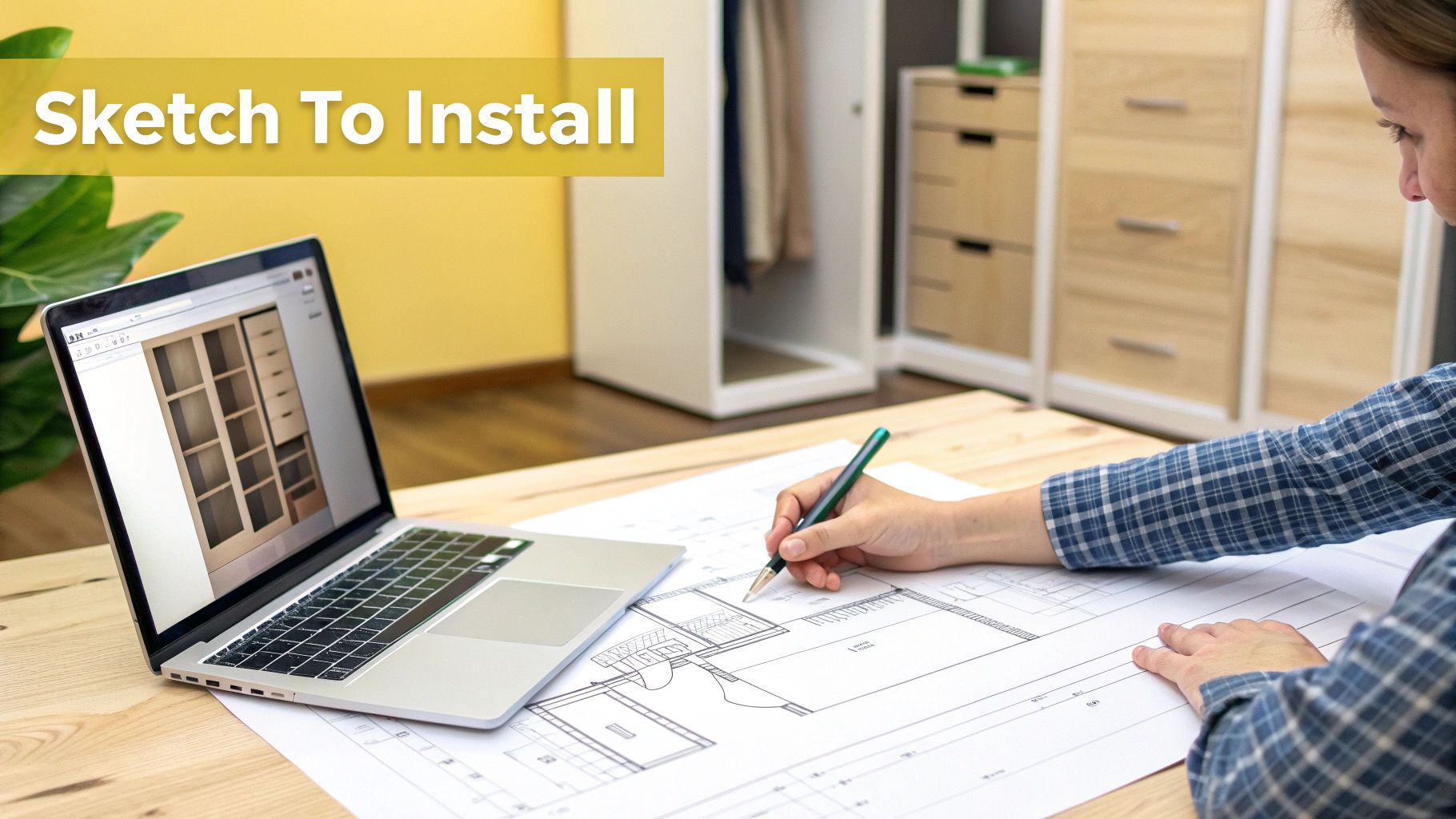
Creating a beautifully crafted built-in wardrobe is a structured process built on careful planning, clear communication, and expert craftsmanship. Here’s a look at our customer-focused journey, designed to make the experience seamless from our first chat to the final handover.
Stage 1: Discovery And Design Visualisation
It starts with a detailed consultation where we discuss your lifestyle, storage needs, and design preferences. Our team then visits your home to take precise on-site measurements, capturing every dimension of the space. This meticulous step is key to achieving the flawless, floor-to-ceiling fit of your built in wardrobe sg.
With these measurements, we create detailed 3D visualisations. These realistic renderings show you exactly how your new wardrobe will look in your room before any work begins. You can review the layout, check proportions, and finalise finishes until it’s perfect.
Our goal here is to eliminate guesswork. The 3D model becomes our shared blueprint, giving you full confidence that what you see is what you’ll get.
Stage 2: Material Selection And Fabrication
Once you approve the 3D design, we help you select materials from our curated library of high-quality laminates, veneers, and hardware. With the materials confirmed, we provide a transparent quotation with no hidden costs.
Upon your approval, our skilled carpenters begin fabricating every component in our local workshop. Building off-site minimises dust, noise, and disruption in your home, while allowing us to maintain high standards of precision. To see how finished projects can be presented, looking through interior design portfolio templates can offer great inspiration.
Stage 3: Professional Installation And Aftercare
When the components are ready, we schedule the installation at your convenience. Our professional team handles the entire assembly with care and efficiency, treating your home with respect. The process is clean, organised, and typically completed within a few days.
We finish every project with a thorough quality check, walking you through the wardrobe to ensure every detail meets your expectations. Before we leave, we’ll provide simple aftercare tips to help you keep your new wardrobe looking beautiful for years to come.
Navigating HDB Rules And Other Key Considerations
A successful renovation in Singapore requires more than just good design; it requires understanding local regulations. Building a compliant built in wardrobe sg means working within specific rules, especially if you live in an HDB flat or a condominium.
HDB Guidelines For Built In Furniture
The Housing & Development Board (HDB) has clear rules to ensure building safety and structural integrity. While a standard built-in wardrobe doesn't usually require a formal permit, there are critical guidelines to follow.
You cannot hack, remove, or alter any structural walls, columns, or beams to fit your wardrobe. All carpentry must be installed on existing, approved walls. Your wardrobe also cannot obstruct essential services like fire sprinklers, electrical distribution boards (DB boxes), or access to the air-con ledge.
A crucial HDB rule: built-in furniture must not cover the ventilation openings of the household shelter. We always design with the required clearance, ensuring these safety features remain fully functional.
Condo Rules And MCST Considerations
If you live in a condominium, your project is governed by the Management Corporation Strata Title (MCST). Each condo has its own renovation by-laws.
Before work begins, you or your interior designer must submit renovation plans to the building management for approval. This typically includes work details, a schedule, and proof of your contractor’s insurance.
MCSTs are generally strict
- Renovation Hours: Work is usually limited to weekdays, from 9 AM to 5 PM, to minimise noise disturbances. Work on weekends or public holidays is typically not allowed.
- Logistics: There are often specific rules for debris disposal and the use of service lifts for transporting materials. We coordinate these logistics to ensure a smooth installation.
Designing For Singapore's Humid Climate
A smart wardrobe design must address our biggest environmental challenge: humidity. A wardrobe with poor ventilation in Singapore can lead to mould and mildew.
We incorporate climate-specific features into our designs to promote airflow. This might include leaving a small ventilation gap at the top or bottom of the wardrobe or recommending louvred doors in certain situations. Using moisture-resistant materials, like high-quality plywood for the internal carcass, is our standard practice and the best defence against dampness.
Your Built-In Wardrobe Questions Answered
Here are the answers to some of the most common questions we receive from homeowners in Singapore about custom wardrobe projects.
How Long Does a Custom Wardrobe Take to Build and Install?
From final design approval to complete installation, the entire process typically takes 4 to 6 weeks.
This timeline consists of approximately 3-4 weeks for our carpenters to fabricate your wardrobe in our workshop, followed by a 2-3 day installation on-site. We provide a clear project schedule from the beginning so you know exactly what to expect.
Can I Get a Built-In Wardrobe in My Rented Apartment?
Yes, but you must get written permission from your landlord before any work begins. A built-in wardrobe is a permanent fixture, and most tenancy agreements in Singapore have strict clauses about alterations.
We recommend discussing your plans with your landlord and getting their approval in writing to avoid any issues. Once you have their consent, we can design a solution that works for the space.
A common misconception is that "built-in" means it can never be removed. While it is securely fixed, a professional can dismantle it. However, this process involves making good the walls and flooring afterwards, which is precisely why getting your landlord's approval is a non-negotiable first step.
What’s the Best Way to Maintain My Wardrobe in Singapore's Humid Climate?
Maintaining your wardrobe is simple. A regular wipe-down with a dry microfibre cloth is sufficient for daily cleaning. For smudges on laminate surfaces, use a damp cloth with a mild cleaner.
To combat humidity, ensure your room is well-ventilated. We also highly recommend placing dehumidifiers or moisture-absorbing packs inside your built in wardrobe sg, especially during the wetter months from November to January. This simple habit will protect both your clothes and the wardrobe itself for years to come.
Ready to create a wardrobe that perfectly fits your space and style? The team at KIVO combines decades of artisan experience with a commitment to quality, ensuring your vision comes to life flawlessly.