As the owner of Kivo, an interior design firm in Singapore, I've seen firsthand how a well-designed built-in wardrobe can completely transform a room. In a city where every square foot counts, custom carpentry isn't just a luxury—it's the most practical way to maximise space and create a truly organised home. Unlike a freestanding cabinet, a built-in wardrobe is designed specifically for your room's dimensions. It stretches from wall to wall and floor to ceiling, eliminating awkward gaps and creating a seamless, polished finish.
This guide is built on years of experience designing and installing wardrobes for Singaporean homes. I'll skip the fluff and give you actionable insights to help you plan, budget for, and create the perfect storage solution for your lifestyle.
Why Custom Wardrobes Are a Game-Changer for Singapore Homes
Designing for HDB flats and condos presents a unique set of challenges. Off-the-shelf wardrobes are a constant compromise—they're often too short, too narrow, or the internal layout just doesn't work for your clothing collection.
A built-in wardrobe, on the other hand, is crafted entirely around you. It's more than just a box for clothes; it’s a thoughtfully designed piece of furniture that brings order and calm to your personal space.
The Problem with "One-Size-Fits-All"
Ready-made wardrobes are designed for an "average" person, but your needs are unique. Perhaps you have long dresses that require full-height hanging space, or a collection of handbags that deserve proper shelving. Freestanding options simply can't adapt.
This mismatch leads to common frustrations:
- Wasted Vertical Space: That gap between the top of a standard wardrobe and the ceiling is prime real estate. A built-in uses this space for storing luggage, winter clothes, or spare bedding.
- Inefficient Internal Layouts: You're stuck with a fixed configuration of shelves and rails that likely doesn't suit your belongings, leading to clutter.
- Awkward Fit: A wardrobe that juts out can obstruct a walkway, while one that doesn't fill a nook makes the room feel unbalanced.
At Kivo, we see a built-in wardrobe as a long-term investment in your home's functionality and value. A well-planned wardrobe doesn't just store things—it solves spatial problems, making your room feel larger, cleaner, and more serene.
Unlocking Your Home’s Hidden Potential
Opting for a custom built in wardrobe in Singapore gives you the power to create a storage system that works in perfect harmony with your daily life. By tailoring every element to the exact dimensions of your room and the items you own, we unlock storage potential you never knew existed.
Imagine a wardrobe where every shirt, every pair of shoes, and every accessory has its designated spot. This level of organisation not only simplifies your morning routine but also creates a tidy, stress-free environment you'll love coming home to. It’s about making your space work for you.
Planning Your Perfect Wardrobe Layout
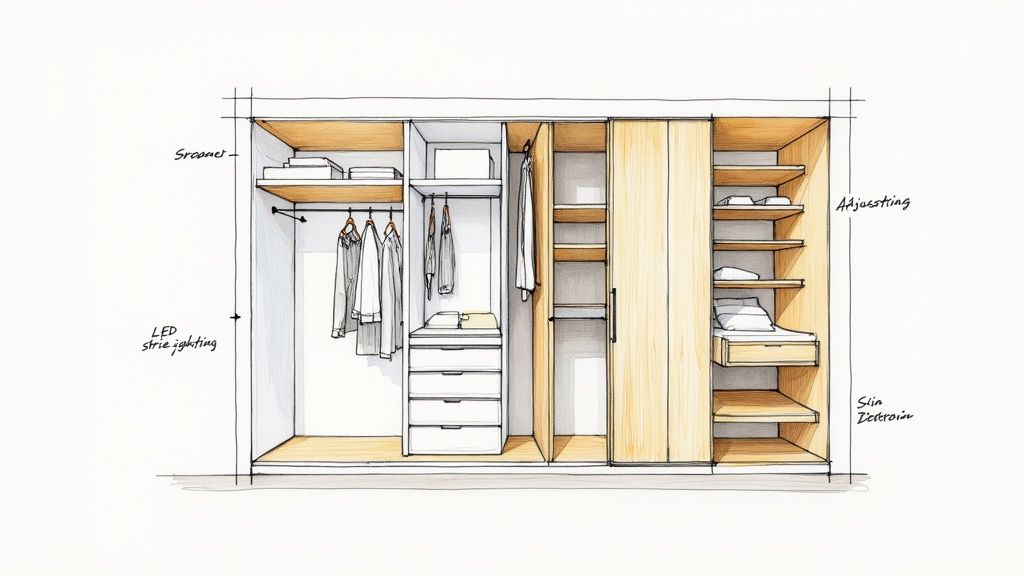
Before a single piece of wood is cut, the most important work begins with a simple question: what does your daily routine look like? A successful built-in wardrobe is less about filling an empty space and more about creating a system that simplifies your life. This planning stage is where we translate your personal habits into a functional, beautiful design.
Think of it as an audit of your lifestyle. The goal is to map out a wardrobe that anticipates your needs, making it effortless to find your favourite shirt or put away laundry. It all starts with an honest look at what you own.
Taking Stock of Your Wardrobe and Lifestyle
First, you need a realistic inventory. Don't guess—take the time to go through what’s actually in your current closet, drawers, and storage boxes. What you discover will directly inform the internal layout of your new wardrobe.
To get started, ask yourself a few practical questions:
- Hang or Fold? Do you have more dresses, blazers, and long coats needing vertical hanging space? Or is your collection mostly t-shirts, shorts, and activewear that are better off folded?
- The Shoe Situation: How many pairs do you own? It's often smart to separate everyday sneakers from special-occasion heels, which may need different storage like angled shelves versus protective boxes.
- All the Accessories: What about watches, belts, scarves, and handbags? These smaller items are notorious for getting lost. They benefit from clever solutions like shallow, partitioned trays or dedicated hooks.
- Bulky Belongings: Where will you store luggage, spare quilts, or seasonal wear? Using the topmost section of a floor-to-ceiling wardrobe is the perfect spot for items you don't need often.
Answering these questions gives us the blueprint for a personalised design. For example, if you have 30 folded shirts but only five long dresses, we'll prioritise shelving and double-hanging rods instead of wasting space on a large full-length hanging section.
Turning Daily Habits into Smart Design
Once we have a clear inventory, we can start sketching the interior. A well-designed built-in wardrobe should work for you.
Think about your morning routine. What do you reach for first? If it’s your work attire, those items should be front and centre, at eye level. Weekend clothes can be placed higher or lower, out of the immediate way.
A great wardrobe layout isn’t just about fitting everything in. It's about arranging your life to save you time and reduce daily stress. The goal is to create a sense of calm every time you open the doors.
Here’s how we translate different lifestyles into practical layouts:
- For the Office Professional: We often incorporate pull-out trouser racks to keep pants crisp and dedicated tie or scarf organisers. A shallow drawer with custom dividers is perfect for keeping watches and cufflinks visible and untangled.
- For the Fashion Enthusiast: We can design a mix of open display shelves for a treasured handbag collection, add full-length hanging for maxi dresses, and use drawers with acrylic fronts to easily spot accessories. Integrated LED lighting can give the wardrobe a chic, boutique feel.
- For the Minimalist: The focus is on clean lines and hidden storage. We would use deep, seamless drawers for folded clothes and simple hanging rods, ensuring every item has a designated home for a clutter-free space.
This detailed planning ensures your new wardrobe is more than a stunning piece of furniture—it becomes a hardworking extension of your lifestyle.
Choosing Materials That Last in a Humid Climate
Picking the right materials for your built-in wardrobe is one of the most critical decisions you'll make, especially in Singapore's humid weather. The wrong choice can lead to warped doors, peeling finishes, or mould issues. At Kivo, we guide our clients carefully to ensure their investment looks great and stands up to our tropical climate for years.
The wardrobe’s internal structure is its skeleton. The carcass—the main frame and shelving—needs to be tough and, most importantly, resistant to moisture.
The Core of Your Wardrobe: Plywood vs. MDF
For a built in wardrobe in Singapore, the two main contenders for the core material are plywood and Medium-Density Fibreboard (MDF). They look similar but behave very differently in humidity.
MDF is essentially compressed wood dust and resin. It offers a smooth surface perfect for painting, but it absorbs moisture like a sponge. In a damp environment, it can swell, warp, and lose its structural integrity. This is a significant risk, particularly in bedrooms that aren't air-conditioned 24/7.
Plywood, however, is constructed by gluing together thin layers of wood veneer, with each layer’s grain running at a right angle to the one below it. This cross-graining makes it incredibly strong and far more resistant to warping from moisture. For the internal carcass of a wardrobe in Singapore, a good moisture-resistant plywood is always the smarter choice for long-term durability.
The core material is the unsung hero of your wardrobe. Investing in high-quality, moisture-resistant plywood for the carcass is the single best way to guarantee your wardrobe a long, healthy life.
Dressing Up Your Wardrobe: Surface Finishes
With a strong core sorted, it's time for the finish. This is what you’ll see and touch every day—it defines your wardrobe’s personality. Here in Singapore, laminates are the most popular and practical option by a wide margin.
Laminates are tough, multi-layered sheets bonded to the plywood core. They are incredibly durable, easy to clean, and come in a vast array of colours, textures, and patterns. Whether you want the look of natural wood, a sleek solid colour, or even a stone finish, there's a laminate for it.
Leading brands like Lamitak offer extensive catalogues, giving you complete creative freedom. Popular choices include:
- Solid Colour Laminates: Fantastic for a clean, modern aesthetic. Matte finishes are great at hiding fingerprints, while glossy ones can make a room feel larger and brighter.
- Wood Grain Laminates: These provide the warmth of real wood without the high cost and maintenance. Modern versions are incredibly realistic, mimicking everything from light oak to rich walnut.
- Textured Laminates: For something more unique, you can find laminates that feel like fabric, leather, or even concrete, adding a distinct tactile element.
This chart gives you a peek into what styles Singaporean homeowners are leaning towards right now.
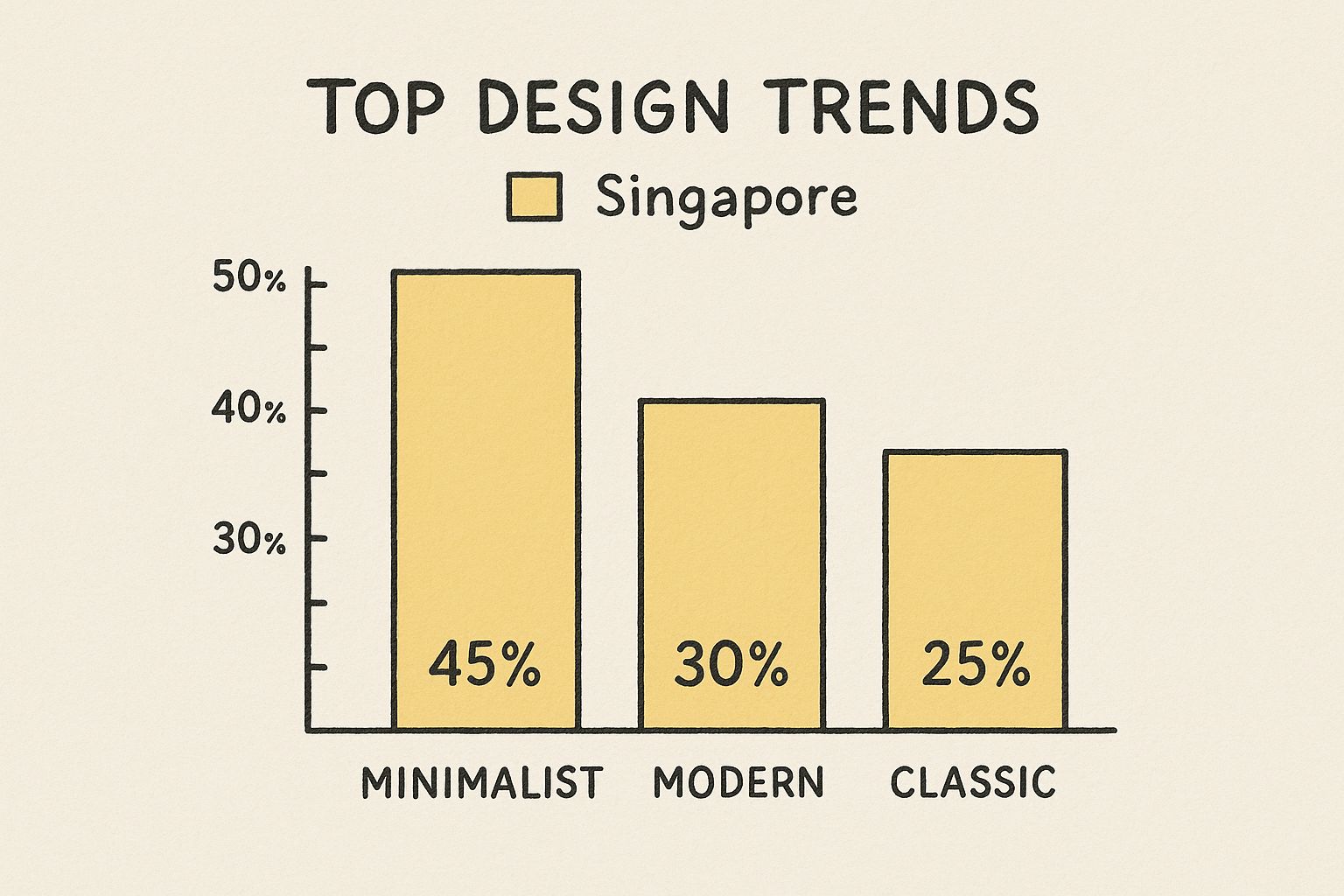
As you can see, there’s a clear love for clean, uncluttered designs, with Minimalist and Modern styles dominating the field.
Wardrobe Material Comparison for Singaporean Homes
Choosing the right material involves balancing aesthetics, budget, and durability against Singapore's unique climate. Here's a quick breakdown to help you compare the most common options.
| Material | Durability | Moisture Resistance | Average Cost (per ft.) | Best For |
|---|---|---|---|---|
| Plywood | High. Strong and resists sagging over time. | Good to Excellent. Moisture-resistant grades are essential. | $80 - $120 | The internal carcass and shelving of any long-lasting wardrobe. |
| MDF | Moderate. Can sag under heavy loads. | Poor. Prone to swelling and warping in high humidity. | $60 - $90 | Low-moisture areas or decorative panels, but risky for main structures. |
| Solid Wood | Excellent. Very strong and repairable. | Varies. Can warp or crack if not properly sealed and treated. | $150 - $300+ | Homeowners who want a premium, traditional look and have a larger budget. |
| Particle Board | Low. Least durable and prone to chipping. | Very Poor. Easily damaged by moisture; not recommended. | $40 - $70 | Temporary or budget furniture, but not for a permanent built-in wardrobe. |
Ultimately, the combination of a solid plywood core with a high-quality laminate finish offers the perfect blend of strength, style, and resilience for our climate. This tried-and-tested pairing ensures your built in wardrobe not only looks exactly how you envisioned but is truly built to last.
Exploring Wardrobe Designs and Custom Features
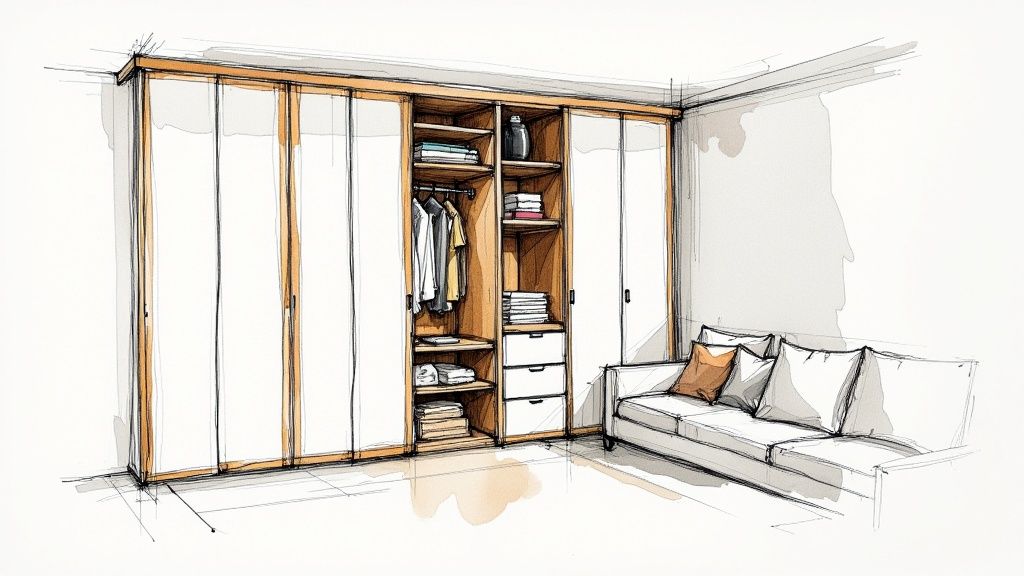
Your wardrobe isn't just a box to store clothes; it's a major piece of furniture that sets the tone for your entire bedroom. The exterior design and interior features can transform it from a simple cabinet into a functional work of art.
We're seeing a huge demand for truly personalised storage. With homes in Singapore becoming more compact, making every inch of space work hard is non-negotiable. A 2023 survey found that 65% of homeowners upgrading their properties prioritised custom high-end wardrobes. You can see the full details on this wardrobe demand trend online.
This trend is clear: people want wardrobes that fit their space perfectly and reflect their personal style. Let's explore the designs and features that are popular in Singapore bedrooms right now.
Exterior Styles That Make a Statement
The wardrobe doors are its face and have a huge impact on the room's feel. The current trend is toward clean lines and interesting textures that add personality without creating visual clutter.
Some of the most popular choices we build for a built in wardrobe in Singapore include:
- Minimalist Handle-less Designs: This achieves a seamless, "barely there" look that makes a room feel larger and calmer. We use high-quality 'push-to-open' mechanisms or discreet recessed finger pulls to keep the surface flat.
- Elegant Fluted Panels: Adding vertical grooves, or fluting, is a fantastic way to introduce texture. It plays with light beautifully, creating a subtle depth and a touch of modern luxury.
- Glass and Mirror Inlays: A full wall of cabinetry can feel imposing. Breaking it up with panels of smoked glass or bronze-tinted mirror is a great solution. It offers a glimpse of what’s inside, and a well-placed mirror is a classic trick to make any small room feel brighter and more spacious.
These aren't just cosmetic touches; they genuinely shape the atmosphere of your personal space.
Sliding vs. Swing Doors for HDBs and Condos
This is one of the most practical decisions you'll make, especially in a typical HDB or condo layout where every centimetre matters.
Swing Doors
- Full Visibility: Open the doors and you see everything inside at once.
- Internal Door Storage: The back of the doors can be used for tie racks, scarf hooks, or even a full-length mirror.
- Space Requirement: This is the main drawback. They require clear space to swing open, which can be a deal-breaker if your bed is close to the wardrobe.
Sliding Doors
- Space-Saving: This is their biggest advantage. Since they don't swing out, they are perfect for tight spots and narrow walkways.
- Modern Aesthetic: They offer a sleek, contemporary vibe that many homeowners prefer.
- Limited Access: The trade-off is that you can only access half of your wardrobe at any given time.
For most Singaporean homes, especially newer BTOs, sliding doors are often the more practical solution. They solve the problem of limited floor space without compromising on style.
Elevating Functionality With Internal Fittings
The real magic of a custom wardrobe is on the inside. Smart internal fittings turn a simple closet into a perfectly organised system that streamlines your daily routine.
Think beyond a basic hanging rod and shelves. We can integrate clever hardware that brings order to chaos:
- Integrated LED Lighting: Imagine your wardrobe lighting up automatically when you open it. Motion-activated LED strips eliminate guessing between black and navy blue in a dim room—a small touch that feels incredibly luxurious.
- Pull-Out Trouser Racks: These racks keep trousers neatly hung and slide out so you can see all your options at a glance, preventing creases.
- Custom Drawer Organisers: We can create custom-fit dividers for everything—watches, jewellery, socks, belts—giving every item its own home.
- Pull-Down Hanging Rods: For tall, floor-to-ceiling wardrobes, this is a game-changer. A mechanism allows you to use the high-up space for hanging clothes; simply pull a handle, and the rod lowers to you.
When you pair a stunning exterior with these thoughtful internal features, your wardrobe becomes more than just storage. It becomes a hardworking partner in keeping your home and your life beautifully organised.
So, How Much Will My Built-In Wardrobe Cost?
Let's talk about budget. Having a clear financial plan from the start is key to a stress-free renovation. When it comes to a built in wardrobe in Singapore, understanding the pricing structure helps you make informed decisions. At Kivo, we believe in transparency, so you know exactly what you're paying for.
Custom wardrobes are typically priced by the per-foot-run (PFR). The concept is simple: the cost is based on the wardrobe's length. An 8-foot-long wardrobe means you're paying for 8 PFR. This provides a baseline, but other factors will shape the final cost.
What Does the Standard Per-Foot-Run Price Cover?
The PFR rate is your base price. It usually covers the basic structure: the main frame (carcass), standard shelves, a hanging rod, and simple swing doors finished with a standard-range laminate.
In Singapore, you can expect the PFR rate for a basic built-in wardrobe to start from $250 to $400. The final figure depends on the carpentry firm's reputation, skill, and the quality of the core materials they use as standard.
What Makes the Price Go Up?
The final cost is determined by your choices in materials, design complexity, and special features. Here’s a breakdown of the main factors that influence your budget:
- Core Materials: Opting for higher-quality, moisture-resistant plywood will cost more than standard options, but it’s a wise investment for Singapore's humid climate.
- Door Mechanism: Standard swing doors are usually included in the base PFR price. Upgrading to space-saving sliding doors or premium soft-closing hinges will add to the total cost.
- Surface Finish (Laminates): Special finishes like high-gloss, textured, or anti-fingerprint laminates from brands like Lamitak will cost more than standard solid colour or wood-grain options.
- Internal Fittings: This is where you can get creative, but it’s also where costs can add up. Every extra drawer, pull-out tray, or specialised accessory like a trouser rack adds to the material and labour costs.
Your wardrobe budget reflects what matters most to you. If organisation is your priority, spending more on internal fittings is a great investment. If you're focused on a specific aesthetic, you might invest in a premium laminate or a unique door design.
Getting a Realistic Idea of Costs
To help you get a clearer picture, here are some typical budget ranges for a standard full-height (up to 9 feet) built-in wardrobe in Singapore.
| Wardrobe Tier | Estimated PFR Rate | Key Features Included | Example 6-Foot Wardrobe Cost |
|---|---|---|---|
| Standard | $250 - $350 | Basic plywood, standard laminate, swing doors, simple internal shelves and rods. | $1,500 - $2,100 |
| Mid-Range | $350 - $450 | Moisture-resistant plywood, better laminates, sliding doors, a few internal drawers. | $2,100 - $2,700 |
| Premium | $450+ | High-grade materials, premium finishes, soft-closing hardware, custom fittings. | $2,700+ |
This demand for well-made, space-efficient furniture is a major trend. Singapore's bedroom furniture market is growing steadily, with forecasts predicting revenue will hit around US$267.57 million by 2025, driven by homeowners wanting storage that is both beautiful and functional. You can dive deeper into the data on this furniture market growth.
How We Bring Your Kivo Wardrobe to Life
When you partner with us at Kivo, you're not just buying a wardrobe; you're getting a fully managed, professional experience. We’ve refined our process to ensure everything from the first discussion to the final installation is smooth, transparent, and stress-free. Here’s how we turn your ideas into a stunning built in wardrobe in Singapore.
Open communication and detailed planning are the keys to a successful project. You'll see that commitment in every step.
Step 1: The First Chat and Design Ideas
It all starts with a conversation. We'll sit down with you to understand your needs. Are you struggling with shoe storage? Dreaming of a vanity table integrated into your wardrobe? We listen to your pain points and your wish list to understand how you live.
Our design team then brings your ideas to life with a detailed proposal, including professional 3D drawings. Seeing a realistic render of how the wardrobe will look in your space helps you confidently finalise the layout, colours, and finishes before we start building.
Step 2: Choosing Materials and Getting the Measurements Right
Once you're happy with the 3D design, we move to material selection. We'll guide you through our collection of high-quality options, from durable, moisture-resistant plywood to a wide range of beautiful laminates. You can see and touch the samples to find the perfect match for your home.
Next, our technical team conducts a precise on-site measurement. This is a crucial step. We measure every corner, checking for any uneven walls or floors. This meticulous attention to detail ensures your new built in wardrobe will have a perfect, seamless fit.
At Kivo, precision is everything. Our meticulous measurements are what make a wardrobe look truly custom-built, leaving no awkward gaps and maximising every centimetre of your space.
Step 3: Building and Installing Your Wardrobe
With the plans finalised and materials selected, our expert carpenters begin fabrication in our workshop. Building everything off-site keeps dust, noise, and disruption in your home to an absolute minimum. We oversee the entire process to ensure every piece meets our high standards.
Finally, on installation day, our professional team assembles your wardrobe efficiently and carefully. We treat your home with respect, work cleanly, and conduct a final walkthrough with you to ensure every detail is perfect. Our promise is a beautiful result without the headache.
Got Questions About Built-In Wardrobes? We've Got Answers.
Planning a custom wardrobe often brings up many questions. To help, we've compiled answers to the most common queries we receive from homeowners at Kivo. Consider this your quick-start guide to the practical side of building your dream wardrobe.
How Long Does It All Take, Really?
From design approval to final installation, the typical timeline is 4 to 6 weeks.
This period includes drafting detailed 3D drawings for your review, sourcing your chosen materials, and fabrication in our workshop. The on-site installation itself is quite efficient, usually completed in just 2-3 days. This process ensures high-quality craftsmanship without rushing.
How Can I Squeeze More Storage into a Small HDB Bedroom?
This is the classic Singaporean design challenge! The most effective strategy is to build vertically. We almost always recommend a full-height wardrobe that extends to the ceiling. This is the single best way to gain a significant amount of storage for less frequently used items like luggage or seasonal clothing.
Other clever features also make a big difference:
- Sliding Doors: Essential for tight spaces. They don't swing out, saving precious floor area.
- Double Hanging Rods: Stacking hanging rods instantly doubles the space for shirts, skirts, and trousers.
- Smart Inserts: Slim drawers for accessories and adjustable shelves allow you to customise the interior so no space is wasted.
Can I Combine My Wardrobe with a Dressing Table?
Absolutely! This is one of the key benefits of a built in wardrobe in Singapore. Since it's custom-made, integrating other functions is straightforward.
We often design wardrobes that seamlessly flow into a dressing table with a mirror and dedicated lighting, or even a compact work-from-home desk. This creates a clean, unified feature wall that serves multiple purposes without cluttering the room.
What About a Warranty?
At Kivo Interior Design, we stand behind the quality and durability of our work. Every custom built-in wardrobe we create comes with a comprehensive warranty covering its structural integrity and all hardware, such as hinges and drawer runners.
We are committed to building things that last, and that includes our relationship with you. Our team will provide you with all the specific warranty details for your project during your consultation.
Ready to design a wardrobe that’s a perfect fit for your home and your life? The team at KIVO is here to guide you, from the first sketch to the final polish.
Start your design journey with us today at kivo.com.sg