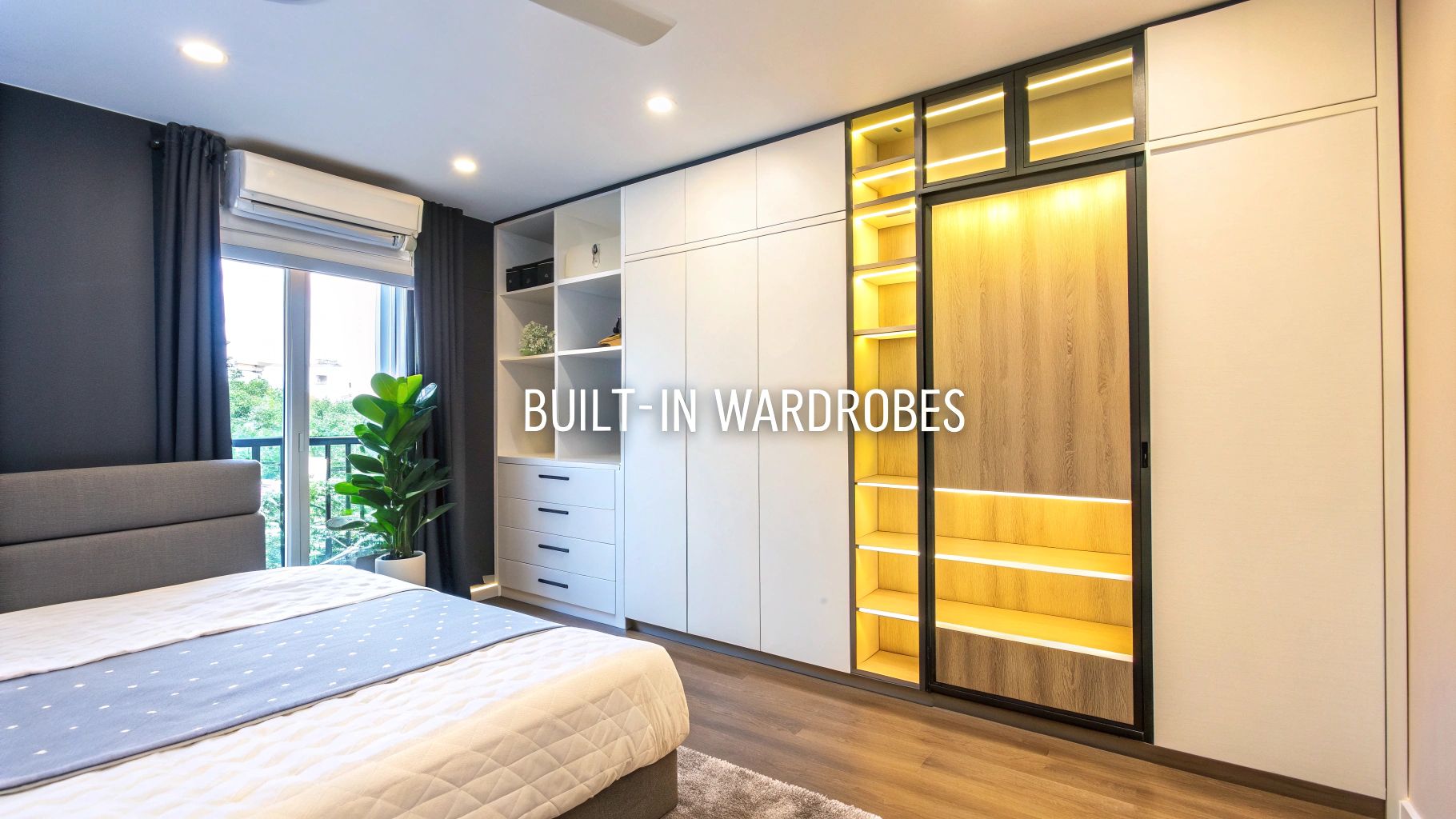
When you're looking at storage options, the choice often comes down to this: built-in wardrobes are a long-term investment in getting the most out of every single square foot of your home. Think of it like the difference between buying a suit off the rack versus having one tailored. A freestanding wardrobe just sits in the room, but a built-in becomes part of the room, fitting perfectly and working far more efficiently.
Why Built-In Wardrobes Are a Smart Investment
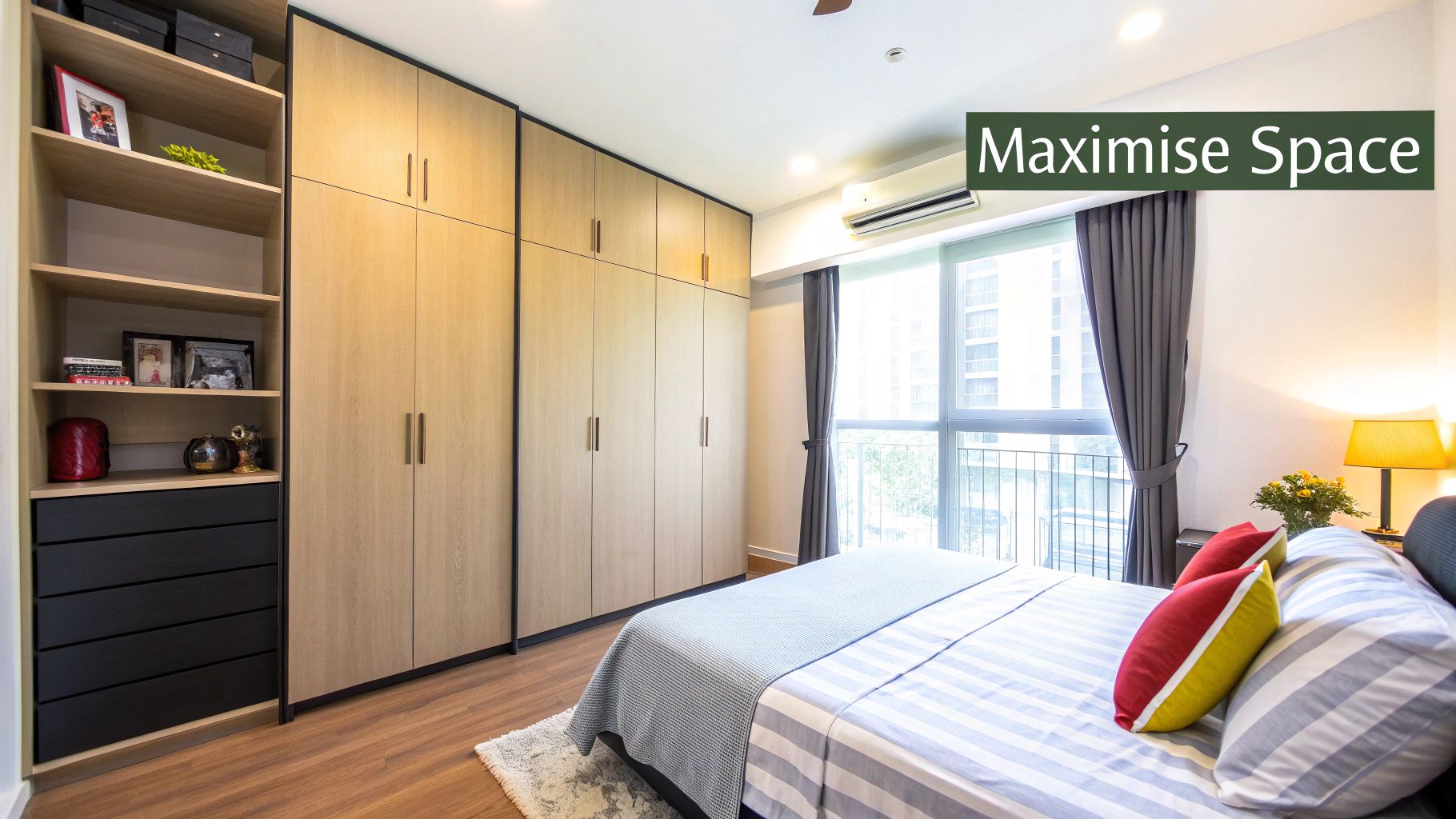
Here in Singapore, space is the ultimate luxury. Every centimetre matters. Standard, off-the-shelf wardrobes almost always leave awkward gaps—next to the wall or under the ceiling—that do nothing but collect dust and waste precious real estate. This is exactly where the true value of a built-in wardrobe shines.
They’re engineered to solve these common frustrations. By fitting flush against your home’s architecture, they turn awkward nooks, slanted ceilings, and tricky corners into beautifully organised, highly functional storage spaces.
Maximising Space and Functionality
The most obvious win with a custom built-in is how it conquers vertical space. A floor-to-ceiling design can easily double the storage you'd get from a standard wardrobe. This gives you dedicated spots for things like seasonal clothing or luggage that would otherwise end up cluttering other parts of your home.
But the customisation goes way beyond just the dimensions. It's about creating storage that is purpose-built for how you actually live.
- No More Dead Space: Forget about those useless gaps beside the wall or on top of the wardrobe. The unit blends in seamlessly.
- Go Vertical: Taking storage right up to the ceiling is a game-changer for stashing away items you don't need every day.
- Conquer Awkward Layouts: A custom solution can be designed to fit perfectly around structural beams, sloped ceilings, or tight corners where standard furniture simply wouldn't work.
Enhancing Aesthetics and Property Value
Beyond just being practical, built-ins deliver a clean, high-end finish that elevates the entire look and feel of a room. Because they are integrated into the wall, they create a streamlined, uncluttered appearance that makes the space feel bigger and more thoughtfully designed.
This bespoke approach isn't just a cosmetic upgrade; it's a strategic improvement to your property. A well-designed, high-quality built-in wardrobe is a major selling point for potential buyers, often boosting a home’s perceived value.
Homeowners in Singapore are catching on that smart storage is about more than just being tidy—it's about intelligent design. Choosing a built-in wardrobe is a decision that pays you back every day in convenience and adds long-term value to your property, making it one of the smartest upgrades you can make.
Selecting Materials That Thrive in Singapore's Climate
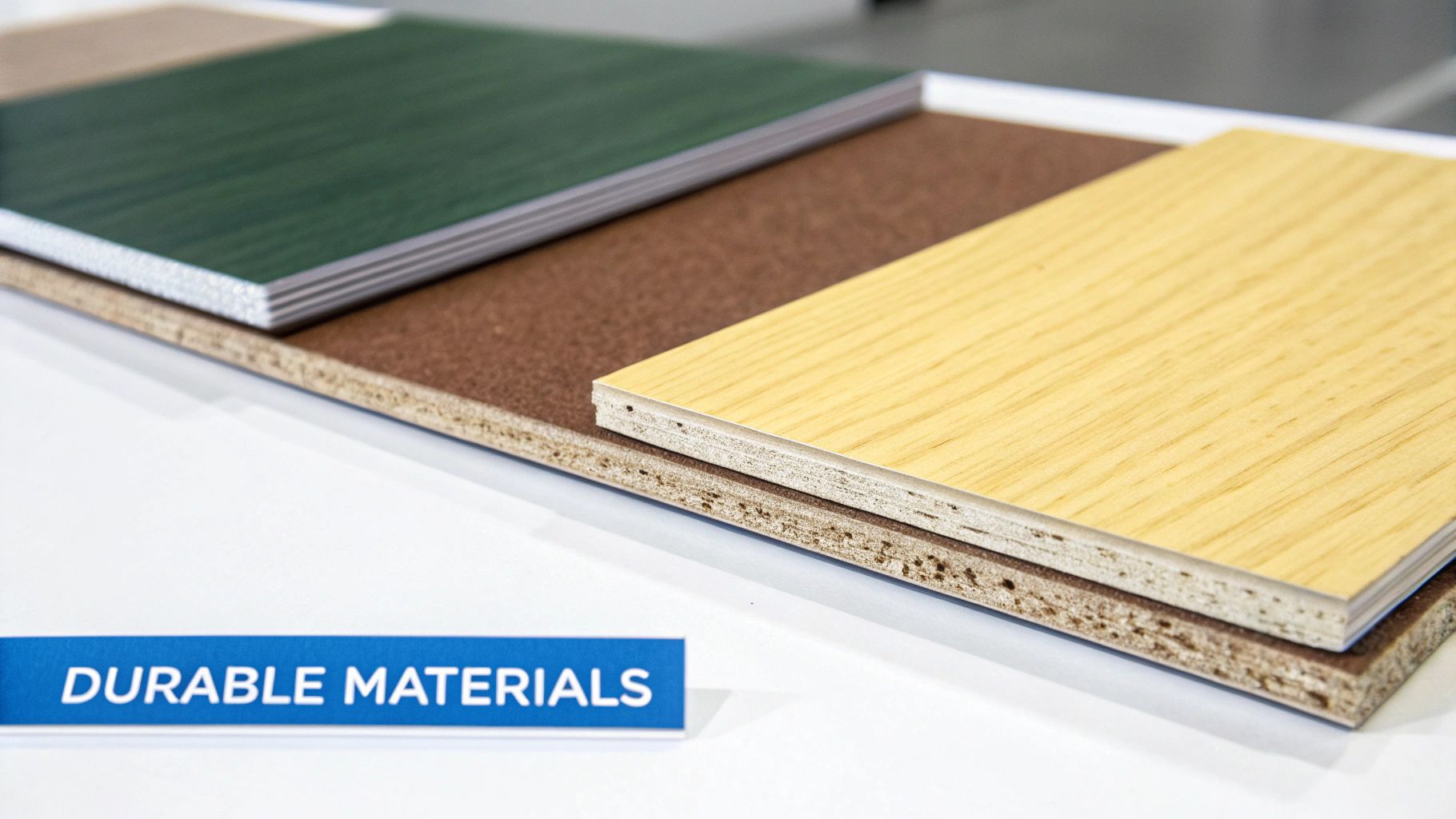
Choosing the right materials for built ins wardrobes in Singapore isn’t about chasing trends—it's about long-term survival. Our relentless humidity is the ultimate stress test for furniture, and making the wrong choice can lead to warped doors, peeling finishes, and a constant battle with mould.
The backbone of a lasting wardrobe is a material that actively fights off moisture. This isn't just a nice-to-have feature; it's an absolute necessity to ensure your investment stays structurally sound and looks pristine for years. We always guide our clients toward materials with a proven track record in our demanding environment.
Core Materials: The Unseen Strength
The real integrity of your wardrobe lies in its core material—the "bones" hidden beneath that beautiful finish. This is where cutting corners is simply not an option.
High-Grade Solid Plywood: This is our go-to for building robust, long-lasting structures. Unlike particleboard, which can swell and crumble when exposed to moisture, quality plywood is made from multiple layers of wood veneer bonded under intense pressure. This cross-grained construction gives it incredible strength and a far superior resistance to warping, making it the ideal choice for the main carcass and shelving.
Medium-Density Fibreboard (MDF) with Quality Laminates: While its core is less moisture-resistant than plywood, high-quality MDF offers an exceptionally smooth and stable surface. When it’s properly sealed and paired with premium, moisture-resistant laminates, it strikes a fantastic balance between durability and aesthetic flexibility. It’s an excellent option for door fronts and external panels where a flawless, uniform finish is the goal.
Even a guide to selecting materials for climate performance for windows can offer great insights into durability that apply to cabinetry in our climate.
Comparing Wardrobe Materials for a Humid Climate
To make things clearer, here’s a practical breakdown of how common materials perform over time in Singapore's high-humidity environment.
| Material | Durability | Moisture Resistance | Typical Lifespan | Ideal Use Case |
|---|---|---|---|---|
| Solid Plywood | Excellent; resists warping and structural decay. | High (when properly sealed and finished). | 15-20 years | Wardrobe carcass, shelving, and internal structures. |
| MDF with Laminate | Good; stable surface but core is vulnerable. | Moderate; relies heavily on the quality of the laminate. | 10-15 years | Door fronts and external panels for a smooth finish. |
| Particleboard | Poor; prone to swelling and sagging over time. | Very Low; absorbs moisture easily, leading to damage. | 5-8 years | Not recommended for long-term built-ins in Singapore. |
| Aluminium | Exceptional; impervious to warping and pests. | Complete; unaffected by humidity or moisture. | 20+ years | Full internal structures for maximum longevity. |
| FENIX Laminate (Finish) | Very High; anti-fingerprint and self-healing. | Excellent Surface Resistance | N/A | High-touch surfaces like doors and drawer fronts. |
| Wood Veneer (Finish) | Good; offers natural wood look. | Moderate; requires a stable substrate like plywood. | N/A | Creating a warm, natural aesthetic on door panels. |
Ultimately, the best choice depends on balancing your budget with your desire for longevity. For the humid Singapore climate, plywood and aluminium are the clear winners for structural integrity.
Aluminium: The Modern Answer to Humidity
Lately, we’ve seen a big shift towards aluminium interiors, and for very good reason. Aluminium is completely immune to moisture—it will never warp, rot, or fall victim to termites, a genuine concern for homeowners here.
While the initial investment might be higher, the sheer longevity and near-zero maintenance of aluminium offer incredible long-term value. It's a pragmatic choice for anyone who puts durability first.
Based on our client data from HDB and condo projects over the last decade, we've observed that wardrobes with aluminium internal structures can last well over 20+ years with minimal upkeep. This is a significant advantage over the typical 12-15 year lifespan for wood-based equivalents, particularly in a climate with an average humidity of 84%. The long-term savings on potential repairs or replacements are substantial.
Finishes: Where Style Meets Durability
The finish is what you see and touch every single day, but it’s also your wardrobe’s first line of defence against daily wear and tear. Our clients are increasingly choosing finishes that blend sophisticated looks with practical, real-world performance.
FENIX Laminates: If you’re after a sleek, ultra-matte look, FENIX is an exceptional choice. Its surface is soft to the touch, anti-fingerprint, and can even thermally heal superficial micro-scratches. This makes it perfect for high-traffic areas and minimalist designs where you want to maintain a clean, flawless appearance.
Textured Wood Veneers: Nothing beats real wood veneer for bringing warmth and character into a room. A thin layer of actual hardwood is applied to a stable core like plywood, giving you the authentic grain and texture of solid wood without the risk of warping. It perfectly bridges the gap between natural beauty and engineered stability.
At the end of the day, the right combination of core materials and finishes is what makes a built-in wardrobe not just a beautiful piece of furniture, but a lasting work of functional architecture built to thrive in Singapore.
Designing a Wardrobe Interior That Works for You
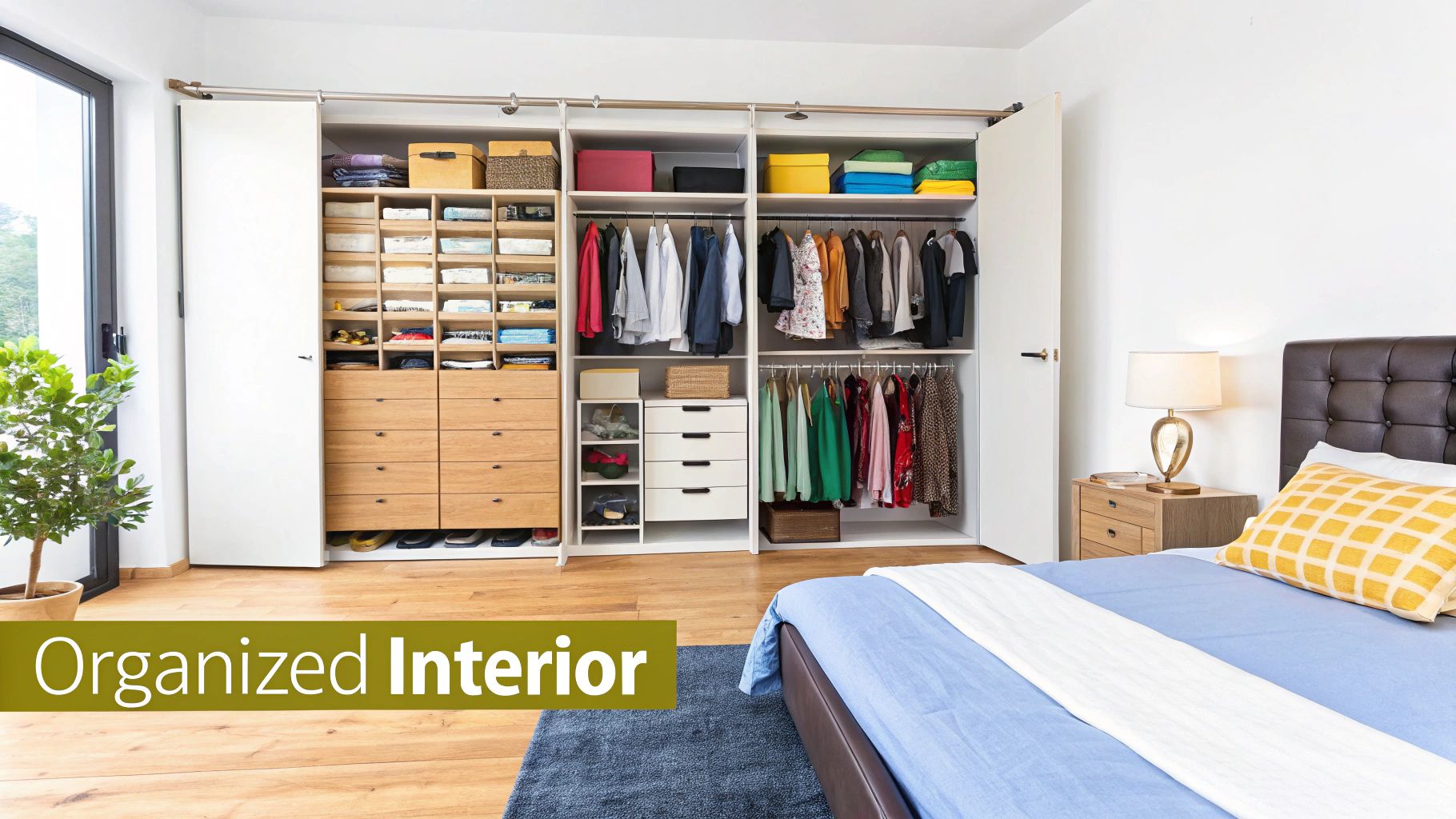
The real magic of great built ins wardrobes isn't what you see on the outside; it’s the clever, hard-working interior. A thoughtfully designed internal layout can turn a simple storage box into a personal command centre that genuinely simplifies your daily routine. It’s all about creating a space where every item has a home, making getting ready feel effortless instead of chaotic.
The first thing we always do with a new client is a ‘wardrobe audit’. It sounds formal, but it’s really just a quick inventory of your clothes and accessories to figure out what you actually need. Forget generic templates—your wardrobe should be a direct reflection of your lifestyle.
Starting With a Wardrobe Audit
Before you even think about layouts, you need to take stock of what you own. This simple step is the blueprint for a truly functional design. Just ask yourself a few key questions:
- Hanging vs. Folding: Are you the type with more dresses, suits, and long coats that need full-length hanging space? Or is your collection mostly t-shirts, jumpers, and jeans that are much happier on shelves or in drawers?
- Accessory Collection: How many pairs of shoes are we talking about? Do you need specific spots for ties, belts, scarves, or watches? Getting a handle on these smaller items is crucial for giving them a proper home.
- Daily Habits: What do you reach for every single day? These items deserve the prime real estate in your wardrobe—usually the space between your eye and waist level, where they’re easiest to grab.
This audit doesn't have to be complicated. A quick count and an honest look at your belongings will give you a clear ratio of hanging-to-folded items, which is the foundation of any smart wardrobe design.
Proven Layouts for Different Lifestyles
After designing countless wardrobes for clients all over Singapore, we've noticed a few patterns. We've developed several layout archetypes that serve as fantastic starting points, which we then customise to fit your exact needs.
For example, we have a layout for 'The Corporate Professional'. This design prioritises plenty of full-length hanging space for suits and dresses, often with pull-out trouser racks to keep work pants perfectly crease-free. It also features dedicated compartments for ties, belts, and watches so everything is visible during those busy mornings.
Then there's what we call 'The Growing Family' layout. Here, flexibility is everything. We use adjustable shelving that can be moved as the kids get bigger and their clothes change size. We'll install lower hanging rails at a height they can reach themselves, which helps build a bit of independence, while the upper storage is perfect for less-used things like seasonal clothing or spare bedding.
A truly functional wardrobe is ergonomic. It anticipates your movements and places your most-used items exactly where you need them, reducing friction in your daily life. The goal is to make organisation intuitive, not a chore.
When we're mapping out the wardrobe interior, advanced software can bring the concept to life before a single piece of wood is cut. If you're curious about how that works, checking out a guide to 3ds Max interior design can give you a peek into detailed rendering. It allows us to test different configurations with you digitally, ensuring the final product is perfect.
Essential Components for Functionality
Beyond the basic shelves and rails, it’s the smaller, high-quality components that really take a built-in wardrobe to the next level. These are the details that add a touch of quiet luxury and make the space a joy to use every day.
- Soft-Close Drawers: For us, this is non-negotiable for a premium feel. Smooth, silent-gliding drawers prevent slamming, which protects the wardrobe's structure and adds a real sense of quality.
- Pull-Out Trouser Racks: This is a far better solution than draping trousers over hangers. These racks let you see all your options at a glance and help prevent those deep creases from forming.
- Dedicated Accessory Trays: Think custom-fitted trays with velvet-lined dividers for your watches, jewellery, and sunglasses. They keep your valuables organised, protected, and beautifully displayed.
- Integrated Lighting: Motion-activated LED strip lighting is an absolute game-changer. It illuminates the entire interior, making it easy to find what you need without flicking on the main room lights—especially handy on early mornings.
Ultimately, designing your wardrobe's interior is about creating a system that serves you. By doing a quick audit of your belongings and investing in the right functional components, you can build a space that’s not only beautifully organised but also perfectly in sync with the rhythm of your life.
Choosing Exterior Styles and Doors for Your Space
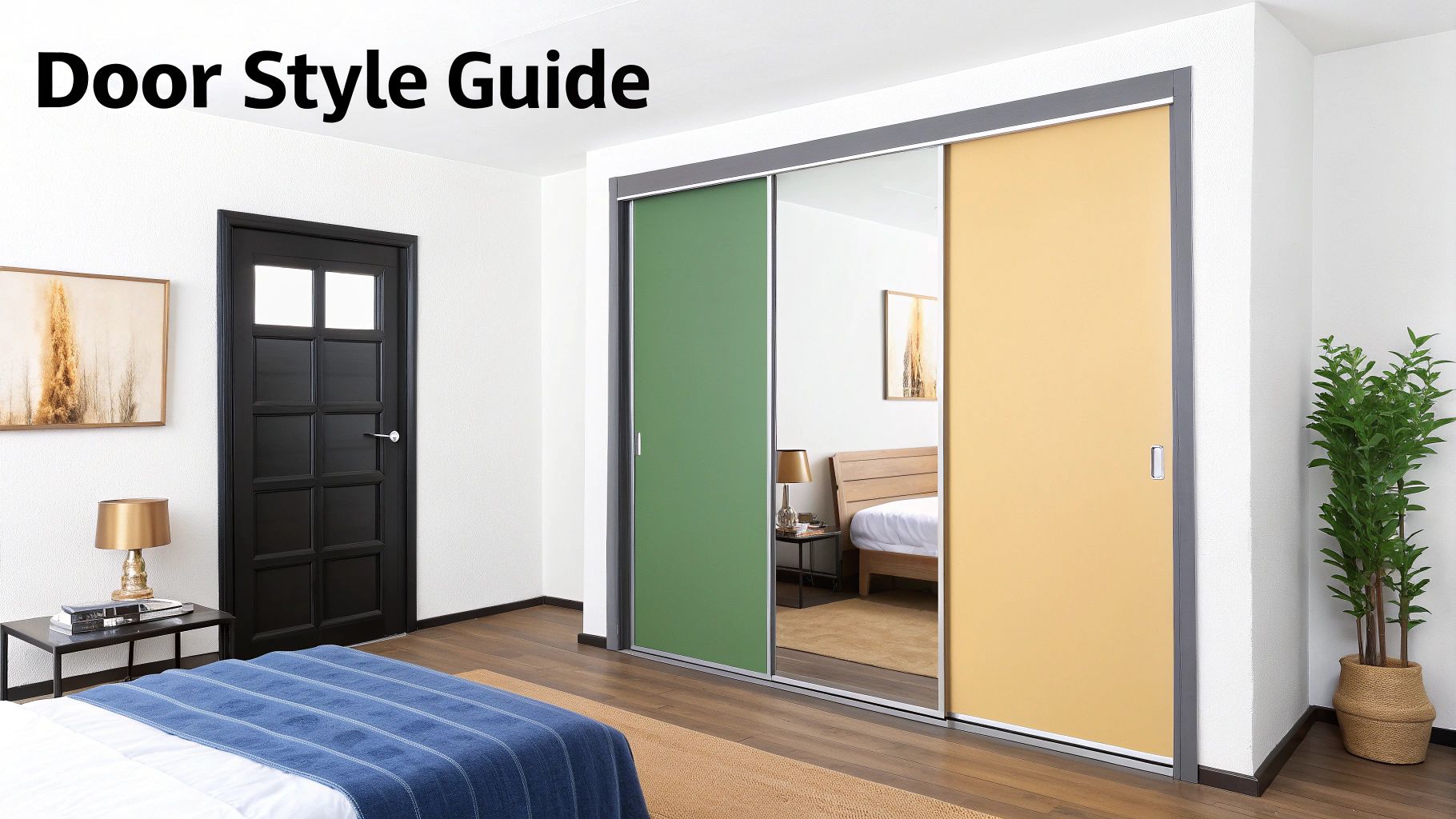
The exterior of your built-in wardrobe is so much more than a functional barrier. Think of it as a large-scale architectural feature that sets the entire aesthetic tone of your room. The door style you choose is a pivotal decision, influencing not just the look but also the flow and daily usability of your space.
The first big choice is between sliding and hinged doors. Each has its own distinct advantages, and the right option often comes down to your room's layout and personal preference. Getting this right is fundamental to a successful wardrobe design.
Hinged Doors: The Classic Choice for Full Access
Hinged doors, also known as casement doors, are the traditional choice. They swing outward into the room, and their biggest benefit is providing 100% unobstructed access to your wardrobe interior. This makes it incredibly easy to see everything at a glance—a huge plus when you're planning an outfit.
However, this full access comes with a trade-off: you need clearance. In a compact Singapore bedroom, the "swing space" required for hinged doors can clash with other furniture like bedside tables or the bed itself. They work best in rooms with a more generous floor plan where this isn't a concern.
Sliding Doors: The Space-Saving Solution
Sliding doors are the go-to option for most modern HDB flats and condominiums, where maximising every square metre is a top priority. Because they glide along a track instead of swinging out, they need virtually zero clearance in front. This simple difference frees up valuable floor space and allows for a much more flexible room layout.
The move towards custom built-ins in Singapore reflects wider trends across the Asia-Pacific. A recent survey found that 65% of property upgraders are opting for high-end custom built-ins. Sliding doors are the preferred choice in 60% of these urban installations precisely because they can save 30-40% of floor space. You can dive deeper into these built-in wardrobe market trends on Datahorizzon Research.
The only functional compromise with sliding doors is that you can only ever access one half of your wardrobe at a time. For most people, this is a small price to pay for the immense space-saving benefits they offer.
Design Trends We Are Seeing with Our Clients
Beyond the mechanism, the door's visual style is where you can truly let your personality shine. Based on what our clients are asking for, a few clear trends have emerged that blend timeless elegance with modern sensibilities, turning the wardrobe from a simple storage unit into a statement piece.
Here are a few popular styles we are currently bringing to life in homes:
- Fluted Panels: These vertically grooved panels add a layer of sophisticated texture and depth. They catch the light beautifully, creating subtle shadows that make the surface visually dynamic. Fluted designs work exceptionally well in both modern luxury and contemporary classic interiors.
- Mirrored Doors: A classic for a reason, mirrored doors are a powerful design tool. They create an illusion of spaciousness, making smaller rooms feel significantly larger and brighter by reflecting both natural and artificial light. Plus, a full-length mirror is incredibly practical.
- Sleek Handle-less Designs: For a truly minimalist and seamless look, handle-less doors are the ultimate choice. Using push-to-open mechanisms or integrated channel pulls, these doors create an uninterrupted, clean surface. This style is perfect for Scandinavian or modern industrial aesthetics where less is truly more.
Ultimately, the exterior of your built-in wardrobe should be a deliberate choice that complements your home’s overall design story, whether you prioritise saving space, achieving a specific look, or maximising accessibility.
Figuring Out the Cost of a Built-in Wardrobe
One of the first questions we always get is, "So, how much will my built-in wardrobe actually cost?" It's a great question, and the honest answer is: it depends. There’s no simple price tag, because a truly custom wardrobe is built around you. But once you understand the main ingredients that go into the final price, you can plan your budget with confidence and make smart choices along the way.
It’s no surprise that custom solutions are becoming a go-to for modern homeowners, especially here in Singapore. We’re seeing a huge demand for personalised, clever storage. In fact, market forecasts predict that revenue in the Bedroom Furniture segment, which includes built-ins, will hit US$267.57 million by 2025. You can dig deeper into the numbers on Singapore's furniture market trends on Statista.
The Four Big Cost Drivers
When we price a wardrobe, it really boils down to four key things. Thinking about these from the start will help you set a realistic budget.
Size and Measurement: This is the most straightforward factor. Bigger wardrobes need more materials and more labour, which means a higher cost. Most carpenters in Singapore price their work per-foot-run (pfr), so a sprawling, floor-to-ceiling unit will naturally be a bigger investment than a more compact one.
Your Choice of Materials: As we touched on earlier, the materials you pick play a huge role. A wardrobe built with high-grade plywood will cost more than one made from standard MDF. Likewise, premium finishes like sleek FENIX laminates or a beautiful real wood veneer will be priced higher than your everyday laminates.
The Complexity of the Interior: What’s inside counts—both for functionality and for cost. A simple layout with a hanging rail and a few shelves is the most wallet-friendly option. The price starts to climb as you add in more intricate features, like multiple soft-close drawers, pull-out trays for accessories, or other specialised organisers.
The Quality of the Hardware: Think of hardware as the engine of your wardrobe. It’s the part that does all the work. Opting for high-quality hinges, smooth drawer runners, and solid handles from trusted European brands might cost a bit more upfront, but it’s an investment you won’t regret. It’s the difference between doors that glide silently for years and ones that sag or drawers that stick.
A Look at Realistic Price Ranges in Singapore
To give you a clearer picture, here are some typical price ranges based on projects we’ve handled. Remember, these are just estimates to give you a starting point—the factors above will ultimately shape the final quote.
| Wardrobe Type | Description | Estimated Price Range (SGD) |
|---|---|---|
| Standard Laminate Wardrobe | A basic 6-foot wardrobe using standard plywood and laminate, with simple interiors. | $2,400 - $3,800 |
| Mid-Range Designer Wardrobe | An 8-foot wardrobe with premium laminates, soft-close hardware, and more drawers. | $4,000 - $6,500 |
| Luxury Custom Wardrobe | A 10+ foot wardrobe with veneer or FENIX finishes, extensive internal accessories. | $7,000+ |
So, where should you put your money for the best long-term value? We always advise clients to prioritise the core structure and the hardware. A solid plywood carcass and reliable soft-close mechanisms will ensure your wardrobe stands the test of time, even if you choose more standard finishes to stay on budget.
Getting a handle on these cost elements means you can have a much more productive conversation with your designer. It helps ensure your investment doesn't just fit your budget, but also delivers the quality and daily function you expect from a wardrobe that’s made just for you.
Our Design and Build Process From Start to Finish
Turning the idea of a perfect built-in wardrobe into a stunning, functional reality isn't magic—it's a process. We’ve spent years refining our approach to make sure every project flows smoothly, from the first chat to the final reveal. Think of it as a partnership, where we move logically from big ideas to the smallest details.
It all kicks off with our initial consultation. This isn't just about measurements; it's a discovery session. We'll listen to your frustrations with your current storage, understand your daily routines, and get a feel for the unique character of your space. What do you need to store? What's your dream aesthetic?
Visualising Your Perfect Wardrobe
Once we’ve got a solid grasp of your vision, our designers get to work. This is where your ideas start to feel real. Using specialised software, we create detailed 3D visualisations of your proposed wardrobe, placing it right into a model of your room.
This step is a total game-changer because it takes all the guesswork out of the equation. You get to see a photorealistic preview of the final design, letting you check proportions, play with finishes, and tweak internal layouts before a single piece of timber is cut. We can make adjustments together until every detail is exactly right.
Seeing your wardrobe in 3D is the moment it all clicks. It guarantees we’re perfectly aligned on the vision, giving you complete confidence that the finished piece will be exactly what you imagined for your space.
From Blueprint to Installation
With the 3D design signed off, the next step is a visit to our showroom. Here, you can get hands-on with our material selection. You’ll be able to see and feel the different laminates, veneers, and hardware options, helping you make informed choices on both the look and durability of your wardrobe.
Once materials are confirmed, our skilled carpenters begin their precision work in our local workshop. Finally, our professional installation team takes over. They work meticulously and efficiently, treating your home with respect and ensuring a flawless fit. We wrap things up with a final handover, walking you through everything and providing aftercare tips to keep your new wardrobe looking its best for years to come.
Your Built-In Wardrobe Questions, Answered
Stepping into the world of custom carpentry for the first time? It's natural to have a few questions. We've put together answers to the most common queries we get from homeowners just like you, drawing from years of experience and countless successful projects.
How Long Does The Entire Process Take?
This is always a big one, and for good reason! From the moment you give the design your final nod to the last handle being fitted, the whole process typically takes between four to six weeks.
The bulk of that time—about three to four weeks—is spent meticulously crafting every component in our workshop. The last week or two is all about the on-site assembly and installation. Of course, a highly complex design or special-order materials might shift the timeline slightly, but we’ll always give you a crystal-clear schedule before we begin.
Can I Move My Wardrobe If I Move House?
We get this question a lot, and the answer is a straightforward "no." A built-in wardrobe is a permanent fixture, not a piece of freestanding furniture. It’s designed and built to the exact millimetre of a specific room, integrating seamlessly with its unique walls, floors, and ceiling.
Think of it less like a piece of furniture you own and more like an architectural upgrade to the house itself. This permanence is exactly why we focus so heavily on getting the design perfect from day one—it’s a lasting investment in your property.
Custom Carpentry Versus Modular Systems?
Many homeowners wonder what really separates true custom carpentry from the off-the-shelf modular systems you see in big-box stores. While they both provide storage, the philosophy and the final result are worlds apart.
- Custom Carpentry: This is about complete design freedom. We build to the exact millimetre, which means a perfect, wall-to-wall fit with absolutely no wasted space. The quality of materials and hardware is also in a completely different league.
- Modular Systems: These are limited by standard-sized boxes and components. This almost always leads to awkward gaps, filler panels, and a look that feels "placed in" rather than "built-in," as they just can't adapt to a room's specific dimensions.
At the end of the day, custom work provides a superior finish, unmatched durability, and a level of personalisation that modular units simply can't replicate.
How Do I Clean and Maintain My New Wardrobe?
Keeping your new wardrobe looking brand new is surprisingly simple. For most laminate and veneer surfaces, all you’ll need is a soft, damp cloth to wipe away dust and smudges. It's best to steer clear of harsh chemical cleaners, as they can degrade the finish over time.
If you have glass or mirrored doors, a standard glass cleaner will do the trick, leaving you with a perfect, streak-free shine.
Ready to create a wardrobe that’s perfectly suited to your space and style? The team at KIVO is here to guide you through every step, from initial design to flawless installation. Discover the difference true craftsmanship makes at https://kivo.com.sg.