For standard custom carpentry in Singapore, like kitchen cabinets and wardrobes, a practical starting budget is $180 to $250 per foot run (pfr). This rate typically covers good quality plywood with a laminate finish and standard hardware.
For more specialised or complex pieces, such as a custom TV console with fluted panels or a feature wall, prices can range from $250 to over $500 pfr. These higher costs reflect the use of premium materials, intricate designs, and more intensive labour required to achieve a high-end finish. Understanding these baseline figures is the first step in planning a realistic renovation budget.
A Practical Carpentry Price List for Singapore Homes
Budgeting for a renovation can feel overwhelming, and custom carpentry is often a significant investment. However, it's an investment that delivers daily value by providing storage solutions and aesthetics perfectly tailored to your lifestyle.
To simplify your planning, we've compiled a price list based on the projects we frequently deliver for HDB and condo owners. Use this as a guide to establish a practical budget for your own project.
Estimated Carpentry Price Ranges Per Foot Run (pfr)
Here is a quick overview of the typical price ranges for common custom carpentry works in Singapore. This table will help you get a ballpark figure for your project from the outset.
| Carpentry Item | Estimated Price Range (SGD per foot run) | Common Materials |
|---|---|---|
| Kitchen Top Cabinets | $180 - $220 | Plywood with laminate finish |
| Kitchen Bottom Cabinets | $200 - $250 | Plywood with laminate, solid surface/quartz top |
| Full-Height Wardrobe (Casement) | $240 - $280 | Plywood with laminate, includes standard casement doors |
| Full-Height Wardrobe (Sliding) | $280 - $350 | Plywood with laminate, includes quality sliding mechanism |
| TV Console | $180 - $280 | Plywood with laminate or veneer finish |
| Feature Wall | $25 - $55 (per square foot) | Craftstone, wood panels, laminates |
| Full-Height Shoe Cabinet | $220 - $300 | Plywood with laminate, includes ventilation features |
Note: These are estimates. The final cost depends on material selection, design complexity, and chosen hardware. Always request a detailed quote for an accurate price.
How Carpentry Prices Are Calculated
Understanding how a carpentry quote is built is essential for managing your renovation budget. In Singapore, the industry standard for pricing custom furniture is per foot run (pfr). It’s a straightforward calculation based on the length of the cabinetry.
Here's a practical example: You're quoted $250 pfr for a new full-height wardrobe. If the design requires a length of 6 feet, your baseline cost is $1,500 (6 ft x $250). This pfr rate provides a clear starting point, but other factors will influence the final price.
Primary Cost Drivers
The pfr rate is a variable figure that changes based on your project choices. The final cost is a combination of materials, hardware, design complexity, and finishing.
Material Selection: The core material is the foundation of your project's cost. For Singapore's humid climate, plywood is the preferred choice for its durability and moisture resistance. Cheaper options like MDF exist but compromise on longevity. Premium solid woods like teak or oak will significantly increase the cost.
Hardware and Mechanisms: The functional components are a key cost factor. A base pfr price almost always includes standard hinges and drawer runners. Upgrading to premium soft-closing hardware from trusted brands like Blum or Hafele will add a per-unit cost. We see this as a worthwhile investment in user experience and durability.
Design and Finishing Impact
The aesthetic details you choose have a significant impact on the final quotation. Intricate designs require more skilled labour, which is reflected in the cost.
Based on recent client requests, features like minimalist handle-less cabinets and elegant fluted panels are in high demand. While visually stunning, they require precision carpentry and can increase labour costs by 15-25% compared to a standard flat-panel design.
The final surface finish determines the look, feel, and durability of your furniture. Here’s how common options compare:
- Laminates: The most popular and cost-effective choice. Laminates offer a vast array of colours and textures, including realistic wood grains. They are durable and easy to maintain.
- Veneers: A thin layer of real wood is bonded to a plywood base, providing the authentic look of solid wood at a more accessible price point. Proper application requires skilled craftsmanship.
- Spray Painting: Delivers a seamless, high-end look in any custom colour. This is the most labour-intensive finishing process, involving multiple stages of sanding and coating, making it the most expensive option.
A Detailed Price Breakdown for Kitchen Cabinetry
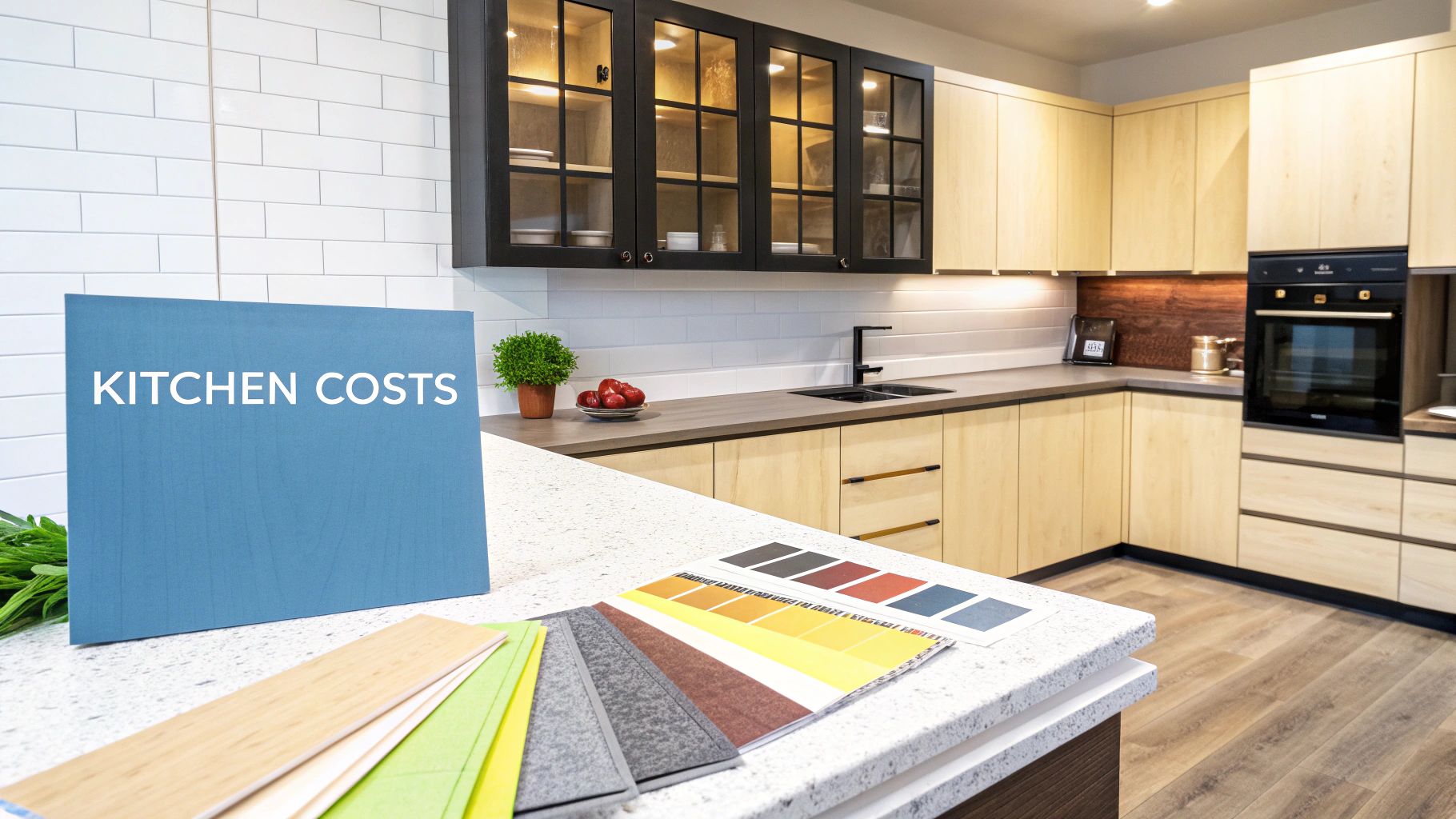
The kitchen is the heart of the home and often accounts for a significant portion of the renovation budget. Understanding how these costs are broken down is key to making informed decisions.
A carpentry quote for a kitchen is not a single lump sum. It's itemised into three main categories: top (wall-hung) cabinets, bottom (base) cabinets, and full-height units like pantries. Each has a distinct price point based on its construction and material usage.
Calculating Cabinet Costs
Bottom cabinets typically cost more per foot run (pfr) than top cabinets. This is because base units must support a heavy countertop and often incorporate drawers or complex pull-out mechanisms, which require more labour and materials than simple shelves.
Full-height units are the most expensive, reflecting the larger volume of materials and the intricate internal configurations required for built-in appliances or pantry systems.
To illustrate, let's use a typical HDB kitchen requiring 7 feet of top cabinets and 10 feet of bottom cabinets.
- Top Cabinets: 7 ft @ $180/pfr = $1,260
- Bottom Cabinets: 10 ft @ $200/pfr = $2,000
- Total Carpentry Cost (before countertop): $3,260
For a more in-depth look at these numbers, you can explore this comprehensive carpentry pricing guide.
The Crucial Role of Countertops
The countertop defines your kitchen's aesthetic and functionality. It is a major cost component, always quoted separately and priced per foot run. Your material choice here will significantly impact the final budget.
From our experience, the best countertop choice balances aesthetics, lifestyle, and budget. A material must not only look good but also withstand daily cooking, cleaning, and usage patterns.
Let's examine the most popular options we install for our clients.
Countertop Material Cost Comparison
Choosing the right countertop involves weighing cost, durability, and maintenance. This table breaks down common materials to help you compare.
| Material | Average Price (SGD pfr) | Pros | Cons |
|---|---|---|---|
| Solid Surface | $80 - $130 | Seamless appearance, non-porous, easy to repair minor scratches. | Can be vulnerable to heat damage and staining from strong substances. |
| Quartz | $100 - $160 | Extremely durable, non-porous, and highly resistant to scratches and stains. | Can be damaged by extreme heat (thermal shock); higher price point. |
| Sintered Stone | $120 - $220 | Highly resistant to heat, scratches, and UV rays, making it suitable for outdoor use. | Premium price tag; can be brittle and may chip on heavy impact. |
Let's apply this to our HDB kitchen example. Choosing a mid-range quartz countertop at $120 pfr for the 10-foot run of bottom cabinets adds $1,200 to the total cost. This brings the estimated kitchen total to $4,460 ($3,260 for cabinets + $1,200 for countertop).
Working Out the Cost of Custom Wardrobes and Storage
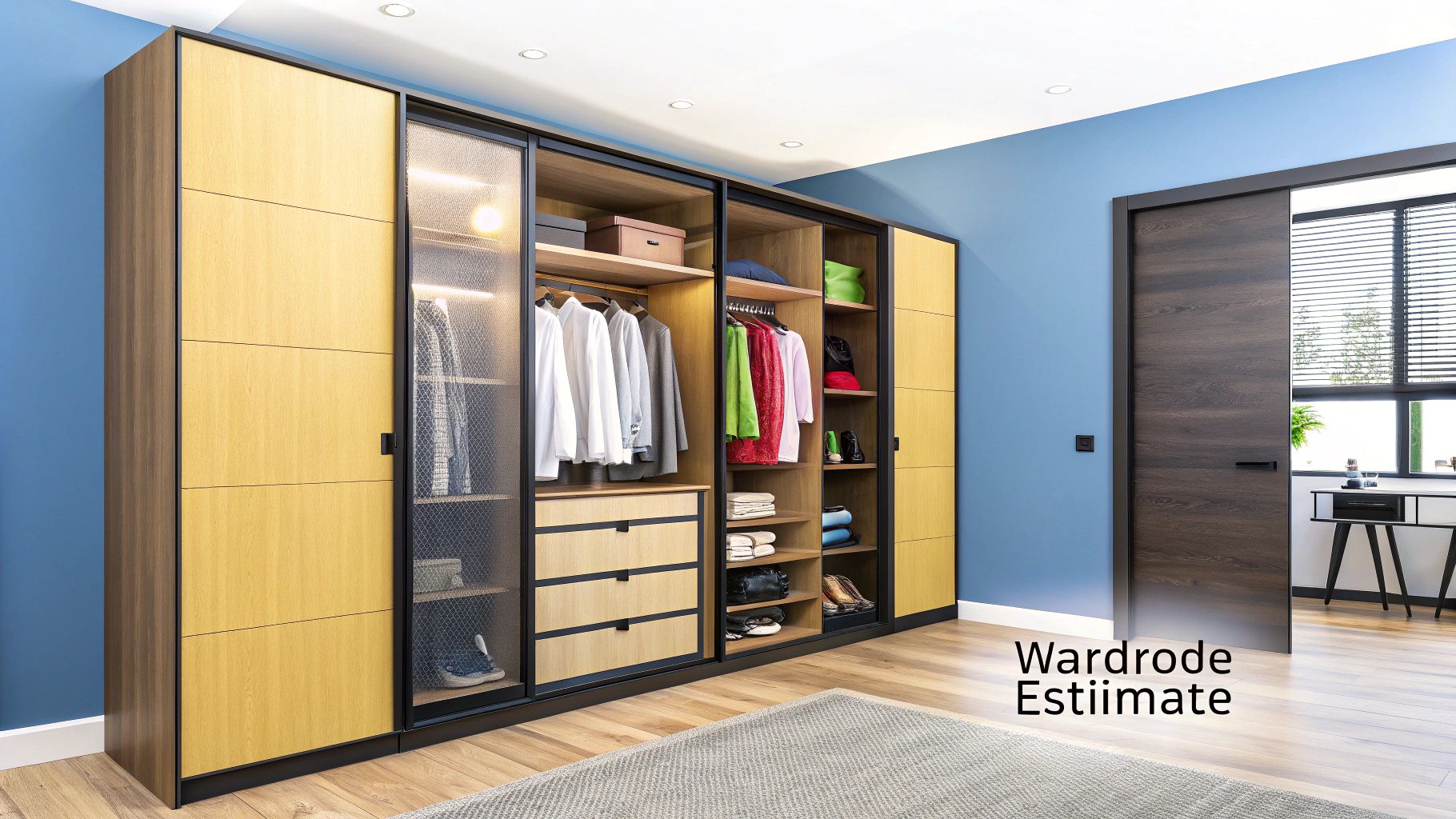
A custom wardrobe is the foundation of an organised bedroom, designed to maximise every inch of your space. When reviewing a carpentry price list, the most significant factor affecting a wardrobe's cost is the door mechanism.
Your two primary options are casement (swing) doors and sliding doors. Each has a different price point and is suited to different room layouts.
Casement vs. Sliding Door Pricing
Casement doors, which swing outwards, are generally the more affordable option. The hinge systems are simpler and require less complex hardware and installation.
Sliding doors are an excellent space-saving solution for smaller rooms where swing clearance is limited. They operate on a track system that involves more sophisticated hardware and precise installation, which increases the cost.
For example, a standard casement wardrobe may start at $240 pfr. The same wardrobe with a quality sliding mechanism could start from $280 pfr, reflecting the higher cost of the hardware. You can see how bespoke features influence pricing in these latest custom carpentry pricing estimates.
How the Insides Impact the Final Bill
The wardrobe's price is determined by its interior configuration as much as its exterior. A basic layout with shelves and a hanging rod is the most economical choice.
However, the value of custom carpentry lies in creating an interior that matches your specific storage needs. While these features add to the cost, they provide significant long-term organisational benefits.
Many of our clients have specific storage challenges—from organising a watch collection to creating space for formal wear. These personalised details are what make custom work a truly valuable investment for a well-ordered home.
Consider how these common additions affect the total price:
- Drawers: Adding drawers, especially with soft-closing runners, increases material and labour costs compared to open shelving.
- Pull-Out Trays: Ideal for accessories, these require special runners and dividers, which add to the cost.
- Integrated Lighting: LED strip lights add a touch of luxury and improve visibility but require additional materials and electrical work.
- Specialised Compartments: Custom-sized sections for luggage or long gowns add complexity and cost to the build.
Pricing Other Custom Carpentry Projects
Custom carpentry extends beyond kitchens and wardrobes to include purpose-built pieces that solve specific storage problems and enhance your home's design.
Understanding the pricing for items like TV consoles and shoe cabinets is key to creating a comprehensive renovation budget. While pfr is often used, the final price is heavily influenced by design complexity and labour.
TV Consoles and Feature Walls
A custom TV console combines style and function, concealing cables and organising media devices. A simple, floor-standing unit starts at around $180 pfr.
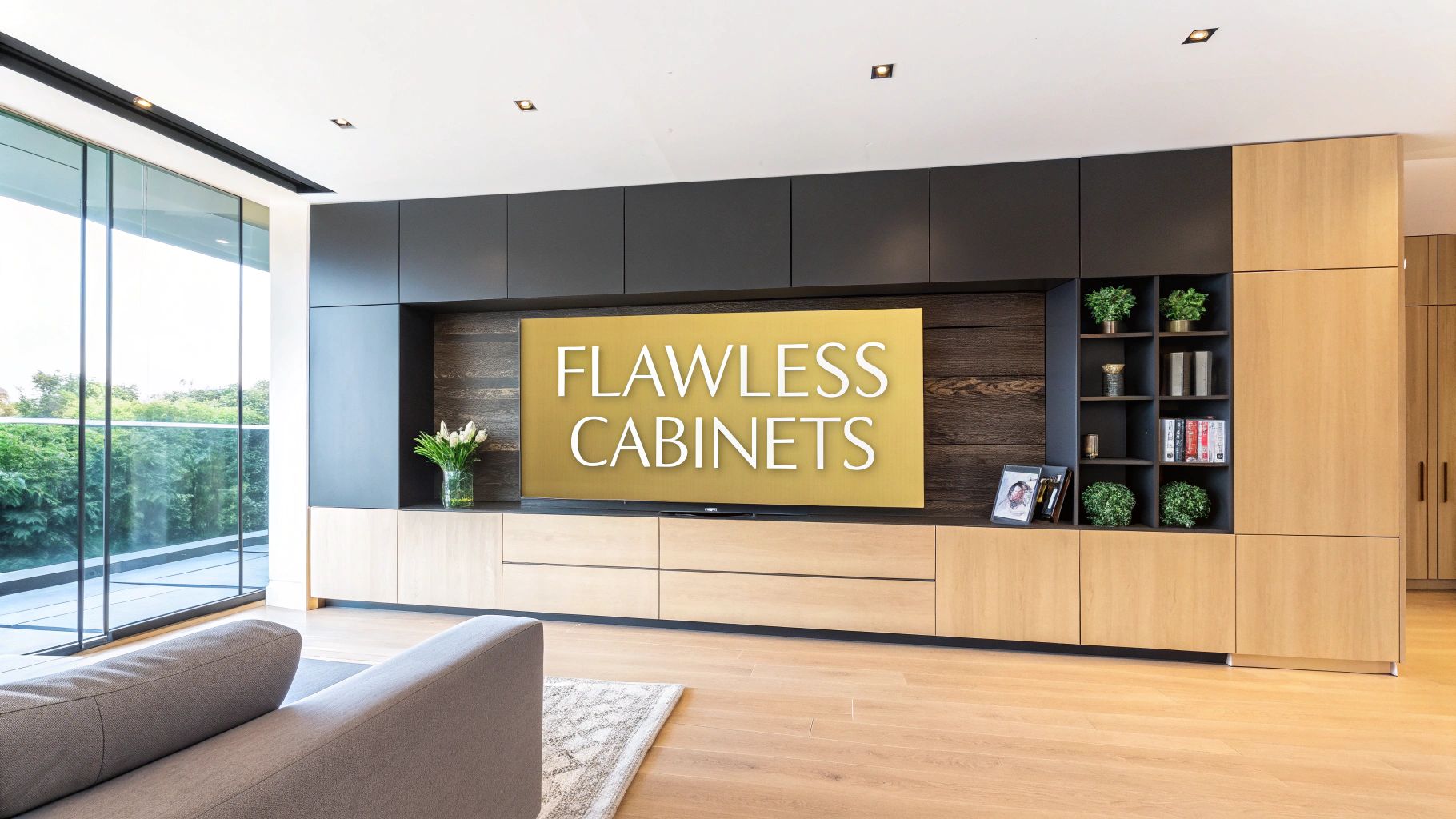
A more popular design we implement is the floating console, which creates a modern, spacious feel. This requires internal reinforcement and a more complex wall-mounting process, pushing the price into the $220 - $280 pfr range.
Feature walls are priced differently, typically per square foot (psf). A basic wall with laminate panels may cost $15 - $25 psf. More elaborate designs with fluted panels, a Craftstone finish, or integrated shelving can cost $30 - $55+ psf due to more expensive materials and intensive labour.
In our experience, the most successful designs integrate the feature wall and TV console into a single, cohesive unit. This creates a seamless, high-impact look but requires careful planning to manage design complexity and budget.
Shoe Cabinets and Study Tables
For shoe cabinets and study tables, practicality drives the design and cost. A full-height shoe cabinet typically costs $220 - $300 pfr. This price often includes features our clients find essential:
- Ventilation: Slatted doors or concealed ventilation holes are crucial to prevent mould and odour buildup.
- Angled Shelving: A simple design trick to maximise storage capacity within a compact space.
- Integrated Seating: A built-in bench is a popular and convenient addition that adds to the overall cost.
Similarly, the price of a custom study table is determined by its components. A simple floating desk is affordable, but costs increase as you add drawers, overhead shelving, or cable management systems to create a fully functional workspace.
Getting an Accurate Carpentry Quotation: What You Need to Know
A detailed quotation is the foundation of a successful renovation project, preventing budget overruns and misunderstandings. To receive an accurate price, you must provide your contractor with clear and specific information. A vague request will always result in a vague estimate.
The more prepared you are, the smoother the quoting process will be. Gather the following documents before approaching contractors to ensure you get a reliable quote based on a realistic carpentry price list.
What to Hand Over to Your Contractor
Floor Plan with Measurements: An accurate floor plan with the dimensions of the walls where carpentry will be installed is non-negotiable. For a TV console, for example, note the full wall length and the intended placement of the unit.
Design Inspiration: Visuals are more powerful than words. Collect images from Pinterest or design magazines that capture the style, finish, and overall look you want to achieve. This helps align expectations immediately.
Functional Needs: Detail how you will use the piece. For a wardrobe, do you need more hanging space for long dresses or more drawers for folded items and accessories? The more specific you are, the more accurate the quote will be.
How to Read a Detailed Quotation
A professional quotation is a transparent, line-by-line breakdown of all costs, not just a single total. This detail protects both you and the contractor.
A common mistake is comparing quotes based only on the final price. A cheaper quote might indicate lower-quality materials or hidden costs that will appear later. A reliable quote breaks everything down so you understand exactly what you are paying for.
Look for these key components in any quote you receive. Their absence is a red flag.
Material Specifications: The quote must clearly state the type of plywood, the brand and code for the laminate, and the countertop material.
Hardware Details: It should specify if standard hardware is included or if it covers premium brands like Blum or Hafele for soft-closing systems.
Finishing: The type of finish—laminate, veneer, or spray paint—should be clearly stated.
Inclusions and Exclusions: The quote must explicitly state what is covered. Are installation, delivery, and GST included, or are they additional charges?
Warranty Information: A reputable firm will offer a warranty on workmanship. Check the duration and what it covers.
Your Carpentry Cost Questions, Answered
When reviewing a carpentry price list, several key questions consistently arise. Here are clear, actionable answers to help you plan your renovation with confidence.
Why Does Custom Carpentry Cost More Than Store-Bought Furniture?
You are paying for a tailored solution, not a mass-produced item. Custom carpentry is designed and built to the exact dimensions of your home, maximising space and functionality in a way off-the-shelf furniture cannot.
The price difference covers:
- A Perfect Fit: Custom work eliminates awkward gaps and utilises every centimetre of space efficiently.
- Material Control: You choose the materials, from durable, moisture-resistant plywood to specific hardware, directly influencing the longevity of your investment.
- Expert Craftsmanship: The cost includes the time and skill of professionals for consultation, fabrication, and meticulous on-site installation.
You are investing in a solution built for your home, your needs, and your style—and built to last.
How Can I Get the Custom Look for Less Without Compromising on Quality?
Managing your budget doesn't mean you have to settle for poor quality. Here are smart strategies to reduce costs effectively:
- Stick to Standard Finishes: High-pressure laminates are durable, easy to maintain, and available in a vast range of styles. They provide a premium look without the expense of real wood veneers or custom spray-painting.
- Simplify Interiors: The more complex a cabinet's interior—with numerous drawers and pull-out trays—the higher the cost. Opting for a simpler layout with more shelving and hanging space can significantly reduce the price.
- Be Strategic with Customisation: Identify which items truly require a custom build to fit a specific space. For other areas, a well-chosen retail piece can complement your custom work and reduce overall costs.
Is Installation and GST Included in the Quoted Price?
Always clarify this before signing any contract. A transparent quote should itemise all costs, including materials, labour, delivery, and installation. Never assume these are included.
As a standard practice, always ask, "Is this price inclusive of GST?" This simple question can prevent a significant and unexpected increase in your final bill.
We ensure our quotes provide a complete breakdown, but it is a good habit for homeowners to verify these details with any contractor.
Ready to transform your space with craftsmanship that fits your vision and budget? The team at KIVO brings decades of design experience to create interiors that are both beautiful and functional. Start your design journey with us today.