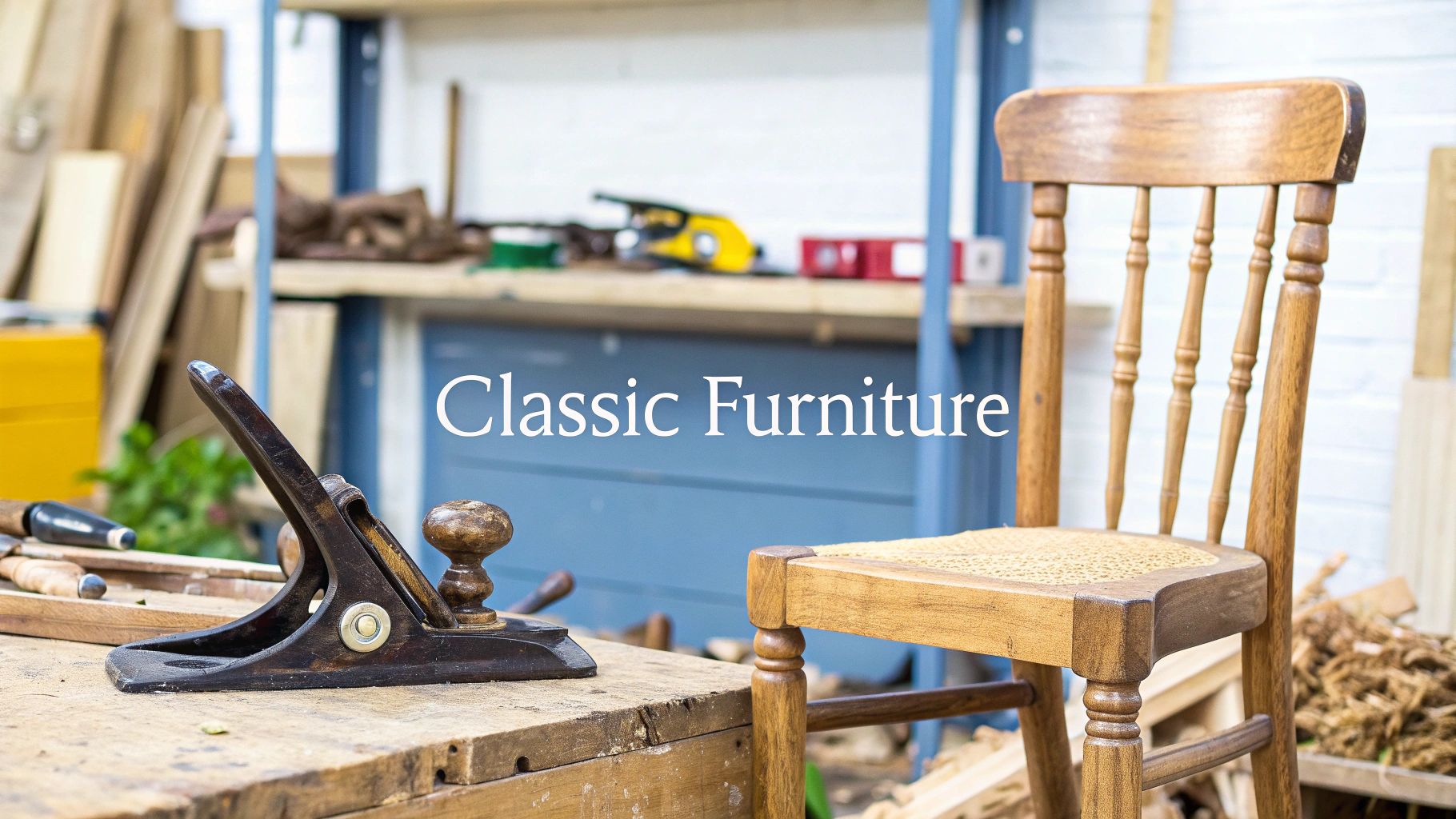
Classic furniture design is not about preserving relics; it’s about honouring superior craftsmanship to create pieces that tell a story. The process focuses on practical structural repairs, timeless aesthetic updates, and the use of high-quality materials to ensure a piece of furniture remains functional and beautiful for generations. This approach is a smart, sustainable way to furnish a home with character.
Why Classic Furniture is a Smart Investment
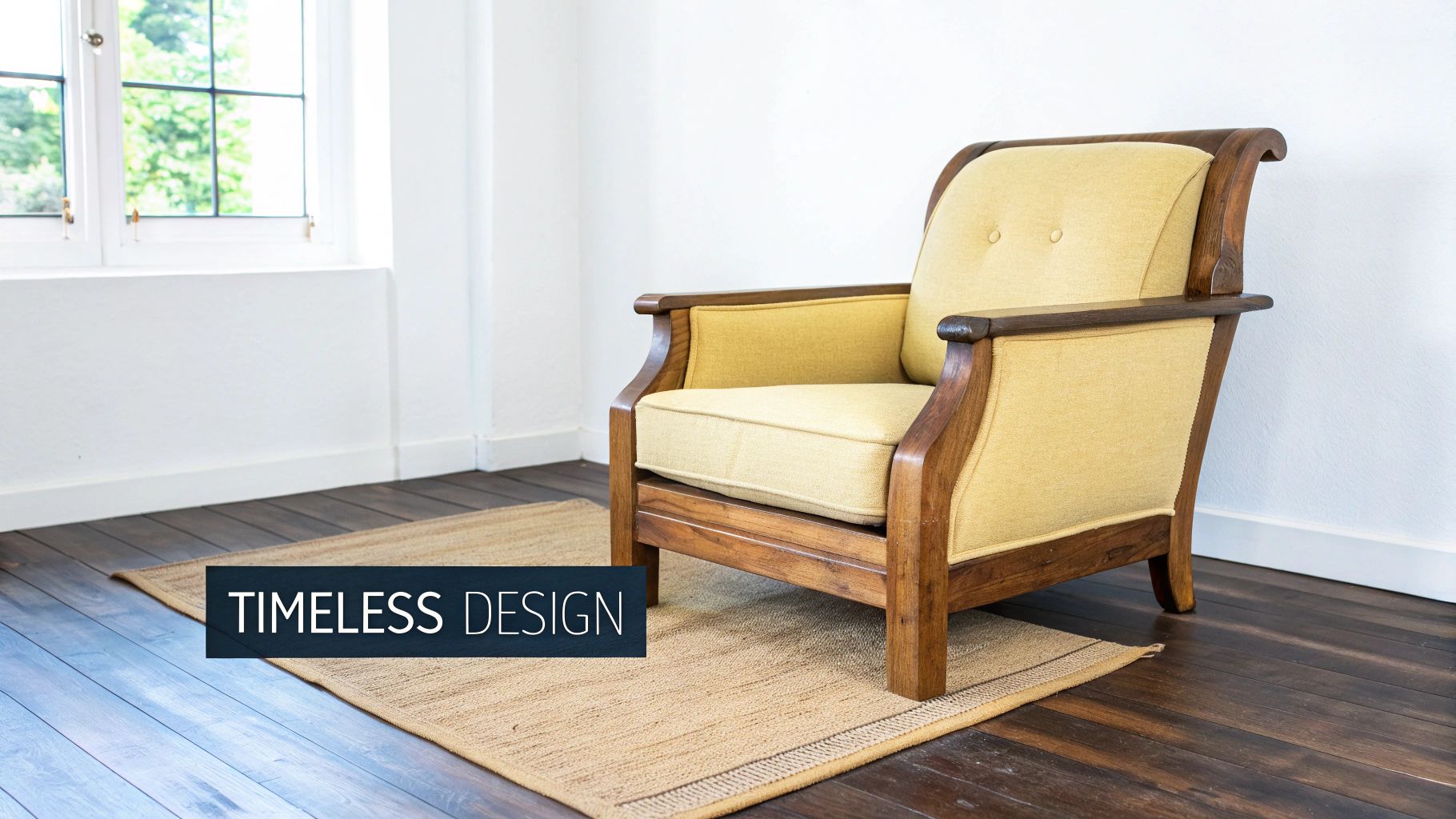
In a world of fast furniture and fleeting trends, classic pieces offer permanence. Unlike items that feel fresh for a season and then quickly date themselves, classic designs are grounded in principles of form and function that remain relevant. They are not 'old-fashioned' but are wise investments in enduring style.
Their lasting appeal comes from a combination of elements that work together to anchor a room. Whether it’s a streamlined Mid-Century Modern sideboard or a sturdy Colonial-era writing desk, each item adds a layer of history and character that mass-produced furniture simply cannot replicate.
The Hallmarks of Timeless Design
True classic design comes down to a few key attributes that our clients in Singapore consistently seek. These are the practical details that separate a temporary purchase from a lifelong investment.
- Balanced Proportions: Classic pieces are designed with harmonious dimensions. Their height, width, and depth create a sense of visual order that is naturally pleasing and easy to integrate into various room layouts.
- Superior Craftsmanship: This is about visible construction quality. For example, look for dovetail joints in drawers instead of staples or glue, solid wood frames instead of particleboard, and hand-carved details that demonstrate skilled workmanship.
- Durable Materials: You’ll find solid hardwoods like oak, walnut, and teak. These materials don’t just look beautiful; they are chosen for their durability and can withstand decades, or even centuries, of use with proper care.
A single, well-chosen classic piece can ground an entire room, adding a sense of permanence that fleeting trends cannot match. It becomes the heart of the space, around which modern life can comfortably revolve.
The Practical Role of Renovation Works
This is where classic furniture design and renovation works intersect. Renovation is a sustainable way to give cherished items a new lease on life. It’s about honouring the original design while skillfully updating it for contemporary living.
For example, a client brought us an armchair passed down from her grandmother. It had a solid teak frame but worn, dated floral upholstery. We reinforced the joints for stability and reupholstered it in a durable, stain-resistant linen that matched her modern living room. The process preserved its sentimental value and classic form while making it a practical, everyday piece for her family.
How to Identify Iconic Furniture Styles
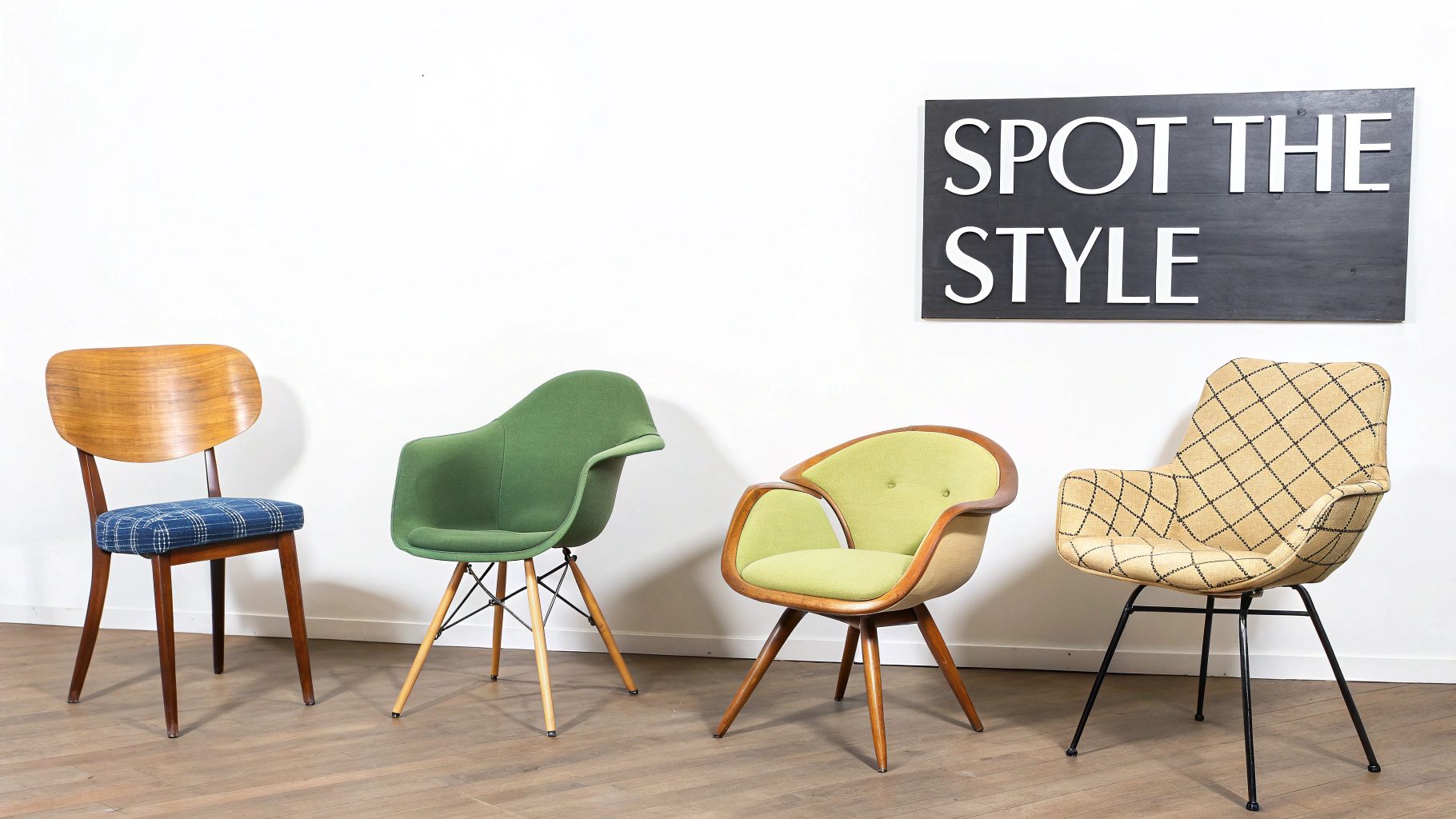
Learning to spot an iconic furniture style empowers you to make thoughtful choices, whether you're assessing a family heirloom or browsing a vintage shop. Instead of getting bogged down in dates, focus on the distinct visual language and philosophy of each era.
Understanding the "why" behind a style makes identifying the "what" much easier. This insight is crucial for any classic furniture design and renovation works, as it ensures any restoration respects the piece's original spirit.
Mid-Century Modern: The Beauty of Function
Born from the post-war optimism of the 1940s to 1960s, Mid-Century Modern (MCM) design prioritises simplicity and function. It stripped away fussy ornamentation in favour of clean lines, gentle organic curves, and a connection to natural materials.
The goal was to create beautiful, practical furniture accessible to the average family, driving an emphasis on elegant and efficient craftsmanship.
Actionable Tip: Look for these key identifiers:
- Tapered Legs: Thin, elegant legs that often splay outwards on chairs, tables, and cabinets.
- Clean Geometric Shapes: Simple rectangles and circles, often softened with curved edges.
- Natural Materials: Solid woods like teak and walnut, often paired with then-new materials like bent plywood, plastic, or metal.
A perfect example is the Hans Wegner Wishbone Chair. Its steam-bent wooden frame and woven paper cord seat are a masterclass in organic form meeting ergonomic comfort.
Art Deco: Glamour and Geometry
Art Deco, dominant in the 1920s and 1930s, is the antithesis of MCM's understated function. This style is about glamour, luxury, and a bold belief in progress. It is theatrical, self-assured, and unapologetically decorative.
Think of the grand, geometric skyscrapers of the era—Art Deco furniture captures that same verticality and sharp, symmetrical flair on a smaller scale.
Art Deco isn't just a style; it's a statement. Its signature is the use of rich materials, bold geometric patterns, and a sense of lavishness that brings energy and sophistication to any room.
Actionable Tip: Look for these tell-tale signs:
- Symmetry and Repetition: Strong, repeating geometric patterns like zig-zags, sunbursts, and chevrons.
- Luxurious Materials: High-gloss lacquered wood, mirrored surfaces, exotic wood veneers, and bold brass or chrome inlays.
- Bold, Stepped Forms: Pieces with a strong, monumental feel, featuring stepped profiles and sharp, commanding angles.
An Art Deco cabinet might feature a glossy black lacquer finish with striking, symmetrical inlay patterns of mother-of-pearl or brass. Once identified, understanding the true value of antique furniture can help guide your renovation decisions.
Colonial Elegance: Durability Meets Refinement
Colonial-style furniture tells the story of European settlers adapting traditional designs to new environments, particularly tropical climates like Southeast Asia. At its core, it is a practical style built from dark, durable woods to withstand humidity, yet it retains a formal elegance.
The design prioritises sturdiness and air circulation, which is why features like caning and slatted designs are common. Iconic pieces include grand four-poster beds and planter's chairs with their distinctive long armrests. This blend of functionality and refined aesthetics makes it a timeless choice for many Singapore homes.
To help you distinguish the defining characteristics of these iconic design eras for your next project, use this quick reference table.
Identifying Features of Popular Classic Furniture Styles
| Style | Defining Characteristics | Primary Materials | Iconic Examples |
|---|---|---|---|
| Mid-Century Modern | Clean lines, organic curves, tapered legs, minimal ornamentation, function over form. | Teak, Walnut, Rosewood, Plastic, Metal, Glass. | Eames Lounge Chair, Noguchi Table, Wishbone Chair. |
| Art Deco | Symmetrical, geometric patterns (chevrons, sunbursts), stepped forms, bold colours. | Lacquered Wood, Exotic Veneers, Chrome, Brass, Glass, Mirrors. | Streamline Moderne Armchairs, Sunburst Mirrors, Waterfall Vanities. |
| Colonial | Dark, heavy woods, turned legs, intricate carvings, caning or latticework for ventilation. | Mahogany, Teak, Rosewood, Rattan, Cane. | Four-Poster Beds, Planter's Chairs, Campaign Chests. |
This table provides a clear snapshot of what to look for. With a little practice, you'll be able to recognise the history and character behind each piece.
The Craft Behind Furniture Renovation
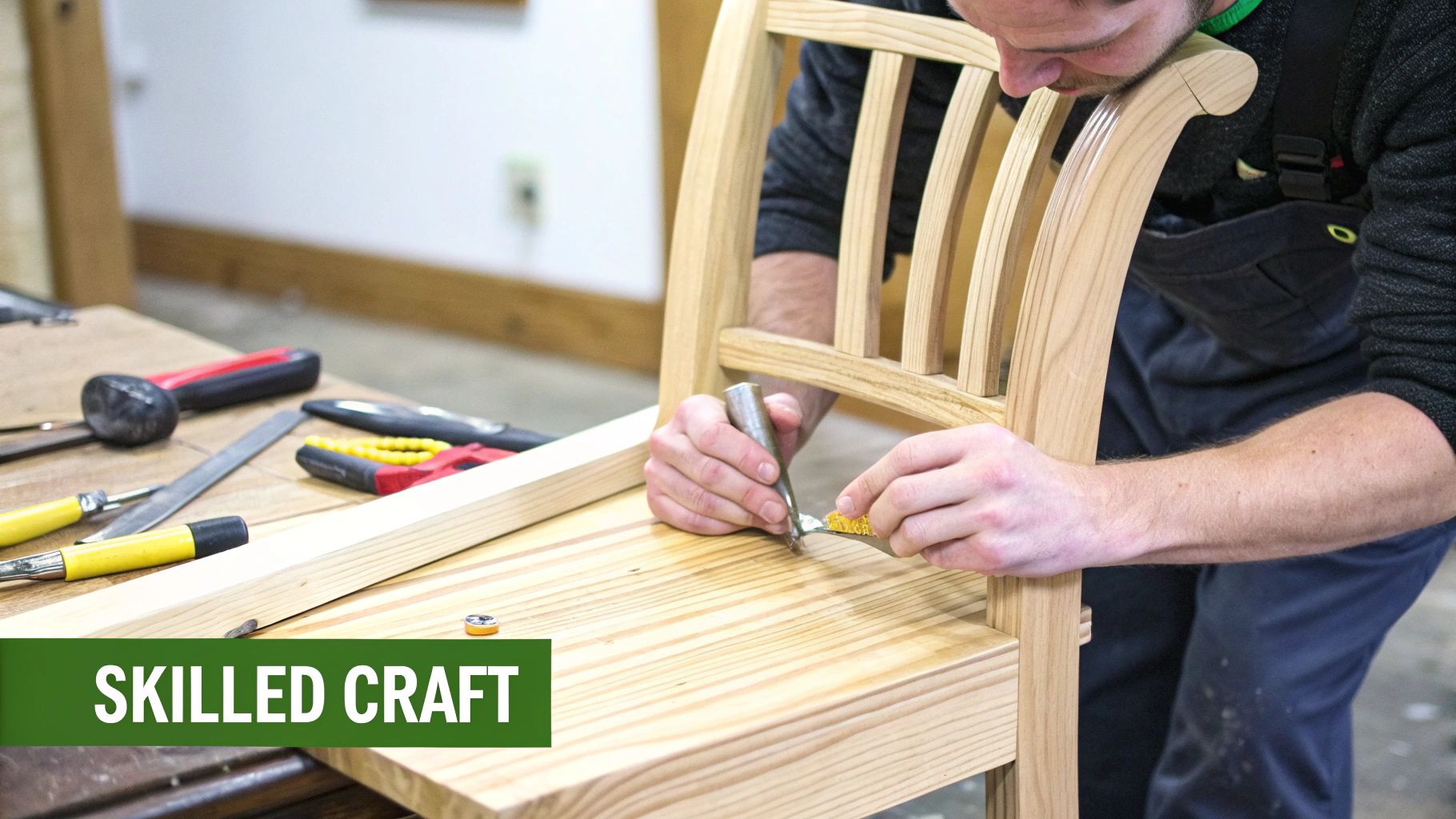
Behind every restored piece is a meticulous process where technical skill meets artistic vision. Classic furniture design and renovation works are far more than a simple cosmetic touch-up; they are a step-by-step journey to honour a piece's history while preparing it for decades of future use.
The first step is always a thorough assessment. This involves a deep dive into the furniture's structural health, material makeup, and historical context. We look for specific issues like woodworm, loose joints, or failing finishes to create a precise action plan. This diagnosis ensures the renovation respects the original craftsmanship while addressing modern needs for durability.
The Stages of Professional Restoration
Once the assessment is complete, the hands-on work begins. The process is methodical, with each stage building on the last.
- Structural Fortification: This is the foundation. We address weaknesses in the "skeleton," such as loose joints or cracked frames. This often means carefully disassembling parts to clean out old, failed glues and reinforcing connections with modern adhesives and traditional joinery for lasting stability.
- Surface Preparation: Next, we address the "skin." Old, damaged finishes are gently stripped using methods that protect the underlying wood. This is a delicate process that demands patience to avoid scratching or damaging the original material, slowly revealing the raw beauty beneath.
- Repairs and Refinements: With a solid structure and a clean surface, we fix cosmetic issues. This might involve filling cracks with custom-matched wood fillers, replacing missing veneer with grain-matched pieces, or sanding surfaces to a perfectly smooth finish.
The Art of Finishing and Upholstery
With the foundational work done, the final, transformative steps can begin. This is where the piece’s personality is reborn, blending historical accuracy with modern durability.
Professional reupholstery is a craft in its own right. It involves stripping the piece down to its frame, checking and repairing the springs and padding, and then skilfully applying new fabric. The choice of material is crucial—it must complement the furniture's era while meeting today’s standards for comfort and wear.
Likewise, finishing is a multi-layered art. It often involves staining to achieve the perfect hue, followed by multiple layers of modern, durable lacquers or oils. Each layer is hand-sanded to build up a deep, resilient, and stunning finish that protects the wood.
Think of structural repair as strengthening the furniture's skeleton, while refinishing is giving it a brand new, protective skin. Both are essential for creating a piece that is not only beautiful but built to last.
This detailed approach to classic furniture design and renovation works is gaining significant traction in Singapore. We are seeing a strong client preference for reviving vintage influences within premium luxury furniture. Based on our project data, we’ve seen a 22% increase in custom renovation projects over the last two years, with clients specifically looking to integrate restored pieces from the 1970s and 1980s into modern interiors.
Making the Call: Restore or Replace?
It’s a common dilemma: you have an older piece of furniture and must decide whether to invest in restoration or replace it entirely. This decision is a mix of practicality, emotional attachment, and an honest assessment of the piece’s potential. Getting this right saves time, money, and future regret.
The choice isn't always clear-cut. A treasured family sideboard with surface scratches is a definite "restore." A modern particleboard dresser with severe water damage is likely a "replace." To make a confident decision, use a simple evaluation framework.
Your Evaluation Checklist
Before committing to any classic furniture design and renovation work, run your piece through this checklist.
- Sentimental Value: Does this piece have a story? Is it a family heirloom? High sentimental value can often justify the restoration cost, as memories are priceless.
- Structural Integrity: This is critical. Is the frame solid? Wobbly joints can be fixed, but rotting or warped wood is a major red flag. The piece needs good "bones" to be worth restoring.
- Material Quality: What is it made of? Solid hardwoods like teak, mahogany, or oak are almost always worth saving due to their durability and value. A thin veneer over particleboard often makes major repairs cost-prohibitive.
- Cost-Benefit Analysis: Get a professional quote for the restoration. Compare that to the cost of buying a new piece of similar quality. Actionable Tip: As a general rule, if the restoration cost is 70% or more of the replacement cost for a new, high-quality equivalent, you need to weigh the other factors (like sentimental value) very carefully.
Analysing Common Scenarios
Let's apply this checklist to two real-world examples from our Singapore projects.
Scenario A: Your Grandparent's Teak Sideboard
This piece has been in your family for 50 years. It holds immense sentimental value, and the solid teak construction is sturdy. The surface is covered in scratches and water rings. A new, solid teak sideboard of similar quality would cost several thousand dollars.
Verdict: Restore. The combination of high sentimental value, excellent material quality, and a solid structure makes this a perfect candidate. The cost to professionally refinish it will be a fraction of buying a new replacement, and you will preserve a priceless family heirloom.
Scenario B: A 10-Year-Old Veneer Dresser
You bought this from a big-box store. The veneer is peeling, and a drawer runner has failed because the particleboard core crumbled. It has no sentimental value.
Verdict: Replace. With poor materials and structural failure, the repair cost would likely exceed its original price. That money is better invested in a new, higher-quality piece designed to last.
Ultimately, the decision is personal. Our role is to provide an expert assessment so you can make an empowered choice, whether that means bringing a cherished piece back to life or investing in a new classic.
Blending Classic Pieces in Modern Singapore Homes
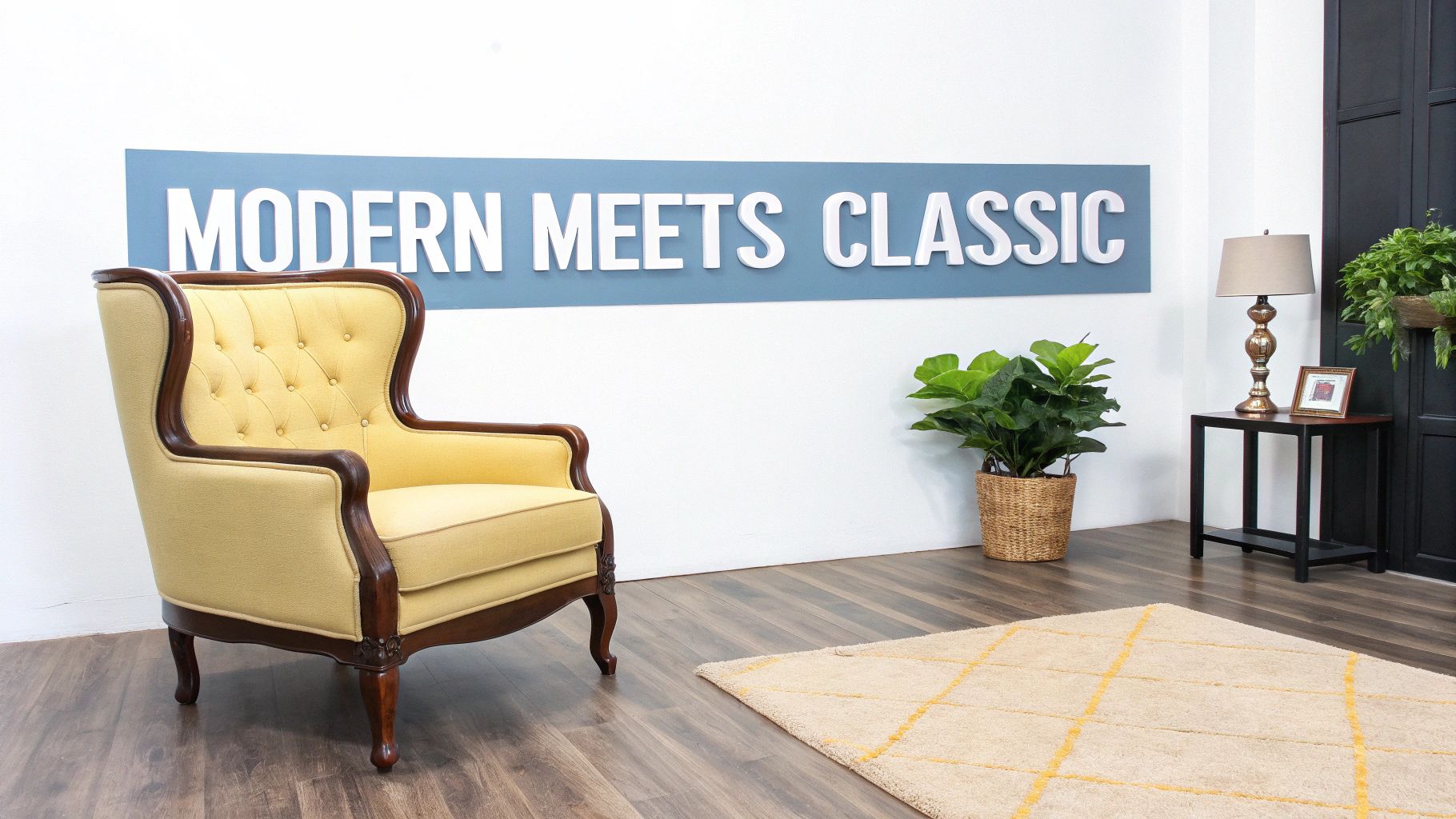
Successfully integrating a restored classic piece into a modern Singapore home—be it a sleek condo or a cosy HDB flat—is an art form. The goal is not to create a museum but to craft a layered, personal space that feels both current and timeless.
The secret is to spark a dialogue between old and new. Use the classic piece as a stunning anchor or a surprising accent, rather than letting its style dominate the room. This fusion of classic furniture design and renovation works is booming in Singapore, supported by a retail furniture market projected to grow from USD 2.17 billion to USD 3.82 billion by 2033. This isn’t just a style choice; it’s a smart investment. You can discover more about Singapore's growing retail furniture market trends and see the potential.
Actionable Design Techniques for Harmony
Creating this balance requires a few strategic techniques we use to ensure a restored piece enhances a contemporary setting.
- The Focal Point Strategy: Let a single, show-stopping classic item shine in a minimalist space. For example, a restored Victorian armchair, reupholstered in a bold, modern fabric, can command attention in an otherwise clean-lined living room, making its ornate details feel like functional sculpture.
- The 80/20 Rule: A practical guideline is to keep your room’s design roughly 80% modern and introduce 20% classic elements. This could be a Mid-Century Modern credenza against a contemporary wall, topped with modern art, or classic dining chairs paired with a minimalist concrete table.
- Contrast Through Colour and Texture: Create visual interest by juxtaposing the rich, dark wood of a Colonial-era chest against light-coloured walls, plush modern rugs, and sleek metallic lamps. This contrast makes the unique beauty of both styles stand out.
The most successful interiors are those that feel curated over time. By blending classic and modern, you create a space that feels deeply personal and resists falling into a short-lived trend.
Project Spotlight: A Punggol HDB Transformation
To illustrate these ideas, let’s look at a recent project. A family in a new Punggol HDB flat inherited a beautiful but tired-looking rosewood Peranakan-style cabinet. They loved its sentimental value but worried it would clash with their modern, Scandinavian-themed home.
The Challenge: The cabinet was structurally sound, but its dark, heavy finish felt imposing. The intricate carvings were lost in the dark stain, clashing with the light oak floors and white walls the homeowners desired.
The Solution: Renovation and Integration
- The Renovation Work: We carefully stripped the old, dark lacquer to reveal the stunning natural rosewood grain. To harmonise with their Scandi palette, we applied a lighter, matte protective finish. This modernised the look while still honouring the wood's natural beauty.
- The Integration: Instead of placing it in the main living area, we positioned the cabinet in the entryway. Here, it became a celebrated focal point. We styled it simply, pairing it with a large, round modern mirror and a single elegant vase to create a "wow" moment upon entry.
The result was a perfect marriage of heritage and modern living. The renovated cabinet didn't just fit in; it elevated the entire space, adding a layer of history and character that made the new flat feel like a forever home.
Choosing the Right Professional for Your Project
Turning your vision for a classic piece into reality hinges on finding the right partner. Selecting the best interior design firm or carpenter for your classic furniture design and renovation works is the most critical decision you'll make. It's an investment in a smooth process and a flawless result.
Move beyond simple price comparisons and focus on a professional’s portfolio. Look for detailed before-and-after photos that demonstrate their ability to handle projects similar to yours. Do they have a track record with your piece's specific style or material? A strong portfolio is proof of consistent quality and care.
What to Look for in a True Artisan
A skilled professional does more than just fix furniture; they respect its past while preparing it for the future. As you vet potential partners, look for these essential qualities:
- Deep Respect for Materials: The right expert understands the nuances of different wood grains, the integrity of original joinery, and the proper techniques for preservation.
- A Collaborative Spirit: They should listen carefully to your goals and offer clear, expert advice, making the process feel like a partnership.
- Transparent Processes: From the initial assessment to final delivery, you should receive clear updates on timelines, costs, and the exact restoration methods being used.
Professional expertise isn't just a cost; it's an investment. It protects you from expensive mistakes and guarantees a final piece that honours the furniture's heritage and your personal vision.
Vetting Your Potential Partner
Once you have a shortlist, it’s time to dig deeper. Actionable Tip: Ask specific questions about their workflow. "Can you walk me through your process for assessing structural integrity?" or "What steps do you take to protect the original wood during finish removal?" A confident professional will happily explain their methods.
In Singapore, the appreciation for classic pieces is stronger than ever. Market data shows that homes featuring well-restored or customised classic wooden elements often see an enhanced property value. This trend underscores the importance of choosing a professional who understands both the craft and the market. You can read the full research on Singapore's wooden furniture market to learn more.
Your Furniture Renovation Questions, Answered
Embarking on a furniture restoration project is exciting, but it naturally comes with questions. Getting clear, practical answers is the first step. Here are some of the most common queries we address.
Our goal is to demystify the restoration process, making it feel less like a gamble and more like the creative partnership it should be.
How Much Does Furniture Renovation Cost in Singapore?
The honest answer is: it varies widely. The final cost depends on the piece's condition, size, and the level of detail required.
A straightforward reupholstery job on a dining chair might start at a few hundred dollars. In contrast, a full structural restoration of an antique teak wardrobe, including complex joinery repairs and a specialised hand-rubbed finish, could run into the thousands. The main cost drivers are:
- Extent of Damage: Are we fixing light surface scratches or rebuilding a collapsed frame?
- Quality of Materials: Premium fabrics, rare wood veneers, or specific period-correct hardware will influence the final quote.
- Hours of Skilled Craftsmanship: The dedicated time our artisans spend on your piece is a significant part of the cost.
We believe in full transparency. We always provide a detailed, itemised quotation after an in-person assessment, so you know exactly what you’re paying for with no hidden surprises.
What Is the Typical Timeline for a Renovation Project?
Quality craftsmanship cannot be rushed. A timeline can range from a few weeks to several months, depending on the scope. A simple refinishing project on a small table might take 2-3 weeks.
However, a more involved restoration—one requiring structural work, sourcing rare hardware, and applying multiple layers of finish that need to cure—could take 8-12 weeks or longer. We always provide a clear, projected timeline from the start to set realistic expectations.
Can Any Piece of Old Furniture Be Restored?
While we are passionate about saving beautiful furniture, not every piece is a viable candidate for restoration. Success hinges on the original build quality and the nature of the damage.
Furniture made from solid wood almost always has great potential. However, pieces with severe termite damage, extensive water damage that has warped the core structure, or those built from low-grade particleboard are often past the point of a sensible or cost-effective repair. A professional assessment is the only way to determine if a piece is a worthwhile investment.
Ready to breathe new life into your cherished furniture or design a space that tells your unique story? The artisans at KIVO Custom Carpentry And Interior Design Services are here to guide you. With decades of experience in bespoke interiors and meticulous renovation, we turn your vision into a lasting reality.
Explore our portfolio and book a consultation today at https://kivo.com.sg.