Opting for custom furniture in Singapore isn’t a luxury; it’s a practical solution for maximising space and function. It's the most effective way to utilise every square centimetre in HDB flats and condos, turning awkward corners and odd-sized walls into perfectly integrated, useful features.
Why Custom Furniture is a Game-Changer for Singapore Homes
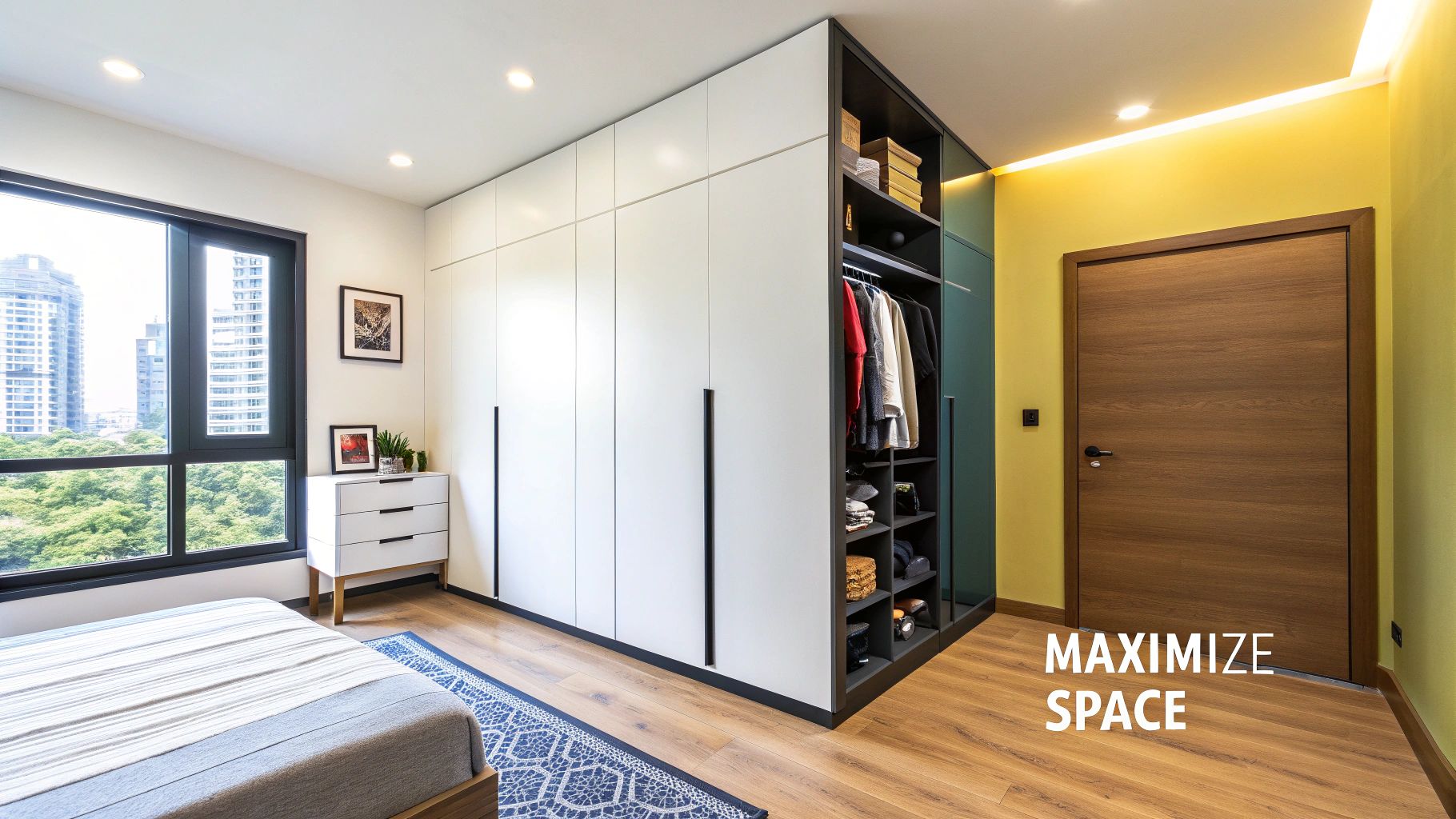
Off-the-shelf furniture often forces a compromise. A wardrobe might be a few centimetres too wide, leaving an unusable gap. A console table might be too deep for a narrow walkway, disrupting the flow of the room. These small mismatches create dead space, making rooms feel cluttered and less efficient.
This is where custom furniture becomes a practical necessity for modern life in Singapore.
Based on our experience with client projects, the impact is immediate and significant. For example, a precisely fitted, floor-to-ceiling wardrobe can double the storage in a compact bedroom. A slim entryway console, built to the exact millimetre, creates a functional foyer without obstructing movement.
Solving Real-World Space Challenges
The demand for bespoke pieces reflects a practical need for homes that work smarter. The benefits go beyond aesthetics:
- Maximised Functionality: Every inch serves a purpose. A common request is for a platform bed with deep, integrated drawers for storing bedding and luggage, or a bay window seat that doubles as a concealed storage chest.
- Perfect Proportions: The furniture is scaled to the room, so you avoid the "too big" or "too small" look that can make a space feel unbalanced.
- Truly Personalised Style: You dictate the materials, finishes, and hardware, ensuring the final piece aligns perfectly with your home's interior design.
Custom furniture isn't just about filling a space; it's about solving a problem. It’s the difference between a house that fits your furniture and furniture that fits your home.
A Growing Trend in Home Investment
This shift towards personalisation is reshaping the local market. Singapore’s furniture market is projected to reach SGD 2.1 billion in revenue by 2025, with a clear trend towards modern, minimalist, and space-saving designs. Homeowners are increasingly prioritising function in high-use areas like kitchens and dining rooms. You can explore the data behind these market trends and furniture revenue projections for a deeper look.
Choosing custom furniture is an investment in your home's long-term value and your daily quality of life. It’s about creating a lasting solution that elevates both form and function.
Planning Your Perfect Custom Piece
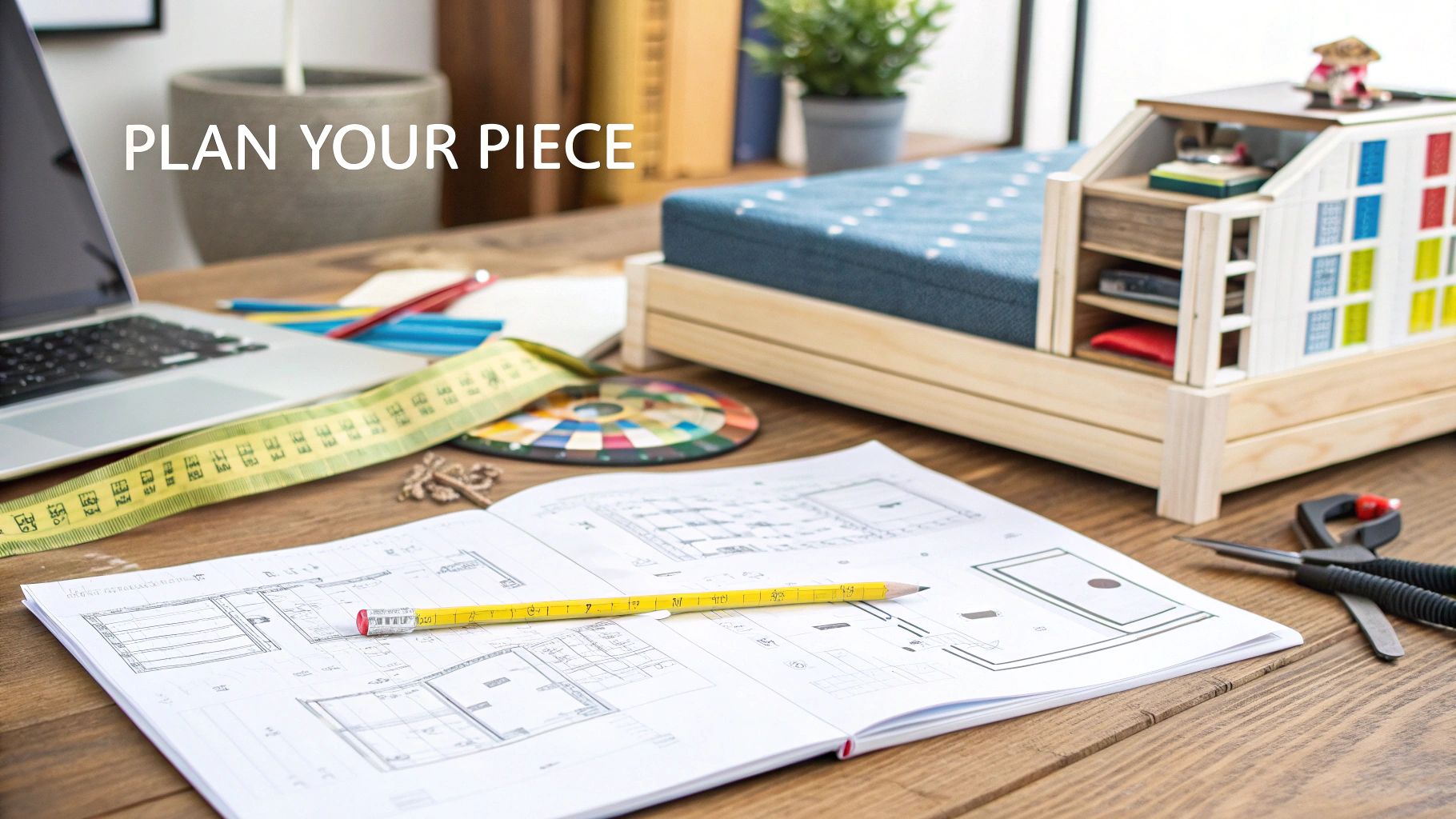
Before any material is cut, the most critical work is done in the planning stage. A clear plan ensures the final piece doesn't just look good but solves a specific problem in your home.
Start by defining its primary purpose. Are you looking for a multi-functional storage bed for a child's room that needs to conceal toys and books? Or a statement dining table that must comfortably seat eight for family gatherings? Be specific. Instead of saying, "I need more storage," define the need: "I need a dedicated cabinet to hide the vacuum cleaner, ironing board, and our two large suitcases."
Gathering Meaningful Inspiration
While platforms like Pinterest are great for visual concepts, the best inspiration often comes from addressing daily frustrations. That persistent pile of shoes by the door is a clear signal you need a custom entryway bench with integrated shoe storage. The tangled mess of wires around your TV points to the need for a bespoke console with smart cable management.
Compile a simple brief that covers:
- Function: What is its primary job? Does it need a secondary function?
- Dimensions: Use masking tape to mark the exact footprint on the floor. This is a crucial step to visualise its scale in the room. For reference, a standard rectangular table 1.5m long seats six people comfortably.
- Style: Collect images that capture the desired aesthetic—the type of finish, the hardware, and the overall shape.
Setting a Realistic Budget
Understanding the costs involved is critical for planning custom furniture in Singapore. Prices are determined by materials, size, and design complexity. A realistic budget from the start prevents surprises and keeps the project on track.
Here is a practical breakdown of cost drivers:
- Materials are the biggest factor. A solid teak dining table will cost significantly more than one made from high-quality plywood with a laminate finish.
- Complexity adds labour hours. A simple, clean-lined TV console is more affordable than one with intricate fluted panels, curved edges, and integrated LED lighting.
- Hardware and finishes matter. Components like soft-closing hinges, designer handles, and premium varnishes add to the final cost, but also enhance the quality and longevity of the piece.
A common mistake is underestimating the cost of complexity. An intricate design can easily double the labour costs compared to a simpler piece of the same size and material. Prioritise the features that truly matter to you.
As a practical example, a custom bed frame can range from $1,000 for a basic design to over $4,000 for one with integrated storage and a complex headboard. Knowing these ranges helps align your vision with your budget, ensuring you can create the perfect piece without last-minute compromises.
Choosing Materials That Last in Our Climate

Selecting the right material is a critical decision, especially in Singapore's humid climate. The wrong choice can lead to warping, swelling, or mould. It's not just about aesthetics on day one; it's about investing in durability.
Many of our clients initially request solid wood, and for good reason. The natural beauty of materials like teak, oak, or walnut is unmatched. Teak is a particularly excellent choice for our environment; its natural oils make it highly resistant to moisture and pests. It’s a premium material that ages gracefully, developing a rich patina over time.
This preference for quality, lasting materials is a documented trend. The wooden furniture market in Singapore is projected for steady growth from 2025, driven by homeowners seeking durable, bespoke furnishings. There is a clear shift towards timeless, well-crafted pieces like dining tables and cabinets made from responsibly sourced wood. You can explore the full research on Singapore's wooden furniture market to see how consumer preferences are evolving.
Engineered Woods: A Practical Alternative
While solid wood is an excellent option, it isn't the only one. Engineered woods, particularly high-moisture resistant (HMR) plywood, offer a superb balance of durability and cost-effectiveness. Plywood's layered construction makes it inherently more stable and less prone to warping in humid conditions than some solid woods.
For most built-in projects like wardrobes and kitchen cabinetry, HMR plywood is our standard recommendation. It provides a strong, reliable core that can be finished with a vast array of laminates or veneers, offering endless design possibilities without the premium cost of solid timber.
The Versatility of Modern Laminates
Today's laminates are sophisticated, durable, and available in textures that convincingly mimic materials like wood grain, stone, and even fabric. High-pressure laminates (HPL) are scratch-resistant, easy to clean, and non-porous, making them ideal for high-use items like TV consoles or children's study desks.
Laminates provide a practical way to achieve a specific aesthetic without the maintenance concerns of natural materials. For instance, a client who loves the look of a marble countertop but is concerned about staining can opt for a high-quality marble-effect laminate to get the visual appeal with far greater resilience.
The best material isn't always the most expensive one. It's the one that best suits the furniture's function, your lifestyle, and Singapore's climate. A well-chosen laminate can easily outperform a poorly suited solid wood.
This table provides a straightforward comparison of the most common materials we use for custom furniture projects.
Material Comparison for Custom Furniture in Singapore
Breaking down materials by their performance in our climate can simplify your decision.
| Material | Pros | Cons | Best For | Average Cost |
|---|---|---|---|---|
| Solid Wood (e.g., Teak) | Extremely durable, ages beautifully, high-end aesthetic, can be refinished. | Higher cost, can be heavy, requires some maintenance to prevent drying. | Dining tables, bed frames, statement freestanding pieces, outdoor furniture. | $$$$ |
| HMR Plywood | Very stable, moisture-resistant, cost-effective, great for built-ins. | The raw edge needs finishing (e.g., with laminate or veneer), not as prestigious as solid wood. | Built-in wardrobes, kitchen cabinets, bookshelves, custom storage solutions. | $$ |
| Laminates (on plywood) | Huge range of colours/textures, highly durable, easy to clean, scratch-resistant. | Can chip at the edges if impacted heavily, less premium feel than real wood. | TV consoles, study desks, surfaces needing high resilience, cabinet doors. | $$ |
The goal is to find the perfect intersection of aesthetics, function, and longevity. The right choice will ensure your custom piece serves you well for many years.
Finding the Right Craftsman for Your Project
A design is only an idea until it is built. Finding the right craftsman for your custom furniture in Singapore is the most critical part of the process, determining the final quality, finish, and durability of your piece. This is about establishing a partnership, not just hiring a supplier.
An experienced carpenter translates a concept into reality. They understand the nuances of different woods, can identify potential weak points in a design, and often suggest clever solutions you might not have considered. Their expertise is what turns a sketch into a functional, beautiful piece of furniture.
Where to Look for Skilled Artisans
Finding a reliable carpenter can be challenging, but there are trusted methods.
Your interior designer is often the best resource. Firms like ours at Kivo.com.sg have spent years building a network of trusted workshops. We know which carpenters excel at solid wood joinery, who are masters with laminates, and who consistently deliver high-quality work.
If you are searching independently:
- Specialist Workshops: Many workshops in Singapore maintain online portfolios on their websites or social media. Look for those that showcase the specific style you are after, whether it's intricate detailing or clean, minimalist lines.
- Referrals: Word-of-mouth is invaluable. Ask friends, family, or colleagues who have recently commissioned custom pieces. A positive personal recommendation is a strong indicator of reliability and quality.
Vetting Potential Partners
Once you have a shortlist, schedule consultations. This is an opportunity to assess their suitability for your project. Think of it as an interview, not just a quote request.
Before meeting, clarify your priorities. Is it their experience with a specific material like teak? Or their ability to execute a complex, modern design flawlessly?
Look beyond the price. A craftsman who understands your vision and communicates clearly is more valuable than the cheapest quote. Miscommunication is the most costly mistake in a custom project.
During your discussion, address these key points:
- Review Their Portfolio: Ask to see examples of previous work, focusing on projects similar to yours in scale, style, or material.
- Inquire About Material Sourcing: Ask where they get their materials. A reputable carpenter will be transparent about their suppliers and the grade of wood or plywood they use.
- Understand Their Process: How do they work? Do they provide detailed technical drawings for approval before fabrication? How are changes or revisions handled mid-project?
- Request a Workshop Visit: If possible, ask to see their workshop. Observing their workspace, tools, and current projects provides powerful insight into their craftsmanship and professionalism.
Building a good rapport is as important as technical skill. You need confidence that they can not only execute the work but also listen to your needs and are committed to bringing your vision to life. This relationship is the foundation of a successful custom furniture journey.
Bringing Your Furniture from Workshop to Home
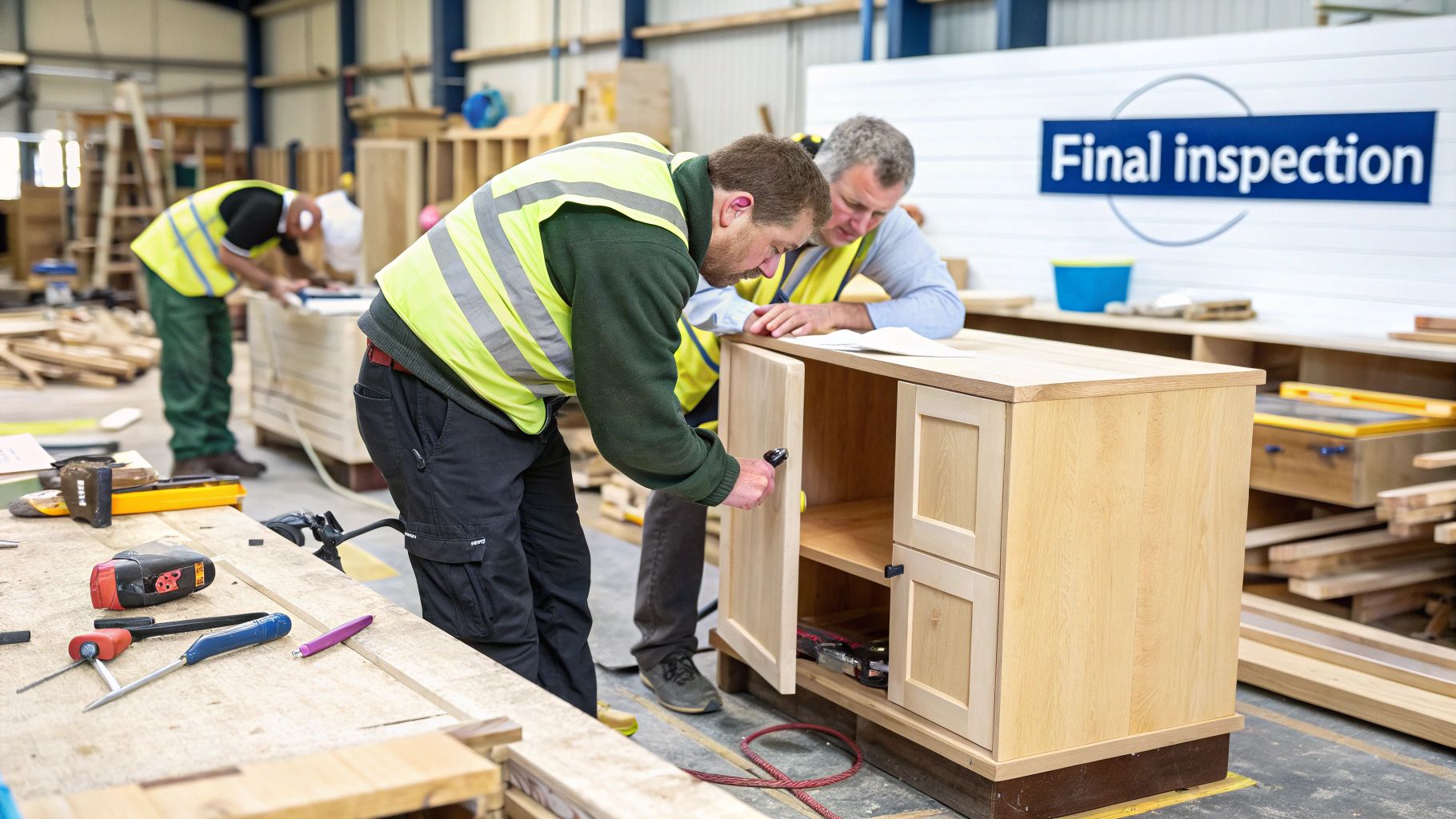
Once the technical drawings are approved, your vision moves from paper to the workshop floor. This is where skilled hands transform raw materials into the piece you imagined for your home.
The process begins with sourcing the specified materials—whether it's a particular grain of teak or a premium European laminate. Carpenters then begin cutting, joining, and assembling the core structure.
The demand for well-made, personalised furniture is growing. The Asia-Pacific furniture market is projected to grow at a compound annual growth rate (CAGR) of around 6.8% from 2025 to 2032. This is driven by homeowners in cities like Singapore who are moving beyond off-the-shelf solutions. You can explore these regional furniture market trends for more context.
Key Production Milestones
Project timelines vary. A straightforward TV console might take four to six weeks, while a complex, full-height wardrobe could take eight weeks or more. We provide updates at key moments to keep you informed.
- Materials Received: Confirmation once all specified materials have arrived at the workshop.
- Fabrication Updates: Photos or videos as the main structure takes shape.
- Finishing Stage: A preview as veneers, laminates, or paint finishes are applied.
- Ready for Delivery: A final preview before scheduling delivery and installation.
This transparent process ensures there are no surprises and allows you to be part of the creation.
The Final Inspection Checklist
The arrival of your new furniture is exciting, but it's also time for a final, crucial check. Before the installation team leaves, conduct a thorough inspection.
Your final inspection is the most important quality control step. Take your time and check every detail. A good craftsman will appreciate your attentiveness as a sign that you value their work.
Use this simple checklist:
- Check the Surfaces: Run your hand over the finish. It should be smooth and consistent, with no rough spots, laminate bubbles, or uneven paint.
- Test Doors and Drawers: Open and close everything. They should glide smoothly without catching. If you specified soft-closing mechanisms, test them.
- Look for Gaps and Alignment: Step back and check the alignment of doors and drawers. The gaps around them should be even.
- Confirm Stability: Gently push the furniture to ensure it is stable and does not wobble. For built-ins, confirm they are securely fixed to the wall.
- A Clean Finish: The team should leave the area clean, with any installation debris cleared away so your new piece is ready to use immediately.
Answering Your Top Custom Furniture Questions
Committing to custom furniture for the first time can bring up questions about cost, timelines, and the design process. Here are answers to the most common queries we hear from homeowners in Singapore.
Is Custom Furniture Really That Much More Expensive?
A common misconception is that "custom" always means a high price tag. The final cost is determined by your choices.
For example, a simple plywood bookshelf built to perfectly fit an awkward nook might cost only slightly more than a mid-range retail piece. Conversely, a large, solid teak wardrobe with intricate detailing will be a more significant investment.
The key benefit is getting exactly what you need. You control the size, function, materials, and style. This eliminates wasted space and results in a piece that is perfectly integrated into your home. It's an investment in superior functionality and long-term value that generic furniture rarely provides.
What’s a Realistic Timeline for a Custom Piece?
Quality craftsmanship takes time. In Singapore, a typical custom furniture project takes 4 to 12 weeks from design approval to installation.
Here is a rough guide:
- A simple, standalone piece like a console table or a small display cabinet: Approximately 4-6 weeks.
- A more complex item, such as a full-height built-in wardrobe or a complete kitchen system: Typically 8 to 12 weeks, sometimes longer depending on complexity.
This timeline includes several key stages:
- Consultation and design finalisation (1–2 weeks)
- Material sourcing and fabrication (2–8 weeks)
- Finishing, delivery, and on-site installation (approx. 1 week)
The workshop's current schedule is also a factor. It is always best to plan ahead, especially if you need to coordinate the delivery with a renovation handover.
Pro Tip: Finalise your custom furniture designs at the same time as your renovation plans. This helps align timelines and prevents delays that could hold up your entire project.
Can I Bring My Own Design Ideas?
Absolutely. We encourage it. Most carpenters and design firms in Singapore welcome client ideas as a great starting point.
To ensure a smooth process, come prepared. Gather inspiration photos from Pinterest, create rough sketches with dimensions, and have accurate measurements of your space.
A skilled craftsman will then collaborate with you to refine your concept into a viable, structurally sound design. They can often suggest better materials or hardware you may not have considered. This collaboration ensures the final piece is both beautiful and functional.
At Kivo, we frequently take a client's initial sketch and develop it into a professional technical drawing. This blueprint guides the workshop, ensuring every detail of your vision is accurately captured.
Ready to create furniture that is genuinely yours? The team at KIVO brings over four decades of hands-on experience in turning unique visions into beautifully crafted pieces. Explore our custom carpentry and interior design services and let's start building something extraordinary together.