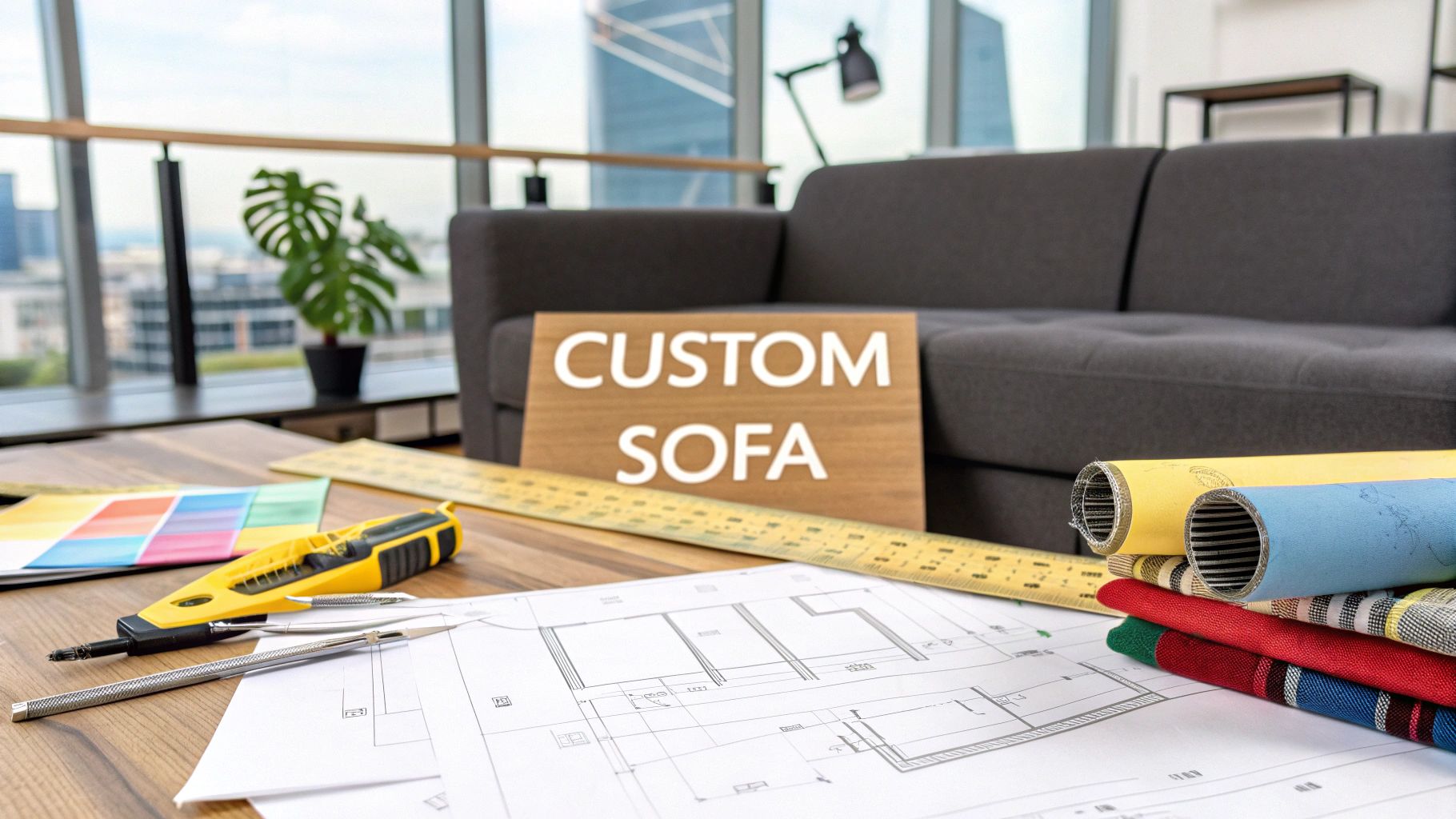
Deciding on a custom sofa in Singapore isn't just a luxury—it's often the most practical solution for homeowners. Why compromise with a mass-produced sofa that doesn't fit your HDB layout or can't withstand our humid climate? Going custom means commissioning a piece that is built for you, from its precise dimensions to the materials that suit your family's lifestyle.
Why a Custom Sofa is a Practical Investment
Finding the right ready-made sofa for a Singaporean home can be a frustrating exercise. We see clients come to us after searching for months. They find a design they love, but it's too large for their living room. Or they find a sofa that fits, but the fabric feels wrong for our weather, becoming sticky and uncomfortable.
This is typically when the conversation about a custom sofa begins. It’s not about extravagance; it's about solving real-world problems. When you commission a custom piece, you control every detail, turning your sofa into a smart, long-term investment that perfectly fits your home and life.
Solving the Space and Style Puzzle
In Singapore, every square metre counts. An off-the-shelf sofa can easily overwhelm a room or leave awkward, unusable gaps. A custom piece, however, is built to the exact millimetre of your floor plan.
For instance, we recently designed a sofa for a client with a 4-room BTO flat in Tampines. The living area was long but narrow. A standard three-seater would have blocked the walkway to the balcony. Our solution was a 2.1-metre sofa with a reduced depth of 85cm (down from the typical 90-95cm) and slim track arms. This subtle adjustment preserved seating space while dramatically improving the room's flow.
A custom sofa is the ultimate problem-solver. It’s the answer to unconventional layouts, specific family needs, and the desire for a piece that doesn't just fill a space, but completes it.
Based on what our clients are asking for, the trend towards personalisation is clear. As home design in Singapore evolves, homeowners want furniture that reflects their unique taste and solves the challenges of modern layouts. They're looking beyond what’s available in a showroom. You can read more about why custom furniture is gaining traction and transforming modern homes on coda.com.sg.
To help clarify the choice, here’s a practical breakdown of what you're deciding between.
Custom vs Off-the-Shelf Sofas at a Glance
| Feature | Off-the-Shelf Sofa | Custom Sofa |
|---|---|---|
| Fit & Dimensions | Standard sizes; often a compromise. | Made-to-measure for a perfect fit. |
| Material Choice | Limited to manufacturer's options. | You select the frame, foam, and fabric. |
| Design & Style | What you see is what you get. | Your design, your style, your details. |
| Durability | Varies; internal quality is often hidden. | Built to last with superior materials. |
| Cost | Generally lower upfront cost. | Higher initial investment, better value. |
| Timeline | Immediate delivery. | Requires a lead time for production. |
While off-the-shelf has its place, a custom sofa puts you in control, especially when quality and a perfect fit are non-negotiable.
Built for Longevity, Not Just for Looks
What good is a beautiful sofa if it starts sagging after two years? That's a poor investment. Customisation allows you to specify superior internal components that mass-produced furniture often compromises on.
This means you can insist on crucial elements like:
- A kiln-dried hardwood frame: This is non-negotiable to prevent warping and deter pests in Singapore's humidity.
- High-density foam cushions: They provide far better support and retain their shape significantly longer than lower-grade foam.
- Durable upholstery: You can select performance fabrics that resist stains and moisture, or choose high-quality leathers that age beautifully.
Ultimately, commissioning a custom sofa in Singapore is about control. It’s about creating furniture that fits your lifestyle perfectly, suits your space flawlessly, and is built to last. That makes it one of the most practical decisions you can make for your home.
Thinking Through Your Sofa's Purpose
Before diving into fabric swatches and design styles, we need to establish the foundation of your sofa's design: how will you actually use it? This is the most important factor that will guide every subsequent decision, ensuring the final piece is a perfect fit for your life, not just a showpiece.
When we consult with clients, we don't start with catalogues. We start with practical questions. Is this sofa for hosting guests with drinks, or is it for family movie nights with kids, pets, and popcorn? The answer changes everything.
Defining Your Sofa's Daily Role
Think about a typical week in your home. Who uses the sofa, and what do they do on it? A sofa for curling up with a book requires a different seat depth and cushion softness than one meant for formal entertaining.
We typically see a few common use cases with our clients:
- The Family Hub: This sofa must be a workhorse, built for lounging, napping, and snacking. Durability is key. This means performance fabrics that repel stains and high-density foam that resists sagging from daily use.
- The Formal Entertainer: This sofa is about creating an impeccable aesthetic for guests. The design may feature a firmer seat, a more upright back, and elegant details like tufting or sleek legs. Upholstery choices can be more luxurious, like velvet or a high-quality linen blend.
- The Compact Multi-Tasker: Common in smaller Singaporean condos, this sofa needs to be versatile. We often design modular units that can be rearranged or pieces with integrated storage to maximize space.
A common pitfall is choosing a sofa for an imagined lifestyle rather than your actual one. Be honest about spills, pets, and daily lounging. This self-awareness ensures you get a sofa you'll love for years, not just for a season.
Mastering Your Room's Dimensions and Flow
Once you know the sofa's primary function, it's time to measure. This isn't just about ensuring it fits through the door; it's about understanding how the sofa will impact the room's flow. A poorly placed sofa can make even a large room feel awkward.
Here’s our practical checklist for measuring your space:
- Measure the primary wall: Get the total length available.
- Note obstructions: Mark the locations of windows, doors, power points, and air-con units. You don't want your new sofa blocking a crucial outlet.
- Define traffic paths: Identify the main walkways. As a rule, leave at least 75cm of clear space for major pathways to allow for comfortable movement.
- Consider other furniture: How will the sofa relate to your coffee table, side tables, or TV console? Ensure enough space between pieces for a functional layout.
Visualising the Sofa in Your Space
Here’s an actionable tip we give all our clients: use painter's tape or old newspapers to outline the sofa’s proposed dimensions directly on your floor. This provides a tangible sense of its footprint.
Walk around the taped-off area. Can you still open the balcony door easily? Does it feel too close to the dining table? Answering these questions now is the best way to prevent costly mistakes. This simple exercise will help you finalize the ideal length, depth, and shape—whether it's a classic three-seater, an L-shaped sectional, or a chic chaise lounge—that perfectly serves both your lifestyle and your living room.
Choosing Materials That Last in Singapore
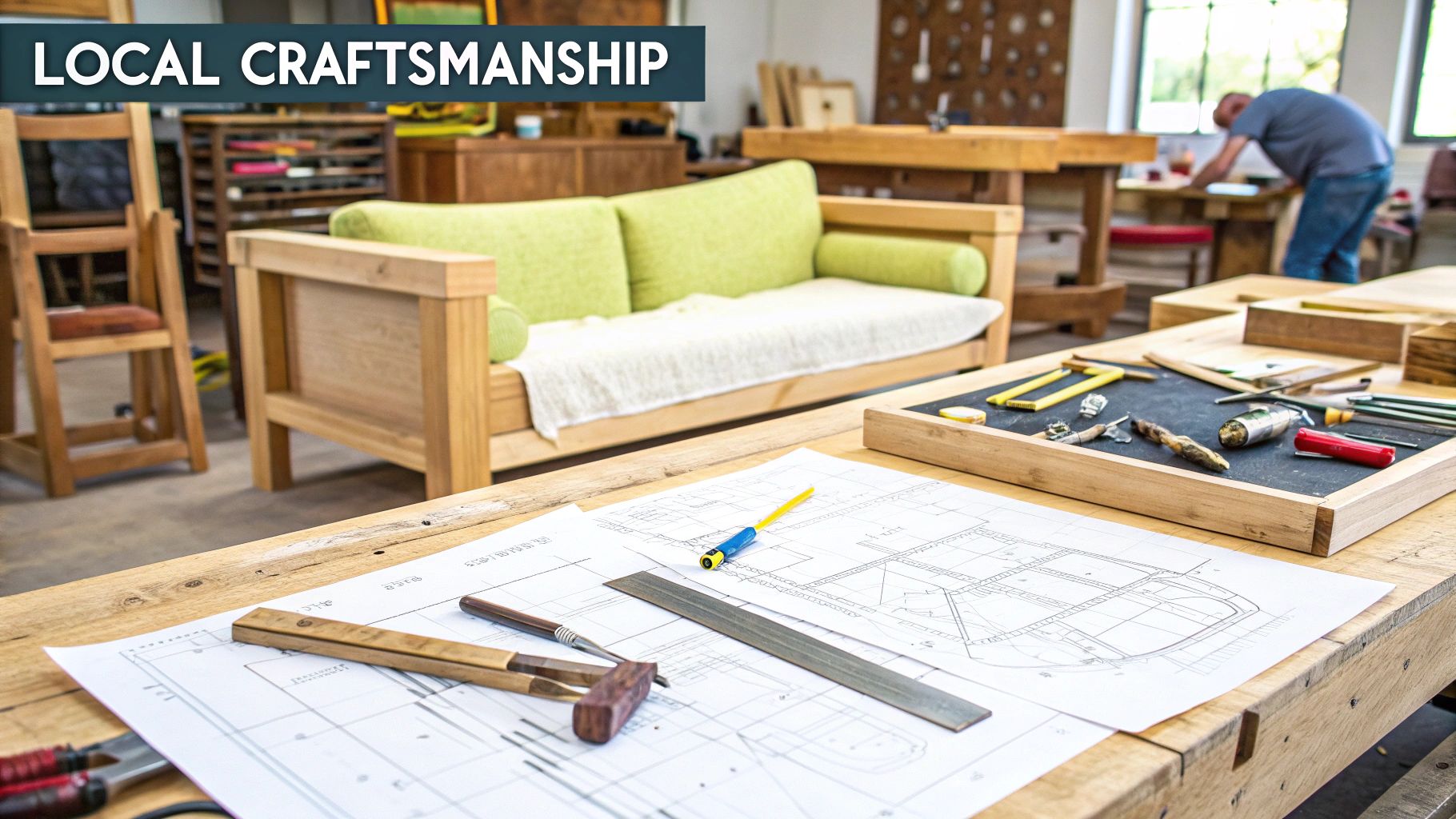
The materials you choose for your custom sofa are what separate a piece that looks good for a year from one that serves your family for a decade. In Singapore's humidity, this isn't just about aesthetics; it's a critical decision for durability and comfort.
This is your opportunity to specify materials genuinely suited to our climate. We'll cover upholstery, but also the hidden components like the frame and suspension—the true backbone of a quality sofa.
Upholstery That Breathes and Performs
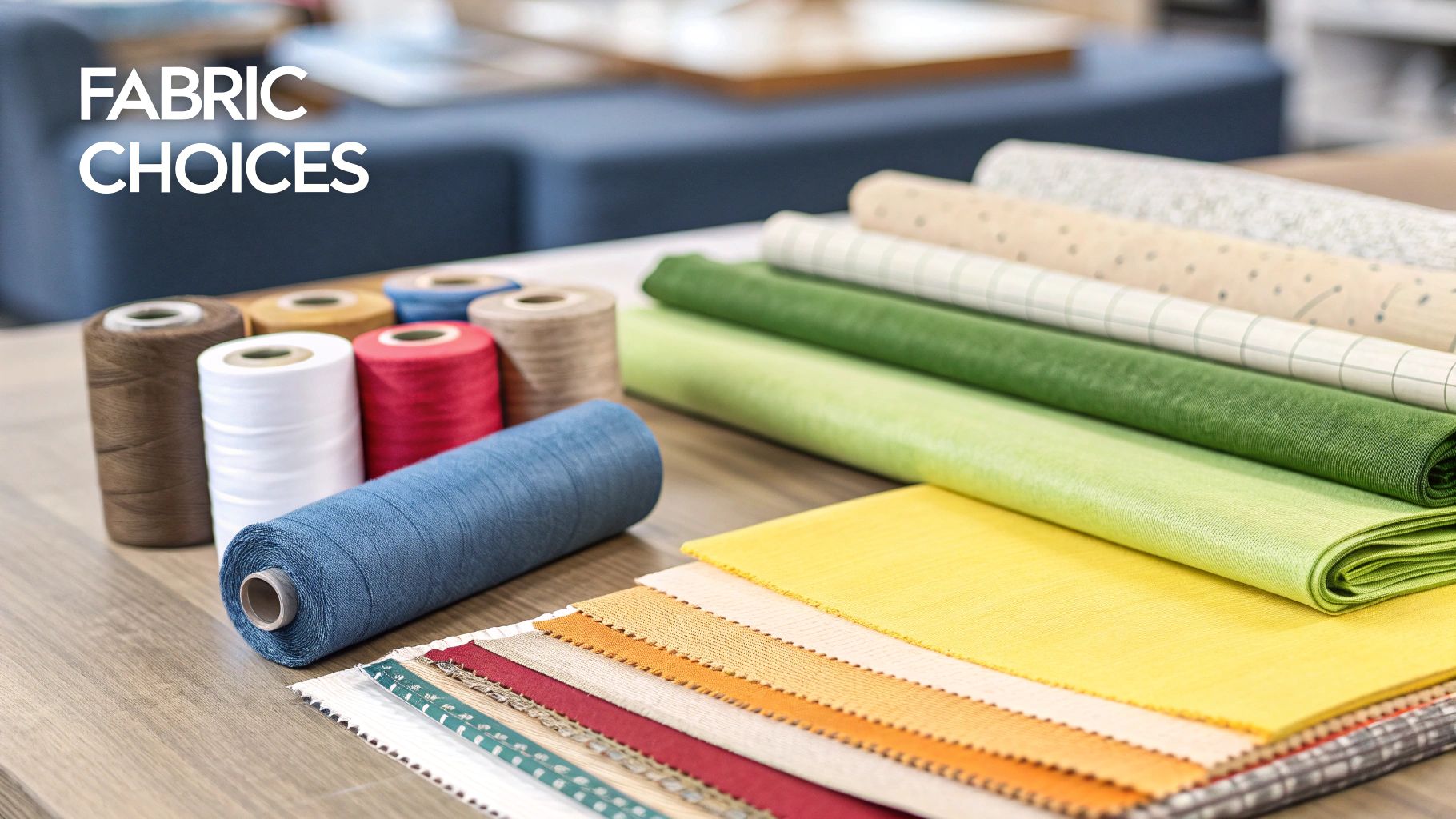
Your sofa’s upholstery is its most visible element, but it must also withstand daily life. The goal is to balance beautiful texture, breathability for our climate, and the durability your household requires.
Based on our experience with homeowners in Singapore, these options perform exceptionally well:
- Performance Fabrics: A game-changer for families. Modern synthetics like olefin or specially treated polyesters are engineered to be water-repellent, stain-resistant, and easy to clean. You get peace of mind without sacrificing a soft, comfortable feel.
- Linen Blends: Pure linen wrinkles easily, but blending it with cotton or viscose gives you the light, airy look and excellent breathability of linen with added durability and structure. It's perfect for avoiding that sticky feeling on a warm day.
- High-Quality Leather: Leather is a classic for its durability and ease of cleaning. However, not all leathers are equal. Full-grain leather is the premium choice, developing a beautiful patina over time. For a more budget-friendly and uniform appearance, corrected-grain or pigmented leathers are excellent, practical alternatives.
Actionable Tip: Always request a large fabric sample. A material can look and feel entirely different on a small swatch versus a large sofa. Drape it over your existing furniture to see how it interacts with your room's lighting at different times of the day.
The Unseen Heroes: The Frame and Suspension
What's inside your sofa is arguably more important than what's on the outside. A weak frame will lead to a wobbly, creaking sofa that loses its shape. In our climate, the choice of wood is critical.
We always specify a kiln-dried hardwood frame. The kiln-drying process reduces the wood's moisture content to below 10%, making it stable and resistant to warping, cracking, or mould—all common issues here. Hardwoods like meranti, kapur, or oak provide excellent strength. Avoid frames made from particleboard or softwoods like pine, as they will not hold up over time.
Equally important is the suspension system, which supports the cushions.
- Eight-Way Hand-Tied Springs: This is the gold standard for durability and comfort. Each spring is tied to its neighbours, distributing weight evenly and preventing sagging. It is labour-intensive but offers a superior feel.
- Sinuous Springs (S-springs): A more common and cost-effective option. These S-shaped wires run from the front to the back of the frame and provide very good support when installed correctly with a sufficient number of clips.
The quality of regional craftsmanship is a significant advantage when building a custom sofa here. Singapore's strong ties to manufacturing hubs in neighbouring countries provide access to excellent materials and skilled artisans. You can find more info about Singapore's role in the regional furniture market here.
Cushion Filling: The Heart of Comfort
The cushion filling determines how your sofa feels when you sit on it. High-density polyurethane foam is the industry standard for its support and resilience. For seat cushions, we recommend a density of at least 1.8 pounds per cubic foot (pcf) to prevent premature flattening.
For a plusher feel, a foam core wrapped in a down and feather blend is an excellent upgrade. This combines the firm support of foam with the soft, sink-in comfort of down.
Making informed material choices ensures your custom sofa in Singapore is not just beautiful, but a comfortable and enduring investment.
Getting the Dimensions and Design Details Right
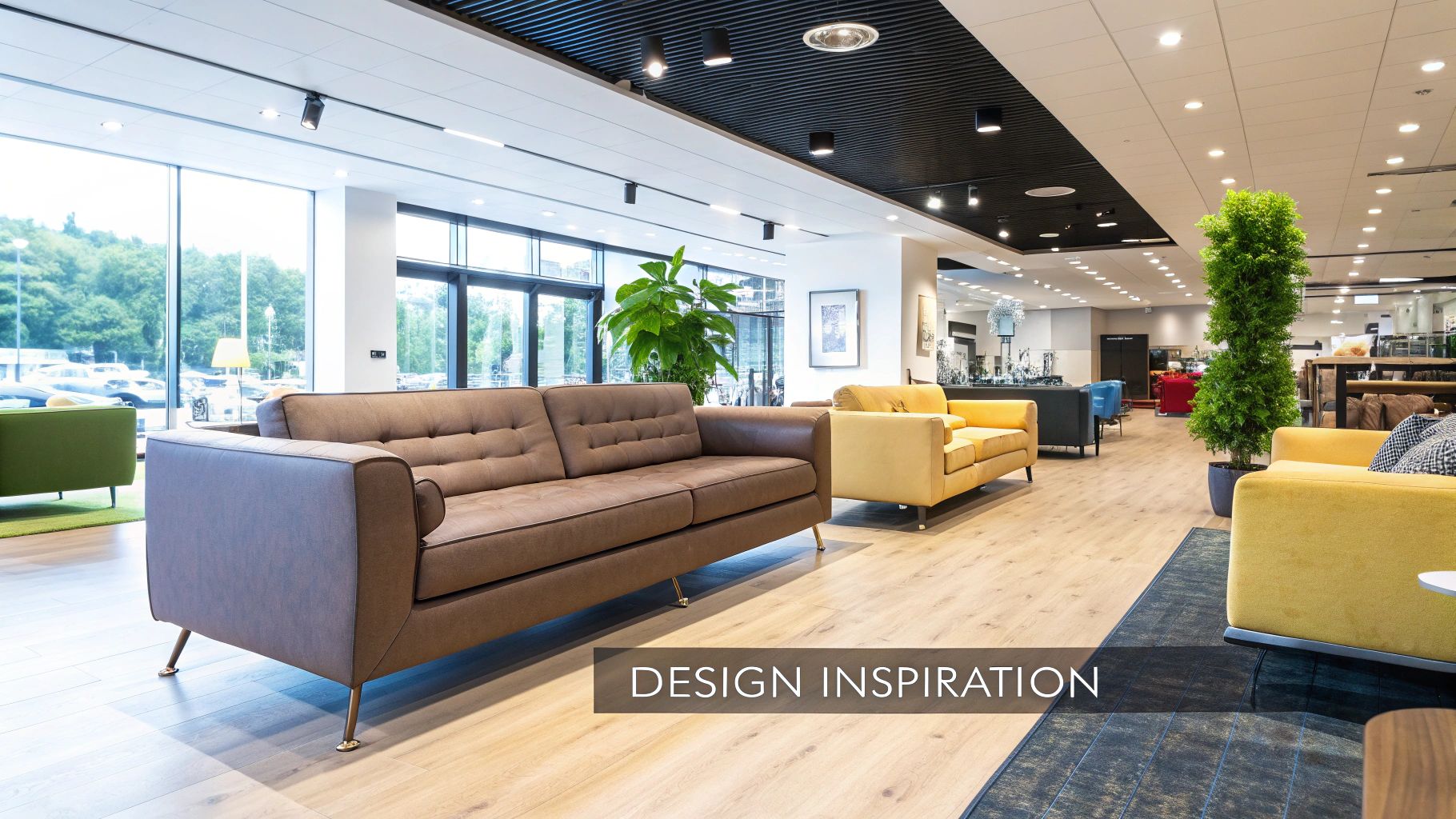
Once you've finalized the sofa's overall footprint, it's time to refine the details that transform it from a piece of furniture into a personal statement. We're moving beyond basic length and width into the specific dimensions that dictate comfort and style.
These details may seem minor, but they have a huge impact on how the sofa feels and looks. A centimetre here or a different curve there can completely alter its character.
Defining Your Comfort Zone: Seat Depth and Back Height
Seat depth and back height are two of the most critical dimensions for comfort. There's no single "right" answer; it's about matching the sofa to how you live.
Seat Depth dictates your posture.
- Shallower Depth (53cm - 58cm): This promotes a more upright sitting position, ideal for formal living rooms or for users who prefer an easier time standing up.
- Deeper Depth (60cm and above): This is for serious lounging, giving you room to curl your feet up and relax. We often recommend this for family rooms where movie nights are a regular event.
Back Height affects both support and the room's visual profile.
- Low-Back Sofas: These create a sleek, contemporary look that is great for open-plan HDBs or condos, as they don't obstruct views and make a space feel larger.
- High-Back Sofas: A high back offers excellent head and neck support, a significant benefit if you enjoy reading or watching TV on the sofa. It provides a cosier, more enclosed feeling.
Practical Tip: Remember to account for back cushions. A sofa with a 65cm seat depth might feel perfect without them, but thick back cushions can reduce that usable space by 10-15cm. Always factor this in.
Shaping the Sofa's Personality with Arm and Leg Styles
The arms and legs are powerful design cues that define a sofa's style. This is where you can inject your personal taste.
Consider the difference between various arm styles:
- Track Arms: Straight and squared-off, these create a modern, tailored look. Their space-efficient design is a great bonus for smaller Singaporean apartments.
- Rolled Arms: A classic choice that feels plush and traditional. Its softer, rounded profile adds a touch of timeless elegance.
- Flared Arms: These angle outwards slightly, creating a more relaxed and contemporary silhouette that feels open and welcoming.
Similarly, the legs ground the sofa. Tapered wooden legs suggest a mid-century modern influence, while sleek black metal legs lean towards an industrial aesthetic. Elevating the sofa on taller legs is also a clever design trick in compact rooms, as it creates an illusion of more space by revealing more of the floor.
Elevating the Design with Finishing Touches
Finishing touches are what truly elevate a custom sofa. These details are often overlooked in mass-produced furniture but make all the difference in a bespoke piece.
For a client's minimalist BTO flat in Punggol, we added a single line of contrast piping in a slightly darker shade along the cushion edges of a clean-lined sofa. It was a subtle detail that beautifully defined the sofa's form without being distracting.
Other impactful details to consider include:
- Tufting: Button tufting adds classic, sophisticated texture.
- Stitching: A top-stitch or French seam provides a clean, refined edge that highlights craftsmanship.
- Cushion Style: A single bench cushion creates a sleek, seamless look, while multiple cushions offer a more traditional and practical appeal.
These final decisions make the sofa uniquely yours, ensuring the finished product is a perfect reflection of your taste and a functional centrepiece for your home.
Finding the Right Sofa Maker in Singapore
Choosing the right craftsman for your custom sofa is the most critical decision in this process. This partnership determines the quality of the final product and your overall experience.
The process should begin with a thorough consultation. This is a creative collaboration, not a sales pitch. A good sofa maker will ask about your lifestyle, family needs, and how you envision using the sofa. They should be as focused on function as they are on aesthetics.
From Digital Renders to Fabric Samples in Your Hand
Seeing your idea visualized before production begins is one of the most reassuring parts of the custom process. Always ask for 3D renders. These digital mock-ups place a model of your proposed sofa into a photo of your actual living room, providing the ultimate preview.
This step is crucial for getting the scale right. A sofa can look great in a showroom but completely overwhelm your space. A 3D render allows you to make adjustments—like slimming the arms or changing the leg height—before it’s too late.
Equally important is interacting with physical materials.
Never finalize an upholstery choice from a screen. The colour on your phone is almost never the colour that arrives at your door, and you can't feel the texture through a monitor.
Always get a physical cutting of the fabric or leather. Take it home. See how it looks in your room's natural and artificial light. This simple step prevents the significant regret of choosing a material that looked different online.
Questions You Absolutely Must Ask Your Sofa Maker
Before committing, you need to ask some direct questions. Treat this as an interview for a key role in your home's future.
Ensure you get clear answers on these points:
- Material Sourcing: Where does the hardwood for the frame come from? Is it kiln-dried? Can I see the different foam densities you offer?
- Production Timeline: What is the estimated lead time from deposit to delivery? What are the key milestones?
- Workshop Visits: Can I visit the workshop to see my sofa's progress?
- Warranty and Aftercare: What does the warranty cover and for how long? Do you offer repair or reupholstery services in the future?
Technology has made it easier for Singaporeans to connect directly with furniture makers, enabling incredible personalization for our unique HDB and condo layouts. The internet has opened up the custom furniture market, which you can read more about on straitsresearch.com.
A great custom furniture experience is built on clear communication. A trustworthy maker will be transparent about their process, welcome your questions, and keep you informed. This collaboration ensures the final piece is the sofa you designed together.
Got Questions About Custom Sofas? We’ve Got Answers.
Embarking on a custom furniture project for the first time can feel like a big step. We've found that a few common questions consistently arise when clients begin exploring a custom sofa in Singapore.
Here are straightforward answers to the most frequent queries.
Isn't a Custom Sofa Way More Expensive?
Let's be direct: a custom sofa typically has a higher initial cost than a mass-produced one. You are investing in a unique design, superior materials chosen for our climate, and skilled craftsmanship. A typical custom sofa in Singapore can range from $2,000 for a simple two-seater to $6,000 or more for a large, premium sectional.
However, the key is long-term value. A well-made custom sofa with a kiln-dried hardwood frame and high-density foam will outlast a mass-produced equivalent by many years. This saves you the cost and hassle of replacement. You are paying for a perfect fit, superior comfort, and durability that lasts.
Think of it as creating a long-term asset for your home, not just buying a temporary piece of furniture. That initial investment reflects a level of quality and personalisation that off-the-shelf options just can't match.
How Long Will I Have to Wait for My Sofa?
Quality craftsmanship takes time. The timeline depends on design complexity, material availability, and the workshop's schedule. As a general guideline, you should expect a lead time of six to ten weeks from design sign-off to delivery. For more intricate designs, this may extend to twelve weeks. A reputable maker will provide a clear and realistic timeline from the outset.
What’s the Best Seat Height for a Sofa?
This is all about personal comfort. While the industry standard is around 45cm, which allows most people to sit and stand easily, the beauty of custom is tailoring it to your needs. If your family members are taller, we might suggest 48cm for better ergonomics. For a relaxed, low-slung lounge sofa in a media room, a height of 42cm might feel more appropriate.
Can I Bring My Own Fabric?
In many cases, yes. Most workshops are open to using a "Customer's Own Material" (COM). However, it's essential to discuss this at the beginning of the process. Your sofa maker will need to confirm if the fabric is suitable for upholstery—it must be durable enough for daily use. They will also calculate the exact meterage required, accounting for any pattern repeats. Be aware that some fabrics, like velvet or those with complex patterns, may require more labour, which could affect the cost.
What if I Hate It When It Arrives?
This is a common fear, but a robust customisation process is designed to prevent this exact scenario. A reputable maker ensures you are involved at every key stage, eliminating surprises.
The collaborative journey includes:
- In-depth consultations about your needs and lifestyle.
- 3D renders to visualize the sofa in your actual space.
- Physical samples of all materials for you to approve at home.
- A final sign-off on all dimensions and design details before production begins.
Because you are a partner in the design process, the sofa that arrives at your door will be the one you helped create. The goal is to deliver a piece you will love for years to come.
Ready to create a sofa that’s uniquely yours, perfectly suited to your space and lifestyle? At KIVO, our team of experienced designers and artisans are here to guide you through every step of the process. Let’s build something beautiful together. Contact us today for a consultation.