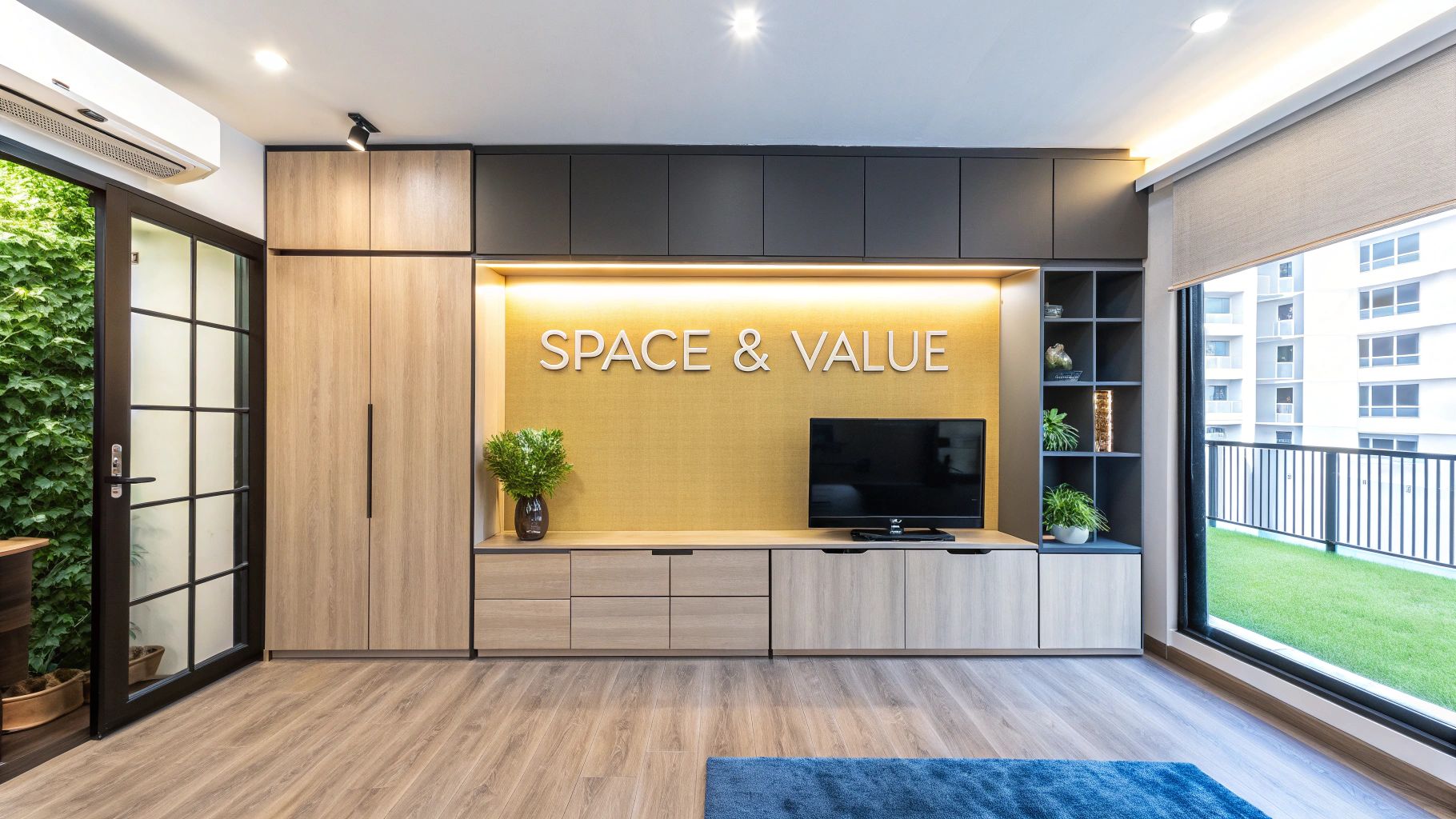
Struggling to find furniture that feels right for your HDB flat or condo? You're not alone. For many Singaporeans, customised furniture is no longer a luxury but a practical necessity for making the most of every single square metre. Bespoke pieces are the perfect answer to common frustrations like awkward layouts and wasted corners, turning those tricky spots into functional, beautiful parts of your home.
Why Custom Furniture is a Smart Investment
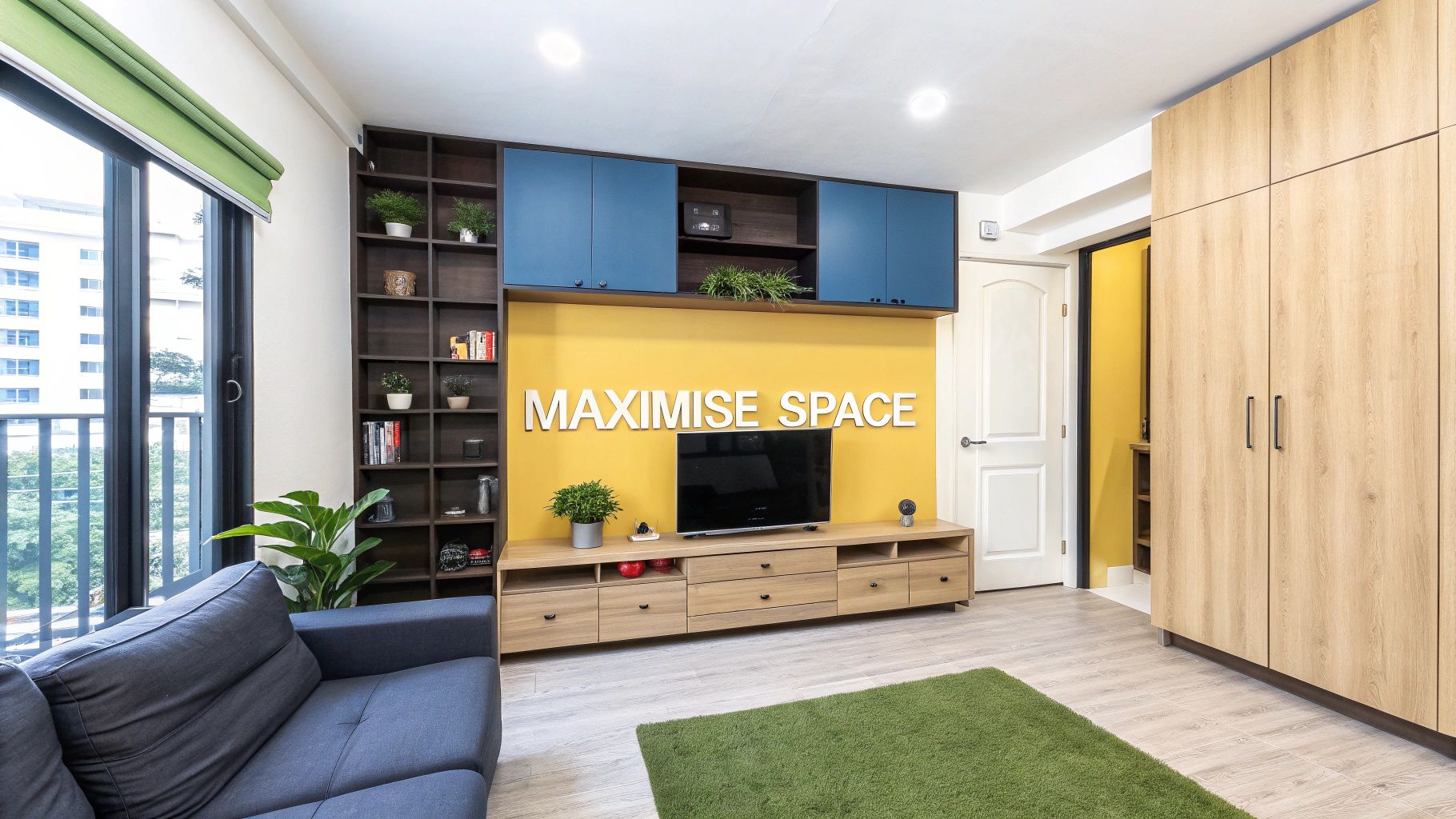
Off-the-shelf furniture is made for the masses, designed for generic spaces that rarely match the unique layouts of Singaporean homes. This often leads to awkward gaps, underused nooks, and a feeling that things just don't quite fit together. Customised furniture, on the other hand, is built precisely for your home and your lifestyle.
Think of it as the difference between a ready-to-wear suit and a tailored one. The first might fit okay, but the second is crafted to your exact measurements, enhancing your silhouette and feeling infinitely more comfortable. In the same way, custom furniture is designed to integrate perfectly with your home’s architecture, looking like it was always meant to be there.
Let's dive into a quick comparison to see the real differences.
Off-the-Shelf vs Customised Furniture: A Quick Comparison
| Attribute | Off-the-Shelf Furniture | Customised Furniture |
|---|---|---|
| Fit & Sizing | Standardised sizes, often a poor fit for unique layouts, leaving awkward gaps. | Made-to-measure for a perfect, seamless fit in any space, no matter how tricky. |
| Design & Style | Limited to current retail trends and available stock. You have to compromise. | Unlimited options. You control the material, finish, colour, and hardware. |
| Functionality | Generic features that may not meet your specific storage or usage needs. | Designed around your lifestyle, with storage and features built just for you. |
| Space Utilisation | Often inefficient, leaving valuable corners and vertical space completely unused. | Maximises every inch, turning awkward nooks and odd walls into valuable real estate. |
| Quality & Longevity | Varies widely. Often made with lower-cost materials for mass production. | Typically uses higher-quality materials and craftsmanship, built to last for years. |
| Cost | Generally lower upfront cost. | Higher initial investment, but offers better long-term value and durability. |
| Timeline | Immediate availability. You can take it home the same day. | Requires a design and production period, usually taking several weeks or months. |
As you can see, the initial convenience of off-the-shelf pieces comes with significant trade-offs in fit, function, and personalisation.
Maximising Every Inch of Space
The biggest win with custom furniture is its incredible ability to conquer space constraints. We see this every day with clients who are determined to make their compact living areas work harder for them.
Instead of trying to awkwardly squeeze a standard wardrobe into a room with a pesky pillar, we can design a built-in unit that wraps around it seamlessly. This move doesn't just provide more storage; it turns an obstacle into a sleek, integrated part of the room. It just looks right.
Customisation empowers you to transform unusable areas—like the awkward space under a staircase or a narrow hallway—into valuable storage or functional features. This strategic use of space is essential for modern urban living.
Reflecting Your Personal Style and Needs
Beyond just being practical, custom furniture is a true expression of your personality. You're in the driver's seat for every detail, from the exact wood grain and finish to the handles and internal layout. This means you never have to choose between getting the look you want and the function you need.
Here’s what that control looks like in real life:
- Perfect Dimensions: A TV console built to the exact width of your feature wall, creating a balanced, high-end feel.
- Specific Storage: A shoe cabinet designed with adjustable shelves to perfectly fit everything from your tallest heels to bulky boots.
- Multifunctional Design: A clever platform bed with deep, built-in drawers, completely eliminating the need for a separate chest of drawers.
This level of personalisation is what's driving so much interest in the market. In Singapore, the demand for space-savvy solutions is a huge factor in the furniture market's growth, which was valued at approximately USD 2.17 billion in 2024 and is set to grow even more. You can discover more insights about Singapore's retail furniture market trends and its impressive projected growth.
Your Custom Furniture Journey, Step by Step

Creating furniture from scratch might sound intimidating, but it’s actually a well-structured and highly collaborative process. Think of it as a partnership between your vision and our expertise. We're here to guide you through every stage, making sure the final piece isn't just beautiful, but a perfect fit for your needs and lifestyle.
We break the entire journey down into clear, manageable stages, moving from big ideas to the smallest details. This methodical approach takes the guesswork out of the equation, so you can feel confident in your decisions at every turn.
Phase 1: Initial Consultation and Discovery
This is where it all begins. Our first meeting is really about getting to know you—your lifestyle, daily routines, what you love aesthetically, and the specific problems you're trying to solve. We’re not just building a wardrobe; we’re creating a storage system that makes your mornings smoother.
To get the most out of this chat, it helps to bring a few things along:
- Floor Plan: Even a simple sketch of the room helps us understand the space.
- Inspiration Photos: Got a Pinterest board or some magazine clippings? Images from our portfolio at Kivo.com.sg also work! They give us a clear visual language to start with.
- Rough Measurements: Knowing the approximate dimensions of the space is a fantastic starting point.
This initial discussion sets the foundation for the whole project. We’ll talk about your budget, material ideas, and the must-have functions to make sure we're on the same page from day one.
Phase 2: Design Conceptualisation and Visualisation
With a solid understanding of your goals, our design team gets to work. This is where your ideas start to take real shape. We translate our conversation into initial sketches and, most importantly, detailed 3D renderings.
These photorealistic visuals are a game-changer. They let you see exactly how the customised furniture will look in your Singapore home, from every angle. You can judge its proportions, its presence in the room, and how it gels with your existing decor. This crucial step eliminates any guesswork, so there are no surprises later. We’ll tweak the design based on your feedback until it’s absolutely perfect.
The design phase isn't just about looks; it's about solving real-world problems. A 3D render helps us spot if a cabinet door will block a walkway or confirm that a new TV console fits perfectly under the window.
Phase 3: Material Selection and Finalisation
Once you've given the thumbs-up on the design, we move on to the fun, tactile part—choosing the materials. We’ll walk you through our library of samples, explaining the practical pros and cons of options like solid teak versus moisture-resistant plywood or high-end laminates.
You’ll get to see and feel the different textures, compare colours, and pick out the handles, hinges, and other hardware that complete the look. This is also when we lock in the technical drawings, which serve as the final blueprints for our carpenters. Every single dimension, joint, and shelf placement is meticulously documented for your final sign-off.
Phase 4: Precision Measurement and Production
With every detail confirmed, our technical team pays a visit to your home for one last critical task: taking precise on-site measurements. This guarantees a seamless, gap-free fit, which is especially important for built-in pieces. Those exact dimensions are then handed over to our workshop.
Here, our skilled craftsmen bring your design to life. They use a blend of modern machinery for pinpoint accuracy and time-honoured techniques for a flawless finish. We oversee the entire production process, ensuring the quality meets our exacting standards. This fabrication stage typically takes 4 to 8 weeks, depending on how complex the piece is.
Phase 5: Delivery and Professional Installation
This is the moment of truth, when your vision finally becomes a reality. Our professional installation team will deliver and assemble the furniture right in your home. They work cleanly and efficiently, always treating your space with the utmost respect.
Before we leave, we'll do a final quality check with you on-site to make sure every detail is perfect. Our job isn’t finished until you are completely happy with the fit, finish, and function of your new custom piece. Seeing it perfectly integrated into your home is the most rewarding part of the entire journey for us, too.
Choosing the Right Materials for Singapore's Climate
When it comes to customised furniture in Singapore, picking the right materials is about more than just good looks. It’s a practical decision to make sure your investment can handle our tropical climate. Constant high humidity can be brutal, causing problems like warping, mould, and general wear and tear long before its time.
Your choice of material really defines the character and lifespan of your furniture. We walk our clients through this, explaining the trade-offs so their pieces are not just beautiful but built to last. It’s all about striking that perfect balance between style, maintenance, and suitability for Singaporean homes.
The Great Divide: Solid Wood vs. Engineered Wood
One of the first big calls you'll make is choosing between the classic appeal of solid wood and the practical versatility of engineered wood. Both are great options, but the right one for you depends entirely on what the furniture is for, where it will live in your home, and your budget.
Solid woods like Teak and Oak are loved for their timeless beauty and incredible durability. Teak, in particular, is a star player in Singapore. Its naturally high oil content makes it inherently resistant to moisture and pests—a huge plus here. Oak gives you that classic, sturdy feel, perfect for a statement piece like a dining table that will see years of family gatherings.
Engineered woods, on the other hand, are incredibly practical, especially for built-in carpentry like wardrobes and kitchen cabinets. We often recommend high-moisture resistant (HMR) plywood for these jobs. It’s constructed in a way that minimises the expansion and contraction that humid weather causes, giving you a stable, reliable foundation for your cabinetry.
Understanding Surface Finishes: Laminates and Veneers
After settling on the core material, the surface finish is what brings the design to life. This is the part you'll see and touch every single day, and it plays a huge role in both the aesthetics and the upkeep of your furniture.
Laminates: Think of these as the tough guys of finishes. They are multi-layered synthetic products bonded onto an engineered wood base. They're incredibly durable, scratch-resistant, and a breeze to clean, which makes them a fantastic choice for high-traffic zones like kitchens and kids' rooms. Plus, the design possibilities are virtually endless, with countless colours, patterns, and textures available.
Veneers: For those who love the look of real wood, veneers are the perfect compromise. A veneer is a thin slice of actual solid wood that's applied to an engineered core. It gives you the rich, natural grain and warmth of solid wood but at a more accessible price and with better stability than a full solid wood panel. It’s a popular choice for TV consoles, feature walls, and wardrobe doors where you want that premium, organic feel.
Your choice of finish has a real impact on your daily routine. A sleek, high-gloss laminate on a TV console is simple to wipe down, while a natural wood veneer might need a bit more gentle care to keep it looking its best over the years.
Material Comparison for Custom Furniture in Singapore
To help you visualise the options, here’s a quick breakdown of common materials used in Singapore. This table compares them based on cost, durability, and how well they stand up to our local climate.
| Material Type | Average Cost | Durability | Best For | Climate Suitability |
|---|---|---|---|---|
| Solid Teak Wood | High | Very High | Outdoor furniture, dining tables, statement pieces | Excellent; naturally resistant to humidity and pests. |
| Solid Oak Wood | High | High | Dining tables, bed frames, heavy-use furniture | Good; needs proper sealing to prevent warping. |
| HMR Plywood | Medium | High | Kitchen cabinets, wardrobes, built-in storage | Excellent; designed to resist moisture and swelling. |
| MDF | Low-Medium | Medium | Wardrobe doors, decorative panels, non-structural items | Fair; can swell with prolonged moisture exposure. |
| Laminate Finish | Low-Medium | Very High | High-traffic surfaces like kitchen countertops and cabinets | Excellent; non-porous and easy to clean. |
| Veneer Finish | Medium | Medium-High | Feature walls, TV consoles, bedroom furniture | Good; requires a sealed core material for best results. |
Ultimately, the best material is the one that fits your lifestyle, budget, and the specific demands of your home environment.
The Rise of Sustainable and Eco-Friendly Options
Lately, we’ve seen a big shift in what our clients care about. Homeowners in Singapore are more conscious than ever of their environmental footprint, and it's heavily influencing their material choices for custom furniture.
This isn’t just a trend; it's about making healthier, more responsible choices for the home. The market is clearly showing a strong preference for sustainable materials like reclaimed wood, bamboo, and innovative recycled composites. In response, custom furniture makers are embracing green certifications like FSC (Forest Stewardship Council) and GREENGUARD to meet this growing demand. You can read more about this movement in Asia-Pacific's wooden furniture market.
We're really excited about this and often suggest options like:
- FSC-Certified Woods: This stamp of approval ensures the wood is sourced from responsibly managed forests that are good for the environment and local communities.
- Low-VOC Finishes: Using paints, sealants, and glues with low or zero Volatile Organic Compounds (VOCs) is a simple way to improve your home's indoor air quality.
- Recycled Materials: New composites made from recycled plastics and other materials are becoming more common, offering unique looks and a great sustainability story.
Choosing the right material is a conversation. By understanding how durability, climate, aesthetics, and sustainability all connect, we can work together to create customised furniture for your Singapore home that you’ll genuinely love for years to come.
Real Solutions for Common HDB and Condo Space Problems
Here in Singapore, clever design isn't just a nice-to-have; it's a must. With our compact HDB flats and condos, every square centimetre is prime real estate. This is where customised furniture stops being a luxury and becomes a strategic move, turning awkward corners and tight spots into hardworking, beautiful spaces.
The boom in custom furniture is directly tied to how we live. With an urbanisation rate pushing 100%, most of us are in high-rise homes where floor space is at a premium. This reality has fuelled the demand for pieces that do more than just sit there—they need to be multifunctional and fit perfectly. If you're curious about the bigger picture, you can learn more about the furniture market dynamics in the Asia-Pacific region to see how this trend is playing out across the industry.
But enough with the theory. Let's get into real-world examples of how we've solved common space challenges for our clients, breaking down the thinking behind each solution.
Transforming the Awkward Bay Window
Bay windows are a familiar sight in Singaporean condos, but they often end up as "dead space"—a dumping ground for clutter or just left empty. We helped a client in a new BTO turn this odd nook into the star of their living room.
The Problem: The client needed more seating for when guests came over but had no space for another sofa or chunky armchairs.
Our Solution: We designed a custom-built bay window settee, complete with a plush upholstered cushion. To really make it work for them, we built deep, concealed drawers into the base.
- Why It Works: This one piece solved two problems instantly. It created comfy seating for three to four extra people without eating into the main living area. Plus, the hidden storage became the perfect spot for magazines, spare cushions, and kids' toys, helping to keep the living room clutter-free. We turned an architectural quirk into a cosy, purposeful feature.
The Space-Saving Bedroom Platform
Bedrooms in newer flats often have just enough room for a bed and a wardrobe, and that's about it. A standard, bulky bed frame can gobble up what little floor space you have, making the room feel claustrophobic.
The Problem: A client's master bedroom felt cramped, and their wardrobe was overflowing. They had nowhere to store bulky items.
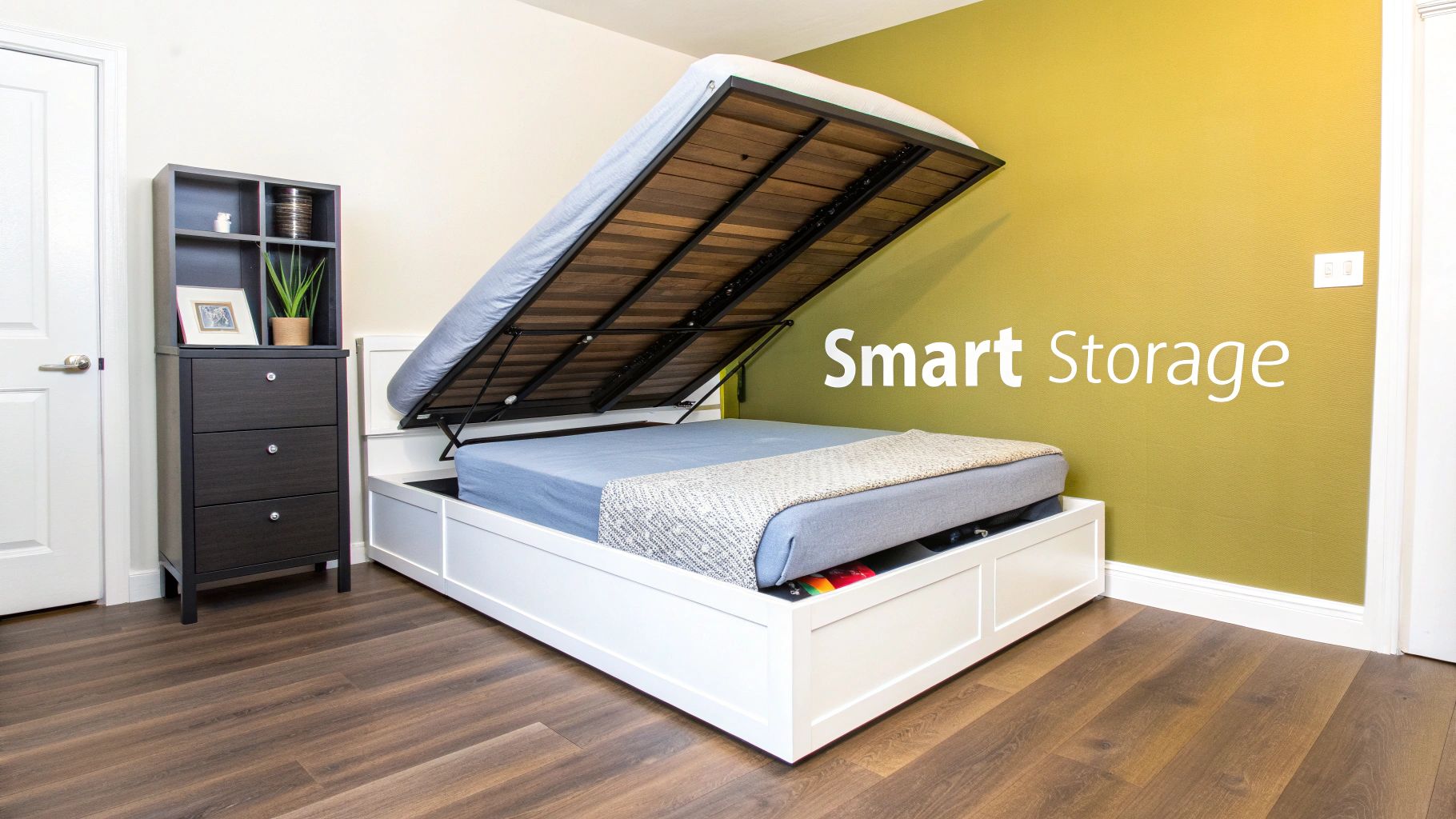
Our Solution: We built a custom platform bed with a hydraulic lift system. This design raises the mattress on a solid base, opening up a huge, easily accessible storage compartment underneath.
- Why It Works: By lifting the bed, we unlocked several square metres of prime, hidden storage. This gave the client a place to stash bulky items like luggage, seasonal quilts, and spare pillows, all completely out of sight. The platform's clean, minimalist lines also made the room feel bigger and less cluttered, getting rid of the need for a separate chest of drawers.
The Floating Console for Narrow Entryways
The entryway is the first thing you see when you walk into a home, but in many HDBs, it's a narrow passage that quickly gets cluttered with shoes, keys, and mail.
The Problem: A family needed a drop-zone for daily essentials by their front door but couldn't fit a standard console table without blocking the walkway.
Our Solution: We designed a sleek, wall-mounted "floating" console. We built it to be slim and fixed it directly to the wall, leaving the floor underneath totally clear. It featured a shallow drawer for keys and a simple top surface for mail.
By lifting furniture off the floor, you create an uninterrupted line of sight across the flooring. It's a classic design trick to make any small space feel larger and more open.
Why It Works: The floating design gives the illusion of more space simply by showing more floor. It delivered exactly what the client needed—a spot for keys and mail—without adding any physical bulk to the narrow hallway. This small change had a huge impact, making their entryway feel organised, welcoming, and noticeably more spacious.
A Practical Guide to Budgeting for Custom Furniture
One of the first questions on everyone's mind is, "So, how much is this going to cost?" It’s a perfectly fair question, but the answer isn't just a single number. Think of the final price for customised furniture in Singapore as a blend of different ingredients: the materials you choose, how complex the design is, and even the handles or hinges you pick.
Getting a handle on these cost drivers is the first step to setting a budget that makes sense for you. It helps you decide where it’s worth spending a bit more for something that will last a lifetime, and where you can be smart with your money without giving up on quality.
Key Factors That Influence the Final Price
A few core elements really shape the final quote for a custom piece. Knowing what they are helps you navigate the whole process without any surprises.
- Materials: This is usually the biggest piece of the puzzle. Solid woods like teak or oak are premium choices loved for their incredible durability, but they come with a higher price tag. On the other hand, high-quality engineered woods like HMR plywood paired with laminates offer a fantastic, wallet-friendly alternative that’s still built to last.
- Design Complexity: It stands to reason that a simple, straight-lined TV console will cost less than an elaborate one with curved edges, fancy built-in lighting, and all sorts of clever compartments. The more skill and hours a piece demands from our craftsmen, the more it will cost.
- Size and Dimensions: This one’s pretty straightforward—bigger pieces just need more materials and time to build. A massive, floor-to-ceiling wardrobe covering an entire wall will naturally be a bigger investment than a neat little shoe cabinet for your entryway.
- Finishing and Hardware: The little details can make a big difference. A sleek, high-gloss finish, for instance, takes more work than a standard matte laminate. In the same way, premium hardware like soft-closing hinges from well-known brands will add to the bill, but they completely change how your furniture feels to use every single day.
Smart budgeting isn't about picking the cheapest option across the board. It's about being strategic. You might splurge on a super durable countertop for your high-traffic kitchen, but choose a simpler design for a console table in a quiet corner of the house.
Ballpark Price Ranges for Popular Custom Pieces
To give you a clearer picture, here are some typical price ranges for common custom furniture projects in Singapore. Of course, these numbers can shift based on everything we just talked about, but they’re a great starting point for your planning.
| Custom Furniture Piece | Typical Price Range (SGD) | Key Cost Influencers |
|---|---|---|
| Full-Height Wardrobe | $1,500 - $5,000+ | Size, internal layout, type of door (sliding vs. casement), and finish. |
| TV Console | $1,500 - $5,000+ | Length, design style (floating vs. freestanding), storage features, material. |
| Custom Bed Frame | $1,000 - $4,000+ | Complexity (e.g., built-in storage), headboard style, and main material. |
| Dining Table | $2,000 - $10,000+ | Type of solid wood, size, leg design, and any special features like extensions. |
Smart Tips for Managing Your Budget
Getting the design you've been dreaming of without breaking the bank is totally doable with a bit of foresight. The best thing you can do is be open with us about your budget right from the start. An honest chat lets us suggest creative solutions and alternatives that hit your aesthetic goals while respecting your finances.
It’s all about priorities. If you’ve fallen in love with a stunning wood grain, maybe we can balance the cost with a simpler, cleaner design. Or, if a highly organised storage system is a non-negotiable, we can look at top-notch laminates that give you the look of pricier materials. By working together, we can create beautiful, functional customised furniture that truly elevates your Singapore home and fits your budget perfectly.
How to Choose the Right Custom Furniture Partner