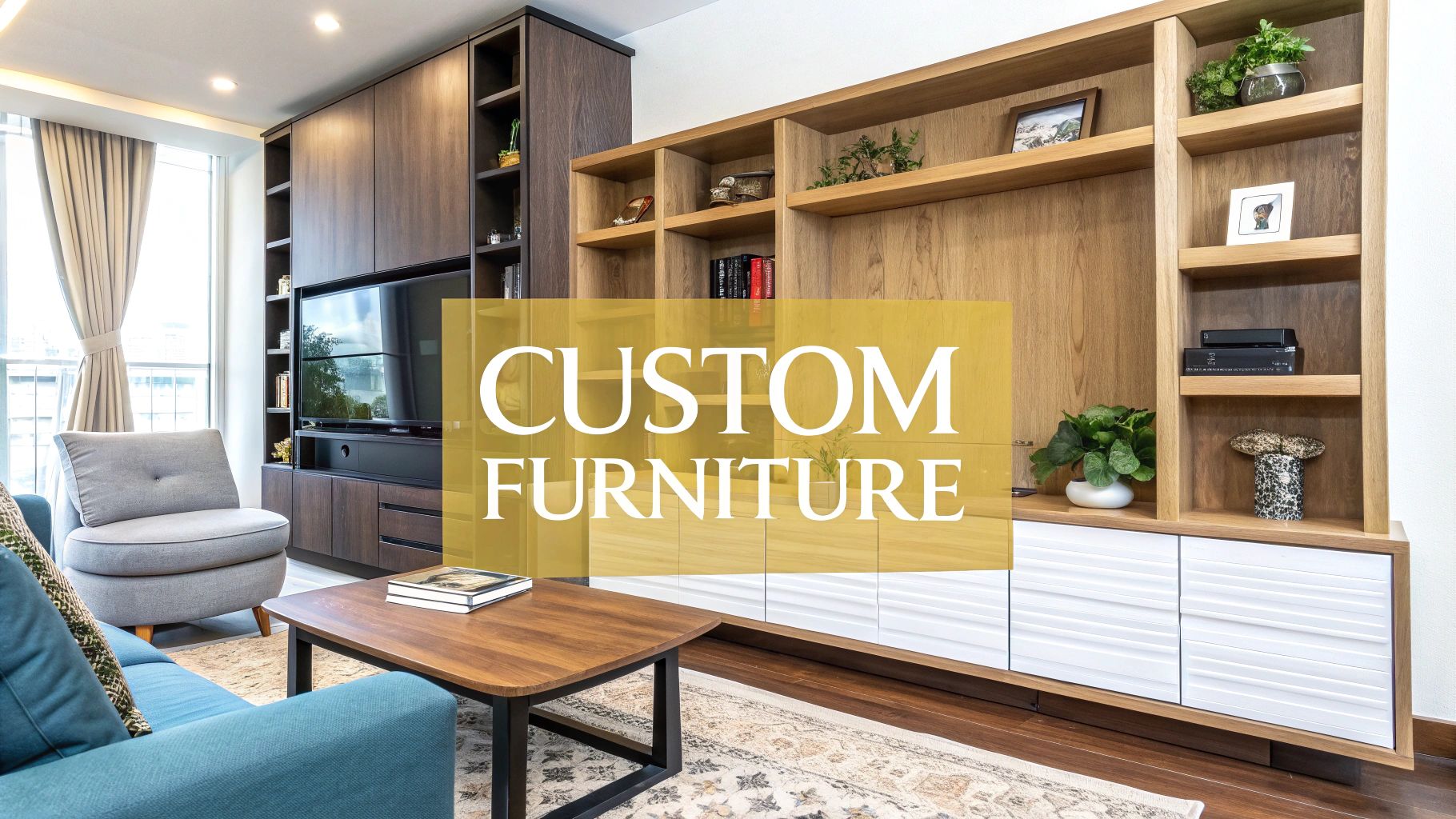
In Singapore, where every square foot is precious, customized furniture is a strategic solution to maximize your home's potential. It's the most effective way to solve the challenges of a compact layout, express your personal style, and invest in quality that is built to last. This approach ensures every piece is not just an object, but a functional extension of your space and lifestyle.
Why Choose Custom Furniture for Your Singapore Home
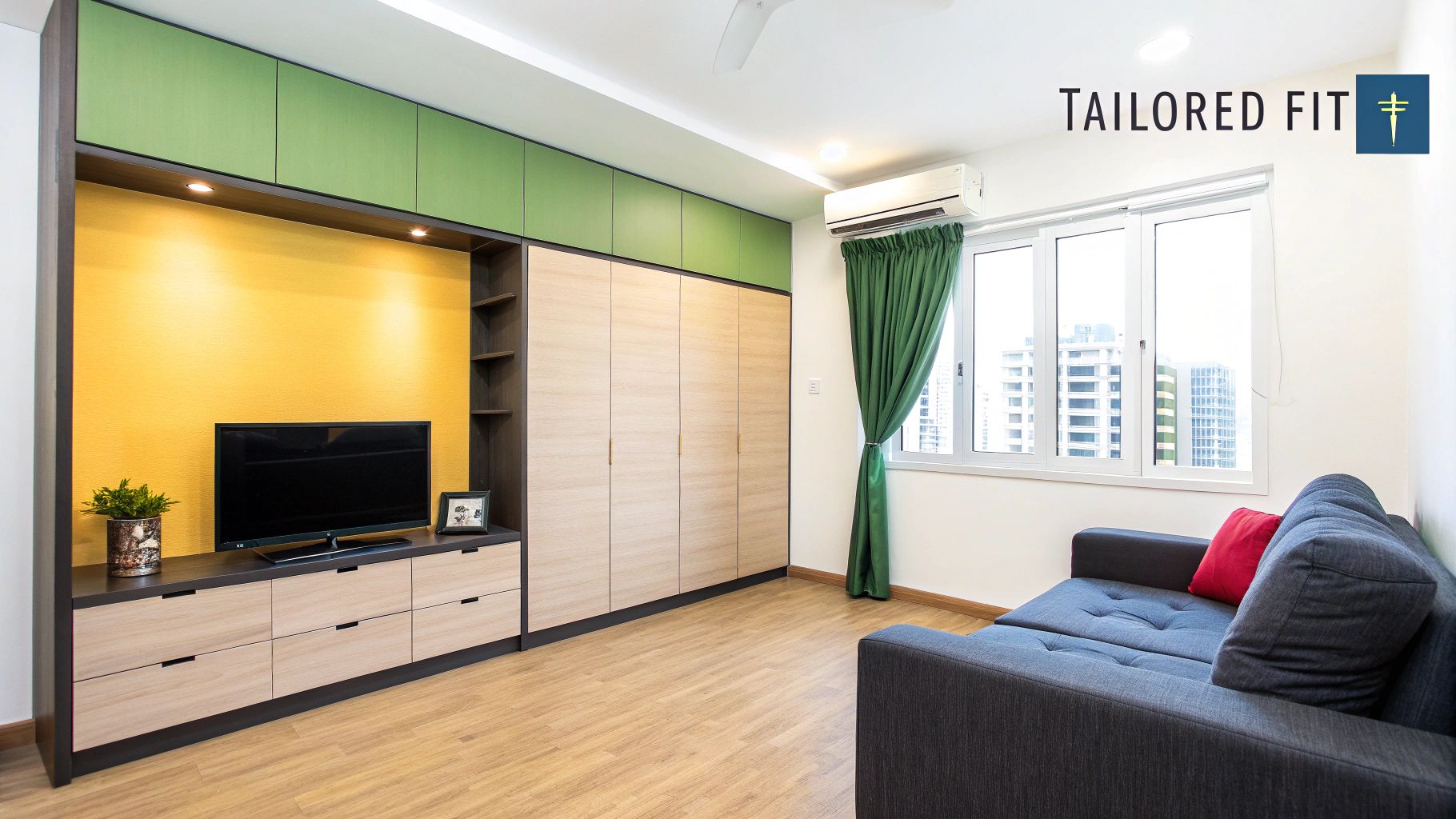
Think of the difference between an off-the-rack suit and a tailored one. The former might fit adequately, but the tailored suit is crafted for you—it enhances your silhouette and moves with you. Customized furniture achieves the same for your home. It's engineered to solve the unique spatial challenges in Singapore's homes, whether it's a narrow HDB corridor, an awkward bomb shelter wall, or an odd-angled condo layout.
This isn't a niche trend; it's a significant market shift. The retail furniture scene in Singapore was valued at US$2.17 billion this year and continues to grow, driven by the demand for intelligent, space-saving designs. This growth indicates a clear move towards bespoke solutions that address the realities of modern urban living. You can see more data on the Singapore retail furniture market on deepmarketinsights.com.
Here's a direct comparison of custom-made versus ready-made options.
Custom vs Off-the-Shelf Furniture at a Glance
| Feature | Customized Furniture | Off-the-Shelf Furniture |
|---|---|---|
| Fit | Built to the exact millimetre for your space. Perfect for odd corners and tight spots. | Standardised sizes. You have to find a space that fits the furniture. |
| Design | You control everything—materials, colours, finishes, and hardware. 100% your vision. | Limited to what's available in the showroom. You might have to compromise. |
| Functionality | Can be designed with multiple functions, like hidden storage or integrated tech. | Functions are pre-determined. What you see is what you get. |
| Quality | Superior craftsmanship and durable materials, chosen for longevity. | Varies greatly. Often made with mass-production materials like MDF or particleboard. |
| Cost | Higher initial investment, but offers better long-term value. | Generally lower upfront cost, but may need replacing sooner. |
| Timeline | Requires a lead time for design, production, and installation (weeks to months). | Can be purchased and delivered almost immediately. |
While this table outlines the trade-offs, the true value of bespoke furniture is in its tailored functionality and long-term durability.
The Core Advantages of Going Bespoke
Opting for custom-made pieces is more than an aesthetic choice; it's a practical decision with tangible benefits. The concept is similar to the build-to-suit model, where an asset is created from the ground up to meet precise client specifications.
Here’s what you actually gain:
- A Perfect, Uncompromised Fit: No more awkward gaps or furniture that feels slightly too large or small. Custom pieces are built to the millimetre, converting wasted nooks into functional storage and making compact rooms feel more spacious.
- Complete Design and Material Control: You are in control. You handpick the materials, finishes, colours, and hardware to align perfectly with your interior design. The result is a true reflection of your style, not a catalogue compromise.
- Superior Craftsmanship and Durability: Custom furniture is built by skilled carpenters using high-quality materials selected to withstand Singapore's humid climate. It's an investment in longevity that pays for itself over time.
Based on client requests over the past year, multi-functional furniture is no longer a luxury but an expectation. We've seen a surge in demand for coffee tables with integrated charging ports and hidden storage, or platform beds with built-in bookshelves. These are practical solutions that standard retail stores simply don't offer.
The Custom Furniture Journey: From Idea to Installation
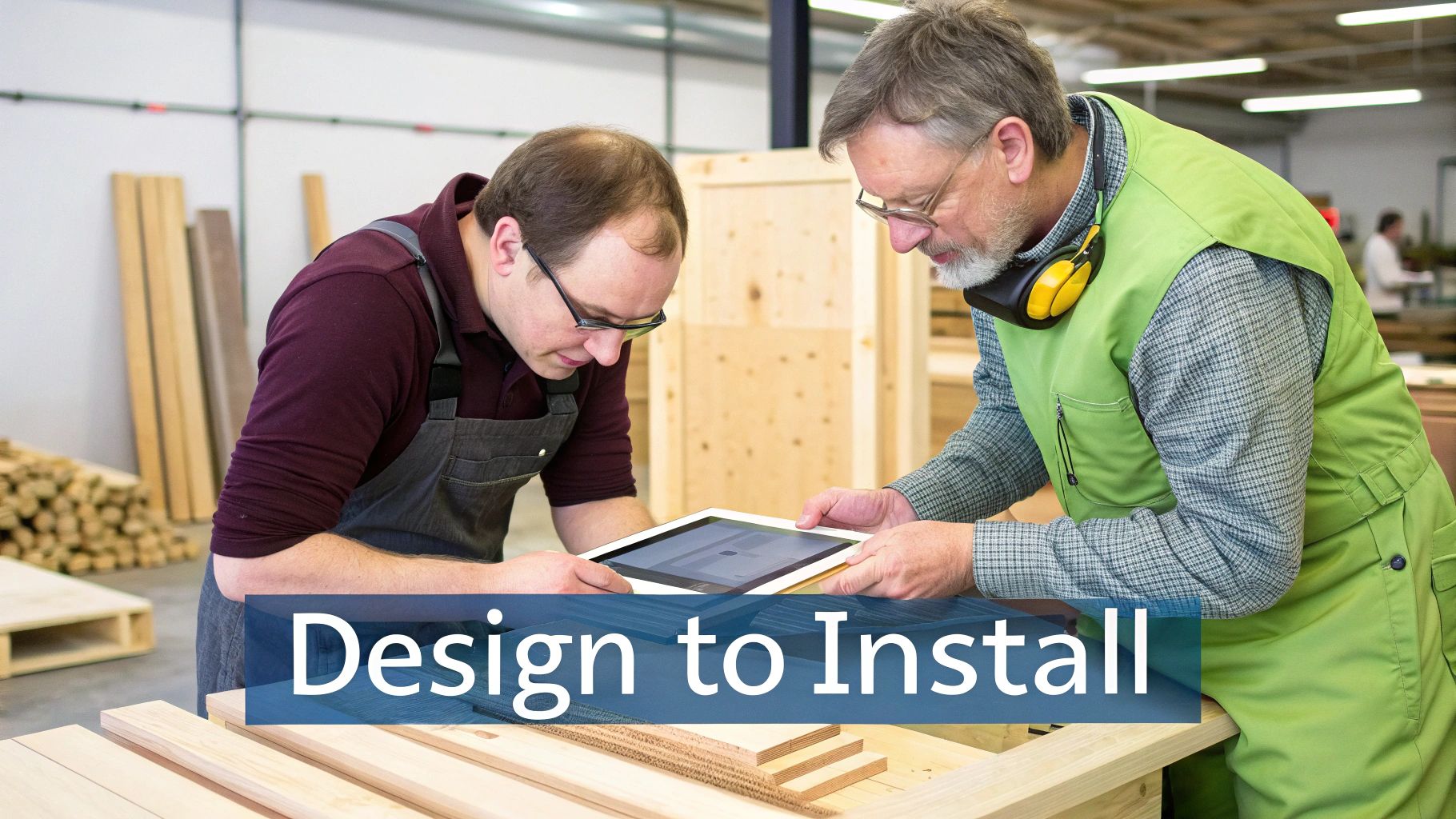
Starting a custom furniture project may seem daunting, but a structured process makes all the difference. It is a creative partnership where your vision is translated into reality through our expertise. Our workflow is refined into five distinct stages, showing exactly how we transform an idea for customized furniture in Singapore into a finished piece, perfectly installed in your home.
This step-by-step approach provides complete transparency, giving you confidence from the initial discussion to the final installation.
Stage 1: Initial Consultation and Vision Crafting
It begins with a conversation. This first meeting is about understanding you, your space, and your objectives. Are you struggling with storage in a tight HDB bedroom? Do you need a unique TV console for an awkward living room corner?
We listen to your ideas and review your inspirations, whether from a detailed Pinterest board or a simple sketch. We also address practicalities—how you use the space, initial measurements, and your budget. This discussion establishes the foundation for the entire project, ensuring we are aligned from day one.
Stage 2: Detailed Design and Material Curation
With a clear understanding of your vision, our design team begins work. Abstract ideas are turned into a concrete plan. We draft detailed drawings showing precise dimensions, internal storage configurations, and all functional components.
This is also when we guide you in selecting the right materials. We explain the options best suited for Singapore’s humid climate. For example:
- High-Quality Plywood with Laminates: Our recommendation for built-in wardrobes and cabinets. It is incredibly stable, resists warping, and is available in a vast range of colours and textures.
- Solid Woods like Teak or Oak: Ideal for standalone statement pieces like a dining table or bed frame. Their durability and natural aesthetic improve with age.
- Engineered Woods with Veneers: Offers the beautiful look of solid wood at a more accessible price point, making it suitable for feature walls or consoles.
We provide physical samples for you to see and feel, ensuring the final materials for your customised furniture are a perfect match for your home.
Stage 3: Immersive 3D Visualisation and Feedback
This is often the most exciting stage for our clients. We convert the 2D drawings into a photorealistic 3D model, creating a digital preview of your finished furniture within a virtual representation of your room.
The 3D visualisation is a critical checkpoint. It serves as a shared blueprint, eliminating guesswork and allowing you to see exactly how the piece will look, feel, and function in your space before fabrication begins.
This step allows you to check proportions, clearance, and how colours and textures interact. It's your opportunity to provide feedback and request adjustments. Whether you want an extra drawer or a different finish, we refine the 3D model based on your input until you are completely satisfied.
Stage 4: Precision Fabrication by Our Carpenters
Once you approve the 3D design, the plans are sent to our in-house carpentry workshop. Here, our skilled craftsmen use the technical drawings to meticulously build your piece. They employ a combination of modern machinery for precision and traditional techniques for sturdy assembly and a flawless finish.
We maintain strict quality control throughout the process. Every joint must be secure, every surface perfectly smooth, and every hinge and handle tested. We believe true craftsmanship lies in these details, ensuring the final product is not only beautiful but also built to last.
Stage 5: Professional Installation and Handover
The final step is bringing your new furniture home. Our installation team delivers and assembles the piece with care and precision, working cleanly and efficiently to minimize disruption. They ensure every component is perfectly aligned, levelled, and securely fixed.
After installation, we conduct a final walkthrough with you. We demonstrate any special features, provide tips on care and maintenance, and ensure you are 100% satisfied with the result. This handover completes the journey, leaving you with a beautiful, functional piece that is uniquely yours.
Choosing the Right Materials and Finishes
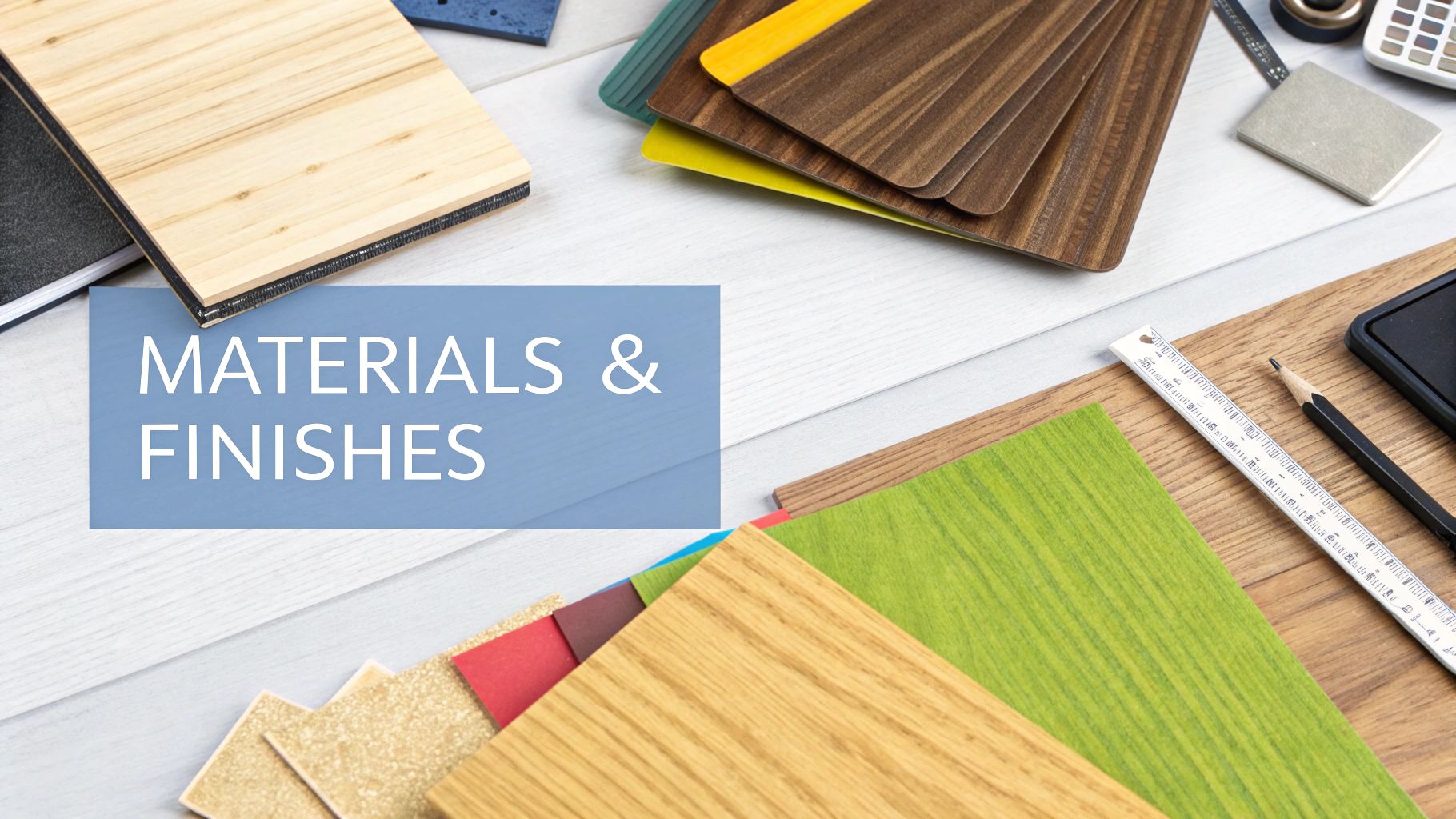
The personality and longevity of custom furniture depend on its materials. Selecting the right ones involves balancing aesthetics, durability, and budget. Based on years of experience, here are the materials we recommend for Singaporean homes.
The demand for personalised spaces is growing rapidly. Singapore’s furniture market was projected to reach US$1.56 billion, largely driven by homeowners seeking unique solutions that off-the-shelf items cannot provide. This trend underscores the importance of quality and personalisation in today's homes.
Understanding your material options is more crucial than ever in this shift towards customisation.
Core Materials for Structure and Durability
The foundational material, or "carcass," is the skeleton of your furniture, providing strength and resilience, which is essential in our humid climate.
High-Quality Plywood with Laminates: This is our primary choice for most built-ins like wardrobes, kitchen cabinets, and TV consoles. Unlike particleboard that can swell with moisture, good plywood is made from layers of wood veneer, making it strong and resistant to warping—a critical feature in Singapore. It provides a stable and reliable base for nearly any finish.
Solid Woods (Teak, Oak, Walnut): For a freestanding statement piece like a dining table or bed frame, solid wood offers unparalleled character. Each wood has distinct properties: Teak is known for its durability and natural moisture resistance, while oak and walnut feature stunning grain patterns. While it is a premium investment, its timeless appeal allows it to be refinished and passed down through generations.
We consistently advise clients against using standard Medium-Density Fibreboard (MDF) in high-moisture areas like kitchens and bathrooms. Standard MDF can absorb moisture and swell. For long-term performance in Singapore, high-moisture resistant (HMR) boards or quality plywood are far superior choices.
Finishes That Define Your Style
If the core material is the skeleton, the finish is the "skin." It’s what you see and touch daily, protecting the core while defining the piece's aesthetic.
Laminates for Versatility
High-pressure laminates (HPL) are a practical and popular choice. They are durable, easy to clean, and available in an extensive range of designs.
- Matte Finishes: Provide a modern, sophisticated look that is effective at hiding fingerprints.
- Glossy Finishes: Create a bright, reflective surface that can make smaller rooms feel more open.
- Textured Finishes: Can mimic other materials like wood grain, linen, or stone, adding depth and tactile interest.
Veneers for Natural Beauty
A wood veneer is a thin slice of real timber applied to a stable core like plywood. This offers the authentic, rich appearance of solid wood without the high cost or risk of warping in large panels. It is ideal for feature walls, headboards, and console doors where a touch of natural elegance is desired.
Other Finishing Techniques
Beyond laminates and veneers, other methods can achieve specific looks and add durability. For instance, if your design includes metal elements, knowing what powder coating is is useful, as it provides a tough, long-lasting finish for legs, frames, or handles.
Choosing the right combination of materials and finishes is a collaborative process. We guide you in weighing the pros and cons of each option to ensure your final piece is not only beautiful but also perfectly suited to your lifestyle and home.
How to Budget for Custom Furniture in Singapore
Budgeting for customised furniture doesn't have to be complex. Understanding the factors that drive costs allows you to plan with confidence and make informed decisions.
The final price is a direct reflection of four main factors. Grasping these will demystify the investment and show you exactly where your money goes.
Breaking Down the Main Cost Factors
Every custom project has a unique price, determined by the choices you make.
Size and Scale: This is the most straightforward factor. A large, floor-to-ceiling wardrobe requires more raw materials and labour than a compact TV console. The larger the design, the higher the base cost.
Design Complexity: A simple, minimalist bookshelf is quicker to build than a TV feature wall with fluted panels, curved edges, and integrated LED lighting. Intricate details, non-standard shapes, and complex internal layouts demand more skill and time from our carpenters, which is reflected in the cost.
Material and Finish Selection: Your choice of materials significantly impacts the price. Solid woods like teak or walnut are premium investments due to their natural beauty and durability. In contrast, high-quality plywood with stylish laminates offers a durable and more budget-friendly option for most built-ins. Similarly, premium finishes like wood veneers or high-gloss laminates cost more than standard matte options.
Hardware and Mechanisms: Small details often make the biggest difference in daily use. High-end hardware, such as soft-closing hinges from brands like Blum, heavy-duty drawer runners, or specialized sliding door systems, adds to the final price. While they are upgrades, they dramatically improve the furniture's functionality and longevity.
Estimated Cost and Timeline for Common Custom Furniture
To provide a clearer picture, here are some realistic price ranges for common customized furniture in Singapore. Use these figures as a starting point for your planning.
| Custom Furniture Piece | Estimated Cost Range (SGD) | Typical Timeline (Weeks) |
|---|---|---|
| Full-Height Built-in Wardrobe | $2,000 – $5,500+ | 4 – 6 |
| TV Console / Feature Wall | $1,800 – $6,000+ | 4 – 7 |
| Platform Storage Bed | $1,500 – $4,500+ | 3 – 5 |
| Kitchen Cabinetry (Full Set) | $7,000 – $20,000+ | 6 – 10 |
| Study Table with Shelving | $1,200 – $3,500+ | 3 – 5 |
These estimates are based on quality materials and professional craftsmanship. The final cost will always depend on the specific size, complexity, materials, and hardware you choose.
Mapping Out a Realistic Project Timeline
Understanding the timeline from consultation to installation is as important as the budget. Good planning helps keep your entire renovation on schedule.
A typical project for a single major piece, like a wardrobe or TV console, generally follows this timeline:
- Week 1: Initial consultation, design discussion, and on-site measurements.
- Week 2: Presentation of detailed 3D models and revisions based on your feedback.
- Weeks 3-5: Fabrication and finishing at our carpentry workshop.
- Week 6: Professional on-site installation and final handover.
This is an estimate. Delays can occur, often due to design changes after approval or unforeseen on-site issues. Building a buffer of one to two weeks into your overall renovation schedule is a prudent measure.
By understanding both the costs and the time involved, you can approach your custom furniture journey with clarity and excitement.
Finding the Right Custom Furniture Partner

Choosing the right firm is the most critical decision you will make. This partnership determines not only the quality of the final piece but also the smoothness and transparency of the entire experience. Asking the right questions is key to finding a team you can trust.
The market for customized furniture in Singapore has expanded significantly beyond traditional showrooms. The local furniture eCommerce market generated US$630 million this year alone, with platforms like Shopee.sg reporting US$207 million in furniture sales. For more details, you can review the Singapore eCommerce furniture market data on ecdb.com.
With numerous options available, knowing how to vet potential partners is more important than ever.
Your Vetting Checklist: Essential Questions to Ask
Treat your initial consultations as interviews where you are the hirer. A reputable firm will welcome your questions and provide clear answers. Use this checklist to guide the conversation:
- "Can I see your physical portfolio and visit your workshop?" Digital photos are a good start, but seeing the craftsmanship firsthand is invaluable. A firm with an in-house workshop has greater control over quality and timelines, which is a significant advantage.
- "What’s your design process, and will I see 3D renders?" Look for a structured process. Detailed 3D visualisations are non-negotiable; they prevent miscommunication and ensure the final product matches the design.
- "Where do you source your materials and hardware?" Inquire about the origin of their plywood and laminates, and the brands of hardware they use (e.g., Blum or Hafele). This indicates their commitment to quality.
- "What does your warranty cover and for how long?" Always get the warranty policy in writing. A solid warranty covering structural integrity and hardware for at least one year shows a company stands behind its work.
Reading Quotations and Spotting Red Flags
A detailed quotation is a hallmark of a professional company. Vague, one-line descriptions are a major red flag. Your quote should be a fully itemised breakdown, not a lump sum.
A proper quotation should clearly specify the materials (e.g., "high-quality moisture-resistant plywood with Lamitak laminate finish"), the exact dimensions, the type of hardware (e.g., "Blum soft-closing hinges"), and a breakdown of costs. This transparency protects you from hidden charges later on.
Be alert for these warning signs:
- Pressure to Pay a Huge Deposit Upfront: A standard deposit is normal, but a demand for more than 50% before work has begun is a cause for concern.
- No Written Contract: A verbal agreement is insufficient. A formal contract outlining the full project scope, timeline, cost, and warranty details is essential for your protection.
- Vague Timelines: If a firm cannot provide a realistic timeline from fabrication to installation, it may indicate poor project management and potential delays.
Taking the time to find the right partner is an investment that will bring you satisfaction for years to come.
Your Custom Furniture Questions, Answered
It's normal to have questions when considering a custom furniture project. Based on our years of experience crafting bespoke pieces for Singapore homes, here are straightforward answers to the most common queries.
Our goal is to demystify the process by addressing the key concerns homeowners have before they invest.
Is Custom Furniture Always More Expensive Than Ready-Made?
Not necessarily. While an intricate, solid wood piece is an investment, many custom solutions are cost-competitive with high-end retail furniture, especially built-ins like wardrobes or TV consoles made from quality plywood and laminates.
The key difference is value. With customised furniture in Singapore, you are paying for a perfect fit that maximizes every inch of your space and materials chosen for longevity in our climate. It's a targeted solution that solves your specific problems. In the long run, this often outlasts and outperforms a mass-produced item, making it a smarter investment.
What Does a Typical Warranty for Custom Furniture Cover?
This is a critical question, as warranty terms vary between firms. A reputable company will provide a clear, written warranty detailing what is covered.
A standard warranty typically includes:
- Structural Integrity: Guarantees the core construction remains sound and stable.
- Hardware Functionality: Covers moving parts like drawer runners and door hinges for a set period.
Warranties usually exclude normal wear and tear, accidental damage, or issues from misuse. Always request the warranty details in writing before signing a contract to understand your coverage and the claims process.
We always tell our clients to get clarity on the warranty upfront. A transparent partner won't hesitate to provide this, which is a great sign of their confidence in their own craftsmanship.
Can I Bring My Own Design Ideas from Pinterest?
Yes, absolutely. We encourage it. Bringing inspiration from platforms like Pinterest, Instagram, or design magazines provides valuable insight into your personal style and functional needs.
Think of these images as a starting point. Our role is to translate that idea into a practical, well-engineered design that fits your space and budget. We adapt the concept, recommend appropriate materials, and then create detailed 3D models to bring your vision to life before fabrication begins.
What if I Need to Make Changes After Seeing the 3D Model?
The 3D visualisation stage is specifically for this purpose. It's a crucial checkpoint for fine-tuning every detail to ensure the design is perfect before it goes to our workshop. It is far easier and more cost-effective to adjust a digital model than a physical piece of furniture.
Most professional firms include a set number of revisions in the design fee. If the initial render isn't quite right, you can provide feedback on dimensions, internal layouts, colours, and hardware. This collaborative process eliminates guesswork and prevents costly changes later, ensuring the final piece is exactly what you envisioned.
Ready to transform your space with furniture that’s designed just for you? At KIVO, our team of experienced designers and skilled carpenters is dedicated to bringing your vision to life with exceptional craftsmanship and a seamless client experience. Explore our portfolio and discover how we can create bespoke solutions that perfectly fit your home and lifestyle.