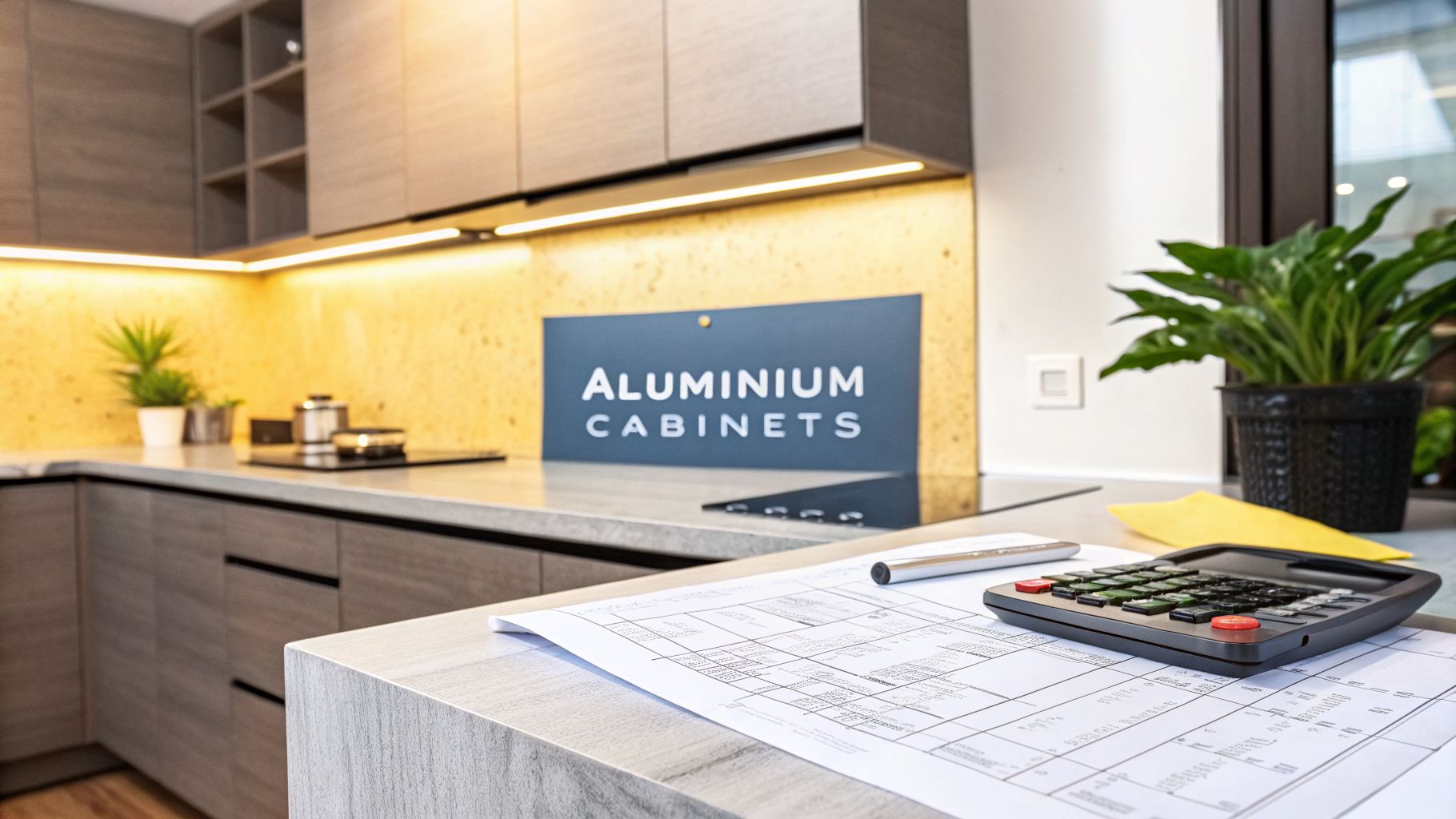

Thinking about renovating and heard the term direct contractor in Singapore? Let's get straight to the point. Hiring a direct contractor means you engage individual tradespeople—like tilers, plumbers, and electricians—yourself for your project.
This approach puts you in the project manager's seat. You are responsible for coordinating every aspect of the renovation, from scheduling who comes in on which day to ensuring the quality of work is up to standard. It's a hands-on method that demands a clear vision and, crucially, the time to manage all the moving parts.
Understanding the Direct Contractor Model

Think of your renovation as directing a film. Going the direct contractor route is like personally hiring the cinematographer, the sound engineer, and the set designer. You are the director, orchestrating the entire production to ensure each specialist delivers their part perfectly and on schedule.
With this model, you bypass a single point of contact, like an interior designer (ID). Instead of one person to call, you'll be liaising directly with multiple contractors.
When This Approach Works Best
Engaging a direct contractor isn’t for everyone, but it excels in specific situations. It’s a practical path if you're an experienced homeowner who has managed a renovation before and feels confident directing different teams.
This model is also highly effective for smaller-scale projects. For example, if you only need to renovate a single bathroom or install custom carpentry in one room, hiring specialists directly can be far more efficient than engaging a full-service firm. You get total control over a focused task.
One of the biggest practical benefits is the direct communication. You're talking to the person doing the actual work, which means faster decisions and a much higher chance your technical requirements are executed exactly as envisioned.
For a clearer picture of the responsibilities involved, this comprehensive guide on contractor management is a useful resource.
Direct Contractor vs. Interior Designer
The choice between a direct contractor and an interior designer depends on your needs, experience, and project scale. They offer two very different service models.
This comparison table provides an actionable framework to help you decide.
Direct Contractor vs. Interior Designer: Which Is Right for You?
| You Should Choose... | A Direct Contractor If... | An Interior Designer If... |
|---|---|---|
| Project Scope | Your project is small-scale or focuses on specific tasks like tiling, plumbing, or electrical work. | You are planning a full-home renovation with complex design, structural, and spatial planning needs. |
| Your Involvement | You want hands-on control and have the time and expertise to coordinate multiple trades, schedules, and materials. | You prefer a single point of contact to manage the entire project from concept to completion. |
| Design Needs | You have a finalised design plan and do not require creative input, 3D renderings, or space planning. | You need expert guidance on design concepts, material selection, and visualising the final look. |
| Budget Approach | You are focused on itemised costs and are prepared to manage the budget across various independent vendors. | You prefer a bundled project fee that includes design, management, and coordination services for clearer financial planning. |
Ultimately, there is no single "best" choice—only the best choice for your specific project. Understanding these fundamental differences is the first step to making a sound decision.
The Real Pros and Cons of Going Direct

The primary motivation for choosing a direct contractor in Singapore is usually cost savings. While the potential to reduce expenses is significant, it's a trade-off between financial benefits and substantial responsibilities. Understanding this balance is key.
The main advantage is the potential to lower your overall project cost. By engaging tradespeople individually, you eliminate the project management and design fees an interior design firm would typically add. This means more of your budget is allocated directly to labour and materials.
But the benefits extend beyond cost. You also gain a level of control and direct communication that is hard to match.
The Upside of Full Control
Having a direct line to the artisans doing the work is incredibly valuable. Imagine discussing the exact grain direction for your kitchen cabinets with the carpenter on-site or specifying the precise height for a shower niche directly with the tiler.
This direct communication leads to faster problem-solving and a final result that closely matches your vision. Since you are managing the project, there is no risk of your instructions being misinterpreted by a third party.
Here is a summary of the main advantages:
- Direct Cost Allocation: Your budget pays for the actual work, not management overheads, potentially leading to a lower final bill.
- Unfiltered Communication: You speak directly with the specialists—the plumber, electrician, and painter—ensuring detailed requests are understood.
- Total Project Authority: Every decision, from material selection to the work schedule, is yours to make.
This hands-on control is empowering, but it also means you assume all the responsibilities of a project manager. The "savings" are, in effect, your compensation for taking on this demanding role.
The Downside: The Project Manager Hat
This is the aspect many homeowners underestimate. When you go direct, you become the project manager, a role that comes with a critical list of duties.
You are responsible for creating and managing the entire project schedule. This involves sequencing different trades correctly—a task that is more complex than it appears. For example, hacking and masonry must be completed before wiring and plumbing can start, which in turn must precede plastering or tiling.
A single scheduling error can trigger a costly domino effect, causing delays and requiring rework. You are also the de facto quality control inspector, which requires a keen eye to identify substandard work or non-compliance with building codes.
Here's a practical example we've seen: a client scheduled a plumber for Monday and a tiler for Tuesday. Late on Monday, a minor pipe leak was discovered. The plumber had to return the next day, but the tiler was already on-site, unable to work. This simple oversight caused a two-day delay, incurred rescheduling fees, and created significant stress.
This highlights the main challenges you will face:
- Complex Scheduling: Juggling multiple independent teams, where one trade's delay can disrupt the entire project timeline.
- Quality Assurance: The responsibility to inspect and approve the quality of every task falls on you. This requires technical knowledge.
- Dispute Resolution: If disagreements arise between tradespeople or work is subpar, you are the mediator. There is no project manager to escalate issues to.
The decision to work with a direct contractor Singapore homeowners face requires a realistic assessment of their own time, expertise, and stress tolerance. The financial pros are real, but the operational cons demand your full, active involvement.
How to Manage Your Budget and Timeline

Successful project management with a direct contractor hinges on two elements: a detailed budget and a rigid timeline. Unlike receiving a single quote from an ID, your budget will be a compilation of individual quotes from each trade. This provides transparency but requires meticulous tracking.
Based on our experience with clients, there's a growing desire for this kind of financial clarity. As public housing construction ramps up, with HDB planning to launch around 19,600 BTO flats, the demand for skilled direct contractors is increasing. This trend underscores the importance for homeowners to manage their renovation projects professionally.
To maintain control, it is essential to use a system for efficiently tracking job progress and costs. This acts as your project's financial command centre.
Demystifying the Cost Structure
The primary difference is in the invoicing. An interior designer provides a single, comprehensive quote that bundles materials, labour, design fees, and a project management margin. A direct contractor bills you only for their specific trade.
You will receive separate invoices for:
- Hacking and masonry
- Plumbing and electrical works
- Plastering and painting
- Tiling and flooring
- Carpentry and fixture installation
It becomes your responsibility to aggregate these individual costs to form your total project budget. While it requires more administrative work, it offers a granular view of expenditures and identifies potential areas for savings.
Sample Cost Breakdown for a 4-Room HDB Renovation
To illustrate, here is a simplified cost comparison. The direct contractor costs are itemised, while the ID firm's quote is typically a bundled figure that includes their coordination and design services.
| Work Item | Estimated Direct Contractor Cost | Typical ID Firm Quoted Cost (Inclusive of Fees) |
|---|---|---|
| Hacking & Masonry | S$4,000 - S$6,000 | Bundled into overall project cost |
| Plumbing Works | S$2,500 - S$4,000 | Bundled into overall project cost |
| Electrical Works | S$3,500 - S$5,500 | Bundled into overall project cost |
| Tiling (Labour & Materials) | S$8,000 - S$12,000 | Bundled into overall project cost |
| Painting Services | S$1,800 - S$2,500 | Bundled into overall project cost |
| Custom Carpentry | S$10,000 - S$15,000 | Bundled into overall project cost |
| Total (Approx.) | S$29,800 - S$45,000 | S$40,000 - S$60,000+ |
Disclaimer: These are indicative figures. Actual costs depend on project complexity, material choices, and specific contractor rates.
This table demonstrates the potential savings, but remember: these savings are realised because you are performing the project management.
Understanding the Critical Path
Beyond budgeting, your most significant challenge is time management. In project management, the critical path is the sequence of essential tasks that determines the project's total duration. Any delay on this path will delay your completion date.
For example, hacking must finish before the plumber can begin. Plumbing must be in place before waterproofing is applied, and waterproofing must cure completely before tiling can start. A delay in the first task (hacking) will cause a cascading delay for all subsequent tasks.
Your primary role as project manager is to protect this critical path. A one-day waterproofing delay might seem minor, but it can easily become a week-long setback once it disrupts the schedules of your tiler and carpenter, who have commitments to other clients.
A simplified critical path for a bathroom renovation:
- Hacking & Debris Removal (3 days) - Prerequisite for plumbing.
- Plumbing Rough-In (2 days) - Prerequisite for waterproofing.
- Waterproofing & Curing (3 days) - Prerequisite for tiling.
- Tiling & Grouting (4 days) - Prerequisite for fixture installation.
- Fixture Installation (1 day) - Final step.
Any disruption creates a ripple effect. Proactive management—daily schedule confirmations, anticipating material deliveries, and on-site progress checks—is the only way to keep your project on track and avoid costly overruns.
Your Checklist for Vetting and Hiring a Contractor

Selecting the right direct contractor is the most critical decision you will make. It determines whether your renovation is a success or a source of stress. The process requires diligence, sharp questioning, and a clear understanding of your requirements.
Approach it like hiring a key employee for a critical project. You would conduct thorough background checks and interviews to ensure they are the right fit. The same rigour applies here.
This checklist provides an actionable plan for the hiring process.
Step 1: Research and Shortlisting
Begin by compiling a list of potential candidates. Referrals from friends and family are valuable, but supplement them with online research. When using platforms to find a direct contractor in Singapore, due diligence is essential.
Screen your initial list with these actions:
- Portfolio Review: Examine their past projects. Do they align with the scope and style of your renovation? A contractor specialising in minimalist BTOs may not be the best fit for a complex landed property extension.
- Online Presence: Review their website, social media, and client reviews. Pay attention to how they respond to negative feedback; a professional response indicates accountability.
- Initial Enquiries: Contact your top candidates. Their responsiveness and professionalism during this first interaction are telling indicators of their service quality.
Step 2: The Crucial First Meeting
This is your opportunity to assess their experience, professionalism, and communication style. It is a two-way interview; you are vetting them, and they are evaluating if your project is a good fit for their capabilities.
Come prepared with these essential questions:
- "Can I see your HDB license?" This is non-negotiable for any HDB renovation. The contractor must be registered. Ask for their license number and verify it on the official HDB Directory of Renovation Contractors.
- "What insurance coverage do you carry?" They must have public liability insurance to protect you from liability in case of accidents or property damage. Ask for a copy of the insurance certificate.
- "Can I speak to a few of your past clients?" A reputable contractor will readily provide references. Speaking directly with former clients offers unfiltered insight into their workmanship and project management.
Step 3: Comparing Quotations Like a Pro
When you receive quotations, avoid the common mistake of simply choosing the cheapest one. A low bid can often conceal future costs or indicate subpar materials. Compare quotations on a like-for-like basis.
A critical error is comparing a vague, lump-sum quote with a detailed, itemised one. Always insist on a detailed breakdown. A quote that simply states "Kitchen Renovation - S$15,000" is a red flag. It should specify costs for hacking, plumbing, electrical, carpentry, and tiling.
Use a simple spreadsheet to compare offers. Create columns for each contractor and rows for each work item. This helps you identify significant price discrepancies for specific tasks, which you should then question.
Step 4: Locking It Down with a Contract
Once you have selected a contractor, formalise the agreement with a comprehensive contract. A verbal agreement is insufficient. The contract is your legal protection and must detail every aspect of the project.
Ensure these key clauses are included:
- Detailed Scope of Work: List every task, including material specifications (e.g., brand of hinges, type of paint).
- Payment Schedule: Link payments to project milestones. A typical structure is: 10% deposit, 40% upon completion of masonry, 40% after carpentry installation, and the final 10% upon handover. Never pay a large sum upfront.
- Project Timeline: Specify a start date, an estimated completion date, and key milestones.
- Defect Liability Period: A standard period is 12 months. This clause obligates the contractor to rectify any defects that appear after project completion.
Finding the Sweet Spot: Partnering with Specialists
Many homeowners in Singapore appreciate the control of being their own project manager but are unwilling to compromise on high-impact features. This is where a hybrid approach is effective: manage the overall project, but engage specialists for critical components.
For instance, you can manage straightforward trades like hacking, tiling, or basic electrical work to control costs. Simultaneously, you can engage a specialist firm like Kivo for areas that demand superior craftsmanship and design, such as custom carpentry.
This approach offers the best of both worlds. You maintain budgetary control over standard tasks while ensuring the most visible and functional parts of your home receive a premium finish.
The Hybrid Model in Action
A recent client renovating their condominium adopted this model. As an experienced homeowner, he acted as his own project manager, sourcing and coordinating contractors for demolition, masonry, and painting.
However, his vision for the kitchen and master bedroom was complex. He wanted a sophisticated, semi-open concept kitchen with a fluted-panel island and integrated appliances. For the master bedroom, he envisioned a floor-to-ceiling wardrobe with specialised internal compartments.
He engaged us specifically for these two critical areas.
- Our Role: We focused on the custom carpentry, translating his design brief into precise technical drawings.
- Collaboration: We coordinated directly with his electrician and plumber to ensure our cabinet designs aligned perfectly with wiring points and plumbing outlets, preventing last-minute issues.
- The Result: The client successfully managed his overall renovation budget. Our team delivered a high-quality kitchen and wardrobe that became the centrepieces of his home.
This hybrid model is an intelligent allocation of funds. You avoid paying a project management premium on tasks you can handle yourself, instead investing those savings into top-tier craftsmanship where it matters most.
More Opportunities on the Horizon
This collaborative approach is not limited to residential projects. The construction sector in Singapore is experiencing broad growth, creating more opportunities for skilled direct contractors.
For example, commercial construction demand is projected to reach S$17.0 billion. This growth is driven by major projects like the Marina Bay Sands expansion and developments in the biomedical sector, contributing to a forecasted 5.2% industry expansion.
You can explore more about these construction trends and market outlooks to understand the expanding landscape. The trend is toward specialisation, benefiting everyone when true experts are engaged for high-value tasks.
Got Questions About Direct Contractors? We've Got Answers.
Even after deciding on the direct contractor route, you may still have questions. Addressing these concerns before work begins is key to a smooth renovation.
Here are answers to the most common questions from Singaporean homeowners.
Does My Contractor Really Need an HDB License?
Whether a contractor needs an HDB license depends on the scope of work.
For HDB flat renovations, contractors performing certain types of work must hold a valid license from the Housing & Development Board. This is a legal requirement to protect the building's structural integrity.
- HDB License Required: If the work involves hacking walls or floors, moving doorways, or redoing bathroom waterproofing, your contractor must be on the HDB's approved list.
- HDB License Not Strictly Required: For tasks like painting, installing built-in furniture, or standard electrical work, a license for that specific trade is not mandatory.
Actionable Advice: Always work with a main contractor who is HDB-licensed, even for minor projects. They understand the regulations, know which works require permits, and can properly oversee the entire project. This provides crucial peace of mind.
What Can I Do About Shoddy Workmanship?
Discovering subpar work is stressful, but there is a clear process to follow. Be systematic and document everything.
If a direct conversation does not resolve the issue, follow this escalation plan:
- Put It in Writing: Send a formal email detailing the issues, referencing the relevant clauses in your contract, and attaching photographic evidence. This creates a documented record.
- Try Mediation: Organisations like the Consumers Association of Singapore (CASE) can mediate disputes, helping both parties reach a fair solution without resorting to legal action.
- Head to the Small Claims Tribunals: For disputes involving claims up to S$20,000 (or S$30,000 if both parties agree), the Small Claims Tribunals offer a faster and less expensive resolution than a lawsuit.
Your contract is your most important tool. A detailed scope of work and clear quality standards are your best defence against poor workmanship.
How Should I Structure Payments to Avoid Getting Burned?
The golden rule of payment is: never pay the full amount upfront. A large initial payment removes your leverage if work quality declines or the project stalls.
A smart payment schedule should be tied to clear, verifiable project milestones. This is known as progressive payment and protects both you and the contractor.
A fair payment structure in Singapore often looks like this:
| Payment Stage | When to Pay | Why This Stage Matters |
|---|---|---|
| 10% Deposit | Upon Signing the Contract | Secures the contractor’s services and allows for initial material orders. |
| 40% Progress | After Hacking & Masonry is Done | Covers the cost of major structural work and the first phase of labour. |
| 40% Progress | After Carpentry & Finishing is Done | Pays for custom work, painting, and final installations before handover. |
| 10% Final | After Handover & Inspection | This is your leverage. Release this final payment only after a thorough inspection and complete satisfaction. |
This milestone-based approach ensures the contractor is paid fairly for completed work while you remain in control of the project's progress.
Managing a renovation can be demanding, but you shouldn't have to compromise on the quality of features that define your home. At KIVO, we specialise in delivering impeccable custom carpentry and project management for discerning homeowners.
Whether you are acting as your own project manager or need a partner for specific, high-craftsmanship elements, we are here to execute your vision with precision.
Discover how we can elevate your space. Explore our work at https://kivo.com.sg.