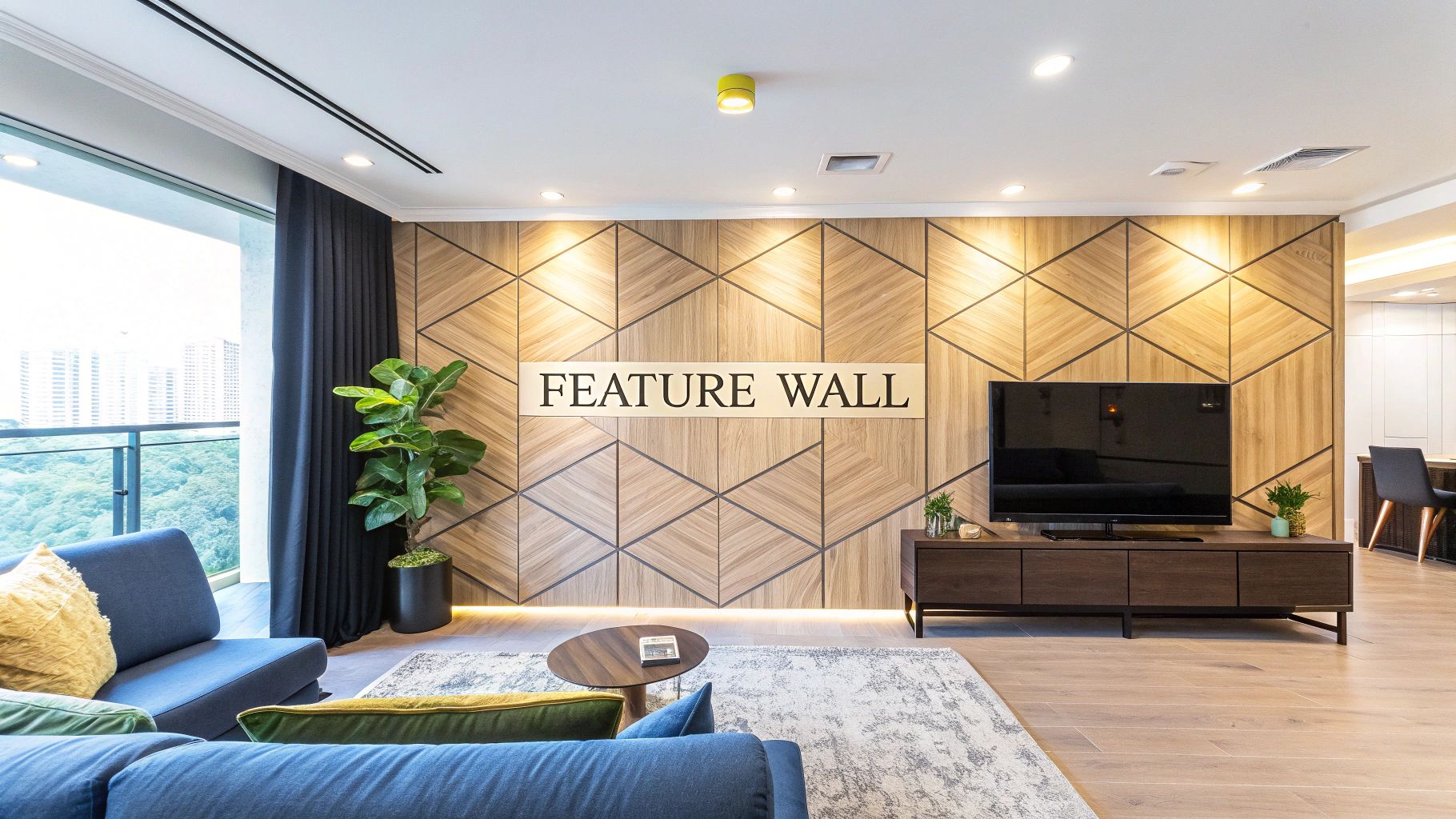
A feature wall is more than just a coat of paint; it's a strategic design element that sets the tone for your entire space. When clients in Singapore approach us, they're often looking for ways to make their HDB or condo feel more spacious, personalised, and luxurious. A well-executed feature wall design is one of the most effective ways to achieve this. It can anchor your furniture, create zones in an open-plan layout, or serve as a powerful expression of your style. This guide provides 10 actionable design ideas we frequently implement, moving beyond trends to focus on practical application and long-term value. From the timeless texture of shiplap to the modern impact of 3D panels, you'll get specific insights into materials, installation, and how each feature wall design works in a real home.
1. The Classic Impact: Bold Accent Wall Paint
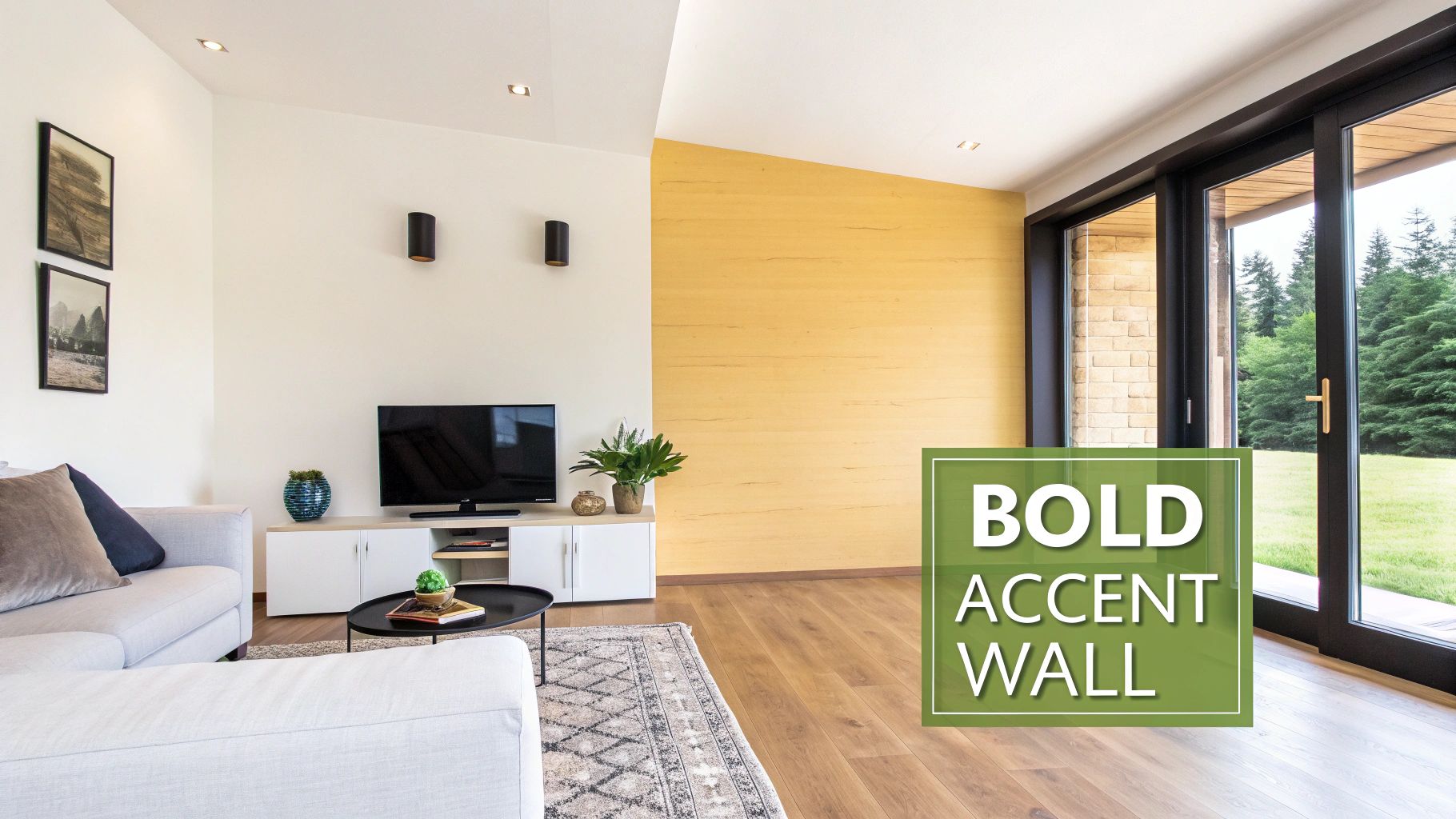
Painting one wall in a high-contrast colour is the simplest and most cost-effective way to create a feature wall. This technique instantly creates a focal point and can alter a room's perceived dimensions. For example, a deep navy blue behind a headboard adds a sense of calm and luxury to a bedroom, while a warm terracotta in the living room can make the space feel more inviting and sociable.
Why It Works
This design leverages colour psychology to guide the eye and establish a specific mood without overwhelming the room. It's a low-commitment, high-impact strategy that is easy to update as your tastes evolve.
Practical Application Tips
To ensure a professional finish, follow these key steps:
- Test Your Colours: Always get sample pots. Paint large swatches on the actual wall and observe them at different times of the day. A colour can look dramatically different in the morning sun versus under evening artificial light.
- Strategic Placement: The best wall for an accent is typically the one you see first when you enter the room, or the wall behind a key piece of furniture like the TV console or sofa. This anchors the room's layout.
- Invest in Quality: Use a high-quality paint with a built-in primer for better coverage and durability. A feature wall draws attention, so a rich, flawless finish is essential.
- Create Balance: Use the accent colour to inform other smaller decor elements like cushions or art, but keep adjacent walls and large furniture pieces neutral. This makes the feature wall feel intentional.
2. Rustic Charm Reimagined: Shiplap Walls
Shiplap involves installing horizontal wooden planks that create subtle, clean lines. While popular in modern farmhouse styles, we've adapted it for contemporary Singaporean homes by using sleeker profiles and sophisticated colours. It adds texture and architectural interest, turning a flat wall into a refined backdrop that feels both clean and cosy.
Why It Works
The repeating horizontal lines create a visual rhythm that can make a room feel wider and more structured. Painted crisp white, it feels airy and coastal; painted a dark grey or navy, it becomes a dramatic and modern statement.
Practical Application Tips
For a durable and professional shiplap wall, consider these points:
- Choose Your Orientation: Horizontal planks are standard and widen a space. However, in rooms with lower ceilings, installing planks vertically can create an illusion of height.
- Prepare the Wall: Ensure the wall is clean and smooth. In potentially damp areas like a bathroom, a moisture barrier behind the planks is non-negotiable to prevent warping.
- Paint Before Installing: For the cleanest finish, paint the shiplap boards before they go on the wall. This ensures even coverage and prevents raw wood from showing through the gaps if the timber expands or contracts.
- Consistent Gapping: The small gap between boards is shiplap's signature. Using a spacer (like a coin) during installation ensures these gaps are uniform for a polished look.
3. Wallpaper Feature Walls
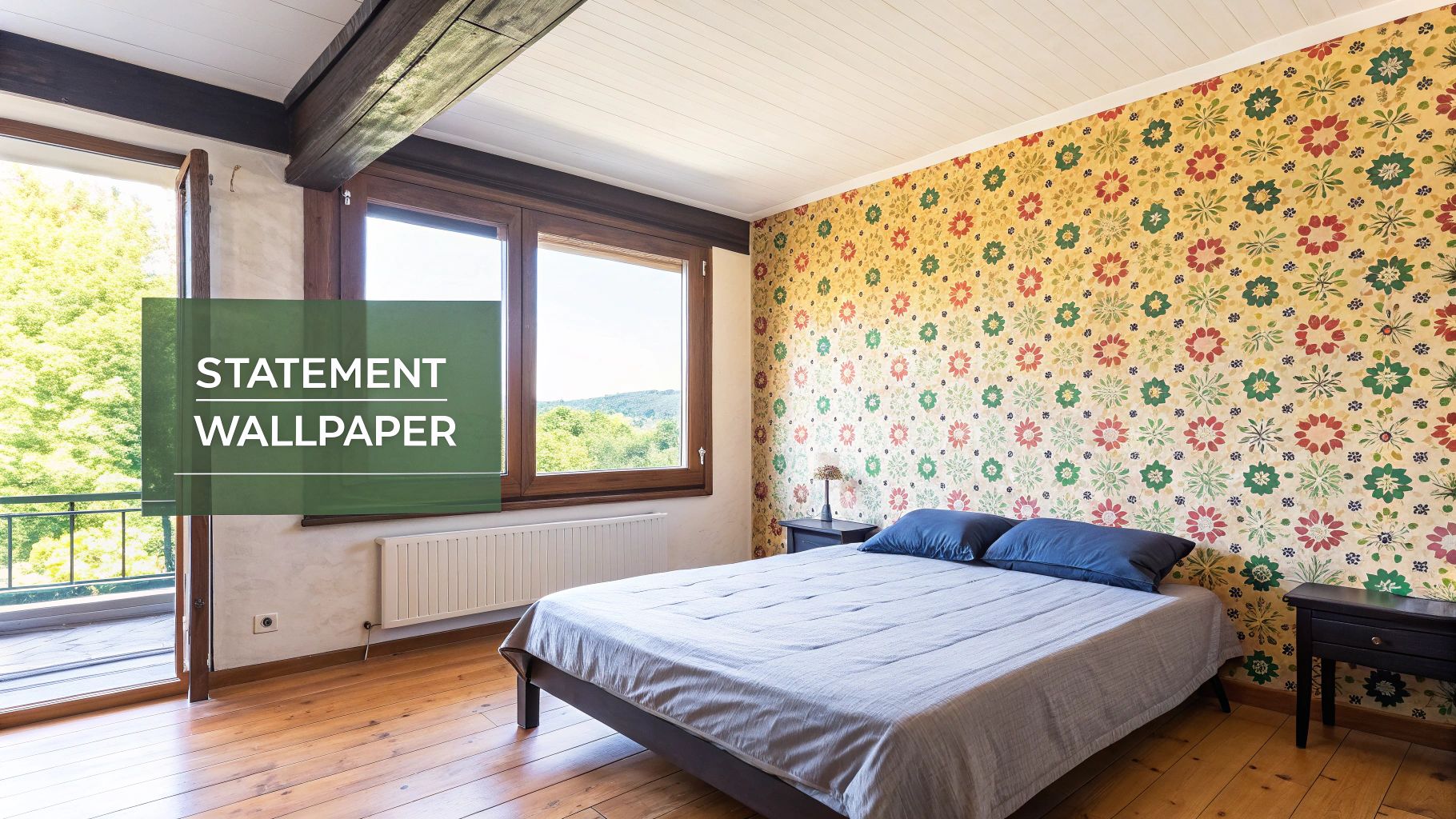
Wallpaper offers an immediate injection of pattern, texture, and personality that paint cannot match. Modern designs range from subtle, textured grasscloth to bold, large-scale botanicals or geometric prints. It's a highly effective way to elevate a space, turning a simple wall into a piece of art.
Why It Works
Wallpaper introduces an intricate layer of detail and can establish a room's entire theme or colour palette. With high-quality vinyl options that are durable and easy to clean, it’s a practical choice for various spaces, including hallways and dining areas.
Practical Application Tips
To make your wallpaper feature wall a success, follow this advice:
- Select the Right Scale: In smaller rooms, like many in Singapore, large-scale patterns can feel overwhelming. A smaller, more subtle print often works better. Conversely, a large wall can handle a bold, dramatic pattern.
- Surface Preparation is Key: The wall must be perfectly smooth, clean, and primed. Any bumps or imperfections will show through the wallpaper, ruining the effect.
- Match the Pattern: For a seamless look, the pattern must be aligned perfectly between strips. This requires careful measurement and often results in some material wastage, so order about 10-15% more than you need.
- Hire a Professional: For intricate patterns or expensive wallpaper (like silk or grasscloth), we always recommend professional installation. It's an investment that prevents costly errors and guarantees a flawless finish.
4. Brick or Stone Accent Walls
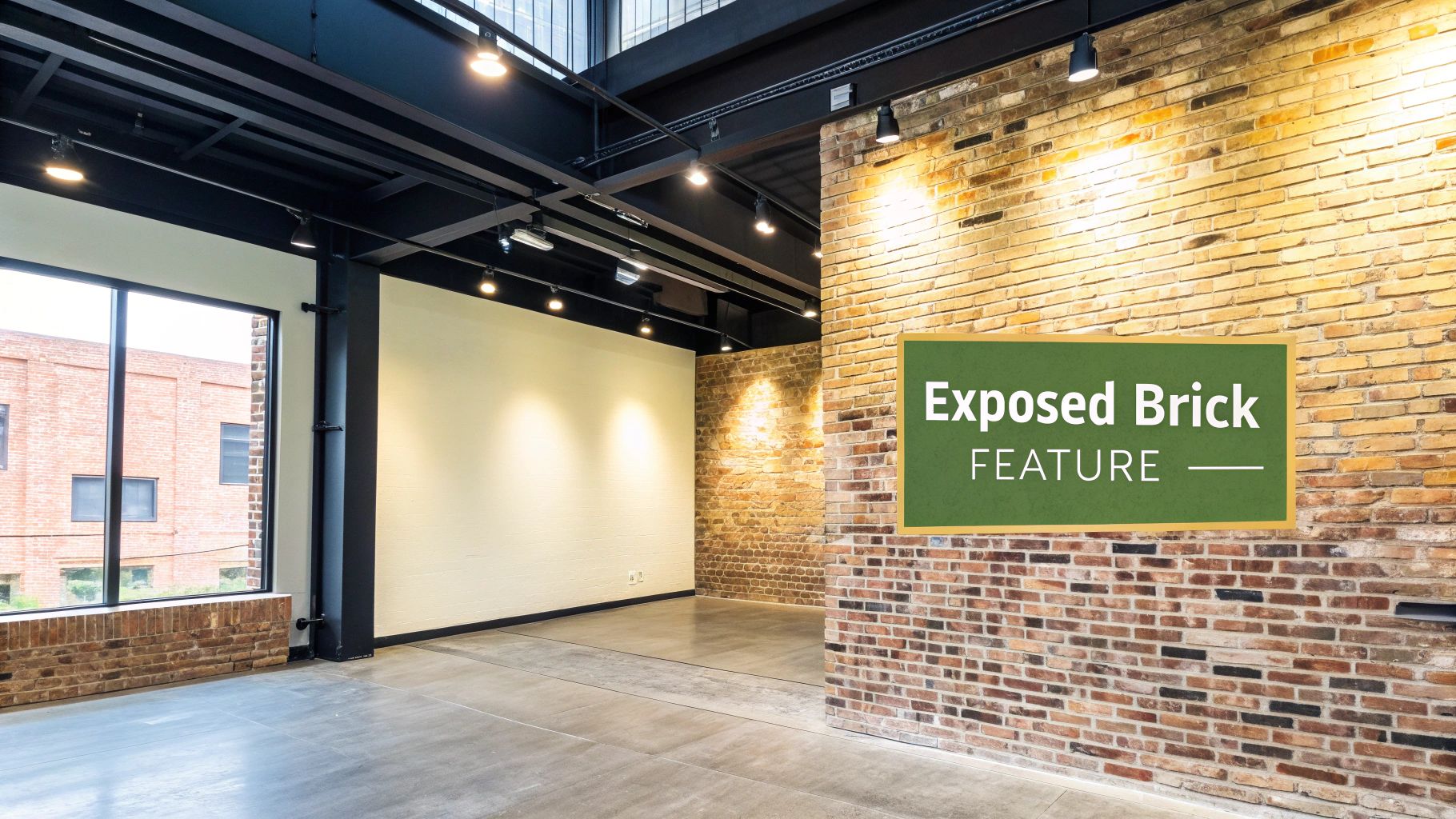
A brick or stone feature wall introduces a powerful textural element, lending an industrial, rustic, or timeless character. It adds a sense of permanence and rugged charm. In modern Singaporean homes where real exposed brick is rare, we use high-quality, realistic brick veneers or stone-effect panels to achieve this look without the structural challenges.
Why It Works
This design adds visual weight and a connection to raw, natural materials. The texture creates a sophisticated yet unpretentious atmosphere that contrasts beautifully with modern furnishings.
Practical Application Tips
To successfully integrate a brick or stone wall, focus on these details:
- Opt for Veneers: For most HDBs and condos, brick or stone veneers are the most practical choice. They are lightweight, easier to install, and won't compromise structural integrity.
- Use Lighting to Enhance Texture: This is crucial. Install track lighting or wall sconces that "graze" the surface. This creates shadows that highlight the texture and depth of the material, bringing the wall to life.
- Balance with Smooth Surfaces: Contrast the rough texture of the brick with smooth, refined elements elsewhere in the room. Think a sleek media console, a velvet sofa, or glass tables to create a sophisticated balance.
- Seal the Surface: Whether real or faux, the surface should be sealed. This prevents dust accumulation in the crevices, protects against moisture, and makes it much easier to clean.
5. Wood Paneling and Wainscoting
Wood panelling and wainscoting (panelling on the lower half of the wall) add architectural character and timeless elegance. This feature wall design can range from simple, modern vertical slats to classic, ornate frame-and-panel wainscoting. It physically alters the wall's surface, creating authentic depth and shadow lines.
Why It Works
This method adds a layer of craftsmanship and perceived value to a home. It feels intentional and custom-built. Wainscoting also has a practical benefit, protecting the lower wall from scuffs and wear in high-traffic areas like hallways and dining rooms.
Practical Application Tips
For a seamless and professional look, follow these guidelines:
- Get the Proportions Right: For traditional wainscoting, the height should typically be about one-third of the ceiling height. This creates a visually pleasing and balanced proportion.
- Define with Colour: Painting the wainscoting a different colour from the wall above it makes the architectural detail stand out. A classic combination is crisp white panelling with a richer colour on the upper wall.
- Match the Style to Your Home: A simple, flat-panel or shaker-style wainscoting suits modern and minimalist interiors, while more detailed, raised-panel designs work better in traditional or transitional homes.
- Finish with Moulding: A chair rail or decorative moulding along the top edge of the wainscoting provides a clean, finished transition to the upper wall, completing the look.
6. 3D Wall Panels and Textured Surfaces
3D wall panels are a contemporary way to introduce sculptural depth and visual interest. Made from materials like PVC, gypsum, or plant fibre, they come in patterns ranging from geometric shapes to organic waves. This feature wall design turns a flat surface into an interactive play of light and shadow.
Why It Works
This design adds a tangible layer of texture and movement. It serves as an immediate architectural upgrade, making a space feel more curated, modern, and luxurious without adding clutter.
Practical Application Tips
To maximise the impact of your 3D panelled wall, consider these tips:
- Lighting is Essential: This is the most important factor. Use uplighting or downlighting positioned close to the wall to "graze" the surface. This creates dramatic shadows that accentuate the pattern and bring the texture to life. Without strategic lighting, the effect is lost.
- Scale the Pattern to the Room: A large, bold pattern can be a stunning focal point in a spacious living room. In a smaller bedroom, a more subtle, intricate pattern will add texture without overwhelming the space.
- Paint for a Custom Look: Most panels come in a matte white finish, ready for painting. Painting them the same colour as the adjacent walls creates a subtle, textural effect, while a contrasting colour makes a bolder statement.
- Consider Acoustic Benefits: In home theatres or open-plan living areas, textured panels made from felt or foam can also help dampen sound, combining aesthetic appeal with improved room acoustics.
7. Textured Paint and Stucco Finishes
Textured paints and plaster finishes like stucco or Venetian plaster offer a more subtle, artisanal approach to adding depth. These applications create a tactile surface with a handcrafted feel, moving beyond simple flat colour. The effect can range from the soft, matte look of limewash to the polished, marble-like sheen of Venetian plaster.
Why It Works
This feature wall design adds a layer of luxury and craftsmanship. The subtle variations in the surface catch the light differently throughout the day, creating a dynamic and organic effect. It’s a sophisticated way to add character without relying on bold patterns.
Practical Application Tips
Achieving a high-end textured finish requires skill. Here's how to get it right:
- Create a Sample Board: Before applying it to the entire wall, the artisan should create a large sample board. This allows you to approve the exact texture and colour and see how it looks in your home's lighting.
- Hire a Specialist: This is not a DIY job. Techniques like Venetian plaster require specific tools and a high level of expertise to achieve a smooth, seamless, and durable finish. Investing in an experienced professional is essential.
- Plan Your Lighting: As with 3D panels, lighting plays a key role. Directional light will highlight the texture, while softer, ambient light will create a more subtle, uniform look.
- Match the Texture to the Style: A rustic stucco finish is perfect for Mediterranean or wabi-sabi aesthetics, while a polished Venetian plaster complements luxurious, contemporary interiors.
8. Mirrored and Metallic Feature Walls
For adding glamour and creating an illusion of space, a mirrored or metallic feature wall is a powerful tool. This can be achieved with large custom-cut mirror panels, metallic-finish wallpaper, or metal tiles. This design works by reflecting light and the surrounding space, making rooms feel larger, brighter, and more opulent.
Why It Works
In compact Singaporean apartments, this design is highly effective. Mirrors visually double the size of a space and amplify both natural and artificial light. Metallic finishes add a warm, shimmering texture that feels luxurious.
Practical Application Tips
To ensure a mirrored wall looks chic, not tacky, follow these rules:
- Reflect Something Beautiful: This is the golden rule. Position the mirror to reflect a window with a view, a beautiful piece of art, or an elegant light fixture. Avoid placing it where it will reflect clutter or a busy doorway.
- Use Tinted Mirrors: Standard silver mirrors can sometimes feel cold. We often specify bronze-tinted or grey-tinted mirrors for our clients. They provide the same spatial benefits but with a warmer, more sophisticated tone.
- Balance with Soft Textures: To prevent the room from feeling too hard or cold, pair the sleek, reflective surface with soft textures like a plush rug, velvet curtains, or a fabric sofa.
- Ensure Professional Installation: Large mirror panels are heavy, fragile, and require precise installation to ensure safety and a seamless look. This is a job for experienced professionals.
9. Gallery Walls and Picture Collections
A gallery wall is a curated collection of art, photographs, and personal objects that transforms a wall into a deeply personal feature. It's a versatile design that can be adapted to any style, from a structured grid of uniform frames to a more eclectic, salon-style arrangement.
Why It Works
This design infuses a space with personality and tells a story. It's a dynamic feature that can evolve over time as you collect new pieces. It’s an excellent way to display multiple items you love in an organised, impactful way.
Practical Application Tips
To create a cohesive and well-designed gallery wall, follow these steps:
- Plan the Layout on the Floor First: Before making any holes in the wall, arrange all your pieces on the floor. Play with the composition until you're happy. A useful trick is to trace each frame onto paper, cut out the templates, and tape them to the wall to visualise the final layout.
- Find a Unifying Element: To make a diverse collection feel cohesive, use a common thread. This could be a consistent frame colour (e.g., all black or all oak), a similar colour palette in the artwork, or using the same colour mat board for all pieces.
- Maintain Consistent Spacing: The key to a professional-looking gallery wall is the spacing between frames. A gap of 5-8 cm between each piece is a good rule of thumb. Consistent spacing makes the arrangement feel intentional, not chaotic.
- Anchor with a Large Piece: Start with your largest piece and position it slightly off-centre. Then, build the rest of the arrangement around it. This creates a natural focal point and a more balanced composition.
10. Living Walls and Vertical Gardens
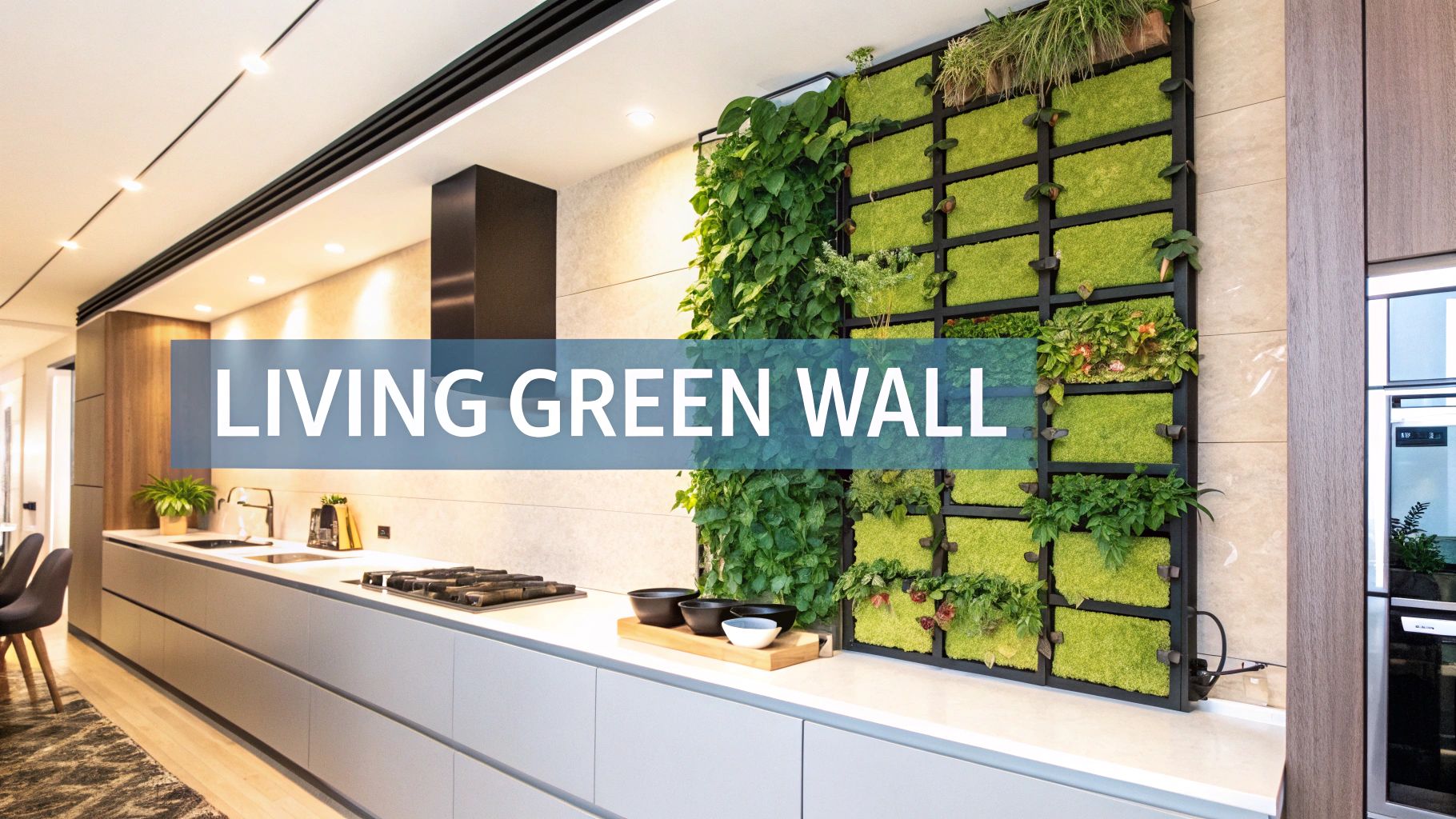
A living wall, or vertical garden, is a feature wall covered with living plants. This biophilic design brings nature indoors, creating a stunning, dynamic focal point that also helps purify the air. It’s a powerful statement piece for homes focused on wellness and sustainability.
Why It Works
This design taps into our innate connection to nature (biophilia), which has been shown to reduce stress and improve well-being. It's a living piece of art that evolves over time, adding a unique and calming energy to the space.
Practical Application Tips
A successful living wall requires careful planning and maintenance.
- Choose the Right Plants: Select plants based on the amount of light the wall receives. For most indoor applications in Singapore, low-light tolerant species like pothos, philodendrons, and ferns are excellent choices.
- Invest in a Professional System: A high-quality, automated irrigation and drainage system is essential. This ensures the plants are watered correctly and prevents water damage to your walls and floors. This is not an area to cut corners.
- Confirm Structural Support: A fully saturated living wall is extremely heavy. The wall must be structurally sound enough to support the weight. We always conduct a structural assessment before installation.
- Plan for Maintenance: Even with an automated system, plants need care. Factor in regular pruning, feeding, and pest monitoring to keep your wall lush and healthy. At Kivo, we often connect clients with specialised maintenance services.
Feature Wall Design — 10-Option Comparison
| Feature | Implementation complexity | Resources & cost | Expected outcomes | Ideal use cases | Key advantages |
|---|---|---|---|---|---|
| Accent Wall Paint | Low — DIY-friendly, quick | Low — paint & basic supplies | Bold focal color, easy to update, moderate durability | Living rooms, bedrooms, rentals, quick refreshes | Affordable, fast, flexible |
| Shiplap Walls | Medium–High — carpentry or pro install | Medium–High — $500–$2,000+ per wall | Added texture and architectural depth, durable | Farmhouse, coastal, accent walls in living/dining | Characterful, hides imperfections |
| Wallpaper Feature Walls | Medium — skillful hanging or peel‑and‑stick | Variable — $40–$200+/roll; $500–$2,000+ installed | Immediate pattern/texture impact; removable or permanent | Bedrooms, apartments, commercial feature walls | Wide design range, dramatic impact |
| Brick or Stone Accent Walls | High — structural work for real brick; faux easier | High — $500–$3,000+ authentic; $200–$800 faux | Strong textural focal point, long‑lasting, permanent | Lofts, kitchens, living rooms, industrial styles | Durable, high perceived value |
| Wood Paneling & Wainscoting | High — precision carpentry, pro recommended | High — $1,000–$4,000+ per wall | Classic, timeless architectural detail; protective lower wall | Dining rooms, hallways, traditional homes | Timeless elegance, wall protection |
| 3D Wall Panels & Textured Surfaces | Medium — panel mounting, some pro installs | Medium–High — ~$500–$2,500+ per wall; panels $50+ | Sculptural depth, modern look, possible acoustic benefits | Office lobbies, contemporary living spaces, hotels | Dramatic texture, customizable finishes |
| Textured Paint & Stucco Finishes | Medium — skilled application yields best results | Low–Medium — $200–$800+ per wall | Surface texture without added materials; conceals flaws | Mediterranean, transitional interiors, accent walls | Affordable textured effect, durable |
| Mirrored & Metallic Feature Walls | Medium–High — precise install, safety needed | High — $400–$3,000+ per wall | Amplifies light, creates illusion of space, glamorous | Small apartments, bars, bathrooms, luxe interiors | Brightens space, visually enlarges |
| Gallery Walls & Picture Collections | Low–Medium — planning and careful hanging | Low–Medium — $100–$1,000+ (art/frames) | Personalized focal display, easily updated | Hallways, living rooms, personalized spaces | Highly customizable, low commitment |
| Living Walls & Vertical Gardens | High — installation + ongoing maintenance | Very High — $1,500–$10,000+ | Dynamic living focal point, improved air quality, evolving | Offices, lobbies, kitchens with light, eco‑homes | Biophilic benefits, unique statement |
Bringing Your Feature Wall Vision to Life with Kivo
We've covered a wide range of feature wall design ideas, from the simple impact of paint to the complexity of a living wall. The right choice for your home depends on your budget, style, and the specific goals you have for the space. A feature wall is more than a trend; it's a fundamental design tool that, when done right, anchors a room and expresses your unique personality.
A successful feature wall balances aesthetics with practicality and expert execution. A beautiful wallpaper can be ruined by poor installation, and a sophisticated 3D panel loses all impact without the right lighting. This is where thoughtful planning and professional craftsmanship make all the difference.
Turning Inspiration into Impeccable Reality
Your next step is to evaluate your space using the insights from this guide:
- Define the Room's Function: Does the room need to feel larger and brighter (consider mirrors)? More intimate and cosy (think dark shiplap)? Or more dynamic and interesting (wallpaper or 3D panels)?
- Consider Scale and Proportion: A heavy stone feature might overwhelm a small HDB living room, while a subtle textured paint could be lost in a large condo. The scale of the material must suit the scale of the room.
- Analyse the Lighting: How does natural and artificial light interact with the wall? A glossy finish will reflect light, while a dark, matte texture will absorb it. Use this to your advantage.
- Ensure Cohesion: The feature wall must feel like an integrated part of your home's overall design, not an afterthought. It should complement your furniture, flooring, and existing colour scheme.
Choosing and implementing the right feature wall is a deliberate design decision that elevates your entire home. It’s an investment in your home's character and ambience. By selecting the right approach and ensuring it is executed to a high standard, you create a focal point that will capture attention and bring you joy for years to come.
Ready to transform your inspiration into a stunning, professionally executed feature wall? The team at KIVO Custom Carpentry And Interior Design Services specialises in bringing complex design visions to life with unparalleled craftsmanship, from bespoke wood panelling to integrated accent walls. Let us handle the complexities of design and installation, ensuring your feature wall is a flawless centrepiece in your home. KIVO Custom Carpentry And Interior Design Services