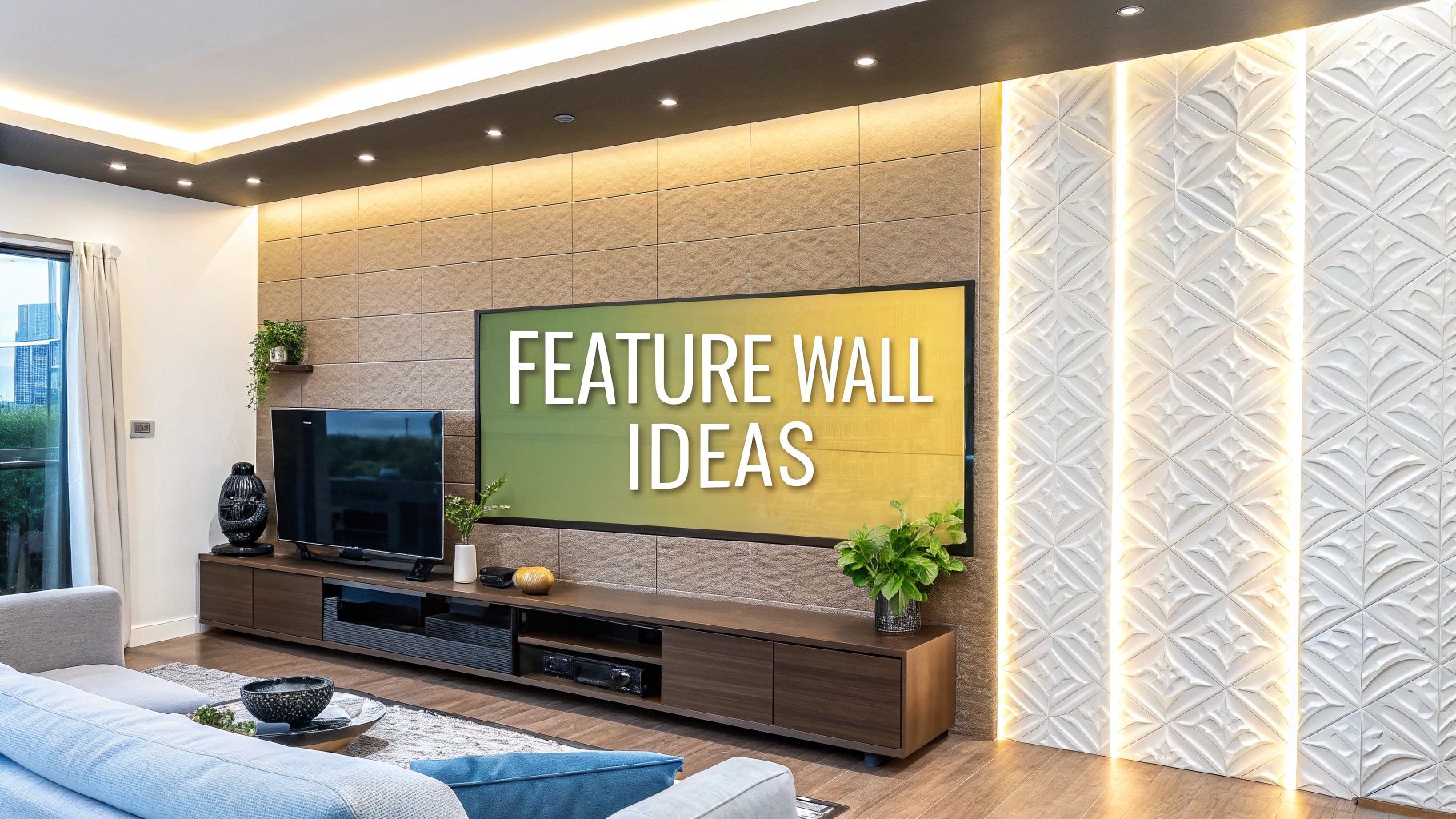
A feature wall is much more than a coat of paint. It's a strategic design move—a way to create a powerful focal point, inject personality, and anchor an entire room. In Singapore, it's the single most effective way to make a statement, especially for hiding messy TV wiring or adding drama to a plain space.
Understanding the Power of a Feature Wall
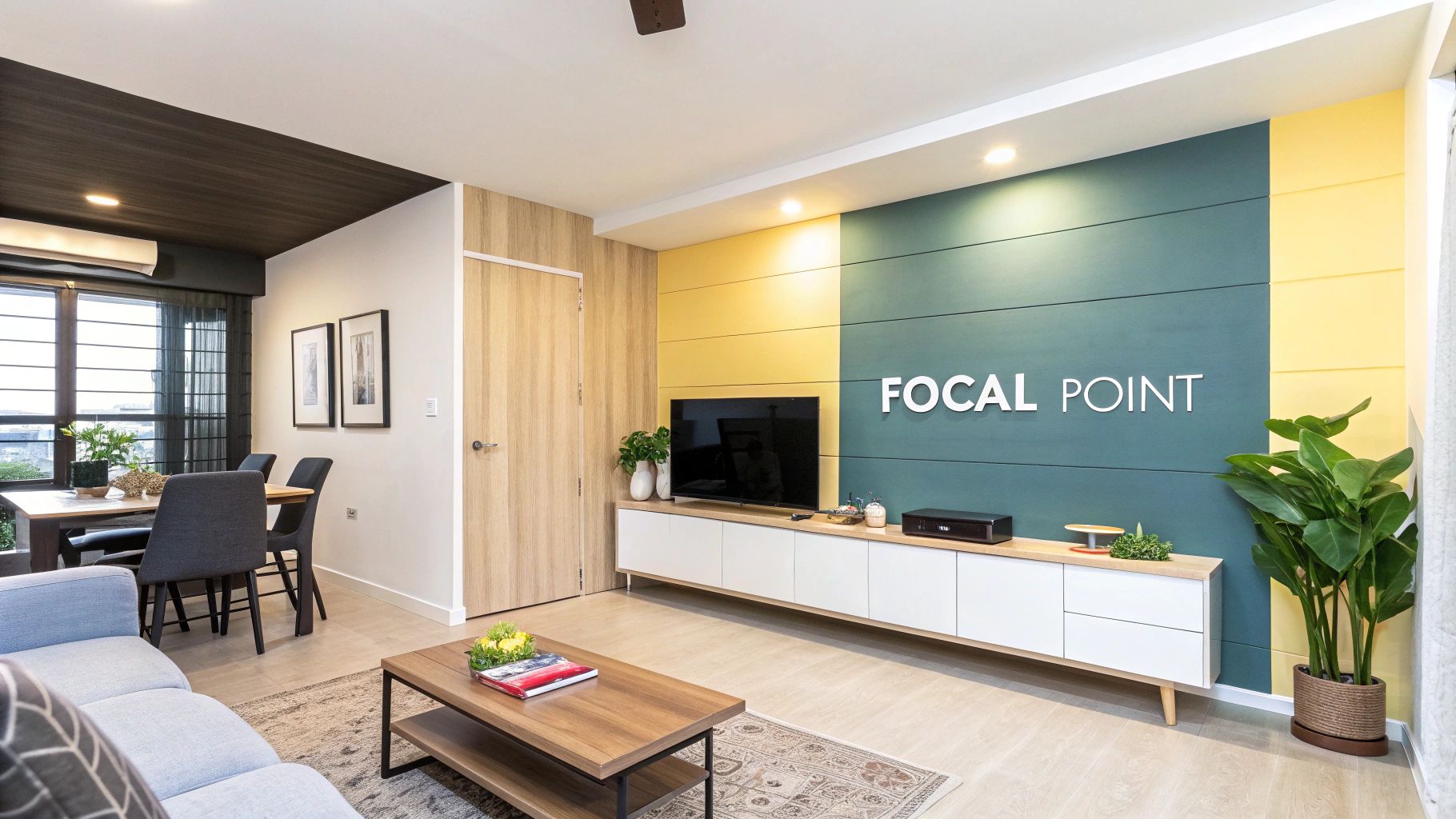
Think of your room as a story. The feature wall is the main character. It draws the eye, sets the mood, and defines the space's character. It’s a deliberate choice to make one wall stand out from the others using a unique colour, texture, material, or design.
This isn't just about aesthetics; it's smart, practical design. In the common HDB and condo layouts you see all over Singapore, where open-plan living is the norm, a feature wall plays a crucial role. It can visually separate different zones—like your living area and dining space—without putting up physical partitions that would make the place feel smaller.
Why Feature Walls Resonate in Singapore
The demand for feature walls here is a perfect blend of practicality and personality. With our compact living spaces, every square metre has to perform. Homeowners need solutions that are both beautiful and efficient.
Based on our client projects, here are the top reasons this design element is so consistently requested:
- Creates a Clear Focal Point: It immediately tells you where to look, anchoring furniture arrangements and making a room feel more organised. The TV console wall is the most practical application for this.
- Injects Personal Style: This is your canvas. Whether you love the raw look of concrete, the warmth of wood panels, or the luxe feel of marble, a feature wall puts your taste on display.
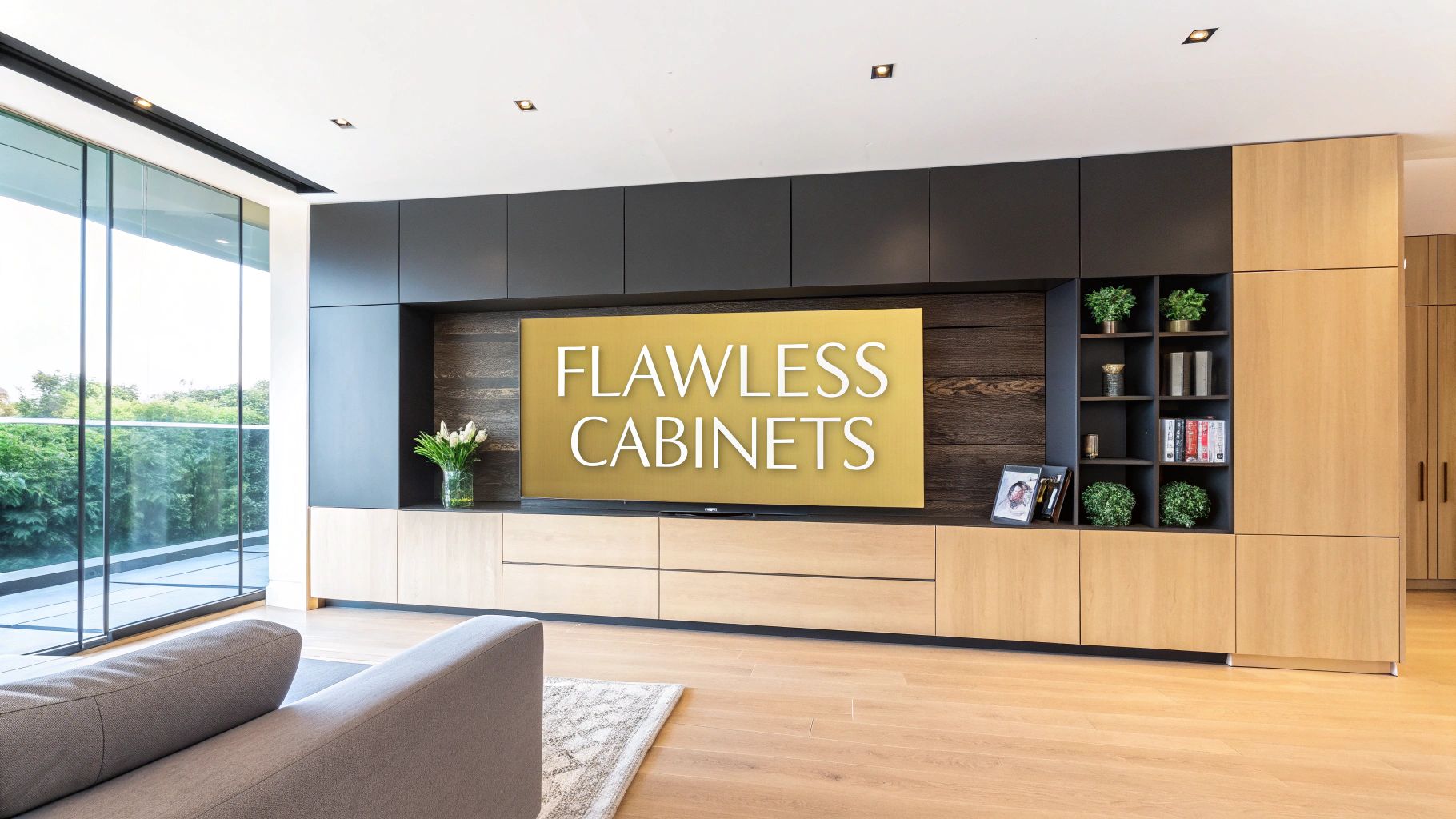
- Conceals Clutter Beautifully: A custom-built feature wall is the ultimate solution for hiding wires from TVs, sound systems, and Wi-Fi routers. The result is a clean, polished, and uncluttered look.
This design approach has deep roots here. As Singapore developed, integrating distinctive visual elements became a hallmark of local design. Historical studies show that by the late 1970s, over 80% of HDB flats had some kind of decorative wall treatment. This trend evolved from enhancing public housing facades to personalising the interior spaces we call home. You can discover more insights about Singapore's architectural identity and see how it shaped modern interiors.
A well-executed feature wall doesn't just decorate a room; it directs it. It’s the visual signpost that guides the feel and flow of your home, making it an indispensable tool for modern Singaporean interior design. It's about making a smart, stylish statement that works for your space.
Choosing the Right Material for Your Feature Wall
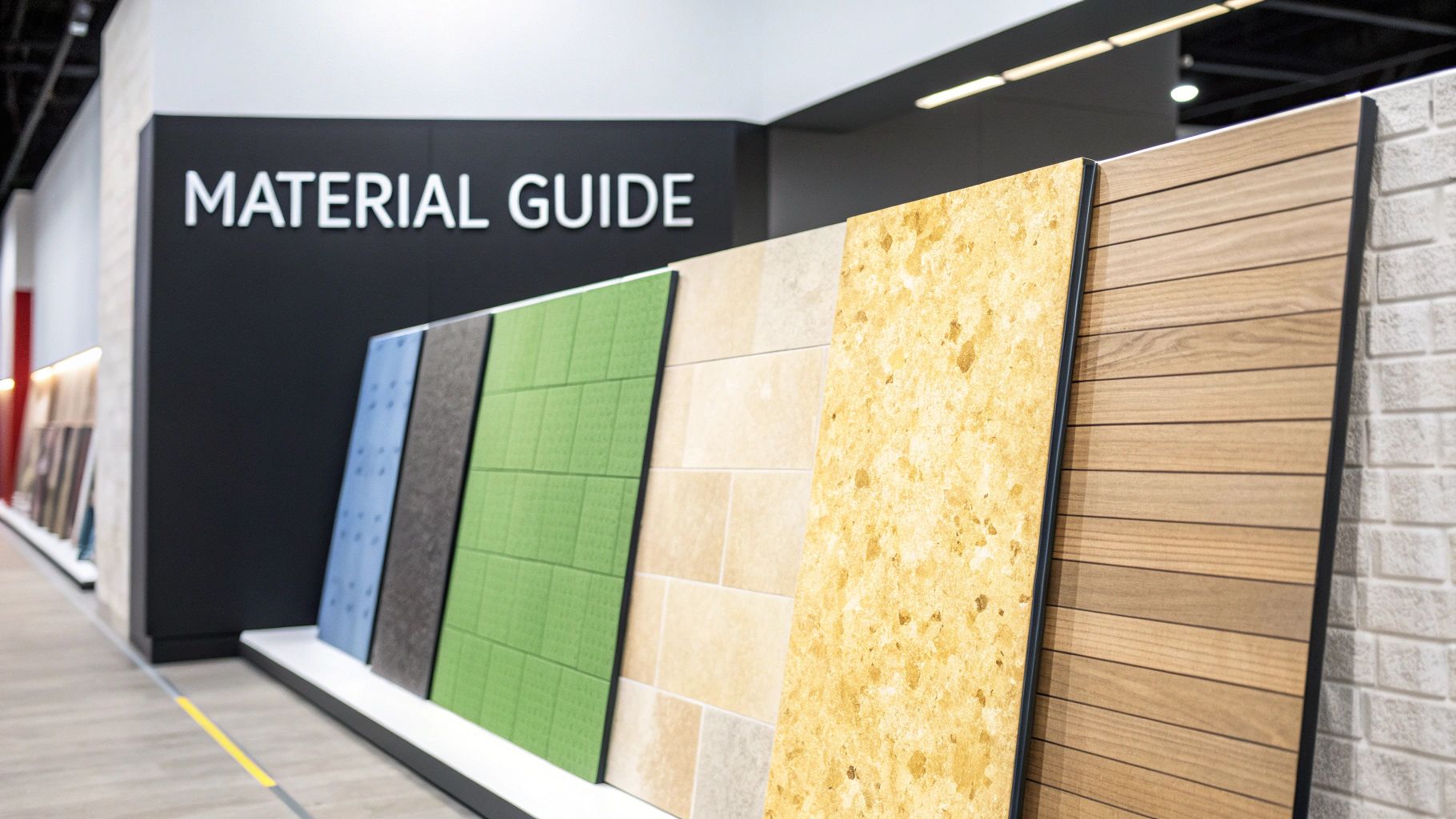
This is where the vision comes to life. Picking the right material is the most critical decision you'll make. It's a balance of the aesthetic you want, the durability your lifestyle needs, and your budget.
Here in Singapore's humidity, practicality must be a priority. The material you choose sets the mood. Are you after a soft, textured backdrop for a cosy living room? Or a bold, dramatic statement piece to wow guests? Let’s break down the most popular choices we work with for our clients.
Fluted Panels for Vertical Appeal
Fluted panels are consistently popular because they work. Their vertical grooves create a stunning three-dimensional texture that adds depth and sophistication.
Their best trick? They draw the eye upward, making ceilings feel higher—a brilliant illusion for the typical HDB or condo where every centimetre counts. Their clean, linear form is a natural fit for modern, minimalist, and Japandi interiors, often used to create a stylish TV console backdrop.
High-Pressure Laminates for Versatility
High-pressure laminates (HPL) are the workhorses of Singapore interior design. Modern technology makes them incredibly realistic, mimicking almost any material—rich wood grains, cool stone, raw concrete, even brushed metals—for a fraction of the cost of the real thing.
It’s not just about looks. Laminates are built to last. They’re scratch-resistant, easy to clean, and stand up well to moisture. This makes them a go-to for families with young kids or for high-traffic zones that need to withstand daily wear and tear.
Limewash and Special Effect Paints
If you’re leaning towards something softer and more organic, limewash paint is a fantastic choice. It delivers a beautiful, matte texture with subtle colour shifts that mimic the look of aged, artisanal plaster.
This effect brings a unique warmth and depth to a wall, perfect for creating a calming wabi-sabi or Mediterranean-inspired vibe. Unlike a flat coat of paint, limewash feels alive, with a chalky finish that interacts beautifully with sunlight throughout the day.
The right material does more than just cover a wall; it brings a story and a feeling into your home. Whether it's the sleek lines of fluted panels or the earthy texture of limewash, the material choice is where your design vision truly comes to life.
Sintered Stone for Ultimate Luxury
When the goal is pure, unadulterated elegance, sintered stone is at the top of the list. This engineered material is created by fusing natural minerals under extreme heat and pressure. The result is a surface that’s incredibly dense, non-porous, and tough.
Sintered stone slabs can be manufactured in large formats, showing off stunning, continuous veins that look just like high-end marble. It’s heat-resistant, scratch-proof, and completely waterproof, making it a durable, lifelong investment for a dramatic, hotel-luxe feature wall.
Other Material Considerations
Of course, the options don't stop there. For homeowners drawn to softer textures, a good guide to luxury textiles like woven fabrics can open up possibilities for upholstered or fabric-wrapped panels.
Other materials we often work with include:
- Wallpaper: The fastest way to introduce pattern and colour, with endless designs available.
- Solid Wood: Offers an unmatched natural warmth and a classic, timeless feel.
- Concrete Screed: Delivers that raw, industrial look perfect for edgy, minimalist spaces.
To make things easier, here’s a quick comparison of the top materials we’ve discussed.
Feature Wall Material Comparison for Singapore Homes
Choosing a material involves weighing its look against its cost and how it fits into your life. This table breaks down the essentials for some of the most popular options in Singapore.
| Material | Estimated Cost (per sq ft) | Durability & Maintenance | Best For Styles |
|---|---|---|---|
| Fluted Panels | $18 - $35 | Moderate; dust grooves regularly. Can be prone to dents. | Modern, Japandi, Minimalist |
| Laminates (HPL) | $10 - $25 | High; scratch-resistant and very easy to wipe clean. | Versatile (Wood, Stone, Metal looks) |
| Limewash Paint | $8 - $20 | Low-Moderate; can scuff. Requires a skilled painter. | Wabi-Sabi, Mediterranean, Rustic |
| Sintered Stone | $45 - $90+ | Very High; extremely durable, scratch & stain-proof. | Luxury, Modern, Hotel-Luxe |
| Wallpaper | $5 - $15 | Varies; vinyl is durable, paper is delicate. | Eclectic, Classic, Contemporary |
Ultimately, each material has its own character and demands. The key is to find the one that not only matches your dream aesthetic but also aligns with the practical realities of your home life here in Singapore.
Popular Feature Wall Design Trends in Singapore
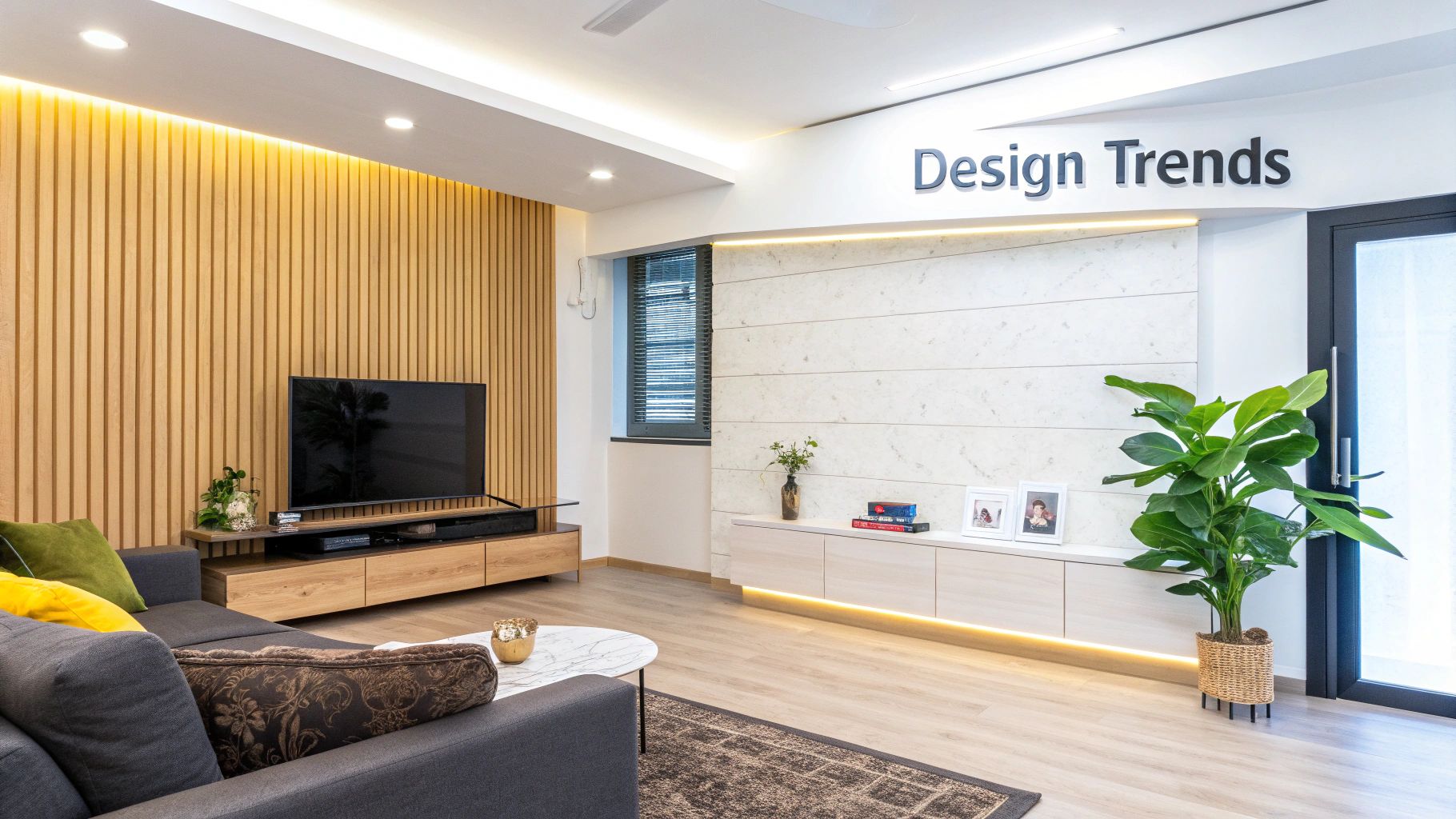
As designers, we get a front-row seat to the evolving tastes of Singaporean homeowners. Feature walls are no longer just about a single, loud colour. Today, it’s about texture, smart functionality, and creating a specific mood.
The trends we’re building for our clients are all about subtle sophistication and making a space feel intentionally designed. From the serene lines of Japandi to the bold drama of modern luxury, let’s dive into the styles defining the feature wall Singapore scene.
The Warm Minimalism of Japandi
Japandi—that blend of Japanese minimalism and Scandinavian practicality—is a huge favourite among our clients. This style creates a calm, uncluttered sanctuary, and the feature wall is key to getting that vibe right.
We often use light-toned, fluted wood panels to bring in natural texture without overwhelming the room. The clean vertical lines create an illusion of height, a fantastic trick for many HDB flats and condos. The key is balance; pairing these wooden elements with soft finishes like limewash paint results in a look that’s both minimal and inviting.
Modern Luxury with Dramatic Flair
For those who want their home to feel like a five-star hotel, the modern luxury trend is the way to go. This style is defined by premium materials and a touch of drama.
The star here is large-format sintered stone, especially slabs that mimic real marble. Using a single, seamless slab for a TV feature wall creates a powerful, unbroken visual. To elevate this, we often integrate LED cove lighting along the edges or within recessed niches. This highlights the beautiful veining of the stone and casts a soft, ambient glow that makes the entire living room feel grander.
A feature wall is the heart of a room's design story. In Japandi, it whispers tranquillity with natural wood. In modern luxury, it makes a bold statement with polished stone and strategic lighting. The goal is to choose a style that speaks to how you want to feel in your space.
Enduring Appeal of Scandinavian Design
The Scandinavian style remains a timeless choice for its clean lines, simplicity, and functionality. A Scandi feature wall is never just for show; it's designed to be useful.
This often translates into custom-built media consoles with a mix of open shelving and closed storage. We use a palette of whites, light greys, and pale woods to keep the look bright and airy. The feature wall becomes a functional art piece, providing a clean backdrop for the television while offering styled shelves for books, plants, and personal keepsakes.
Edgy and Raw Industrial Look
Inspired by urban lofts, the industrial style brings a raw, edgy character into the home. It’s a look that celebrates imperfections. For a feature wall in Singapore, this is often achieved with high-quality finishes that replicate raw textures.
Concrete screed effects, whether done with special paints or microcement overlays, are incredibly popular. This creates a cool, textured backdrop with an understated ruggedness. We often pair this with black metal accents and warm wood tones in the surrounding furniture to balance the coolness of the concrete.
This idea of walls as art has permeated our public spaces, influencing residential design. The landmark '50 Walls' project during SG50, where artists created murals in public housing estates, statistically increased foot traffic by 10-15% in some areas. Seeing art celebrated publicly encourages homeowners to be bolder with their interior choices. You can trace the evolution of Singapore’s vibrant street art scene and see how public art inspires what we do in our private spaces.
If you're looking for fresh ideas, it’s worth exploring current must-try vinyl wrap and wall sticker trends that can spark inspiration for your next project.
How Much Does a Feature Wall Actually Cost in Singapore?
Let's talk numbers. Setting a realistic budget is the most crucial first step. The final figure on an invoice is a sum of materials, labour, and any prep work needed to get the job done right. Understanding this breakdown is key to avoiding surprises.
The price for a feature wall in Singapore can swing wildly, from a few hundred dollars for a DIY paint job to tens of thousands for a custom-built media centre. It all boils down to your vision and material choice. Let’s look at the costs you need to factor in.
Breaking Down the Core Costs
When we prepare a quote, it’s about more than the surface material. Several elements contribute to the final investment.
- Materials: This is the most obvious cost driver. The price range is huge—from budget-friendly wallpaper at around $5 per square foot (psf) to premium sintered stone that can easily top $90 psf.
- Carpentry and Labour: This is where skill transforms a drawing into reality. It covers building the structure, applying finishes, and ensuring every joint is flawless. More complex designs with curves or intricate patterns will demand more man-hours.
- Electrical Work: Dreaming of integrated LED strip lighting? Or need new power sockets for your TV and sound system? Electrical work is a separate cost and must be handled by a licensed pro. This typically adds $300 to $800+ to the bill.
- Demolition or Hacking: Getting rid of an old built-in or a non-structural wall requires a budget for hacking and disposal. This can cost anywhere from $400 to over $1,000.
Realistic Budget Ranges for Your Project
To give you a clearer picture, here are some typical project scopes and what you can expect to invest, based on a standard HDB living room wall (about 10-12 feet wide).
Remember, a feature wall is an investment—not just in your home's resale value, but in your own daily enjoyment of the space. The cost reflects the design expertise, skilled labour, and project management needed to pull it off perfectly.
1. The Simple & Stylish Refresh ($800 - $2,500)
This is the sweet spot for making a big impact without breaking the bank.
- Scope: Applying a finish directly onto the existing wall. Think high-quality limewash paint, a striking designer wallpaper, or simple wooden battens for texture.
- Breakdown: The cost is mostly for materials and specialised labour for a professional finish. It assumes no major carpentry or electrical work.
2. The Classic Built-Out Wall ($3,000 - $6,500)
This is the most common type of feature wall we create for Singaporean homes.
- Scope: Building a new false wall structure. This is often finished with popular choices like fluted panels or high-pressure laminates, and it usually includes basic solutions to hide TV wires.
- Breakdown: Costs are a blend of carpentry for the structure, the price of your chosen material, and labour. It might also include minor electrical work.
3. The All-in-One Media Wall ($7,000 - $15,000+)
This is the ultimate solution for a clean, functional, and impressive living room.
- Scope: A fully custom-built media wall with integrated storage like cabinets and drawers, display niches, concealed wiring, and ambient LED lighting.
- Breakdown: A carpentry-intensive project. The higher price reflects detailed design work, extensive materials, complex assembly, and integrated electrical components.
By understanding these components, you can plan your feature wall Singapore project with confidence, knowing where your money is going.
Navigating HDB Renovation Rules for Your Feature Wall
For most homeowners in Singapore, the renovation journey comes with the question: "Is this HDB-compliant?" Building a feature wall without understanding the rules can lead to penalties and orders to tear it all down.
These regulations exist to protect the building's structural integrity, ensure safety, and be fair to your neighbours. Getting this right is non-negotiable.
Hacking Walls The Right Way
A common client question is, "Can I hack this wall for a more open feel?" The answer depends on whether the wall is structural or non-structural.
- Structural Walls: These are the skeleton of the building. Hacking or even drilling into them is forbidden, as it compromises the safety of the whole block. Your flat’s floor plan will clearly mark these walls.
- Non-Structural Walls: These are partition walls that divide rooms. You can typically hack these down, but you must get a permit from HDB before any work begins.
This is a hard rule, not a suggestion. Hacking any wall without the right permits is a serious offence. You will face fines and be ordered to rebuild the wall at your own cost. Always confirm with your designer and contractor first.
Wall Finishes and Thickness Limits
Even if you’re not hacking walls, you still need to follow the rules. HDB has guidelines on how thick your wall finishes can be.
The total thickness of your feature wall finish—whether it’s laminates, tiles, or a custom panel—should not exceed 25mm. This isn’t usually a problem for simple finishes, but for more elaborate, built-out designs, it's a detail your contractor must account for.
Safety First: Electrical and Fire Regulations
Modern feature walls often include lighting or power points. Hiding the wires inside the structure for a seamless look must be done safely.
All electrical work must be carried out by a Licensed Electrical Worker (LEW). This is a legal requirement. An LEW ensures all wiring is properly installed and insulated according to Singapore’s safety standards to prevent fire hazards. If your feature wall is near your main door, you may need to use specific fire-rated materials to ensure it doesn't block an escape route.
A Quick Compliance Checklist
Run through these questions with your contractor before they start:
- Hacking: Have you checked the official HDB floor plan to confirm we're only touching non-structural walls?
- Permits: Will we need an HDB permit for this work? Who is responsible for submitting the application?
- Electrical: Will a licensed electrician handle all the wiring and installations?
- Thickness: Does our final design meet HDB’s 25mm thickness limit for wall finishes?
If you live in a condominium, you'll deal with your Management Corporation Strata Title (MCST) instead of HDB, but the principles are the same. Submit your renovation plans for approval before any work begins.
Real Feature Wall Transformations from Singapore Homes
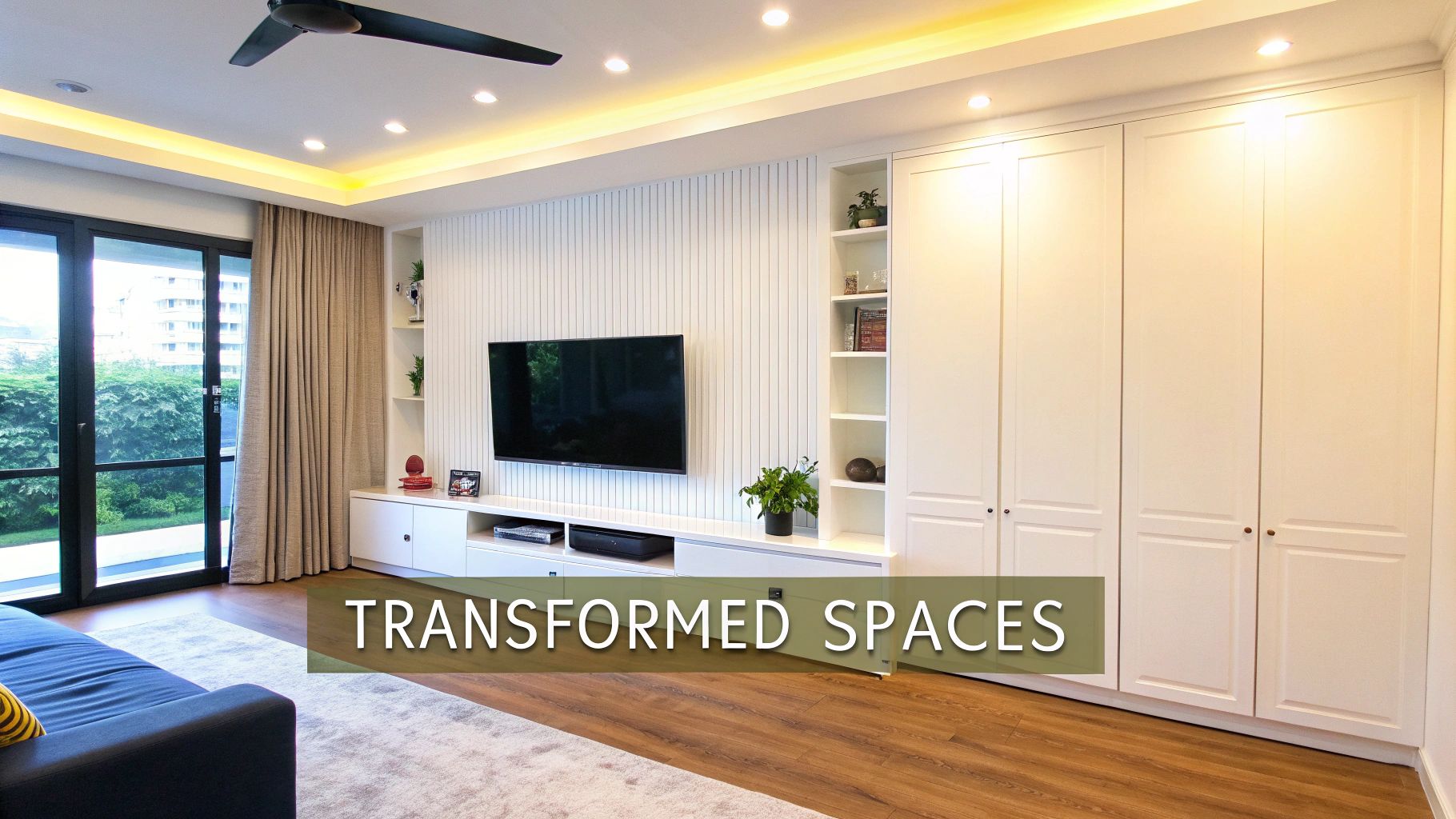
Trends and theories are great, but nothing beats seeing how a feature wall can redefine a real home. Let's step inside a few of our recent projects to show you the tangible impact of thoughtful design.
Each project tells a unique story, turning a homeowner's vision into a beautiful, functional reality. It’s proof that a well-designed feature wall in Singapore can transform a room from ordinary to the home's stunning centrepiece.
This love for distinctive walls isn't just a modern trend; it ties into a deeper appreciation for heritage. Conservation efforts under Singapore’s ‘Our SG Heritage Plan’ have safeguarded thousands of buildings, many of which now blend historical architecture with contemporary interiors. Restoring prominent walls as features is often part of this process—a nod to our island’s multicultural past. You can learn more about this heritage roadmap to see how it shapes local design.
Case Study 1: The Seamless Living Room Media Hub
A family in a Punggol BTO wanted their living room to feel clean, modern, and clutter-free. Their biggest headache? The tangled mess of wires from the TV, soundbar, and gaming console.
- The Goal: Create a sleek focal point that would hide all wiring and serve as a sophisticated backdrop for their entertainment setup.
- The Solution: We designed and built a full-height fluted panel feature wall. The secret was in the craftsmanship: the panels included a hidden, removable section for easy access to power points and cables, yet it remained completely invisible.
- The Result: The vertical lines of the fluted panels instantly made the ceiling feel higher, while the uniform look brought a sense of calm. The living room became a polished, cohesive space, proving that high design and everyday practicality can go hand-in-hand.
Case Study 2: The Serene Bedroom Retreat
In a Clementi condo, the homeowners dreamed of a master bedroom that felt like a tranquil escape. They wanted texture and warmth but were wary of anything too bold.
- The Goal: Introduce a soft, organic element to the room that would evoke a feeling of calm.
- The Solution: We chose a limewash finish for the wall behind their headboard. The hand-applied process creates subtle tonal variations and a beautiful, chalky texture that plays with natural light.
- The Result: The limewash wall added incredible depth and character without overwhelming the space. It became the perfect serene backdrop, turning their master bedroom into the peaceful, hotel-like sanctuary they had envisioned.
Common Questions About Feature Walls Answered
Over the years, we've helped countless Singaporean homeowners bring their perfect feature wall to life. Along the way, we’ve found that the same practical questions pop up time and time again.
To help you plan with confidence, here are our answers to the queries we hear most often.
How Long Does It Take to Build a Feature Wall?
The timeline for a feature wall project here in Singapore depends on its complexity.
A simple paint job or wallpaper installation is quick—usually 1-2 days. But a custom-built feature wall with carpentry, like fluted panels or a full media console, is a different story. These projects typically take anywhere from 1 to 3 weeks from start to finish, including design, fabrication, and installation.
Can I Have a Feature Wall in a Small HDB Flat?
Absolutely! In fact, a feature wall is one of the smartest design moves you can make in a smaller HDB flat or condo. It’s all about creating an illusion of space.
For example, materials with vertical lines, like fluted panels, draw your eye upward, making the ceiling feel higher. A subtle texture or a reflective material can add depth and bounce light around, making the entire room feel larger and more open.
A feature wall in a small home isn't about shrinking the space; it's about tricking the eye. By creating a strong vertical or horizontal focus, you give the room a sense of direction and scale that it might otherwise lack.
Which Room Is Best for a Feature Wall?
The living room is the classic choice, but the possibilities are endless.
- Living Room: The TV wall is the go-to for a reason. It anchors the main social hub of the home.
- Master Bedroom: A feature wall behind the headboard is a fantastic way to create a calming, hotel-like retreat.
- Dining Area: In an open-plan layout, an accent wall can define the dining space, making it feel more distinct.
- Entryway: A feature wall at the entrance makes a powerful first impression the moment anyone steps through the door.
Is a Feature Wall Still in Style?
Yes, a feature wall is a timeless design element, but what’s considered “in style” has evolved. The days of painting one wall a loud colour are behind us.
Today’s feature walls are far more sophisticated. The focus is on texture, architectural interest, and integrated function. Modern designs lean towards high-quality materials like laminates, sintered stone, and limewash to add understated luxury that feels both current and built to last.
Feeling inspired to create a stunning focal point in your own home? The team at KIVO combines artisan experience with modern design to build feature walls that are as functional as they are beautiful. Let's discuss how we can bring your vision to life. Explore our custom interior design services today.