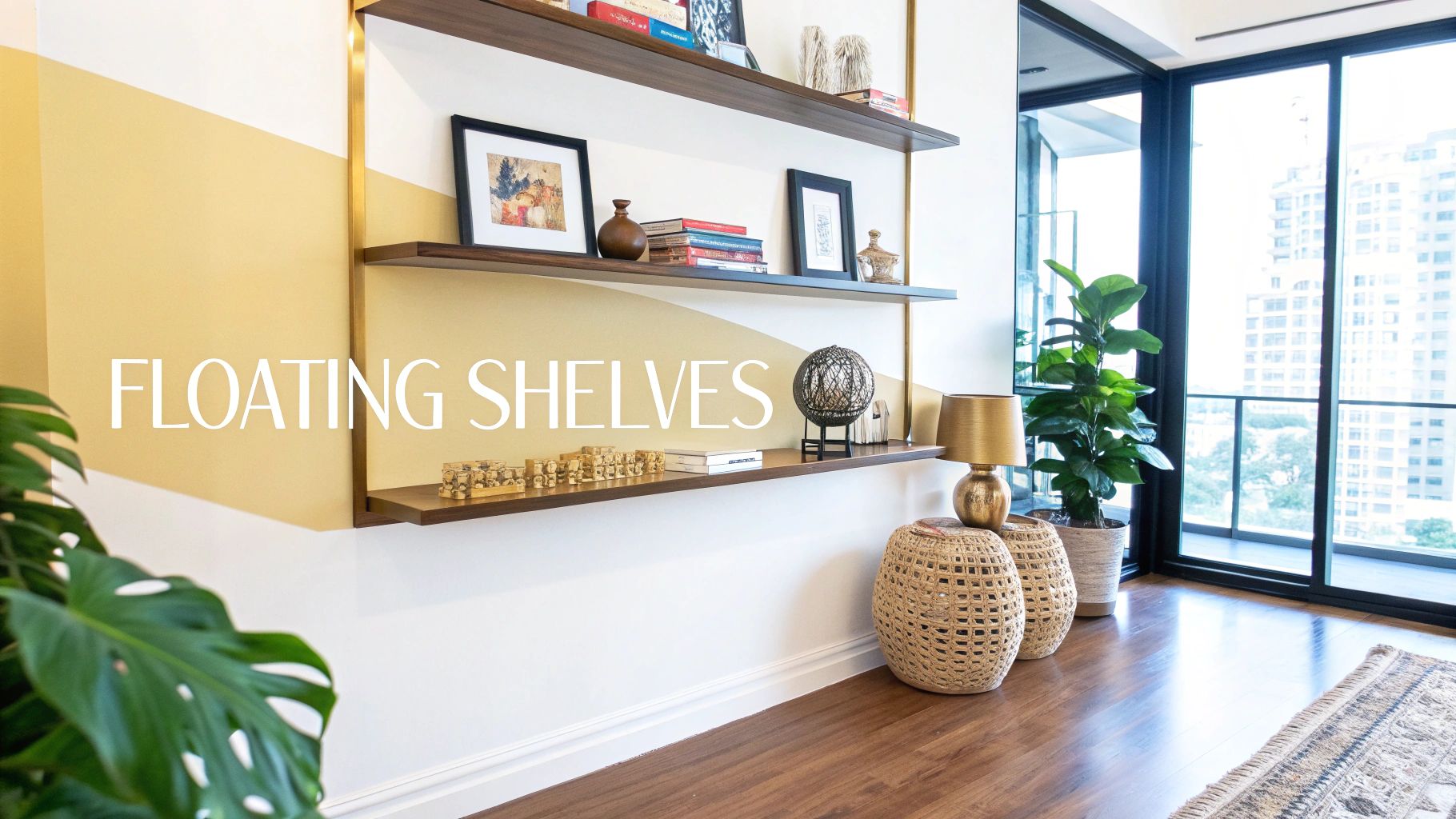
In Singapore, floating shelves aren't just an interior design trend—they're a practical solution for modern HDB and condo living. These shelves tackle the fundamental problem of limited floor space head-on, creating a feeling of openness while serving as versatile storage. They’re a perfect match for the minimalist and Scandinavian designs so many of our clients request.
Why Floating Shelves Are Essential for Singapore Homes
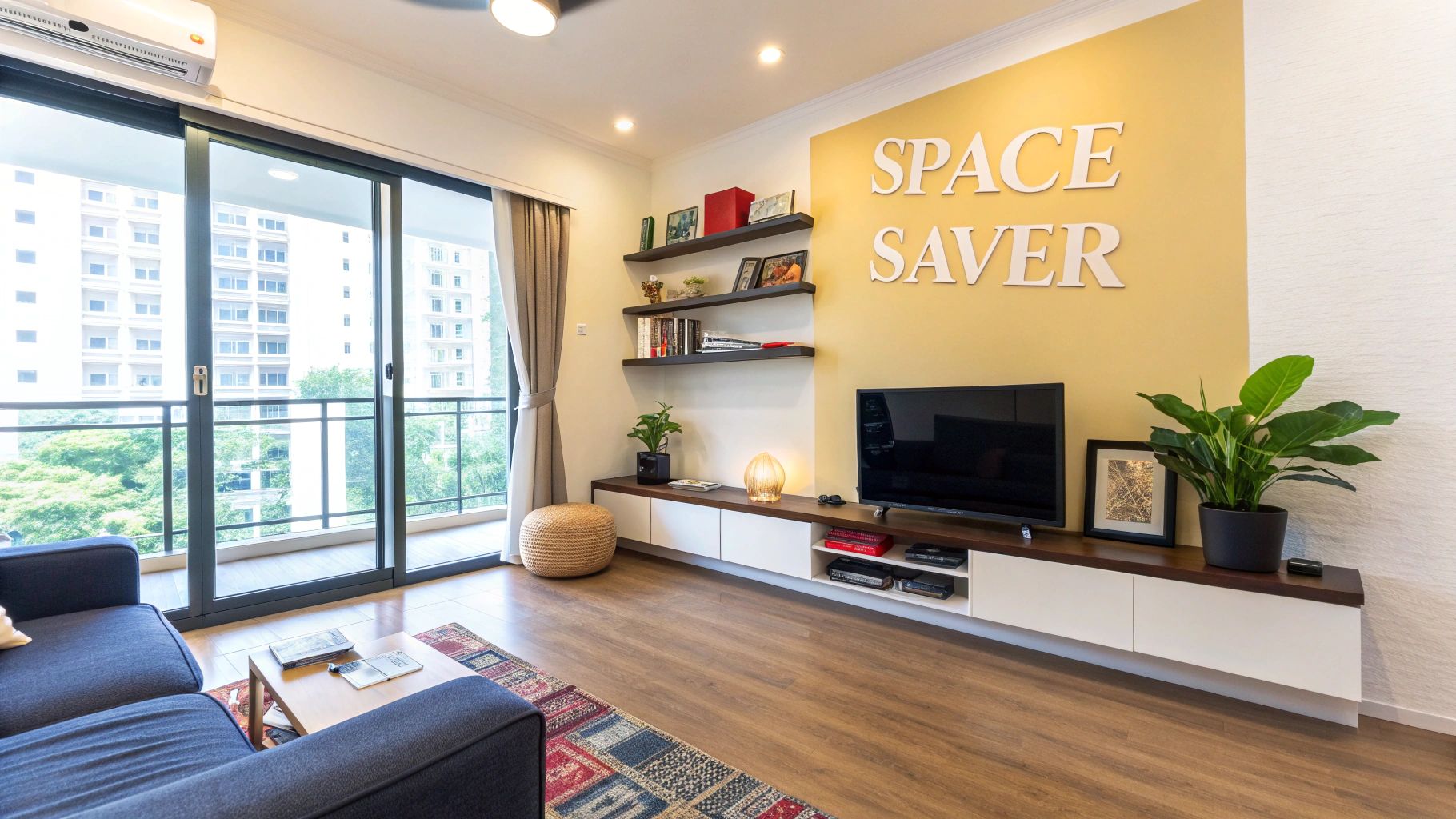
In a city where HDB flats average around 90 square metres, every inch of space is premium. Floating shelves allow homeowners to maximise storage without sacrificing precious floor area, reclaiming walls for both function and style. If you're interested in market trends, you can explore this floating shelves market report.
Having designed and installed shelving in countless local homes, we've seen how these additions can completely transform a room. Unlike a bulky, traditional bookcase that makes a small space feel claustrophobic, floating shelves deliver an airy, uncluttered look. This visual lightness is key. By drawing the eye upward, they create the illusion of higher ceilings and more spacious rooms—a significant advantage in compact apartments.
The Perfect Blend of Form and Function
Floating shelves are the ideal solution for homeowners who need style and practicality. They aren't just for showing off decorative pieces; they are hardworking storage solutions that can be adapted to any room.
- Living Room: Instead of a bulky TV console, a long, low floating shelf creates a sleek media station. For example, a 2.4m shelf in a light oak laminate can hold a soundbar and media box while making the room feel wider.
- Kitchen: Keep everyday spices, oils, and cookbooks within arm's reach on a shelf mounted near the stove. This gives your kitchen a chic, café-like vibe while improving workflow.
- Bedroom: Replace bulky bedside tables with clean floating surfaces. A simple 40cm x 30cm shelf on each side of the bed is perfect for a lamp, your phone, and a book.
- Home Office: Mount shelves above your desk for a streamlined workspace to hold files, stationery, and reference books.
The real advantage of custom floating shelves is their adaptability. They can be cut to fit an awkward alcove, finished to match your existing cabinetry, and built to support anything from delicate glassware to a heavy collection of art books.
Embracing Singaporean Interior Trends
The clean lines of floating shelves align perfectly with popular design styles in Singapore. Based on our client projects, Scandinavian-inspired interiors remain a top request. This style emphasizes simplicity, light colours, and natural materials, making floating shelves in a light oak or birch finish a hallmark of the look.
Likewise, the minimalist trend—with its "less is more" philosophy—finds its perfect partner in floating shelves. Their invisible mounting hardware creates a seamless look, eliminating visual clutter and fostering a sense of calm and order. This guide will walk you through everything from picking the right materials to ensuring a safe installation.
Choosing the Right Material and Finish for Your Home
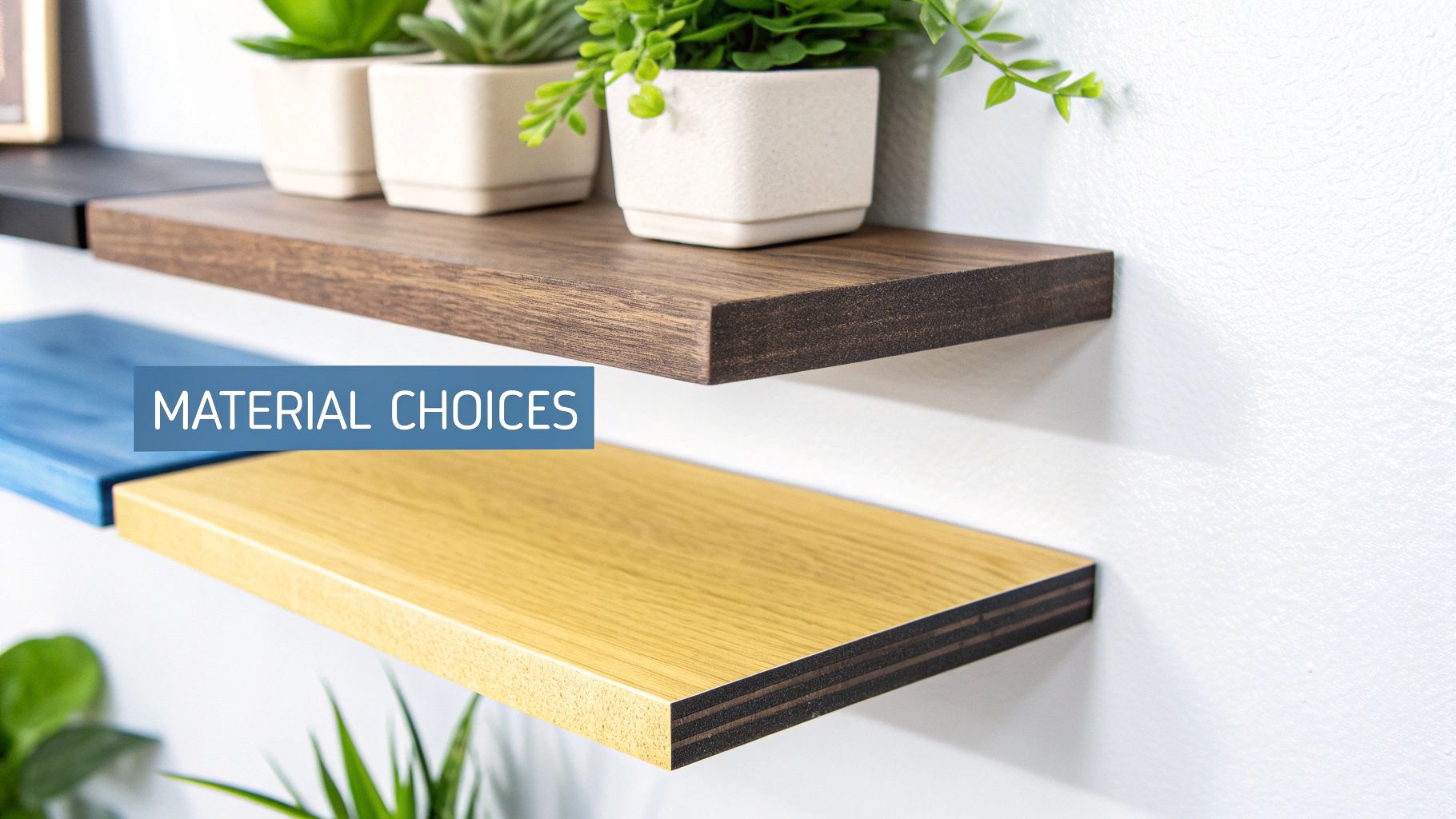
Selecting the right material for your floating shelves goes beyond aesthetics. It's a crucial decision for durability, especially in Singapore’s humid climate. The wrong choice can lead to warping, sagging, or peeling finishes. A material that works well in a living room might be a disaster in a bathroom. Understanding the properties of each option is key to an investment that looks good and holds up for years.
Solid Wood: A Timeless and Durable Choice
Solid woods like teak and oak bring undeniable warmth and character to a space. These hardwoods are naturally strong, making them an excellent choice for supporting heavier items like stacks of books, ceramic pots, or a vinyl collection.
From our experience, clients often choose solid teak for a standout feature in their living or dining room. Its rich colour and natural oils make it inherently resistant to moisture and pests—a huge advantage in our climate. Oak, on the other hand, offers a lighter, more modern vibe that pairs perfectly with Scandinavian or minimalist interiors. While the upfront cost is higher, the longevity and timeless appeal of solid wood often provide the best long-term value.
Engineered Wood: Versatility and Modern Finishes
Engineered wood, particularly high-quality plywood combined with premium laminates or veneers, offers endless design possibilities. Unlike solid wood, engineered solutions can be finished to match any colour scheme or style.
This versatility makes them our go-to for creating a seamless look. For instance, we frequently use plywood with high-pressure laminate (HPL) finishes for kitchen and bathroom shelves. HPL is incredibly tough, easy to clean, and stands up to moisture and scratches—exactly what's needed in these hardworking areas. A practical example is using a matte white HPL on plywood shelves to match the finish of kitchen cabinets, creating a fully integrated design.
The real magic of custom carpentry with engineered wood is the precision. We can craft shelves that blend flawlessly with your cabinetry, feature wall, or even mimic the look of materials like marble or concrete without the high cost.
Sustainability is also a growing priority for homeowners. Based on current market trends, there's a clear preference for eco-certified materials. We prioritise low-VOC and responsibly sourced woods in our projects. For more on this, check out these insights on the floating shelves market.
Metal and Other Modern Alternatives
For an industrial or ultra-modern look, materials like powder-coated steel or aluminium make a strong statement. Metal floating shelves are slim, incredibly strong, and bring a sharp, minimalist edge to any room. They work especially well in home offices or for creating a sleek, gallery-style display for collectibles.
The powder-coating process provides a tough, uniform finish in a massive range of colours, from classic matte black to vibrant shades. This layer also makes the metal resistant to chipping and corrosion. We’ve designed systems for clients wanting a clean, gallery-like feel, where the thin metal shelves almost disappear, letting the art and objects on them take centre stage.
Floating Shelf Material Comparison for Singapore Homes
| Material | Pros | Cons | Best For | Estimated Cost (per metre) |
|---|---|---|---|---|
| Solid Wood (Teak, Oak) | Timeless look, very strong, durable, can be refinished. | Higher initial cost, can be heavy, susceptible to humidity if not treated. | Living rooms, studies, and displaying heavy items like books. | $180 - $350+ |
| Engineered Wood (Plywood + Laminate/Veneer) | Huge range of colours/finishes, moisture-resistant (with HPL), cost-effective. | Lower-quality versions can sag; edges can chip if not properly finished. | Kitchens, bathrooms, kids' rooms, and achieving a specific colour scheme. | $120 - $250 |
| Metal (Steel, Aluminium) | Very strong and slim profile, modern/industrial aesthetic, durable finish. | Can look cold/clinical, may show fingerprints, limited in texture. | Home offices, minimalist interiors, displaying collectibles. | $150 - $300 |
Ultimately, choosing the best material comes down to balancing your personal style, the intended load, and the room's environment. Getting this mix right ensures you'll have shelves that look fantastic and perform well for years.
Understanding Load Capacity and Safe Installation
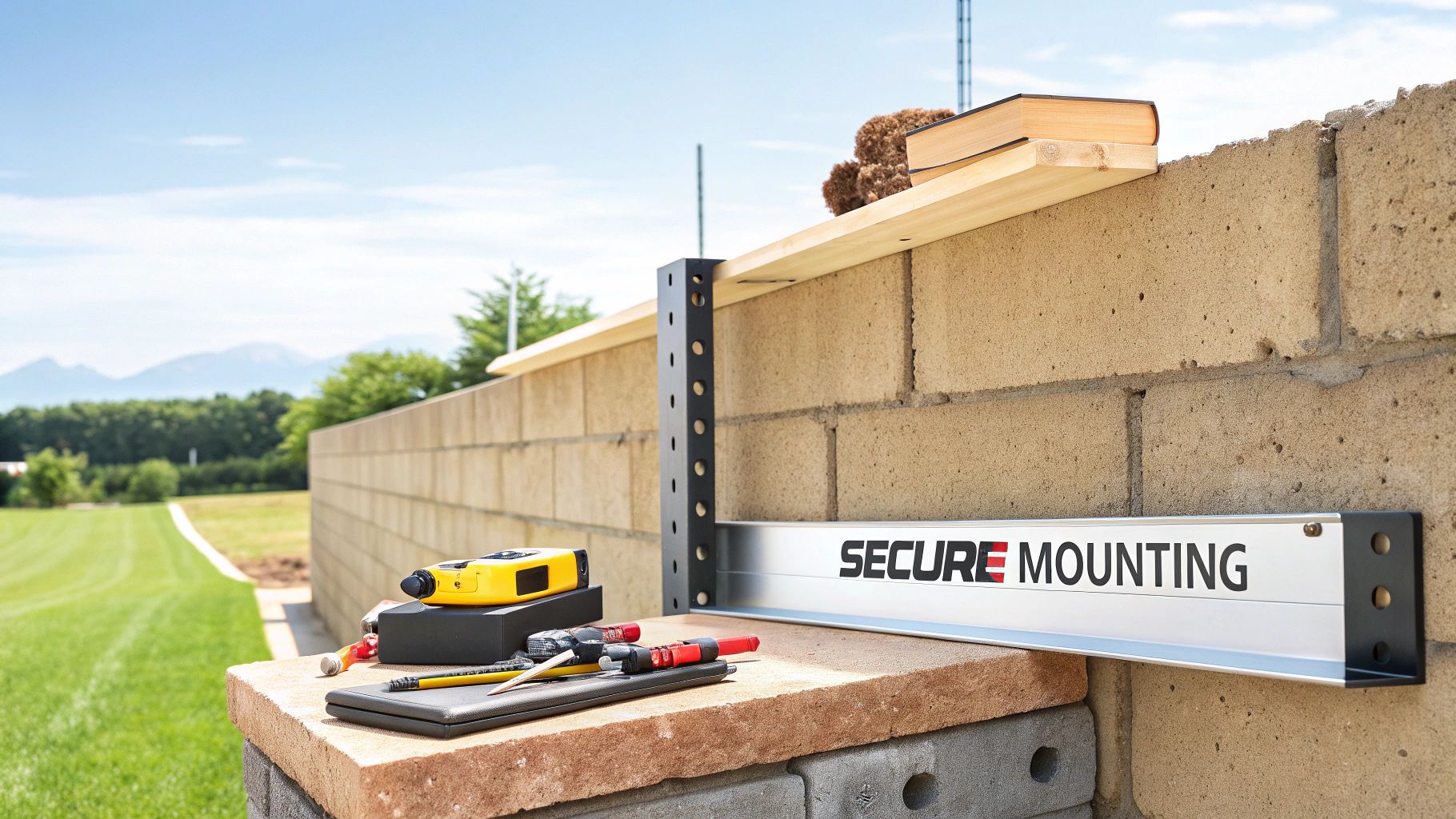
A beautiful floating shelf is useless if it can't safely hold your items. The single most important factor is its load capacity—how much weight it can support. This depends on the shelf's internal structure, the mounting bracket, and the wall it's attached to.
Think of the concealed bracket as the shelf's backbone. For light photo frames, a simple rod bracket might suffice. But for a collection of hardcover books or heavy kitchen dinnerware, a heavy-duty steel frame with multiple anchor points is necessary to distribute the load effectively. Ignoring these limits can lead to sagging shelves, damaged walls, and broken valuables.
Why Your Wall Type Is Crucial
In Singapore, the type of wall you’re drilling into is a critical part of the installation. Our homes feature different wall materials, and each requires a specific mounting strategy.
Using the wrong screws and plugs is a common DIY mistake. For example, using standard screws in a partition wall without hitting a stud is like trying to hang a heavy painting on cardboard.
- Solid Concrete Walls: Found in most HDB flats, these are incredibly strong and provide the best foundation for heavy loads. With the right masonry anchors, they can support significant weight, making them ideal for bookshelves or pantry storage.
- Partition Walls (Drywall): Common in newer BTOs and condos, these are made of gypsum board over a metal or timber frame. To mount anything substantial, the brackets must be drilled directly into the internal studs (the vertical supports inside the wall). Attaching a heavy shelf only to the plasterboard will lead to failure.
A professional installer uses a stud finder and experience to locate these structural supports, ensuring the shelf’s weight is transferred to the building's frame, not just the wall surface. This is the difference between a shelf that lasts a lifetime and one that pulls away from the wall in months.
The Anatomy of a Secure Installation
A professional installation is a precise process, not a quick DIY task. It involves several key steps to guarantee a flawless look and total safety. Understanding the essential hardware building materials involved shows how critical the right components are.
First, your carpenter takes meticulous measurements to ensure everything is perfectly level. Next, they select the correct hardware for your specific wall type and the shelf's intended load—this might mean heavy-duty masonry anchors for concrete or specialised toggle bolts for drywall. The bracket is then mounted to be perfectly flush and stable. Finally, the shelf is slid onto the bracket for a snug, seamless fit with no wobble or visible gaps. This attention to detail ensures the shelf is 100% safe for your family and belongings.
Design and Placement Ideas for Every Room
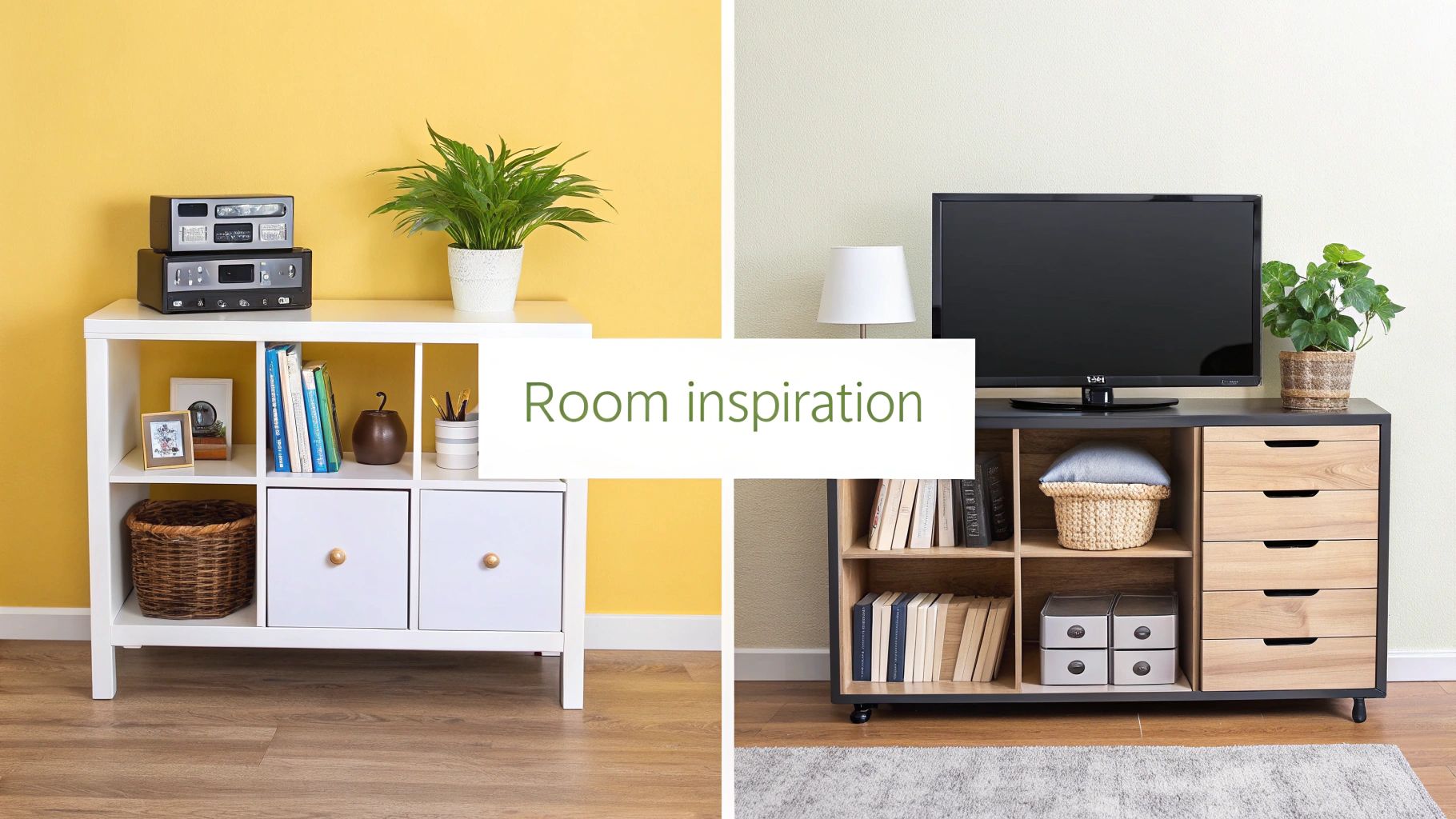
Floating shelves are more than just planks on a wall; they are design tools that can unlock hidden potential. In Singaporean homes where every square metre is valuable, smart placement can turn an empty wall into a beautiful and functional feature. Here are some practical ideas we've implemented in HDB and condo layouts.
The Living Room Hub
Many of our clients are ditching bulky TV consoles that consume floor space. Instead, we design elegant media setups using a long, low-slung floating shelf mounted below a wall-mounted television. This creates an open, airy feel and provides a sleek home for a soundbar and media players, making a compact living area feel significantly larger.
Another powerful technique is to create a dynamic, asymmetrical display.
- Gallery Wall Integration: Mix floating shelves of different lengths with framed art and photos. For example, place a 90cm shelf above a 60cm one, staggered to the side.
- Staggered Heights: Avoid a rigid, ladder-like look. Placing shelves at varying heights creates visual interest and movement.
- Corner Solutions: An unused corner can be transformed with custom-fit L-shaped floating shelves, turning it into a stylish library nook.
The Kitchen Cafe Vibe
In the kitchen, the goal is to blend convenience with style. We often replace a few upper cabinets with sturdy floating shelves to break up visual monotony. Placing everyday items like plates, bowls, and coffee mugs on an open shelf near the dishwasher or coffee machine makes them easy to grab.
We often advise clients to use floating shelves to display their most aesthetically pleasing kitchenware—think matching ceramic mugs, stylish glassware, or jars of colourful spices. This turns functional storage into a deliberate design choice.
For a cohesive look, match the shelf material to another element in the room, like a wooden countertop or cabinet handles. This small detail ties the entire design together.
The Streamlined Bedroom and Home Office
In smaller HDB bedrooms, bulky nightstands can consume valuable floor space. A simple, custom-fit floating shelf on either side of the bed offers a minimalist surface for a lamp and phone without the visual weight.
In a home office, an integrated system is a game-changer. We can design a floating desk surface combined with shelves mounted directly above it, creating a complete, streamlined workstation that feels intentional.
- Integrated Desk: A thick, sturdy floating shelf acts as a minimalist desk, freeing up legroom underneath.
- Vertical Storage: Shelves mounted above the desk keep stationery, files, and books organised and within easy reach.
- Concealed Lighting: We can even build in LED strip lighting under the lowest shelf to illuminate the workspace without a clumsy desk lamp.
By thinking strategically about placement, floating shelves become smart architectural elements that enhance the flow, function, and feel of your home.
Figuring Out the Cost of Custom Floating Shelves in Singapore
Understanding the cost of custom floating shelves is crucial for planning. Unlike off-the-shelf products, custom work pricing depends on the specific materials, size, and complexity.
The primary cost driver is the material. Solid American oak will have a different price point than high-grade plywood with a laminate finish. Even within laminates, a premium, textured finish that mimics real wood grain will cost more than a basic, smooth one.
What Really Drives the Price?
Beyond the main material, several factors influence the final cost.
Size and Thickness: A longer, deeper, and thicker shelf requires more material and stronger internal support, increasing the cost. A slim 60cm shelf for photo frames will be more affordable than a chunky 180cm shelf designed for cookbooks.
The Finish: A simple clear coat on solid wood is less labour-intensive than a multi-step staining and lacquering process. Similarly, applying a high-pressure laminate (HPL) requires meticulous cutting and edge banding, adding to the craftsmanship and time involved.
Installation Complexity: The wall type is a major factor. Drilling into a solid concrete wall in an older HDB flat requires different tools and anchors than fixing shelves to the studs of a partition wall in a new BTO, affecting the installation time and cost.
Real-World Price Ranges for Common Projects
To give you a clearer idea, here are some common scenarios we encounter. These are estimates to help you budget for your project in Singapore.
| Project Type | Description | Estimated Price Range (per shelf/set) |
|---|---|---|
| Simple Accent Shelves | A pair of small-to-medium oak-laminate shelves (e.g., 60cm x 25cm) for displaying decor in a living room. | $300 - $550 |
| Heavy-Duty Kitchen Shelving | One long (1.5m+) shelf made with moisture-resistant, HPL-finished plywood to hold plates and cookware. | $400 - $700 |
| Full Feature Wall Unit | A complete system with multiple shelves of varying sizes, integrated LED lighting, and custom fitting around a TV. | $1,200 - $2,500+ |
Investing in custom carpentry is about long-term value. A perfectly fitted shelf, built from quality materials and professionally installed, means no worries about sagging, gaps, or safety. It's a proper upgrade that works beautifully and looks great for years.
Why Custom Carpentry Is the Smarter Choice
Off-the-shelf floating shelves often result in compromise. They may be a few centimetres too short, leaving an awkward gap, or the finish might clash with your existing furniture. Ready-made options lock you into standard sizes, limited materials, and generic mounting hardware that may not be suitable for your walls, posing a safety risk.
Custom carpentry, on the other hand, creates something that feels like an integrated part of your home’s architecture.
The Power of a Perfect Fit
The biggest advantage of custom work is a fit that is precise down to the millimetre. Every Singaporean home has tricky spots: an awkward nook, a structural pillar, or the narrow wall above a doorway. A standard shelf wouldn't work. A carpenter can measure that exact space and build a shelf that fits flawlessly, turning a forgotten corner into a functional, beautiful feature.
We recently worked on a condo where the client wanted a clean media console under their TV. An off-the-shelf unit would have left gaps. Our custom-built floating shelf spanned the entire wall, creating a seamless, high-end look that made the room feel more spacious and intentional.
This level of precision is impossible with a boxed product.
Unmatched Quality and Integration
Going custom also means you control the materials and finishes, ensuring everything ties together with your home's existing style.
- Material Harmony: You can select the exact wood grain to complement your dining table or specify a laminate that perfectly matches your kitchen cabinets.
- Engineered for Strength: Custom shelves are built for a specific purpose. If you need to display a heavy collection of books, the internal structure and mounting system will be designed to handle that weight safely.
- Professional Installation: A skilled carpenter ensures your shelves are perfectly level, securely anchored to your specific wall type, and finished without any visible gaps or messy seams.
Ultimately, choosing custom carpentry for your floating shelves in Singapore is an investment in quality, durability, and a design that truly belongs in your space. It solves problems that standard products can't and delivers a polished result that elevates the entire room.
Your Floating Shelf Questions, Answered
Here are answers to some of the most common questions we hear from homeowners in Singapore.
How Much Weight Can a Floating Shelf Actually Hold?
This depends on the shelf's construction, the brackets used, and the wall type. When installed correctly on a solid concrete wall, a professionally built shelf can typically hold 15-25 kg per linear foot. That’s enough for a stack of hardcover books or ceramic dinnerware. On partition walls, the load capacity is lower, making them better suited for lighter items like photo frames and small plants.
Can Floating Shelves Be Installed in a Bathroom or Kitchen?
Yes, they are an excellent choice for these spaces, provided you use the right materials. Singapore’s humidity can cause warping or peeling in the wrong materials. For humid rooms, we recommend two options:
- Solid Teak: Its natural oils provide inherent resistance to moisture.
- Engineered Wood with HPL: A High-Pressure Laminate finish creates a waterproof, non-porous, and easy-to-clean surface.
What Is the Typical Lead Time for Custom Floating Shelves?
From design finalisation and on-site measurements, you can typically expect your new shelves to be fabricated and installed in about 3 to 5 weeks. This timeline allows for sourcing the best materials, precise workshop fabrication, and careful installation without rushing any step.
How Do You Hide the Brackets for a True Floating Look?
The seamless "floating" look is achieved with concealed hardware. Instead of visible L-brackets, we use heavy-duty steel rods or a custom mounting plate that is completely hidden. These supports are drilled securely into the wall structure. The shelf, which has matching holes or a cavity in the back, then slides snugly over them, creating the gravity-defying effect. To understand why this custom approach is superior, it's worth reading about the unmatched advantage of custom-made furniture.
Ready to transform your space with shelving that’s designed just for you? At KIVO, we combine expert craftsmanship with thoughtful design to create custom floating shelves that perfectly fit your home and lifestyle.
Contact us today to schedule your complimentary design consultation.