
Finding a great renovation contractor in Singapore doesn’t start with a frantic Google search. It starts with a plan. The most successful projects are born from a crystal-clear understanding of your scope and budget before you even think about picking up the phone.
Taking the time to do this groundwork first turns a vague, overwhelming hunt into a targeted mission. You’ll know exactly what you’re looking for, which means you’ll find the right professionals from the get-go.
Defining Your Renovation Vision and Budget

Before a single contractor sees your space, you need to get all those ideas out of your head and onto paper. Moving from a fuzzy thought like "I want a nicer kitchen" to a detailed plan is the single most important thing you can do. This clarity cuts through potential miscommunication and ensures every quote you receive is accurate and easy to compare.
An actionable way to start is by creating a simple three-column list:
- Must-Haves: These are your non-negotiables. Example: "A quartz countertop that can withstand hot pots," "an induction hob instead of gas," or "waterproof vinyl flooring for the living room."
- Wants: These are the nice-to-haves you'd love but could live without if the budget gets tight. Example: "Under-cabinet LED lighting," "that specific German-brand oven," or "a rain shower head in the master bathroom."
- Not-Needed: This is just as crucial. Actively listing what you don’t want helps prevent misunderstandings. Example: "No open shelving because it collects dust," or "avoid dark wood finishes to keep the space bright."
This simple exercise instantly gives potential contractors a blueprint of your mind, showing them you’ve seriously thought through your needs.
Establishing a Realistic Budget
With your vision pinned down, the next big hurdle is your budget. A classic rookie mistake is only budgeting for the big, visible items like carpentry and tiling. A smart budget, however, always includes a buffer for the unexpected.
As a rule of thumb, always set aside an extra 15-20% of your total budget as a contingency fund. This is your safety net for those "uh-oh" moments. For example, if your main budget is S$50,000, your real total budget should be at least S$57,500. This fund covers things like discovering hidden water damage after hacking a wall or deciding you really do want that pricier tap at the last minute.
Getting a feel for typical renovation costs in Singapore is also key to setting realistic expectations. The final bill can swing wildly depending on your property type. For instance, sprucing up a new 3-room HDB flat might run you anywhere from S$32,800 to S$51,500. A 5-room flat? Expect something closer to S$44,700 to S$69,800.
Keep in mind that resale flats often cost up to 40% more. That’s because they usually need more intensive work, like hacking up old flooring or a complete electrical rewiring. You can dive deeper into what drives these figures in this detailed cost breakdown.
Uncovering Common Hidden Costs
Nothing sours a renovation experience faster than surprise costs. Many first-time homeowners get caught off guard by expenses that weren't clearly itemised in the initial quote. Get ahead of this by asking potential contractors about these common add-ons:
- Haulage and Debris Removal: Someone has to pay for clearing out all the old materials and construction waste. Ask: "Is the cost of the skip bin and disposal fees included in your quote?"
- Electrical and Plumbing Works: This is a big one. Rewiring an older flat or rerouting pipes can easily add thousands to your bill. Ask: "Does your quote cover the cost of a new distribution board (DB box) if needed?"
- Permit Fees: Any submissions to HDB or other authorities will have administrative fees attached. Ask: "Are all HDB/BCA permit application fees included in the administrative costs?"
- Post-Renovation Cleaning: Your home will be covered in a fine layer of dust. Professional chemical cleaning is often needed to get it truly move-in ready. Ask: "Does your handover process include a professional chemical wash, or is that a separate charge?"
By defining your vision and building a comprehensive budget that accounts for these hidden extras, your search for good renovation contractors in Singapore will be far more efficient and, ultimately, much more successful.
Okay, you've got your vision pinned down and a budget in mind. Now for the exciting part: finding the right people to make it happen. This is where you shift from dreaming to doing, building a solid list of potential contractors who can turn your plans into a home you love. The goal isn't just to find any contractor, but the right one for you.
Your search should start on local platforms built for this exact purpose. Websites like Qanvast and HomeRenoGuru are more than just directories; they’re goldmines of portfolios, unfiltered client reviews, and detailed project breakdowns. But don't just glance at the five-star ratings. Dig deeper. Look for reviews that tell a story about the process. Actionable insight: Search for keywords within the reviews like "delay," "problem," or "communication." See how the contractor responded. Did they communicate clearly? How did they handle that unexpected plumbing issue? These stories give you far more insight than a simple star rating ever could.
This initial digital legwork is non-negotiable. Singapore's renovation industry is massive, valued at around S$6 billion a year. With over 6,000 registered firms all vying for your project, quality and professionalism are what separate the best from the rest. The good news? This competition means you have plenty of options. Taking your time here will absolutely pay off. For a deeper dive into the market, you can check out these insights on Singapore's renovation scene.
Digital Due Diligence
Before you even think about adding a name to your shortlist, do a quick digital health check. A contractor's online presence is their modern-day business card. It tells you a lot about their professionalism and how much they care about the details.
Here’s a quick mental checklist as you browse their sites and social media:
- Portfolio Quality: Are the project photos recent and sharp? Practical check: Look for proper before-and-after shots that show off their actual workmanship, not just staged photos of fancy furniture. Do they show close-ups of tile grout lines or carpentry joints?
- Professional Website: Does the site look polished and load without a fuss? A clunky, outdated website can be a red flag for a disorganised operation.
- Clear Contact Information: Can you easily find their office address, phone number, and company registration number (UEN)? Actionable tip: Google their address. Does it lead to a proper office or a residential unit? Good contractors have nothing to hide.
This simple process of checking online signals, verifying their credentials, and then narrowing down your list is the most effective way to find a reliable partner.
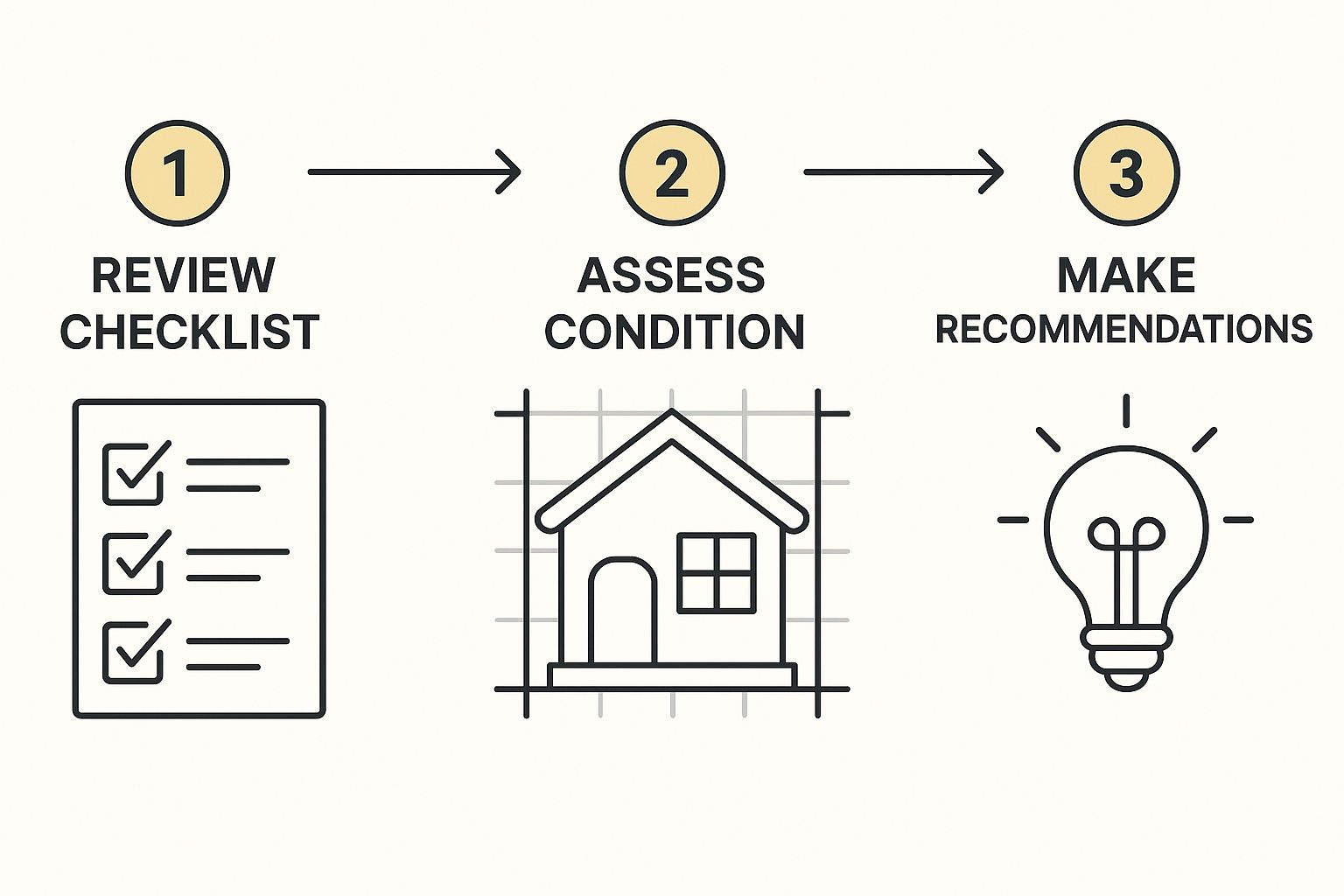
As the visual shows, a systematic approach is your best bet. It’s about combining what you see online with the hard facts of their qualifications.
To help you keep track as you go, a simple comparison table can be a lifesaver. It lets you see, at a glance, how each potential candidate stacks up against your criteria.
Contractor Vetting Checklist
| Checklist Item | Contractor A | Contractor B | Contractor C |
|---|---|---|---|
| HDB Licence Verified | |||
| CaseTrust Accredited | |||
| Professional Website | |||
| High-Quality Portfolio | |||
| Positive Online Reviews | |||
| Responsive to Initial Query |
Using a checklist like this ensures you're comparing apples to apples and not letting a flashy portfolio overshadow a lack of essential credentials.
Verify Credentials and Seek Smart Referrals
Beyond the pretty pictures, you need to confirm they’re the real deal. For Singapore homeowners, especially if you live in an HDB flat, two credentials are non-negotiable.
- HDB Licence: Any contractor touching an HDB flat must be on the official Directory of Renovation Contractors (DRC). This is your assurance that they know and will follow HDB's strict rules. No licence, no deal.
- CaseTrust Accreditation: While not mandatory, this is a huge plus. The CaseTrust scheme signals a firm's commitment to fair trading and consumer protection. Practical benefit: These businesses usually offer things like deposit insurance and have clear processes for handling disputes, giving you an extra layer of security.
Finally, never underestimate good old-fashioned word-of-mouth. But when you ask friends or family for a recommendation, don't just ask, "Were they good?"
Get specific. Ask questions that reveal how they operate under pressure. "How did they stick to the project timeline?" is a good start. Even better: "When a problem came up with the tiling, what exactly did their project manager do to fix it?" A great follow-up is, "How often did you receive updates without having to ask for them?" These kinds of questions uncover the truth about their problem-solving skills and on-site professionalism.
By blending solid online research, mandatory credential checks, and smart referrals, you should be able to build a strong shortlist of 3 to 5 promising candidates. Now you’re ready for the next, and most important, phase: meeting them.
Vetting Your Shortlisted Candidates

Alright, you’ve done the digital legwork and now have a solid shortlist of three to five candidates. This is where the real work begins. You're shifting from looking at polished portfolios online to having actual conversations with the people who might be tearing down your walls.
This vetting stage is crucial. It’s less about their beautiful finished projects and more about figuring out their work style, professionalism, and how they handle the inevitable chaos of a renovation.
The first meetings are your best chance to see if you even click. A good contractor should be doing more listening than talking, asking smart questions about your lifestyle, not just your design ideas. Practical example: They should ask things like "Do you cook often with a lot of oil? That will affect our recommendation for your backsplash," not just "What colour do you want?"
Asking the Right Questions
Forget just asking how many years they’ve been in business. You need to understand how they perform when things go wrong—because something always goes wrong. When you're searching for good renovation contractors in Singapore, their ability to manage unexpected hiccups is what separates the pros from the amateurs.
Here are a few powerful questions to get the conversation rolling:
- "Tell me about a recent project that hit an unexpected snag. How did you handle it and communicate the issue to the homeowner?" This cuts right to their transparency and problem-solving skills.
- "How do you manage your team of subcontractors? What's your process for making sure their work is up to your standard?" This gives you a peek into their project management and quality control.
- "What happens if we decide to change something halfway through? Can you walk me through your variation order process?" Their answer reveals how organised, fair, and transparent their system is for changes.
A seasoned, confident contractor will have no problem answering these with specific, real-world examples. If you get vague, dismissive answers, consider that a major red flag.
The point of these questions isn't to play "gotcha." It's to see their processes in action. A true professional welcomes this level of detail because it shows you're a serious client who cares about the outcome.
Checking References and Seeing Their Work in Progress
Portfolios are the highlight reel; references and site visits are the behind-the-scenes documentary. When a contractor gives you references, don't just ask the past client if they were "happy."
Get specific.
- How close did the final bill come to the initial quote?
- Was the project completed on time? If not, how were the delays managed?
- How responsive was the contractor when you had questions or concerns?
- Did you need any touch-ups or fixes after the reno was done? How did they handle that?
Even better than a phone call, ask if you can pop by an ongoing project. This is an invaluable move. You can tell a lot about a contractor by the state of their worksite. Actionable checklist for your site visit: Look for organised tool storage, floor protection in non-work areas, and a general sense of order. This reflects their professionalism.
A quick visit lets you see their real workmanship, not just the glossy, styled photos. Pay attention to the little things, like how neatly tiles are being laid or the precision of the carpentry. This kind of firsthand look provides a level of confidence that no portfolio ever could. It’s what helps you make that final decision with total peace of mind.
Decoding Quotations and Reviewing Contracts
Right, this is where things get real. After the initial meetings, the quotations from your top choices will start rolling in. This is a critical moment in your search for a good renovation contractor in Singapore, and honestly, it can feel a bit like trying to solve a puzzle. Each firm has its own way of presenting information, which makes a direct, side-by-side comparison tricky.
Here’s a hard-earned piece of advice: the cheapest quote is almost never the best one. A suspiciously low bid should set off alarm bells. It often means something crucial has been left out, either in the quality of materials or entire chunks of work that will mysteriously reappear later as expensive "variation orders." Your real mission is to compare them on an apples-to-apples basis.
Reading Between the Lines of a Quotation
A detailed quote isn't just a document; it's a sign of a professional. If you see a vague line item like "Kitchen Carpentry - S$8,000," that's a massive red flag. A proper quote from a serious contractor will break this down meticulously. For example, it should specify: "Fabricate and install 20ft top and bottom kitchen cabinet in solid plywood with Fenix NTM laminate finish (code: X), using BLUM soft-closing hinges and drawer runners."
Keep a sharp eye out for these details:
- Material Specifications: Does the quote list the brand and model for your tiles, paint, or bathroom fittings? Actionable tip: If it just says "Nippon paint," ask "Which line? Vinilex 5000 or the premium Odour-less All-in-1?" The cost difference is significant.
- Provisional Sums (PC Sums): These are essentially estimated placeholder amounts for items you haven't finalised yet, like light fixtures or that special feature tile. A few are normal, but a quote loaded with PC sums can make the final cost feel like a moving target.
- Exclusions: Always, always check what is not included. Things like professional post-reno cleaning, paint touch-ups after other installations are done, and permit application fees are common exclusions you need to be aware of.
A transparent contractor gives you a quote that leaves very little to guesswork. If you find yourself constantly asking what a line item means or which materials are included, it’s a good indicator of how communication might be for the rest of the project.
Demystifying the Renovation Contract
Once you’ve settled on a contractor, you’ll be presented with the final, and most important, document: the contract. Please, don't just skim it. This is a legally binding agreement designed to protect both you and the contractor. It's your safety net. Singapore's residential construction sector is a significant part of the market—making up 47.1% of it—so contracts have become more standardised, but they still need your full attention. With renovation activity expected to grow, knowing your contract inside and out is non-negotiable. If you're curious about the industry's scale, you can get a sense of Singapore’s construction market trends here.
Your contract should clearly lay out a few non-negotiable clauses:
- Payment Schedule: A fair schedule ties payments to project milestones. A common structure is a 10% deposit, 40% when hacking and masonry are done, another 40% after carpentry is installed, and the final 10% at handover. Be wary of any contract demanding a massive upfront payment.
- Project Timeline: This needs a clear start date and an estimated completion date. But more importantly, look for a clause that details penalties for unexcused delays. This keeps everyone accountable.
- Defect Liability Period: Think of this as a warranty period. It's typically for 12 months, and during this time, the contractor is obligated to come back and fix any defects in their workmanship at no extra charge to you.
- Dispute Resolution: This clause outlines what happens if you and your contractor can't agree on something. It often specifies mediation through an organisation like the Consumers Association of Singapore (CASE) as the first step.
Taking the time to really understand these documents isn't just paperwork; it’s about empowering yourself. It ensures you can move forward with confidence, knowing your home and your investment are protected.
Managing the Project and Contractor Relationship
Alright, the contract is signed and the real work is about to begin. This is where your role shifts from planner to project manager. The success of your renovation from here on out really boils down to how well you and your contractor work together. A partnership built on clear communication and mutual respect is the secret sauce to navigating the inevitable bumps in the road.
Don't wait for problems to pop up—get ahead of them. Set up a communication rhythm right from day one. Many homeowners and good renovation contractors in Singapore find a dedicated WhatsApp group works wonders. Actionable tip: Pin key documents like the final floor plan and material choices to the group chat for easy reference. It's a simple, instant way to share progress photos, ask quick questions, and keep a running log of all the small details that might otherwise get lost.
For the bigger picture stuff, nothing beats a regular site meeting. Try to schedule these weekly. Getting on-site and walking through the progress together is invaluable for catching potential issues early and making sure everything is aligned with the plan.
Document Everything and Keep Communication Clear
Your smartphone is your most valuable tool during the renovation. Make it a habit to snap photos and videos of the progress, maybe at the end of each day or week. This isn’t about playing “gotcha!”; it’s about creating a shared visual record of the work being done. If you spot a tile that seems a bit off or a paint finish that doesn't look quite right, a photo makes the conversation objective, not accusatory.
When you do need to raise an issue, think collaboration, not confrontation. Instead of saying, "You did this wrong," try something like, "I noticed this area looks a bit different from what we discussed. Can we take a look together and figure it out?" This keeps everyone on the same team.
Handling Changes the Right Way
It’s almost a guarantee you’ll want to change something mid-way through. Maybe you've fallen in love with a different light fixture, or you suddenly realise you desperately need another power socket behind the sofa. In the renovation world, these are called Variation Orders (VOs), and they need to be handled properly to avoid headaches over costs and timelines later.
A verbal agreement is not enough. Insist that every single change is documented in a formal VO. This written record should clearly outline:
- The specific change being requested. Example: "Add one double power socket on the living room wall, 300mm from the floor, aligned with the right edge of the window."
- The impact on the cost (whether it's an addition or a saving).
- Any adjustment to the original project timeline.
Make sure both you and your contractor sign off on the VO before any new work starts. This simple step protects everyone and ensures there are no nasty surprises when the final bill arrives. Managing the project with this level of transparency builds a rock-solid working relationship that can handle whatever the renovation throws at you.
Got Questions About Singapore Renovation Contractors? We’ve Got Answers.
Even with the best-laid plans, the world of home renovations can throw a few curveballs. Getting straight answers to your burning questions is the key to moving forward with confidence. Let's tackle some of the most common queries we hear from homeowners looking for good renovation contractors in Singapore.
A big point of confusion right off the bat is usually the difference between an interior designer (ID) and a renovation contractor. Think of an ID as the creative director for your home. They’re all about the big picture—space planning, 3D renders, material palettes, and pulling together a cohesive look. If you want a guiding hand to shape your vision from scratch, an ID is your go-to.
A renovation contractor, on the other hand, is the master of execution. They are the builders. You give them the blueprint, and they make it happen, managing all the technical bits and pieces like carpentry, tiling, and electrical work. If you’ve already got a rock-solid vision and detailed plans, going straight to a contractor can be a smarter, more budget-friendly move.
What Is a Reasonable Defect Liability Period?
So, the renovation is done and you've got the keys. But your relationship with the contractor isn't quite over yet. This is where the defect liability period (DLP) comes in—it’s basically a warranty on the workmanship. It's the window of time where your contractor is obligated to come back and fix any issues that pop up.
In Singapore, the industry standard for a DLP is 12 months. Make sure this is spelled out clearly in your contract. If a contractor offers anything less, it might be a red flag about how much confidence they have in their own work. This period covers things like paint that starts to peel, cabinet hinges that go wonky, or tiles that pop. It doesn't cover normal wear and tear from living in your new space.
What Should I Do if My Contractor Goes MIA?
This is the scenario that keeps homeowners up at night, but don’t panic. There are clear steps you can take. First things first: document everything. Create a paper trail of every attempt to get in touch—calls, messages, emails, noting the dates and times. Sometimes, a formal letter sent via registered post is enough to get a response when texts and emails are met with silence.
If they’re still uncontactable, your next move depends on who you hired:
- CaseTrust Accredited Firms: If your contractor is part of the CaseTrust scheme, you’re in luck. You can file a formal complaint, and they will step in to mediate the dispute.
- Small Claims Tribunals: For disputes involving claims under S$20,000, the Small Claims Tribunals is a great option. It’s designed to be a quicker and more affordable path than a full-blown lawsuit.
- Legal Action: When larger sums are at stake, it might be time to speak with a lawyer to understand your legal options.
The best defence is a good offence. Putting in the hard work to vet your contractor upfront and insisting on a detailed contract with clear payment milestones drastically cuts the risk of being left in the lurch.
Choosing the right renovation partner is about more than just a slick portfolio. It’s about finding a team you can genuinely trust to build your home with professionalism and care. Asking these questions before you sign anything ensures you find someone who’s not just good on paper, but a great partner for the entire journey.
Ready to turn your vision into a meticulously crafted reality? The artisan team at KIVO Custom Carpentry And Interior Design Services has over four decades of experience creating bespoke spaces that blend function and luxury. From initial design to flawless execution, we build partnerships based on transparency and excellence. Discover how we can transform your home by exploring our services at https://kivo.com.sg.