Thinking about a new kitchen for your HDB flat? It's one of the most impactful changes you can make, turning a standard space into the heart of your home. In Singapore, designing an HDB kitchen requires a smart approach—it's a balance of maximising compact spaces, ensuring durability against our climate, and reflecting your personal style.
This guide isn't a list of fleeting trends. It's a practical walkthrough based on years of experience designing and building kitchens for Singaporean homeowners. We'll cover the essential choices you need to make, providing actionable insights to help you create a kitchen that is both beautiful and highly functional.
Getting HDB Kitchen Cabinets Right
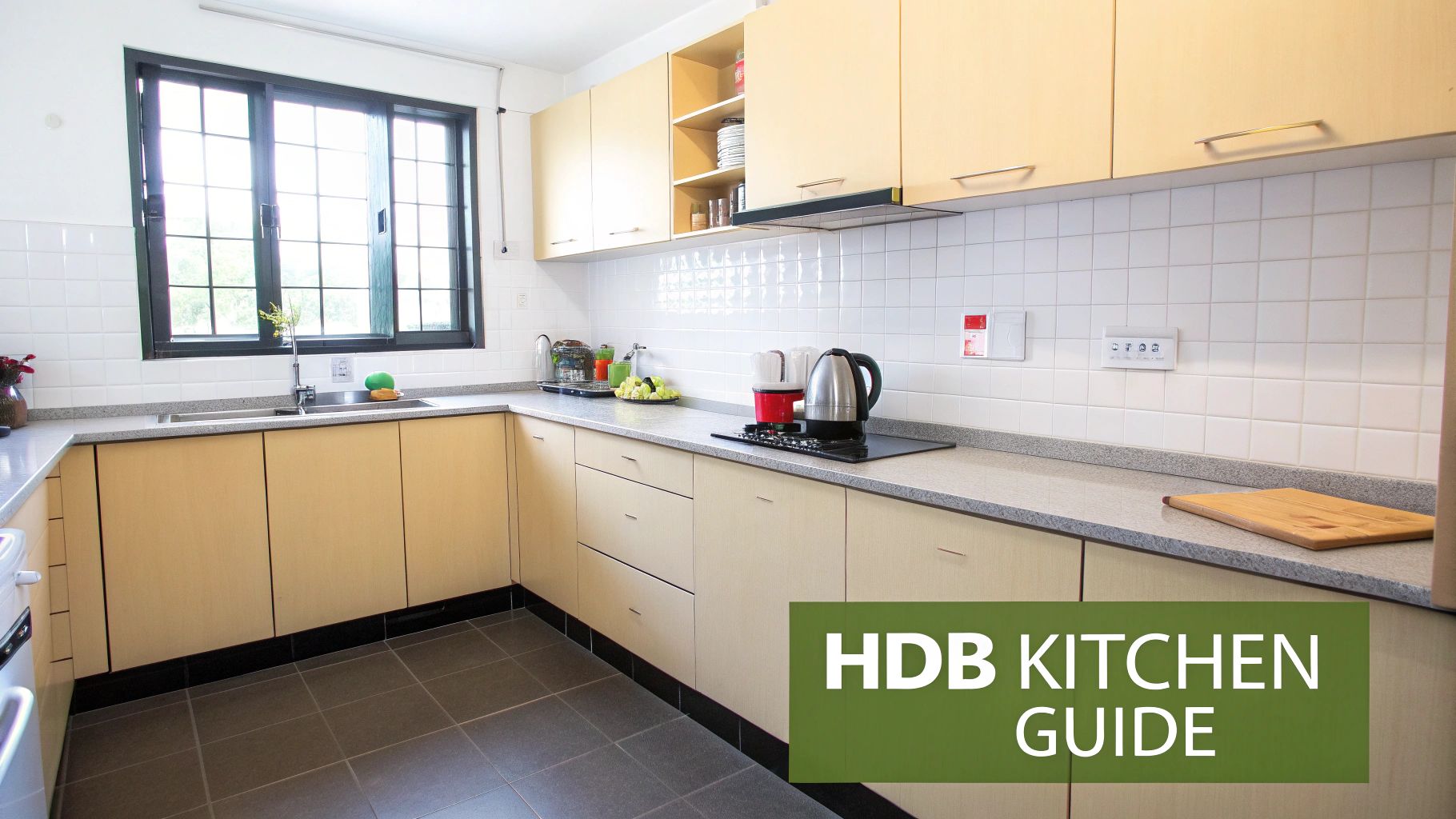
In an HDB flat, every centimetre counts. Your cabinets aren't just for storage; they define the kitchen's workflow, layout, and overall feel. They are the single most important element of your kitchen renovation.
From our experience with countless HDB projects, the main challenge for homeowners is aligning a beautiful design with practical daily needs and a realistic budget. This guide breaks down the entire process into clear, manageable steps—from selecting materials that withstand humidity to designing layouts that make small kitchens feel spacious.
Understanding the Investment
Let's start with the budget. A complete renovation for an average HDB kitchen typically falls between SGD 8,000 and SGD 50,000. The final cost depends heavily on the scope of work and, most importantly, the materials and hardware you choose for your cabinets. For a deeper dive, picketandrail.com offers some great insights into kitchen renovation costs.
This investment reflects a shift in how we view our kitchens. They are no longer just utilitarian spaces for cooking.
A well-planned kitchen is a long-term investment in your home’s value and your daily quality of life. The choices you make for your cabinets—from material to layout—will impact your routine for years to come.
Actionable Insights You'll Find Here
Navigating the world of kitchen cabinetry involves a lot of technical jargon and choices. This guide provides the practical knowledge you need to make confident decisions. We will cover:
- Material Selection: Practical advice on choosing materials that last in Singapore's climate.
- Layout Strategies: How to design a workflow that makes cooking and cleaning efficient.
- Smart Storage Solutions: Concrete examples of hardware that eliminate clutter and maximise space.
- Budgeting Tips: How to allocate your funds effectively for the best long-term results.
By the end of this guide, you will have a clear, actionable plan for creating a kitchen that is perfectly tailored to your HDB home.
Choosing the Right Cabinet Materials
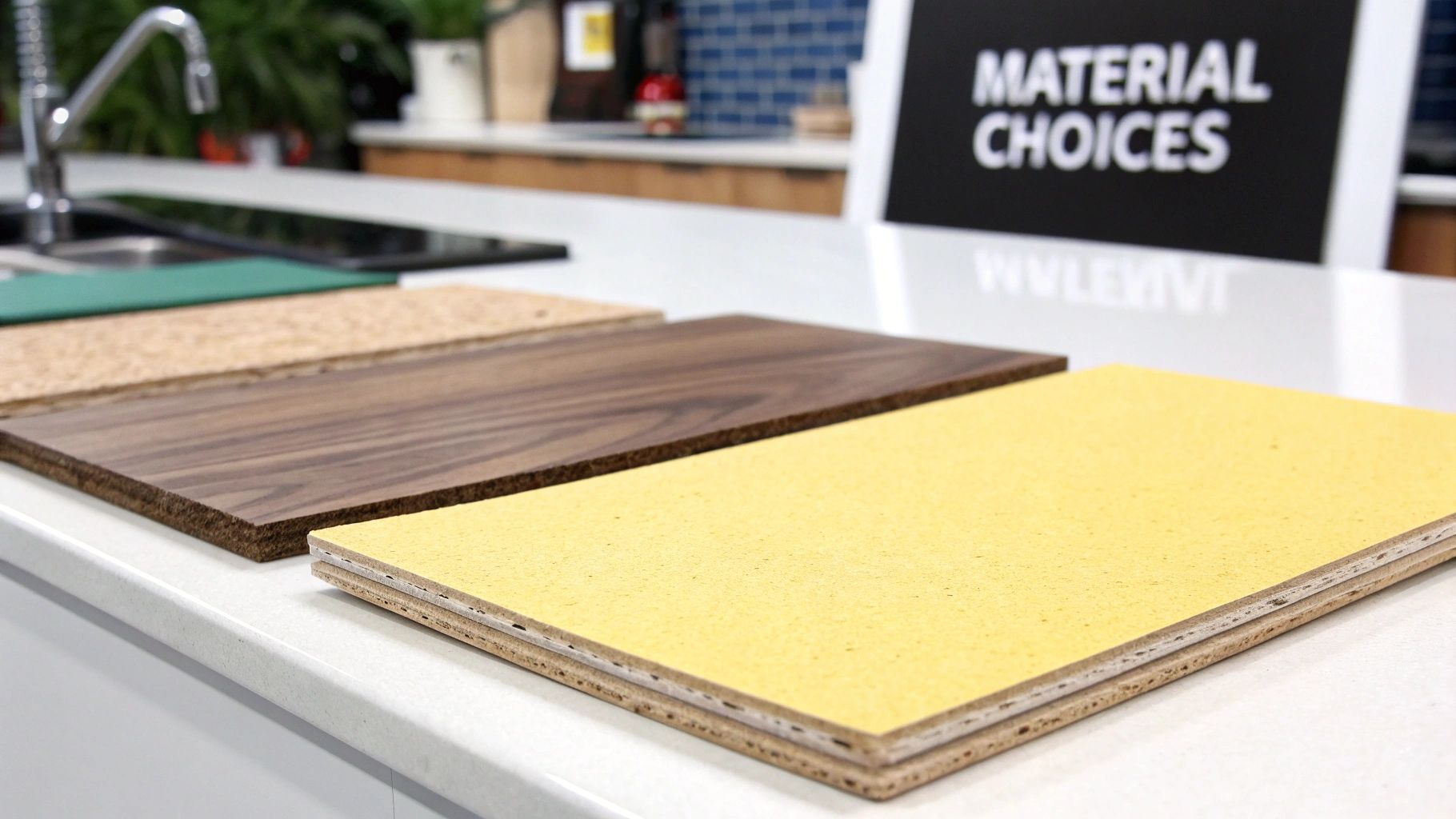
Selecting the right material for your HDB kitchen cabinets is more than an aesthetic choice—it's a structural one. In Singapore's humid environment, the material's durability determines the lifespan of your kitchen.
Let’s get straight to the practical options. The internal structure of your cabinet, the "carcass," needs to be robust and moisture-resistant. This brings us to the primary choice: Plywood versus Medium-Density Fibreboard (MDF).
Based on our project data, plywood is the superior choice for kitchen carcasses in Singapore. Its layered, cross-grain construction provides excellent structural integrity and significantly better moisture resistance compared to MDF, which tends to swell and deform when exposed to water.
The Core Carcass: Plywood vs. MDF
We specify plywood carcasses for nearly all our kitchen projects. It holds screws more securely, which means hinges and drawer runners remain stable over time. It is also more forgiving in case of minor plumbing leaks under the sink—a common issue that can completely ruin MDF cabinets.
While MDF is slightly cheaper, the long-term cost of potential repairs and replacements makes it a poor investment for a hardworking kitchen. A solid plywood core is the most practical foundation for your renovation.
Based on our client data, over 95% of our HDB kitchen projects use plywood carcasses. This isn't just a trend; it's a proven standard for durability in our humid climate, offering the best long-term value.
The Face of Your Cabinets: Laminates
Once the plywood structure is established, the next step is choosing the external finish. For HDB kitchens, laminates are the most practical and popular choice due to their durability, ease of maintenance, and vast design variety.
Laminates are multi-layered sheets bonded to the plywood core with high pressure and heat, creating a sealed surface that can replicate various textures, from solid colours to realistic wood grains.
Here are the primary options we recommend to clients:
- High-Pressure Laminates (HPL): The industry standard for a reason. HPL is highly resistant to scratches, heat, and stains, and is available in thousands of designs.
- Advanced Finishes (e.g., FENIX): For clients seeking a premium, contemporary aesthetic, we often use innovative materials like FENIX. It is a nanotech matte material known for its soft touch, anti-fingerprint properties, and the ability to thermally heal micro-scratches.
Practical Example: For a recent 4-room BTO project in Punggol, the homeowners wanted a clean, handle-less look but were concerned about maintenance with two young children. We used a matte white FENIX laminate. The anti-fingerprint finish kept the kitchen looking pristine, demonstrating how the right material choice can directly support a family's lifestyle.
HDB Kitchen Cabinet Material Comparison
This table provides a clear breakdown of the most common materials to help you weigh the pros and cons based on your priorities.
| Material | Pros | Cons | Estimated Cost (per foot run) | Best For |
|---|---|---|---|---|
| Plywood with Laminate | Highly durable, moisture-resistant, huge design variety, cost-effective. | Can have visible edge seams; quality depends on the plywood grade. | $100 - $180 | The vast majority of HDB kitchens; offers the best balance of performance and price. |
| MDF with Laminate | Very smooth surface, cheaper than plywood. | Swells easily with moisture, doesn't hold screws well over time. | $80 - $140 | Dry areas like wardrobes or display cabinets; not recommended for kitchens. |
| FENIX (on Plywood) | Anti-fingerprint, self-healing, super matte, premium feel. | Higher cost, limited to solid colours. | $180 - $250+ | Modern, minimalist designs where a flawless, high-end finish is a priority. |
| Solid Wood | Beautiful natural grain, can be refinished, timeless appeal. | Very expensive, prone to warping in humidity, requires regular maintenance. | $250 - $400+ | Homeowners with a large budget who prioritise classic aesthetics and are committed to upkeep. |
Ultimately, plywood with a high-quality laminate finish is the most reliable and versatile option for HDB kitchen cabinets in Singapore, delivering durability and design freedom.
Designing a Functional Kitchen Layout
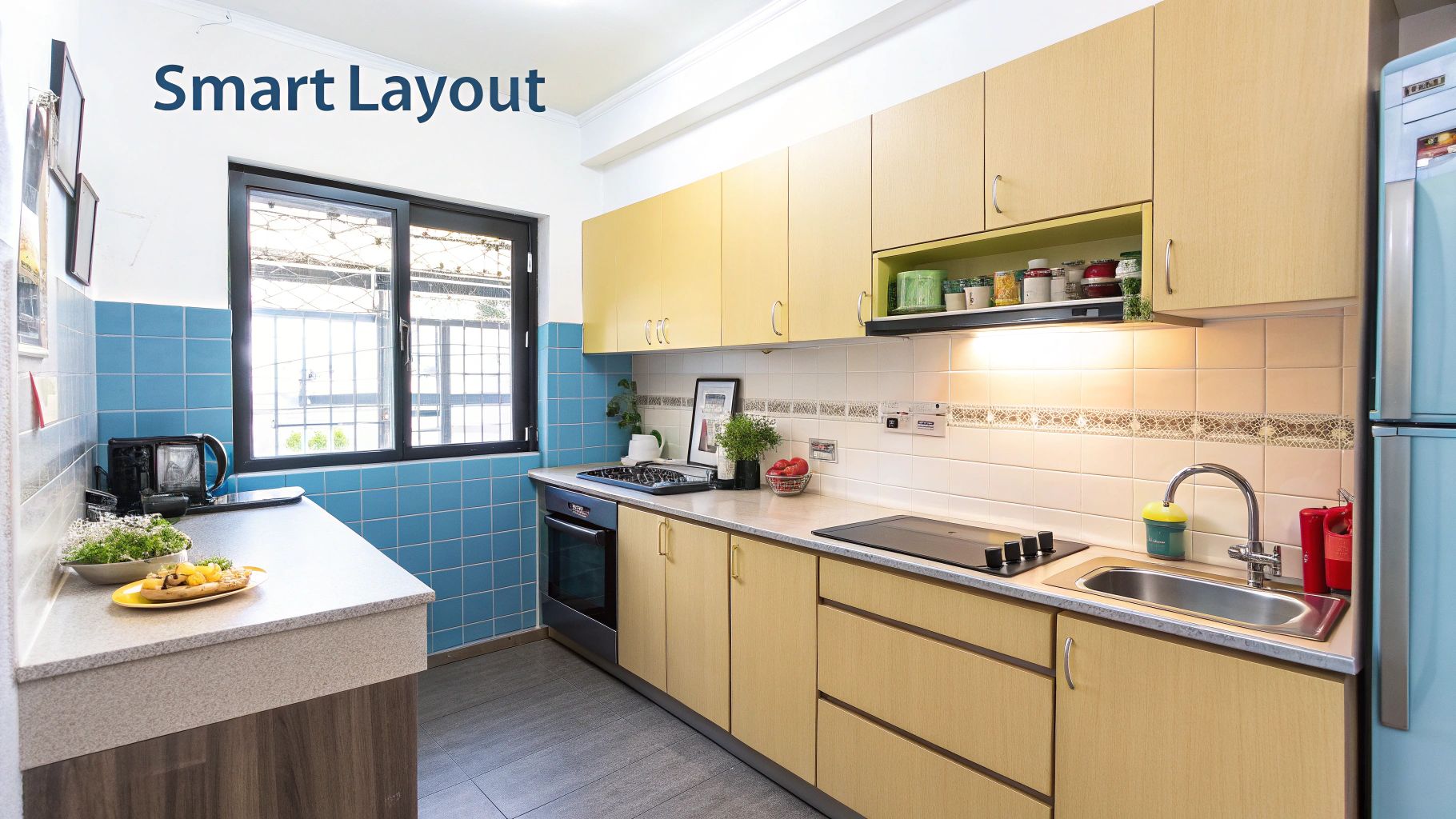
A beautiful kitchen is secondary to a functional one. The layout of your HDB kitchen cabinets dictates your workflow, making daily tasks like meal prep and cleaning either effortless or frustrating. Whether you have a new BTO or an older resale flat, a logical layout is the key to a successful kitchen.
For most HDB flats, the layout is determined by the unit's footprint. Understanding the strengths of each common configuration is the first step toward a kitchen that works for you.
Choosing Your Core Kitchen Layout
The shape of your kitchen will likely fall into one of these three efficient layouts. The best choice depends on your room's dimensions and how you use the space.
- Galley Layout: Common in long, narrow kitchens, this layout features two parallel runs of cabinets. It creates a highly efficient corridor, ideal for a single cook, and maximises counter and storage space.
- L-Shape Layout: One of the most popular layouts in HDB flats. It utilizes two adjacent walls, which opens up the floor plan for a small dining area or improved traffic flow. It's a versatile choice for couples and small families.
- U-Shape Layout: For kitchens with more square footage, a U-shape provides the maximum amount of storage and counter space. It uses three walls to create a dedicated work zone where everything is within easy reach.
The trend towards smaller household sizes has made efficient layouts even more critical. In 2000, the average household in a four-room flat was 3.95 people. By 2020, this dropped to 3.29 persons. This means designing for more compact living, where smart, space-saving cabinet solutions are paramount. You can explore more insights on millennial HDB trends to see how this impacts home design.
Mastering the Kitchen Work Triangle
Once a layout is chosen, the next step is to position your key appliances for optimal workflow. The "kitchen work triangle" is a design principle that connects your three main work zones: the sink (cleaning), the stove (cooking), and the refrigerator (storage).
The purpose of the work triangle is to ensure an unobstructed path between these three points. A well-planned triangle minimizes wasted steps, creating a smoother and less strenuous cooking process.
Practical Example: In a typical HDB L-shaped kitchen, placing the refrigerator on one end of the 'L' and the stove on the other, with the sink positioned in the middle, creates a perfect work triangle. This strategic placement of your HDB kitchen cabinets and appliances prevents you from crossing your own path, turning the kitchen into an efficient workspace tailored to your movements.
Unlocking Your Kitchen’s Potential with Smart Storage
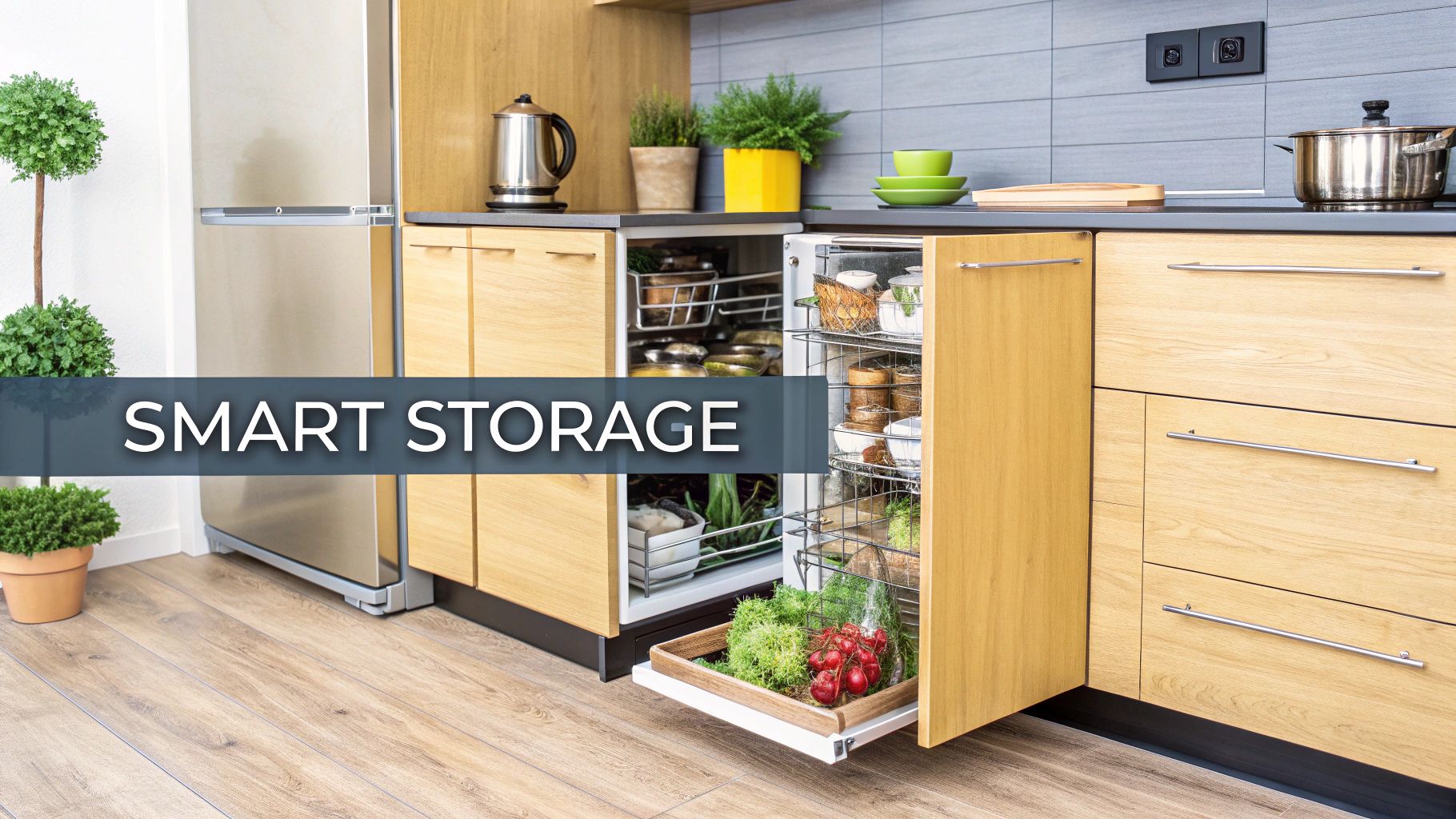
In a compact HDB kitchen, effective storage is what transforms the space from cluttered to streamlined. The real functionality of your HDB kitchen cabinets is determined by what’s inside them. Smart storage hardware makes your cabinets work more efficiently for you.
While the cabinet doors provide the aesthetic, it's the internal mechanisms that define the user experience. Investing in quality hardware not only maximizes storage but also improves accessibility, making daily kitchen tasks far more pleasant.
Beyond the Basic Shelf
Standard shelves are often inefficient, especially in deep base cabinets where items get lost at the back. Modern storage hardware is designed to bring the contents of your cabinets out to you, ensuring every inch of space is usable.
Here are some of the most impactful solutions we integrate into our kitchen designs:
- Pull-Out Pantry Units: These are perfect for narrow, awkward spaces next to the stove or fridge. A slim pull-out unit can house spices, oils, and sauces, keeping them organised and accessible during cooking.
- 'Magic Corner' Systems: The blind corner cabinet is notoriously difficult to access. A magic corner or LeMans unit solves this with shelves that swing out from the cabinet, providing full visibility and access to all items. For a client in a Tampines resale flat, this solution instantly doubled their usable storage for pots and pans.
- Integrated Drawer Organisers: Customisable cutlery trays, deep drawer dividers for pots and lids, and pegboard systems ensure everything stays in its place. This eliminates rattling and searching, streamlining your meal prep process.
The goal of smart storage is to create a 'place for everything, and everything in its place.' It's an investment in efficiency that pays off every single time you use your kitchen.
Custom Solutions for Modern Lifestyles
True customisation is about designing storage that supports your specific routines. Your HDB kitchen cabinets can be tailored to your lifestyle.
Practical Example: For a client who is an avid baker, we designed a cabinet with vertical dividers specifically for organising baking sheets, muffin tins, and chopping boards. We also installed a heavy-duty mixer lift that brings their stand mixer up to counter height from a base cabinet, saving them from lifting the heavy appliance.
Other popular customisations include:
- Vertical Dividers: Ideal for organising flat items like platters and trays.
- Pull-Out Bins: Integrated systems for waste and recycling keep bins hidden and odours contained.
- Under-Sink Organisers: Pull-out caddies designed to fit around plumbing make accessing cleaning supplies effortless.
By thinking strategically about the space within your cabinets, you unlock your kitchen’s full potential, making it feel more organised, spacious, and suited to how you live.
Figuring Out a Realistic Budget for Your Kitchen Cabinets
Establishing a clear budget is the most critical first step for a successful renovation. A realistic budget for your HDB kitchen cabinets isn't an arbitrary number; it's a financial plan that helps you make informed decisions, balancing your vision with practical constraints.
The total cost is influenced by several factors. The length of your cabinetry, measured in 'per foot run' (pfr), forms the base cost. From there, your choice of materials, countertop, and internal hardware will adjust the final price.
Breaking Down the Costs
To create a budget you can stick to, it's important to understand where the money goes. Each component contributes to the kitchen's longevity and functionality.
Here are the key cost drivers:
- Cabinetry Length (pfr): This is the primary factor. A larger kitchen requiring more cabinetry will have a higher base cost.
- Material and Finish: As discussed, premium finishes like FENIX will cost more than standard high-pressure laminates.
- Countertop Material: This is a major variable. Options range from affordable solid surfaces to high-end quartz or sintered stone, each with a different price point.
- Internal Hardware: This is not an area to cut corners. Investing in quality soft-closing hinges and drawer runners from reputable brands adds to the cost but significantly improves the daily user experience and durability of your kitchen.
Your budget is a roadmap, not a restriction. It guides you on where to invest for maximum long-term value and where you can be more economical without sacrificing essential functionality.
Where to Invest and Where to Save
Smart budgeting means allocating funds to the elements that matter most. We always advise clients to prioritise high-use components. A durable countertop is essential, as it endures daily wear from heat, moisture, and food prep. Similarly, high-quality drawer runners and hinges are a worthwhile investment; their smooth and reliable operation prevents future frustration.
You can achieve savings in other areas. For example, choose standard cabinet handles, as they can be easily upgraded later. Opting for standard laminates over premium finishes can also help manage costs. The Singapore furniture market is projected to reach USD 932.41 million by 2025, driven by home refurbishments. This competitive market means you can find cost-effective packages, some starting as low as SGD 1,999 for a basic HDB kitchen. For more data, you can check out Singaporean furniture market trends on Statista.
Breaking Down the Renovation Process From Start to Finish
Understanding the renovation timeline can demystify the process and reduce stress. We follow a structured approach to ensure transparency and predictability, keeping you informed from the initial consultation to the final handover of your new HDB kitchen cabinets.
The process begins with an in-depth design consultation, where we discuss your vision, daily routines, and budget. Our designers then create detailed 3D visualizations, allowing you to see exactly how your new kitchen will look and feel. This crucial step enables you to make adjustments before fabrication begins.
From Our Workshop to Your Home
Once you approve the 3D design, the project moves into production. The entire process from this point typically takes four to six weeks.
Site Measurement and Finalisation (1–2 Weeks): Precision is key. We conduct a detailed site visit to take exact measurements of your kitchen. This ensures a perfect fit for your custom cabinets. During this stage, we also confirm your final selections for all materials and hardware.
Workshop Fabrication (2–3 Weeks): With all details confirmed, your cabinets are crafted in our local workshop. By building everything off-site, we significantly minimise the noise, dust, and disruption in your home.
On-Site Installation (2–4 Days): This is when your new kitchen takes shape. Our professional installation team assembles and fits your cabinets. The duration depends on the complexity of your design but is a relatively quick and efficient process.
Actionable Tip: Before the installation team arrives, clear your old kitchen completely. Ensuring a clear workspace and access path for the installers will help make the process safer and more efficient.
The Final Handover
After the final cabinet door is installed, we conduct a thorough inspection with you. We review every detail, checking every hinge and drawer to ensure everything meets our quality standards and your expectations.
We also provide practical tips on how to care for your new HDB kitchen cabinets to maintain their appearance for years to come. This final handover is our commitment to quality, ensuring you are completely satisfied as you begin to enjoy your new kitchen.
Got Questions About HDB Kitchen Cabinets? We’ve Got Answers.
A kitchen renovation is a significant project, and it's normal to have questions. Here are clear, practical answers to some of the most common queries we receive from HDB homeowners.
How Long Does the Whole Process Take?
From design finalisation to the completed installation, the typical timeline is four to six weeks.
Here’s a quick breakdown:
- Design & Finalising Details (1–2 weeks): This phase includes design revisions, material selection, and final confirmations.
- Fabrication (2–3 weeks): Your custom cabinets are built off-site in our workshop.
- On-site Installation (2–4 days): Our team installs the cabinets in your home. The exact time depends on the kitchen's size and complexity.
Do I Need an HDB Permit to Replace My Cabinets?
In most cases, no. Replacing existing kitchen cabinets is considered non-structural work and does not require a permit from HDB.
However, if your renovation involves hacking walls, relocating sinks or plumbing points, or making other structural changes, you will need to obtain the necessary HDB permits. Always work with a licensed and registered contractor who is familiar with HDB regulations to ensure full compliance.
What Is the Best Way to Maintain My New Cabinets?
Maintaining laminate cabinets, the most common choice for HDB kitchens, is straightforward. For daily cleaning, use a soft, damp cloth with a mild, non-abrasive cleaner.
Avoid using harsh chemical cleaners or scouring pads, as these can scratch or damage the laminate surface. It is also important to wipe up spills promptly, especially water around the sink area, to prevent moisture from seeping into the joints and causing long-term damage.
Ready to create a kitchen that perfectly blends style, function, and durability? The team at KIVO is here to guide you through every step, from initial design to flawless installation. Visit us at kivo.com.sg to start your renovation journey today.