When people hear "high-end interior design," they often picture expensive furniture and fancy brand names. But that's just scratching the surface. A top-tier firm offers a completely bespoke, all-encompassing service that crafts a unique living experience from the ground up.
Think of it this way: it's the difference between commissioning a custom-tailored suit and buying one off the rack. A suit off the rack might fit well enough, but a tailored one is cut from a pattern made just for you, using materials you selected, with details you specified. It's built for you, and only you.
What High End Interior Design Really Means
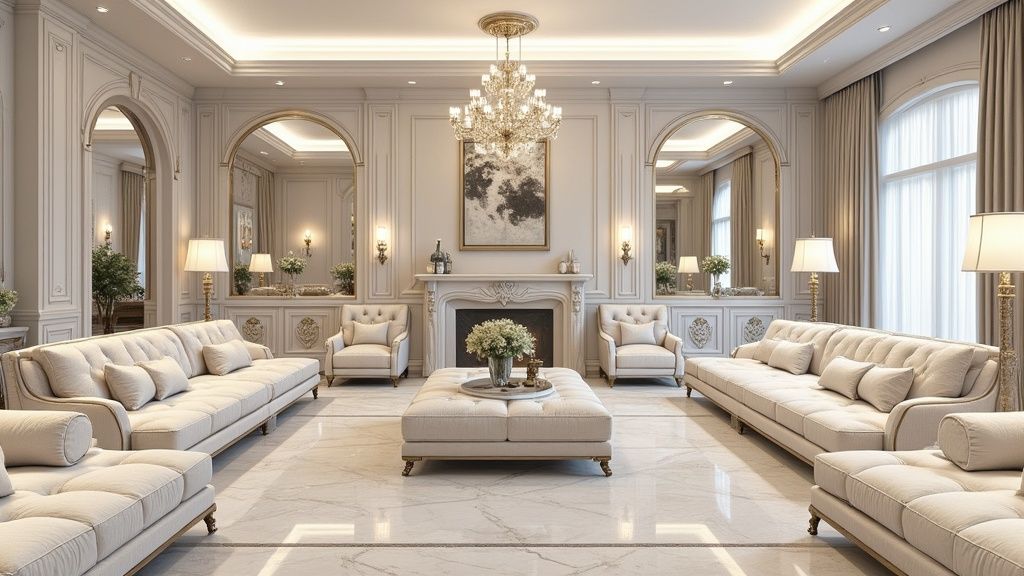
The real value isn't in the price tags of the items filling a room; it's in the comprehensive, deeply personalised service that elite firms deliver. They essentially become the creative director and project manager for your home, making sure every single element—from the lighting to the layout to the textures—works in perfect harmony.
This journey starts long before a single piece of furniture is even considered. It begins with a deep dive into your lifestyle, your aspirations, and how you genuinely use your space. A premier designer doesn't just ask about your favourite colours; they want to understand how you live. For example, they'll ask: "Do you entertain large groups, requiring an open-plan kitchen and living area, or are your evenings about quiet family time, suggesting cozier, more defined zones?" The answers directly shape the spatial planning and flow of your home.
Beyond Decoration: The Core Principles
The service goes far beyond aesthetics. High-end interior design firms are deeply involved in the architectural and structural bones of a project. They work hand-in-hand with architects and builders right from the start, ensuring the home's foundation is perfectly aligned with the final vision.
A practical example of this is reconfiguring a floor plan to capture more natural light. The firm might suggest widening a hallway and replacing a solid wall with structural glass to flood a previously dark corridor with sunlight. Or they might design intricate architectural details like a coffered ceiling to add character to a new build. The objective is to create a space that feels utterly intentional and completely original to you.
It all boils down to a few core principles:
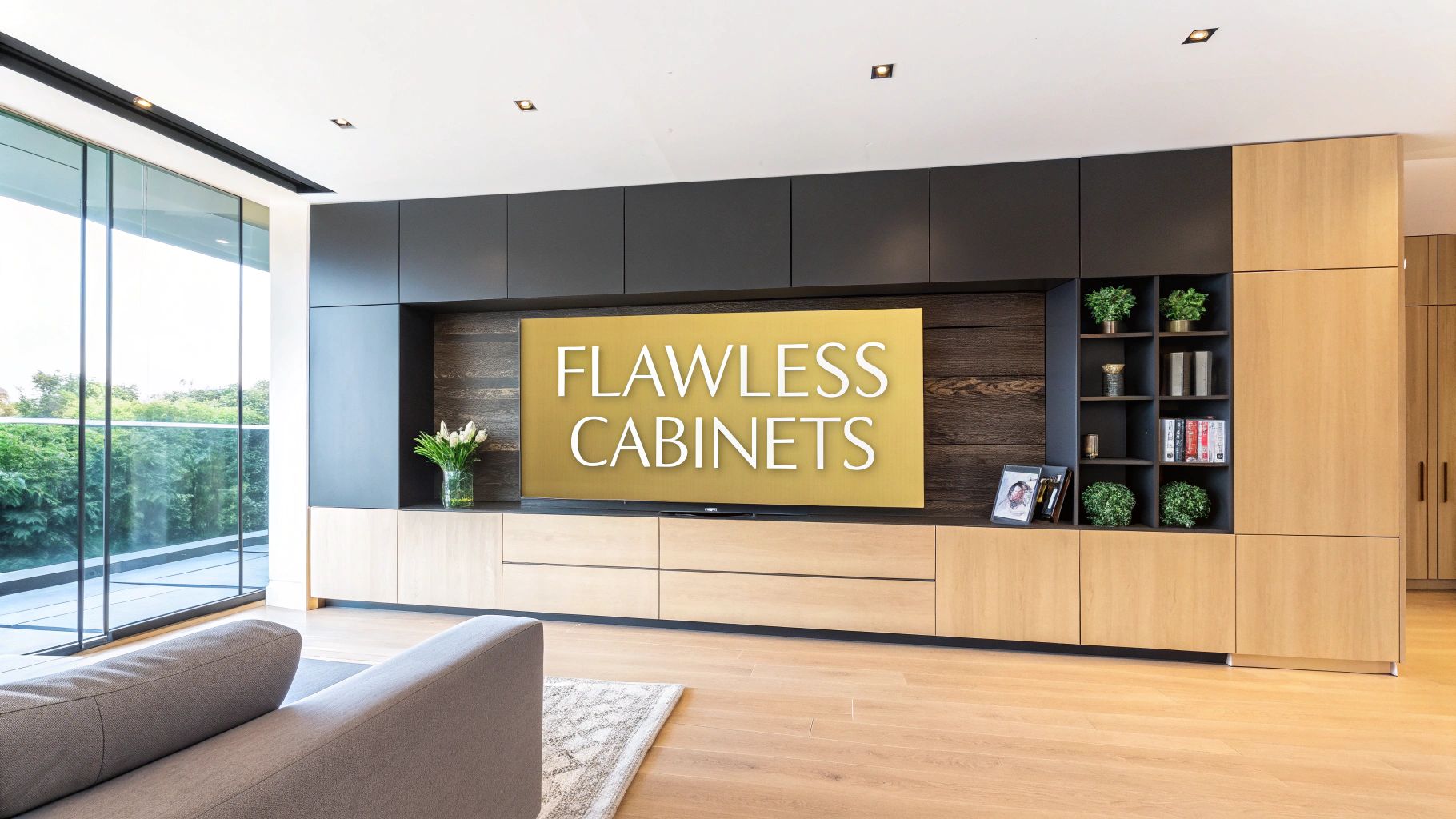
- Bespoke Creation: Forget catalogues. Nearly everything is custom-made. A practical example is designing a media unit that not only fits a specific wall perfectly but also has custom-sized compartments for your exact audio-visual equipment, with integrated, hidden cable management.
- Exclusive Sourcing: These firms have a global network of artisans, suppliers, and materials that simply aren't available to the public. They might source a rare slab of Calacatta Gold marble from a specific quarry in Carrara, Italy for your kitchen island, or find hand-dyed silk textiles from a small atelier in Kyoto for your bedroom curtains.
- Seamless Project Management: From coordinating with contractors to managing budgets and timelines, the firm handles all the logistical heavy lifting. This means you don't have to spend your weekends chasing down plumbers or electricians; you receive a single, consolidated progress report from your designer.
A high-end interior designer doesn't just furnish a room; they compose it. Every piece, texture, and light source is a note in a larger composition, creating a cohesive and emotionally resonant experience.
Investing in a Cohesive Asset
Ultimately, partnering with a high-end interior design firm is an investment in creating a valuable, cohesive asset. Their work isn't about chasing fleeting trends. It's about building a timeless environment that not only enhances your property's value but, more importantly, elevates your quality of life.
The result is a home that isn't just beautifully decorated—it functions flawlessly for your needs and reflects your personality in every detail. It transforms a simple structure into a deeply personal sanctuary.
The Services That Define a Premier Design Firm
When you partner with one of the top high end interior design firms, you're not just hiring someone to pick out paint colours and fabrics. You’re engaging a dedicated team to provide a complete, turnkey service that takes full responsibility for every single part of your project. The whole point is to make the experience seamless, turning a vision into a home with painstaking attention to detail.
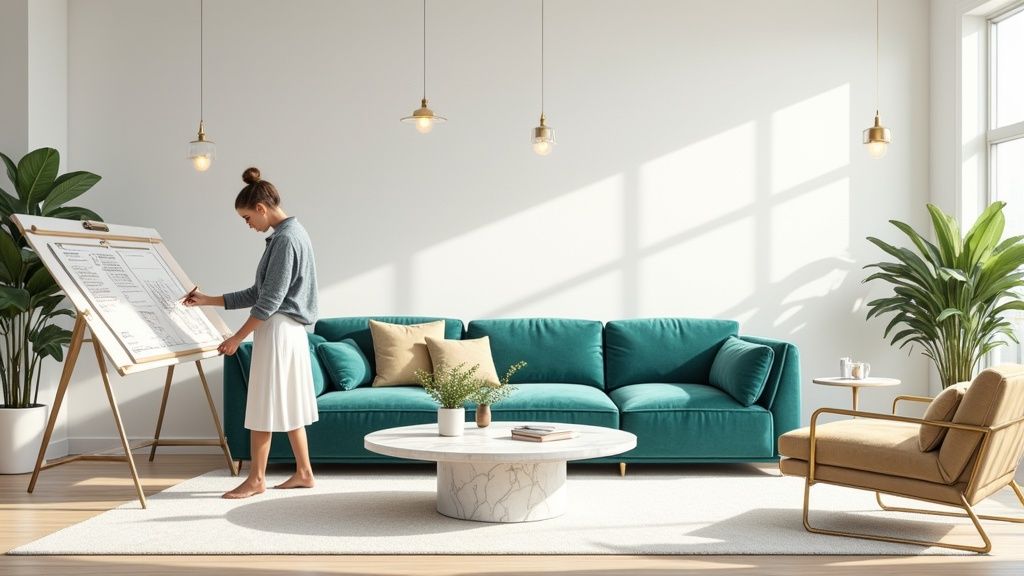
It all begins long before a single hammer is swung. The first phase is a deep dive into concept development and spatial planning. Here's a practical example: instead of just asking where you want the sofa, your design team will analyze your family's daily routines to create a "flow map" of your home, ensuring high-traffic areas are clear and functional zones (like a homework nook or a reading corner) are placed for optimal use. This stage involves detailed floor plans, realistic 3D renderings, and mood boards that bring the proposed look and feel to life.
From Blueprint to Bespoke Creation
Once the vision is locked in, the real magic begins: creating the custom elements that make a space truly one-of-a-kind. This is where a firm's exclusive network of artisans, craftspeople, and suppliers becomes absolutely essential.
- Custom Furniture Design: Forget scrolling through catalogues. Premier firms design bespoke pieces tailored to your space. Imagine a dining table built to the exact millimetre for your room to maximize seating without feeling cramped, or a modular sofa designed with specific cushion firmness and upholstery that resists spills, perfect for a family with young children.
- Unique Material Sourcing: These firms have contacts all over the world to find rare and exceptional materials. That could mean tracking down a particular slab of semi-precious agate for a backlit bar countertop or sourcing hand-woven seagrass wallpaper from a small collective in the Philippines for a textured feature wall.
- Art and Accessory Curation: A key service is commissioning unique art from local or international artists. A firm might collaborate with a Singaporean sculptor to create a bronze centerpiece for a double-height living room, ensuring the art is an integral part of the design story, not just a final touch.
At its core, high-end design is an act of orchestration. A premier firm harmonises the work of architects, builders, artisans, and suppliers, ensuring every collaborator contributes to a single, unified vision without the client needing to manage any of it.
This image breaks down the typical cost components involved in a high-end interior design project.
As you can see, the total project cost is a mix of direct design fees, material costs, and the all-important project management fee that covers the logistical heavy lifting.
To really appreciate the difference, let's look at how the services compare side-by-side.
Standard vs High End Interior Design Service Comparison
| Service Area | Standard Design Firm | High End Interior Design Firm |
|---|---|---|
| Concept & Planning | Provides basic 2D floor plans and mood boards. | Delivers immersive 3D renderings, detailed architectural plans, and in-depth lifestyle analysis. |
| Sourcing | Selects from retail suppliers and standard trade catalogues. | Sources rare materials globally and commissions bespoke pieces from exclusive artisans. |
| Customisation | Offers limited custom options (e.g., fabric choice) on standard furniture pieces. | Designs and fabricates completely unique furniture, joinery, and fixtures from scratch. |
| Project Management | Coordinates basic deliveries and contractor schedules. | Provides comprehensive end-to-end management, including architects, engineers, and daily site supervision. |
| Art & Accessories | Suggests off-the-shelf décor and art prints. | Curates and commissions one-of-a-kind art pieces and accessories as part of the design narrative. |
| Client Involvement | Requires client to approve multiple vendor quotes and manage some communication. | Acts as a single point of contact, handling all coordination and logistics for a stress-free experience. |
This table highlights the shift from a purely decorative service to a fully integrated project delivery model.
The Art of Flawless Project Management
Maybe the most valuable service offered by high end interior design firms is end-to-end project management. They become the conductor of a very complex orchestra, coordinating every moving part to shield you from logistical headaches and expensive mistakes.
This service covers everything. For instance, if your project needs structural changes, the design firm works directly with architects and engineers to get permits approved and ensure the architectural plans and interior vision are perfectly aligned. They manage all procurement—a practical example is consolidating orders from ten different European suppliers to arrive in a single, coordinated shipment, saving on costs and preventing delays.
They also control the timeline, oversee contractors on-site, and manage the entire budget with regular, transparent updates. This single point of contact simplifies communication down to one trusted partner. Instead of you trying to juggle calls from the tiler, the painter, and the electrician, you have a professional team responsible for delivering the project on time, on budget, and to the highest possible standard.
Why Investing in a Top Firm Pays Off
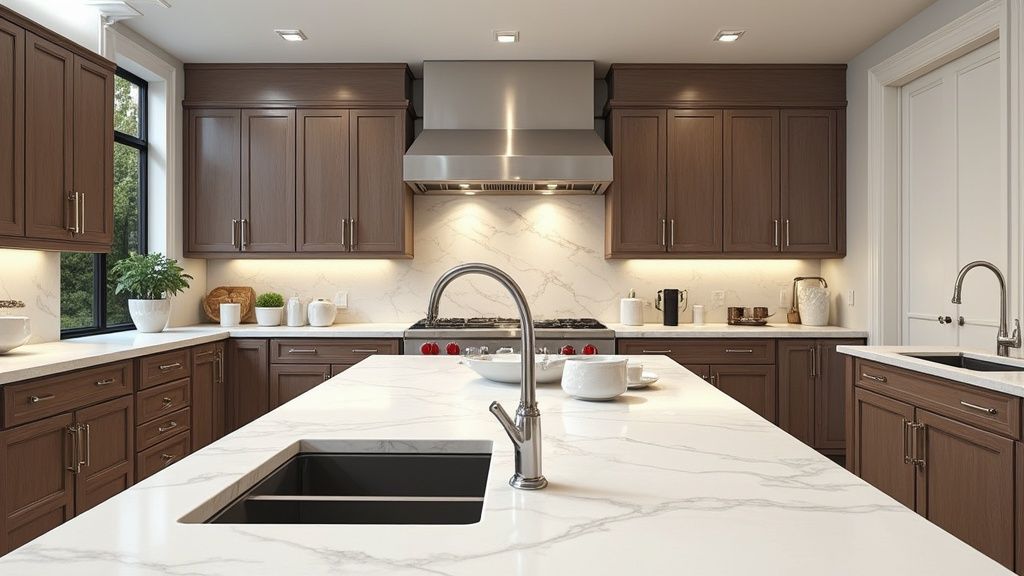
Bringing one of the top high end interior design firms on board is much more than paying for a beautiful outcome. It's a calculated investment in efficiency, value, and your own well-being. Yes, the upfront cost can feel significant, but the long-term returns show up in real, tangible ways that often eclipse the initial expense.
Think of it like this: you could try to build a complex investment portfolio on your own, or you could hire a seasoned financial advisor. The advisor's expertise not only helps you achieve better returns but also protects you from costly market pitfalls and saves you immense personal effort. A premier design firm does exactly the same thing for your home.
Access to an Exclusive Network
One of the most immediate advantages is getting a backstage pass to a world of exclusive resources the public simply can't access. Elite firms have spent decades forging relationships with world-class artisans, niche suppliers, and custom furniture makers who operate purely on trusted referrals.
This network unlocks a universe of possibilities:
- Unique Materials: Suddenly, sourcing that specific type of reclaimed timber from a dismantled 19th-century barn in France or a rare slab of blue-onyx from a private quarry in Iran becomes a reality.
- Master Craftsmanship: You can commission a hand-carved feature wall from a local artisan who specialises in traditional techniques, or bespoke lighting from a renowned glassblower in Murano, adding a layer of authenticity that mass production can never match.
- Priority Access & Trade Pricing: Top firms often get exclusive trade discounts (typically 10-30% off retail) and can secure items or materials with long lead times far more quickly, keeping your project moving forward without a hitch.
This curated network ensures every single element in your home is of the highest quality and contributes to a space that is truly one-of-a-kind.
The real luxury isn't in an item's price tag, but in the story behind its creation and the skill of the hands that made it. A top firm is your personal curator for these stories.
The appetite for this level of service is growing. The Asia Pacific Interior Design Services Market was valued at around USD 10.7 billion and is expanding at a compound annual growth rate (CAGR) of roughly 10.9%. This isn't just a number; it shows how much homeowners and businesses are prioritising expertly crafted, high-end interiors. You can explore more data on the luxury interior design market's growth.
Expert Project Management That Saves Time and Money
Perhaps the most underrated perk is the meticulous project management that shields you from the stress—and financial drain—of a large-scale renovation. Any major project has dozens of moving parts, from navigating regulatory permits to coordinating an army of tradespeople.
A premier firm acts as the central command for the entire operation. Their experience means they see problems coming a mile away, preventing the kinds of delays and costly errors that can completely derail a project's budget. For example, they know to check the load-bearing capacity of a floor before ordering a 500kg marble bathtub, avoiding a structural crisis.
Imagine a complex kitchen renovation. Without an expert eye, a simple measurement mistake by a contractor could mean your custom cabinets arrive 5cm too wide to fit. This sets off a domino effect of delays and re-orders that can cost you thousands of dollars and weeks of your time. A high-end firm’s project manager would have triple-checked every specification on-site before fabrication, stopping that crisis before it ever started.
A Practical Scenario: The Seamless Renovation
Let's look at a real-world example: a full renovation of a heritage shophouse in Singapore. This kind of project is a minefield of potential problems, from strict conservation rules to unforeseen structural issues and the need for highly specialised labour.
Going it alone would mean sinking hundreds of hours into deciphering building codes from the Urban Redevelopment Authority (URA), vetting dozens of contractors (many of whom may lack heritage experience), and trying to manage a timeline you aren't equipped to control. The stress would be immense, and one wrong move could lead to hefty fines or a compromised result.
Now, picture the same project in the hands of a high-end interior design firm:
- Navigating Regulations: They have an established process for submitting plans to the URA and a deep understanding of conservation guidelines, ensuring every plan gets approved smoothly.
- Orchestrating Experts: The firm calls in their trusted team of structural engineers, conservation specialists, and skilled builders who know how to work with original timber beams and delicate facades.
- Seamless Execution: They manage the entire timeline, from the first day of demolition to the final installation of bespoke joinery, giving you clear, weekly progress reports with photos and budget tracking.
The entire process is transformed from a stressful, high-risk gamble into a seamless and predictable journey. The end result isn't just a beautifully restored home; it's a property whose value has been significantly boosted by the quality of the work and adherence to all regulations.
How to Find the Right Design Partner for Your Project
Choosing the perfect firm from a sea of talented high end interior design firms can feel like a project in itself. The trick is to have a clear game plan. This isn't just about finding someone with a great portfolio; it's about finding a true creative partner whose process, style, and vision click perfectly with yours.
The journey actually starts with you. Before you start your search, create a practical brief. Define your budget range, your desired timeline, and the key functional needs for each room. A Pinterest board or a Houzz Ideabook can be a powerful tool here, helping you communicate a vibe that words can’t always capture.
Vetting Portfolios to Find Your Aesthetic Match
Once you have a handle on your own direction, it’s time to dive into portfolios. But don't just skim for pretty pictures—look deeper with a critical eye. You're searching for consistency in both quality and style.
As you review their work, ask yourself these actionable questions:
- Does it resonate? Do their finished projects genuinely speak to your personal style? If you're drawn to warm, clean minimalism, a firm that excels in opulent, traditional interiors probably isn't the right fit, no matter how skilled they are.
- Is the scope similar? Look for projects that mirror the scale of what you have in mind. A firm that mostly handles single-room refreshes might not have the logistical experience to manage a full-gut renovation with structural changes.
- What about the details? Zoom in. Look at the craftsmanship in the joinery—are the seams invisible? Check the alignment of tiles or wallpaper patterns. This is where a firm’s commitment to real quality shines through.
This initial deep dive should help you whittle down your list to two or three strong contenders. Then, the real homework begins.
Checking Credentials and Industry Reputation
A firm’s reputation offers a vital layer of assurance. In Singapore, the luxury interior design scene is earning serious recognition, and industry awards are a solid sign of a firm's credibility and creative horsepower.
For instance, the Singapore Interior Design Awards (SIDA), organised by the Society of Interior Designers Singapore (SIDS), is a key benchmark. It celebrates top local and international talent and has categories like 'Best in Residential Design' to spotlight the ones really setting the bar. Seeing accolades like this can give you confidence that you're dealing with a top-tier team. You can find out more about the trends shaping the luxury interior design market here.
Beyond awards, look for professional affiliations, client testimonials on neutral platforms like Google or Houzz, and features in respected design magazines. This background check helps build a complete picture of the firm's reliability and standing in the industry.
The All-Important Consultation: Questions You Must Ask
The consultation is your chance to see if your personalities and working styles mesh. Think of it as a two-way interview. While they're getting a feel for your project, you're assessing their process, their communication style, and how transparent they are.
Think of this initial meeting as a first date. You're looking for chemistry and a shared vision. A successful project is built on a foundation of trust and open communication, and that starts here.
Come prepared with a list of questions that go beyond their beautiful portfolio. You need to understand how they work, not just what they’ve created.
Here’s a practical checklist to guide the conversation:
- Their Process & Communication: "Can you walk me through your design process, from the first sketch to the final installation? How often can I expect updates, and who will be my main point of contact?"
- Budgeting: "How do you structure your fees and handle the overall project budget? Can you show me an example of a budget breakdown from a past project?"
- Their Team: "Do you have an in-house team of contractors and artisans, or do you subcontract the work? How do you vet them?"
- Your Role: "How much involvement do you typically expect from a client? At what specific stages will my approval be required?"
- Problem-Solving: "Can you tell me about a time a project went over budget or past a deadline, and how you managed it with the client?"
- References: "Would you be open to me speaking with one or two recent clients whose projects were similar in scope to mine?"
A confident, professional firm will welcome these questions. Their answers will give you a real glimpse into the client experience they offer, helping you choose a partner who will not only deliver a breathtaking space but also make the journey an inspiring one.
Spotting the Key Trends in Modern Luxury Design
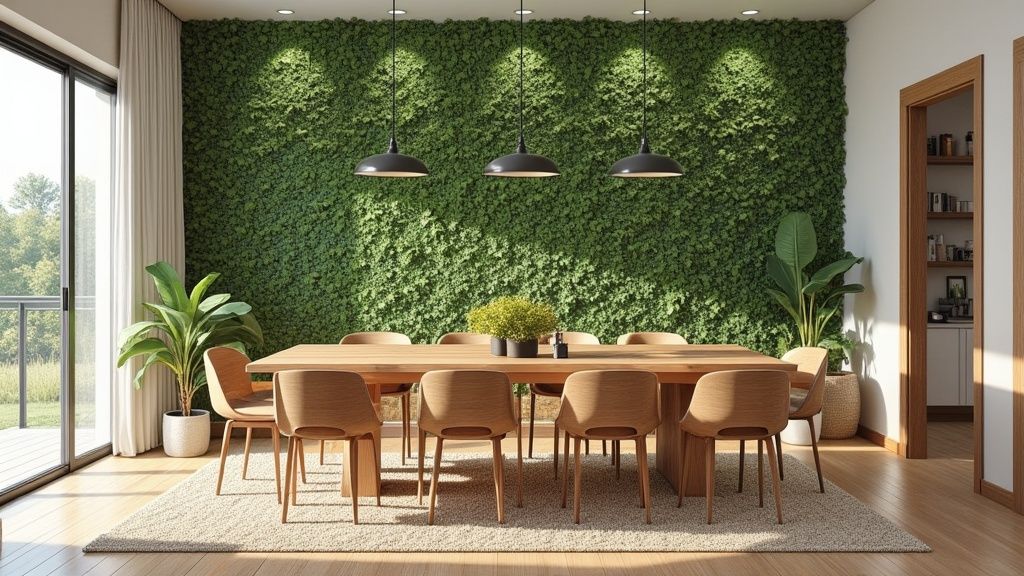
To really get a feel for what premier high end interior design firms are up to these days, you have to look past the fleeting fads. The world of luxury is shaped by big cultural shifts, and the best designers are the ones leading the way. These aren't just aesthetic choices; they are lasting movements that are completely redefining what luxury means in a modern home.
Right now, three big trends are shaping sophisticated interiors in Singapore and across the globe: quiet luxury, biophilic design, and sustainable innovation. Each one taps into a deeper desire for authenticity, connection, and a sense of responsibility.
The Rise of Quiet Luxury
The most significant shift we’re seeing is the move away from obvious branding and towards quiet luxury. This whole philosophy is about celebrating exceptional craftsmanship and timeless, high-quality materials over logos and loud statements. It’s a much more understated and personal take on elegance.
Instead of a room filled with instantly recognisable designer labels, the focus is on subtlety and substance. Think of it as the difference between a handbag covered in monograms and one made from exquisite, unmarked leather—only those with a trained eye would recognise its true value.
You can see this trend come to life in things like:
- Bespoke Joinery: A practical example is custom-built cabinetry with seamless, hand-finished details and integrated handles, creating a clean, architectural look that feels like a natural part of the home.
- Natural Materials: Using large slabs of richly veined marble for a seamless look, hand-scraped wide-plank oak floors, and walls finished with tactile, breathable lime wash paint.
- Commissioned Pieces: Furniture designed and built by master artisans specifically for the space, like a coffee table carved from a single piece of wood, which tells a unique story of skill and artistry.
"Quiet luxury is the ultimate expression of confidence. It communicates value through quality, texture, and artistry rather than brand recognition, creating a space that feels personal and enduring."
This approach results in interiors that are deeply serene and sophisticated, designed to be loved for decades, not just until the next trend comes along.
Biophilic Design: Connecting Homes to Nature
In a dense city like Singapore, our innate need to connect with nature has become a powerful force in design. Biophilic design is all about weaving natural elements and processes into our homes and buildings. And it’s much more than just adding a few potted plants.
Leading firms are using clever architectural and design strategies to blur the lines between inside and out. The result is calming, restorative spaces that genuinely improve our well-being.
For instance, a firm might design a living room around a central air well transformed into a green courtyard, install floor-to-ceiling sliding glass walls that open onto a landscaped garden, or use natural materials like raw travertine stone and unfinished teak wood throughout the home. They might even incorporate a "living wall" of plants in a bathroom to help purify the air and add a lush, tropical feel.
Championing Sustainable and Smart Luxury
Sustainability is no longer a "nice-to-have" in high-end design; it's a core principle. Affluent clients are increasingly asking for homes that aren't just beautiful but also ethically and environmentally responsible. It's a preference that’s clearly showing up in the local market.
This trend is a major driver in Singapore’s luxury home décor market, which is on track to generate around US$345 million in revenue. People are looking for custom interior solutions that blend ecological responsibility with a high-quality lifestyle. You can read more about Singapore's growing home décor market on Statista.com.
Top high end interior design firms are championing this by:
- Sourcing Ethically: Prioritising reclaimed materials, such as wood salvaged from old buildings, and specifying fabrics made from recycled fibres like regenerated nylon.
- Boosting Energy Efficiency: Integrating smart home systems that use sensors to automatically adjust blinds, lighting, and air conditioning based on the time of day and occupancy, significantly cutting down on energy use.
- Focusing on Health: Using low-VOC (volatile organic compound) paints, natural fibre insulation, and water purifications systems to ensure excellent indoor air quality for the family.
These trends make it clear that modern luxury is evolving. It's becoming quieter, more connected to nature, and much more conscious of its impact on the world.
Got Questions About High End Interior Design?
Diving into the world of high-end interior design is thrilling, but it can also feel a bit daunting. It’s a major investment of both time and money, so it’s completely natural to have a few questions before you commit. We've put together answers to the most common queries we hear, giving you the clarity you need to move forward with confidence.
Think of this as pulling back the curtain on what it's really like to work with a premier interior design firm.
How Long Does a High End Interior Design Project Typically Take?
While no two projects are exactly alike, you can use a few practical timelines. For a single room—like a primary bedroom and ensuite, designed from scratch and fully installed—it’s wise to set aside anywhere from 6 to 9 months. This timeline accounts for detailed design phases, the 12-16 week lead times for custom European furniture, and a careful, meticulous installation.
If you’re looking at a full home renovation (e.g., a 4-bedroom apartment), the timeline stretches out quite a bit. You should be prepared for a process that lasts between 18 and 24 months from initial consultation to final handover. This ensures every detail is executed perfectly without rushing critical stages like curing concrete or custom joinery fabrication.
What Is the Typical Fee Structure for a Premier Firm?
Fee structures can differ, but most high-end interior design firms operate on one of a few well-established models. A key insight is to ask for a detailed proposal that explains their chosen model clearly.
- Hourly Rate: Many firms bill by the hour for their design services. In a major city like Singapore, this can range from $150 to over $350 per hour for a principal designer. This is best for smaller consultations or when the scope is not yet fully defined.
- Flat Fee: For projects where the scope is crystal clear from the get-go, some firms will propose a flat fee. This is calculated based on the project's size, complexity, and the estimated hours involved, giving you a fixed cost for the design work. This is a common and transparent model.
- Percentage of Project Cost: This is a popular model for large-scale renovations. The design fee is simply a set percentage (often 15-25%) of the total project cost, which covers everything from construction and labour to the final furnishings.
- Retail Mark-up: Firms almost always purchase furniture and materials with a trade discount. They then sell these items to you with a mark-up (e.g., 20-30%), which is usually still below the full retail price. This commission helps cover the firm’s time managing procurement and logistics.
It's worth remembering that the most valuable service isn't just the design itself—it's the professional oversight. A firm’s expertise saves you from costly mistakes and the headache of juggling dozens of vendors and timelines.
How much Involvement Is Expected from Me as the Client?
Honestly, your level of involvement can be tailored to whatever you prefer, but a great project always starts with collaboration. In the beginning, your focused input is crucial. You'll participate in several deep-dive sessions to establish the brief. Be prepared to share how you live, your personal taste, and your functional needs for the space.
Once the design direction gets your stamp of approval, you can step back as much as you'd like. A huge benefit of hiring a top-tier firm is that they become your single point of contact. They’ll circle back for your input at key milestones—like formal presentations to approve fabric swatches or finalise joinery designs—but they manage the day-to-day grind so you don’t have to.
Can a Firm Work with My Existing Furniture or Art?
Absolutely! A talented designer doesn't see your sentimental pieces as constraints. They see them as opportunities to inject personality and history into a space. Premier firms are masters at weaving cherished items into a new, cohesive design.
For instance, they might suggest reupholstering a beloved family armchair in a fresh, modern bouclé fabric to give it a second life. Or, they could design a custom gallery wall with specialized lighting around your existing art collection, turning it into the stunning centrepiece it was always meant to be. The ultimate goal is to create a space that feels authentically yours, and that always means honouring the pieces you already love.
Ready to transform your vision into a beautifully crafted reality? At KIVO Custom Carpentry And Interior Design Services, we blend decades of artisan excellence with a commitment to creating bespoke spaces that perfectly reflect you. Discover the difference of a true design partnership by exploring our services.