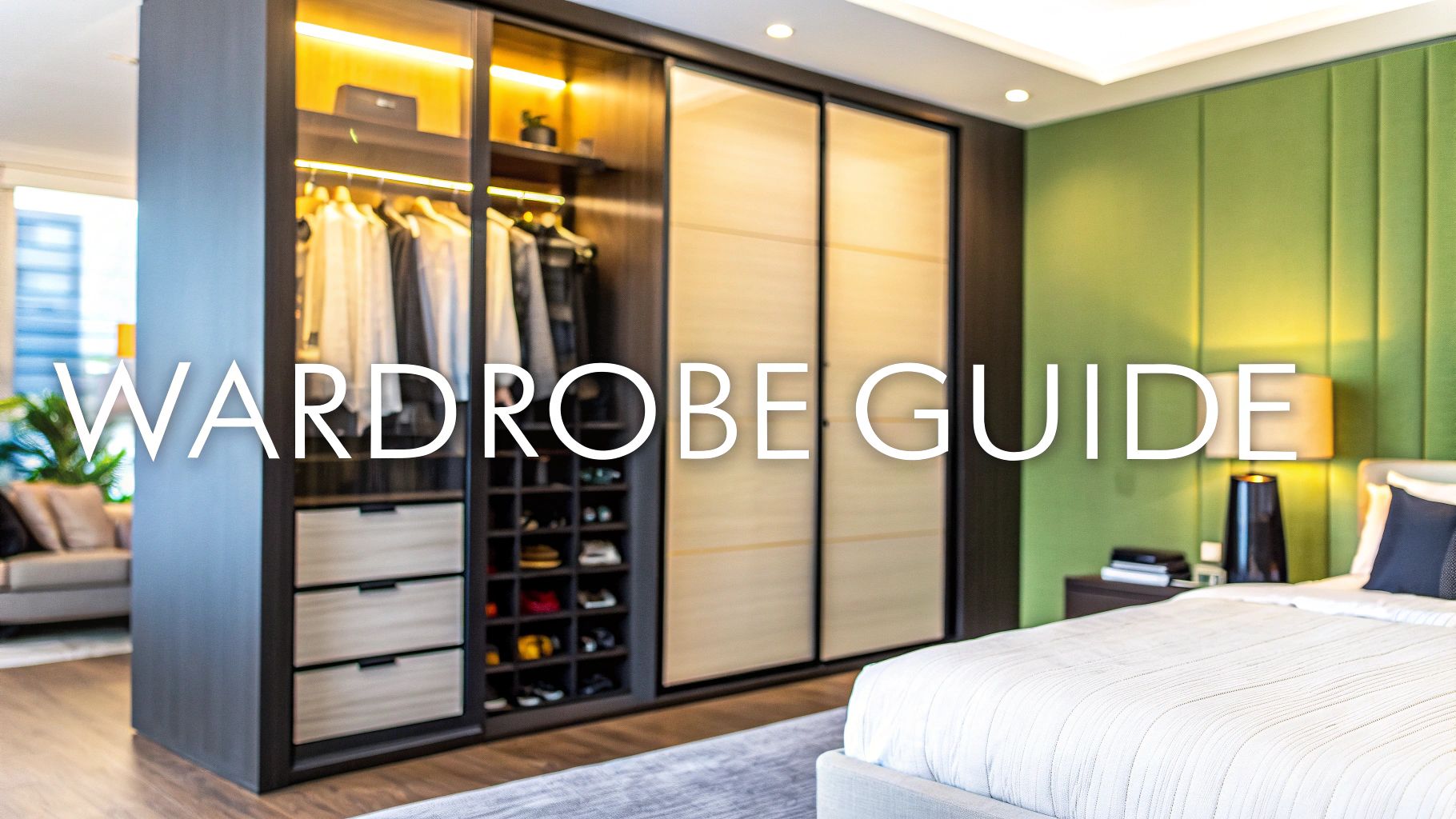
An inbuilt wardrobe is more than just storage; it’s a piece of custom architecture that becomes part of your bedroom's very fabric. Designed to fit your space perfectly—whether an awkward nook or an entire wall—it eliminates wasted gaps and the clumsy footprint of freestanding furniture.
Your Foundation For A Perfect Inbuilt Wardrobe
An exceptional inbuilt wardrobe doesn't start with cutting wood. It begins with an honest look at your lifestyle and the room it will occupy. Getting this foundation right is what separates a wardrobe that’s just beautiful from one that’s perfectly functional for you.
Think of it as the command centre for your daily routine. A great design anticipates how you move and what you reach for, making everything intuitive. This planning phase is critical; it’s how a basic storage idea becomes a bespoke piece of furniture that genuinely simplifies your life.
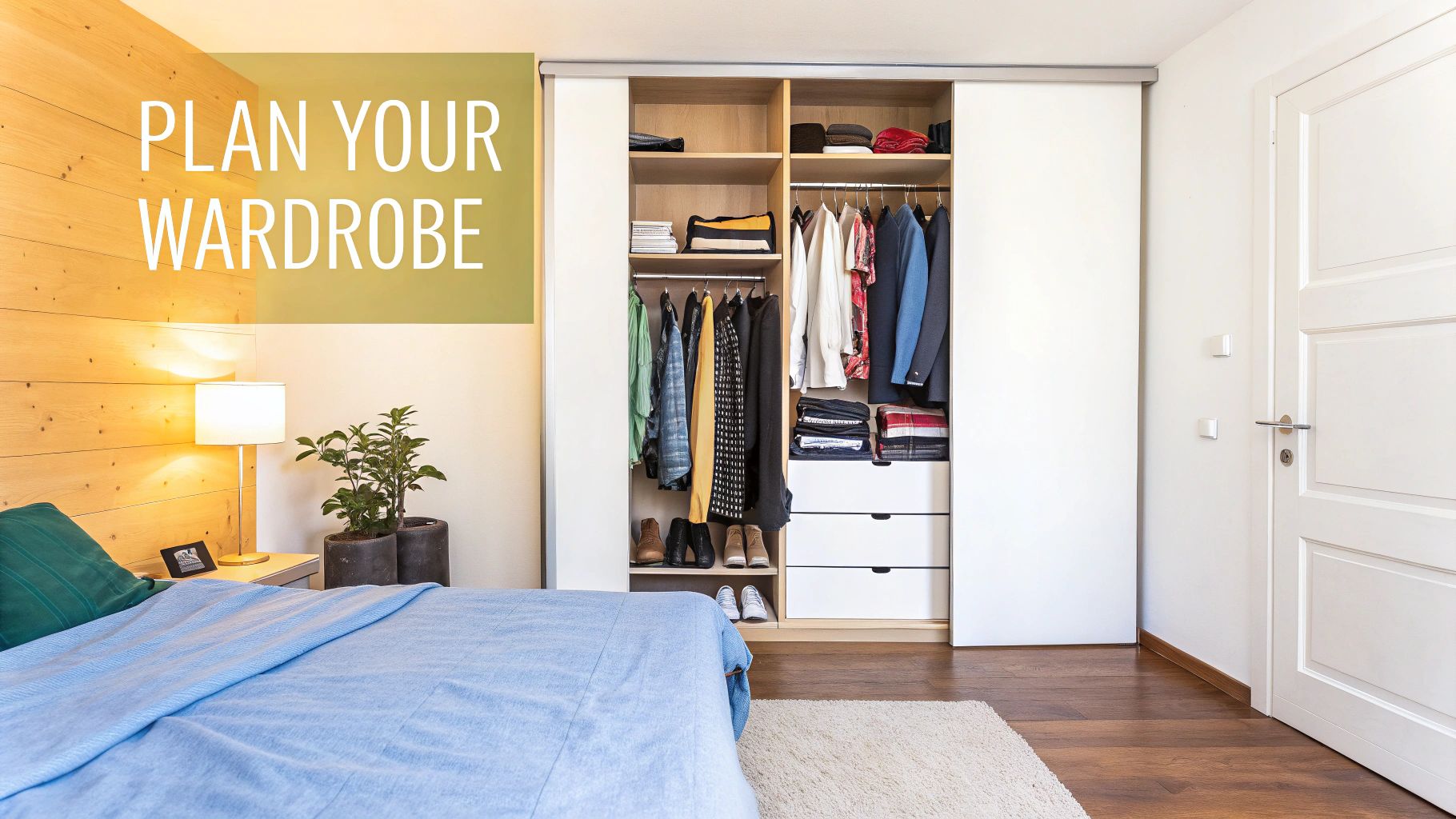
Assessing Your Lifestyle And Storage Needs
The best place to begin is with a detailed inventory of what you own. This isn’t just counting shirts; it’s understanding the types of items you have and how you use them day-to-day.
Start by asking yourself a few practical questions:
- Hanging vs. Folding: Do you own lots of dresses, suits, and long coats that need full-length hanging space? Or is your collection mainly t-shirts, jumpers, and jeans that are better folded on shelves or in drawers?
- Accessory Collection: How do you store shoes, bags, ties, and jewellery? A large shoe collection might need dedicated angled shelves, while designer handbags require taller, protected cubbies to maintain their shape.
- Seasonal & Occasional Items: Where will you store bulky winter coats, luggage, or formal wear? Allocating specific, less-accessible zones for these items keeps your everyday essentials front and centre.
This personal audit directly shapes the internal layout. For example, a client with a corporate job and two dozen formal shirts will benefit immensely from double hanging rails, instantly doubling their capacity for short-hanging items. In contrast, someone with a large collection of knitwear will need more deep drawers to prevent jumpers from stretching on hangers.
A common mistake is designing a wardrobe for an imaginary, perfectly organised version of yourself. The best inbuilt wardrobe works for your real-life habits, not one that forces you to adopt new ones.
Analysing Your Room Layout And Flow
Once you know what you need to store, the next puzzle is where it will all go. An inbuilt wardrobe should feel like it was always meant to be there, enhancing the room's flow, not disrupting it.
The placement of the wardrobe can change the entire atmosphere. A unit with mirrored doors, for instance, can make a small room feel bigger and brighter—but only if placed opposite a window to bounce light. Placing a tall, dark wardrobe where it blocks the morning sun can make a space feel cramped and gloomy.
Consider these actionable factors:
- Door Swing: Will swinging or sliding wardrobe doors clash with the bedroom door, bump into the bed frame, or block a window?
- Traffic Flow: Is there enough clearance (we recommend a minimum of 75cm) to walk comfortably around the bed and access other furniture?
- Architectural Features: Can the design cleverly incorporate awkward features, like a structural beam or a slanted HDB ceiling, turning a problem area into a design feature?
By aligning your personal storage needs with the physical reality of your room, you create the blueprint for a wardrobe that’s both a practical powerhouse and a beautiful, harmonious addition to your home.
Mastering Wardrobe Layouts And Dimensions
The real magic of a custom wardrobe isn't just its look, but how it feels to use. The difference between a good and a truly great wardrobe comes down to its layout and dimensions—the thoughtful planning that makes organisation effortless. A well-designed inbuilt wardrobe should maximise every centimetre of your room without overwhelming the space, a non-negotiable for modern Singaporean homes.
This focus on intelligent storage is more than just a trend. In Singapore, where urban living means making the most of every square foot, homeowners are demanding smarter solutions. This is backed by hard numbers, with the local market for closets and dressers projected to hit US$81.88 million by 2026. It's clear people want wardrobes that are high-functioning, integral parts of their homes, not just standalone furniture. You can explore more data on Singapore's furniture market growth for a deeper dive.
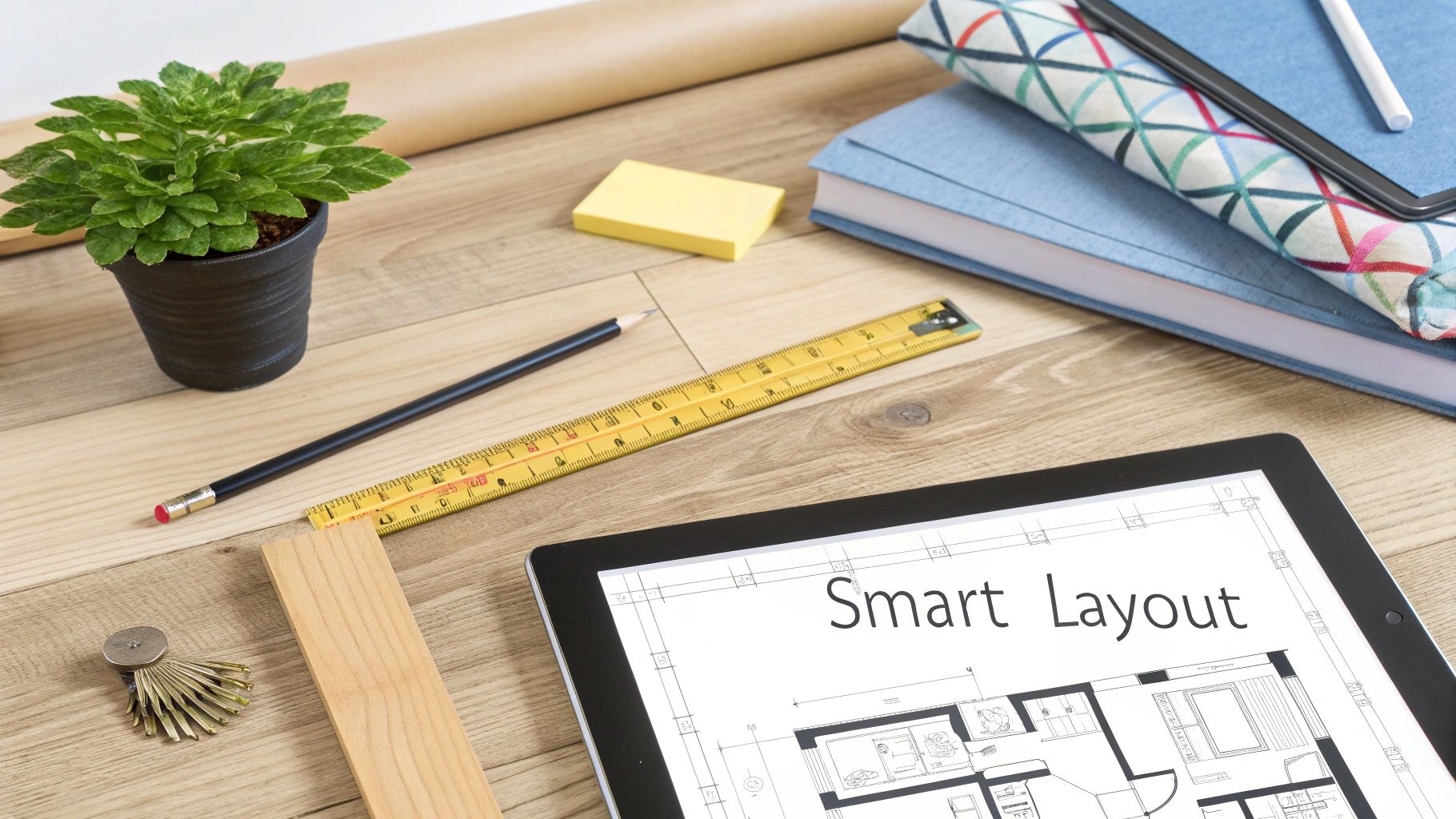
Choosing The Right Wardrobe Configuration
The first step is picking a shape that works with your room's architecture, not against it. From our experience fitting out HDB flats and condos, certain layouts are clear winners for specific spaces.
- Straight or Galley Style: The workhorse of wardrobe design. Running along a single wall, it’s incredibly versatile and fits almost any bedroom, from a long master bedroom to a compact guest room.
- L-Shaped Wardrobe: An excellent solution for claiming unused corner space. It provides generous storage and can naturally create a distinct dressing area, making it a fantastic choice for squarer rooms where a long, straight wardrobe might feel unbalanced.
- U-Shaped or Walk-In Wardrobe: For those with the space, this is the ultimate in wardrobe luxury. Using three walls, it creates an immersive, boutique-like experience with unparalleled organisation. It requires a dedicated room or a very large bedroom, but the payoff in capacity is enormous.
The goal is always to choose a layout that enhances the room's natural flow and light.
Ergonomics And Optimal Dimensions
This is where precision truly matters. Off-the-shelf wardrobes use standard dimensions that rarely fit anyone perfectly. Getting the ergonomics right ensures every item has a home and is easy to reach.
A common mistake we see is prioritising sheer volume over accessibility. A wardrobe that's too deep might store more, but if you can't easily reach the items at the back, that extra space is effectively useless.
Here’s a quick-reference guide to the key dimensions we plan for in our projects to make every inch count.
Standard Wardrobe Dimensions For Optimal Ergonomics
This table provides a practical reference for planning the internal dimensions of your inbuilt wardrobe, ensuring everything is functional and easy to access.
| Wardrobe Component | Recommended Depth (cm) | Recommended Height/Width (cm) | Best For |
|---|---|---|---|
| Overall Wardrobe | 60cm (minimum 55cm) | Varies with room height | Hanging clothes without crushing them. |
| Long Hanging | 55-60cm | 150-170cm | Long dresses, coats, and full-length outfits. |
| Short Hanging | 55-60cm | 100-110cm | Shirts, blouses, skirts, and folded trousers. |
| Folded Shelves | 40-45cm | 30-35cm (height between) | T-shirts, jumpers, and other folded garments. |
| Shallow Drawers | 40-50cm | 10-15cm (height) | Accessories, jewellery, delicates, and socks. |
| Deep Drawers | 40-50cm | 20-25cm (height) | Bulky knitwear, jeans, and larger items. |
These aren't arbitrary numbers; they are based on the real-world dimensions of clothing and the ergonomics of human movement, ensuring your daily routine is as smooth as possible.
The Power Of Wardrobe Zoning
To elevate a wardrobe from storage to an intuitive system, we apply a principle called 'wardrobe zoning'. This involves creating a mental map of your closet by dividing the interior into zones based on frequency of use.
- Prime Zone (Eye Level): Your high-value real estate. Reserve it for everyday essentials—the clothes and accessories you reach for most often.
- Upper Zone (High Shelves): For long-term storage. Think seasonal items like winter coats, travel luggage, or sentimental pieces you don’t need regular access to.
- Lower Zone (Drawers/Shelves): Perfect for shoes, folded heavy items like denim, or pull-out trays for ties and belts.
By planning your layout and dimensions with this level of detail, you create a system that not only keeps your space beautifully organised but also genuinely simplifies your daily life.
Choosing Premium Materials And Finishes
The materials you choose define your wardrobe's character, durability, and how it feels to use every day. Here in Singapore, this decision is even more critical. With our humidity, materials must be tough enough to resist warping and wear, balancing aesthetics with long-term performance.
A wardrobe's strength starts with its core structure. While solid wood has classic appeal, we consistently recommend high-quality, moisture-resistant plywood for Singaporean homes. Unlike solid wood, which can expand and contract with humidity swings, premium plywood remains stable. It provides a robust carcass that ensures doors hang perfectly and drawers glide smoothly for years.
For an extra touch of luxury inside, you might explore beautiful and aromatic cedar closet wood options, which have the added benefit of naturally repelling moths.
Finishes That Define Your Style
The finish is the part of your wardrobe you see and touch most—it sets the tone for the entire room. In our experience, homeowners in Singapore are moving beyond basic finishes, choosing textures that offer a sense of quiet luxury.
Here’s a rundown of the key players:
- High-Pressure Laminates (HPL): The champion of durability and versatility. Modern laminates come in an incredible range of colours and textures that convincingly mimic everything from wood grain and linen to raw silk. They're scratch-resistant, easy to clean, and stand up brilliantly to humidity, making them a smart and stylish choice.
- Wood Veneers: For the authentic warmth of real wood without the stability concerns of solid timber, veneer is the perfect solution. A thin layer of real wood is bonded to a stable plywood core, giving you genuine natural beauty and solid structural integrity.
- Matte and Fenix Surfaces: We’ve seen a huge shift towards super-matte finishes. Materials like Fenix NTM offer an anti-fingerprint surface that’s soft to the touch and diffuses light beautifully. It creates a clean, modern, and sophisticated aesthetic that many of our clients are choosing.
The right finish does more than look good—it shapes the room's atmosphere. A light-coloured matte finish can make a space feel calmer and more expansive, while a rich, dark wood veneer adds a touch of drama and cosiness.
Current Trends From Our Client Projects
Based on recent client requests, the focus has shifted towards creating visual interest with texture and mixed materials, rather than just relying on bold colours. This approach adds depth and a truly bespoke feel.
Here are a few key trends we're incorporating into our projects:
- Textured Laminates: Clients are increasingly drawn to laminates with subtle textures, like a linen-weave or brushed metal effect. These surfaces catch the light in interesting ways and add a tactile quality that feels more premium.
- Strategic Use of Glass: While mirrored doors are a classic for small rooms, fluted or reeded glass panels have become incredibly popular. Used on select doors, they partially obscure contents while adding a decorative element that plays with light and shadow.
- Integrated Metal Accents: Thin strips of brass, bronze, or black metal, either inlaid between panels or used as recessed handles, provide a sharp, clean accent. This detail breaks up large, flat surfaces and introduces a touch of polished elegance.
By carefully selecting both the core material and the external finish, you can create a wardrobe that not only serves its purpose perfectly but also stands as a stunning piece of custom furniture.
Innovations In Hardware And Internal Organization
The true elegance of a bespoke wardrobe is in the details you interact with daily. While the external design provides the canvas, it’s the quality of the hardware and the cleverness of the internal organisation that turn a simple cabinet into a seamless, luxury storage system.
The demand for these smarter, more organised storage solutions is on the rise. In fact, the Singapore wardrobes market is projected to grow at a compound annual growth rate (CAGR) of about 4.2% between 2024 and 2030. This is a clear sign that homeowners are prioritising sophisticated, functional design more than ever. You can review the full market research to understand this growing trend for innovative wardrobe solutions.
The Non-Negotiables Of Premium Hardware
Hardware is the engine of your wardrobe. Investing in high-quality mechanisms isn't a luxury—it’s essential for longevity and a frustration-free experience.
We believe two elements are absolutely non-negotiable for any premium wardrobe build:
- Soft-Close Hinges: The industry standard for high-end carpentry. They prevent doors from slamming shut, protecting the frame from wear and tear while ensuring a quiet, gentle closure.
- Smooth-Gliding Drawer Runners: The difference between a clunky drawer and one that glides open without effort is immense. We use full-extension runners that let the drawer pull all the way out, giving you complete visibility and access to everything inside.
These components are the silent workhorses that elevate the user experience from merely functional to genuinely pleasurable.
Tailoring The Interior To Your Collection
Once the foundational hardware is sorted, the real customisation begins. This is where we design specialised accessories that cater directly to your wardrobe, ensuring every item has its own perfect home.
The most successful inbuilt wardrobe is one where the internal layout is a direct reflection of the owner's belongings. It’s not about adding every possible accessory; it's about choosing the right ones that solve your specific storage challenges.
Here are some of the most effective internal solutions we integrate into our designs, based on what our clients need for their modern lifestyles.
Smart Storage Accessories For Ultimate Organisation
These innovative features are designed to maximise space and accessibility, turning cluttered corners into highly functional zones.
- Pull-Out Trouser Racks: These racks keep trousers neatly hung and crease-free. They slide out smoothly, allowing you to see your entire collection at a glance without digging through hangers.
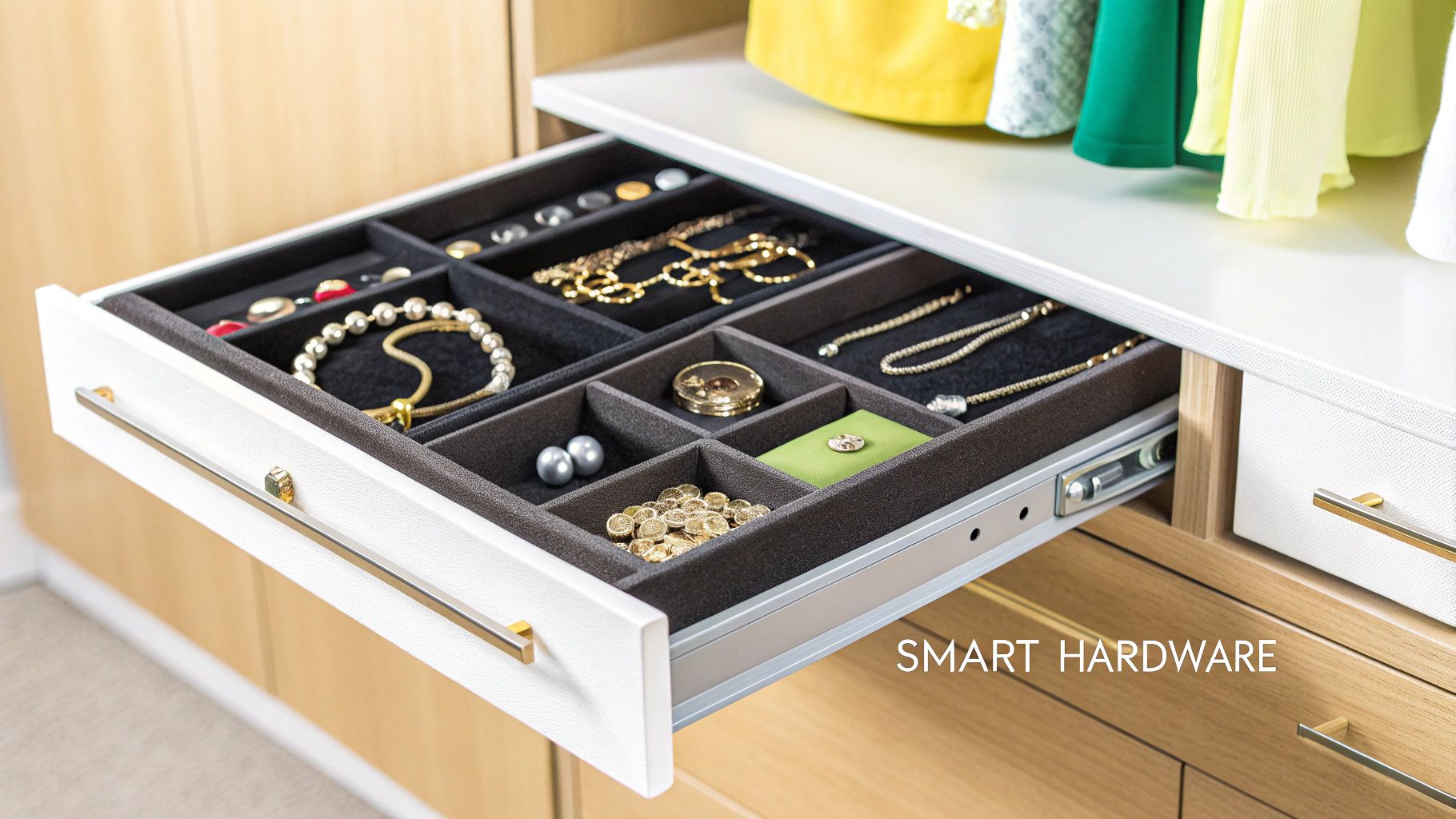
- Bespoke Jewellery Trays: Instead of a tangled mess, a shallow drawer lined with soft velvet features custom compartments for rings, watches, necklaces, and earrings. Everything is protected, visible, and beautifully displayed.
- Integrated Shoe Shelves: Whether you prefer angled shelves that showcase your favourite pairs or pull-out racks that store them efficiently, a dedicated shoe system keeps footwear organised and off the floor.
- Pull-Down Hanging Rails: High ceiling space often goes to waste. A pull-down rail brings the hanging rod down to a comfortable height with a simple pull, effectively doubling your hanging space for seasonal or less-used items.
By thoughtfully combining these internal accessories with superior hardware, your inbuilt wardrobe becomes more than just storage. It becomes a highly organised, intuitive system that simplifies your daily life.
The Art Of Integrated Wardrobe Lighting
Lighting is a detail that can completely transform an inbuilt wardrobe. It’s the difference between a simple storage box and a bright, functional showcase that elevates your daily routine. Good lighting cuts through clutter, banishes dark corners, and lets you see every item at a glance.
But it's more than practical. Thoughtful, integrated lighting adds a layer of luxury. It creates a beautiful ambience, turning the simple act of choosing an outfit into a boutique-like experience.
Strategic Placement For Maximum Impact
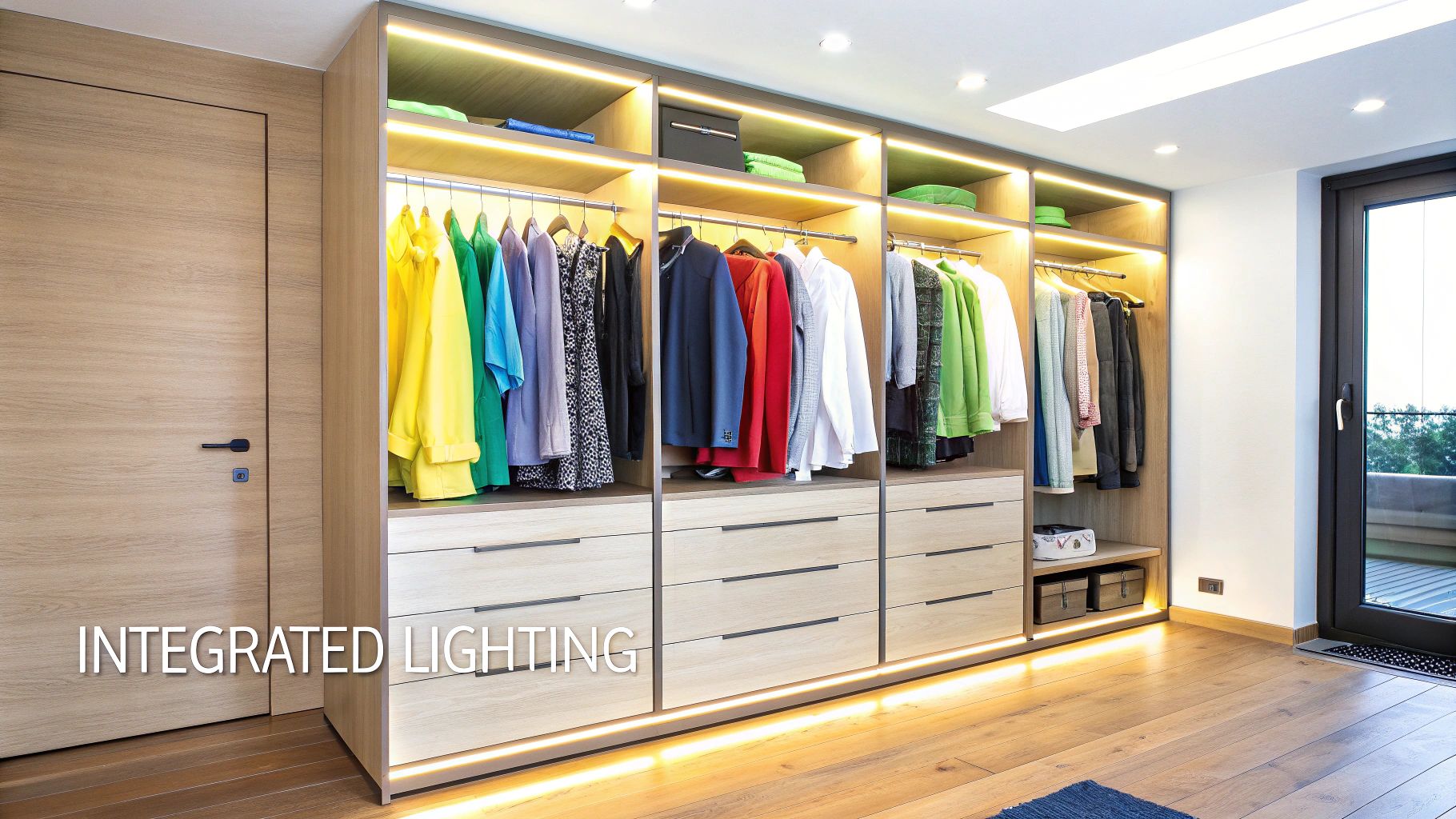
The secret to effective wardrobe lighting is putting it exactly where it’s needed. A single overhead light casts shadows from shelves and clothing. Instead, we focus on layered, built-in solutions that illuminate the space from within.
Here are the placements that deliver the best results:
- Vertical LED Strips: Recessed LED strips running down the inner sides of the wardrobe are our go-to method. This lights up the entire height of the space evenly, preventing shadows from top-down lights.
- Under-Shelf Lighting: Slim light strips tucked away beneath each shelf are a must. They ensure that stacks of folded clothes are perfectly visible, right to the very back.
- Integrated Rail Lighting: A game-changer. A hanging rail with a built-in, downward-facing LED shines light directly onto your garments, making it effortless to tell navy from black.
Choosing The Right Colour Temperature
The type of light you choose is just as important as where you put it. Colour temperature, measured in Kelvin (K), determines if a light appears warm and yellowish or cool and bluish.
For wardrobes, we almost always recommend a Neutral White light (around 4000K). This temperature is closest to natural daylight, meaning the colours of your clothes will look true and accurate. Go too warm (under 3000K), and whites might look yellow. Go too cool (over 5000K), and colours can look washed out and harsh.
The goal is simple: see your clothes inside the wardrobe exactly as they’ll look when you step outside. Accurate colour representation saves you from those "I thought this was navy blue!" moments.
Adding A Touch Of Effortless Luxury
Modern technology offers features that bring both convenience and sophistication. It's a growing expectation here in Singapore, where minimalist designs with high-tech features are becoming the norm.
Sensor-activated lights are a favourite among our clients. They switch on the moment you open the door and turn off when you close it—effortless, energy-efficient, and incredibly seamless. For an even more refined experience, you can integrate smart lighting systems that let you control brightness from your phone.
Ultimately, these thoughtful lighting choices elevate a wardrobe from a mere cabinet into a personal gallery for your collection.
From Concept To Creation: Bringing Your Vision To Life
Turning an idea for a wardrobe into a beautiful, functional piece of furniture is a collaborative journey. Understanding how we move from the first chat to the final installation provides clarity and confidence in the process. Our approach is transparent and methodical, designed to ensure every detail is perfect.
The Initial Consultation and Design Brief
It all starts with a conversation. This first meeting is arguably the most important part of the project. This is where we sit down and listen—to your storage frustrations, lifestyle needs, and the aesthetic you envision.
We encourage you to bring your inspiration. A Pinterest board, magazine clippings, or just a collection of thoughts helps us build a detailed design brief that becomes the project blueprint.
- Understanding Your Needs: We get into the specifics. How much hanging space do you need? Do you have a watch collection that needs a special home? We figure it all out.
- Defining Your Style: We’ll explore materials, finishes, and colours that will integrate seamlessly with your bedroom’s existing decor.
- Measuring Your Space: Our team conducts a precise on-site survey, taking detailed measurements and noting any architectural quirks like sloped ceilings or uneven walls.
Visualising Your Design in 3D
It’s hard to imagine how sketches will come together. That’s why we use detailed 3D visualizations. This technology lets you see a photorealistic render of your future wardrobe, placed inside a model of your own room.
You’ll see exactly how the proportions feel, how the finishes look, and how the doors will interact with the space. This is where we fine-tune the design together, tweaking the layout, materials, or hardware until it feels just right. It completely removes the guesswork.
A 3D render is our commitment to getting it right before a single piece of wood is cut. It empowers you to make informed decisions and feel completely confident in the final design.
Precision Fabrication and Meticulous Installation
Once you approve the 3D design, our skilled carpenters get to work in our workshop. Following the detailed plans, they meticulously craft every component of your wardrobe. We only use premium materials and hardware, ensuring the final piece is built to last.
The final step is on-site installation. Our professional installers work cleanly and efficiently, assembling your wardrobe with absolute precision. We take immense pride in achieving a perfect fit and a flawless finish. Throughout it all, our project management ensures the process is smooth and causes minimal disruption to your home.
This collaborative journey ensures your new inbuilt wardrobe is more than just storage—it’s a true reflection of your vision, expertly brought to life.
Ready to start your own design journey? Contact KIVO today to schedule your consultation.
Your Questions, Answered
Embarking on a bespoke carpentry project can feel like a big step, and it's natural to have questions. Here are answers to the queries we hear most often about inbuilt wardrobe design in Singapore.
How Much Should I Budget for a Custom Inbuilt Wardrobe?
The investment for a custom-built wardrobe in Singapore depends on your specific requirements. The final cost is shaped by the wardrobe's size, materials, internal complexity, and finish.
As a general guide, a more straightforward design using standard laminates typically starts at around S$250 per foot run (pfr). For wardrobes with more premium features—such as high-end laminates, extensive internal organisers, integrated lighting, or specialised hardware—the cost can range from S$500 pfr upwards. We provide a detailed, itemised quote after our initial consultation for full transparency.
What’s the Best Wardrobe Material for Singapore’s Climate?
Given Singapore's humidity, material choice is critical. For the wardrobe's core structure, we strongly recommend high-quality, moisture-resistant plywood. It’s exceptionally stable and stands up to our climate, resisting the warping that can affect lesser materials.
For the exterior, high-pressure laminates (HPL) are a fantastic, practical choice. They are built to withstand moisture, scratches, and daily wear, making them incredibly durable and easy to maintain. With a huge range of colours and textures available, you get top-tier performance without sacrificing style.
How Long Does the Whole Process Take?
From design approval to final installation, you can expect the entire journey to take between four to six weeks.
This timeline is broken down into a few key phases:
- Design & Confirmation: We lock in every detail, from materials and hardware to the final layout.
- Fabrication: The longest stage, where our craftsmen bring the design to life with precision in our workshop.
- On-site Installation: The final step. Our team will assemble everything in your home, which usually takes two to four days, depending on the wardrobe's complexity.
This methodical approach ensures that every step is handled with meticulous attention to detail. We manage the schedule from start to finish, so the journey is smooth and predictable for you.
Ready to transform your space with a beautifully crafted inbuilt wardrobe? The team at KIVO is here to guide you from the first sketch to the final installation. Contact us today for a personalised consultation and start bringing your vision to life.