What is interior design project management? It's the disciplined process of turning a design concept into a finished physical space. It’s the framework that coordinates contractors, suppliers, and timelines to ensure your renovation is completed on budget, on schedule, and to the highest quality standard.
As project managers, our role is to be the single point of accountability for your renovation. We orchestrate every detail, from initial budgeting to the final handover, ensuring a seamless and predictable process.
The Real Value of Professional Project Oversight
Many homeowners mistakenly believe project management is just about creating a schedule. That's a small part of it. True interior design project management is about proactive problem-solving and risk management. It's about anticipating issues before they impact your budget or timeline and acting as the central communication hub between you and a complex team of tradespeople.
Here's a practical analogy: imagine your renovation is an orchestra. Your designer is the composer who writes the musical score. The contractors are the musicians, each a specialist with their instrument.
Your project manager is the conductor. Their job is to ensure every musician plays their part at the right time and in perfect harmony. Without a conductor, you don't get a symphony—you get chaotic noise.
Beyond Timelines and Spreadsheets
That conductor role is critical because a design, no matter how beautiful, is only as good as its execution. Without professional oversight, projects often encounter the same predictable pitfalls:
- Budget Creep: Unplanned changes and overlooked costs accumulate, pushing the final bill far beyond the initial estimate.
- Costly Delays: A simple miscommunication—like a plumber not being informed about a change in sink placement—can halt all subsequent work and throw the entire schedule off track.
- Quality Issues: Without a professional eye inspecting the work daily, small mistakes in finishing, like uneven grout lines or misaligned cabinet doors, get missed, leading to frustrating and expensive rework later.
A good project manager foresees these issues. For example, we order long-lead items like custom cabinetry or imported European tiles right at the project's start, ensuring they don’t become the bottleneck that delays everything else. This proactive management is where the real value lies.
An experienced project manager isn't just reacting to today's problems; they are constantly looking ahead to prevent tomorrow's. Their true value is measured in the costly mistakes you never have to deal with.
The demand for this expertise is growing in Singapore. The local interior design market was valued at USD 0.77 billion in 2024 and is projected to reach USD 1.22 billion by 2033. This reflects a shift where homeowners increasingly value a structured, professionally managed renovation process.
Modern tools like AI interior design solutions are also enhancing efficiency, but their potential is only fully realised when integrated into a project by a skilled manager who ensures every detail aligns with the overall vision.
Navigating the Six Phases of Your Renovation Journey
A successful renovation isn't a single event; it's a carefully orchestrated process. To ensure clarity and remove guesswork, we structure every project into six distinct phases. This roadmap ensures you always know where we are, what comes next, and what decisions are needed from you at each stage.

A solid plan is the foundation of any successful project. Understanding how to plan your home renovation effectively empowers you to make informed decisions and collaborate confidently with your project team. Let’s walk through what this journey looks like in practice.
Phase 1: Discovery and Feasibility
This is the foundation. Before any design work begins, we listen. We need to understand your vision, lifestyle, and the practical requirements of your space. This phase is about aligning expectations to set the project up for success. We'll discuss everything from your aesthetic preferences and daily routines to your long-term plans. This is also where we have a transparent conversation about budget and timeline.
Key Activities in This Phase:
- Initial Consultation: A deep dive into your goals, pain points with your current space, and desired outcomes.
- Site Assessment: We visit the property to take precise measurements, analyse existing conditions (like plumbing and electrical points), and identify potential challenges early on.
- Budget & Timeline Planning: We establish a realistic financial framework and outline a preliminary project schedule based on the scope of work.
Phase 2: Concept Development
With a clear understanding of your goals, we begin translating your abstract ideas into a tangible design concept. This concept serves as the guiding principle for all subsequent decisions. We develop mood boards, explore space-planning options, and create colour palettes that capture the desired look and feel.
This phase is more than aesthetics; it's about solving spatial problems. How can we improve traffic flow? How do we maximize natural light? How can every square metre be optimized for function?
Practical Example: For a family in a Punggol HDB who loved hosting, our concept focused on an open-plan living and dining area. Using space-planning software, we demonstrated how removing a non-structural wall would create a seamless, expansive area perfect for gatherings, giving them confidence in the design direction before any hacking began.
Phase 3: Design Finalisation
With the concept approved, we refine the technical details. This phase bridges the creative vision and the practical execution, producing the precise documents our contractors will use to build. We create detailed drawings, 3D visualizations, and material specifications, leaving no room for ambiguity.
Outputs From This Phase Include:
- Technical Drawings: Detailed floor plans, elevations, and lighting/electrical layouts that specify exact dimensions and placements.
- 3D Renderings: Photorealistic models that allow you to virtually walk through your new space before construction starts.
- Material Selections: Finalising every finish, from flooring and tiles to laminates and paint codes.
Phase 4: Sourcing and Procurement
With the design finalized, we begin sourcing all materials, fixtures, and fittings. This involves selecting and ordering everything, as well as engaging the right team of skilled tradespeople. We manage this complex supply chain, ensuring every item arrives on time and meets our quality standards. We leverage our network of trusted suppliers and contractors to secure the best quality and value for your budget.
Phase 5: Construction and Site Management
This is where the transformation takes place. Our project manager takes full command of the site, overseeing all construction activities to ensure the work is executed precisely according to the plans, on schedule, and to the highest standard. We handle the daily coordination of all trades—carpenters, electricians, plumbers, and painters. We are on-site regularly for inspections, monitoring progress, and enforcing rigorous quality control. You receive consistent updates, so you're always informed without having to manage the process yourself.
Phase 6: Handover and Completion
As construction concludes, we conduct a meticulous final inspection with you. We walk through the entire space and create a "punch list" (or defect list) of any minor items needing a final touch-up. Once every detail is perfected to your satisfaction, we officially hand the project over. Our relationship doesn't end here; we provide all necessary documentation and warranties and remain available for any questions as you settle into your newly renovated home.
Understanding Who Does What on Your Project Team
A successful renovation depends on a team working in perfect sync. Confusion over roles and responsibilities leads to miscommunication, delays, and costly mistakes. Defining clear roles from day one is the key to a smooth and accountable project. Think of it like a professional sports team: every player has a specific position and a job to do. The team only wins when everyone knows their role and trusts their teammates.

The Three Key Players in Your Renovation
To eliminate confusion, let’s break down the core responsibilities. This structure is the backbone of effective interior design project management.
1. The Client (You)
You are the visionary and the ultimate decision-maker. Your most critical role is to provide clear, timely feedback and make decisions to keep the project moving forward.
- Your Main Jobs: Approving designs, finalising material choices, and signing off on key project milestones.
- Practical Example: We present three tile options for your master bathroom. Your prompt decision allows us to place the order immediately, avoiding a potential two-week shipping delay that would halt all tiling work.
2. The Project Manager
The project manager is the conductor of the orchestra and your single point of contact. They coordinate all moving parts, manage the schedule and budget, and ensure the design vision is executed flawlessly on-site.
- Their Main Jobs: Bridging communication between you and the contractors, managing timelines, overseeing quality control, and solving on-site problems.
- Practical Example: The project manager notices that custom carpentry is scheduled for delivery on the same day the floors are being polished. They reschedule the delivery to prevent scuffs and damage to the new floors—a critical detail that prevents costly rework.
3. The Contractors and Tradespeople
This is the skilled team that brings the design to life—carpenters, electricians, plumbers, and painters. They are responsible for the hands-on execution of the plans with expert craftsmanship.
- Their Main Jobs: Carrying out work according to the technical drawings, adhering to safety standards, and coordinating their specific tasks with other trades on-site.
- Practical Example: The electrician follows the detailed lighting plan to install recessed lighting exactly as specified in the 3D renderings, ensuring the final ambience perfectly matches the design concept.
A well-defined team structure transforms a complex renovation into a managed, predictable process. It ensures your vision is translated into action efficiently, with specialists handling the technical execution.
Project Team Responsibilities At a Glance
This table outlines who handles what during a typical Singapore interior design project.
| Project Task | Client Role | Project Manager Role | Contractor Role |
|---|---|---|---|
| Defining the Vision | Set project goals, style preferences, and functional needs. | Translate vision into a project brief and scope of work. | N/A |
| Budgeting | Set the overall budget and approve major expenditures. | Develop a detailed budget, track costs, and report on spending. | Provide quotes for labour and materials. |
| Design Approval | Provide feedback and final approval on all design concepts. | Present designs, manage revisions, and prepare final drawings. | N/A |
| Scheduling | Make timely decisions to avoid delays. | Create and manage the master project schedule for all trades. | Follow the schedule provided by the project manager. |
| Material Sourcing | Approve final material, fixture, and furnishing selections. | Source options, manage procurement, and coordinate deliveries. | Install materials supplied for the project. |
| Site Management | N/A | Oversee all on-site activities, ensuring quality and safety. | Execute construction work as per the approved plans. |
| Problem Solving | N/A | Identify and resolve on-site issues before they escalate. | Report any site issues or discrepancies to the PM. |
| Final Sign-Off | Inspect the finished work and approve project completion. | Manage the defect list and ensure all items are rectified. | Complete any final touch-ups or defect rectification. |
This clear division of labour prevents guesswork and keeps everyone focused.
Fostering a Collaborative Environment
Modern renovations are increasingly complex. Singapore's design sector workforce has grown to meet this demand, with an estimated 68,900 professionals in 2021. This large talent pool makes sharp coordination essential to harness everyone's expertise. You can explore this topic further in this detailed report on Singapore's design industry.
To ensure seamless collaboration, we use a simple responsibility framework. For every key decision—like approving a variation order or selecting an appliance—we map out who provides input, who gives final approval, and who executes the work. This eliminates "I thought you were handling that" moments that derail projects and creates an accountable, cooperative team.
A Practical Guide to Managing Timelines and Budgets
Time and money are the two biggest concerns for homeowners during a renovation. Think of them as the twin rails your project runs on; if one goes off track, the entire project can derail. A project manager's core function is to keep these two elements aligned, turning potential chaos into a predictable journey. It’s normal to feel anxious about schedules and costs. That’s why we build a reliable framework for every project, based on years of experience with properties in Singapore.
Setting Realistic Timelines for Singapore Homes
A common mistake is underestimating the time required for a quality renovation. A proper timeline isn't just a list of dates; it's a carefully sequenced plan that accounts for everything—permit approvals, lead times for imported materials, and critical details like concrete curing times.
Here are some realistic timelines we work with for different Singapore properties:
- 4-Room HDB Flat (New BTO): For essential works like carpentry, electrical, and finishes, we schedule 8-10 weeks.
- 5-Room HDB Resale (Major Overhaul): For a project involving hacking, full re-tiling, and extensive custom work, expect 10-14 weeks.
- Condominium (3-Bedroom): Factoring in building management regulations and a typical scope of work, a full renovation usually takes 12-16 weeks.
- Landed Property (Terrace or Semi-Detached): These larger projects involve more complexity. We generally plan for 4-6 months from the start of construction to handover.
We build buffers into these timelines. A shipment might be delayed at customs, or a permit may take longer than expected. By anticipating these potential issues, we can navigate them without derailing the entire project.
Mastering Your Renovation Budget
A detailed, transparent budget is your financial roadmap. Our role is to break down every cost so you understand exactly where each dollar is allocated.
A budget isn't a restriction; it's a tool for making smart decisions. It empowers you to allocate funds to what matters most, ensuring every dollar contributes to your vision.
A typical budget allocation for a Singapore renovation might look like this:
| Expense Category | Typical Budget Allocation | Key Components |
|---|---|---|
| Carpentry & Custom Works | 30-40% | Kitchen cabinets, wardrobes, feature walls, display units. |
| Hacking & Masonry | 15-20% | Demolition, tiling for floors and walls, waterproofing. |
| Finishes & Fittings | 15-20% | Paint, lighting fixtures, sanitary ware, flooring materials. |
| Electrical & Plumbing | 10-15% | Rewiring, adding power points, laying new water pipes. |
| Contingency Fund | 10-15% | Reserved for unforeseen issues or approved changes. |
The Two Most Important Budgeting Strategies
To protect your budget and prevent financial stress, we insist on two key strategies.
1. The Contingency Fund
We always advise clients to set aside 10-15% of the total renovation cost as a contingency fund. This is not for adding items to your wish list mid-project; it's a safety net for genuine unforeseen issues. For example, if we hack a wall and discover old, faulty wiring that poses a fire hazard, the contingency fund allows us to fix it properly without compromising your kitchen cabinet budget.
2. Managing Variation Orders (VOs)
A Variation Order (VO) is the formal document for any change to the original plan. Want to add an extra power socket or change the laminate on your wardrobe? That requires a VO. Our process is non-negotiable: no work proceeds on a change until you have reviewed and approved a VO that clearly states the impact on both cost and timeline. This keeps you in full control and ensures there are no surprise charges on the final bill.
The Singapore interior design market serves diverse clients, from young couples with new HDB BTOs to families renovating landed properties. Each has different needs and budget priorities. Managing these varied expectations is a core part of project management. To learn more, you can explore modern interior design trends and pricing in Singapore.
Our Approach to Communication and Quality Control
The difference between a good renovation and a great one often comes down to two things: transparent communication and uncompromising quality control. These are the pillars of effective interior design project management. When done right, they transform a stressful process into a confident partnership, ensuring you feel informed and the final result is flawless.
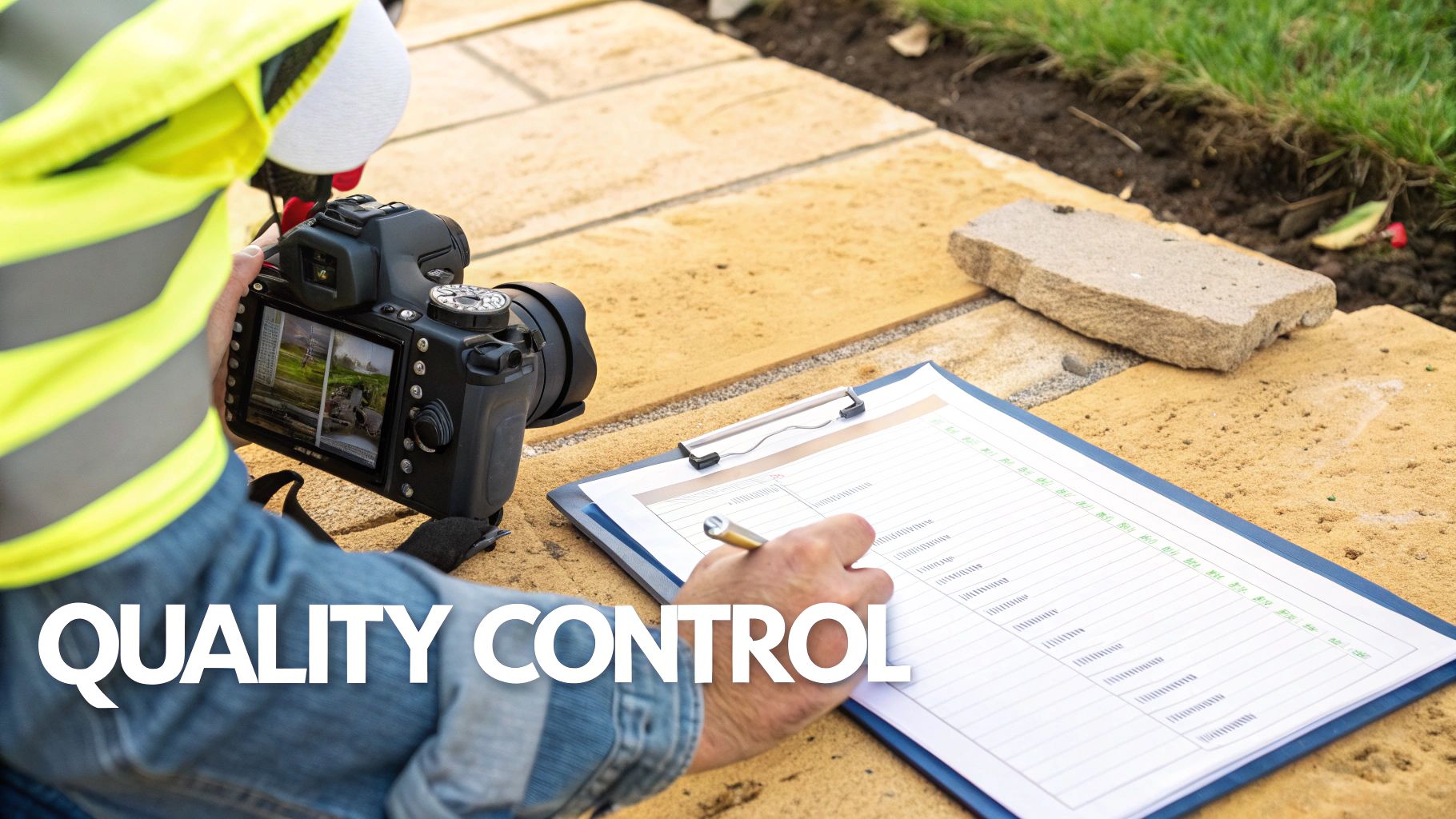
We build our projects around a structured communication rhythm. This proactive approach eliminates guesswork, so you're never left wondering what's happening with your home.
Keeping You Informed Every Step of the Way
Clear, consistent updates are non-negotiable. Our system is designed to give you the right information at the right time, without overwhelming you with technical jargon.
Here’s what you can expect:
- Scheduled Weekly Updates: Every week, you will receive a detailed progress report. This is a proper summary of work completed, what's scheduled for the upcoming week, and any decisions needed from you.
- A Shared Project Portal: You will have access to a centralized online portal with progress photos, key documents, and milestone tracking, giving you 24/7 visibility.
- A Single Point of Contact: You will have a direct line to your dedicated project manager, preventing the confusion that arises from communicating with multiple contractors or team members.
This structured communication ensures everyone—you, the designer, and the contractors—is perfectly aligned.
Our Commitment to Craftsmanship and Quality
A beautiful design is only as good as its execution. Our quality control is not a final check; it's a series of meticulous inspections integrated into every phase of the project. We believe in identifying potential issues early before they become expensive problems.
Quality control isn't about fixing mistakes at the end; it's a proactive process that prevents them from happening in the first place. This commitment to detail defines true craftsmanship.
Our multi-stage inspection process ensures excellence. For example, we conduct a thorough inspection and a flood test on bathroom waterproofing before a single tile is laid. This critical step prevents devastating water damage issues years later.
Here are a few more practical examples of our quality control in action:
- Carpentry Workshop Inspections: Before any custom cabinetry is delivered, we visit the workshop to inspect the joinery, laminate finishing, and hardware to ensure it meets our standards.
- Electrical and Plumbing Checks: We physically verify all wiring and piping against the technical drawings before walls are plastered. This ensures every outlet and pipe is positioned correctly.
- Paint and Finish Reviews: We review paint application under different lighting conditions to check for evenness and consistency, guaranteeing a flawless, streak-free finish.
This rigorous, hands-on approach is fundamental to how we manage projects and ensure the final result exceeds your expectations.
How to Choose the Right Project Management Partner
Selecting the right firm to manage your renovation is the single most important decision you will make. This choice dictates the final quality, budget adherence, and your overall experience. A great partner acts as your advocate and problem-solver. The wrong one can turn your dream home into a nightmare of delays and stress. To make a confident choice, look past the glossy portfolios and ask questions that reveal how a firm truly operates.
Key Questions to Guide Your Decision
When meeting with potential partners, your goal is to understand their day-to-day process. A professional firm will welcome detailed questions about their interior design project management approach.
Use this checklist to guide your conversation:
Experience and Portfolio:
- "Can you show me a portfolio of projects similar to mine in scale and style, specifically for HDBs or condominiums in Singapore?"
- "What was the biggest challenge you faced on that project, and how did you resolve it?"
Process and Tools:
- "What specific tools or software do you use for project tracking and client communication? Can I see a sample report?"
- "How often will I receive progress reports, and what information will they contain?"
Problem-Solving Approach:
- "Walk me through your process for handling a Variation Order (VO) when a client requests a change mid-project."
- "How do you handle unforeseen issues on-site, like discovering a structural problem after hacking a wall?"
Their answers to these questions will reveal their transparency, problem-solving skills, and commitment to clear communication.
What to Look for in a Contract
The contract is the final piece of the puzzle. It is a legal document that should protect both parties by leaving no room for misunderstanding. A vague contract is a major red flag.
A detailed, transparent contract is the foundation of a trusting partnership. It ensures everyone is on the same page about scope, cost, and expectations before any work begins.
Your contract must clearly define these critical elements:
- A Detailed Scope of Work: An itemised list of every task, from demolition and masonry to carpentry and painting. Vague terms like "kitchen renovation" are not sufficient.
- A Clear Payment Schedule: Payments should be broken down into milestones tied to project progress (e.g., 20% after masonry is completed, 30% after carpentry is installed). This ensures you only pay for work that has been finished.
- Defined Timelines: A projected start and completion date are essential. The contract should also include a clause explaining how potential delays are handled and communicated.
By asking the right questions and ensuring a solid contract, you can confidently choose a project management partner you can trust to bring your vision to life.
Your Questions, Answered
Here are straightforward answers to some of the most common questions we receive about interior design project management in Singapore.
What's the Real Benefit of Hiring a Project Manager?
The primary benefit is having a single, dedicated expert responsible for every detail of your project—from timeline and budget to quality control. This frees you from the stress of managing contractors and prevents costly mistakes. We act as your advocate on-site, handling the complex logistics so you can focus on the exciting aspects of seeing your vision come to life.
How Much Should I Set Aside for Project Management Fees?
Fees vary based on project size and complexity and are typically structured as either a percentage of the total renovation cost or a fixed fee. While it may seem like an additional expense, this investment often pays for itself by preventing costly errors, securing better trade pricing, and avoiding delays.
Good project management isn't an expense; it's an insurance policy for your budget and timeline. It ensures every dollar is spent wisely and protects you from the financial impact of unforeseen problems.
A sharp project manager often saves you money by managing schedules tightly and resolving issues before they become expensive problems.
Can I Still Be Involved if I Have a Manager?
Absolutely. A project manager is there to execute your vision. You remain the final decision-maker on all key aspects—design direction, material choices, and milestone approvals. Our role is to provide you with well-researched options, offer our professional recommendations, and then implement your decisions flawlessly. We manage the execution details to ensure your vision is realised exactly as you imagined, keeping you informed and in control at every major stage.
Ready to bring your vision to life with a seamless, expertly managed process? At KIVO, we combine decades of craftsmanship with meticulous project management to create spaces that are both beautiful and built to last.
Explore our interior design and custom carpentry services to see how we can transform your home.