A kitchen cabinet renovation is one of the most transformative projects for any Singaporean home. It revitalises the heart of your home, improving daily functionality and boosting property value. A successful project hinges on a clear, actionable plan that addresses your budget, lifestyle needs, material choices, and layout efficiency. Getting this foundation right before any work begins is the key to a result you'll love for years.
Starting Your Kitchen Cabinet Renovation Smartly
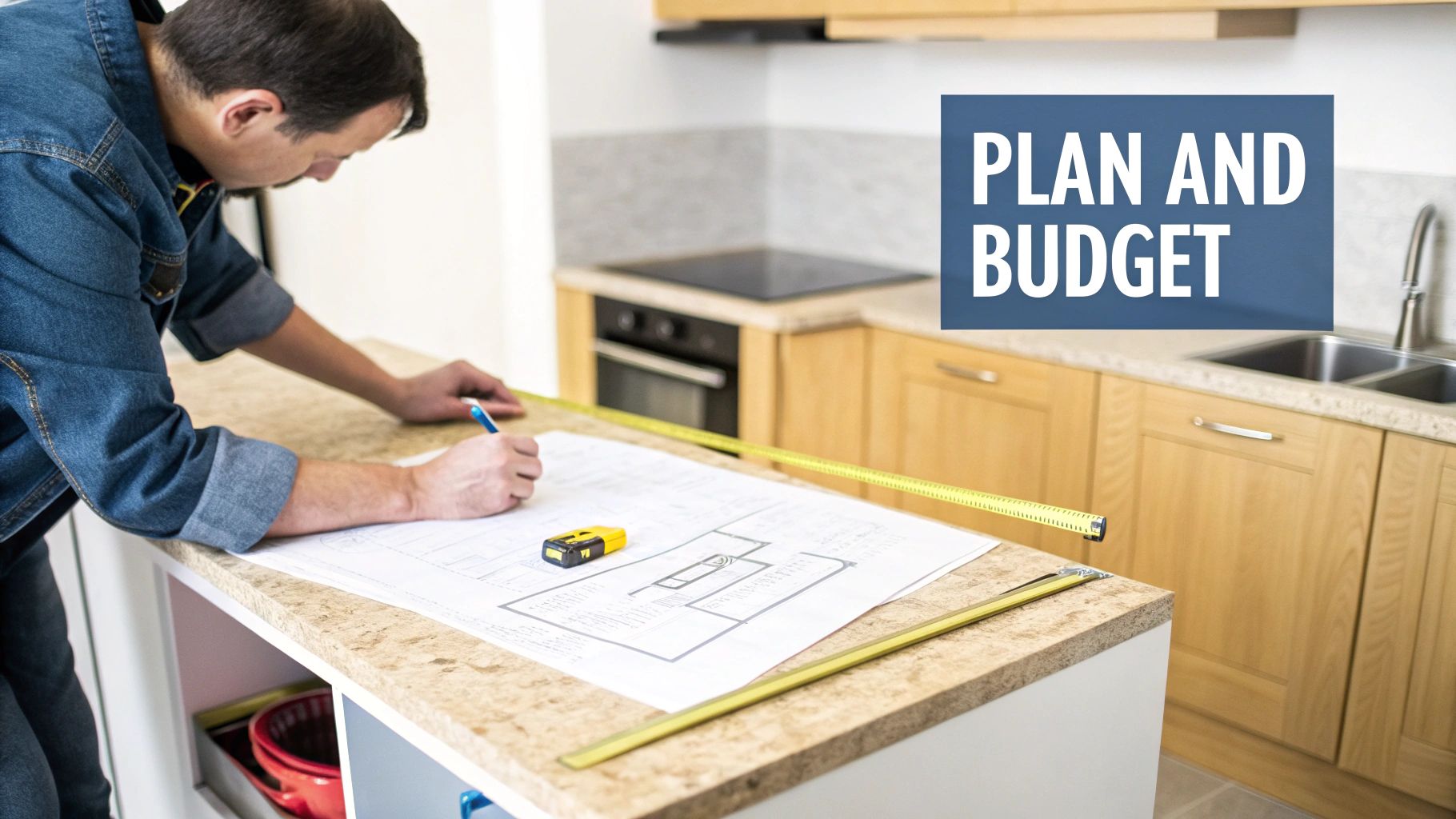
Embarking on a kitchen cabinet renovation can seem daunting, but a structured approach eliminates the stress. From our experience handling numerous projects, the smoothest renovations begin with a clear understanding of two core elements: your budget and your kitchen's true purpose.
First, establish a realistic budget. In Singapore, kitchen carpentry is a significant investment. For a typical HDB flat, expect the cost for cabinetry, countertops, and installation to range from S$5,000 to over S$19,000. This figure doesn't include appliances or fittings. For resale flats, anticipate a 30-40% increase due to necessary hacking, plumbing, and electrical work. You can find out more about how renovation costs break down in Singapore for a detailed overview.
Define Your Kitchen’s Primary Function
With a budget defined, think critically about how you use your kitchen. This insight will drive every design decision. We always ask clients to describe their daily kitchen routines.
For the Avid Home Cook: Functionality and durability are paramount. This means specifying scratch-resistant countertops like quartz or sintered stone, designing deep drawers for pots near the hob for an efficient workflow, and selecting cabinet finishes that withstand heat and moisture.
- Actionable Tip: Plan for at least 90cm of uninterrupted counter space next to your stove for food preparation.
For the Social Entertainer: Your kitchen is a gathering space, so aesthetics and flow are key. Consider an open-concept layout with a feature island, integrated under-cabinet lighting to create ambiance, and handle-less, seamless cabinet fronts for a clean, inviting look.
- Actionable Tip: Incorporate a "beverage station" with dedicated storage for glasses, your coffee machine, and bar essentials to keep guest traffic out of your primary cooking zone.
For the Busy Family: Efficiency is non-negotiable. Your renovation should focus on smart, accessible storage. This includes pull-out pantries for dry goods, designated low drawers for kids' snacks, and durable, easy-to-clean surfaces like high-pressure laminates.
- Actionable Tip: Install soft-closing hinges and drawer runners to prevent slammed fingers and reduce noise.
A well-designed kitchen supports your lifestyle, not just your aesthetic preferences. Understanding this from the outset prevents costly mid-project changes and ensures the final space is genuinely functional for you.
Measure Twice, Build Once
Accurate measurements are the bedrock of custom carpentry. While we conduct our own professional site measurements, taking your own preliminary measurements helps you visualise the space and understand its limitations. Use a tape measure to record wall-to-wall lengths, floor-to-ceiling height, and the dimensions of windows and doors. Crucially, note the locations of existing plumbing and electrical points, as relocating them will impact your budget.
Finally, familiarise yourself with HDB regulations, especially if you live in a resale flat. There are strict guidelines concerning the hacking of walls, relocation of sinks, and plumbing alterations. Starting your kitchen cabinet renovation with this practical knowledge ensures a smoother process, free from unexpected delays and compliance issues.
Choosing Materials That Last in Our Climate
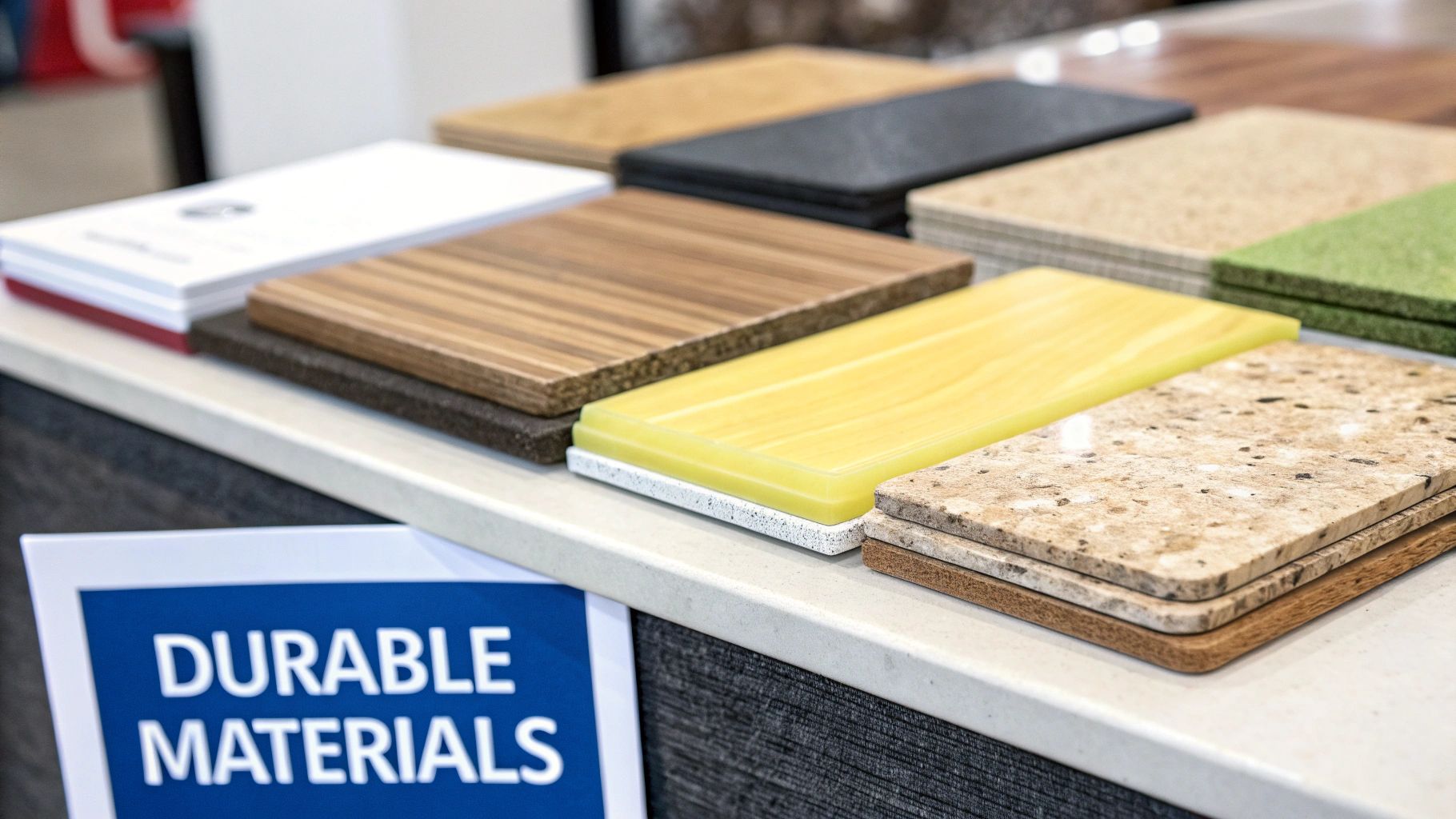
Selecting the right materials is arguably the most critical decision in your kitchen cabinet renovation. In Singapore's humid climate, your choices determine not only the look but also the long-term durability and maintenance requirements of your kitchen.
Materials may look flawless in a showroom, but they must perform under the daily stress of cooking steam, moisture, and wear. We advise clients to prioritise performance and suitability for our local environment.
The Foundation Your Cabinets Are Built On
Let’s talk about the cabinet's internal structure, or the carcass. In Singapore, moisture-resistant solid plywood is the industry standard for good reason. It provides superior structural stability compared to MDF or particleboard, which are prone to swelling and degradation in high humidity.
For cabinet doors and exterior panels, high-pressure laminates (HPL) are an excellent, practical choice that we frequently recommend. Today’s laminates offer a vast array of finishes, from realistic wood textures to modern matte colours. More importantly, they are highly resistant to scratches and easy to clean, providing the aesthetic of more expensive materials without the maintenance headaches.
Selecting the Perfect Countertop Surface
The countertop is your kitchen's primary work surface and must withstand daily use. Two of the most popular and reliable options our clients consider are quartz and sintered stone.
Quartz: An engineered stone composed of about 90% ground natural quartz and polymer resins. Its key benefit is its non-porous nature, making it highly resistant to stains from common culprits like coffee, wine, and soy sauce without ever needing to be sealed.
Sintered Stone: A newer material created by fusing natural minerals under intense heat and pressure. This process results in an ultra-compact surface that is exceptionally durable, UV-stable, and resistant to heat, scratches, and stains.
A client who loves to cook with a wok and often places hot pans directly on the counter found sintered stone to be the ideal solution. Another client with young children chose quartz for its superior stain resistance and more accessible price, giving them peace of mind against daily spills.
This practical comparison can help you decide which material is right for your kitchen cabinet renovation.
Comparing Popular Kitchen Countertop Materials
The choice between materials like quartz and sintered stone should be guided by your cooking habits and lifestyle. This table breaks down their key attributes.
| Material | Durability | Maintenance | Heat Resistance | Price Range (per foot run) |
|---|---|---|---|---|
| Quartz | Highly durable and scratch-resistant, but can be damaged by extreme heat. | Non-porous and stain-resistant. No sealing required. | Good, but direct contact with very hot pots should be avoided. | S$90 - S$180 |
| Sintered Stone | Extremely hard and resistant to scratches, UV rays, and high temperatures. | Non-porous and very easy to clean. No sealing needed. | Excellent. Can withstand direct contact with hot cookware. | S$150 - S$280 |
Ultimately, the best material is one that aligns with your budget, aesthetic, and the practical demands of your daily kitchen routine. Investing in the right surfaces ensures your kitchen remains both beautiful and functional for years.
Designing for Better Flow and Smarter Storage
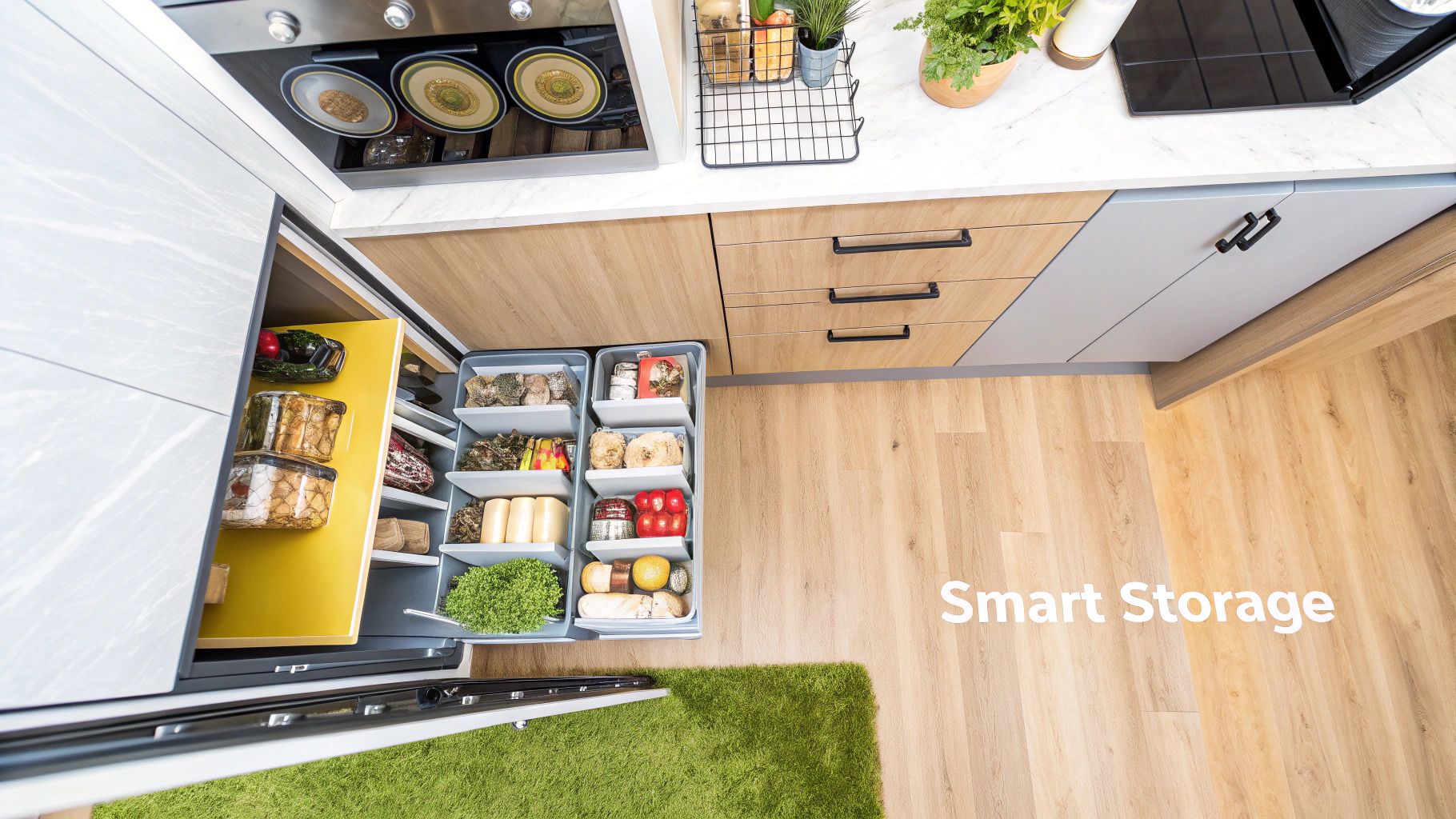
An effective kitchen cabinet renovation goes beyond aesthetics; it's about creating an intuitive and efficient workspace. In the compact homes common in Singapore, a smart layout and clever storage solutions are essential for turning cooking from a chore into a pleasure.
The goal is to minimise movement and maximise convenience. The classic "kitchen work triangle"—linking the sink, refrigerator, and hob—is a good foundation. But modern kitchen design evolves this concept into "work zones." This means grouping related items and tasks together. For example, all baking equipment and ingredients should be stored in one area, while coffee mugs and supplies are kept next to the coffee machine.
Optimising Common Singapore Kitchen Layouts
Every kitchen layout has unique strengths and challenges. The key is to enhance its potential through thoughtful design.
The Galley Kitchen: Often found in older HDB flats, this narrow layout can feel constrained. To create a sense of space, we recommend confining tall, full-height cabinets to one side. Replacing lower cabinets with deep drawers is another practical upgrade, eliminating the need to search for items at the back of a dark cupboard.
The L-Shaped Kitchen: This layout is ideal for an efficient work triangle but presents a challenge with the corner cabinet. A simple shelf in this space often becomes a "black hole." This is where specialised corner storage mechanisms are invaluable.
The U-Shaped Kitchen: This layout provides ample counter and storage space but creates two difficult corner cabinets. Careful appliance placement is also crucial to prevent doors from clashing and creating workflow bottlenecks.
Unlocking Your Kitchen’s Hidden Potential
This is where the value of custom carpentry becomes clear. Standard, off-the-shelf cabinets cannot adapt to a room's specific dimensions, but bespoke solutions can turn awkward spaces into highly functional storage.
A kitchen's true potential is often hidden in its corners and vertical spaces. By using specialised hardware and thoughtful design, we can reclaim these underutilised areas and dramatically increase storage efficiency without expanding the footprint.
For example, that challenging corner in an L-shaped kitchen can be transformed with a LeMans corner unit, a pull-out system with shelves that swing completely out of the cabinet for easy access. In a narrow galley kitchen, a tandem pull-out pantry offers significant storage within a small footprint, allowing you to see all your dry goods at a glance.
We are also advocates for utilising vertical space. The cabinet above the refrigerator, often underused, is perfect for storing baking sheets and trays with simple vertical dividers. Integrated organisers for cutlery, spices, and utensils create order and ensure everything is easily accessible. These practical details are what elevate a good kitchen to a great one.
What to Expect During the Renovation Process
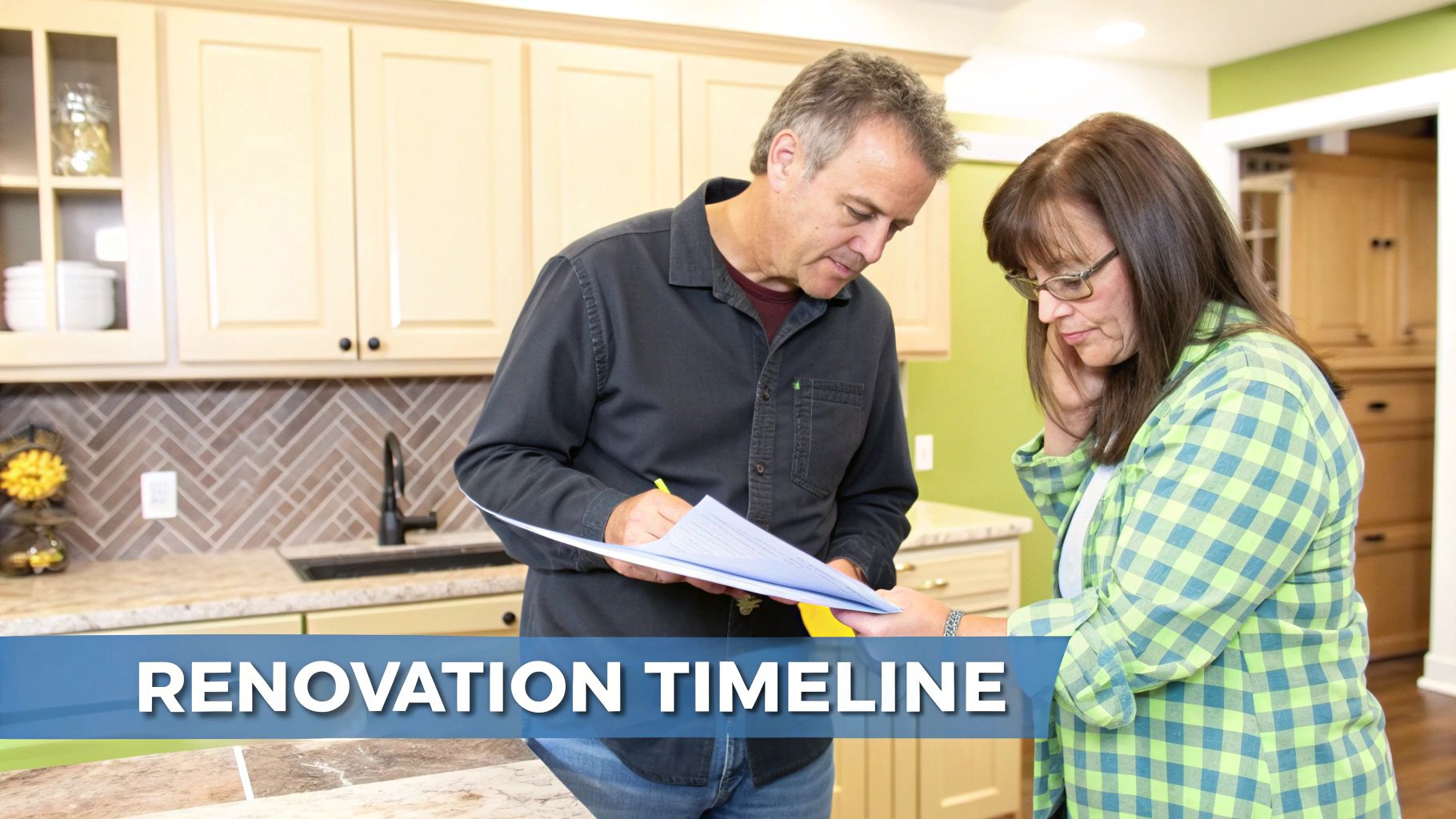
Understanding the step-by-step process of a kitchen cabinet renovation demystifies the project and helps you prepare for each stage. We follow a structured timeline to ensure efficiency and minimise disruption to your home.
Once the design is finalised and materials are selected, the first step is the off-site fabrication of your custom cabinets. This process typically takes 2 to 3 weeks. Our carpenters construct the cabinet carcasses, doors, and drawers in our workshop according to the precise approved specifications. This off-site approach significantly reduces the dust and noise in your home.
The On-Site Coordination Phase
While the cabinets are being built, we coordinate any necessary on-site preparatory work. This is the time for foundational tasks that must be completed before the carpentry is installed.
This stage may include:
- Hacking and Demolition: Removal of old cabinets, tiles, and fixtures.
- First-Fix Works: Electricians and plumbers reposition wiring for new appliance locations and adjust water pipes for the new sink.
Proper sequencing is critical. Completing these messy works before the new cabinets arrive prevents delays, additional costs, and potential damage. We manage the coordination of these trades to ensure every outlet and pipe is perfectly positioned for the new layout.
From Carcass to Complete Kitchen
With the site prepared, the installation phase begins. This is a carefully ordered process designed to achieve a precise and high-quality finish.
First, the fabricated cabinet carcasses are delivered and installed. Our team levels and secures each unit to the walls, forming the solid framework of your new kitchen.
A common question we get is why countertops aren't installed immediately after the cabinets. The countertop requires a precise template created after the base cabinets are fixed in their final position. This guarantees a perfect fit with minimal gaps and a clean, professional look.
After the base cabinets are in place, the countertop supplier takes precise measurements for templating. The fabrication of a quartz or sintered stone top typically takes about one week. During this period, we continue with the installation of tall units and overhead cabinets.
Once the countertop is fitted, we proceed with the finishing touches. This includes hanging cabinet doors, installing handles, and adjusting drawers for smooth operation. Finally, the sink, tap, and hob are installed, completing the transformation of your kitchen.
Finding the Right Team for Your Project
The success of your kitchen cabinet renovation depends heavily on the skill and professionalism of the team you hire. The right partner will execute your vision flawlessly, while the wrong one can lead to delays, budget overruns, and considerable stress.
The Singapore home improvement market is robust, valued at approximately USD 3.54 billion in 2024, with many homeowners investing in upgrading their spaces. This means there are many professionals to choose from, making careful vetting essential. You can read more about the Singapore home improvement market at Deep Market Insights to understand the current landscape.
Interior Designer vs Direct Carpenter
A key initial decision is whether to engage an interior design firm or work directly with a carpenter. The best choice depends on the scope of your project.
Direct Carpenter: This is an excellent option for straightforward projects, such as replacing existing cabinets in the same layout where you have already decided on materials and finishes. A skilled carpenter can execute this efficiently.
Interior Design Firm: If your renovation is more complex—involving structural changes, re-routing plumbing, new lighting plans, and requires 3D visualisation—an interior design firm provides comprehensive project management. We coordinate all trades, including tilers, electricians, and plumbers, ensuring a seamless workflow.
Vetting Your Potential Partners
Once you have determined the right path for your project, thorough due diligence is necessary. A polished portfolio is a starting point, but it's crucial to look deeper.
A beautiful portfolio shows what a firm can do, but client testimonials and transparent communication reveal how they do it. The process is just as important as the final product.
When shortlisting potential partners, look for these key indicators of professionalism and reliability:
- Check for HDB Licensing: If you live in an HDB flat, your contractor must be listed in the HDB's Directory of Renovation Contractors. This is a mandatory requirement that ensures they are aware of and compliant with all regulations.
- Scrutinise Their Quotation: A professional firm will provide a detailed, itemised quotation that breaks down costs for materials, labour, and any third-party services. Be cautious of vague, lump-sum quotes, which can hide future costs.
- Ask Probing Questions: Inquire about their project management process, typical timelines for a project of your scale, and how they handle unforeseen issues. A confident and experienced team will provide clear, direct answers.
Answering Your Top Kitchen Renovation Questions
Clients often have similar questions when planning a kitchen cabinet renovation. To provide clarity, here are straightforward answers to some of the most common queries we receive.
How Long Does a Renovation Typically Take?
For a standard HDB kitchen renovation focused solely on new cabinetry without major hacking or re-tiling, the entire process usually takes about four to six weeks.
Here’s a practical timeline breakdown:
- Design & Selection (1-2 weeks): Finalising the layout, creating 3D visualisations, and confirming material selections.
- Fabrication (2-3 weeks): Off-site construction of your custom cabinets in our workshop, which minimises on-site disruption.
- Installation (1 week): On-site installation of cabinet carcasses, followed by countertop templating and fitting, and final installation of doors and hardware.
If your project is more extensive and includes hacking, tiling, and significant plumbing or electrical work, a more realistic timeline would be eight to ten weeks.
Custom Carpentry or Modular Cabinets?
This decision involves balancing budget, flexibility, and the final quality of the fit.
Custom carpentry is purpose-built to the exact dimensions of your space. This allows for complete design freedom, maximises storage by eliminating odd gaps, and perfectly conceals any imperfections like uneven walls.
Modular cabinets are prefabricated in standard sizes. While they can be a more budget-friendly and faster option, they come with significant limitations. Design flexibility is reduced, and installers often need to use filler panels to cover gaps between cabinets and walls, resulting in wasted space.
The choice depends on your priorities. If achieving a seamless, fully optimised space is your goal, custom carpentry is the superior solution. If speed and a lower initial cost are more critical, a modular system can be a viable alternative.
Should I Just Replace My Cabinet Doors?
Yes, this process, known as refacing, is an excellent and cost-effective way to update your kitchen's appearance without a full-scale renovation. It is an ideal solution if your existing cabinet carcasses are still structurally sound.
Refacing involves replacing all old cabinet doors and drawer fronts, installing new hardware (handles and hinges), and often applying a matching laminate finish to any visible cabinet frames to ensure a consistent look.
This approach is significantly faster and less disruptive than a complete overhaul. However, it's a cosmetic upgrade and does not allow you to change the kitchen's layout or address any underlying structural issues with the existing cabinets.
Ready to transform your kitchen with expert craftsmanship and thoughtful design? The team at KIVO Custom Carpentry And Interior Design Services is here to guide you through every step of your renovation. Get in touch with us at kivo.com.sg to start the conversation.