When designing a kitchen that will last in Singapore's humid climate, selecting the right wood for your cabinets is the most critical decision you'll make. The best choice isn't just about looks; it's about finding the perfect balance between durability, moisture resistance, and your personal style. From our experience, this often means using high-quality plywood for the cabinet structure (the carcass) and options like solid wood or premium laminates for the doors.
Matching Your Cabinet Wood to Singapore's Humidity
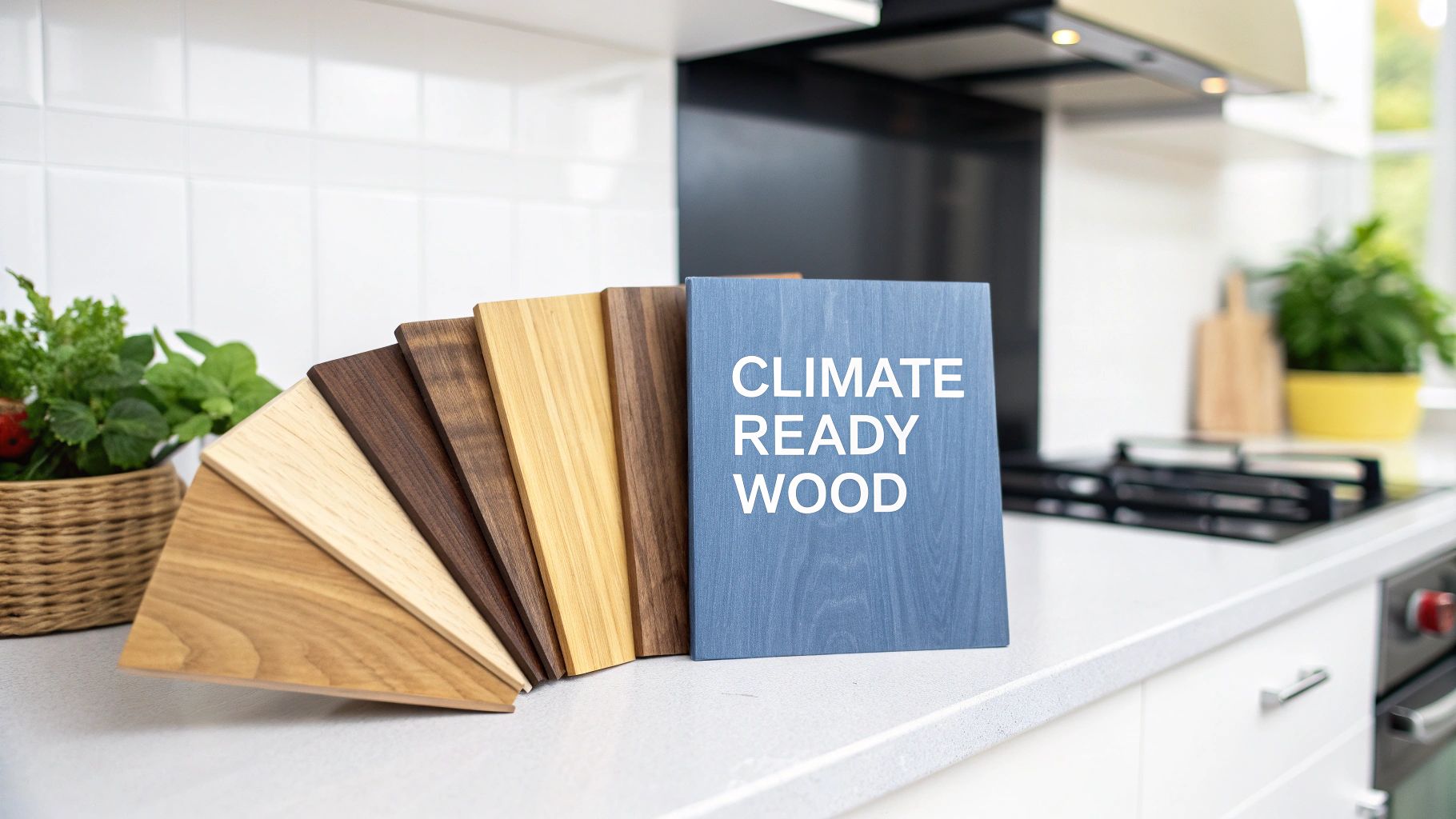
In Singapore, your kitchen is constantly exposed to high humidity. This moisture can cause solid wood to warp, swell, or even develop mould if it hasn't been properly selected and sealed. The foundation of a lasting kitchen isn’t just a beautiful design—it’s smart material selection tailored to our environment.
Think of your cabinet wood like a car's chassis. A weak frame undermines the entire vehicle, no matter how sleek it looks. Similarly, a wood that can't handle our local climate will lead to practical problems like misaligned doors, peeling finishes, and drawers that stick.
Key Factors for Your Decision
Based on hundreds of HDB and condo kitchen projects, we’ve found that homeowners achieve the best results by focusing on four key factors. Balancing these is the secret to a kitchen that not only looks great but also stands up to daily use for years.
- Humidity Resistance: The material’s ability to remain stable without warping. This is non-negotiable in our tropical climate. For example, solid wood doors need expert sealing, while high-quality plywood offers inherent stability for the cabinet box.
- Everyday Durability: How well the wood handles scratches, dings, and heat. A busy family kitchen with heavy cooking requires a tougher material than a kitchenette used occasionally.
- Aesthetic Appeal: The natural colour, grain pattern, and how it takes a stain or paint. This is about matching your home's interior style, whether it's a warm Scandinavian look or a sleek, modern design.
- Overall Budget: The cost includes the raw material, fabrication, and finishing. This can vary significantly between different wood types and engineered options.
A common mistake is choosing a wood based solely on an online photo. For instance, solid walnut looks incredible, but its performance in Singapore is entirely dependent on expert sealing techniques to protect it from humidity. Without it, you risk costly warping issues down the line.
This guide will provide actionable insights into the real-world differences between solid woods like oak and maple, and practical engineered options like plywood and laminates. Understanding these will help you make an informed choice that balances your design vision with the demands of living in Singapore.
Exploring Popular Solid Wood Species
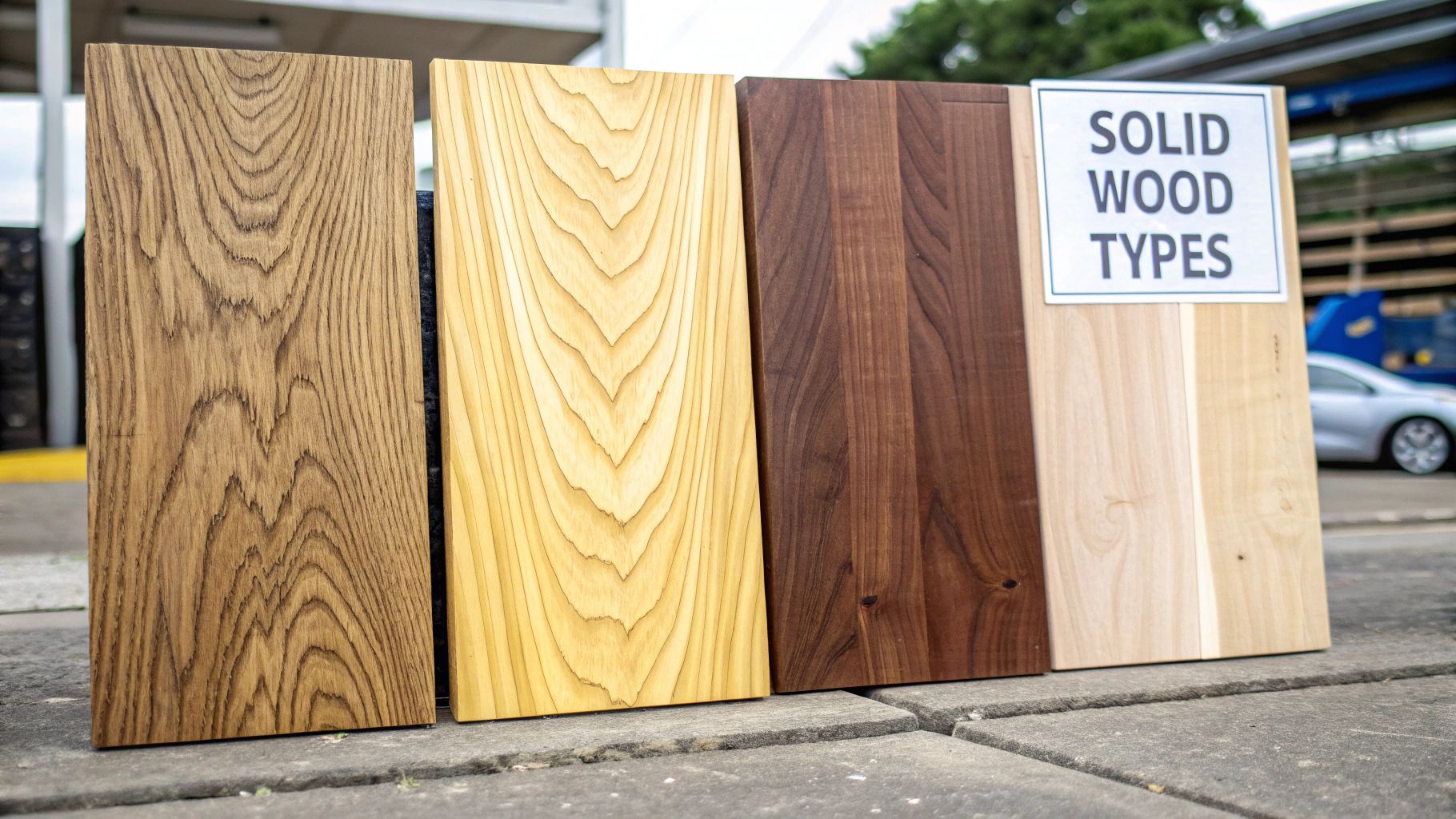
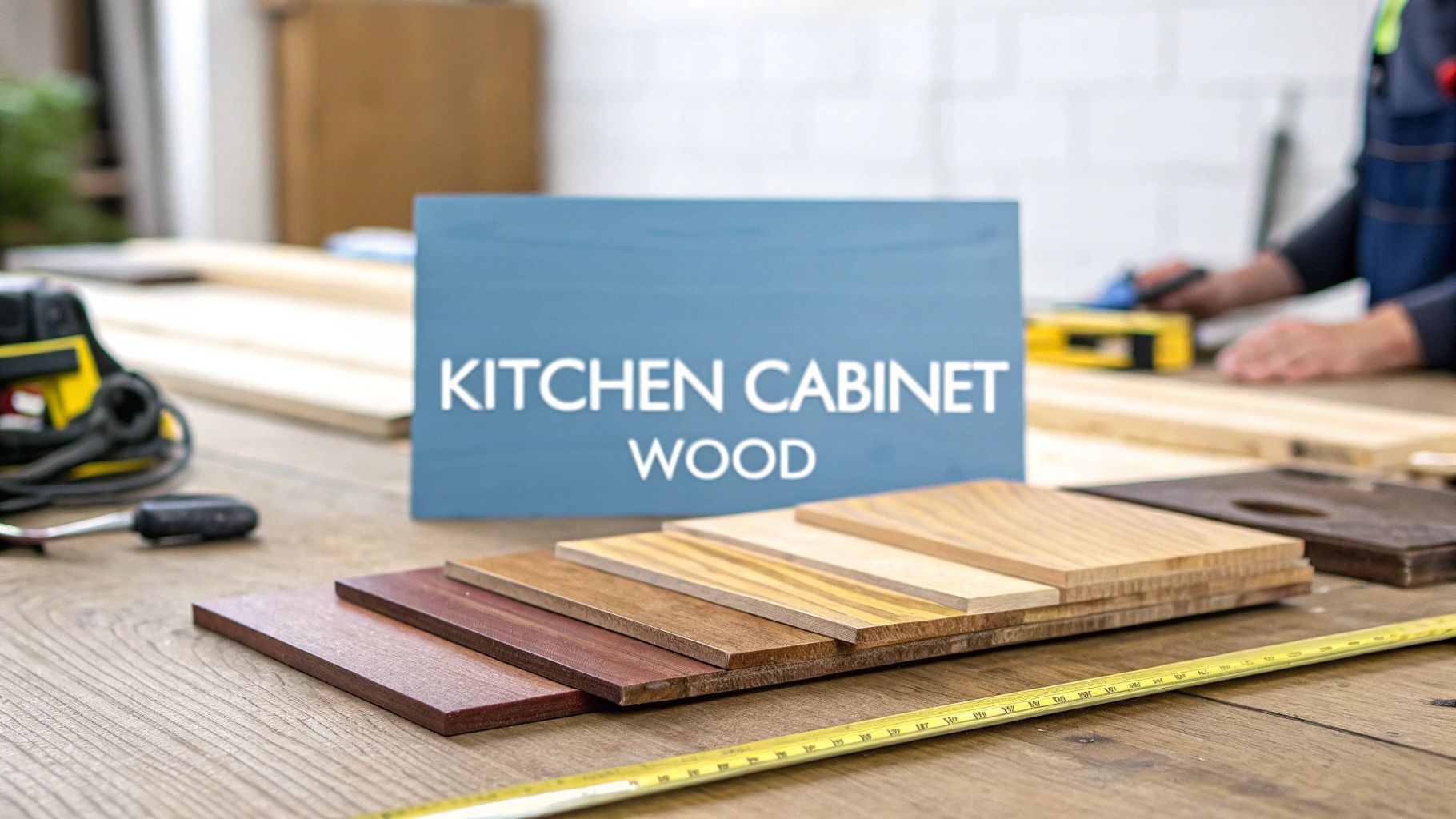
Choosing a solid wood for your cabinet doors is about defining the personality of your kitchen. Each species has a unique grain, colour, and texture that sets the tone for the entire space. In our projects, these details often become the defining feature of a home, turning a standard kitchen into one with distinct character.
While High-Pressure Laminate (HPL) is a popular choice in Singapore for its durability in our climate, we're seeing a growing trend among clients, especially in condos, who want the authentic touch of solid wood. Nothing quite matches the feel and grain of real wood. With professional sealing, it can resist moisture and be refinished over the years, lasting for decades. You can explore more about these material trends for modern kitchens in Singapore to see how solid wood is being integrated into contemporary designs.
Here's a practical breakdown of the most popular wood species we work with.
Oak: The Resilient Classic
Oak is the workhorse of cabinetry. It’s known for a prominent grain pattern—from straight lines in quarter-sawn oak to sweeping arches in plain-sawn cuts. This distinct texture is incredibly forgiving, effectively hiding minor dings and scratches from daily use, making it an excellent choice for active kitchens.
Its natural strength makes it suitable for various designs, from classic farmhouse to rustic, nature-inspired interiors. We often recommend oak to families who want a warm, timeless kitchen that is built to withstand heavy use.
- Grain: Open and highly visible, giving it a textured, traditional feel.
- Durability: Very hard and resistant to dents.
- Best For: Creating warmth and permanence in classic, rustic, or transitional kitchens that see a lot of activity.
Maple: The Smooth and Modern Canvas
Maple is the opposite of oak. It has an incredibly smooth surface with a fine, subtle grain, creating a clean, modern aesthetic. This minimal texture makes it the perfect base for painted finishes.
If you envision a sleek kitchen with flawless coloured cabinets, maple is the ideal choice. Paint applies smoothly and evenly, resulting in a sharp, consistent finish. It’s our top recommendation for minimalist and contemporary designs where clean lines are essential.
When clients request a painted finish, we almost always guide them to maple. Its smooth surface ensures the colour is the star, without any competing wood grain showing through. This is the key to achieving that pristine, modern look.
Cherry: The Elegant Connoisseur
Cherry is known for its graceful ageing. It starts with a lighter, pinkish-red tone and gradually darkens with light exposure, developing a deep, rich patina over time. This evolving character gives a kitchen a sense of history and warmth.
Its grain is fine and straight, adding to its elegant appearance. Cherry is ideal for creating upscale, traditional, or formal kitchens. It is slightly softer than oak, so it’s better suited for homes where it will be treated with more care.
Walnut: The Luxurious Statement Piece
For a luxurious statement, walnut is the clear winner. It features rich, dark chocolate tones with stunning swirls and a complex grain. A kitchen with walnut cabinets instantly feels opulent and custom, making a bold design statement.
Because of its premium feel and darker colour, walnut works best in larger kitchens with ample natural light to balance its deep tones. It’s our go-to for sophisticated, high-end designs, especially in luxury condominiums where it adds significant visual and monetary value.
Here's a quick comparison of how these options stack up for practical use:
| Wood Species | Primary Aesthetic | Grain Pattern | Best Use Case |
|---|---|---|---|
| Oak | Warm & Traditional | Strong & Prominent | Busy family kitchens needing high durability. |
| Maple | Clean & Modern | Fine & Subtle | Sleek, painted cabinets for a minimalist look. |
| Cherry | Elegant & Warm | Smooth & Straight | Upscale spaces that will age gracefully. |
| Walnut | Luxurious & Sophisticated | Rich & Complex | High-end statement kitchens in well-lit spaces. |
Ultimately, choosing the right wood comes down to the story you want your kitchen to tell. Whether it’s the rugged reliability of oak or the refined elegance of cherry, your choice will define the heart of your home.
Engineered Woods: A Practical and Stylish Alternative
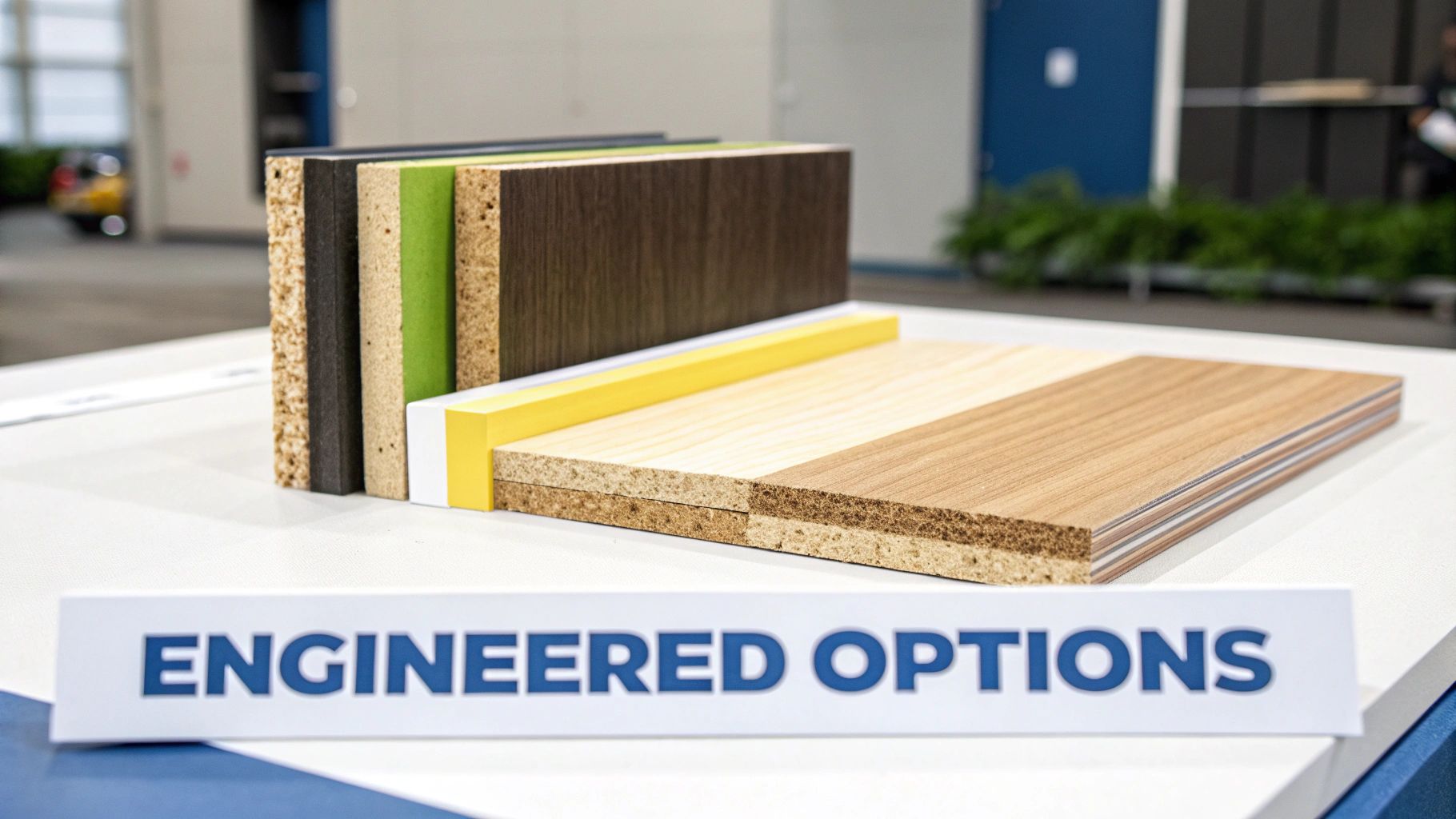
While solid wood is beautiful, a durable and long-lasting kitchen in Singapore often relies on the practical strength of engineered materials. These modern alternatives are a strategic choice, providing robust solutions that perform exceptionally well in our climate without sacrificing style.
An easy way to think about it: a solid wood plank is a single piece, susceptible to warping. Engineered wood, like plywood, is made of multiple layers glued together under pressure. This multi-layered construction gives it superior dimensional stability, making it far less likely to warp or expand with humidity shifts.
This stability is why we almost exclusively use high-quality, multi-layered plywood for the internal structure—the "carcass"—of our kitchen cabinets. It forms a reliable skeleton that ensures your cabinet doors hang straight and drawers glide smoothly for years.
The Power of Plywood Carcasses
A cabinet's strength comes from its core. Plywood’s cross-grained construction creates a material that is incredibly strong and resists the forces of gravity and moisture that can cause other materials to sag over time. This is critical for supporting heavy quartz countertops and fully loaded shelves.
For our projects, specifying a high-grade, moisture-resistant plywood carcass is a non-negotiable quality standard. It’s the durable foundation for beautiful and functional designs made to last in Singapore.
High-Pressure Laminates: The Durable Finish
While plywood provides core strength, the visible surfaces must be both attractive and tough. This is where high-pressure laminates (HPL) excel.
Modern HPLs offer incredibly realistic wood-grain textures and a huge range of colours. They also provide unmatched durability, making them ideal for busy family kitchens. They are highly resistant to scratches, stains, heat, and impact. A quick wipe is usually all that's needed for cleanup, making them extremely low-maintenance—a major benefit for our clients.
For clients who want the warm look of wood but need a surface that can handle daily cooking, young children, and entertaining, HPL is the perfect solution. It delivers the desired aesthetic with practical, worry-free performance.
The Hybrid Approach: Best of Both Worlds
One of the most effective strategies we use is a hybrid approach. This method combines the beauty of your chosen door material with the structural integrity of engineered wood, offering an excellent balance of performance, aesthetics, and budget.
- Cabinet Doors and Drawer Fronts: Crafted from solid wood like oak or maple, or finished with a high-quality HPL to achieve the desired look and feel.
- Cabinet Carcasses (Boxes): Constructed from high-quality, moisture-resistant plywood for superior stability and longevity.
This combination allows you to invest in the visual elements—the parts you see and interact with daily—while relying on the proven performance of plywood for the hidden framework. It’s a smart, practical approach that delivers a high-end result without the potential drawbacks of using solid wood for large structural panels in our humid climate.
Finishes and Maintenance for a Tropical Climate
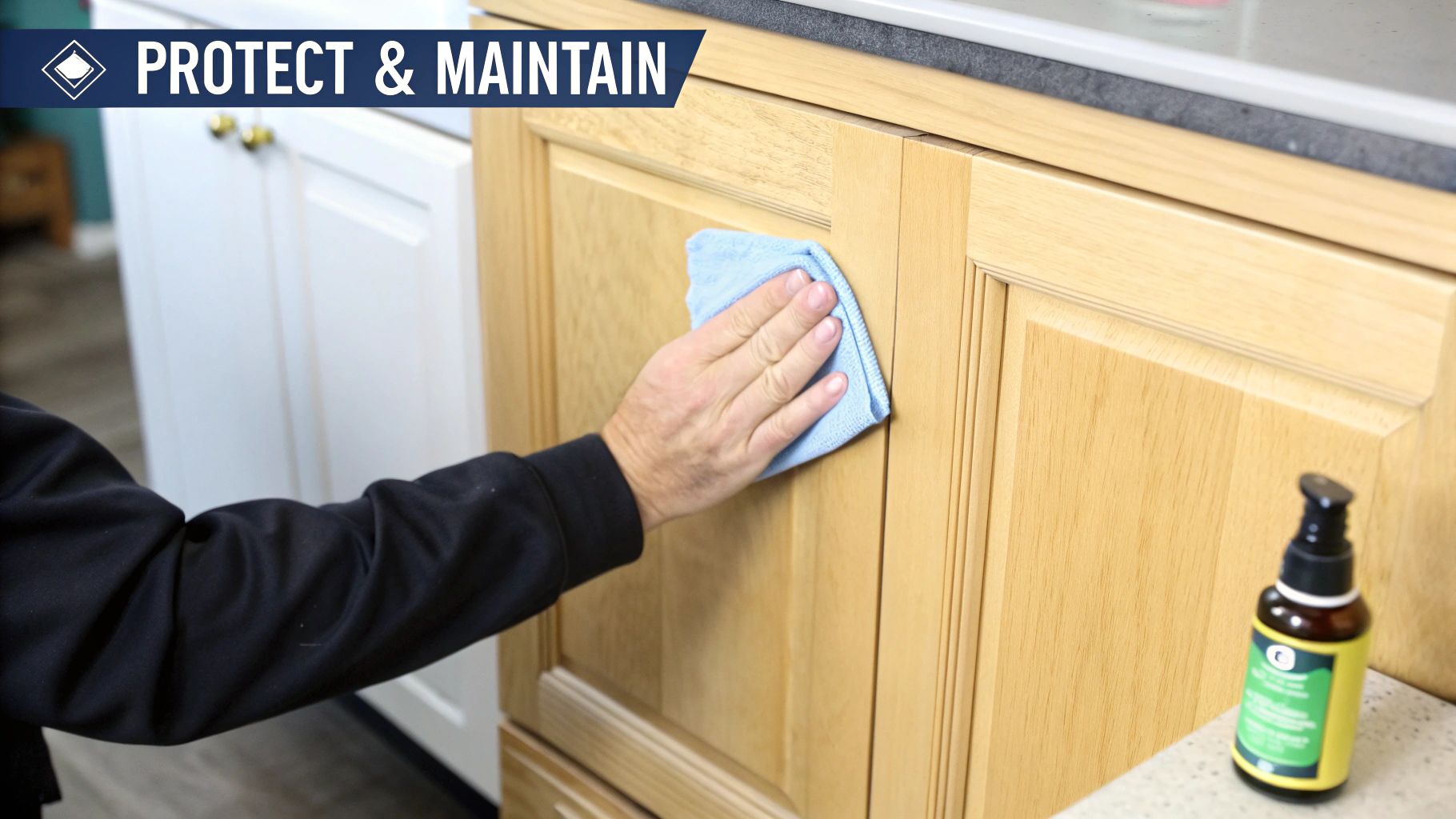
Selecting the right wood is only half the job. The finish you apply is its armour against Singapore’s relentless humidity. A quality finish acts as a crucial barrier, sealing the wood to prevent moisture from causing warping, swelling, and other damage.
This protective layer keeps your investment looking pristine. But the finish also defines the final look, from the sheen to the clarity of the coat.
Choosing Your Cabinet's First Line of Defence
When selecting a finish, durability is key. We guide our clients toward two excellent options for a tropical climate.
Polyurethane (PU) Finishes: Polyurethane cures into a hard, plastic-like film that offers brilliant resistance to moisture, chemicals, and scratches. This makes it an ideal choice for high-traffic kitchens that see a lot of daily use.
Water-Based Lacquers: Modern water-based lacquers are a superb alternative, known for their crystal clarity. They won’t yellow over time, allowing the natural beauty of the wood grain to show through. They also have lower Volatile Organic Compounds (VOCs), which improves your home's indoor air quality.
We find that for most projects, a satin sheen provides the perfect balance. It has enough lustre to feel elegant but is far more forgiving than a high-gloss finish when it comes to hiding fingerprints and minor scuffs. It’s the practical choice for a beautiful, low-maintenance kitchen.
The demand for high-quality wooden cabinetry reflects a wider trend in Singapore. Projections show steady growth in the kitchen furniture sector, driven by urban renewal in HDBs and condos. This highlights the importance of choosing durable, well-finished solutions. For example, KIVO cabinets are engineered to resist tropical wear for over a decade.
A Practical Maintenance Checklist
Proper care is key to making your wooden cabinets last. A simple, consistent routine will keep them looking their best.
Do’s for Daily and Weekly Care:
- Wipe spills immediately: Use a soft, damp microfibre cloth to clean up liquids right away before they can soak in.
- Use a mild cleaner: For regular cleaning, a simple solution of gentle soap and water is sufficient.
- Dry thoroughly: Always follow up with a dry cloth to remove any leftover moisture.
Don’ts to Avoid Damaging Your Finish:
- Avoid harsh chemicals: Never use abrasive cleaners, scouring pads, or solvents like ammonia. They can strip the protective finish.
- Do not oversaturate: Avoid using excessive water when cleaning, as it can seep into joints and cause damage.
- Steer clear of wax polishes: Many furniture polishes contain silicones or waxes that build up over time, creating a hazy film that attracts dust.
For tackling stubborn grease, using a safe kitchen cabinet degreaser is invaluable for maintaining wooden finishes. The right cleaning techniques will ensure your cabinetry remains a stunning centrepiece.
Budgeting for Your Custom Kitchen Cabinets
Understanding the costs involved is the first step to a successful renovation. A clear budget isn't just about numbers; it’s about making smart choices that bring your dream kitchen to life without financial surprises.
A common pitfall is focusing only on the wood cost. The final quote is a blend of materials, craftsmanship, hardware, and installation complexity. Our goal is to provide a clear financial roadmap, showing where your investment goes.
Breaking Down the Key Cost Factors
Several factors influence the total cost of your cabinetry. Understanding them helps you decide where to invest more.
- Material Selection: This is the starting point. Premium solid woods like Walnut are more expensive than versatile options like Oak or Maple. Plywood, used for cabinet carcasses, is the most cost-effective structural material.
- Cabinet Construction: The build method matters. Frameless (or full-access) cabinets, common in modern European designs, require more precise manufacturing, which can increase the cost compared to traditional framed cabinets.
- Door and Drawer Front Style: This is about labour. A simple flat-panel or Shaker-style door is quicker to produce than an intricate raised-panel door with detailed moulding. More complexity means higher fabrication costs.
- Hardware and Accessories: This is a significant variable. Basic handles and hinges are inexpensive, but high-end, soft-close systems, specialised pull-outs, and designer hardware can add hundreds or even thousands to the bill.
- Finishing: The type of finish plays a role. A multi-step staining process or a professional-grade painted finish requires more labour and materials than a simple clear coat.
- Installation Complexity: A straightforward layout in a new BTO is different from an installation in an older resale flat, which may require scribing cabinets to uneven walls or working around existing plumbing, adding to on-site time.
Realistic Budget Ranges in Singapore
To give you a practical idea, the budget can vary significantly based on your property and scope.
For a standard HDB BTO kitchen using a hybrid approach—plywood carcasses with solid wood or high-quality laminate doors—a realistic budget for custom carpentry typically starts from S$15,000. For a larger condominium or a landed property using premium woods like Walnut and high-end fittings, costs can easily exceed S$30,000.
It's also important to view your cabinets within the context of the whole renovation. Resale flat projects often cost 30-40% more overall due to hacking and preparation. In that scenario, investing in durable, locally crafted wooden cabinets adds tangible value.
While solid woods need expert treatment for Singapore's climate, their timeless beauty and ability to be refinished make them a sound long-term investment. For more analysis on local trends, you can explore Singapore's wooden furniture market data on IndexBox.io. Understanding these costs upfront helps you plan effectively.
Bringing Your Vision to Life: The Custom Carpentry Journey
Choosing the right wood is the first step, but the real transformation happens when a skilled carpenter brings your ideas to life. Going from a conversation to a fully installed kitchen is a collaborative journey to create something that feels made just for you.
It starts with a discussion about how you live in your kitchen. Are you an avid cook? What are your storage frustrations? We use these answers to create detailed 3D models. This crucial step lets you see and tweak your future kitchen, ensuring every dimension is perfect before we cut any wood.
From Our Workshop to Your Home
Once you approve the design, our carpenters get to work. Each plank is hand-picked and cut with precision. This is the benefit of custom work: cabinets are built to fit your kitchen’s unique footprint, eliminating the awkward gaps of off-the-shelf solutions.
We focus on creating built-in solutions that make your life easier.
- A Perfect Fit: Your cabinets will sit flush against your walls and ceiling, creating a seamless, integrated look.
- Smarter Storage: We design storage around your items, like custom pull-out spice racks or deep drawers sized for your pots and pans.
- Seamless Integration: The final finish is meticulously applied to ensure the colour and style blend beautifully with your home's overall design.
The Final Installation
The last piece is the installation. Our team works with care to assemble your new kitchen, ensuring every door hangs level and every drawer glides smoothly. This attention to detail locks in the quality and ensures your kitchen stands the test of time.
The true value of bespoke carpentry isn’t just in the beautiful wood; it’s knowing the result is a direct reflection of your vision, tailored perfectly to your home and built to last.
This entire process is about turning your dream kitchen into a tangible reality by combining beautiful materials with thoughtful, functional design.
Still Have Questions About Kitchen Cabinet Wood?
Choosing the right wood for your kitchen cabinets can be confusing, especially with Singapore’s humidity. Here are answers to some of the questions we hear most often.
What’s the Best Kitchen Cabinet Wood for Singapore's Climate?
For cabinet carcasses (the internal structure), high-quality, moisture-resistant plywood is the hero. Its cross-laminated construction provides incredible stability against warping.
For cabinet doors, the key is the finish. Stable hardwoods like teak or quarter-sawn oak hold up beautifully, but only if they're professionally sealed with a top-notch, moisture-resistant finish. This combination of a sturdy wood and a protective coating is your best defence against our tropical weather.
Is Solid Wood Actually Better Than Plywood for Kitchens?
Neither is universally "better"; they excel at different things. The best kitchens use them as a team.
Solid Wood: Unbeatable for natural beauty and the ability to be refinished. It’s the top choice for cabinet doors and frames, where aesthetics matter most.
Plywood: The structural champion. It’s superior in dimensional stability, resisting expansion and contraction from humidity. This is what you want for the cabinet boxes to ensure the structure remains rigid and square.
The industry standard for high-end custom cabinetry in Singapore is a hybrid approach: beautiful solid wood doors mounted on rock-solid plywood carcasses.
How Much Should I Budget for Custom Wooden Kitchen Cabinets in Singapore?
The cost varies based on materials, design complexity, and property type.
For a typical 4-room HDB flat, a full kitchen renovation with custom carpentry generally falls between S$15,000 and S$25,000.
For a larger space, like a luxury condo or a landed property, with premium materials like solid walnut and high-end hardware, the cost can easily exceed S$30,000. Renovating a resale flat often costs 30-40% more than a new BTO due to extra hacking and disposal work.
Your best bet is to get a detailed quote tailored to your specific layout and material choices.
Ready to create a kitchen that perfectly marries the timeless beauty of wood with performance that lasts? At KIVO, our team of expert designers and carpenters is here to guide you through every choice, from picking the perfect grain to flawless installation.