Choosing new kitchen cabinets for your HDB flat is one of the biggest decisions in your renovation. This choice defines the kitchen's functionality, style, and daily workflow. It's not just about aesthetics; it's about making a practical investment that works for your lifestyle in a Singaporean home.
Designing Your Ideal HDB Kitchen Starts Here
Renovating an HDB kitchen involves navigating space constraints and specific regulations. Every choice, from layout to material, directly impacts the final outcome. The goal is to create a kitchen that is not only visually appealing but also resilient enough to handle daily use and Singapore's climate.
Understanding the Core Elements
Before diving into finishes and colours, it's essential to establish a solid foundation. Focusing on these fundamentals first prevents costly mistakes later. We always advise clients to prioritise three key areas:
- Layout and Workflow: How do you actually use your kitchen? The design should support a natural flow between the sink, stove, and fridge—the classic "kitchen work triangle." For instance, a client who bakes frequently will need more countertop space for prep, while a family that stir-fries daily will prioritise heat-resistant surfaces and powerful ventilation.
- Storage Needs: Be realistic about your storage requirements. Do you own a large rice cooker, an air fryer, and multiple woks? We design solutions like deep drawers for pots and pull-out pantries for spices to ensure everything has a place, eliminating countertop clutter.
- Budgetary Realism: A clear budget is your most critical tool. It dictates material choices, hardware selection, and the extent of custom carpentry possible. A well-defined budget ensures you allocate funds to what matters most to you, whether that's premium finishes or clever storage mechanisms.
This planning stage is about translating your lifestyle into a functional design. A well-planned kitchen layout can completely transform how you live in your home. It’s less about chasing trends and more about creating a functional heart for your flat that genuinely serves your needs.
Balancing Aesthetics with Practicality
While a beautiful kitchen is the goal, practicality is paramount for kitchen cabinets in an HDB. Singapore's humidity demands materials that resist moisture and are easy to clean.
Your lifestyle should guide your material choices. For a family with young children, we often recommend fingerprint-resistant matte laminates over high-gloss surfaces that show every smudge. Similarly, investing in soft-closing hinges reduces daily noise and prolongs the life of your cabinet doors. This guide is designed to help you make these smart, practical choices for a kitchen you'll love for years.
Choosing the Right Cabinet Materials and Finishes
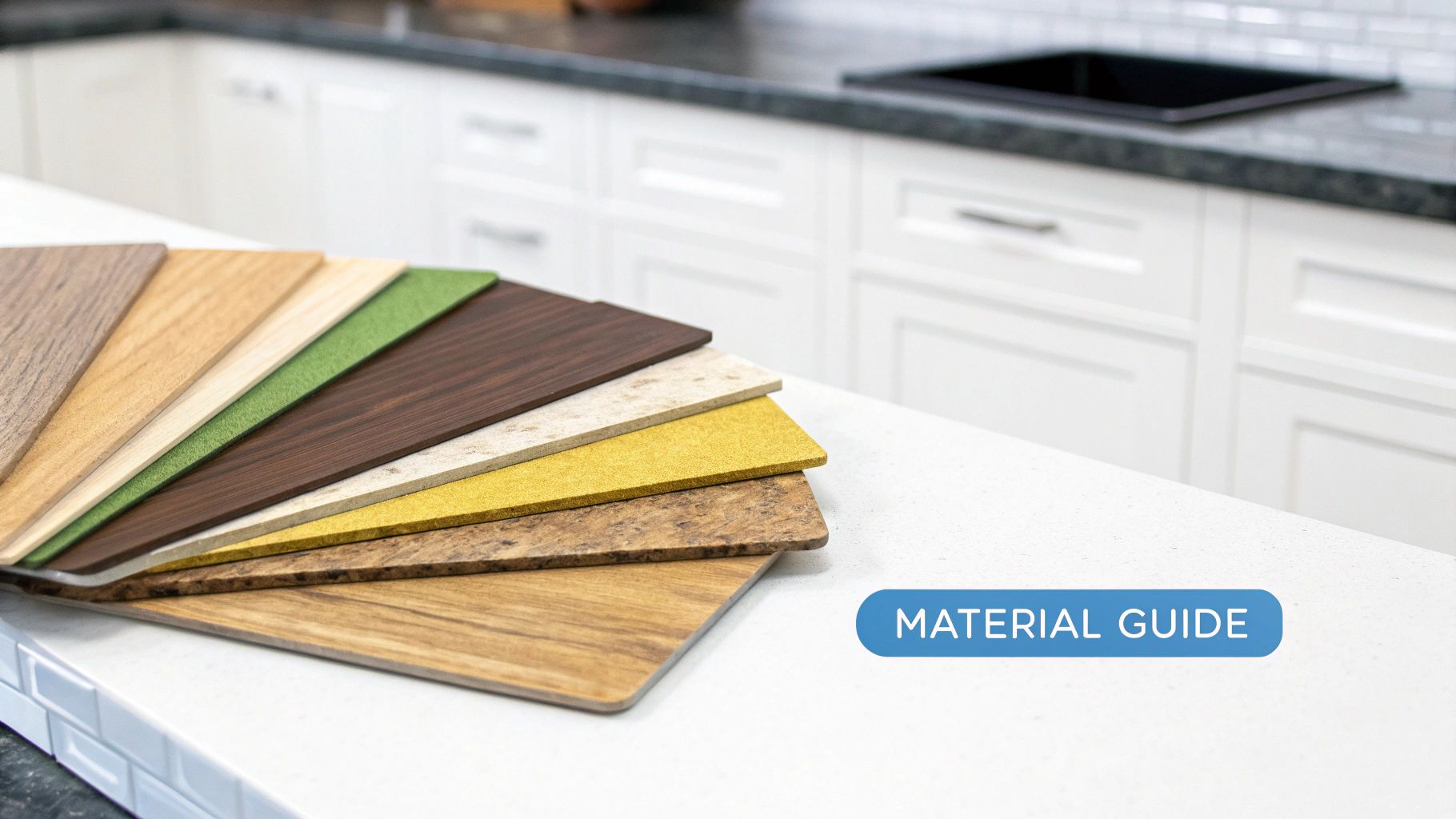
The materials selected for your kitchen cabinets HDB determine not just the look but also their long-term durability. In Singapore’s humid environment, the combination of a robust core material and a resilient surface finish is critical for longevity.
The cabinet's core provides structural integrity, while the finish delivers the aesthetic and protective layer. Getting both right is essential for a lasting investment.
Understanding Core Cabinet Materials
The internal structure of your cabinets must be strong and moisture-resistant. Based on our extensive experience with HDB renovations, one material consistently proves to be the superior foundation.
Solid Plywood is our standard recommendation for the cabinet carcass. Unlike MDF or particleboard which can swell and degrade when exposed to moisture, plywood is constructed from multiple layers of wood veneer bonded together. This cross-grained structure provides excellent strength and resistance to humidity—a crucial feature for any kitchen in Singapore. We've seen firsthand that a solid plywood core offers HDB homeowners the best long-term value and durability.
Popular Finishes for HDB Kitchens
Once you have a strong plywood core, the finish defines your kitchen's style and day-to-day maintenance.
- Laminates: The most common choice for kitchen cabinets in HDB flats due to their versatility and value. High-pressure laminates (HPL) are available in a vast array of colours and textures, including realistic wood grains. They offer excellent resistance to scratches, heat, and stains, making them a practical and budget-friendly option.
- Sintered Stone: A premium choice for those seeking a luxurious look and exceptional durability. Created by fusing minerals under extreme heat and pressure, it results in a non-porous, highly resilient surface that is nearly impossible to scratch or stain. It's easy to clean and ideal for a sleek, modern aesthetic.
- Quartz: While primarily used for countertops, quartz can also be applied to cabinet doors for a seamless, high-end appearance. It is extremely hard-wearing, non-porous, and low-maintenance, blending practicality with sophisticated style.
The demand for these durable and modern materials is growing. Singapore’s kitchen furniture market is projected to reach USD 94.13 million in revenue by 2025, driven by a preference for minimalist and functional designs in compact HDB homes. You can explore more on these trends with Statista’s market insights.
HDB Kitchen Cabinet Material Comparison
| Material | Average Cost (per foot run) | Durability | Maintenance | Best For |
|---|---|---|---|---|
| Laminate | S$90 - S$150 | Good | Low | Homeowners seeking maximum design flexibility on a practical budget. |
| Quartz | S$200 - S$350 | Excellent | Very Low | Those wanting a seamless, premium look with outstanding durability. |
| Sintered Stone | S$250 - S$400+ | Excellent | Very Low | Homeowners desiring an ultra-modern, luxurious kitchen that is virtually indestructible. |
Finishes in Action: Matte vs. Glossy
The final texture of your material has a significant impact on both the kitchen's appearance and its upkeep.
Matte Finishes
A matte finish provides a soft, contemporary aesthetic that diffuses light. Its key advantage is its ability to conceal fingerprints, smudges, and minor scratches, making it a highly practical choice.
- Practical Example: For a family in a 4-room Punggol HDB, we used dark grey Fenix laminate cabinets. The super-matte, anti-fingerprint surface ensures the kitchen looks clean and sophisticated with minimal daily wiping, which was a key requirement for the busy parents.
Glossy Finishes
High-gloss finishes are excellent for making smaller HDB kitchens feel larger and brighter by reflecting light. They create a sleek, polished, and modern look.
- Practical Example: In a compact 3-room BTO in Tampines, we installed high-gloss white laminate cabinets. The reflective surface amplified the natural light from the window, making the narrow galley kitchen feel more open and spacious. While it requires more frequent cleaning to maintain its shine, the homeowner prioritised the visual benefit of a brighter space.
Your choice of materials and finishes should align with both your aesthetic preferences and the practical demands of your household.
How to Budget for Your HDB Kitchen Cabinets
Establishing a clear and realistic budget is the most critical step for a smooth kitchen renovation. While many homeowners focus on the cost per foot run for kitchen cabinets for an HDB, this figure only tells part of the story.
A comprehensive budget should account for all components, from materials and hardware to labour and customisations. Understanding these costs upfront helps prevent unexpected expenses and ensures your investment is allocated wisely.
Breaking Down the True Cost of Kitchen Cabinets
The final cost of your kitchen cabinets is a sum of several key components, each influencing the overall quality and functionality.
- Materials: This is the largest component, covering the cabinet carcasses (we insist on solid plywood), door finishes (laminate, quartz, etc.), and the countertop.
- Hardware: This includes all functional mechanisms like hinges, drawer runners, and handles. Upgrading to high-quality systems like Blum or Hafele soft-closing hardware adds cost but significantly improves daily user experience and longevity.
- Labour and Installation: This covers the skilled carpentry, delivery, and professional installation required to ensure a precise and secure fit.
- Customisations: This includes any non-standard features, such as pull-out pantry systems, "magic corner" units for L-shaped corners, or integrated organisers for cutlery and spices.
A typical HDB kitchen renovation in Singapore ranges from SGD 6,000 to SGD 15,000, with cabinetry being a major portion of this cost. You can discover more insights about HDB renovation costs for a broader budgeting perspective.
Realistic Cost Ranges for HDB Flats
Based on our project experience, the total cabinetry budget generally scales with the flat size. Here is a practical guide for a complete set of quality kitchen cabinets in an HDB, including solid plywood carcasses, laminate finishes, a quartz countertop, and professional installation.
| HDB Flat Type | Typical Kitchen Size | Estimated Cabinetry Budget |
|---|---|---|
| 3-Room | Compact / Galley | S$5,000 - S$8,000 |
| 4-Room | Standard L-Shape | S$7,000 - S$12,000 |
| 5-Room | Larger U-Shape | S$9,000 - S$15,000+ |
These are baseline estimates. Opting for premium finishes like sintered stone or incorporating extensive custom internal systems will position your budget at the higher end of these ranges. A well-planned budget isn’t about spending less; it’s about spending smarter to get the features and durability that truly matter.
Smart Ways to Save Without Sacrificing Quality
A tight budget doesn't mean compromising on quality. Strategic planning can help you achieve a high-end result without overspending.
Here are actionable tips we provide our clients:
- Prioritise Your Hardware: Invest in premium soft-closing runners for frequently used drawers (e.g., cutlery, pots and pans) and use standard hinges for less-accessed cabinets, like those above the fridge.
- Mix and Match Materials: Use a more expensive, visually striking finish for upper cabinets and a durable, cost-effective laminate for the high-wear lower cabinets. This creates a stylish two-tone look while optimising your material budget.
- Standardise Cabinet Sizes: Designing your layout around standard cabinet widths (e.g., 600mm, 900mm) reduces the need for custom carpentry, which can lower labour costs.
- Rethink Corner Solutions: While "magic corner" systems are effective, they can be costly. A well-planned blind corner cabinet with simple shelving can often provide sufficient storage for less-used items at a fraction of the price.
By focusing on these practical strategies, you can build a beautiful and functional kitchen that aligns with your budget and is built to last.
Maximising Space with Smart Kitchen Layouts
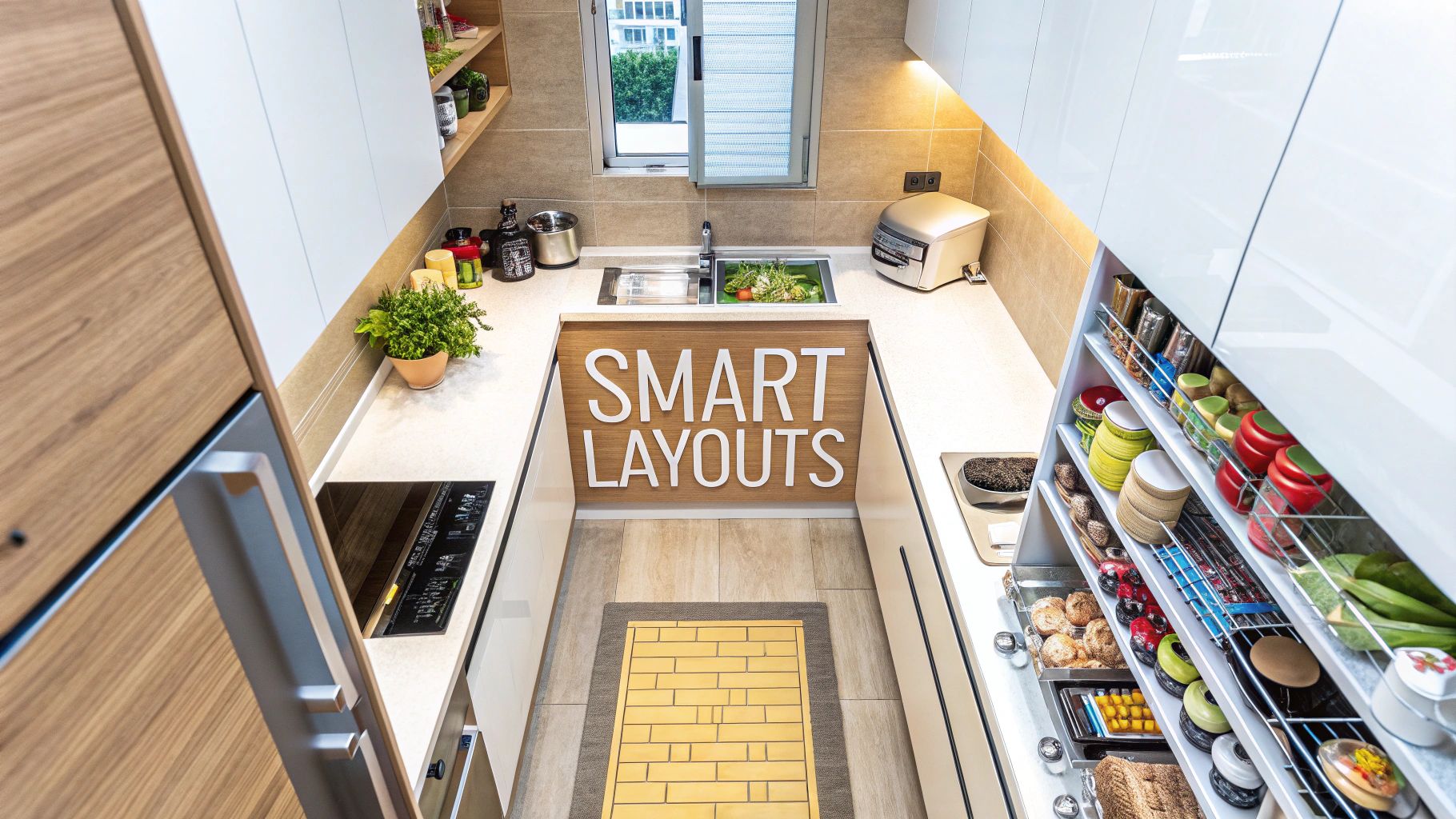
In a compact HDB flat, the kitchen layout is the most critical element for functionality. A well-designed layout makes a small kitchen feel efficient and spacious, while a poor one creates daily frustration. The primary goal is to establish an effective "kitchen work triangle," connecting the sink, stove, and refrigerator for a seamless workflow. This principle is the foundation for all functional kitchen cabinets for HDB designs.
Common HDB Kitchen Layouts
HDB kitchens typically conform to one of three layouts. The best choice depends on your flat's structure and your cooking habits.
- The Galley Kitchen: Featuring two parallel runs of cabinets, this layout is highly efficient for a single cook and common in older HDBs. The work triangle is compact, keeping everything within arm's reach.
- The L-Shape Kitchen: Found in many 4- and 5-room flats, this layout uses two adjacent walls, opening up the kitchen to the dining area. This creates a more social atmosphere but requires a smart solution for the corner cabinet.
- The U-Shape Kitchen: Utilising three walls, this layout provides the most storage and counter space. It is ideal for avid cooks or larger families and can comfortably accommodate multiple users.
Based on our experience, the L-shape often provides the best balance of efficiency and an open feel, but the optimal layout is always one that is tailored to your specific needs.
Going Beyond the Basic Layout
Once the primary layout is determined, the real optimisation happens inside your kitchen cabinets HDB design. This is where we integrate clever storage solutions to maximise every centimetre.
A smart layout isn’t about having more cabinets; it's about having smarter ones. The goal is to make storage intuitive. Here are some solutions we frequently implement:
- Pull-Out Pantries: A tall, narrow pull-out pantry is far more efficient than a deep, standard cabinet where items get lost. It allows you to see all your dry goods and condiments at a glance.
- Magic Corner Units: These systems transform awkward corner cabinets into highly accessible storage. A swing-out mechanism brings shelves from the back of the cabinet directly to you, making it perfect for bulky pots and appliances.
- Deep Drawers for Pots and Pans: Instead of a low cabinet where you have to stack and unstack pots, deep and wide drawers allow you to store them side-by-side. This makes accessing your cookware effortless.
A Practical Example of Smart Design
In a recent 4-room HDB project in Bishan, the homeowners struggled with a cramped L-shaped kitchen. Their main pain points were the inaccessible corner cabinet and a lack of organised pantry storage.
Our solution was twofold. First, we installed a magic corner unit, which immediately made the entire corner usable for their rice cooker and large pots. Second, we replaced a standard 300mm base cabinet with a full-height pull-out pantry. This one change consolidated all their sauces, spices, and dry goods into a single, organised location.
By optimising the internal fittings alone, we increased their usable storage by approximately 30% without altering the kitchen's footprint. The result was a kitchen that felt significantly larger and more efficient for their daily cooking routine.
Navigating HDB Renovation Rules and Timelines
Before starting your renovation, it's crucial to understand the regulations set by the Housing & Development Board (HDB). Adhering to these guidelines for your kitchen cabinets in your HDB ensures a smooth project, avoids potential penalties, and protects the structural integrity of your building.
Core HDB Guidelines You Must Know
While your interior designer will manage the permits, being aware of the key rules helps you plan a feasible design.
The most common regulations for kitchen renovations involve structural alterations and "wet works." Hacking walls to create an open-concept kitchen requires an HDB permit, and only non-structural walls can be demolished. Any modifications to the plumbing, such as relocating the sink, must be performed by a PUB-licensed plumber and often require HDB approval to ensure proper waterproofing and drainage.
A good renovation plan respects these guidelines from the outset, ensuring your project is approved without delay and built safely.
Working with HDB-Licensed Contractors
This is non-negotiable for certain tasks. Any work involving hacking, plumbing, gas pipes, or window replacement must be carried out by contractors registered with HDB.
Using an unlicensed contractor poses significant risks, including potential fines and a requirement to reinstate the unapproved work at your own expense. Engaging an established design firm or an HDB-licensed contractor provides a guarantee that all work complies with regulations and is properly documented.
A Realistic Project Timeline from Start to Finish
Understanding the project timeline helps you manage expectations and plan accordingly. A typical kitchen cabinets HDB installation follows a structured process.
Here is a realistic timeline:
- Design & Planning (1-3 weeks): This phase involves consultations, finalising the layout, selecting materials, and approving 3D renderings.
- Permit Application & Approval (1-3 weeks): Your designer submits the necessary plans to HDB for approval. The duration depends on the complexity of the renovation.
- Fabrication (2-4 weeks): While awaiting permits, your custom cabinets are fabricated off-site in our carpentry workshop.
- On-Site Work & Installation (1-2 weeks): This is the execution phase. It includes any approved hacking, plumbing, and electrical work, followed by the installation of cabinets, countertops, and appliances.
- Finishing Touches (3-5 days): This final stage includes installing the backsplash, final paint touch-ups, and a thorough clean-up before the official handover.
This clear roadmap transforms a potentially overwhelming process into a manageable and rewarding project.
Keeping Your Kitchen Cabinets Looking New
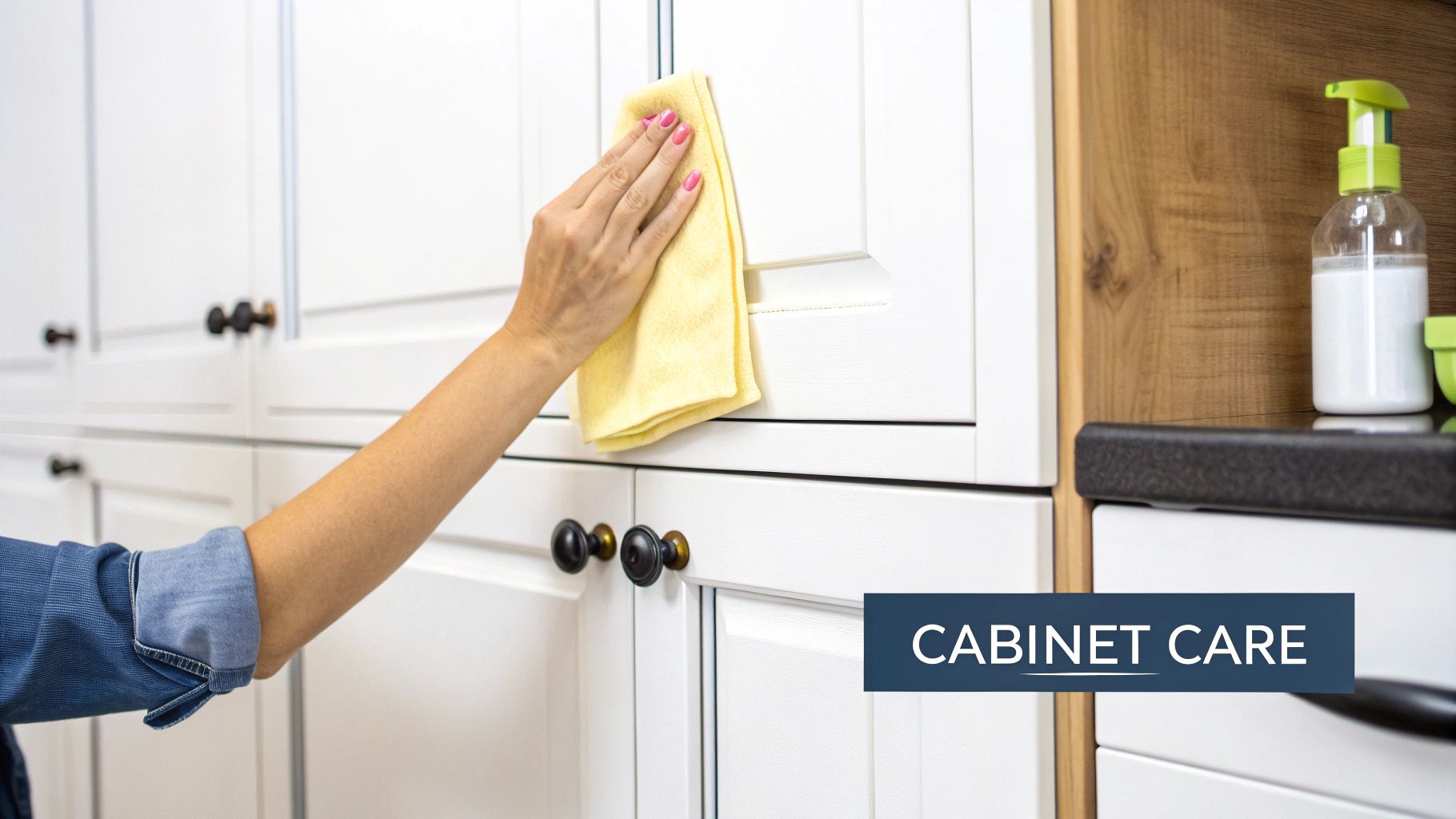
Maintaining your new kitchen cabinets HDB is simpler than you might think. It relies on consistent, gentle care rather than intensive periodic cleaning. A simple routine prevents the build-up of grease and grime that can cause long-term damage.
Cleaning Guides for Common HDB Materials
Using the right cleaning method for your specific material is essential to avoid damage.
Laminate Cabinets
- Daily Care: Use a soft, damp microfibre cloth for daily spills and fingerprints. For grease, a solution of warm water and mild dish soap is effective.
- What to Avoid: Abrasive cleaners, scouring pads, and harsh chemicals like bleach can scratch the surface and cause discolouration.
Quartz and Sintered Stone
- Daily Care: These non-porous surfaces are easy to clean. Wipe them with a soft cloth and a pH-neutral cleaner or a mild soap and water solution.
- What to Avoid: Avoid highly acidic or alkaline cleaners and abrasive pads, which can dull the polished finish over time.
A critical habit we always recommend is to wipe the area around the sink dry daily. This simple action prevents water from seeping into cabinet joints and causing damage, regardless of the material.
Proactive Maintenance Tips
A few preventive habits will keep your kitchen functioning smoothly for years.
Preventing Scratches and Dents
Use cutting boards on countertops and place trivets under hot pans. Inside drawers, use soft liners to prevent utensils from scratching the interior surfaces.
Simple Hinge Adjustments
Over time, cabinet doors may become misaligned. This is a normal occurrence and is easy to fix.
- Locate the Adjustment Screws: Most modern hinges have at least two screws.
- Adjust Alignment: One screw typically moves the door left or right, while the other adjusts it vertically.
- Test and Tweak: Make small, quarter-turn adjustments and check the alignment by closing the door. A few minor tweaks are usually all that is needed to restore a perfect fit.
Performing this quick check every six months will ensure your doors operate smoothly and prevent undue stress on the hardware.
Your Top Questions About HDB Kitchen Cabinets Answered
Here are clear, direct answers to the most common questions we receive about kitchen cabinets in HDB flats.
How Long Does a Full Cabinet Installation Take?
Once the cabinets are fabricated and delivered to your site, the physical installation typically takes 1 to 2 weeks. This includes setting the cabinets, fitting the countertop, and installing handles and hardware. The off-site fabrication process itself usually requires 2-4 weeks prior to this.
Can I Actually Change My Kitchen Layout in an HDB?
Yes, but within HDB guidelines. You can rearrange your cabinet layout to create a more functional design. However, major changes like relocating your sink or hacking walls require a permit from HDB to ensure structural integrity and proper plumbing. While a kitchen island is a popular request, a peninsula is often a more practical solution in HDB layouts, offering similar benefits without obstructing the workflow.
What’s the Most Durable Material Combo for Singapore's Climate?
For the optimal balance of durability, value, and resilience to humidity, we consistently recommend a solid plywood carcass paired with a high-pressure laminate (HPL) finish. Plywood provides superior moisture resistance compared to particleboard, preventing warping. Modern laminates are highly resistant to heat, scratches, and stains, making them an ideal surface for a busy kitchen.
Do I Really Need to Use an HDB-licensed Contractor?
Yes, for specific regulated tasks, it is mandatory. While a general contractor can install cabinets, any work involving hacking, plumbing, or electrical modifications must be performed by an HDB-licensed professional. This ensures the renovation is safe, compliant, and protects your home's value.
Ready to create a kitchen that perfectly fits your HDB flat and lifestyle? The team at KIVO combines decades of experience with a passion for functional design. Visit us at kivo.com.sg to see our portfolio and schedule a consultation.