A kitchen cabinet renovation is one of those upgrades that fundamentally changes how you experience your home. It’s not just about a new look; it’s about solving daily frustrations. It’s about creating a smarter workflow, gaining more storage, and boosting your home’s value. This process involves replacing or refacing your cabinet structures to build a kitchen that’s not just beautiful, but perfectly in sync with your lifestyle.
Especially in Singapore homes, where every square centimetre is valuable, a well-executed kitchen cabinet renovation is one of the most impactful improvements you can make.
Why Your Kitchen Cabinets Are the Key to a Better Home
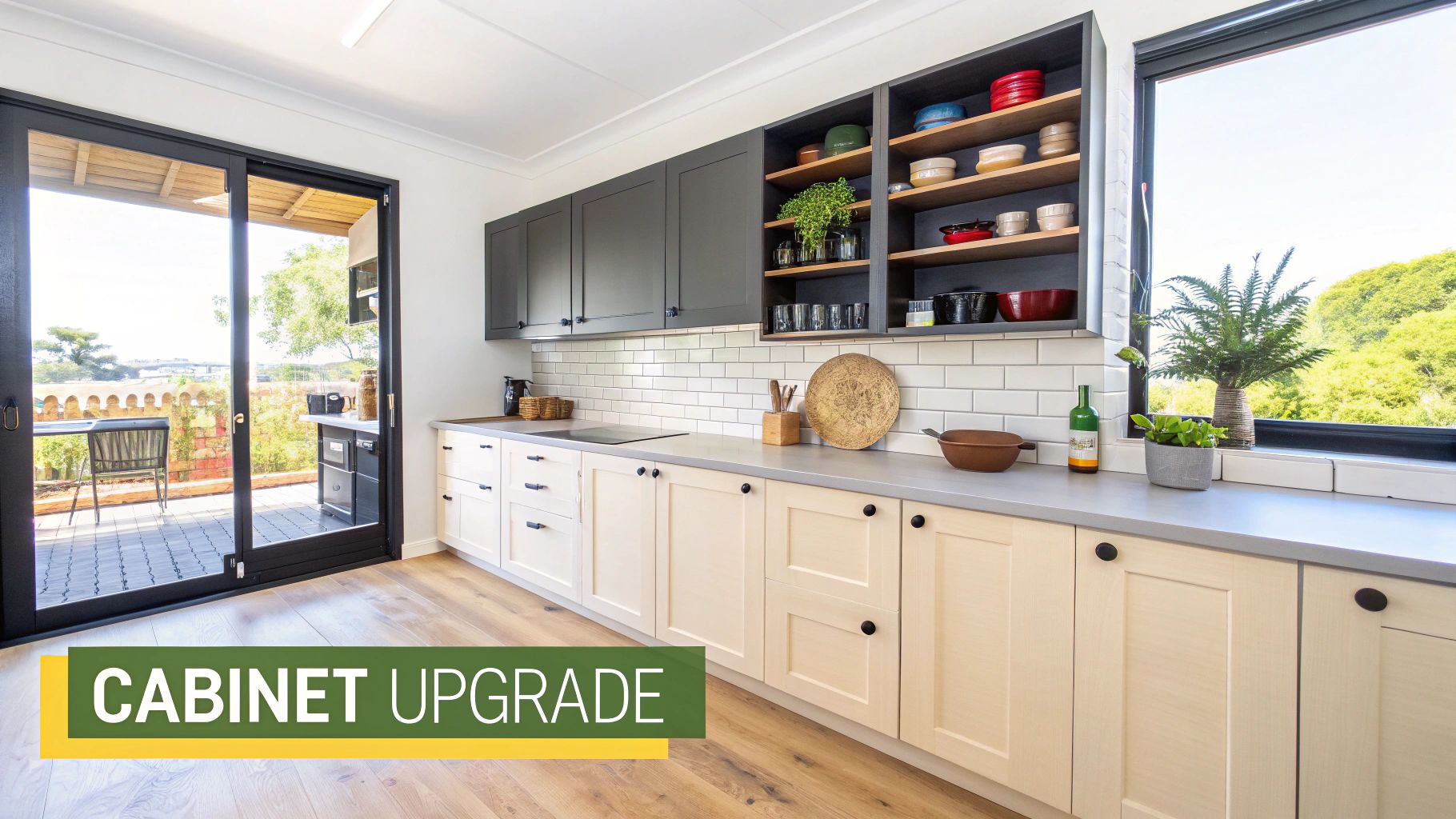
Think of your kitchen cabinets as the foundation of your home’s central hub. They are far more than storage boxes; they dictate your kitchen's workflow, define its aesthetic, and shape how you interact with the space every single day. A well-planned kitchen cabinets renovation isn’t just an expense—it’s a powerful investment in your daily quality of life.
From our experience with clients in HDB flats and condominiums across Singapore, a cabinet overhaul is often the catalyst for a complete home transformation. It directly addresses common frustrations: insufficient storage, awkward layouts, and dated designs that simply don't function for a modern household.
Unlocking Your Home's Potential
A thoughtful cabinet renovation solves practical problems while elevating your home's character. The benefits are immediate and tangible, making a real difference in your daily routines.
Here are the actionable results you stand to gain:
- Enhanced Functionality: Imagine deep drawers for pots right next to the stove, eliminating the need to crouch and dig through a back-of-the-cupboard mess. A practical example is a pull-out spice rack beside the hob, so you can grab what you need without taking a single step.
- Maximised Storage: In compact Singaporean homes, every inch is prime real estate. A bespoke cabinet solution can reclaim awkward corners with pull-out systems, stretch storage to the ceiling, and integrate smart organisers that can effectively double your usable storage capacity.
- Increased Property Value: The kitchen is a major selling point. A modern, well-designed kitchen with high-quality cabinetry is a significant draw for potential buyers and consistently delivers a strong return on investment.
A kitchen cabinet renovation isn’t just about changing doors and drawers. It’s about re-engineering the heart of your home to work better for you, creating a seamless blend of beauty and practicality.
This guide will walk you through every critical step. We will cover everything from setting a realistic budget and choosing materials that withstand Singapore's humidity, to deciding between custom carpentry and prefabricated options. Our goal is to provide you with the practical, actionable insights needed to create a kitchen you’ll love for years to come.
Understanding the Real Cost of a Cabinet Overhaul
Starting a kitchen cabinet renovation is exciting, but the first practical step is understanding the budget. In Singapore, cabinetry is often the single largest expense in a kitchen project. Cabinets define your kitchen's layout, its daily function, and its overall style. Knowing where your money goes is crucial for making smart, long-lasting decisions.
The final cost depends on a mix of materials, the extent of customisation, and the complexity of the installation. For example, simply refacing cabinet doors is worlds apart from a full-scale renovation involving bespoke carpentry designed to maximise a tricky HDB layout. Every choice, from the laminate finish to the brand of soft-closing hinges, impacts the total investment.
Breaking Down the Core Expenses
The cost of new kitchen cabinets rarely stops at the carpentry. To achieve a flawless, durable result, essential preparatory work is often needed. These related services can catch homeowners by surprise if they aren't factored in from the start.
Consider these "hidden" costs that are essential for a professional job:
- Hacking and Demolition: This involves carefully tearing out old cabinets, countertops, and sometimes wall tiles. It's precise work, especially when navigating around existing plumbing and electrical lines.
- Masonry and Structural Work: For most HDB kitchens, a solid concrete base for the cabinets is a must. This masonry work provides a sturdy, waterproof foundation, protecting your new cabinets from long-term moisture damage.
- Plumbing and Electrical Adjustments: Planning to move your sink or add under-cabinet LED lighting? This requires licensed professionals to reroute pipes and wires, which is an additional cost.
It’s a common misconception that the cost begins and ends with the cabinets. A seamless renovation requires a coordinated team of tradespeople. We always advise clients to allocate an additional 15-20% of their cabinet budget for this crucial prep work to avoid surprises.
In Singapore's renovation market, kitchen cabinets are a major investment, typically accounting for 30-40% of the entire kitchen budget. For a standard HDB or condo, this can be a significant portion of a total project cost ranging from $8,900 to $23,200. This is driven by a preference for custom carpentry, as homeowners invest in smart, built-in solutions to make the most of every square centimetre.
Here’s a look at a typical cost breakdown in Singapore.
Typical Cost Breakdown for a Kitchen Cabinet Renovation in Singapore
This table outlines estimated cost ranges for key components, helping homeowners budget effectively.
| Component | Estimated Cost Range (SGD) | Key Considerations |
|---|---|---|
| Custom Carpentry (Plywood with Laminate) | $120 - $200 per foot run (pfr) | The most popular choice in Singapore. Price varies based on laminate quality and internal fittings. |
| Countertops (e.g., Quartz, Sintered Stone) | $90 - $250 pfr | Sintered stone and high-end quartz are at the premium end. Price depends on brand, thickness, and colour. |
| Hardware (Hinges, Handles, Drawer Slides) | $500 - $2,000+ | High-quality European brands like Blum or Hafele will cost more but offer superior durability and features. |
| Hacking & Demolition | $800 - $2,500 | Depends on the size of the kitchen and the extent of removal (e.g., cabinets, countertops, floor/wall tiles). |
| Masonry (Cabinet Base, Plastering) | $700 - $2,000 | Essential for HDBs. Cost depends on the length of the base and any required wall plastering after hacking. |
| Plumbing & Electrical Work | $500 - $1,500+ | Includes moving water points, installing new power sockets for appliances, and adding lighting points. |
Note: These are estimates. The final cost depends on your project's specifics, material choices, and the professionals you engage.
The Impact of Materials and Customisation
Material choice will cause the biggest swings in your budget. While laminate-finished plywood is a favourite in Singapore for its balance of durability and value, upgrading to premium materials like solid wood, sintered stone countertops, or high-end European hardware will increase the cost.
Similarly, choosing between off-the-shelf cabinets and fully custom ones is a major financial decision. Prefabricated options offer a more budget-friendly starting point, but bespoke carpentry provides an unmatched advantage in fit, finish, and storage efficiency. Customisation allows us to design around awkward corners, seamlessly integrate your appliances, and create unique features built for how you live. For a deeper look at budgeting, you can find guides on the cost to replace kitchen cabinets in other markets for comparison.
Choosing Cabinet Materials and Hardware That Last
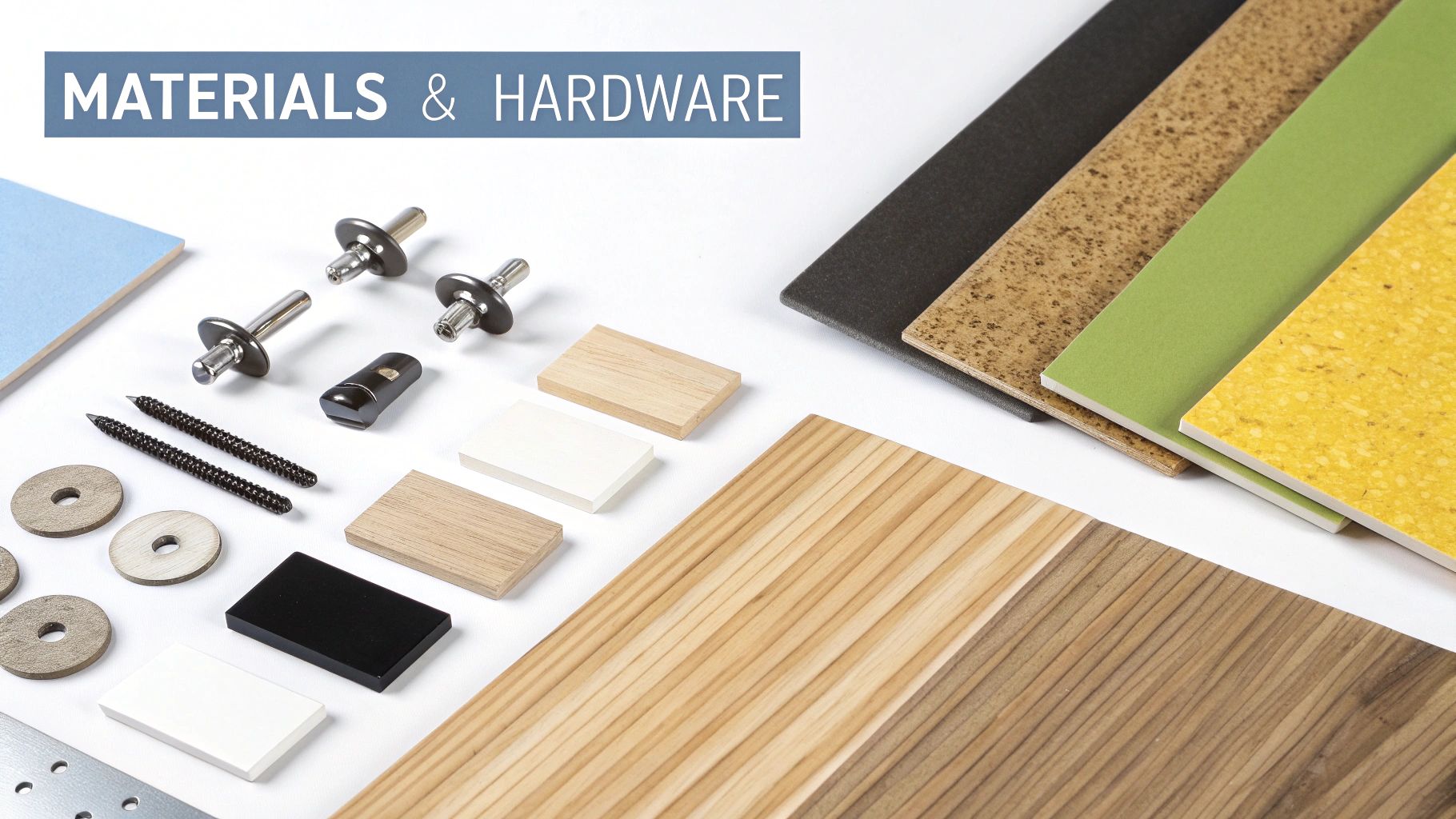
The materials and hardware you select are the core of a successful kitchen cabinet renovation. They determine not just the initial look, but how your kitchen withstands daily use, spills, and Singapore's humidity for years to come.
Think of the cabinet carcass as the skeleton and the hardware as the joints—both must be strong and reliable for the entire structure to function flawlessly. Making the right choices from the start prevents common issues like warped doors, peeling laminates, or sticking drawers.
Selecting the Right Cabinet Carcass Material
The internal structure, or carcass, is the unseen workhorse of your cabinets. Its material is critical for longevity, especially in our climate.
Here’s a practical rundown of the most common options:
- Solid Plywood: This is our primary recommendation for Singaporean homes. Made from multiple thin layers of wood veneer glued together, it's exceptionally strong and highly resistant to moisture. Its cross-grained structure prevents it from warping or swelling easily, making it the ideal foundation for a hardworking kitchen.
- Medium-Density Fibreboard (MDF): MDF is an engineered product made from compressed wood fibres. It provides a perfectly smooth surface, which is excellent for paint or laminate finishes. However, its main drawback is its vulnerability to water; if the surface is compromised, MDF can absorb moisture and swell, leading to damage.
- Solid Wood: While beautiful, solid wood is often less practical for Singapore's humid environment. Wood naturally expands and contracts with humidity changes, which can lead to warped panels or cracked joints. It also requires more maintenance and is typically the most expensive option.
For a kitchen that needs to withstand daily cooking and cleaning in a humid climate, solid plywood is consistently the most reliable choice. Its superior moisture resistance and structural stability provide a durable foundation that cheaper alternatives cannot match.
Pairing Cabinets with Durable Countertops
Your countertop is where aesthetics meet daily function. It must be tough enough for food prep yet stylish enough to be a centrepiece. Based on consistent client demand, two materials stand out.
Quartz remains a top choice for its non-porous and highly durable nature. As an engineered stone, it resists stains from coffee, wine, and oil, requiring minimal upkeep.
Sintered stone is another excellent option, offering even greater resistance to heat, scratches, and UV rays. This makes it ideal for homeowners who want a work surface that is practically indestructible.
Recent data backs these trends. Quartz leads at 40% preference due to its stain-resistant surface and impressive warranties. For property developers, these kinds of upgrades can even yield 12-15% higher rental returns. You can explore detailed market insights on the Singapore cabinet industry to see more on this.
The Finishing Touches: Hardware and Organisers
Hardware is what you interact with daily, and upgrading it can dramatically improve your kitchen’s usability.
Here are the hardware elements that make the biggest impact:
- Soft-Closing Hinges and Drawer Slides: This is a non-negotiable for a quality feel. They prevent slamming, reducing wear and tear while creating a quieter kitchen.
- Handles and Pulls: The choice between handles and a handleless design defines your kitchen's look. Integrated "J-pull" or push-to-open mechanisms create a minimalist aesthetic. In contrast, handles in finishes like brushed brass or matte black can add personality. From our clients, we see a strong trend towards matte black and champagne gold finishes for a touch of modern luxury.
- Internal Organisers: This is where you truly customise your storage. Smart additions like pull-out pantry units, corner carousel systems ("magic corners"), and deep drawer dividers transform clutter into efficiency. A practical example is a pull-out tray for heavy appliances like a stand mixer or rice cooker, saving you from reaching into deep, dark corners.
Custom vs Prefabricated Cabinets: Which Is Right for You?
Choosing between custom carpentry and prefabricated cabinets is a pivotal decision in your kitchen renovation. It dictates your budget, timeline, and the final character of your space. There is no single "best" answer; the right choice aligns with your specific needs, your home's layout, and the level of personalisation you desire.
Prefabricated cabinets, or stock units, are mass-produced in standard sizes. Their main advantage is speed and cost. Being ready-made, they can be delivered and installed much faster than custom options, making them suitable for projects on a tight schedule.
However, this convenience comes with trade-offs. Standard sizing means they often don't fit a kitchen's unique dimensions perfectly. This can result in awkward filler strips to cover gaps and, more importantly, wasted space—a significant drawback in compact Singaporean homes where every centimetre is crucial.
The Unmatched Flexibility of Custom Cabinets
This is where custom carpentry truly shines. Bespoke cabinets are designed and built from scratch to the exact measurements of your kitchen. This tailored approach allows us to solve common challenges like slanted walls, low ceilings, or odd corners, turning potential problems into functional, seamless storage.
With custom work, you control every detail:
- A Perfect Fit: We can build cabinets from floor to ceiling, eliminating dust-collecting gaps and maximising vertical storage.
- Personalised Layouts: Want a dedicated drawer for your Nespresso pods or a narrow pull-out for cooking oils next to the hob? Customisation makes it possible.
- Material and Finish Freedom: You are not limited to a catalogue. You can select the exact laminate, hardware, and internal organisers that match your vision and lifestyle.
Custom cabinets are the ultimate solution for maximising space and achieving a truly integrated design. They transform your kitchen from a collection of standard boxes into a cohesive, highly functional workspace that is uniquely yours.
The demand for these smart, space-saving solutions is particularly high in smaller Singaporean homes. Small kitchen renovations in Singapore, especially for HDB units, have seen a surge in interest, highlighting how essential intelligent cabinet design is in spaces often under 40 sq ft.
Project costs for these can range from $8,900 to $23,200, with a significant portion invested in carpentry. This allows for optimisations like slimline cabinets that can boost storage by 30% without reducing floor space. You can learn more about how smart cabinet solutions are transforming compact kitchens.
Making the Decision: A Head-to-Head Look
So, how do you decide? It comes down to your priorities. Are you focused on a quick, budget-friendly update, or is your goal a perfectly optimised, long-term solution built just for you?
To clarify, let's compare them side-by-side.
Custom vs Prefabricated Cabinets: A Head-to-Head Comparison
This table provides a clear comparison across the factors that matter most when deciding between custom and prefabricated cabinets.
| Feature | Custom Cabinets | Prefabricated Cabinets |
|---|---|---|
| Fit and Sizing | Made-to-measure for a perfect, seamless fit. Ideal for unusual layouts. | Standard sizes only. May require filler panels and leave unused gaps. |
| Personalisation | Unlimited options for materials, finishes, hardware, and internal organisers. | Limited selection of styles, colours, and configurations. |
| Cost | Higher initial investment due to skilled labour and bespoke design. | Lower upfront cost due to mass production and standard materials. |
| Timeline | Longer lead time is required for design, fabrication, and installation. | Quicker process as units are in-stock or have short order times. |
| Quality | Typically higher quality materials and construction, leading to better durability. | Quality can vary significantly between manufacturers and product lines. |
Ultimately, if your budget and timeline allow, custom cabinetry often delivers a superior return on investment through enhanced functionality, better durability, and a flawless aesthetic. For those with standard layouts or a need for speed, prefabricated options offer a practical and accessible alternative.
The Renovation Process From Vision to Reality
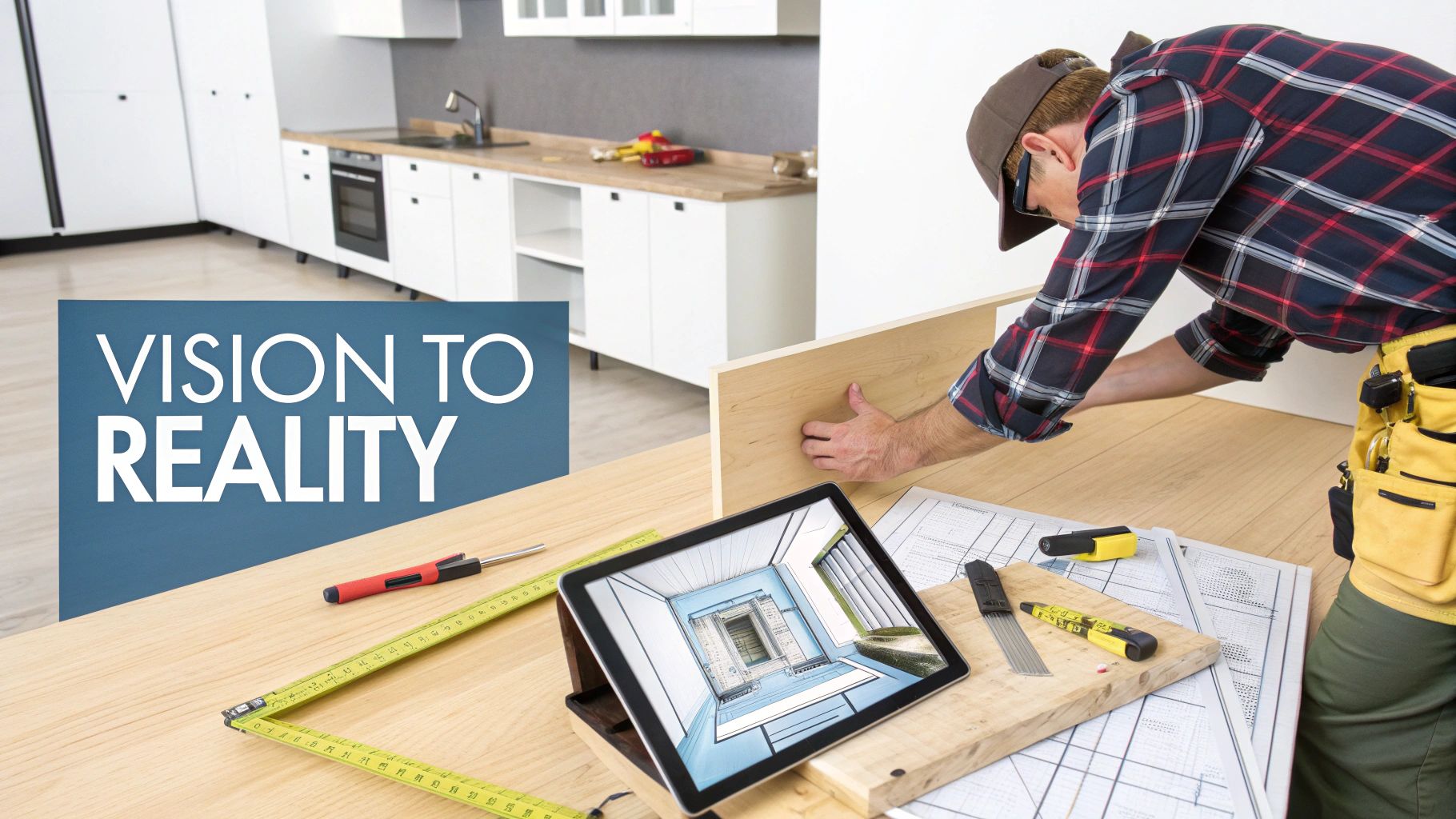
A kitchen cabinet renovation is a structured process, not a chaotic one. Understanding the roadmap transforms a seemingly overwhelming task into a clear, manageable project. We'll guide you from your initial idea to a stunning, functional kitchen, showing how each phase builds logically on the last.
This systematic approach helps eliminate surprises, keeps the project on track, and ensures the final result aligns perfectly with your vision.
Phase 1: Initial Consultation and Design Development
This is where your ideas take shape. We start with a deep dive into your lifestyle, your frustrations with your current kitchen, and your desired aesthetic. How do you use your kitchen daily? What are your storage pain points? What style are you aiming for?
With this understanding, our design team crafts a concept that maximises your space in both form and function. This is more than just sketching layouts; it’s a detailed process:
- Detailed Space Planning: We meticulously analyse your kitchen's workflow to create an efficient “work triangle,” ensuring the placement of cabinets, appliances, and work surfaces feels intuitive.
- Material and Finish Selection: We guide you through the options, helping you select the right materials for cabinet carcasses, doors, countertops, and hardware that look great and endure Singapore's climate.
- 3D Visualisation: Using advanced software, we create photorealistic 3D renderings of your proposed kitchen. This is a game-changer, allowing you to see exactly how the space will look and feel, so you can make confident decisions before any work begins.
Phase 2: Fabrication and Off-Site Preparation
Once the design is finalised and materials are approved, the action moves to our workshop. Off-site fabrication is a cornerstone of our process. By building your custom cabinets in a controlled environment, we achieve a level of precision and quality that is difficult to replicate on-site.
During this phase, our skilled carpenters bring your design to life. This parallel workflow is also highly efficient. While your cabinets are being built, we can begin preparatory work at your home, such as demolition or masonry, which significantly reduces the overall disruption to your daily life.
The off-site fabrication stage is where raw materials are transformed into the components of your new kitchen. It’s a period of quiet progress that sets the stage for a swift and organised installation.
Phase 3: On-Site Installation and Finishing
This is where your vision becomes a tangible reality. The on-site phase begins with the careful removal and disposal of your old cabinetry. Our team works cleanly and efficiently to prepare the space.
The installation follows a precise sequence:
- Base Cabinet Installation: We start from the ground up, setting the lower cabinets and ensuring they are perfectly level and securely anchored.
- Upper Cabinet Mounting: Next, the wall cabinets are mounted, carefully aligned with the base units to create clean, continuous lines.
- Countertop Placement: The countertops are then meticulously installed, with precise cut-outs for your sink and hob.
- Final Touches: The last steps involve fitting doors, drawers, handles, and internal organisers. We conclude with final adjustments and a thorough clean-up, leaving your new kitchen ready for you to enjoy.
Clear communication is our priority throughout the process. Exploring the key factors in kitchen remodeling can help you understand the full scope of what shapes a project's timeline and budget. This structured, transparent approach ensures a smooth journey and a transformative result.
Kitchen Design Inspiration from Our Projects
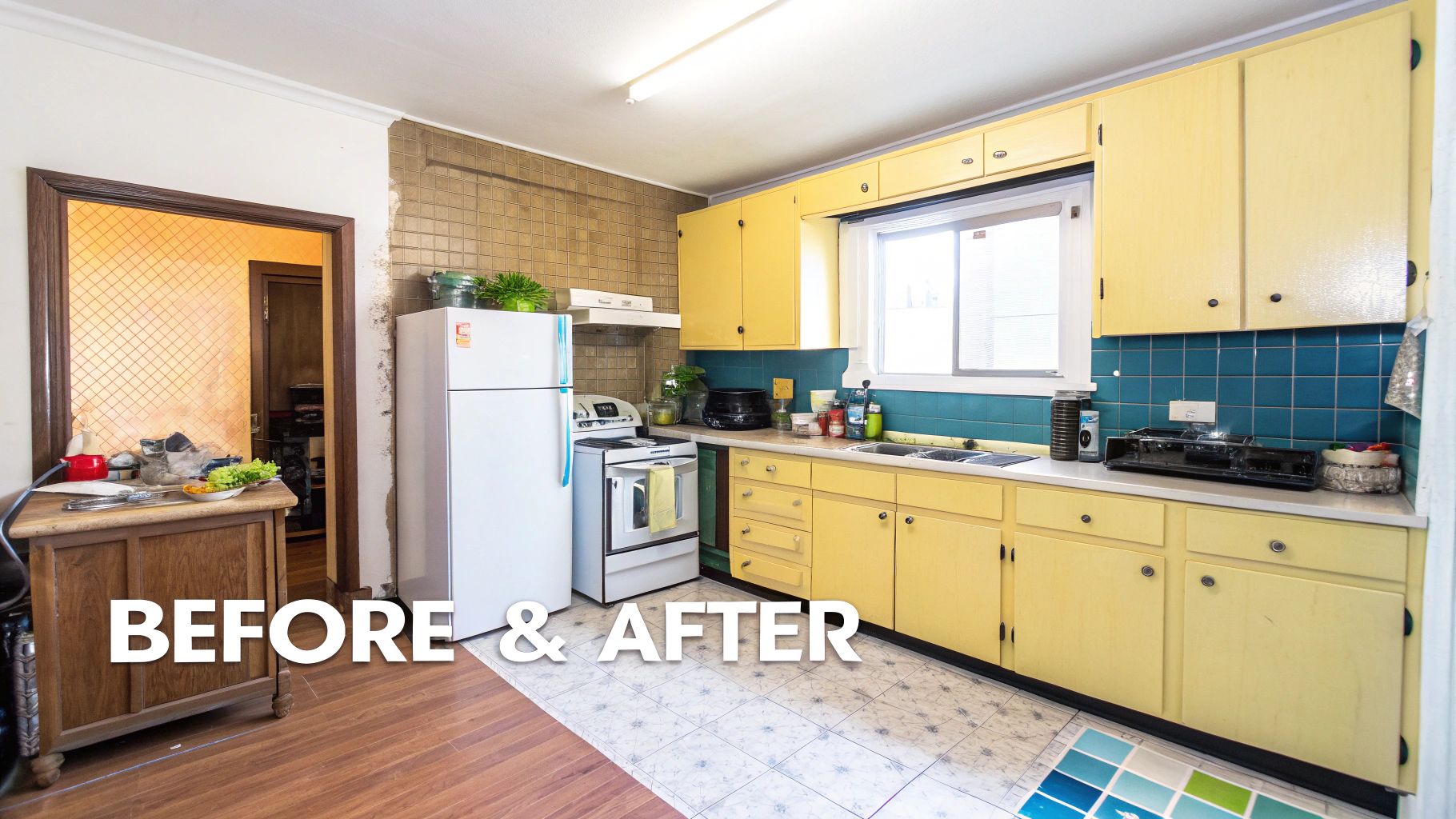
Sometimes, the best inspiration comes from seeing what's possible in the real world. Let’s look at two distinct kitchen cabinet projects from our portfolio, each solving a unique challenge with a bespoke solution.
These examples demonstrate how powerfully custom cabinets can redefine a space, whether it’s a compact HDB flat or a spacious condominium. It’s about using smart customisation to solve practical problems while creating a beautiful, functional heart for the home.
Case Study 1 The Compact HDB Kitchen Transformation
For our client in a 3-room HDB flat, the primary challenge was a cramped, inefficient kitchen. The original layout was dark and cluttered, with minimal counter space and disorganised storage that made daily cooking a chore. Their goal was a space that felt open, bright, and truly functional.
Our solution was a complete custom cabinetry overhaul designed to maximise every centimetre.
- Space-Saving Solutions: We installed slim-profile, floor-to-ceiling cabinets to draw the eye upward, creating an illusion of height. A pull-out pantry was cleverly integrated next to the fridge, turning a narrow, awkward gap into a deep and accessible storage tower for dry goods.
- Material and Colour Choices: Light-coloured laminates with a subtle wood grain finish were chosen for the cabinet doors. We paired this with a glossy white quartz countertop, which reflected light around the room and made the kitchen feel significantly larger and more inviting.
By replacing bulky, standard-depth lower cabinets with custom-sized units and integrating smart organisers, we not only increased storage capacity but also widened the main walkway. This small change dramatically improved the kitchen's flow and usability.
Case Study 2 The Sophisticated Condominium Entertainer’s Hub
A condominium project presented a different challenge: transforming a large but generic kitchen into a sophisticated hub for family cooking and entertaining. The client wanted a space that felt luxurious and seamless, with premium finishes for effortless hosting.
The design focused on creating a sleek, integrated look with high-end, bespoke features.
- Premium Finishes: We used a dark, matte Fenix laminate for the cabinets—a material known for its soft-touch feel and anti-fingerprint surface, perfect for maintaining a clean, modern aesthetic. This was complemented by a stunning sintered stone countertop with dramatic veining, which we extended up the wall as a backsplash for a cohesive, high-impact statement.
- Bespoke Features: The centerpiece was a custom-designed kitchen island featuring an integrated wine cooler, deep drawers for pots and pans, and discreet power points for small appliances. To maintain a minimalist look, we used handleless cabinet doors with a push-to-open mechanism, ensuring clean lines throughout the space.
This renovation shows how custom cabinets can elevate a room from merely functional to truly exceptional, creating a centrepiece that is as practical for daily life as it is beautiful for entertaining.
Got questions about your upcoming kitchen cabinet renovation? You're not alone. Embarking on this journey brings up a lot of "what ifs" and "hows." To give you a clearer picture, we've compiled answers to the questions we hear most often from homeowners right here in Singapore.
How Long Will My Cabinet Renovation Actually Take?
This is the big one, and the answer really depends on the scale of your project.
If you're looking at a straightforward swap of ready-made cabinets, the on-site work can be wrapped up in as little as 1 to 2 weeks. But for a full-blown custom renovation—think hacking old tiles, masonry work, and beautifully bespoke carpentry—you should plan for 4 to 8 weeks from the day we start on-site.
A good chunk of that time involves off-site fabrication of your custom pieces. We build everything in our workshop while the initial prep work happens at your home, which helps keep the on-site disruption to a minimum. Don't worry, we'll give you a detailed schedule so you know exactly what’s happening and when.
Can I Still Use My Kitchen During the Works?
Honestly, for most of the renovation, your kitchen will be a designated work zone. During the messy demolition phase and the precision of installation, it’s going to be largely out of commission.
Our best advice? Set up a small, temporary kitchen station somewhere else in your home. A microwave, an electric kettle, and a mini-fridge can be lifesavers. This simple setup makes the whole process so much more manageable for you and your family while we work our magic.
"A temporary kitchen setup is probably the single best tip we give clients. It makes a world of difference to your daily routine and keeps the stress levels down."
Should I Reface or Completely Replace My Cabinets?
This is a critical decision that really shapes the project's budget, timeline, and final result. Let's break it down.
- Replacing: This means we tear everything out—the old cabinet boxes, doors, everything—and install brand-new ones from scratch. This gives you complete freedom to change the kitchen layout, add clever storage, and fix any underlying issues. It’s the only way to go if your current cabinet structures are old, damaged, or just not working for you anymore.
- Refacing: Think of this as a cosmetic facelift for your kitchen. We keep the cabinet boxes in place but give them a fresh new look with brand-new doors, drawer fronts, and hardware. It's quicker and usually costs less, but it's only a viable option if your existing layout works well and the cabinet carcasses are in solid, good-as-new condition.
The right choice really boils down to the state of your current kitchen and what you're hoping to achieve with the renovation.
Ready to stop wondering and start planning? The team at KIVO is here to walk you through every question, detail, and decision. We combine expert craftsmanship with transparent project management to bring your dream kitchen to life.
Explore our custom interior design services and start your transformation journey today.