Choosing the right kitchen cabinets in Singapore is the single most important decision in your renovation. It defines the aesthetic and, more critically, the daily functionality of your space. A well-chosen cabinet system anchors the entire kitchen, influencing workflow, storage, and ease of use. The goal is to create a space that’s not just visually appealing but genuinely practical for your lifestyle.
Framing Your Kitchen Cabinet Decision: Custom vs. Modular
Starting a kitchen renovation presents a dizzying array of choices. The first crucial decision for homeowners in Singapore—whether in an HDB flat or a condo—is the type of cabinetry construction that best suits their needs.
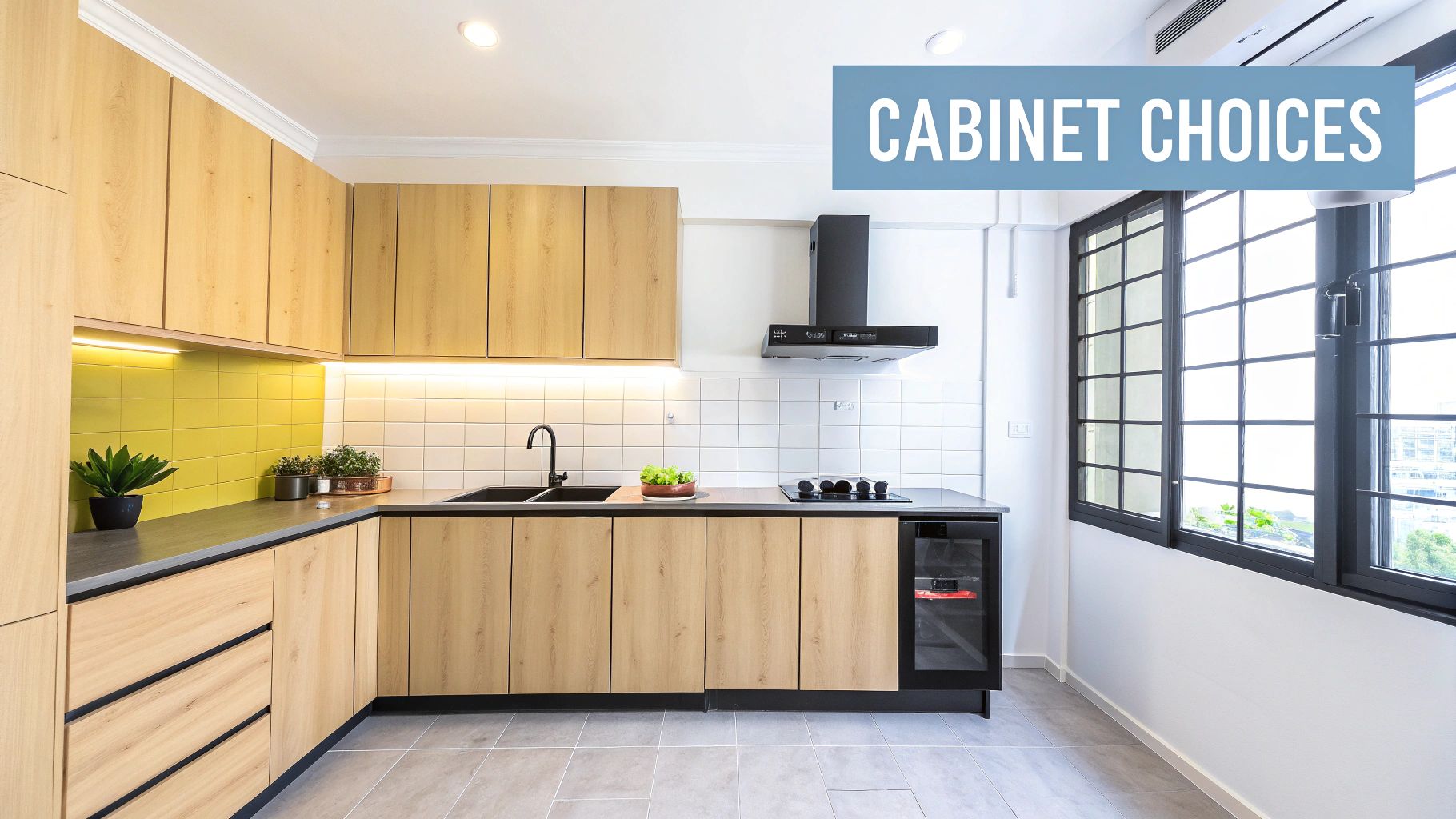
This choice boils down to two primary routes: custom-built carpentry or a modular system. Understanding the practical differences is key to aligning your kitchen aspirations with your budget, timeline, and home layout.
The Core Decision
This isn't just about picking a colour; it's about the fundamental build method that will dictate your kitchen's form and function for years.
- Custom Carpentry: The traditional, bespoke approach. Carpenters build cabinets from scratch on-site or in a workshop, fitting them perfectly to your kitchen's specific dimensions, including any awkward corners or uneven walls. This offers maximum design flexibility.
- Modular Systems: The modern, factory-made approach. This involves using pre-manufactured standard-sized cabinet units ("modules") that are assembled and installed in your kitchen.
We've observed a clear shift towards modular solutions. The modular kitchen market in Singapore was valued at approximately USD 81.79 million in 2024, with cabinetry being the largest component. This trend reflects a demand for faster installation and predictable quality. You can read the full research about the modular kitchen market in Singapore for more data.
The best choice is a balance. Custom carpentry offers unparalleled personalisation, while modular systems provide efficiency and cost-effectiveness. The decision depends on whether you need to maximise an irregular space or prioritise a streamlined process.
Cabinet Materials That Withstand Singapore’s Climate
In Singapore's high humidity, material selection is about long-term durability, not just aesthetics. Constant moisture can cause inferior materials to warp, swell, or develop mould. Choosing the right material for your cabinet's core structure (the carcass) is the first step towards a lasting kitchen.
The carcass is the unseen backbone of your cabinetry. Its material determines strength and resilience against our tropical climate. Let's break down the most common options for kitchen cabinets in Singapore.
Plywood: The Reliable Workhorse
For most Singaporean homes, plywood is our standard recommendation. It's constructed by layering thin wood veneers, with the grain of each layer oriented perpendicularly to the next. This cross-graining technique provides exceptional structural stability.
Its most significant advantage here is superior moisture resistance. Plywood is far less prone to absorbing humidity and warping compared to other engineered woods. For high-use kitchens, especially around the sink and cooking areas, a high-grade, moisture-resistant plywood forms a solid foundation that endures.
Actionable Insight: When discussing options with your contractor, specifically request moisture-resistant (MR) grade plywood for all wet areas. For a recent project in a humid landed property, we specified phenol-formaldehyde bonded plywood for the sink cabinet, providing our client with maximum protection against potential leaks and long-term moisture exposure. This small specification adds significant long-term value.
MDF: A Smooth but Cautious Choice
Medium-Density Fibreboard (MDF) is engineered from fine wood particles, wax, and resin, pressed into dense panels. This process yields a perfectly smooth surface, ideal for paint, lacquer, or veneer finishes.
However, its primary weakness is water. If the protective surface finish is compromised by a deep scratch or chip, MDF can absorb moisture and swell irreversibly. While it's a cost-effective option for cabinet doors in dry zones, we strongly advise against using standard MDF for carcasses, particularly near sinks or dishwashers.
Solid Wood and Other Materials
The natural warmth of solid wood is timeless. The wooden kitchen furniture market in Singapore was valued at about USD 55 million in 2024, demonstrating its enduring appeal. You can explore market trends in this detailed industry analysis.
However, using solid wood requires careful consideration:
- Species Matters: Teak contains natural oils that make it highly resistant to moisture and pests, making it a premium choice. Hardwoods like oak and maple are also viable if properly kiln-dried and sealed for our climate.
- Climate Acclimatisation: Wood expands and contracts with humidity changes. It is crucial to use timber that has been properly acclimatised to Singapore’s environment to minimise future warping or cracking.
Beyond wood, materials like aluminium and stainless steel are gaining popularity for homeowners seeking an industrial aesthetic with unmatched durability. They are completely waterproof and pest-proof, offering a professional-grade solution for serious cooks.
Here’s a practical comparison of materials for a Singaporean home.
Cabinet Material Comparison for Singaporean Homes
| Material | Pros | Cons | Best For | Est. Cost / Foot Run |
|---|---|---|---|---|
| Plywood | Excellent moisture resistance; strong and durable; holds screws well. | Surface isn't as smooth as MDF; can have voids in lower grades. | Cabinet carcasses, especially in wet areas like the sink and hob. | S$100 - S$180 |
| MDF | Very smooth surface, perfect for paint/lacquer; cost-effective. | Prone to water damage if not sealed; heavy; doesn't hold screws as well as plywood. | Cabinet doors and decorative panels in dry areas. | S$80 - S$150 |
| Solid Wood | Beautiful natural grain; can be refinished; timeless appeal. | Can warp or crack with humidity changes; more expensive; requires maintenance. | High-end kitchens where aesthetics are a priority and budget allows. | S$150 - S$400+ |
| Stainless Steel | Impervious to water; extremely hygienic; durable and heat-resistant. | Can dent and scratch; shows fingerprints; can look cold or industrial. | Modern, industrial-style kitchens; countertops and backsplash. | S$180 - S$350 |
| Aluminium | Lightweight and rust-proof; 100% waterproof and termite-proof. | Can be more expensive; limited aesthetic options compared to wood. | Sleek, contemporary kitchens and outdoor kitchen setups. | S$200 - S$400 |
Plywood often provides the best balance of durability and value for the local climate, but the ideal material depends on your specific aesthetic goals and functional requirements.
Choosing a Finish: Laminates, Lacquers, and Modern Styles
The cabinet finish defines your kitchen's visual identity and serves as its primary defence against daily wear. For kitchen cabinets in Singapore, the right finish must balance aesthetic appeal with practical resilience.
From the robust laminates we recommend for active families to the seamless elegance of lacquer, each choice offers distinct performance characteristics. Let's explore the finishes our clients in Singapore are currently choosing.
High-Pressure Laminates (HPL): The Practical Powerhouse
High-Pressure Laminate (HPL) is the most popular and practical finish for kitchen cabinets in Singapore. It’s an engineered material created by fusing layers of paper with resin under intense heat and pressure, resulting in an incredibly tough, non-porous surface.
HPL is highly resistant to scratches, heat, and stains, making it ideal for a hard-working kitchen. The design possibilities are vast, with options that convincingly mimic wood grain, stone, or any solid colour imaginable. For homeowners who prioritise durability and low maintenance, HPL is an outstanding choice.
Client Project Example: For a family with young children in a Punggol HDB, we specified a matte-finish, fingerprint-resistant laminate from Lamitak. The result was a sleek, modern kitchen that withstands daily messes and requires only a simple wipe-down to look pristine. This practical choice directly addressed the client's need for a low-maintenance, family-friendly space.
Lacquer: The Seamless and Sleek Option
For a truly seamless, high-end aesthetic, a lacquer finish is unmatched. Lacquer is applied in multiple thin layers, with meticulous sanding between coats, building up to a hard, durable surface. It is available in any conceivable colour, with finishes ranging from high-gloss to a sophisticated matte.
The primary appeal of lacquer is its flawless, uniform appearance without the edge bands seen on laminate doors. This creates a clean, monolithic look perfect for minimalist designs. However, high-gloss lacquer can be more prone to showing fine scratches and fingerprints than textured laminates.
Exploring Other Popular Finishes
- Wood Veneer: For those who love the authentic beauty of solid wood but are concerned about stability, veneer is the ideal compromise. A thin slice of real wood is bonded to a stable core like plywood, offering the natural grain of wood without the high cost or risk of warping.
- Acrylic: A premium option delivering an exceptionally vibrant, high-gloss finish with a glass-like appearance. Acrylic doors are known for their colour depth and flawless surface, creating a modern, luxurious feel. They are also highly resistant to moisture and UV degradation.
Here’s a quick comparison to guide your decision:
| Finish | Main Benefit | Best For | Maintenance Level |
|---|---|---|---|
| Laminate (HPL) | Extreme durability & endless designs | High-traffic family kitchens | Very Low |
| Lacquer | Seamless, high-end look in any colour | Modern, minimalist aesthetics | Medium |
| Wood Veneer | Authentic wood grain and warmth | Achieving a natural, classic look | Medium |
| Acrylic | Ultra-high gloss, vibrant colour | Sleek, contemporary luxury kitchens | Low to Medium |
The right finish should support your lifestyle. Consider your daily kitchen use: Is it a hub for heavy cooking or a showpiece? Answering this will guide you to a finish you'll appreciate for years.
Smart Layouts for HDB and Condo Kitchens
In Singapore's compact homes, an efficient kitchen layout is non-negotiable. For the typical spaces in HDB flats and condominiums, a thoughtful plan can make a small kitchen feel open and highly functional.
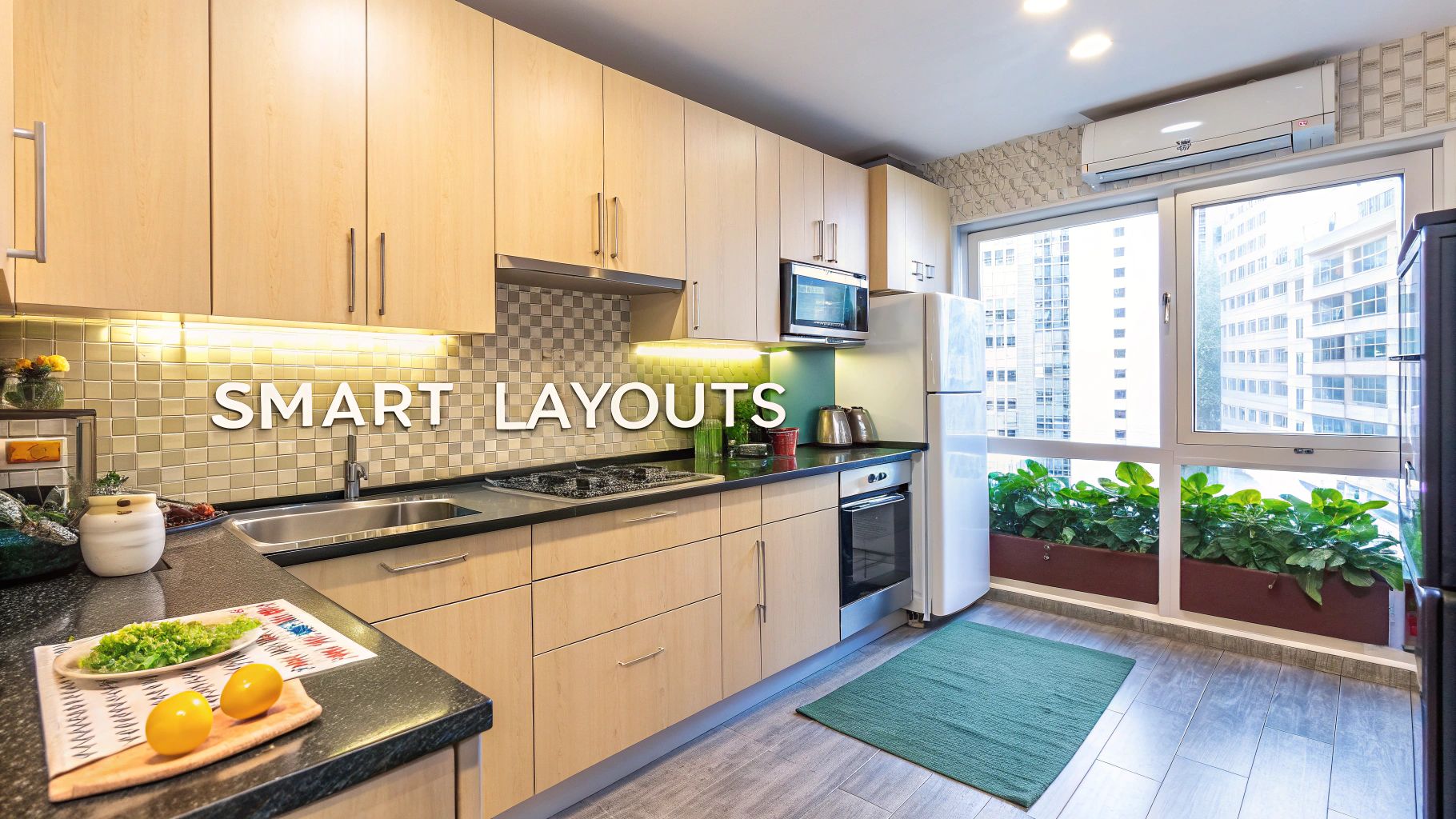
Effective workflow is achieved by strategically placing your kitchen cabinets, appliances, and workspaces to minimise movement. The goal is to make daily tasks, from meal prep to cleanup, feel intuitive.
The Kitchen Work Triangle, Perfected for Singapore
The core of effective kitchen design is the kitchen work triangle, which connects the three primary zones: the refrigerator (storage), the sink (cleaning), and the hob (cooking). An efficient layout ensures these points are close but unobstructed.
For Singaporean homes, we adapt this principle to smaller footprints. Let’s see how this applies to common layouts.
The Galley Kitchen: A Corridor of Efficiency
Common in older HDBs, the galley kitchen consists of two parallel counters. While it can feel narrow, a well-designed galley is one of the most efficient layouts for a single cook.
- Workflow: The work triangle is highly effective here. We typically place the sink and hob on one wall, with the fridge opposite, minimising steps between key tasks.
- Cabinet Strategy: To avoid a tunnel effect, we often use lighter colours for upper cabinets or incorporate open shelving. Maximising vertical space with floor-to-ceiling kitchen cabinets in Singapore is essential to keep countertops clear.
Actionable Insight: In a recent galley kitchen design for a 3-room BTO in Tampines, we maintained a walkway width of 1.2 metres. This specific dimension is crucial as it allows two people to pass comfortably without forcing a reduction in standard cabinet depth (600mm). This detail significantly improved the kitchen's day-to-day usability.
The L-Shape Kitchen: The Versatile Corner
Popular in modern BTOs, the L-shaped layout utilises two adjacent walls, opening up the room. It’s excellent for open-concept living and often accommodates a small dining area or an island.
The work triangle functions naturally, with two zones on one wall and the third on the other. The main challenge is the corner cabinet. We solve this by installing clever hardware like a "magic corner" pull-out system or a LeMans unit to ensure no space is wasted.
The U-Shape Kitchen: Maximum Storage and Counter Space
For homeowners needing extensive storage, the U-shaped layout is the ultimate solution. Utilising three walls, it offers the most counter and cabinet space, wrapping around the cook to keep everything within easy reach.
A U-shape provides an ideal work triangle, with each zone on its own wall. This layout is highly efficient and safe, as it prevents foot traffic from disrupting the cooking area. The key is ensuring the open end is wide enough to avoid feeling enclosed—we recommend a minimum of 1.5 metres between opposing cabinet runs.
Functional Features and Customisation Trends
Modern kitchen cabinets in Singapore are sophisticated systems designed to enhance daily routines. The real value is in the details: functional hardware and smart customisations that create an effortless user experience.
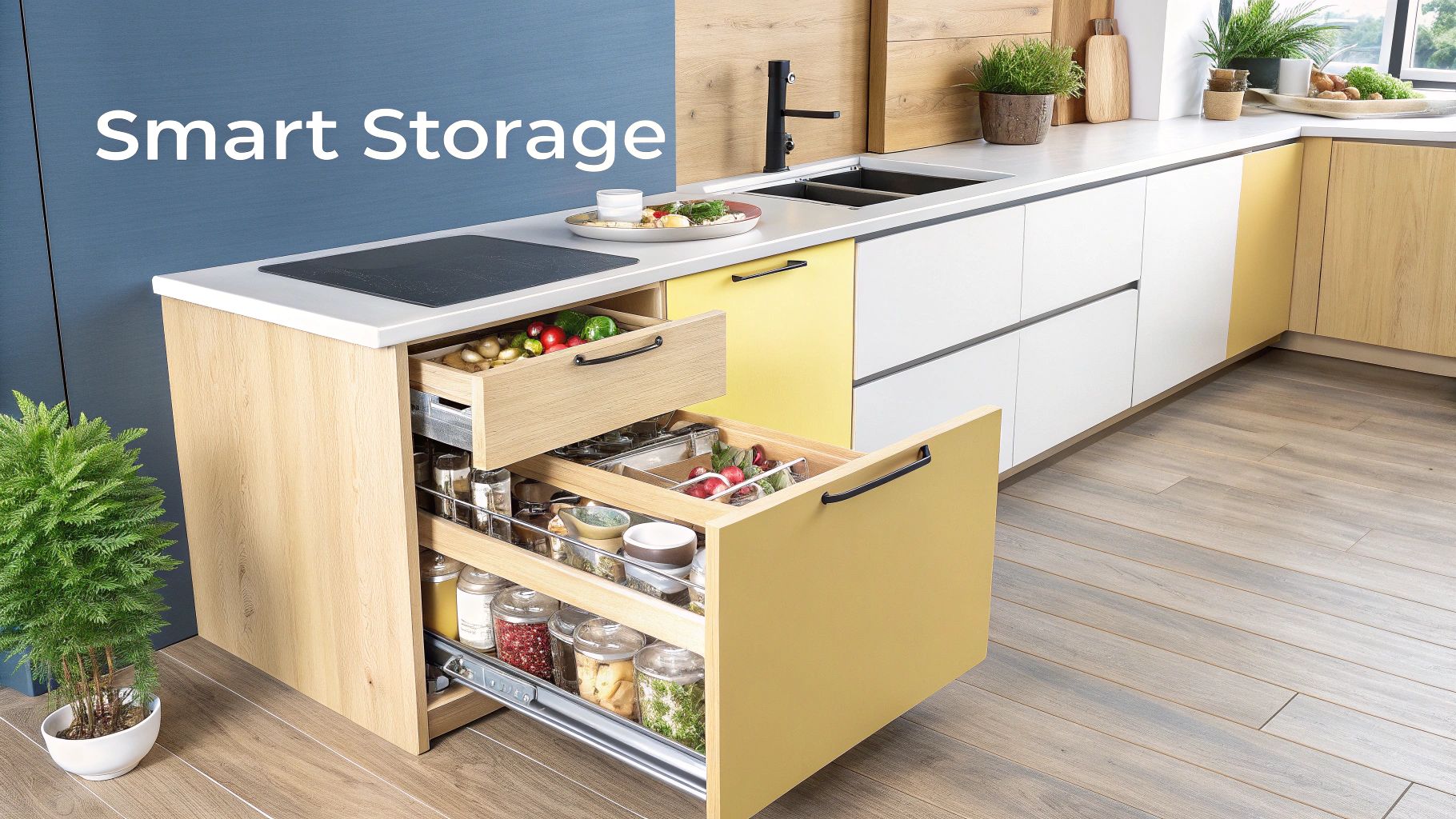
These features, from silent, soft-closing doors to storage that brings items to you, are becoming the standard for a well-designed kitchen.
The Unseen Heroes: Essential Hardware
The quality of your kitchen often depends on its unseen hardware.
- Soft-Closing Hinges and Runners: This is a non-negotiable feature we include in all our projects. Soft-closing mechanisms prevent slamming, reducing noise and long-term wear and tear on cabinet doors and drawers.
- High-Quality Drawer Systems: Investing in reputable brands like Blum or Hettich is crucial. Their drawer runners are engineered to handle heavy loads (like pots and pans) and provide a smooth, reliable glide for decades. Full-extension runners are particularly practical, allowing you to access everything inside, even items at the very back.
Maximising Every Inch with Smart Storage
In Singapore's compact homes, intelligent storage solutions are essential. They transform awkward corners and deep cabinets into highly efficient spaces.
Actionable Insight: A well-organised kitchen is not about having more space, but about using your existing space more effectively. The right internal fittings can double your usable storage.
Popular solutions we integrate:
- Pull-Out Pantries: Tall, narrow units that slide out completely, providing a clear overview of all your dry goods.
- Magic Corner or LeMans Units: Genius systems for corner cabinets. The shelves swing out, bringing the entire contents of the "dead space" into easy reach.
- Integrated Bin Systems: Pull-out bins keep waste and recycling hidden inside a cabinet, maintaining a clean aesthetic and containing odours.
Current Customisation Trends We See in Singapore
Based on client requests, a few key trends have emerged, all pointing towards clean aesthetics and seamless functionality.
- Handleless Designs: Using recessed channels (G-profiles) or push-to-open mechanisms creates an uninterrupted, modern look that is both stylish and easy to clean. This has become the default request for most contemporary kitchen projects.
- Integrated LED Lighting: Under-cabinet task lighting is standard, but we now frequently install motion-activated LEDs inside drawers and cabinets. This adds a touch of functional luxury and makes it easy to find items in low light.
- Hidden Charging Stations: We design dedicated drawers with built-in power outlets to combat countertop clutter. This provides a designated spot to charge devices, keeping them powered up but out of sight.
How to Budget for Kitchen Cabinets in Singapore
Establishing a realistic budget is the first step to a smooth renovation. The cost of kitchen cabinets in Singapore is determined by material, finish, size, and design complexity. Understanding these cost drivers is key to planning your investment.
The primary cost metric is the per-foot-run (pfr), which is the price per linear foot of cabinetry. However, the materials and hardware you choose will cause this price to vary significantly.
Breaking Down the Costs
- Material Choice: The cabinet carcass forms the base cost. Plywood is the standard for durability in Singapore. Upgrading to solid wood or aluminium will increase the price.
- Finish and Door Style: High-pressure laminates (HPL) are the most cost-effective and durable option. Premium finishes like acrylic, wood veneer, or lacquer will increase the budget.
- Hardware and Internal Fittings: This is where costs can accumulate. Upgrading from standard hinges to soft-closing mechanisms from brands like Blum or Hettich adds to the cost, as do clever storage solutions like pull-out pantries or corner systems.
Actionable Insight: We advise clients to allocate a significant portion of their hardware budget to high-quality drawer runners and hinges. These components are used multiple times daily. Investing in their durability ensures your kitchen functions smoothly for years and feels solid to the touch.
Estimated Budget Tiers
Here is a sample budget for a typical 4-room HDB flat, requiring approximately 20 to 25 feet of cabinetry.
Estimated Budget for a Typical HDB Kitchen
| Item/Category | Budget-Friendly (e.g., Melamine/Laminate) | Mid-Range (e.g., Quality Laminate/Veneer) | Premium (e.g., Custom Carpentry/Solid Wood) |
|---|---|---|---|
| Cabinet Carcass & Doors | S$3,000 - S$4,500 | S$4,500 - S$7,000 | S$7,000 - S$12,000+ |
| Hardware (Hinges/Runners) | S$400 - S$700 | S$800 - S$1,500 | S$1,500 - S$2,500+ |
| Internal Fittings | S$300 - S$600 (Basic inserts) | S$800 - S$1,800 (Pull-outs) | S$2,000 - S$4,000+ (Advanced systems) |
| Total Estimated Cost | S$3,700 - S$5,800 | S$6,100 - S$10,300 | S$10,500 - S$18,500+ |
This wide range highlights the importance of prioritising your needs before beginning.
Where to Save and Where to Splurge
Smart budgeting is about strategic allocation of funds.
- Save: Opt for standard-sized cabinets, as custom dimensions increase labour costs. High-quality laminates offer excellent durability and aesthetics without the high price tag of veneer or lacquer.
- Splurge: Invest in a durable countertop, high-quality drawer mechanisms, and a skilled installer. Professional installation is critical—it ensures longevity and can make even budget-friendly cabinets look premium.
Got Questions About Your Kitchen Cabinets? We’ve Got Answers.
Here are answers to some of the most common questions we receive from homeowners in Singapore.
How Long Will the Installation Take?
- Modular Systems: Fabrication typically takes 3 to 4 weeks after final measurements are confirmed. On-site installation is efficient, usually completed in 2 to 4 days.
- Custom Carpentry: The bespoke process takes longer. Expect a timeline of 4 to 6 weeks from measurement to final installation, allowing time for detailed craftsmanship.
We provide a detailed project schedule at the outset so you always know what to expect.
What’s the Best Way to Maintain Cabinets in This Climate?
Consistent, gentle care is key. Wipe up spills immediately with a soft, damp cloth to prevent moisture from seeping into joints. For daily cleaning on laminate surfaces, a simple solution of mild soap and water is sufficient. Avoid harsh chemical cleaners or abrasive sponges that can damage the finish.
Actionable Tip: Always use your cooker hood when cooking. This simple habit extracts grease and steam from the air before they can settle on cabinet surfaces, keeping them cleaner for longer and preventing long-term damage from humidity.
Are Handleless Cabinets a Good Idea for Families?
Yes, they are an excellent choice. Beyond the sleek aesthetic, handleless cabinets are a practical and safer option for homes with young children. The absence of protruding handles reduces the risk of bumps and scrapes.
There are two primary types:
- Recessed Channel-Grip: A continuous groove allows you to grip the door. It's intuitive and our most recommended option for families.
- Push-to-Open Mechanisms: Offers a completely seamless look. However, a child could accidentally open a door by leaning on it, which is a minor consideration.
Both styles contribute to a safer, more spacious-feeling kitchen, making them a smart and popular choice for modern families.
Ready to create a kitchen that perfectly balances beauty, function, and durability? The team at KIVO is here to guide you through every step, from material selection to final installation. Explore our bespoke interior design and custom carpentry services at https://kivo.com.sg to start your transformation.