
When planning a kitchen transformation, the first question is always about cost. A realistic understanding of the kitchen remodel price in Singapore is crucial before you start designing. For a complete overhaul, homeowners can expect to invest anywhere from S$8,000 to over S$35,000. This isn't a fixed price—it's a spectrum that varies based on your property type, the project's complexity, and your material choices.
Understanding the True Cost of Your Kitchen Renovation
Before you fall in love with a specific layout or finish, the smartest first step is to establish a clear financial baseline. The final cost is influenced entirely by your home and your renovation goals. Whether you’re refreshing an HDB kitchen or completely gutting a condo space, the final bill will reflect those specifics.
HDB vs Condo Price Expectations
The type of home you own plays a significant role in shaping the budget. A brand-new BTO flat is often a "blank slate," making the renovation process more straightforward and potentially less expensive than working with an older resale property.
For example, a client with a new BTO can often keep the original flooring and basic plumbing points, saving thousands. In contrast, a resale flat often comes with hidden issues. We frequently encounter outdated plumbing, non-compliant electrical wiring, or structural quirks that must be rectified before any aesthetic work can begin. These necessary fixes can quickly add to your costs.
Estimated Kitchen Remodel Price by HDB Flat Type and Scope
Here’s a quick overview of what you can expect to invest in an HDB kitchen renovation, broken down by the level of work and quality of finishes.
| Renovation Scope | Estimated Cost Range (SGD) | What This Typically Involves |
|---|---|---|
| Basic Update | S$8,000 – S$15,000 | Cosmetic changes: new cabinet doors, laminate countertop, new sink/tap, fresh paint. No layout changes. |
| Mid-Range Remodel | S$15,000 – S$25,000 | New custom carpentry, quartz countertop, some new tiling (e.g., backsplash), new appliances. Minor layout tweaks possible. |
| Premium Overhaul | S$25,000 – S$35,000 and above | Full gut renovation: hacking walls for open-concept, new flooring, full rewiring/plumbing, premium materials, and appliances. |
These ranges illustrate how customisation, materials, and complexity directly impact the final price tag.
Breaking Down Costs by Project Scope
To give you a clearer idea, let's look at how the remodel price breaks down based on the scope of work. This helps you align your budget with your renovation goals.
A basic renovation is a cosmetic refresh without altering the layout. Think new cabinet doors, a fresh countertop, and updated taps. A mid-range project typically includes new custom carpentry, better materials like quartz, and some minor layout adjustments. A high-end remodel involves a complete overhaul: hacking walls for an open-concept design, installing premium European appliances, and choosing luxury finishes like natural stone.
To fully understand all the components that make up an accurate kitchen renovation cost, it’s worth digging into detailed guides. The more you know about these variables, the more financial clarity you’ll have from the start.
Actionable Tip: The most common mistake we see is underestimating labour costs and unforeseen issues. Always include a contingency fund of 10-15% in your budget to cover surprises. For a S$20,000 project, that's S$2,000-S$3,000 set aside, ensuring the project stays on track without compromising on quality.
With these initial numbers, you're better equipped to move forward. Understanding the price ranges and influencing factors allows you to approach your kitchen renovation with a smart, realistic financial plan.
Where Your Renovation Budget Actually Goes

A renovation quote can seem complex. That total kitchen remodel price is a mosaic of different costs, each contributing to the final look and function of your space. To budget smartly, you must understand where every dollar is going.
We’ll demystify this by splitting costs into two main categories: foundational work (the critical, unseen elements) and finishing touches (the visible elements that define your kitchen's style). Understanding this distinction helps you make smarter investment decisions.
Line-Item Cost Estimates for a Standard Kitchen Remodel
This table breaks down typical cost ranges for individual components in a Singapore kitchen renovation, helping you see how the final figure adds up.
| Work Category | Typical Cost Range (SGD) | Key Influencing Factors |
|---|---|---|
| Hacking & Demolition | S$500 – S$8,600 | Scope of demolition (walls, floors), type of flat (HDB/condo), debris disposal fees. |
| Masonry & Tiling | S$100 – S$18,400 | Area size, tile material (ceramic, porcelain, stone), complexity of layout, waterproofing. |
| Plumbing | S$150 – S$2,800 | Relocating pipes, number of new water points, type of fittings (taps, sinks). |
| Electrical | S$150 – S$4,200 | Number of new power points, lighting points, rewiring needs, complexity of circuitry. |
| Carpentry & Cabinetry | S$150 – S$30,400 | Amount of cabinetry, material (laminate, solid wood), customisation, hardware. |
| Countertops | S$800 – S$8,000 | Material (quartz, granite, solid surface), length and thickness, edge profiling. |
| Painting | S$450 – S$2,000 | Area to be painted, type of paint (e.g., moisture-resistant), number of coats. |
| Appliances | S$1,500 – S$15,000+ | Brand, features, integrated vs. freestanding, number of appliances. |
| Labour & Management | 10% – 20% of total | Project complexity, designer vs. contractor, coordination of trades. |
These figures show just how wide the ranges can be. Your specific choices in materials, customisation, and complexity will determine where your project falls on this spectrum.
Foundational Work: The Unseen Essentials
Before you select new cabinets or countertops, the foundational work begins. This stage is messy but forms the non-negotiable bedrock of a quality, long-lasting renovation—especially in an older resale flat.
These essential tasks include:
- Hacking: The demolition phase. It involves tearing out old cabinets, hacking floor and wall tiles, and sometimes removing non-structural walls to open up the layout.
- Masonry: Rebuilding the space after demolition. This means screeding floors to make them perfectly level, plastering walls for a smooth finish, and constructing new structures, like the base for a kitchen island.
- Plumbing and Electrical: Mission-critical work. It covers running new pipes for your sink and dishwasher, laying new wiring for lights and appliances, and ensuring compliance with Singapore's safety standards.
Trying to cut costs here is a classic, expensive mistake. A solid foundation prevents future headaches like uneven floors, leaky pipes, or tripping circuits.
Actionable Tip: From our experience, foundational work is not the place to cut corners. Investing properly in hacking, masonry, and utilities is like building a strong skeleton for your kitchen—it supports everything else and prevents costly structural issues later.
The costs for this initial stage can be substantial. Hacking alone can run from S$500 to S$8,600, while masonry and tiling can cost anywhere from S$100 to S$18,400. You can explore more detailed figures about these renovation costs to see how they fit into the bigger picture.
Finishes and Fixtures: The Visible Value
With the groundwork laid, you can focus on the elements you see and touch daily. This is where your personal style shines and where a significant portion of your budget will be allocated.
The main cost drivers here are:
- Carpentry and Cabinetry: Often the single biggest line item. It covers custom-built cabinets, drawers, and storage solutions. The material, finish, and design complexity heavily impact the price.
- Countertops: Your choice of countertop material dramatically affects both the look and the budget. Options range from affordable laminates to popular mid-range quartz and high-end natural stones like marble or granite.
- Appliances and Fittings: This includes your hob, hood, oven, fridge, sink, and taps. The brand, features, and whether they are freestanding or integrated will all dictate the cost.
For example, opting for custom-built, full-height cabinetry with a premium laminate finish will be a much bigger investment than standard, off-the-shelf units. Similarly, choosing a durable quartz countertop will cost more than a basic solid-surface option but offers superior longevity and a more polished aesthetic.
Carpentry stands out here, with costs ranging from S$150 up to S$30,400. This often breaks down to S$150 to S$450 per foot run (pfr), which shows exactly why it’s such a critical part of any kitchen remodel price.
The Big Decisions That Drive Up Your Remodel Price
Knowing individual item costs is useful, but the major budget drivers are the big-picture decisions you make early on. These choices can keep your project on track or cause the final bill to spiral. Getting these right is key to a successful renovation.
The single biggest variable is the property itself. Renovating a brand-new BTO flat is vastly different from overhauling a 30-year-old resale unit. A BTO is a clean slate; a resale property can hide expensive surprises.
The BTO vs. Resale Property Dilemma
When you renovate a resale property, you're often paying to undo and fix the old. This is where costs can escalate unexpectedly. Older homes frequently have outdated electrical wiring that is a safety hazard or plumbing that needs total replacement. These are not optional upgrades—they are essential fixes that can add thousands to your bill before you've even picked a tile.
From our client projects, we consistently see a major price difference. Renovating a resale flat is often up to 40% more expensive than a new BTO due to the necessary preparatory work. For condominiums, the gap can be even wider, with renovation costs from SGD 30,000 to SGD 150,000, depending on the building's age and condition. You can explore more detailed cost comparisons on Qanvast for different home types.
Actionable Tip: Many homeowners forget to budget for "unseen" work in resale flats. A client might plan for beautiful carpentry but won't set aside funds for mandatory rewiring, forcing tough compromises later. We always advise resale homeowners to build a larger contingency fund specifically for these potential discoveries.
Structural Changes and Layout Alterations
The second major cost driver is the ambition of your new layout. Sticking with your kitchen’s current footprint—keeping the sink and appliances in their existing locations—is the most budget-friendly approach. The moment you start hacking walls, moving the sink, or creating an island, the complexity and cost increase significantly.
Consider these common scenarios:
- Creating an Open-Concept Kitchen: Hacking a non-structural wall is popular for an airy feel. But it also requires making good the surrounding floors, walls, and ceiling, adding to masonry, tiling, and painting costs.
- Relocating the Sink: Moving a sink means major plumbing work. New pipes must be run through walls and floors, a labour-intensive job that can easily add a few thousand dollars to the plumbing bill.
- Building a Kitchen Island: An island often needs new electrical wiring for outlets and new plumbing for a second sink. This is in addition to the significant costs of the custom carpentry and countertop.
Material Choices and Level of Finish
Finally, the materials you choose will define your kitchen’s look and its final price. This is where your personal taste directly impacts your budget.
Here’s a practical look at how different material choices compare:
- Countertops: Laminate is the most affordable. Solid surfaces are a step up. Quartz is the most popular mid-range choice for its aesthetics and durability. For a luxury finish, premium materials like natural marble, granite, or sintered stone represent the largest investment.
- Cabinetry: A standard laminate finish is durable and cost-effective. High-end finishes like Fenix, natural wood veneer, or a flawless spray-painted look will increase your carpentry cost significantly.
- Backsplash: Simple ceramic or porcelain tiles are a classic, budget-friendly option. Choosing handmade tiles, a seamless quartz backsplash matching your countertop, or an intricate mosaic pattern will elevate both the look and the expense.
Each of these three factors—property condition, structural changes, and material selections—acts as a lever on your total kitchen remodel price. Understanding them gives you the power to make smart decisions that align your vision with your budget.
What Different Budgets Can Actually Build
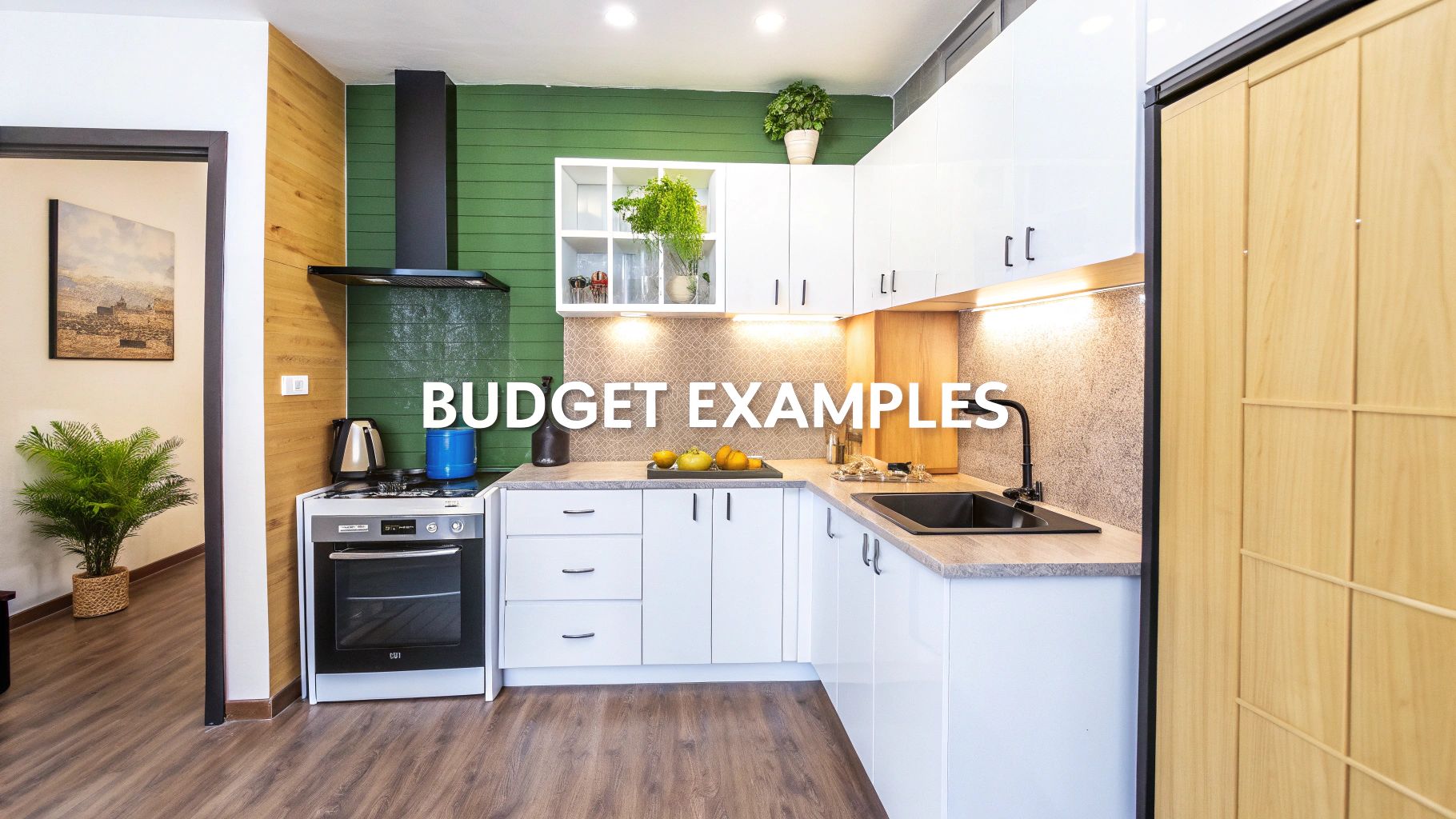
Cost breakdowns are helpful, but what does a budget actually get you? Let’s translate those numbers into real-world kitchens we design and build across Singapore.
Seeing how a budget is allocated helps you visualize what’s possible. We'll walk through three distinct scenarios—from a smart HDB upgrade to a show-stopping luxury kitchen—to show what different investment levels can achieve.
The Smart HDB Kitchen (Budget: SGD 15,000 to 25,000)
The goal here is maximum function and clean style within a sensible budget. In a typical HDB kitchen, this means making strategic choices for high impact without overspending. The focus is on durability, clever space planning, and clean aesthetics. The existing layout is usually kept to avoid costly plumbing and electrical work, allowing the budget to be channelled into creating an efficient workspace.
What this budget typically includes:
- Carpentry: Custom-built cabinets using high-quality laminates for durable, easy-to-maintain finishes that maximise storage.
- Countertops: A reliable and stylish quartz or solid surface countertop, offering a premium look with excellent resistance to stains and scratches.
- Appliances: A solid suite of mid-range appliances (hob, hood, oven) from reputable brands that balance performance and value.
- Finishes: Standard yet stylish ceramic or porcelain tiles for the backsplash and flooring, chosen for longevity and easy cleaning.
This approach creates a kitchen that is practical for daily life, looks modern and organised, and represents a smart, value-driven investment.
The Stylish Condo Kitchen (Budget: SGD 30,000 to 50,000)
With a more generous budget, you can inject more personality and introduce premium materials. This mid-range condo kitchen moves beyond pure function to make a style statement, reflecting your taste through elevated finishes and thoughtful features. Minor layout tweaks, like extending a countertop for a breakfast bar, become possible.
From our experience, this is the budget where design details really start to shine. We see clients opting for integrated cabinet lighting, custom pull-out storage, and premium hardware that completely elevates the feel of the space.
What this budget typically includes:
- Carpentry: Custom cabinetry with premium finishes like Fenix laminates or wood veneers, paired with soft-closing mechanisms and high-quality internal hardware.
- Countertops: A wider selection of premium quartz with intricate veining, or durable sintered stone surfaces for a sleek look.
- Appliances: Higher-end, semi-integrated European appliances offering superior performance and a more seamless aesthetic.
- Finishes: A feature backsplash using unique tiles or a seamless quartz finish matching the countertop to add a touch of drama.
This kitchen is perfect for those who love to entertain and want a space that is both highly functional and a beautiful focal point of their home.
The Bespoke Luxury Kitchen (Budget: SGD 60,000+)
When your budget allows for a truly bespoke creation, the kitchen becomes a masterpiece of design and craftsmanship. This is where the kitchen remodel price reflects a complete reimagining of the space, often involving significant structural changes and the finest materials.
A luxury kitchen is defined by uncompromising quality and flawless execution. This includes major layout overhauls to create an open-concept space with a statement island, fully integrated top-of-the-line appliances, and artisanal details.
What this budget typically includes:
- Carpentry: Fully bespoke, handcrafted cabinetry from solid wood or finished with flawless spray paint, including intricate detailing and custom-designed storage.
- Countertops: Exquisite natural stone like marble or quartzite, often featuring dramatic waterfall edges on an island for maximum impact.
- Appliances: Top-tier, fully integrated appliances from luxury brands like Miele or Gaggenau, often including specialized items like a wine chiller or steam oven.
- Finishes: Custom flooring, designer lighting, and premium fixtures. Every detail, from the sink and tap to the cabinet handles, is a high-end selection.
This level of investment creates a one-of-a-kind kitchen that is a testament to personal style and represents the pinnacle of modern luxury living.
How to Maximise Value and Avoid Costly Mistakes
A stunning kitchen is the result of a smart, well-managed process that protects your investment. Navigating kitchen remodel pricing requires foresight. Over the years, we've identified key strategies that help you get the best possible return and sidestep common financial traps.

The most critical step is locking down a detailed, realistic budget from the start. This isn't just a number; it's a clear financial roadmap. Just as important is building a safety net into that budget.
The Non-Negotiable Contingency Fund
We advise every client to set aside a contingency fund of 10-15% of the total project cost. This isn't for last-minute upgrades; it's a dedicated fund for unexpected issues, which are especially common in older resale flats.
Think of it as renovation insurance. It covers discoveries like:
- Outdated wiring behind walls that requires a full overhaul.
- Hidden water damage behind old cabinets that needs plumbing repairs.
- Uneven walls or floors that need fixing before new installations.
Without this buffer, such issues can halt a project or force painful cuts to your planned finishes. A contingency fund ensures things keep moving smoothly without derailing your finances.
Sidestepping Common Financial Pitfalls
Beyond the budget, a few common mistakes can inflate costs. One of the biggest is trying to cut corners by skipping professional project management. Managing a renovation means juggling multiple trades—carpenters, plumbers, electricians, tilers. One small delay can cause a domino effect of costly rework. Professional oversight provides quality control at every stage, preventing small issues from becoming expensive problems.
Actionable Tip: A well-managed project is a cost-effective one. The value of an experienced project manager lies in proactively solving problems, ensuring quality, and keeping the project on budget. It's an investment that pays for itself by preventing costly errors.
Another trap is getting swept up by fleeting trends. While tempting, timeless design holds its value far better. Based on client preferences over the years, we've seen that classic choices like high-quality quartz countertops and well-crafted shaker-style cabinets remain popular and look great for years, ensuring a better return on your investment.
The Power of a Transparent Partnership
Ultimately, the best way to get maximum value is through a transparent and collaborative partnership with your design firm. Clear, consistent communication is the bedrock of a successful project. You should always know what's happening, what's next, and how each decision impacts the budget.
A true partnership ensures every choice aligns with your vision and financial plan. The goal isn't just to spend money; it's to invest it wisely in creating a functional and fabulous kitchen that elevates your daily life and property value.
Got Questions About Kitchen Remodel Costs? We've Got Answers.
Stepping into a kitchen renovation is exciting, but it’s natural to have questions. To help you plan with confidence, we’ve answered the most common questions we hear from homeowners in Singapore, based on our years of experience.
How Long Will My Kitchen Renovation Actually Take?
The timeline depends on the project scope. A simple cosmetic update in an HDB flat (new cabinet doors, countertop, paint) can take about 3 to 4 weeks. A full remodel involving hacking, layout changes, and custom carpentry will be closer to 6 to 10 weeks. Delays can occur due to material shipping or permit approvals for structural changes. We always provide a detailed schedule upfront so you know what to expect.
What About Hidden Costs? Should I Be Worried?
Hidden costs are a real concern, especially in older resale flats. Some issues are only visible after demolition begins.
Common surprises we've encountered include:
- Outdated Electrical Wiring: Needing a mandatory and complete overhaul for safety.
- Hidden Water Damage: Lurking behind old sinks, requiring plumbing fixes and new waterproofing.
- Uneven Surfaces: Old walls and floors that need levelling before new installations.
- Haulage and Disposal Fees: The cost of removing and disposing of old materials.
Actionable Tip: The best defense is a thorough site inspection by a reputable team before finalizing the quote. Combine this with a 10-15% contingency fund, and you’ll be prepared for any curveballs without compromising your vision.
Is a Kitchen Remodel a Good Investment in Singapore?
Absolutely. A well-designed kitchen consistently offers one of the best returns of any home renovation. In Singapore's competitive property market, a modern, functional kitchen is a major selling point that can significantly increase your home’s value. The return isn't just financial; a kitchen designed around your workflow improves your daily life, offering returns in both property value and personal enjoyment for years.
Will I Need a Permit for My Kitchen Renovation?
It depends on the scope. For cosmetic touch-ups like replacing cabinets or repainting, you generally won't need a permit.
However, a permit is required for more substantial work, including:
- Hacking or removing any walls
- Moving sinks or drainage points
- Making significant changes to your electrical or plumbing layout
In Singapore, approval from authorities like HDB or BCA is necessary for these jobs to ensure safety and code compliance. A good design firm will handle the entire submission process for you, providing peace of mind that your renovation is fully compliant.
At KIVO, we believe a great renovation is built on transparency and careful planning. Our team is here to walk you through every step, answer every question, and make sure your kitchen remodel is as smooth and rewarding as possible.
Ready to transform your kitchen? Contact us for a consultation today.