When planning a kitchen renovation in Singapore, the first question is always the same: "How much will it cost?" The answer isn't a single number. Based on our experience with numerous projects, a straightforward refresh can start from S$8,000, while a comprehensive overhaul in an older flat can easily exceed S$40,000.
This wide range is determined by three core factors: the scope of work, your choice of materials, and a crucial starting point—whether you're renovating a new BTO flat or an older resale unit. Understanding these elements is the key to setting a realistic budget.
Breaking Down Singapore Kitchen Renovation Prices
Knowing what to expect financially is the foundation of a smooth renovation. The biggest variable influencing your kitchen renovation price is often the age and condition of your HDB flat. A brand-new BTO presents a very different set of challenges and costs compared to a 30-year-old resale property.
BTO vs. Resale HDB Kitchens: A Cost Comparison
New BTO flats provide a clean slate. You start with new plumbing, modern electrical wiring, and level surfaces. This means your budget is allocated directly to visible improvements: custom carpentry, countertops, and appliances.
Older resale HDB flats require more foundational work before the aesthetic upgrades can begin. This is why a resale kitchen renovation typically costs more, often falling between S$20,000 to S$35,000. This budget must first cover essential (and often costly) tasks like hacking existing tiles, full-scale rewiring to meet current safety standards, and replacing old plumbing.
In contrast, a basic BTO kitchen renovation can be achieved for S$8,000 to S$15,000. For a more detailed look at these cost factors, Vistyle.sg has a great breakdown.
Actionable Insight: For a BTO, your budget is for furnishing and finishing. For a resale flat, you must first budget for rebuilding the kitchen's core infrastructure.
To provide a clearer financial picture, here is a breakdown based on project scope and flat type.
Estimated Kitchen Renovation Price Ranges by HDB Flat Type
This table offers a practical summary of typical cost brackets, comparing new BTO flats with older resale flats across different scopes of work.
| Renovation Scope | New BTO Flat (Estimated Price) | Older Resale Flat (Estimated Price) |
|---|---|---|
| Light Renovation | S$8,000 - S$15,000 | S$15,000 - S$22,000 |
| Moderate Renovation | S$15,000 - S$25,000 | S$22,000 - S$35,000 |
| Extensive Renovation | S$25,000+ | S$35,000+ |
Consider these ranges a starting point. A light renovation might involve replacing cabinet doors and installing a new laminate countertop. An extensive project would include hacking walls, installing premium sintered stone, and completely reconfiguring the layout. Let’s examine the specific factors that drive these costs.
What Really Drives Your Renovation Cost?

Why can one kitchen renovation cost S$10,000 while another that looks similar costs S$40,000? The difference lies in a few key decisions that significantly impact the final budget. Understanding these cost drivers allows you to make informed choices, deciding where to invest for longevity and where to save.
Hacking and Masonry Works
For resale HDBs, structural work is the most significant cost variable. The decision to hack walls for an open-concept kitchen adds thousands to your quote before any new materials are brought in. This cost covers not just demolition but also making good the surfaces, debris removal, and skilled labour. A renovation that avoids hacking operates on a completely different budget level.
Practical Example: Hacking a non-structural wall between a kitchen and dining area can add S$1,500 to S$3,000 to your project cost, covering demolition, protection, and disposal.
Carpentry: The Core of Your Budget
Custom carpentry is almost always the largest line item in a kitchen renovation quote. Its cost is determined by two main factors: the total length of your cabinets (measured per-foot-run or PFR) and the materials and finishes selected.
A small galley kitchen with 15 feet of standard laminate cabinets is far less expensive than a large U-shaped kitchen requiring 30 feet of premium Fenix laminates and high-end Blum fittings. Each additional foot of cabinetry increases material and labour costs directly.
Actionable Insight: We advise clients to think of carpentry as a modular system. The more modules you need (length) and the more specialised they are (premium finishes, advanced hardware), the higher the final cost.
Countertop Material Selection
Your countertop is a major functional and aesthetic component, with prices that vary dramatically.
- Laminate: The most budget-friendly option, offering a wide range of looks. However, it has lower durability against heat and scratches.
- Quartz: A popular choice for its excellent balance of price and performance. It is durable, non-porous, stain-resistant, and has a premium feel.
- Sintered Stone: The top-tier material, offering superior resistance to heat, scratches, and stains. This high performance and sleek aesthetic come at a premium price.
Practical Example: For a standard HDB kitchen, choosing sintered stone over laminate can increase the total renovation cost by S$3,000 to S$5,000 or more.
Plumbing and Electrical Works
These are essential, often "hidden" costs, particularly in older flats. Moving a sink to a new island requires re-routing water and drainage pipes, which is a significant plumbing job. Similarly, adding new power sockets for appliances, installing under-cabinet lighting, or upgrading your distribution board (DB) box for safety all contribute to the final cost. In many resale flats, a complete rewiring is a non-negotiable safety upgrade.
To illustrate, here is an itemised breakdown of typical costs.
Detailed Cost Breakdown of Common Kitchen Renovation Works
This table details common works in a Singapore kitchen renovation, showing how individual components contribute to the overall budget.
| Renovation Work | Typical Cost Range (SGD) | Key Considerations |
|---|---|---|
| Hacking & Masonry | $1,500 - $4,000+ | Scope of demolition; includes hacking walls/floors, making good surfaces, and debris disposal. |
| Custom Cabinetry | $150 - $350 per foot run | Depends on material (laminate vs. premium), internal hardware (e.g., Blum), and total length. |
| Countertops | $80 - $250+ per foot run | Varies by material: Laminate is the most affordable, quartz is mid-range, and sintered stone is premium. |
| Plumbing Works | $500 - $1,500+ | Includes new piping for relocating sinks/dishwashers and installing fixtures. |
| Electrical Works | $800 - $2,000+ | Cost for new lighting points, power sockets, and potential DB box upgrades for safety. |
| Tiling (Floor/Wall) | $1,500 - $5,000 | Depends on tile selection (e.g., ceramic vs. porcelain) and the total area to be covered. |
| Painting | $400 - $800 | Standard cost for ceiling and wall painting with professional-grade paint. |
These are estimates; final costs depend on your specific choices. According to industry data, core components like carpentry can range from S$5,000 to over S$19,000. Appliances can add another S$6,500 to S$10,000. You can explore more about these typical renovation costs for a deeper understanding.
Decoding Cabinetry and Countertop Prices
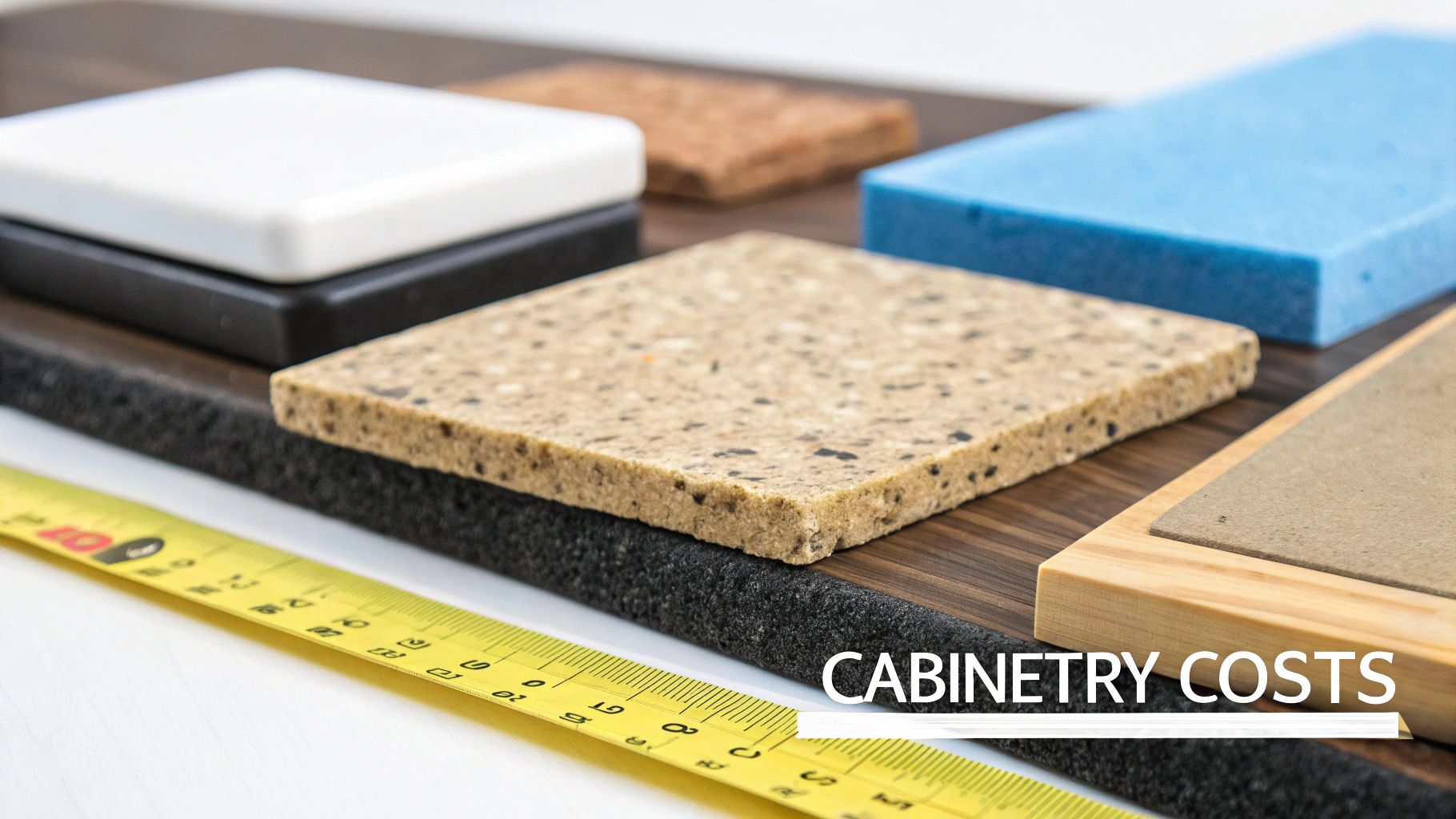
Carpentry and countertops are the two largest components of most kitchen renovation budgets. They define the kitchen's functionality and aesthetic, and understanding their pricing structure is crucial for making informed decisions. In Singapore, the industry standard for pricing cabinetry is per-foot-run (PFR), a straightforward method for calculating cost based on length.
What Per-Foot-Run Actually Covers
The PFR rate is a bundled cost that includes several key components for a fully functional cabinet. A transparent quote should clearly define what this covers. Typically, our PFR pricing includes:
- Carcass Construction: The cabinet's internal structure, usually made from solid plywood for its durability in Singapore's humid climate.
- External Finishes: The selected laminate or other finish for cabinet doors and visible panels.
- Internal Finishes: A standard, easy-to-clean white internal PVC finish.
- Hardware and Labour: Essential hardware like standard soft-closing hinges and handles, plus all labour for fabrication and installation.
This bundled approach simplifies quoting. Upgrades, such as premium drawer systems from Blum, are quoted as separate line items for clarity.
Choosing Your Countertop Material
Your countertop is the most hardworking surface in the kitchen. The choice of material is a balance of aesthetics, durability, and cost.
Actionable Insight: The countertop material is a key lever for controlling your kitchen renovation price. Switching from laminate to sintered stone can alter your budget by thousands.
Here are the three most popular options we work with, based on client projects:
- Laminates on Solid Plywood: The most cost-effective solution. High-pressure laminates (HPL) are available in a vast array of designs, from realistic wood grains to solid colours. They are ideal for tight budgets but offer the lowest resistance to heat and scratches and may show joint lines.
- Quartz: The most popular choice for its balance of performance and value. As an engineered stone, it is non-porous, making it highly resistant to stains and bacteria. It offers excellent durability and a wide range of designs that mimic natural stone without the maintenance.
- Sintered Stone: The premium option, offering unparalleled durability. It is manufactured under extreme heat and pressure, creating a surface that is virtually impervious to heat, scratches, and UV damage. This superior performance and sleek look come with the highest price tag.
Understanding these material trade-offs enables a productive discussion with your designer to ensure your kitchen meets both your aesthetic goals and your budget.
Planning for Hidden Renovation Costs
Even with a detailed quote, unexpected expenses can arise. A well-prepared budget anticipates these "hidden costs," which are a normal part of any renovation, especially in older resale flats. Understanding them upfront helps you maintain control over your kitchen renovation price and avoid financial stress.
Common Costs Hiding in Plain Sight
These are logistical necessities that are often billed separately because they vary based on building management rules and site conditions.
- Haulage and Debris Disposal: This covers the labour to move waste from your unit to a designated disposal area and the official disposal fees.
- Post-Hacking Cleaning: Demolition is messy. A professional chemical wash and general cleaning are often needed to prepare surfaces for new work.
- Protection for Flooring and Furniture: Your contractor will need to lay protective sheets and boards to shield your property from dust and damage.
Practical Example: Collectively, these items can add S$800 to S$1,500 or more to your final bill. Always clarify with your designer if these are included in the quote.
Electrical Upgrades: The Silent Budget Breaker
Electrical work is another area where costs can increase. Your initial quote covers planned electrical points, but new needs often emerge during the project. You may decide to add an extra socket for a new appliance, or your designer might recommend upgrading your distribution board (DB box) to safely handle the load of modern, high-power appliances like induction hobs.
Actionable Insight: Upgrading a DB box is a critical safety measure, not an aesthetic choice. If required, it can add S$600 to S$1,000 to your budget, ensuring your home's electrical system is safe and compliant.
The Power of a Contingency Fund
The most effective tool for managing unexpected costs is a contingency fund. This is not a "slush fund" but a calculated buffer set aside for unforeseen issues. We recommend every client budget an additional 10-15% of their total renovation cost as a contingency.
Practical Example: For a S$25,000 kitchen renovation, this amounts to S$2,500 to S$3,750. This fund provides peace of mind. If you encounter hidden plumbing issues or need to upgrade your DB box, the funds are available. If not, you can use it for an appliance upgrade or simply save it. This proactive step turns potential budget crises into manageable expenses.
Smart Ways to Save on Your Kitchen Renovation

A beautiful and functional kitchen does not require an unlimited budget. Lowering your kitchen renovation price is about making smart, strategic choices—knowing where to invest for maximum impact and where cost-effective alternatives can deliver excellent results.
Retain Your Layout to Avoid Hacking Costs
The single most effective way to control your budget is to work with your existing kitchen layout. Hacking walls or relocating your sink and hob triggers a cascade of expensive work, including plumbing, electrical rewiring, and masonry. By keeping your main walls and appliance positions, you eliminate these significant costs, freeing up your budget for high-impact items like quality cabinetry and countertops.
Opt for Smart Material Alternatives
You can achieve a high-end look without the high-end price tag by choosing modern, high-performance materials.
- High-Quality Laminates: Today's high-pressure laminates (HPL) offer realistic imitations of wood, stone, and matte finishes at a fraction of the cost of the real thing. Paired with a solid plywood core, they provide a durable and stylish solution.
- Quartz Over Natural Stone: While materials like marble are beautiful, they are porous, high-maintenance, and expensive. Quartz offers a similar luxurious aesthetic with superior durability and stain resistance at a more accessible price point, making it a smarter long-term investment for busy kitchens.
Actionable Insight: Based on our client data, choosing a high-quality laminate over a premium solid surface can save S$2,000 to S$4,000 on an average-sized kitchen without compromising on style.
Be Strategic with Appliances and Hardware
Smart choices in appliances and hardware can lead to significant savings, both upfront and in the long run.
Freestanding vs. Integrated Appliances
Integrated appliances offer a seamless look but come at a premium. They also lock you into specific dimensions, making future replacements difficult and costly. High-quality freestanding appliances are more budget-friendly and offer greater flexibility. A skilled designer can still achieve a clean, built-in look by carefully designing cabinetry to frame standard-sized appliances.
Invest in Quality Hardware
This may seem counterintuitive for saving money, but it's a critical long-term strategy. The hinges and drawer runners are the most heavily used components in your kitchen. Choosing low-quality hardware leads to sagging doors, sticking drawers, and costly repairs. Investing in reliable hardware from trusted brands like Blum is a small upfront cost that ensures your kitchen functions smoothly for years, saving you money on future repairs. It's a prime example of spending a little more now to save a lot later.
Is an Expensive Renovation a Better Investment?
In Singapore's competitive property market, a kitchen renovation should be viewed as an investment, not just an expense. A well-executed renovation can significantly enhance your home’s resale value by appealing to potential buyers. A modern, functional kitchen signals that a home is well-maintained, which can lead to a higher selling price and a faster sale.
Mid-Range vs. Luxury: Where’s the Real ROI?
The key to a good return on investment (ROI) is strategic spending. While a luxury kitchen with high-end European appliances is impressive, it doesn't always yield the best financial returns. From our experience, a mid-range renovation consistently delivers the highest ROI. This approach focuses on high-impact upgrades that appeal to a broad range of buyers: durable quartz countertops, a timeless backsplash, and an efficient layout with quality soft-closing hardware.
A luxury renovation might include S$15,000 appliances, but many buyers are unwilling to pay a premium for such specific, high-cost features. A mid-range renovation creates an attractive, move-in-ready space that allows buyers to envision themselves living there.
Actionable Insight: A well-planned S$30,000 mid-range renovation can potentially add S$40,000 to a property's value. In contrast, a S$70,000 luxury renovation might only add S$50,000. The smarter investment is often the one with broader appeal.
The Features Buyers Actually Value Most
To maximize your investment, focus on features that blend durability, style, and practicality.
- Durable Countertops: Quartz remains the top choice for its mix of style, durability, and low maintenance.
- Ample and Smart Storage: Well-designed cabinetry with solutions like pull-out pantries and organized drawers is a major selling point.
- Good Lighting: A combination of ambient and task lighting makes a kitchen feel larger, brighter, and more functional.
- Timeless Design: Neutral palettes and classic finishes appeal to a wider audience and do not date quickly.
By focusing on these elements, you are not just creating a kitchen for your own enjoyment but also investing in a valuable asset that enhances your home's long-term worth.
Common Questions About Kitchen Renovation Costs
Navigating the costs of a kitchen renovation can bring up many questions. Here are straightforward answers to the most common queries we receive from homeowners in Singapore.
How Long Does a Typical Kitchen Renovation Take?
A standard HDB kitchen renovation typically takes 4 to 8 weeks. The final timeline depends on the project's complexity. A simple cosmetic refresh (new cabinets and countertops) will be on the shorter end. A complete overhaul involving hacking, extensive rewiring, and major plumbing changes will likely take closer to eight weeks or more. It is always wise to factor in a buffer for potential delays, such as material delivery or building management approvals.
Is Renovating a BTO Kitchen Cheaper?
Yes, in almost all cases. Renovating a BTO kitchen is significantly more cost-effective than a resale flat. BTOs provide a "blank canvas" with new wiring, plumbing, and sound structures, eliminating the need for extensive foundational work. Resale flats often require costly preliminary work like hacking, complete rewiring to meet modern safety standards, and overhauling old plumbing systems, all of which drive up the final price.
What Is the Average Cost for a 4-Room HDB Flat?
The kitchen renovation price for a 4-room HDB flat varies, but it's helpful to think in tiers. A comprehensive renovation for a 4-room flat, including flooring, cabinetry, and essential works, typically ranges from SGD 45,000 to SGD 65,000, particularly for mid-range to premium finishes. For a more detailed breakdown, you can discover more insights on 2025 renovation costs.
Actionable Insight: A budget around S$20,000 covers the essentials with basic carpentry. A budget of S$30,000 to S$35,000 allows for better materials like quartz countertops. Exceeding S$45,000 opens up possibilities for premium materials, custom features, and more complex designs.
Ready to create a kitchen that perfectly balances your vision and budget? At KIVO, our experienced team is here to guide you through every step, ensuring a transparent and seamless renovation experience. Contact us today for a consultation and let's start designing the heart of your home.