Thinking about a kitchen renovation is exciting, but let’s be honest—the first question on every Singaporean homeowner's mind is, "How much will it cost?"
The truth is, a kitchen project in Singapore can range from a simple refresh for around S$8,000 to a full-blown transformation costing S$30,000 or more. It all comes down to the scope of work, the size of your kitchen, and your choice of materials. This guide will give you a clear, upfront breakdown based on our experience with real HDB and condo projects, helping you plan with confidence.
Understanding The Typical Cost Of A Kitchen Renovation
When you start planning your new kitchen, the budget is the anchor for the entire project. It influences everything from the countertop material you choose to whether you can knock down that wall for an open-concept feel.
From our experience managing numerous HDB and condo projects, we know that the "dream kitchen" on Pinterest needs to be balanced with a realistic financial plan. The key is understanding what actually drives the final price tag.
The cost spectrum for a kitchen reno is pretty wide. In Singapore, you're typically looking at a range between S$8,000 to S$30,000, with the average project landing somewhere near S$20,000.
Of course, the size of your kitchen is a huge factor. A spacious maisonette kitchen will naturally need more materials and labour than a compact BTO one. Likewise, your material choices play a massive role—premium finishes like natural stone countertops will push the budget up compared to practical, stylish laminates. If you're curious about how these costs can fluctuate, you can find more insights on platforms like Coohom.com.
Estimated Kitchen Renovation Cost By Scope
To give you a clearer picture, here’s an overview of what you can expect to spend based on the scope of work. Think of these as practical budget ballparks to get you started.
| Renovation Scope | Typical Cost Range (SGD) | Best For |
|---|---|---|
| Light Refresh | S$8,000 - S$12,000 | Newer BTOs or kitchens that are structurally sound but need a cosmetic lift. No hacking involved. |
| Mid-Range Renovation | S$13,000 - S$22,000 | The most common scope for resale HDB flats needing a complete but straightforward update, including hacking and new carpentry. |
| Major Overhaul | S$23,000+ | A complete gut-and-rebuild, often involving layout changes, extensive hacking, and premium finishes for larger kitchens. |
These tiers help set a baseline for what you can achieve at different budget levels, making the planning process a lot less overwhelming.
A well-planned budget isn't about limiting your creativity; it's about channelling it smartly. Focus your spending on high-touch, high-impact elements like countertops and functional hardware to get the most value and satisfaction from your investment.
By understanding these different renovation scopes, you can align your vision with a practical budget and avoid any nasty surprises down the road.
Decoding Your Renovation Quote: A Detailed Cost Breakdown
A renovation quote can often feel like a long list of technical terms and numbers that leave you wondering where your money is actually going.
Think of it as a detailed recipe for your new kitchen. Every single ingredient and every step in the process has a specific cost attached. Understanding these line items is the only way to properly compare quotes and ensure there are no hidden costs. So, let's break down the typical components you'll find in a quotation from any reputable renovation firm in Singapore.

Hacking, Demolition, And Masonry
Before the beautiful new things can go in, the old stuff often has to come out. This is where hacking and demolition costs come into play. This line item covers the labour and disposal fees for tearing out old floor tiles, wall tiles, cabinets, and sometimes even non-structural walls to give you a clean slate.
Once the demolition is done, masonry work is needed to prep the surfaces. This includes laying new floor tiles, applying a cement screed to create a perfectly level base, waterproofing wet areas, and installing new wall tiles or plastering walls for a smooth finish. These foundational tasks are absolutely critical for a durable, professional-looking kitchen.
Carpentry: The Heart Of The Kitchen
Let's be honest: the cabinetry is the star of the show. It's almost always the single largest cost component in any kitchen renovation, defining both the kitchen’s functionality and its style.
Quotes will typically price carpentry on a per-foot-run (PFR) basis, which is the standard industry measurement here in Singapore.
But not all PFR pricing is created equal. A basic laminate finish will have a much lower PFR cost than a premium finish like Fenix ply or solid wood. Here’s what’s usually bundled into that price:
- Base and Top Cabinets: The main storage workhorses of your kitchen.
- Tall Units: Often used for pantries or to house integrated ovens and microwaves.
- Carcass Material: This is the internal structure of the cabinets, usually made from sturdy plywood.
- External Finishes: The visible doors and panels, with laminates being the most common and versatile choice.
- Hardware: Essential bits like soft-closing hinges and standard drawer runners.
Remember that custom features like pull-out pantry systems, clever corner units (often called "magic corners"), or custom-built internal organisers will add to the overall carpentry cost.
Countertops: The Workhorse Surface
Your choice of countertop material has a massive impact on both the look and the budget. Just like cabinetry, countertops are often quoted per foot run, but the price swings wildly depending on the material you pick.
A common mistake we see is homeowners trying to save too much on their countertops. While it's a big investment, this is the surface that takes the most daily abuse. Choosing a durable, non-porous material like engineered quartz or sintered stone often works out to be more cost-effective in the long run than materials that need frequent sealing or an early replacement.
From our experience, while natural marble is undeniably beautiful, many clients in Singapore now lean towards high-quality quartz. It delivers a similar luxurious look but with far better durability and resistance to stains—a much more practical choice for a busy family kitchen.
Plumbing, Electrical, And Other Essentials
The final pieces of the puzzle are the essential services that bring your kitchen to life. These are almost always itemised separately in a quote because the scope of work can change dramatically from one project to the next.
For a clearer picture, let’s look at how these items add up to the total renovation cost. For example, specific line items can include hacking works (S$500 to S$8,600) and extensive cabinetry (S$150 to over S$30,000). On top of that, countertop installation can range from S$2,500 to S$8,000, while essential plumbing and electrical works can easily add several thousand more to the budget. You can explore a more detailed breakdown of these renovation expenses to understand how they all contribute to the final figure.
Here's a quick look at what these services cover:
- Plumbing Works: This involves laying new stainless steel pipes for hot and cold water, connecting the sink and tap, and installing the dishwasher if you're getting one.
- Electrical Works: This means running new wiring for lighting points, power sockets for all your appliances, and installing switches. The number of new points you need directly impacts this cost.
- Painting: A professional paint job for the ceiling and any non-tiled walls.
- Haulage and Protection: This covers the cost of protecting your flooring during the renovation and the proper disposal of all debris according to HDB or condo management rules.
Once you understand what each line item in your quote represents, you're in a much better position to have a productive discussion with your interior designer and make smart decisions that align with your vision and your budget.
Itemised Kitchen Renovation Cost Breakdown
This table summarises the potential costs for each part of the project, giving you a clearer view of where your money goes.
| Component / Work | Estimated Cost Range (SGD) | Key Considerations |
|---|---|---|
| Hacking & Demolition | S$500 – S$1,500+ | Depends on the extent of removal (e.g., floor, walls, existing fixtures). Disposal fees are included. |
| Masonry & Tiling | S$2,000 – S$6,000+ | Includes floor screeding, waterproofing, and laying new tiles. The type and size of tiles affect cost. |
| Carpentry (Cabinets) | S$4,500 – S$15,000+ | Priced per-foot-run (PFR). Varies greatly based on materials (laminate, veneer, solid wood) and custom features. |
| Countertops | S$2,500 – S$8,000+ | Material is the biggest factor. Quartz and sintered stone are popular but pricier than solid surface or laminate. |
| Plumbing Works | S$800 – S$2,000+ | Includes running new pipes, installing sink/tap, and connecting appliances like dishwashers. |
| Electrical Works | S$1,000 – S$2,500+ | Cost is based on the number of new lighting points and power sockets required for appliances. |
| Painting | S$400 – S$800+ | Covers ceiling and any non-tiled walls. Price depends on the size of the kitchen. |
| Haulage & Protection | S$300 – S$600+ | Essential for protecting your home during renovation and for proper debris disposal. |
This breakdown should help you see how the different elements contribute to the overall budget. It makes it easier to spot where you can invest more for quality and where you might be able to find savings.
How Your HDB Flat Type Shapes the Renovation Budget
In Singapore, the term "HDB kitchen" covers a lot of ground. It's not one-size-fits-all. The age, layout, and type of your flat create a unique starting point for any renovation, which has a massive impact on the final bill. Sprucing up a kitchen in a brand-new BTO is a completely different ball game—and budget—than gutting one in a 30-year-old resale maisonette.
Understanding these differences is key to setting a realistic budget. It helps you anticipate the scope of work required, from a simple cosmetic facelift to a full overhaul, ensuring your financial planning is grounded in reality.
Scenario 1: The New BTO Flat Refresh (Minimal Work)
When you get the keys to a new Build-To-Order (BTO) flat, the kitchen is essentially a blank canvas. The plumbing, wiring, and core structure are all new and meet current standards. This is a huge cost advantage, as it allows you to skip the expensive and messy hacking work.
Here, the focus is almost entirely on aesthetics and functionality.
- Scope of Work: The main goal is to install new cabinetry, a countertop, and a backsplash. No hacking of existing tiles or walls is needed.
- Typical Budget: A cosmetic refresh for a new BTO kitchen generally lands between S$8,000 and S$15,000.
- Key Focus: Your money goes directly into high-impact visual elements like cabinet finishes and countertops, since the essential infrastructure is already sorted.
Scenario 2: The Mid-Life Resale Flat Renovation (Full Replacement)
A 10 to 15-year-old resale HDB flat tells a different story. The kitchen has likely seen a decade or more of daily use. Cabinetry might be tired, countertops could be stained, and the layout may not suit modern needs.
This project goes beyond cosmetics and dives into functional upgrades, often requiring the replacement of most core components. As you budget, it's wise to learn more about how much to renovate an HDB kitchen in Singapore to get a clearer picture of the costs involved.
A classic pitfall for resale flat owners is underestimating the cost of "making good" after hacking. Tearing out old tiles often reveals uneven walls and floors. Plastering and screeding to get those surfaces perfectly flat can easily add S$1,500-S$2,500 to the budget before you've even installed a single new cabinet.
A mid-range reno for a resale flat often includes:
- Full Hacking: Stripping out old floor and wall tiles, cabinets, and countertops.
- New Tiling and Masonry: Laying a new waterproof membrane, screeding the floor, and installing new tiles.
- Complete Carpentry: Designing and building a full set of new kitchen cabinets.
- Plumbing and Electrical Updates: This might involve moving water points or adding more power sockets for today's appliances.
- Scope of Work: This is a comprehensive replacement of everything. It can also include minor layout tweaks to improve the kitchen's workflow.
- Typical Budget: For a mid-range renovation in a resale flat, you should plan to budget between S$15,000 and S$25,000.
Scenario 3: The Older Maisonette or Executive Flat Overhaul (Reconfiguration)
Older, larger flats like maisonettes or executive apartments offer generous kitchen space but often come with the biggest renovation challenges. After 25+ years, these kitchens may have obsolete plumbing, insufficient electrical points, and layouts that feel closed off.
An overhaul of this magnitude is a complete reinvention of the space. It frequently involves knocking down a wall to create an open-concept kitchen that flows into the dining area—a major change to the flat's footprint.
- Scope of Work: This is a full gut job. We're talking extensive hacking, major layout reconfigurations, new plumbing and electrical systems, premium materials, and fully customised carpentry.
- Typical Budget: A major overhaul for an older, larger HDB flat will typically start from S$25,000 and can easily climb past S$40,000.
- Key Focus: The investment goes beyond aesthetics. It's about fundamentally transforming the kitchen's flow, function, and connection to the home, often using high-end materials and custom solutions.
Key Decisions That Drive Your Kitchen Renovation Cost
Ever wondered why two kitchens that look almost identical can have wildly different price tags? The secret is in the details. Your choices in materials, layout changes, and custom features are what really shape the final kitchen renovation singapore cost. Understanding these variables is key to creating your dream kitchen without blowing your budget.
It’s these details that often surprise homeowners. A seemingly small choice, like a particular tile pattern, can have a noticeable ripple effect on the final quote. By understanding where the money goes, you can make smarter decisions—splurging where it truly matters to you and finding clever ways to save elsewhere.
The Impact of Materials and Finishes
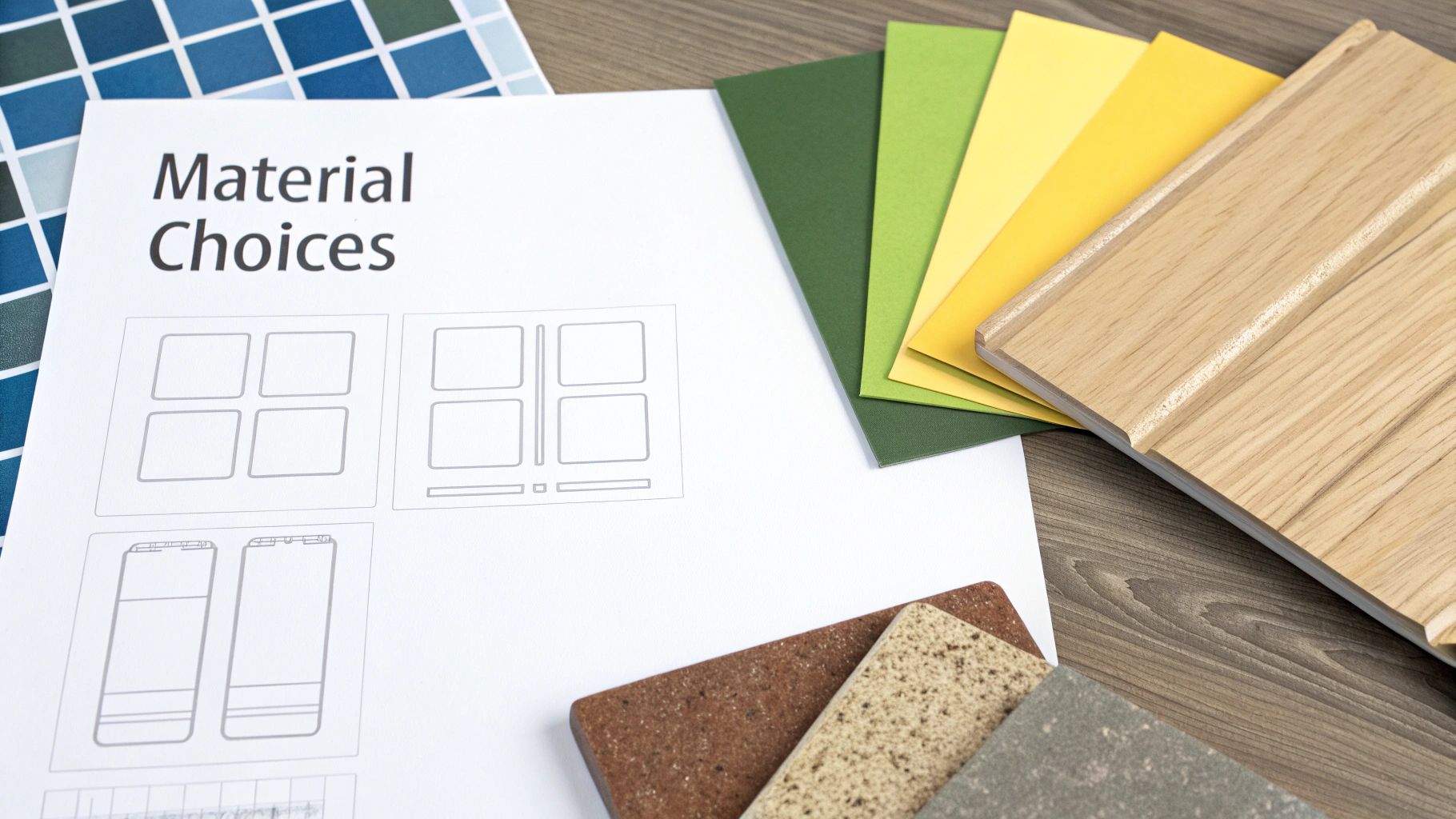
The materials you select for your cabinets and countertops will be one of the biggest chunks of your budget. This is where you’ll find the widest spectrum of costs.
For cabinetry, high-pressure laminates are the go-to choice in Singapore for good reason. They're cost-effective and come in a massive range of colours and textures. However, if you're looking for premium finishes like Fenix, veneer, or solid wood, expect your carpentry costs to increase significantly.
Countertops tell a similar story:
- Laminate: The most budget-friendly option, best for light-use kitchens.
- Solid Surface: A good mid-range choice, known for its seamless appearance.
- Engineered Quartz: The most popular choice for its durability, non-porous nature, and wide range of designs. A smart investment for busy kitchens.
- Sintered Stone/Natural Stone: At the premium end, materials like marble or granite offer unmatched beauty but come with a higher price and more maintenance.
Layout Changes and Structural Work
Want to know the quickest way to inflate your renovation bill? Start changing the layout. While knocking down a wall for an open-concept kitchen or shifting the sink to an island can be a game-changer for workflow, these moves come with significant costs.
A common request we get is moving the sink from its standard BTO position to a new kitchen island. This is far more complex than it sounds. It means hacking up the floor to reroute both the water supply and drainage pipes, followed by extensive plumbing and masonry work to put it all back together. That single change can easily add $2,000 to $4,000 to the project.
A kitchen's functional flow is critical, and for a deep dive into optimising the space, this commercial kitchen layout design guide offers some great principles. Hacking walls requires HDB permits, structural checks, and significant work to make good the surrounding areas, all of which adds time and cost to the job.
Customisation, Appliances, and Tiling
Beyond the big-ticket items, a few other factors quietly add up. The level of customisation in your carpentry is a big one. A standard cabinet is priced per-foot-run, but once you start adding clever internal organisers, pull-out pantry systems, or premium Blum hardware, the price climbs.
Your choice of appliances also makes a huge difference. You could get a standard hob and hood for under $1,000, or you could invest in a full suite of integrated appliances from high-end European brands like Fisher & Paykel or Bosch, which can run into the thousands. We often see clients mix and match—splurging on a top-tier oven they’ll use daily while opting for a more standard fridge to keep the budget in check.
Finally, don't underestimate the cost of tiling. Laying regular-sized tiles in a basic grid is straightforward and costs less. But if you want an intricate pattern like herringbone or chevron, or you've fallen for tiny mosaic tiles, the job becomes far more time-consuming for the tiler. That extra skill and labour will be reflected in the bill.
Smart Ways To Save Money Without Sacrificing Quality
Getting that high-end kitchen look doesn’t always mean you have to pay a high-end price. The secret to a budget-friendly renovation isn’t about cutting corners; it’s about making smart, strategic choices that give you the most bang for your buck.
With some clever planning, you can have a kitchen that looks and feels luxurious while keeping your kitchen renovation Singapore cost under control. It all starts with knowing where to invest and where you can save.
One of the single most effective ways to save cash is to maintain your existing kitchen layout. Sure, moving the sink to a new island sounds great, but in reality, these changes require serious work like rerouting plumbing and electrical wiring, which quickly adds up. By keeping your main work triangle where it is, you skip the expensive hacking and masonry work, freeing up a huge chunk of your budget.
Choose Smart Materials And Finishes
Materials are a massive part of any renovation budget, but savvy selections can give you a premium look for less. For instance, high-quality laminates have come a long way. They can convincingly mimic the look of natural wood or stone at a fraction of the cost—and they’re often more durable against scratches and stains.
Here's a practical strategy our clients use:
- Splurge on the Countertop: This is your kitchen's main work surface and a huge focal point. Investing in a durable and beautiful material like engineered quartz will instantly elevate the entire space.
- Save on Cabinetry Finishes: Pair that premium countertop with more affordable yet stylish laminate cabinets. The contrast creates a balanced, high-end feel without breaking the bank.
- Don't Forget Hardware: Think of handles and pulls as the jewellery for your cabinets. For a relatively small cost (S$100-S$300), quality hardware can make standard cabinets look far more custom and expensive.
Time Your Purchases And Consider Alternatives
Good timing and smart sourcing can lead to big savings, especially on big-ticket items. Instead of leaving all the purchasing to your contractor, get involved and source your own appliances.
We often tell our clients to keep an eye out for major sales events like Black Friday, the Great Singapore Sale, or year-end clearance deals. You can often snag the exact same high-quality oven, hob, or fridge for 15-30% less than the regular retail price if you just plan ahead.
Tiling is another area where you can find significant savings. If your existing floor or wall tiles are in good condition but just look dated, think about an overlay instead of hacking them all out. Laying new tiles directly over the old ones saves a fortune on demolition, disposal, and masonry costs. It’s not the right solution for every situation, but when it works, the savings are massive. For larger investments or to spread out expenses, understanding various kitchen equipment financing options can also be valuable for your renovation budget.
By combining these strategies, you can stretch your renovation dollar much, much further.
How To Choose The Right Renovation Partner For Your Project
Picking the right interior designer or contractor is easily the most important decision you'll make for your entire kitchen renovation. A great partner can bring your vision to life seamlessly, while a poor one can turn your dream project into a nightmare of blown budgets and endless stress. This single choice has a bigger impact on your final kitchen renovation Singapore cost—and your sanity—than almost anything else.

It’s not just about finding someone who can build cabinets; it’s about finding a team whose skills and communication style match your goals. When you get this right, you get clear communication, honest pricing, and the expertise to pull off your project without a hitch.
Evaluating Quotes Beyond The Bottom Line
When the quotes start rolling in, it’s natural to feel your eyes drawn to the lowest number. But from our experience, the cheapest quote is almost never the best value. A price that seems too good to be true usually is. It often means they're cutting corners with lower-quality materials, less experienced workers, or an incomplete scope that sets you up for surprise costs down the road.
Instead of just comparing the final price tag, you have to dig into the details. Look closely. Does one firm specify premium Blum hinges while another just vaguely lists "soft-closing hinges"? Does one quote detail the exact brand and thickness of the plywood for the cabinet carcasses? These small differences are what separate a kitchen that looks good for a year from one that lasts for decades.
A trustworthy firm will always provide a detailed, itemised quote that spells out exactly what’s included and, just as importantly, what’s not. This level of transparency is a massive green flag and a sign you’re dealing with a true professional.
Key Questions To Ask Your Potential Partner
To properly vet a potential designer or contractor, you need to go in armed with the right questions. This isn't about trying to catch them out; it's about making sure they are qualified, properly insured, and a good fit for you and your project.
Here's a practical checklist of questions to ask:
- Are you HDB-licensed and insured? This is non-negotiable. Ask to see their public liability insurance to ensure you're protected.
- Can I see your portfolio of completed kitchen projects? Look for work that is similar in style and scale to your vision.
- Can you provide references from a few recent clients? Speaking with past clients provides unfiltered insight into their process and delivery.
- Who will be my main point of contact throughout the project? Having a dedicated project manager prevents miscommunication.
- What's the estimated timeline for my project, and how do you handle delays? A professional should provide a realistic schedule and have a clear process for managing unforeseen issues.
The quality of their answers—and how they answer—will tell you a lot. Vague responses or hesitation to provide references are major red flags. A partner who is genuinely confident in their work will be proud to show off their credentials and connect you with happy homeowners.
At Kivo, we believe an informed client is a happy client. We welcome these questions and are committed to building a partnership based on trust and clarity. If you're ready to discuss your project with a team that values transparency, we invite you to get in touch with us at Kivo.com.sg for a no-obligation consultation.
Your Kitchen Renovation Questions, Answered
Planning a kitchen renovation naturally comes with a lot of questions, especially around budgets and timelines. Here are some straight answers to the questions we hear most from Singapore homeowners.
How Long Does a Typical HDB Kitchen Renovation Take?
For a standard HDB kitchen overhaul—including hacking, masonry, and full custom carpentry—a realistic timeline is 4 to 6 weeks. This allows sufficient time for crucial steps like cement screed curing and fabricating your custom cabinets.
For a simple cosmetic refresh in a BTO flat (no hacking), the project could be completed in as little as 2 to 3 weeks.
Factors that can extend the timeline include:
- Complex Layout Changes: Moving plumbing or electrical points will add time.
- Material Availability: Special-order materials can face shipping delays.
- Permit Approvals: Waiting for HDB or condo management approval can add a few days or weeks before work can begin.
Do I Need an HDB Permit for My Kitchen Project?
Yes, for certain jobs, an HDB permit is required. You will need one if your renovation involves:
- Hacking or demolishing any walls or flooring.
- Shifting the location of your sink or other plumbing fixtures.
- Altering windows or doorways.
Your interior designer or contractor will handle the application process for you. For simple cosmetic changes like painting or replacing cabinets in the same location, a permit is generally not needed.
Is It More Expensive to Renovate a Condo Kitchen?
Generally, yes. You can expect a condo kitchen renovation in Singapore to cost 10-20% more than a similar project in an HDB flat.
This is not due to materials but logistics. Condo management boards often have stricter rules that limit working hours, require more thorough protection for common areas, and involve more complex procedures for material haulage and debris disposal. These extra steps add to the labour and administrative costs for your renovation firm.
Ready to stop guessing and get a clear financial plan for your dream kitchen? The team at KIVO provides transparent, itemised quotes that are built around your specific needs and vision. Let's create something beautiful together. Contact us for a personalised consultation at Kivo.com.sg.