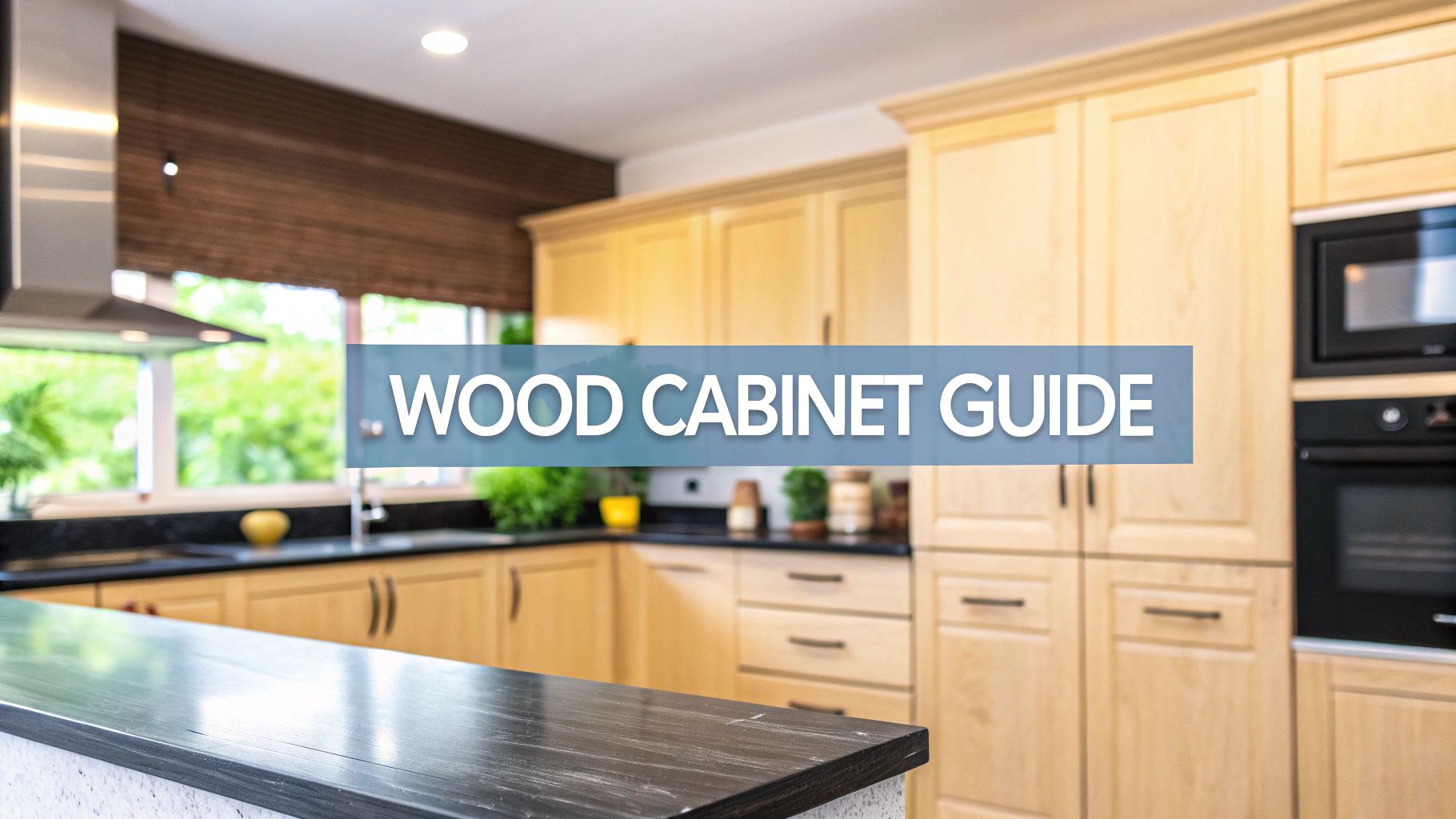
Kitchen design trends come and go, but the classic kitchen wood cabinet remains a timeless choice. There’s a warmth and natural beauty to wood that feels instantly like home. More than just a place to stash your plates, your cabinetry is the foundation of your kitchen’s character, blending rock-solid durability with an aesthetic that lasts.
Why Wood Cabinets Remain the Heart of Singapore Kitchens
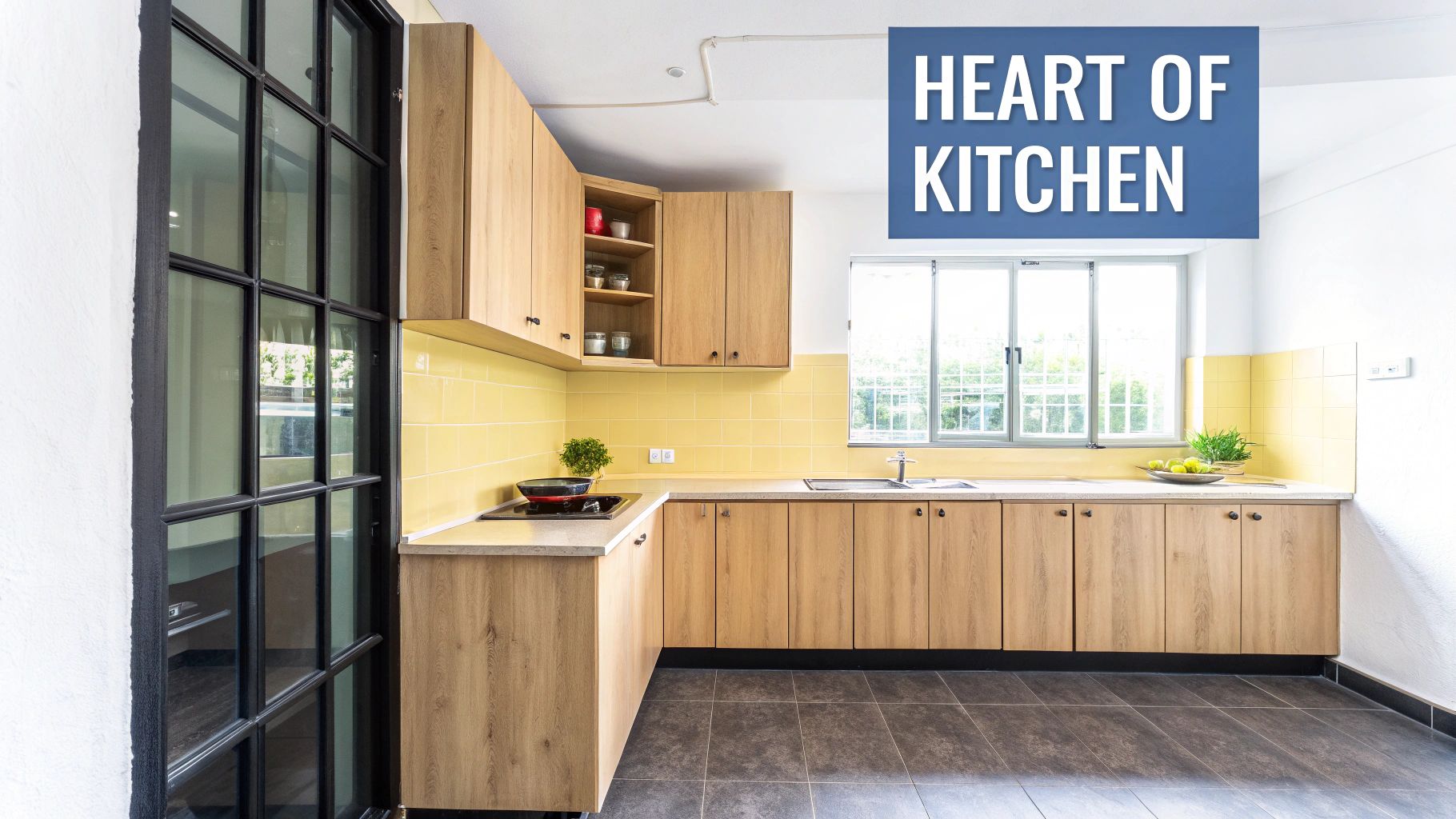
From a classic HDB flat to a sleek new condo, the soul of a Singaporean kitchen is often found in its woodwork. Wood has an incredible ability to bridge the gap between tradition and modern style, making it the preferred material for many homeowners.
It’s about creating a space that is both welcoming and highly functional. The natural grain and texture of wood bring an organic, tangible quality that man-made materials can't replicate. It’s this quality that makes a kitchen feel less like a sterile workspace and more like the true heart of the home.
A Mark of Quality and Craftsmanship
In Singapore, where space is a premium, every design decision counts. We've seen a clear shift in client expectations towards quality and sustainability. People are seeking true craftsmanship—quality materials and meticulous construction are no longer just nice-to-haves; they’re expected.
For instance, a client with a compact BTO kitchen recently wanted to maximise storage without making the space feel cramped. We designed full-height cabinets using light oak with a flat-panel design. This not only provided ample storage but the vertical grain and light colour made the ceiling feel higher. This is the kind of practical, tailored solution that bespoke woodwork delivers.
A kitchen wood cabinet is a functional piece of furniture built to withstand the rigours of daily life. It’s the silent workhorse of your home—holding your dishes, organising your pantry, and providing the backdrop for family meals.
The Foundation of a Cohesive Design
Choosing your wood cabinets is the first critical step in your kitchen design. The type of wood, the stain, and the style you pick set the tone for everything else, from countertops and backsplashes to the very floor you stand on. A cohesive, well-planned design always starts with this fundamental choice.
To create a seamless look, consider extending the wooden aesthetic to your flooring. Exploring durable and stylish wood flooring choices for kitchens can tie the whole room together. Pairing wood cabinets with the right wood flooring creates a warm, sophisticated look that elevates the entire space.
Ultimately, your kitchen cabinets aren't just storage boxes. They are a long-term investment in your home's enduring appeal and the daily joy you get from using a beautiful, functional space.
Choosing the Right Wood for Your Kitchen Cabinets
The wood you choose for your kitchen cabinets is more than a style choice—it's the foundation of your kitchen's future. It’s about picking a material that can stand up to daily use and Singapore's humidity. A smart decision here ensures your kitchen looks great for decades.
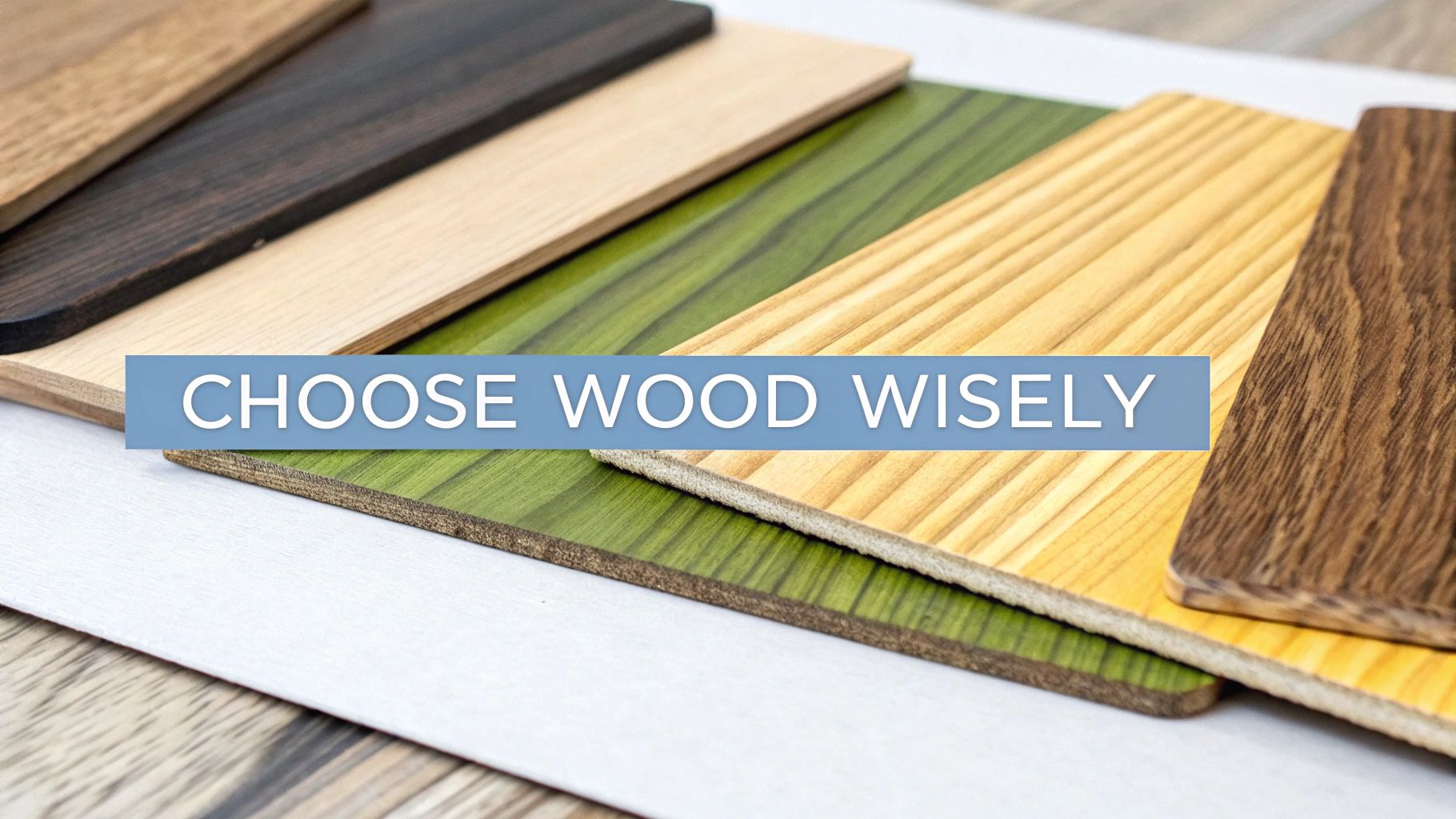
Getting familiar with different wood types commonly used in homes is a great starting point. The core characteristics of each timber—its strength, grain, and moisture handling—are exactly what you need to consider for cabinetry.
Solid Hardwoods: The Gold Standard
Milled straight from the tree, each piece of solid hardwood has an authentic character that can't be faked. Every knot and grain pattern tells a story. Their natural density makes them tough enough to handle the knocks and bumps of a busy kitchen.
From our experience building custom kitchens, a couple of hardwoods are clear winners for our clients:
- Teak: Famous for its high natural oil content, teak has a built-in resistance to moisture and pests—a huge plus in our climate. For a recent project in a landed property with an open-concept kitchen, we used solid teak for the island. Its gorgeous golden-brown hue became the warm, inviting centrepiece of the home.
- Oak (White or Red): Oak is a classic for a reason. It's incredibly strong with a beautiful, prominent grain. We particularly recommend White Oak for kitchens; its closed-grain structure makes it more water-resistant than Red Oak, giving it a practical edge.
Solid wood can expand and contract with humidity, but a professional finish and proper sealing will minimise this.
Engineered Wood: The Stability Champion
While solid wood has undeniable appeal, engineered wood often wins on practicality. It’s the unsung hero, especially for the unseen cabinet boxes (or "carcasses"). These materials are designed to resist the warping and swelling that can affect solid wood in humid environments.
The go-to choice we trust and recommend is Moisture-Resistant (MR) Plywood. It's made by layering thin sheets of wood veneer, with the grain of each layer turned 90 degrees to the next. This cross-graining technique creates a board that’s incredibly stable and strong.
Think of plywood like a well-woven fabric. A single thread can snap easily, but when you weave those threads together into a tight grid, the fabric becomes incredibly strong and resists stretching. Plywood’s layered structure works on the same principle, giving it superior stability against humidity.
The Smart Choice for Your Kitchen
So, what's the verdict? More often than not, the best kitchens use a hybrid approach. This is our preferred method.
We frequently design kitchens with solid wood for the cabinet doors and drawer fronts—the parts you see and touch. Behind the scenes, we use high-quality MR plywood for the cabinet boxes. This combination gives you the authentic beauty of solid wood where it counts, backed by the structural integrity and moisture resistance of engineered wood where you need it most.
Here’s a quick rundown of the top materials we work with for Singapore kitchens.
Comparing Popular Wood Types for Kitchen Cabinets
This table breaks down the key players to help you see how they stack up in terms of performance, cost, and best use cases.
| Wood Type | Key Characteristics | Best For | Considerations |
|---|---|---|---|
| Solid Teak | Naturally resistant to moisture and pests; rich, warm colour; ages gracefully. | High-end kitchens, homeowners seeking a timeless and luxurious aesthetic. | Higher initial cost; requires proper sealing to maintain its lustre. |
| Solid Oak | Very strong and durable; distinct, beautiful grain patterns; excellent for staining. | Versatile for both traditional and modern designs; high-traffic kitchens. | Can be heavy; Red Oak is more porous and requires a robust finish. |
| MR Plywood | Extremely stable and resistant to warping; strong and holds screws well. | Cabinet boxes (carcasses), shelving, and as a base for veneers. | The edges need to be finished with a laminate or veneer for a clean look. |
Ultimately, choosing the right material is a balance of aesthetics, budget, and real-world practicality. By understanding these core differences, you can make a confident choice that will serve your home beautifully for many years.
Cabinet Construction and Styles That Define Your Space
The lasting beauty of a kitchen wood cabinet goes beyond the timber. How that cabinet is built and the style you choose for its doors are what truly shape your kitchen's personality and day-to-day function. These are foundational choices, dictating everything from storage space to the overall aesthetic.
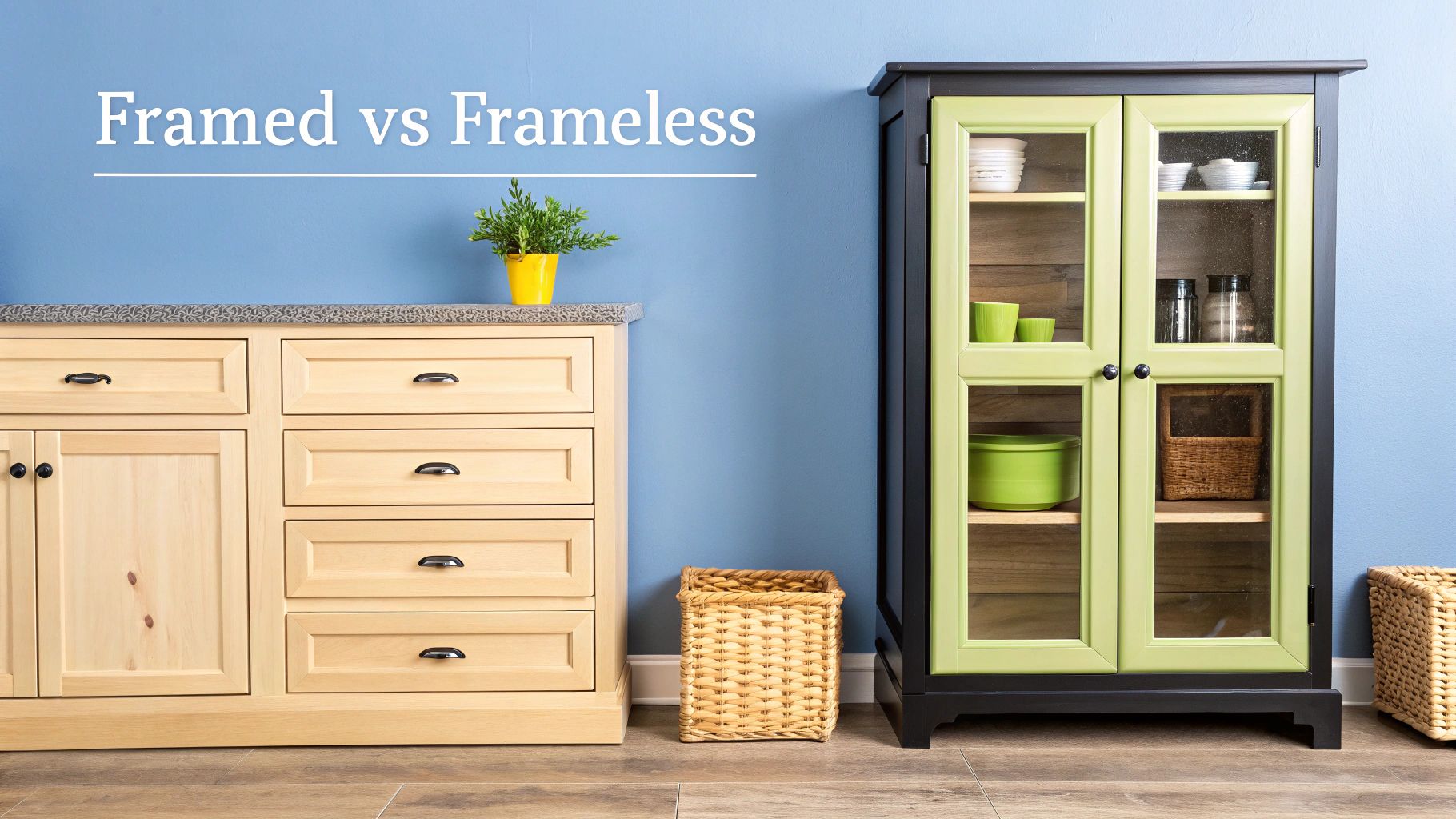
Think of cabinet construction as the skeleton of your kitchen. It determines strength, accessibility, and the visual lines of your design. The two main methods are frameless and framed.
Frameless Construction: The Modern Maximiser
Often called European-style, frameless construction is the clear winner for modern Singaporean homes, especially in HDBs and condos where every centimetre counts. It's a simple, clean box where the doors attach directly to the sides of the cabinet.
This clean design delivers two huge benefits:
- Maximum Accessibility: With no frame lip in the way, you get full, unobstructed access to the interior. This makes it easier to store larger items like pots and rice cookers.
- Sleek, Seamless Look: The doors and drawers fit tightly together with minimal gaps, creating a clean, uninterrupted surface. This is the secret behind those sleek, minimalist kitchens.
Framed Construction: The Traditional Touch
Framed construction is the more traditional method. A solid wood frame, usually about 1.5 inches wide, is attached to the front of the cabinet box, and the doors are mounted onto this frame.
Think of it like a picture frame around the cabinet opening. This approach provides immense structural rigidity and a classic, substantial look. While it slightly reduces the opening size, the sturdy frame is excellent at keeping the cabinet box perfectly square and adds a layer of timeless craftsmanship.
The choice between framed and frameless isn't about one being "better." It's about aligning the cabinet's structure with your aesthetic goals. Are you prioritising seamless modernity or traditional solidity?
Door Styles: The Face of Your Kitchen
If construction is the skeleton, the door style is the face. This is the element that most defines your kitchen's theme. Based on our projects, a few styles consistently resonate with clients.
Here are the most popular choices we see:
- Shaker Style: The champion of versatility. Shaker doors feature a simple, clean design with a flat recessed centre panel and four surrounding frame pieces. Their timeless look fits perfectly into everything from Scandinavian to modern luxury designs.
- Flat-Panel (or Slab) Doors: A completely flat, solid door with no detailing. It’s the go-to for minimalist and contemporary kitchens, allowing the wood grain or finish to be the star.
- Raised Panel Doors: For a more traditional look, raised panel doors feature a centre panel that is elevated to the same height as the door frame. This creates depth and shadow lines, lending a sense of classic elegance.
Your selection of a door profile is a critical step. A simple Shaker or flat-panel door can make a kitchen feel instantly modern. The key is to match the door's character to your home's architecture and your personal style.
Finishes and Hardware That Elevate Your Design
This is where the magic happens. Once the core structure of your kitchen wood cabinets is in place, the finishes and hardware define their final character. These aren’t afterthoughts; they are the critical touches that turn a well-made cabinet into a stunning centrepiece.
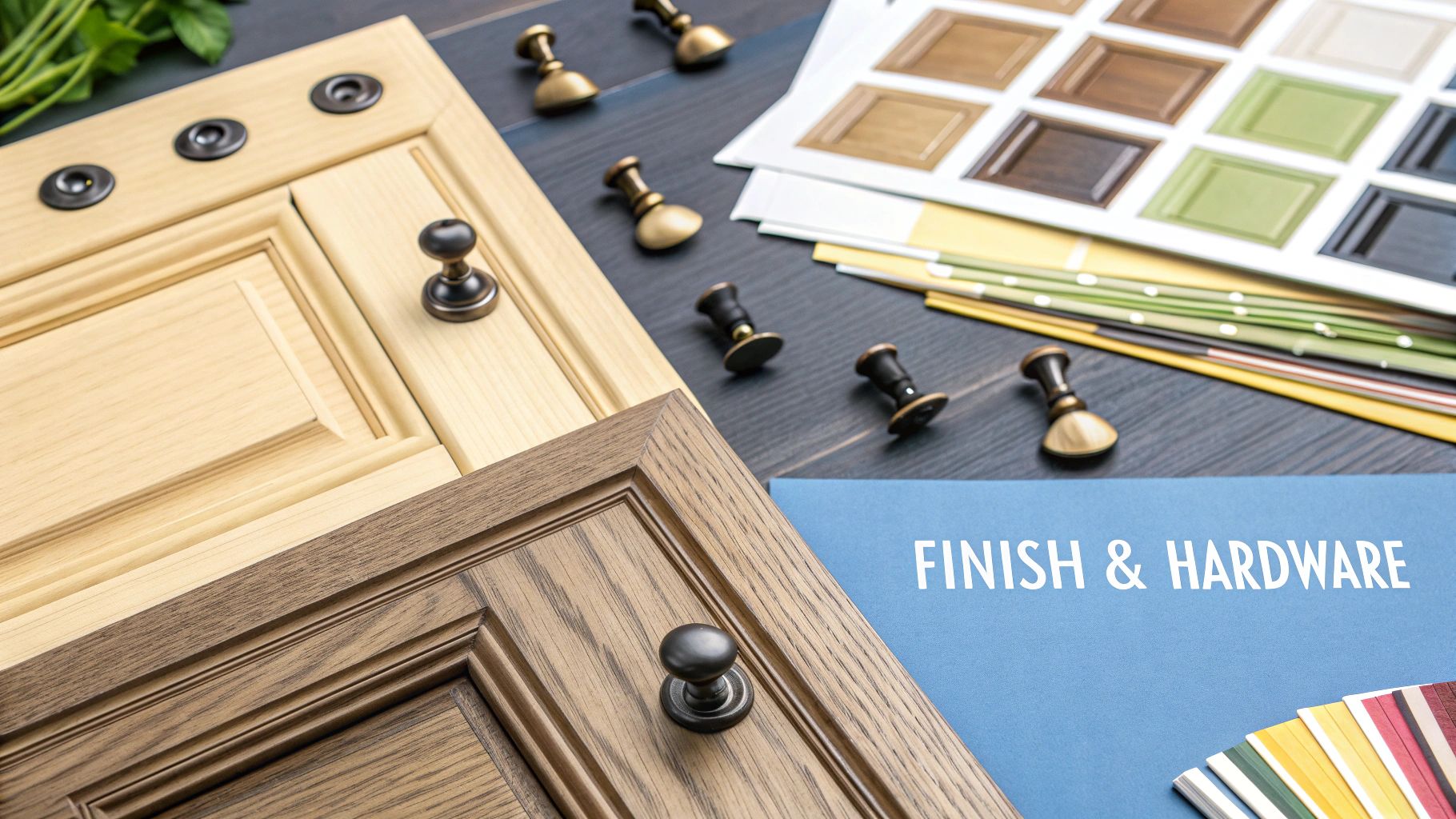
Think of the finish as the cabinet's protective skin and personality. It’s the first thing you see and touch, setting the tone for both the look and longevity. The choice generally comes down to staining or painting.
Stain or Paint: The Great Debate
A wood stain is absorbed by the timber, enhancing its natural beauty. It celebrates the unique grain patterns, knots, and textures of the wood, adding depth and colour while letting the material's character shine through. This is perfect for showcasing high-quality solid woods like oak or teak.
Paint, on the other hand, provides a smooth, opaque layer of colour for a clean and uniform look. This is an excellent choice for hitting a specific colour palette, whether you’re dreaming of a timeless white, a bold navy, or a soft, contemporary grey.
Beyond just colour, the sheen level plays a huge role in the final look and day-to-day practicality.
- Matte Finish: Gives a soft, non-reflective look that feels very modern. It's fantastic at hiding minor imperfections but can be more challenging to clean.
- Satin Finish: This is our most recommended option. It has a gentle lustre that feels premium without being overly shiny, and it’s both durable and easy to wipe down. A true all-rounder.
- High-Gloss Finish: For a sleek, mirror-like surface. High-gloss reflects light beautifully, which can make a smaller kitchen feel larger. While it's the easiest to clean, it will also show fingerprints more readily.
Hardware: The Jewellery of Your Kitchen
If the finish is your cabinet’s clothing, then hardware is its jewellery. Knobs, handles, and pulls are the small details that make a disproportionately large impact. They are the functional touchpoints you interact with every day.
For a modern kitchen with flat-panel doors, we often recommend sleek bar pulls in a matte black or brushed nickel finish. For a more traditional Shaker-style cabinet, classic knobs or cup pulls in polished nickel or antique brass add a touch of timeless elegance.
Think of your hardware as the final punctuation mark on your design statement. The right choice confirms the style, while the wrong one can create a confusing message. It's a small decision that carries significant visual weight.
Hardware is also one of the easiest and most cost-effective ways to give older wood cabinets an instant refresh. Whether you're planning a new kitchen or updating an existing one, carefully considered hardware is essential.
Understanding the Cost and Value of Custom Cabinets
One of the first questions clients ask is, "How much will this cost?" It’s a fair question. But thinking about a custom kitchen cabinet project purely as an expense misses the bigger picture. It’s an investment in your home and daily life.
The final price isn't a random number; it’s a direct reflection of every choice we make together—from the timber to the handles—to create a kitchen that is built for you.
Breaking Down the Key Cost Factors
Four main things drive the budget for your cabinetry. Understanding these helps you decide where to invest.
Wood Selection: Solid hardwoods like teak are at the premium end. High-quality engineered woods, like moisture-resistant plywood, provide a robust, stable foundation for a more accessible price.
Design Complexity: A clean, simple run of Shaker-style cabinets is more budget-friendly than a design with intricate details. Curved cabinets or custom pull-out pantries demand more materials and skilled labour.
Finishes and Materials: A multi-layer, factory-sprayed paint finish will cost more than a standard stain. Likewise, the countertops and backsplash materials that tie everything together will impact the total project cost.
Hardware and Internal Fittings: Upgrading to premium soft-close mechanisms, clever corner solutions, or high-end handles adds to the cost. However, these are often the little luxuries that make the biggest difference in how your kitchen feels to use every day.
The True Value of a Bespoke Kitchen
While the initial price for custom cabinets is higher than for mass-produced options, the value you get back goes far beyond the price tag. At its heart, custom carpentry is about solving problems. It’s about turning awkward architectural quirks into clever features and making every inch of space work for you.
A custom kitchen wood cabinet isn't just about looking beautiful; it’s an investment in superior functionality and lasting durability. It solves the unique challenges of your space, delivering a return in daily convenience and long-term home value that pre-made solutions simply cannot match.
In our experience with Singapore homes—especially HDBs and condos—bespoke design is often a necessity. We design clever solutions for awkward corners that would otherwise become dead space. We build cabinets that perfectly frame your appliances for a seamless, integrated look. Most importantly, we build storage right up to the ceiling, unlocking vertical space you never knew you had.
This tailored approach means your kitchen becomes a single, cohesive unit designed to fit your life, your workflow, and your home perfectly. That level of personalised function is an investment that pays you back every single day.
Maintaining Your Kitchen Wood Cabinets
Your new kitchen cabinets are a serious investment, so it makes sense to protect them. Keeping your wood cabinets looking pristine—even in Singapore's humid climate—is easier than you might think. It’s about building a few simple habits.
The "Little and Often" Cleaning Routine
The best defence against long-term wear is a "little and often" approach.
- Daily Wipe-Down: After cooking, give any splashes a quick wipe. A soft, lint-free cloth (microfibre is perfect) dampened with a little water is all you need. Always wipe in the direction of the wood grain.
- Weekly Clean: Once a week, mix a few drops of mild dish soap into a bowl of warm water. Dampen your cloth, wring it out until it’s almost dry, and wipe down all the cabinet fronts. Pay extra attention to areas around handles.
Here’s the most important step: after any cleaning, always dry the surfaces immediately with a separate dry, soft cloth. Lingering moisture is the number one enemy of any wood product.
Using the Right Tools for the Job
The cleaning products you use are critical—the wrong chemicals can strip the protective finish.
A common mistake is using a harsh, all-purpose cleaner. These sprays often contain ammonia, bleach, or abrasives that will permanently dull or scratch your cabinet’s finish and void any warranty.
To keep it simple, here’s a quick guide on what to use and what to avoid.
| Safe Cleaners (Use These) | Harmful Products (Avoid These) |
|---|---|
| Mild dish soap diluted in water | Abrasive cleaners or scouring pads |
| Commercial wood cabinet cleaners (non-silicone based) | All-purpose cleaners with bleach or ammonia |
| Soft, lint-free microfibre cloths | Silicone-based polishes (they cause build-up) |
| A 50/50 mix of water and white vinegar (for tough grease) | Soaking wet sponges or cloths |
Tackling Common Kitchen Issues
Even with the best care, life happens. Here’s how to handle common kitchen mishaps.
- Grease Splatters: For stubborn oily spots, the vinegar and water solution works wonders. Spray a small amount onto your cloth (not directly on the cabinet), wipe the greasy patch, then rinse the area with a clean, water-dampened cloth and dry it thoroughly.
- Minor Scratches: For light scuffs, a touch-up pen that matches your cabinet’s stain can make them disappear. Apply it sparingly, staying just within the scratch. For deeper gouges, it’s best to call a professional.
- Moisture Management: Singapore's humidity can be tough on wood. Ensure your kitchen has good airflow. Always use your cooker hood to pull steam and moisture away from your cabinetry.
Still Have Questions About Kitchen Wood Cabinets?
To wrap things up, let's tackle some of the most common questions we hear from homeowners. Getting clear, straightforward answers helps you move forward with confidence.
Project Timelines and Expectations
How long does a custom kitchen wood cabinet project actually take?
From our first meeting to the final installation, a typical custom cabinet project moves through a few key stages. The initial design and consultation—where we finalise the layout, materials, and create 3D visuals—usually takes about 1-3 weeks.
Once you approve the designs, fabrication takes around 4-6 weeks. On-site installation is typically wrapped up in 1-2 weeks. All in, you’re looking at a timeline of roughly 6 to 11 weeks. We provide regular updates so you always know the project status.
Material Choices and Climate
Is solid wood really the best choice for kitchens in Singapore?
Not always. While solid wood has a timeless beauty, it's not always the most practical choice for our climate. High-quality engineered woods, especially moisture-resistant plywood, offer much better dimensional stability, meaning they are far less likely to warp or swell in Singapore's humidity.
The "better" choice comes down to your priorities. If you're after authentic, natural charm, solid wood is fantastic. But for superior stability and rock-solid durability, a premium engineered wood is often the smarter pick for a kitchen wood cabinet.
Maximising Space in HDB Kitchens
How can I get the most storage out of a small HDB kitchen?
This is where customisation makes all the difference. In smaller kitchens, we immediately look to go vertical, building cabinets right up to the ceiling to use every inch of space.
We also integrate clever hardware that makes your kitchen work smarter:
- Pull-out pantries that slide out to reveal everything at a glance.
- Corner carousel or "magic corner" systems to make awkward corner cabinets completely usable.
- Deep drawers with custom dividers to keep pots and pans organised.
Using a frameless cabinet design also helps, as it gives you slightly more usable space inside compared to traditional framed cabinets.
Choosing the Most Durable Finish
What's the toughest, most long-lasting finish for a kitchen wood cabinet?
For a kitchen that sees a lot of action, we almost always recommend a factory-applied conversion varnish or a two-part polyurethane finish. These aren't just paints; they create an incredibly hard, non-porous shield over the wood that resists moisture, heat, and scratches far better than a standard lacquer.
They stand up to daily cooking and cleaning, making them easier to maintain over the years. We'll always talk through the pros and cons based on how you use your kitchen to ensure you get a finish that's both beautiful and built to last.
Ready to create a kitchen that truly fits your home and your life? At KIVO Custom Carpentry And Interior Design Services, we blend artisan skill with smart design to build spaces that feel just right. Let's start the conversation about your dream kitchen.
Explore our custom carpentry and interior design services at Kivo.com.sg