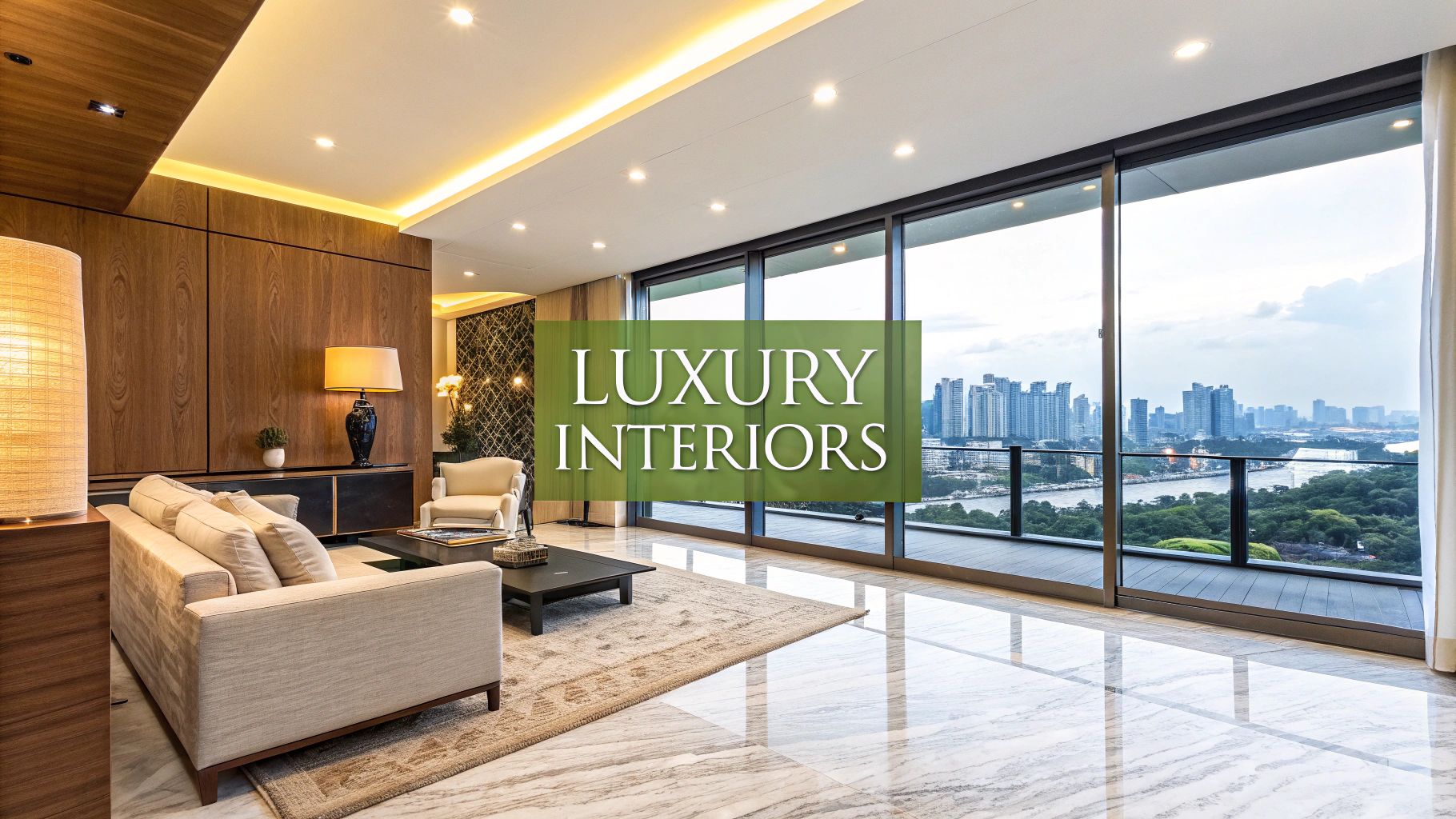
True luxury in home interior design isn't defined by a price tag. It's a feeling—a sense of harmony and flawless execution that speaks directly to your lifestyle. It’s the artful blend of bespoke craftsmanship, exceptional materials, and a design that intuitively understands how you live, turning a house into a personal sanctuary.
What Defines Luxury in Singapore Homes Today
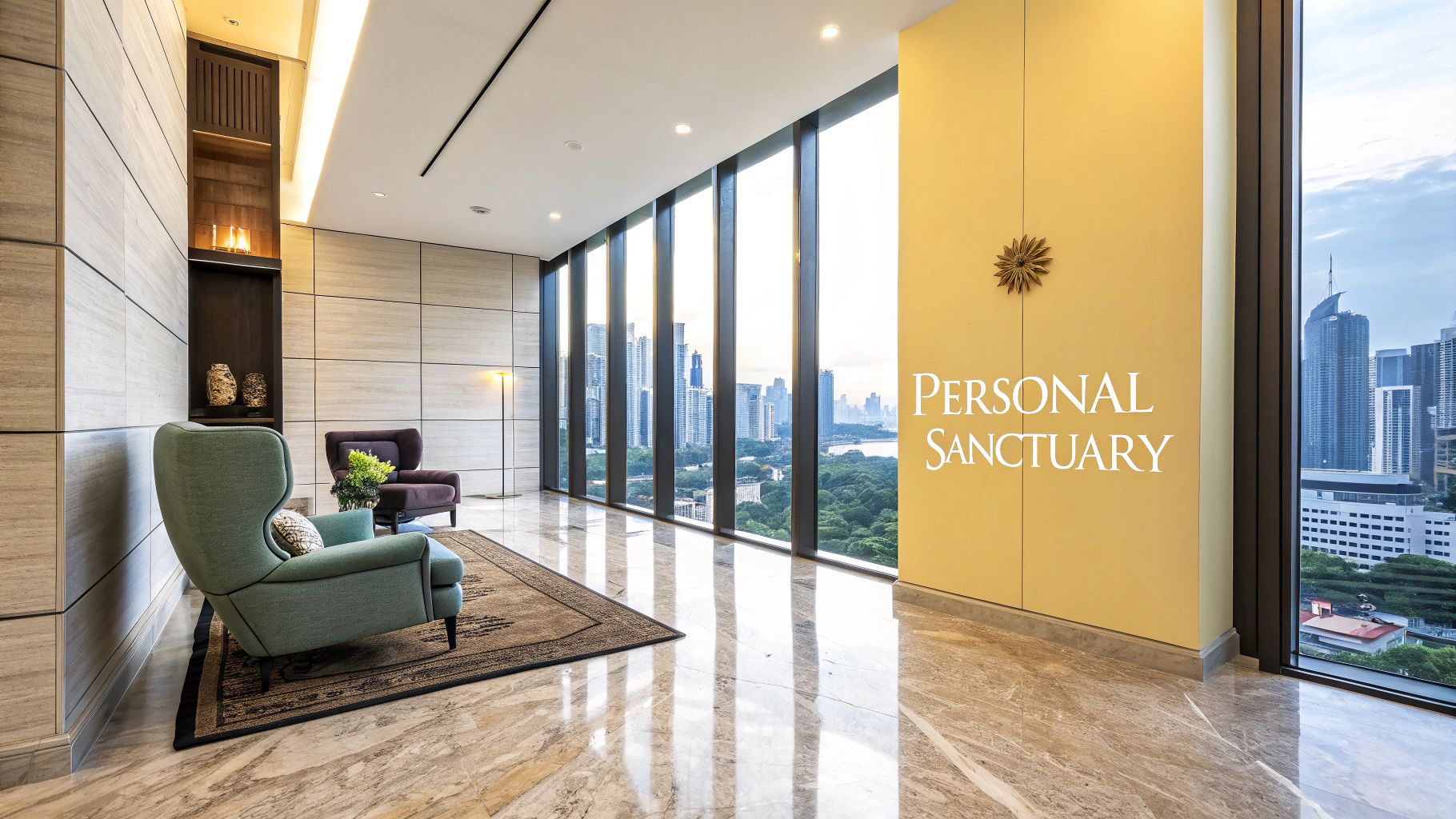
Here in Singapore, we’ve seen a clear shift in our clients' priorities. They are moving away from overt opulence and are instead focused on creating private havens—genuine escapes from the city’s constant buzz. This thinking leads to designs that are not only beautiful but also deeply connected to the way a homeowner lives day-to-day.
At its heart, modern luxury is about building a foundation of comfort and well-being. It’s measured by how a space makes you feel from the moment you walk in. To achieve this, we focus on core principles that elevate a home from simply 'well-decorated' to something truly exceptional.
The Rise of the Personal Sanctuary
More and more, we see homeowners investing inward, turning their living spaces into private retreats. This trend is driven by a deep desire for an environment that nurtures and restores. We see it in requests for spa-like bathrooms that replace weekend wellness trips or balconies designed with biophilic elements that become miniature personal parks.
True luxury is anticipatory. It's the quiet satisfaction of a perfectly placed reading light, the tactile pleasure of a cool marble countertop, and the seamless flow from one room to the next. It’s design that intuitively supports your daily rituals.
This approach is about creating a multi-sensory experience. It’s not just about what you see, but also about the acoustics, the lighting, and the textures that come together to craft an atmosphere of complete tranquillity and refinement.
Key Elements of Modern Luxury
To deliver this level of personalised comfort, a few key elements must work in concert. They form a cohesive and elevated living experience that feels both exclusive and deeply personal.
- Bespoke Craftsmanship: This refers to custom-made furniture and carpentry built specifically for your home. Practical Example: A media console designed to the exact millimetre to house your specific audio equipment, with integrated cable management and ventilation, ensuring a clean, uncluttered look that a store-bought unit could never achieve.
- Material Authenticity: Using genuine, high-quality materials like natural stone, solid wood, and rich textiles adds a layer of authenticity and durability. You can feel the difference between a solid oak floor and a laminate imitation—the former deepens in character over time, while the latter wears out.
- Intuitive Functionality: A luxury home should work for you. Practical Example: Designing a kitchen layout where the 'work triangle' (sink, stove, refrigerator) is optimised for your cooking style, or integrating smart lighting that adjusts automatically based on the time of day to support your circadian rhythm.
For a deeper dive into creating this kind of atmosphere, exploring insights into luxury homewares, home decor, and furniture can offer a more complete picture. Ultimately, today’s luxury is about crafting a space that is a true reflection of you—a personal sanctuary that nurtures, inspires, and brings joy.
The Foundational Pillars of Timeless Luxury Design
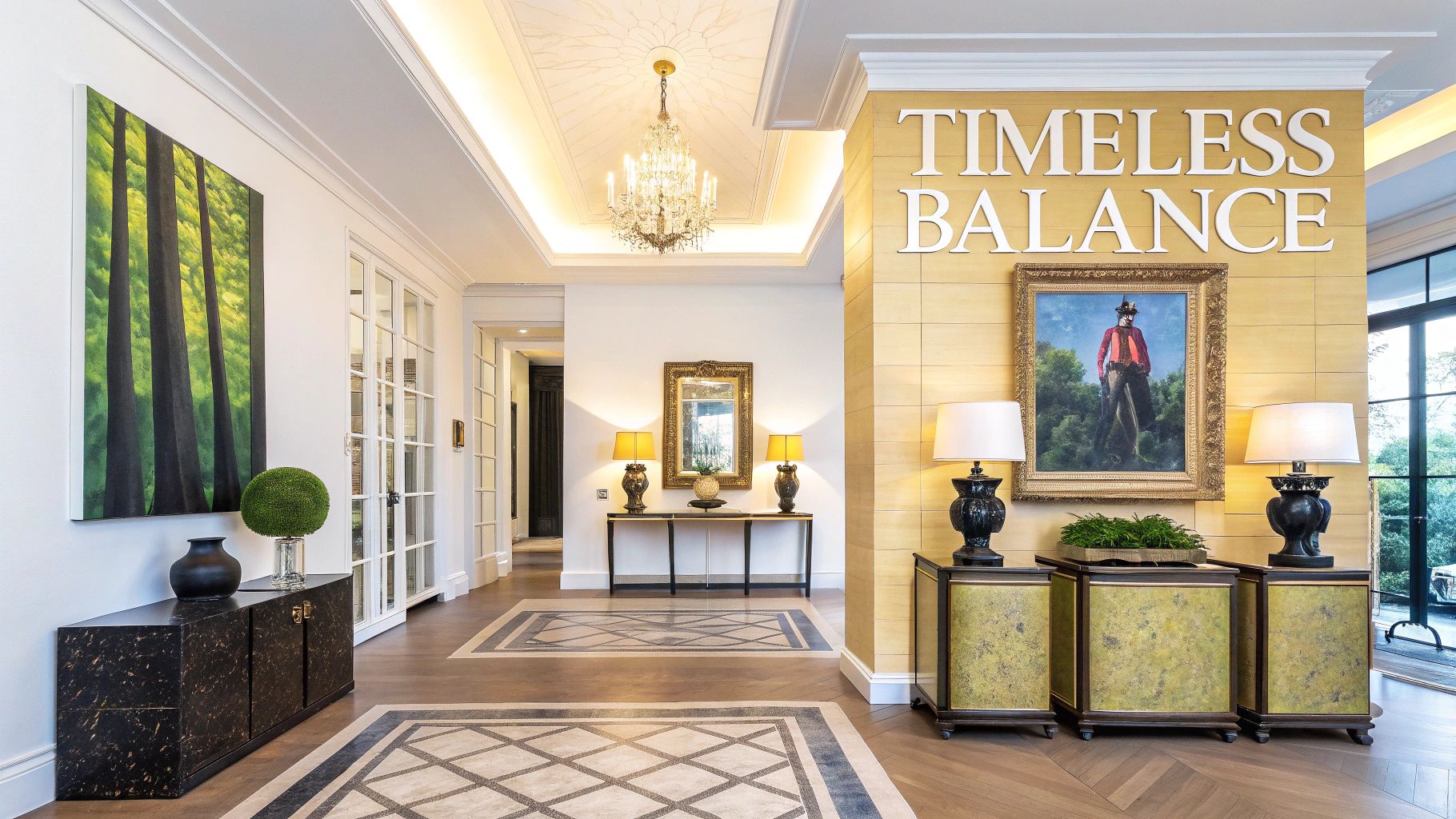
Anyone can fill a room with expensive objects, but creating a space that feels genuinely luxurious requires a different skill set. True luxury home interior design is built on core principles—invisible frameworks that ensure a home feels right, not just for a moment, but for years to come.
Think of these principles as the grammar of design. When applied correctly, they create a cohesive narrative throughout your home, where every element has a purpose. Mastering them is what separates a merely decorated room from one that exudes an effortless, enduring sense of quality.
The Art of Scale and Proportion
Scale and proportion are about the relationship between objects, the space they occupy, and the people within it. Getting this right creates harmony. Practical Example: In a condominium with a high, double-volume ceiling, a standard-sized sofa would feel lost. To create intimacy, we would specify a large-scale, custom sectional sofa and an oversized area rug to properly anchor the living area. A dramatic, multi-tiered chandelier would then be introduced to fill the vertical space, making the room feel grand yet liveable, not cavernous.
Achieving Symmetry and Balance
Symmetry offers a sense of calm and order. A perfectly symmetrical layout—like matching bedside tables and lamps flanking a master bed—creates an immediate feeling of stability. This classical approach is predictable in the best way possible, offering a restful visual experience.
Balance, however, doesn't always mean perfect symmetry. Asymmetrical balance creates a more dynamic, modern feel. Practical Example: We might balance a large L-shaped sofa on one side of a room with two elegant armchairs and a sculptural floor lamp on the other. Although the pieces are different, their visual weight is distributed evenly, achieving a sophisticated equilibrium that feels intentional and curated.
Creating Emphasis with Focal Points
Every well-designed room needs a hero—a focal point that immediately draws the eye and sets the tone. Without one, a room can feel chaotic and rudderless.
We often establish this visual anchor with a significant feature that commands attention:
- A Statement Artwork: A large, compelling piece of art can serve as the colour palette inspiration for the entire room.
- A Sculptural Staircase: In a landed property, a beautifully crafted staircase can act as a functional piece of art, guiding the eye upwards.
- Dramatic Lighting: An elaborate pendant light over a dining table not only illuminates the space but instantly becomes its centrepiece.
This single, powerful element gives the rest of the design a clear point of reference, allowing other pieces to play their supporting roles effectively.
In luxury design, a focal point isn't just about grabbing attention; it’s about making a deliberate statement. It communicates the homeowner's personality and establishes a clear hierarchy within the space, guiding how it is experienced.
Weaving in Rhythm and Repetition
Rhythm is the visual thread that ties a home together, creating a seamless flow from one room to the next. It’s created by repeating colours, textures, patterns, or materials. Practical Example: The bronze finish on kitchen cabinet handles might be subtly echoed in the legs of the dining chairs and the frame of a living room mirror. This repetition isn't meant to be obvious, but it creates an underlying sense of unity that the subconscious mind registers as thoughtful and complete. Understanding expert tips for choosing window treatments is also key, as they can significantly influence a room's rhythm.
Insisting on Material Authenticity
Finally, we arrive at a non-negotiable pillar of luxury home interior design: material authenticity. This is a commitment to using genuine, high-quality materials. It’s the difference between vinyl flooring that looks like wood and the rich, warm character of solid oak planks underfoot. Authentic materials like natural marble, solid timber, and pure linen engage all the senses. They have a tactile quality, a depth, and a way of ageing gracefully that synthetic alternatives can never replicate. This commitment to realness is what gives a luxury space its substance and longevity.
Choosing Your Palette of Materials and Finishes
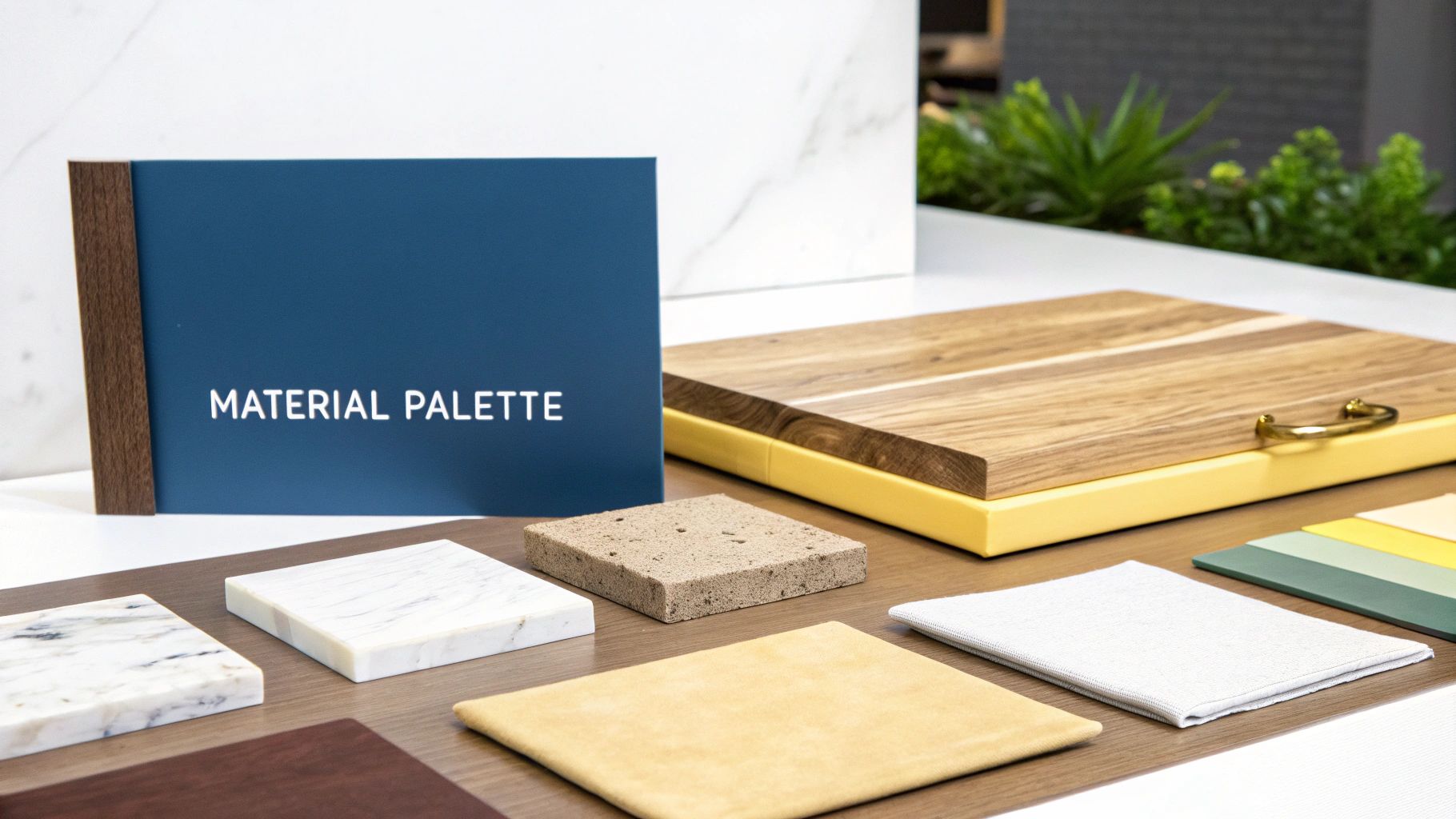
The materials and finishes you choose are the vocabulary of your home's design story. They do more than cover surfaces; they engage the senses, set the mood, and define how a space feels. In luxury home interior design, this isn't about picking trendy items—it’s about curating a palette that delivers quality, durability, and a rich, multi-sensory experience.
Making the right material choices is a foundational decision. Authentic, high-quality materials possess a character and depth that simply can't be faked. This commitment to authenticity is what separates a truly high-end interior from one that merely looks expensive.
The Enduring Appeal of Natural Stone
There's a reason natural stone is a cornerstone of luxury design: its inherent uniqueness means no two slabs are ever identical. Materials like marble and travertine bring an organic elegance. Practical Example: We often use bookmatched marble slabs for a feature wall in a living room or master bathroom. By mirroring two adjoining slabs, the veins create a stunning, symmetrical piece of natural art.
Travertine, with its warm tones, is fantastic for flooring that bridges indoor and outdoor spaces. Its porous texture offers a tactile, non-slip surface that feels wonderful underfoot, blending durability with a soft, sophisticated look.
In luxury design, materials must offer more than visual appeal. They need to evoke a feeling. The cool, smooth touch of a marble countertop or the solid, reassuring feel of a hardwood floor are sensory cues that constantly reinforce a sense of quality and permanence.
The Warmth and Character of Solid Hardwoods
While stone provides a cool, grounding element, solid hardwoods introduce warmth and life. From the deep richness of walnut for bespoke cabinetry to the bright feel of European oak for flooring, wood connects a space to nature. Its grain tells a story, and its ability to develop a beautiful patina adds character that deepens with age. Practical Example: For a cosy study, we might use a dark, matte-finished walnut for built-in bookshelves to create an intimate, enveloping feel. In contrast, a lighter, limewashed oak for flooring can make a main living area feel more expansive and bright.
Sophisticated Accents with Metals
Metals are the jewellery of an interior, adding refinement. We've seen a clear shift in client preferences towards warmer, unlacquered metals like brass and bronze, which develop a natural patina over time. These finishes feel more alive and less sterile than chrome.
Consider these practical applications:
- Brass Inlays: Delicate brass strips set into marble flooring or custom joinery create subtle, elegant details that elevate the entire design.
- Bronze Fixtures: Using bronze for tapware, lighting, and cabinet hardware creates a cohesive, warm thread throughout the home.
- Blackened Steel: For a contemporary edge, blackened steel can be used for staircase balustrades or window frames, providing a strong, graphic contrast.
Layering Textures for a Multi-Sensory Feel
The final layer involves the textiles and wall finishes that add softness and depth. Venetian plaster, for example, offers a luminous, marble-like finish for walls with a seamless quality that paint cannot achieve. Its subtle variations in texture create a dynamic surface that changes with the light. For textiles, our focus is on natural fibres like silk, linen, and wool. Practical Example: Layering a silk and wool blend rug for lustre and durability with linen curtains that diffuse sunlight beautifully creates a room that feels complete, considered, and incredibly inviting.
Comparing High-End Materials for Luxury Interiors
| Material | Best Application | Aesthetic Impact | Maintenance Level |
|---|---|---|---|
| Marble | Feature walls, countertops, bathroom vanities | Timeless, elegant, unique veining | High (requires sealing, prone to staining) |
| Travertine | Indoor/outdoor flooring, wall cladding | Warm, earthy, textured | Medium (porous, needs regular sealing) |
| Solid Hardwood | Flooring, custom cabinetry, wall panels | Warm, classic, adds character over time | Medium (requires proper cleaning, can scratch) |
| Brass (Unlacquered) | Tapware, hardware, lighting, inlays | Warm, luxurious, develops a unique patina | Medium (requires occasional polishing to restore shine) |
| Venetian Plaster | Feature walls, ceilings, seamless surfaces | Luminous, sophisticated, textural depth | Low (durable and easy to clean/repair) |
Choosing the right combination is about balancing beauty with the practicalities of daily life. The goal is to create a palette that is not only stunning on day one but also lives and ages gracefully with you.
Using Space Planning and Bespoke Carpentry
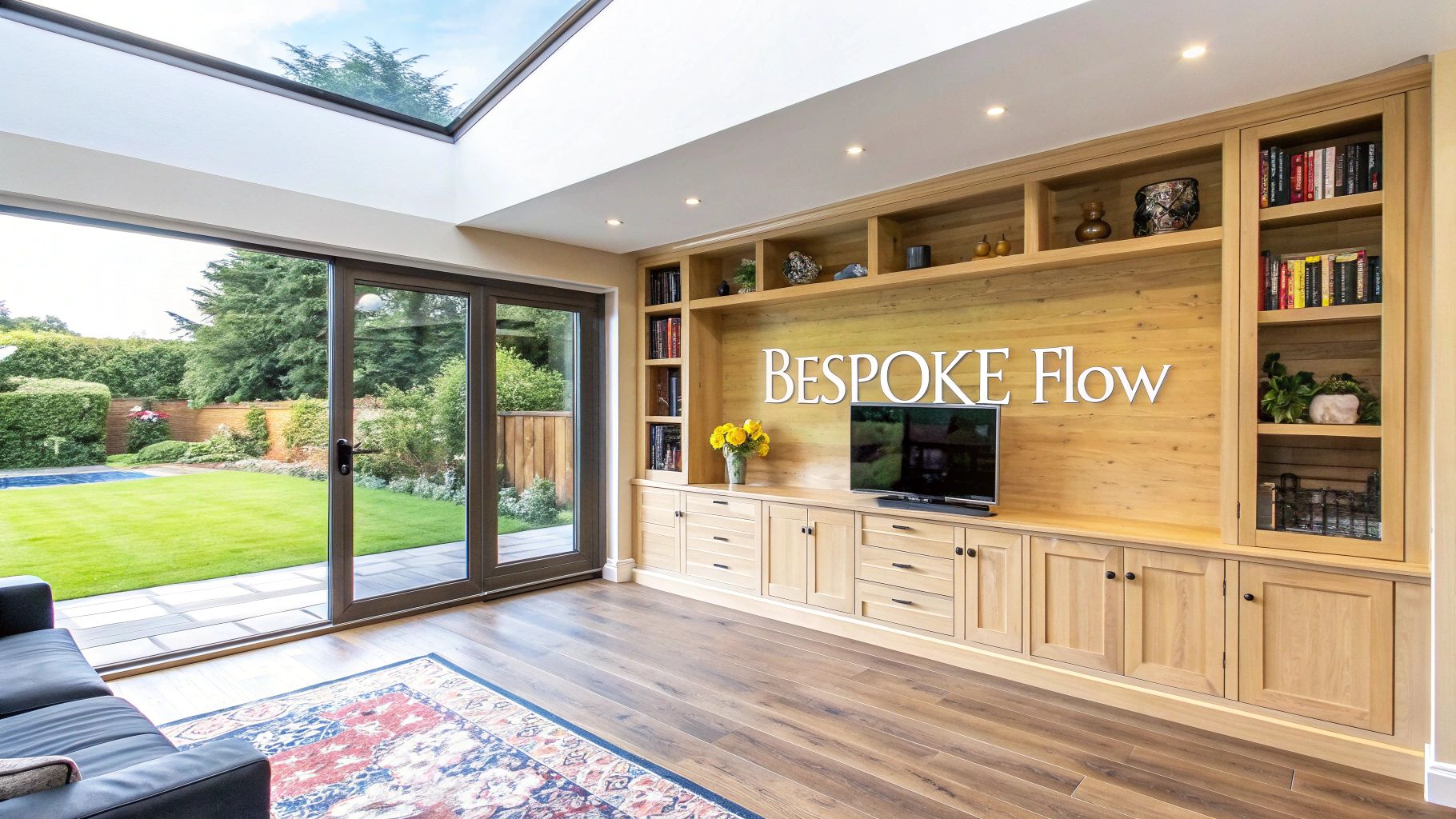
The true heart of a luxury home isn't a single expensive item. It's the feeling of effortless flow, where the home anticipates your needs and makes daily life simpler and more beautiful. This is the result of two intertwined disciplines: masterful space planning and custom-designed bespoke carpentry.
Think of space planning as the architectural choreography of your home. It goes beyond arranging furniture. It’s about crafting an intelligent flow, maximising natural light, and carving out distinct zones for everything from entertaining to quiet reflection.
Creating Intelligent Flow and Zoning
In Singapore, where space is a premium, a brilliant layout is non-negotiable. The goal is to create intuitive pathways that guide you from one area to another without interruption. We pay close attention to sightlines—what you see the moment you enter a room—to foster a sense of openness.
From there, we establish zones based on how you live.
- The Social Hub: An open-plan living and dining area can be zoned with a large area rug or a strategically placed island counter, clearly defining the space.
- The Quiet Retreat: A reading nook can be carved out by a window, with a comfortable armchair and dedicated lighting, creating a psychological boundary from the main living space.
- The Functional Core: The kitchen layout is meticulously planned around an efficient "work triangle" to ensure smooth movement between the sink, stove, and refrigerator.
This thoughtful zoning prevents rooms from feeling chaotic and ensures every activity has its own dedicated space.
The Power of Bespoke Carpentry
Once the spatial blueprint is set, bespoke carpentry brings it to life with precision and personality. Off-the-shelf furniture rarely meets the exact dimensional needs or aesthetic vision of a luxury interior. Custom-built solutions, on the other hand, are tailored down to the millimetre.
This is particularly crucial for storage. Practical Example: In a recent condominium project, we designed a floor-to-ceiling wardrobe that blended seamlessly into a bedroom wall. It wasn't just a closet; it featured tailored compartments for specific types of clothing, hidden drawers for accessories, and integrated LED lighting, turning a simple storage unit into a luxurious feature.
Bespoke carpentry is the ultimate problem-solver. It addresses unique spatial challenges with solutions that are not only functional but also become signature design elements, reflecting an unparalleled commitment to quality and a perfect fit.
The demand for such personalised solutions is a major force in the luxury sector. The global luxury interior design market hit a valuation of $60.66 billion and is expected to grow, fuelled by a rising preference for customised homes. This trend highlights how homeowners view their residence as a primary form of self-expression. You can learn more about these luxury market trends to see the full picture.
Beyond wardrobes, custom carpentry opens up endless possibilities. An integrated media unit can hide wires while providing shelves to display art. A tailored kitchen can incorporate specialised storage, making the space exceptionally efficient. Each piece is designed to harmonise with the home's overall aesthetic.
Planning Your Luxury Renovation Budget and Timeline
Embarking on a high-end renovation is an exciting journey, but a successful project is always built on a foundation of transparency and clear expectations. A firm grasp of the practicalities—namely, the financial investment and the time required—is essential.
Think of it as strategic allocation, not guesswork. An honest, practical guide to budgeting and scheduling is what keeps a project smooth and ensures the final result is everything you hoped for.
Deconstructing the Luxury Budget
So, where does the money actually go in a luxury home project? Based on our experience with high-end residential projects in Singapore, a typical budget breaks down something like this.
- Structural and Wet Works (15-20%): The essential groundwork. This covers foundational changes like hacking walls, rewiring, plumbing, and masonry.
- Custom Carpentry (25-30%): Often the largest slice of the budget. Bespoke wardrobes, kitchen cabinetry, and feature wall panels are signatures of a luxury home, requiring skilled craftsmanship and premium materials.
- Finishes and Materials (20-25%): The elements that create that luxurious feel. This includes flooring like marble or solid hardwood, wall finishes such as Venetian plaster, and high-end countertops. Quality here is non-negotiable.
- Furniture, Fixtures, and Equipment (15-20%): A broad category covering everything from your sofa and dining set to statement lighting, high-end tapware, and kitchen appliances.
- Professional Fees (10-15%): These fees cover the comprehensive services your design firm provides, from initial conceptualisation and detailed 3D visualisation to meticulous project management and on-site coordination.
If you’re wondering where to invest for the most significant long-term value, focus on two areas: the structural "bones" of your home and the high-touch elements you interact with daily. Never compromise on the quality of plumbing, electricals, or custom-built cabinetry.
Mapping a Realistic Project Timeline
One of the first questions we hear is, "How long will this take?" A luxury renovation is a carefully sequenced process, and rushing any stage can compromise the final quality.
A typical high-end project in Singapore follows a clear path:
- Phase 1: Design and Planning (4-8 weeks): We dive deep with consultations, develop the core concept, nail down space planning, select materials, and create detailed 3D renderings. Finalising details here is crucial for preventing costly changes later.
- Phase 2: Procurement and Tendering (3-6 weeks): Once designs are approved, we start sourcing materials and engaging our trusted contractors. This is where we factor in lead times for items like imported European marble or custom-ordered furniture.
- Phase 3: Construction and Installation (12-24 weeks): The physical transformation. It kicks off with demolition and structural work, followed by carpentry fabrication, installation of finishes, painting, and electrical work. For a condominium, this phase might take 3-4 months; a larger landed property could easily take 6 months or more.
- Phase 4: Furnishing and Handover (2-4 weeks): The finishing touches. Furniture is delivered, window treatments are installed, and the space gets a professional clean. We then conduct a thorough inspection with you before the final handover.
This methodical approach ensures that every element is executed to the highest standard, delivering a result that is built to last.
How to Select the Right Interior Design Partner
Choosing the right interior design firm is the single most important decision you'll make. This isn't just about hiring someone to pick out finishes; you're entrusting them with your vision, budget, and home for months. Getting this partnership right is the foundation for a spectacular result.
A top-tier firm offers more than aesthetics. Their real value lies in their proven processes, their network of exclusive suppliers, and the expertise to steer a complex project to a flawless finish.
It's also worth noting that Singapore’s luxury interior design market is booming. But with growth comes a fragmented landscape, making due diligence more critical than ever. If you're curious, you can discover more insights about Singapore's interior design market to get a feel for the environment.
Evaluating a Firm’s Portfolio and Process
Your first step is a deep dive into a firm's portfolio. Look for a consistent thread of quality and an aesthetic that resonates with you. Zoom in on the details—the precision of the joinery, the seamless flow of materials, the cleverness of the space planning. This is where true craftsmanship reveals itself.
But a strong portfolio is only half the story. Their project management process is what separates the pros from the amateurs. A professional firm will have a clear, structured path for taking a project from idea to reality.
During your initial conversations, ask direct questions:
- How do you manage the budget and track spending?
- What is your communication process during the project?
- Who are your primary contractors and how do you ensure their quality of work?
- How do you handle unexpected issues or delays on-site?
Their answers should inspire confidence. A well-oiled process isn't just administrative; it's the hallmark of a partner you can rely on to keep things on track and on budget.
The Importance of Chemistry and Credentials
Never underestimate the importance of chemistry. You’ll be working closely with your designer for a long time, so a relationship based on mutual trust and respect is non-negotiable. The right designer is a great listener, someone who seeks to understand your lifestyle and can translate your ideas into something tangible and beautiful.
A great designer doesn't just impose their style on you; they act as a skilled interpreter of your own. The relationship should feel collaborative, with your vision at the centre of every decision, elevated by their professional expertise and creative insight.
Finally, do your due diligence on their credentials. Look for testimonials and, if possible, ask to speak with past clients about their experience. A firm with a proven track record of successful projects and delighted homeowners is your safest bet for creating the luxurious sanctuary you’ve been dreaming of.
Still Have Questions About Luxury Design?
Stepping into a luxury home renovation is a significant undertaking, and it's normal to have questions. To provide clarity, we've gathered some of the most common queries we hear from homeowners in Singapore, with practical answers to help you feel confident as you begin.
How Long Does a Luxury Home Renovation Typically Take in Singapore?
The timeline for a luxury renovation depends heavily on the project's scale and complexity. For a condominium, you're generally looking at a 3 to 6-month journey from initial design to final handover. For a landed property, that timeline can easily extend to 6 to 12 months or more.
Key factors include the extent of structural changes, lead times for sourcing unique or imported materials, and securing necessary permits. We always provide a detailed project schedule from the outset, so you have a realistic picture for your specific home.
What Is the Difference Between an Interior Designer and a Contractor?
This is a great question, as the roles are distinct. Think of your interior designer as the architect of the vision. The designer determines the 'what' and the 'why'—crafting the floor plan, selecting materials, curating furniture, and designing the lighting scheme to create a cohesive, functional, and beautiful home.
The contractor is the master of execution. They handle the 'how', managing the physical build from demolition and masonry through to plumbing and electrical work. In a high-end project, a design firm like ours manages the entire process. We engage our trusted network of contractors and oversee their work to ensure the final result perfectly matches the design's intent and quality standards.
How Do I Ensure My Luxury Design Stays Timeless?
The secret to a timeless look is a foundation of classic design principles and authentic, high-quality materials—natural stone, solid wood, and exceptional craftsmanship. The primary focus should be on a well-conceived layout and balanced proportions that will look as good in twenty years as they do today.
A truly luxurious space has an elegant, high-quality base that allows for evolution. Trends should be introduced through elements that are simple to update, such as decorative accessories, art, textiles, or even accent paint colours, allowing you to refresh the space without a complete overhaul.
By prioritising the enduring 'bones' of the design, you create a home that remains stylish and relevant, adapting gracefully with your tastes over the years.
Ready to create a home that’s a true reflection of your vision? The team at KIVO Custom Carpentry And Interior Design Services is here to guide you through every step, from concept to completion. Let’s build your sanctuary together. Contact us today to schedule your consultation.