Modern commercial interior design is not about chasing fleeting trends; it's a strategic investment in your business's future. It’s the art and science of creating a physical environment that solves real-world problems—boosting team productivity, cementing your brand identity, and enhancing the client experience. The goal is to build a space that works as hard and as smart as your team does.
A Strategic Business Investment, Not an Expense
Many business leaders see interior design as a final, decorative touch. We see it as a foundational business tool. It’s about translating your company's mission, daily workflows, and unique culture into a tangible, three-dimensional asset. A well-designed commercial space isn’t just impressive to look at; it actively contributes to your bottom line by improving efficiency and morale.
This requires moving beyond surface-level aesthetics and asking deeper, more practical questions. How can the office layout reduce friction between collaborating departments? How can our reception area tell our brand story in the first 30 seconds? Where can we create dedicated zones for both deep, focused work and spontaneous creative collisions? Answering these questions is the first step toward a space that truly performs.
More Than Just a Pretty Space
From our experience working with diverse businesses, the real purpose of modern design is to deliver tangible, measurable results.
- Boosting Productivity: A poorly planned office is a productivity killer, filled with distractions and inefficient pathways. Strategic design eliminates these roadblocks by creating clear traffic flows, designated quiet zones, and accessible collaborative hubs. For a recent tech client, redesigning their layout to place engineering and product teams in closer proximity reduced cross-departmental query times by an estimated 20%.
- Strengthening Brand Identity: Your physical space is your brand story made manifest. The materials, colours, and furniture you choose communicate your values—be it the innovative energy of a tech startup or the quiet confidence of a financial firm. A law firm we worked with chose dark wood and leather to convey tradition and trust, while a creative agency opted for raw concrete, exposed ceilings, and flexible furniture to reflect their agile, disruptive culture.
- Improving Client Perception: For any client-facing business, your interior is the first handshake. A modern, intentional design communicates professionalism, capability, and a meticulous attention to detail. This builds trust before a single word is spoken, setting a positive tone for every interaction that follows.
The Building Blocks of Functional Design
A successful commercial interior is a cohesive system where every element serves a purpose. It all starts with a deep dive into how the space needs to function day-to-day. We analyze operational workflows, ergonomic requirements for employee well-being, and how different teams actually interact.
A thoughtfully designed commercial space becomes a silent partner in your business's success, fostering efficiency, communicating your brand ethos, and enhancing the daily experience for both your team and your clients.
To understand these foundational elements, consider the role of something as basic as flooring. Exploring the best commercial flooring for different businesses reveals that the choice is far from cosmetic. A polished concrete floor in a café is durable and easy to clean, but in an open-plan office, it would create an acoustic nightmare. Carpet tiles, however, would absorb sound and improve focus. Aligning every element with business objectives is what transforms design from a cost into a powerful tool for growth.
The Pillars of High-Impact Commercial Design
Creating a modern commercial space that actually works goes beyond aesthetics. It's about mastering several core principles that must work in harmony to create an environment that is functional, cohesive, and genuinely inspiring. These are the non-negotiable pillars we build every project on to ensure the final space actively helps the business thrive.
Think of these pillars as the essential ingredients in a chef's signature dish. Each is critical on its own, but their true power is unlocked when combined correctly. Get one wrong, and the entire experience can fall flat.
Strategic Space Planning and Flow
The first and most critical pillar is how people move through and use a space. Strategic space planning is about designing an environment that feels intuitive and eliminates friction. The goal is to create natural pathways that guide employees and clients from one area to another without congestion or confusion.
- Practical Example (Office): In a recent project for a logistics company, we placed the operations team adjacent to the sales department but separated them with a glass partition and a shared "collaboration zone." This maintained acoustic separation for focused work while enabling quick, impromptu meetings, improving workflow efficiency.
- Practical Example (Retail): For a boutique retailer, we designed a circular customer journey that guided shoppers past high-margin impulse-buy items near the checkout counter, directly increasing the average transaction value.
Multi-Layered Lighting Design
Lighting is one of the most transformative yet often overlooked tools in design. A single, flat source of overhead light is no longer sufficient. We implement a multi-layered approach to create a dynamic, comfortable atmosphere that adapts to different tasks and moods throughout the day.
We break this down into three key layers:
- Ambient Lighting: The general, foundational light that fills the space. This is often achieved with recessed ceiling lights, but we prioritize maximizing natural light wherever possible, as it’s proven to boost mood and regulate circadian rhythms.
- Task Lighting: Focused, direct light for specific work areas. Examples include adjustable desk lamps for individual workstations, under-cabinet lighting in pantries, or pendant lights over reception desks. This prevents eye strain and supports detailed work.
- Accent Lighting: The "dramatic" layer used to highlight architectural features, artwork, or company branding. Track lighting aimed at a logo wall or uplighting on a textured feature wall adds depth and visual interest.
By layering these sources, we shape the mood, maintain energy levels, and guide attention. Access to natural light and views alone can improve employee satisfaction and productivity, making a thoughtful lighting strategy a crucial business investment.
Intentional Materiality and Texture
The materials you choose are the physical vocabulary of your brand. They are what people see and touch, sending powerful subconscious messages about your company's values. The warmth of reclaimed wood can suggest sustainability and approachability, while the sleek finish of polished concrete can communicate a modern, industrial edge.
The right materials do more than just build a space; they build a feeling. They communicate your brand’s commitment to quality, sustainability, and the well-being of your team before a single word is spoken.
For instance, a wealth management firm might use rich walnut, brass accents, and natural stone to project stability and heritage. In contrast, a tech startup might leverage raw plywood, exposed ductwork, and vibrant textiles to foster a culture of innovation and creativity. The tactile experience—the cool touch of a marble countertop, the softness of an acoustic felt panel—enriches the sensory experience, making the space more memorable.
Prioritising Acoustic Comfort
In today's open and collaborative workspaces, acoustics have become a vital pillar of high-impact design. Poorly managed acoustics lead to a distracting environment where concentration is difficult and stress levels rise. It's an invisible problem with a very visible impact on productivity.
Effective acoustic design is planned from the start.
- Practical Example: For an open-plan office, we installed suspended acoustic ceiling baffles over noisy collaborative zones and used sound-absorbing felt panels as decorative dividers between workstation clusters. We also specified carpet tiles in high-traffic areas to dampen footfall noise. This "zoning" approach created an environment that supported both lively collaboration and quiet, focused work.
Emerging Workspace Design Trends in Singapore
The days of the one-size-fits-all office are over, especially in a dynamic market like Singapore. We are seeing a significant shift in client expectations, moving away from maximizing headcount towards creating human-centric ecosystems that support the modern workforce.
This evolution is driven by a focus on employee well-being and the need for adaptable, resilient workspaces. From our experience, clients are increasingly asking for designs that champion flexibility, inclusivity, and a strong connection to nature.
The Rise of Biophilic Design
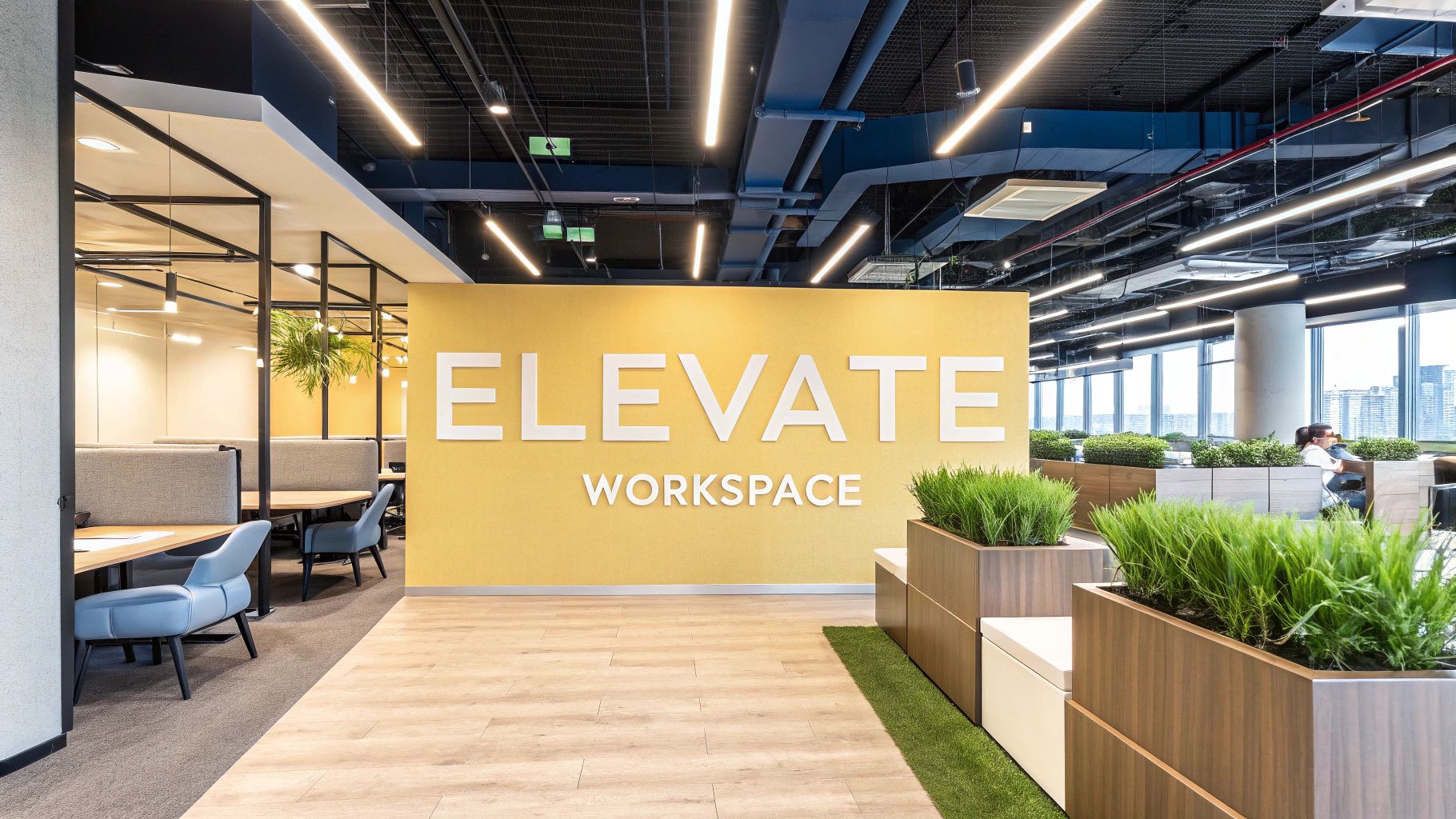
One of the most impactful trends we are implementing is biophilic design. This is not just about adding a few potted plants; it's a philosophy that weaves natural elements into the fabric of the built environment to strengthen the human-nature connection.
Practical applications of biophilia include:
- Living Walls & Integrated Planters: We design built-in planters and green walls that serve as natural air purifiers and stunning visual focal points.
- Natural Materials: We prioritize the use of materials like reclaimed wood, bamboo, and natural stone for flooring, wall cladding, and furniture.
- Maximising Natural Light & Views: Layouts are planned to allow sunlight to penetrate deep into the workspace and to ensure as many employees as possible have a view of the outdoors.
By weaving elements of the natural world into the built environment, we create spaces that actively reduce stress, enhance creativity, and improve cognitive function—making the workplace a truly healthier place to be.
The shift towards these new priorities is clear when comparing old and new approaches.
Modern vs Traditional Commercial Design Approaches
| Characteristic | Traditional Design Approach | Modern Design Approach |
|---|---|---|
| Layout | Fixed, hierarchical layouts with private offices and cubicles. | Flexible, activity-based layouts with diverse zones (collaborative, quiet, social). |
| Focus | Maximising space efficiency and employee density. | Enhancing employee well-being, productivity, and experience. |
| Technology | Basic connectivity, often as an afterthought. | Seamlessly integrated technology to support hybrid work and smart building functions. |
| Materials | Standard, often synthetic materials chosen for durability and cost. | Natural, sustainable, and tactile materials that connect to nature and well-being. |
| Employee Needs | One-size-fits-all approach. | Human-centric and neuro-inclusive, offering choice, control, and autonomy. |
This table illustrates a fundamental shift from rigid, top-down structures to adaptive, people-focused environments.
Neuro-Inclusive and Human-Centric Spaces
A truly modern workspace must cater to everyone. This has brought neuro-inclusive design to the forefront—an approach that creates environments supportive of diverse sensory and cognitive needs. Not everyone thrives in a loud, visually stimulating open-plan office.
This means providing a spectrum of spaces.
- Practical Example: In a recent project, we designed a "library zone" with low lighting, sound-dampening acoustic booths, and a no-phone-call policy for deep focus. This was balanced with a vibrant "town hall" area with modular seating and interactive whiteboards for high-energy brainstorming. This gives employees the autonomy to choose the environment that best suits their task and mental state.
When prioritising well-being, finding the best ergonomic office chair is a foundational investment, ensuring physical comfort is a baseline standard for everyone.
Creating 'Phygital' Environments for Hybrid Work
The hybrid work model is here to stay. This necessitates 'phygital' spaces—environments that seamlessly merge the physical and digital worlds to ensure all employees, whether in-office or remote, feel equally connected and engaged.
A successful phygital space integrates technology frictionlessly.
- Practical Example: We equip meeting rooms with smart cameras that automatically focus on the active speaker and high-fidelity microphones that capture clear audio from everyone in the room. We also integrate user-friendly hot-desking systems that allow employees to book a workspace via a simple mobile app before they even leave home. The goal is to make the line between physical and virtual collaboration disappear.
Choosing Materials and Furniture That Last
This is where design theory becomes physical reality. Selecting the right materials and furniture is a long-term investment in durability, functionality, and brand expression. Every choice—from the flooring to the task chairs—impacts the space's longevity and daily operational success.
The true cost is not the upfront price but the total cost of ownership over years of use. A cheaper material that requires frequent maintenance or replacement is a poor investment. We prioritize selections built to withstand commercial use while aligning with the overall design vision.
Foundations Matter: Your Flooring Choices
Flooring is a critical decision that sets the tone for the entire space and affects acoustics, maintenance, and safety. The best choice depends entirely on the function of the specific area.
- Polished Concrete: Ideal for high-traffic lobbies or retail spaces due to its durability and ease of cleaning. However, its hardness and poor acoustic properties make it unsuitable for quiet office zones without supplementary acoustic treatments.
- Luxury Vinyl Tile (LVT): A versatile and durable option that can mimic natural wood or stone at a lower cost. Its water resistance and comfort underfoot make it a great choice for office pantries, corridors, and breakout areas.
- Carpet Tiles: The best choice for acoustic control in open-plan offices and meeting rooms. The modular design is a key benefit—a stained or damaged tile can be easily replaced without redoing the entire floor, saving time and money.
Furniture: The Non-Negotiables
In modern commercial interiors, furniture is a functional tool that supports well-being and business agility. We focus on three non-negotiable pillars when selecting furniture for our clients.
True value in commercial furniture isn’t found in its initial cost, but in its ability to support your team’s health, adapt to your company’s growth, and withstand the test of time.
This ensures every piece is a hardworking asset.
1. Ergonomics for Well-being
A healthy team is a productive team. Ergonomic furniture is a business necessity, not a luxury. This means specifying chairs with adjustable lumbar support, height-adjustable desks that allow users to sit or stand, and monitor arms to ensure correct screen height.
2. Modularity for Future Flexibility
Your business will evolve, and your furniture should adapt with it. Modular systems—such as desks that can be reconfigured from individual workstations to team pods, or movable acoustic partitions—provide the agility to change your layout without a complete overhaul.
3. Durability for Daily Use
Commercial-grade furniture is engineered to withstand intensive daily use. We look for solid construction, durable finishes that resist scratches and stains, and high-performance fabrics rated with a high "double rub" count (a measure of abrasion resistance). Investing in durability upfront prevents the costly cycle of frequent replacements.
Breaking Down the Commercial Design Process
A commercial design project can seem daunting, but it follows a structured, step-by-step process. Understanding this workflow demystifies the journey and empowers you to be an informed partner. We guide every project through a transparent, phased approach to ensure every decision aligns with your goals, budget, and timeline.
Phase 1: Discovery and Strategy
This is the most critical phase. Before sketching any ideas, we immerse ourselves in your business. We conduct workshops to deeply understand your strategic objectives, operational needs, company culture, and future growth plans. This is also where we establish the practical framework: a realistic budget and a detailed timeline. This foundational work prevents costly misalignments later on.
Phase 2: Concept and Space Planning
With a clear strategy, the creative work begins. We develop initial design concepts through detailed space planning, crafting layouts that optimize flow and functionality based on our discovery findings. To make these ideas tangible, we create mood boards—curated collections of textures, materials, colour palettes, and imagery that define the desired aesthetic and atmosphere. This ensures we are aligned on the vision before proceeding.
Phase 3: Design Development and Visualisation
Next, we flesh out the approved concept into a detailed, buildable plan. This phase involves creating precise technical drawings and selecting specific materials, furniture, fixtures, and equipment (FF&E). We use high-fidelity 3D visualisations to provide a photorealistic preview of the final space.
3D renders are so much more than just pretty pictures. They’re a crucial communication tool that lets you walk through your future space virtually, ensuring every last detail is perfect before a single wall ever goes up.
These renders eliminate guesswork and give you complete confidence in the final outcome, allowing for any final adjustments before construction begins.
Phase 4: Project Management and Execution
With the design finalized, we transition into execution. Our role expands to full project management, acting as your single point of contact and on-site advocate. We coordinate all contractors, suppliers, and tradespeople, ensuring seamless execution. This hands-on management keeps the project on schedule and within budget. We oversee site works to ensure construction adheres strictly to the design specifications and meets our high standards for craftsmanship. This execution is supported by a growing talent pool; Singapore's design workforce is projected to hit about 82,500 professionals by 2025, a nearly 20% increase in four years, which is vital for delivering the complex, integrated designs modern businesses demand. You can read more about these workforce trends from the DesignSingapore Council.
Phase 5: Handover and Ongoing Support
In the final phase, all the planning and hard work come together. After construction is complete, we conduct a meticulous final inspection to ensure every detail is perfect before officially handing the space over to you. Our role doesn't end there. We provide a smooth transition, walking you and your team through any new systems or features. We believe in building lasting partnerships, and our support continues long after move-in day to ensure your new environment continues to serve your business effectively for years to come.
How to Budget Your Commercial Design Project
Establishing a realistic budget is the most critical first step in any commercial design project. A well-planned budget is not a limitation; it is a financial roadmap that guides decision-making, prevents costly surprises, and ensures every dollar is invested strategically.
Understanding the key components is crucial for effective planning. The total cost is a combination of several distinct elements.
The Key Financial Components
A comprehensive budget accounts for every aspect of the project, from initial concept to final installation.
- Design and Professional Fees: This covers the expertise of your design firm, including strategic space planning, concept development, 3D visualisations, technical drawings, and project management. This investment ensures a cohesive and functional outcome.
- Construction and Renovation Costs: This is typically the largest portion of the budget. It includes all physical work: demolition, building partitions, electrical, plumbing, flooring installation, and painting.
- Furniture, Fixtures & Equipment (FF&E): This category includes all movable items, such as desks, chairs, storage systems, lighting fixtures, and technology hardware.
- Contingency Fund: This is non-negotiable. We advise clients to set aside 10-15% of the total project cost for unforeseen issues. This buffer provides a safety net for unexpected site conditions or changes that may arise during construction.
Getting the Most Value Without Sacrificing Quality
Smart budgeting isn't about choosing the cheapest option. It’s about strategic allocation—investing in high-impact areas that deliver the greatest return for your business and your team.
A well-managed budget empowers you to invest strategically in design elements that directly support your business goals, turning a necessary expense into a powerful asset for growth and employee satisfaction.
A practical strategy is to prioritize spending on elements that people interact with daily. For example, investing in high-quality ergonomic chairs and durable workstations directly impacts employee comfort and productivity. This can be balanced by selecting more cost-effective yet stylish finishes for less critical areas. Smart material choices, like using high-quality laminate that mimics natural wood for custom joinery, can achieve a premium look while freeing up budget for other priorities.
The demand for professionally designed commercial spaces is on the rise. In Singapore, the interior design services market was valued at around USD 0.77 billion in 2024 and is projected to reach USD 1.22 billion by 2033. This growth reflects a clear understanding among businesses that a well-designed workplace is a critical driver of success. You can dive deeper into this market growth on Deep Market Insights.
Answering Your Questions About Commercial Interior Design
Embarking on a commercial design project can bring up a lot of questions. Here are clear, straightforward answers to some of the most common queries we hear from business owners in Singapore.
How Long Does a Renovation Take?
The timeline depends entirely on the project's size and complexity.
- Small Projects (under 2,000 sq ft): A typical renovation for a small office or retail space usually takes 8 to 12 weeks from design finalization to handover.
- Large Projects (over 5,000 sq ft or complex builds): Larger projects, or those involving significant structural changes or extensive custom joinery, can range from 4 to 6 months or more.
Key factors that influence the schedule include the speed of decision-making, lead times for custom materials and furniture, and obtaining necessary permits from authorities like the Building and Construction Authority (BCA). A detailed project schedule is established at the outset to provide a clear roadmap.
What Is the Difference Between a Designer and a Contractor?
These roles are distinct but complementary.
- An Interior Designer is your strategic partner. We focus on the 'why' and the 'how'—translating your business objectives into a functional and aesthetic plan. We handle space planning, concept development, material selection, 3D modelling, and producing detailed drawings for construction.
- A Contractor is the builder. They are responsible for the physical execution of the design plan. They manage the construction site, coordinate tradespeople (electricians, plumbers, painters), and bring the designer's vision to life.
While some firms offer a combined "design and build" service, partnering with a dedicated design firm ensures you have an expert advocate whose sole focus is creating a space that is not just well-built, but perfectly aligned with your business needs and brand identity.
An interior designer crafts the blueprint for success, solving business challenges with thoughtful planning. The contractor is the master builder who expertly constructs that vision.
How Does Modern Design Improve Productivity?
Modern commercial design directly boosts productivity by creating environments tailored to human needs.
- Ergonomic Furniture: Proper ergonomic support reduces physical strain and fatigue, keeping employees comfortable and focused throughout the day.
- Biophilic Design: Integrating natural light, plants, and natural materials has been proven to reduce stress, improve cognitive function, and enhance creativity.
- Acoustic Control: By using sound-absorbing materials and creating designated quiet zones, we minimize distractions in open-plan offices, allowing for deep concentration.
- Varied Work Zones: Providing a mix of collaborative hubs, private pods for focused work, and informal breakout areas gives employees the autonomy to choose the best environment for their specific task.
When you invest in a space that is comfortable, inspiring, and functional, you empower your team to perform at their best.
Ready to turn your commercial space into your greatest asset? The team at KIVO blends decades of artisan craftsmanship with smart, forward-thinking design to create environments that don't just function—they inspire. Explore our services at kivo.com.sg and let’s start building your vision together.