The modern office is no longer just a place to work; it's an ecosystem designed to foster innovation, collaboration, and well-being. As business leaders in Singapore navigate the demands of a dynamic workforce, the search for impactful office interior design ideas has become a strategic priority. The right design can transform a simple workspace into a powerful tool for attracting top talent, enhancing productivity, and embodying your company's unique culture and values.
This guide moves beyond generic advice to provide a curated roundup of 12 distinct, actionable design concepts tailored for the modern enterprise. We understand that a successful office is a reflection of its purpose, whether that's facilitating deep focus, encouraging spontaneous teamwork, or impressing high-value clients. A thoughtfully designed space signals competence and care, directly influencing employee morale, operational efficiency, and even brand perception.
Drawing from our experience with diverse clients, we'll explore practical strategies: from biophilic principles that connect employees with nature to tech-forward layouts that future-proof your operations. You will discover how specific choices in layout, materials, and technology can solve common workplace challenges. Prepare to find tangible inspiration on how thoughtful design, grounded in functionality and refined by expert craftsmanship, can redefine what your office can achieve.
1. Open Plan Office Layout
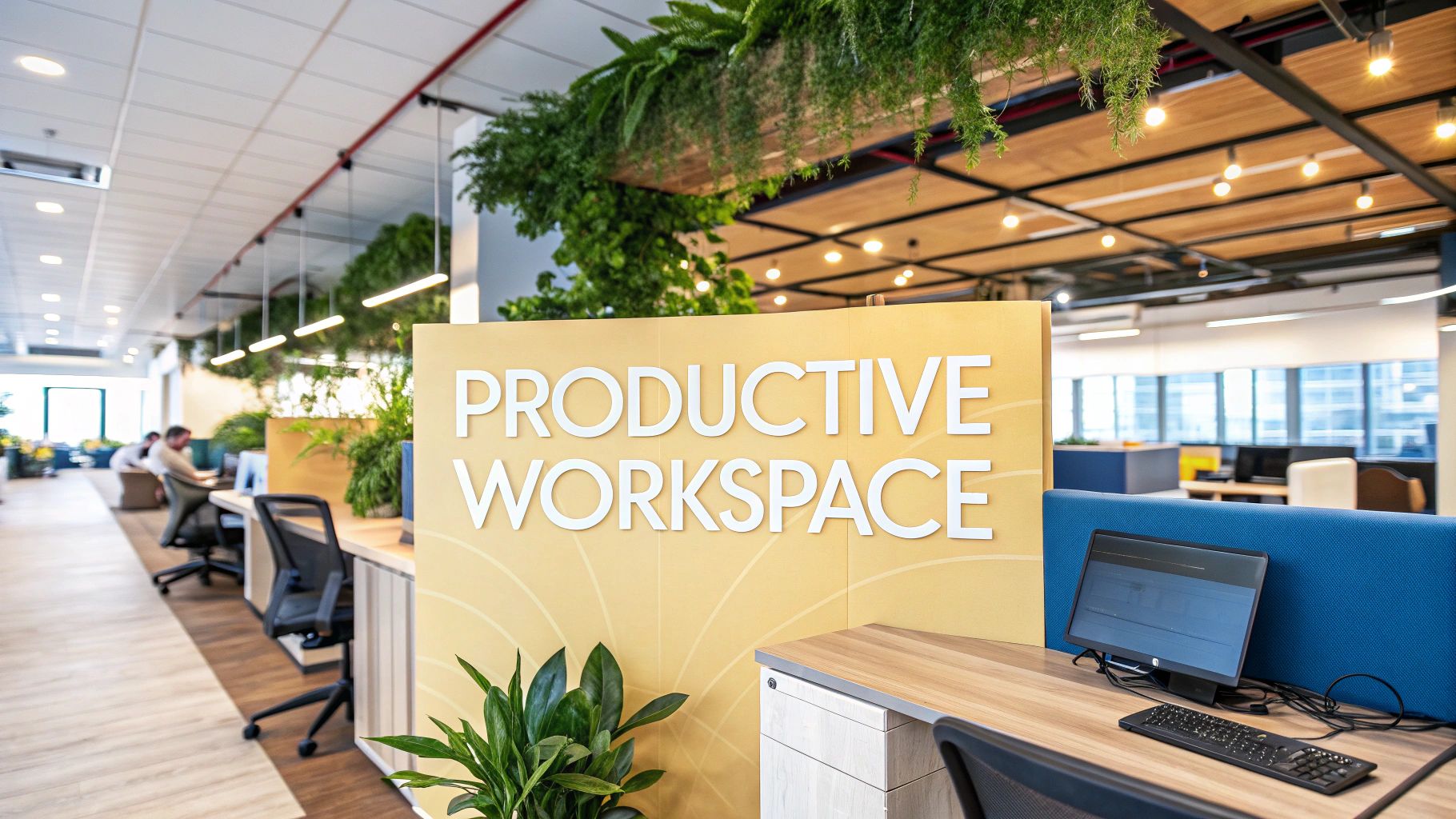
The open plan office layout is a popular choice for businesses aiming to dismantle traditional barriers like cubicles in favour of a single, expansive workspace. This approach is designed to foster a culture of transparency and collaboration by placing teams in a shared environment. It maximises the flow of natural light and creates a dynamic, energetic atmosphere that can spur spontaneous innovation.
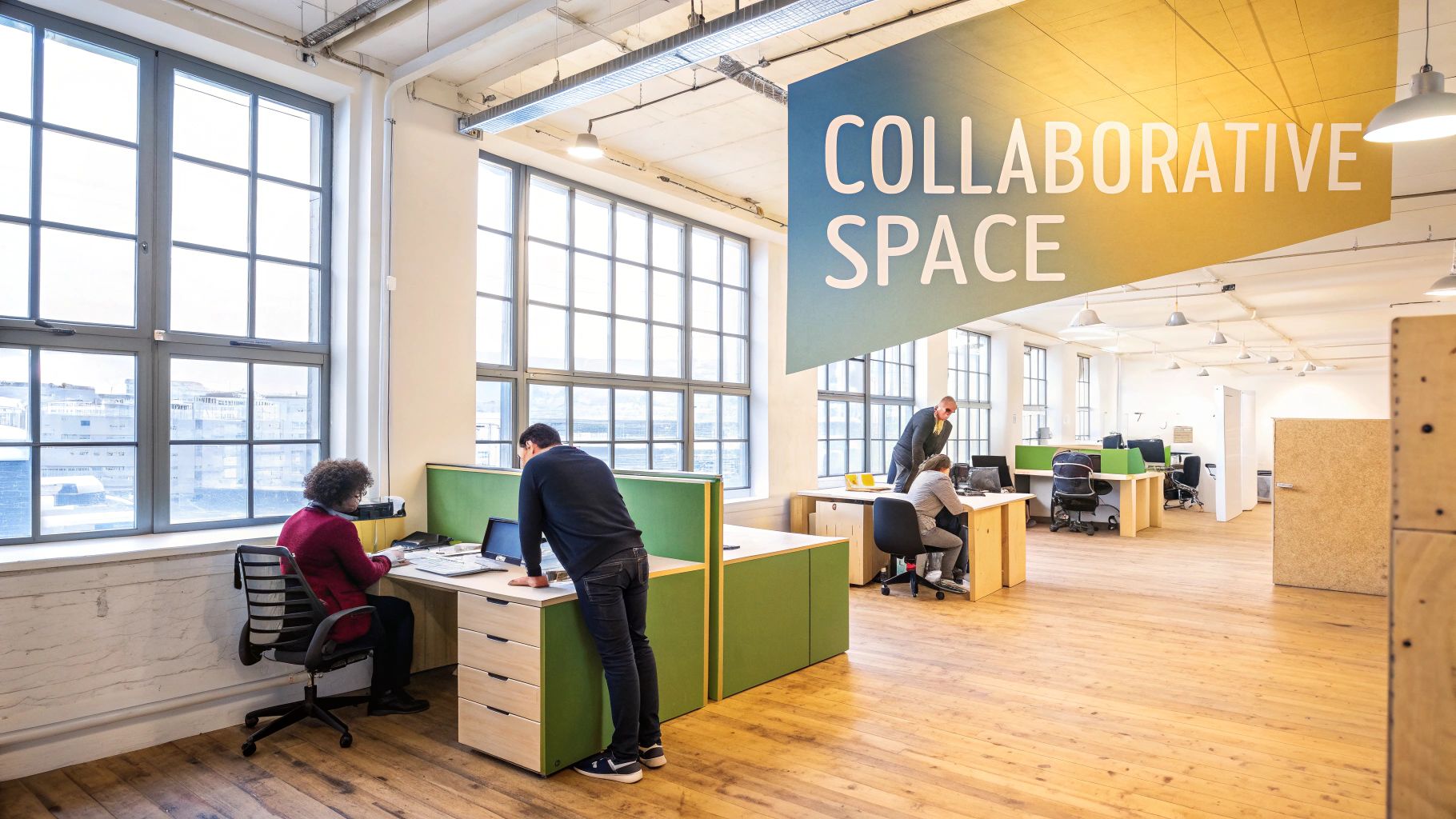
Many of our clients in the tech and creative sectors request this model to encourage cross-functional teamwork. However, a successful open plan requires careful strategic planning to mitigate potential downsides like noise and lack of privacy.
Actionable Implementation Strategies
To ensure your open plan layout succeeds, focus on creating a balanced environment. This involves more than just removing walls; it’s about thoughtful space planning.
- Acoustic Management: Integrate sound-absorbing materials like acoustic panels, high-backed sofas, and carpeting to control ambient noise. This is the most common concern we address for clients.
- Practical Example: For a recent project, we installed felt wall panels behind collaborative zones and used high-backed armchairs to create semi-private nooks for informal chats, effectively dampening sound bleed.
- Zoning: Use different flooring materials, area rugs, or varied ceiling heights to visually define distinct zones for collaboration, individual tasks, and relaxation.
- Quiet Areas: Designate specific "quiet zones" or enclosed pods for focused work, private calls, and small meetings. This is non-negotiable for a functional open-plan office.
- Bespoke Dividers: We often design and build custom carpentry solutions, such as semi-transparent slatted wood dividers or shelving units. These elegant structures define spaces and add a touch of sophistication without sacrificing the open feel. You can explore our bespoke furniture services for inspiration.
2. Biophilic Office Design
Biophilic design is one of the most impactful office interior design ideas, focusing on connecting employees with the natural world. This approach intentionally incorporates elements like plants, natural light, and organic materials into the workspace. Rooted in our innate need to connect with nature, this design philosophy is proven to reduce stress, improve air quality, and enhance cognitive function.
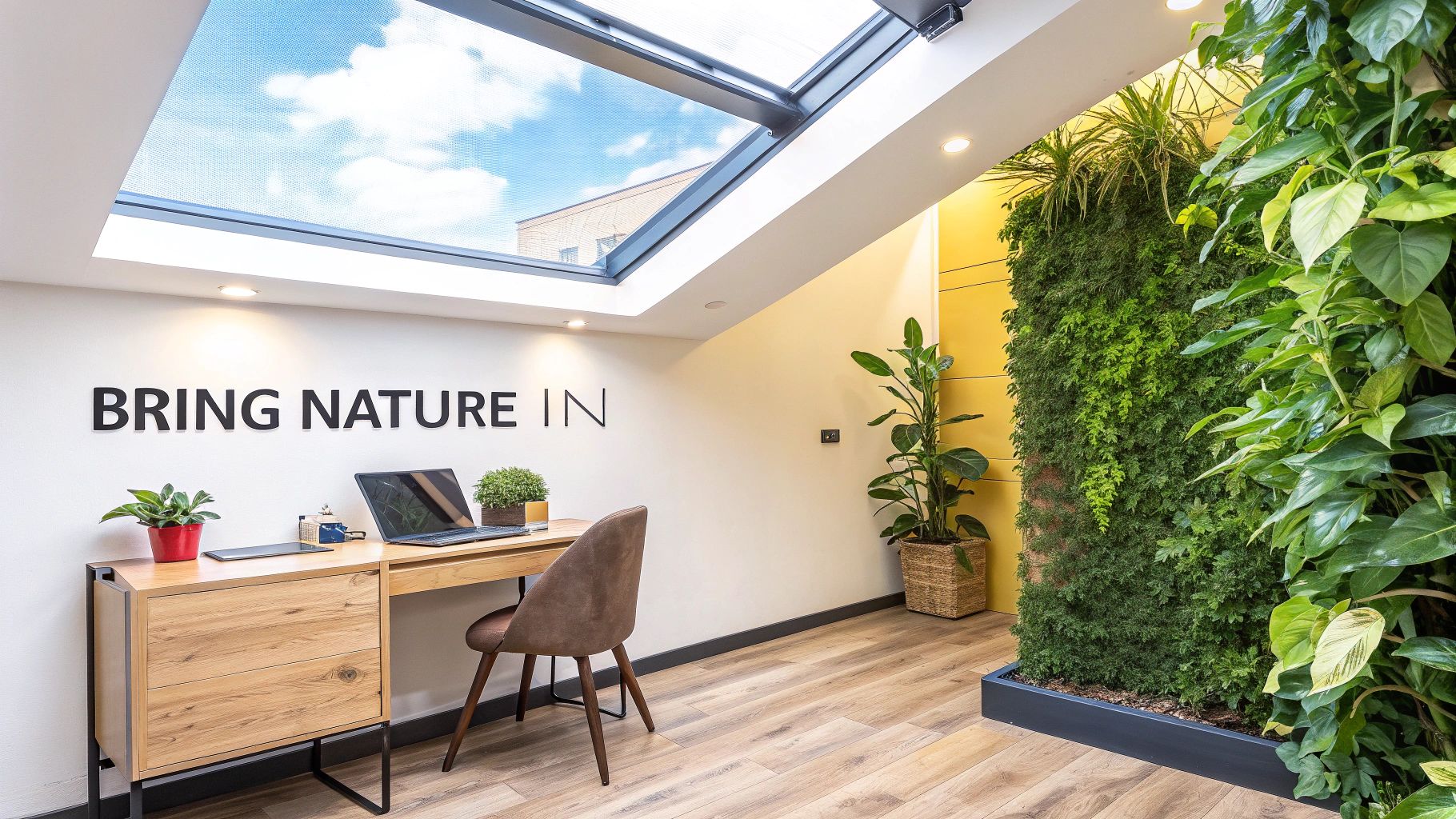
We've observed a significant increase in client requests for biophilic elements, reflecting a broader trend towards prioritising employee well-being. By creating a calming, restorative environment, biophilic design directly boosts productivity, making it a powerful tool for modern businesses.
Actionable Implementation Strategies
Successfully integrating biophilic design goes beyond simply placing a few potted plants. It requires a holistic strategy to create an authentic connection to nature.
- Maximise Natural Light: Prioritise layouts that position workstations near windows. If structural changes are possible, consider installing larger windows or skylights to flood the space with daylight, which regulates circadian rhythms and boosts energy.
- Integrate Living Greenery: Introduce a variety of low-maintenance indoor plants suitable for office environments. For a high-impact feature, a living "green wall" in a reception or communal area makes a powerful statement.
- Practical Example: In a law firm's client lounge, we designed a floor-to-ceiling green wall with an integrated self-watering system, creating a stunning focal point that also naturally purifies the air.
- Use Natural Materials: Incorporate materials like wood, stone, and bamboo in flooring, wall features, and furniture to add textural warmth.
- Custom Nature-Inspired Carpentry: We can design bespoke solutions like custom wood panelling with integrated plant displays or wooden shelving units that evoke natural, organic forms. These custom pieces embed nature into the structure of your office.
3. Activity-Based Working (ABW)
Activity-Based Working (ABW) moves beyond assigned desks, creating a dynamic environment where employees choose a workspace that best suits their task. This approach empowers staff by offering a variety of specialised zones for different activities, from quiet concentration to lively collaboration. It’s a strategic model that enhances productivity and optimises real estate by ensuring every square metre serves a distinct purpose.
Based on our client work, ABW is increasingly popular with companies adopting hybrid work models. The core principle is trust and autonomy, allowing teams to seamlessly transition between different work modes throughout the day, which directly supports a more flexible company culture.
Actionable Implementation Strategies
Successfully rolling out an ABW model requires meticulous planning. The design must be intuitive, guiding employees effortlessly through the space and its various functions.
- Diverse Work Zones: Designate clearly defined areas for specific tasks: quiet zones for deep focus, collaborative lounges for brainstorming, semi-private pods for video calls, and social hubs for informal interactions.
- Intuitive Technology: Implement a user-friendly booking system for meeting rooms and hot desks. Ensure seamless tech connectivity and power access across all zones.
- Practical Example: We recently fitted out an office where we integrated QR codes on each hot desk and meeting pod. Employees simply scan the code to see its availability or book it instantly via a mobile app.
- Personal Storage: Provide secure and accessible personal lockers or mobile storage caddies to help employees manage their belongings in a non-territorial environment.
- Custom Zone Dividers: We can craft bespoke carpentry solutions to physically and visually separate these zones. This could involve branded slatted partitions, integrated shelving, or custom-built booths that define space while reinforcing your company’s identity. Discover our approach to bespoke furniture services for more ideas.
4. Minimalist Office Design
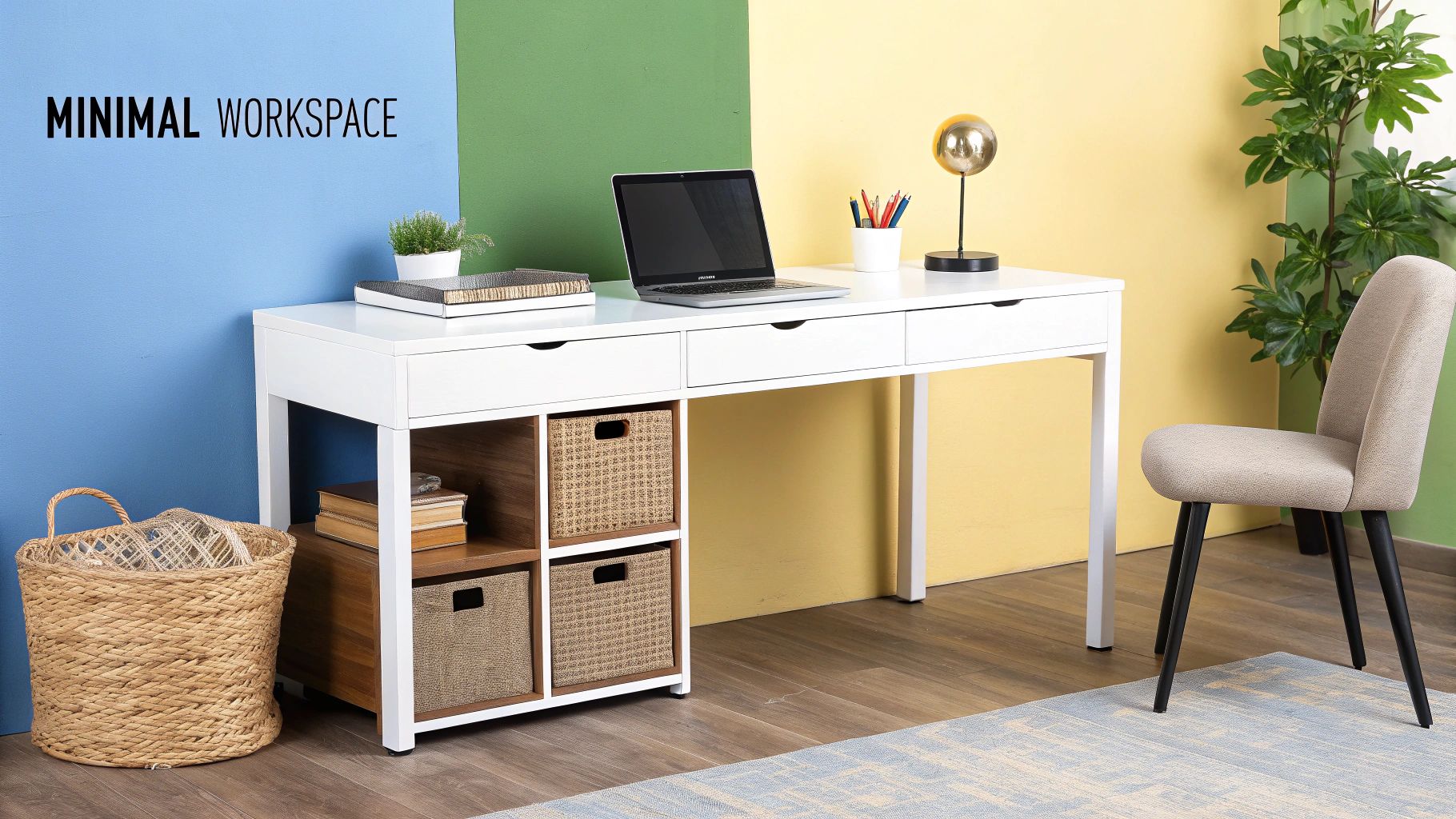
Minimalist office design champions the philosophy of "less is more," creating spaces defined by simplicity, clean lines, and purposeful functionality. This approach eliminates visual clutter, fostering a calm, focused, and organised atmosphere. By stripping away distractions, minimalism allows employees to concentrate better while appreciating the quality and intention behind every design choice.
Clients often request this aesthetic to convey sophistication and efficiency. A successful minimalist interior feels intentional and professional, not empty or sterile. It proves that a powerful statement can be made through restraint and precision.
Actionable Implementation Strategies
Achieving effective minimalism requires a disciplined approach. The goal is to create a serene environment where every element has a clear purpose.
- Curated Furniture: Select a few high-quality, well-crafted furniture pieces with simple silhouettes. Functionality and form should be paramount.
- Hidden Storage: Maintain clean surfaces by integrating seamless storage. This is the most crucial element. We design bespoke carpentry like handle-less cabinets and flush wall panels that conceal clutter.
- Practical Example: For a finance company's boardroom, we designed a full-wall, flush-panelled storage system that hides AV equipment, whiteboards, and supplies. When closed, it appears as a simple, elegant feature wall. Explore our bespoke furniture services for minimalist solutions.
- Neutral Colour Palette: Build your design around a core palette of two to three neutral colours, such as white, grey, and beige, to create a cohesive backdrop.
- Textural Interest: Add depth without clutter by incorporating different materials. Think a linen-upholstered sofa, a polished concrete floor, or a slatted timber feature wall.
5. Industrial Modern Office Design
Industrial modern office design celebrates raw architectural elements by pairing them with sleek, contemporary furnishings. This aesthetic strips interiors back to their structural bones, showcasing materials like exposed brick, concrete floors, and visible ductwork. The result is an authentic, edgy, and sophisticated atmosphere that feels both historic and forward-thinking.
This style remains a top request from our clients in creative agencies and tech startups located in refurbished shophouses or older commercial buildings. The design ethos values authenticity and craftsmanship, creating a space that feels grounded, functional, and inspiring.
Actionable Implementation Strategies
Successfully executing an industrial modern design is about creating a deliberate balance between raw and refined elements. Without careful planning, the space can feel cold or unfinished.
- Balance Raw and Refined: Juxtapose coarse textures like exposed brick or concrete with smooth, modern surfaces. A polished marble reception desk against a raw concrete wall creates a powerful visual contrast.
- Introduce Warmth with Wood: The harshness of metal and concrete needs a balancing element. We specialise in crafting bespoke wood features, such as reclaimed timber conference tables or slatted wood partitions, that introduce organic warmth.
- Practical Example: In a converted warehouse office, we clad a large concrete pillar with warm oak slats, transforming it from a cold obstruction into a beautiful central feature. Explore our custom carpentry to see how we integrate natural materials.
- Soften with Textiles: Use plush area rugs, comfortable upholstered seating, and acoustic fabric panels to absorb sound and add a layer of comfort and colour.
- Strategic Lighting: Combine ambient track lighting that highlights architectural features with warm, focused pendant lights over desks and collaborative zones.
6. Wellness-Focused Office Design
Wellness-focused office design is an approach that prioritises the physical and mental health of employees. This philosophy goes beyond aesthetics, integrating features specifically chosen to reduce stress, prevent physical strain, and boost overall well-being. By creating an environment that actively supports health, companies can foster a more positive, resilient, and productive workforce.
Clients increasingly view wellness features not as perks, but as strategic investments in human capital, leading to reduced absenteeism and higher employee retention. These office interior design ideas are about creating a supportive, healthy workplace.
Actionable Implementation Strategies
Implementing a wellness-focused design involves a holistic look at how the physical environment impacts employees' daily experiences.
- Ergonomic Foundations: Invest in high-quality, fully adjustable ergonomic chairs and height-adjustable desks. This is the baseline. Offering a variety of seating, such as stability balls or lounge chairs, accommodates different tasks and postures.
- Dedicated Quiet Zones: Designate a tech-free quiet room or meditation space for employees to de-stress. This sanctuary provides a crucial escape from the sensory stimulation of the main office floor.
- Practical Example: For a large corporate client, we converted an underutilised storage room into a "Recharge Room" with dimmable lighting, comfortable floor cushions, and sound-absorbing wall panels. It's now one of the most-used spaces in their office.
- Air and Light Quality: Maximise natural light exposure and supplement it with circadian-supportive lighting systems. A crucial aspect of a wellness-focused office is improving indoor air quality, which can be achieved by integrating plants for air purification.
- Movement-Friendly Layouts: Encourage physical activity by creating clear, open pathways and centrally locating shared resources like printers or water stations.
7. Modern Luxury Office Design
Modern luxury office design fuses contemporary aesthetics with premium materials, bespoke furnishings, and meticulous craftsmanship. This style goes beyond mere function to create an environment that communicates success, prestige, and a commitment to quality. It is designed to impress clients, attract top talent, and provide a sophisticated workspace that reflects a company’s elite brand identity.
This design is often requested for the boardrooms of financial firms, client-facing areas of law practices, and headquarters of premium real estate agencies. It’s about creating an experience where every detail reinforces the company's calibre.
Actionable Implementation Strategies
Achieving an authentic luxury feel requires a deep understanding of materials, space, and brand storytelling.
- Premium Material Palette: Select timeless, high-quality materials that age gracefully. Think Italian marble for reception desks, rich walnut for wall panelling, and brushed brass for fixtures.
- Bespoke Carpentry and Millwork: This is where luxury becomes tangible. We leverage over 40 years of experience to create custom carpentry that becomes the centrepiece of a space.
- Practical Example: We recently crafted a 4-metre-long boardroom table from a single slab of book-matched walnut, with integrated power and data ports concealed beneath a seamless central panel. It's a statement of quality and precision.
- Strategic Lighting Design: Use a layered lighting approach to highlight architectural features and premium finishes. Signature pendant lights and discreet recessed LEDs can create a warm, dramatic atmosphere.
- Invest in Signature Pieces: Commissioning original artwork or investing in iconic designer furniture elevates the space. Explore our bespoke furniture services to see how we can craft your company's signature pieces.
8. Tech-Forward Office Design
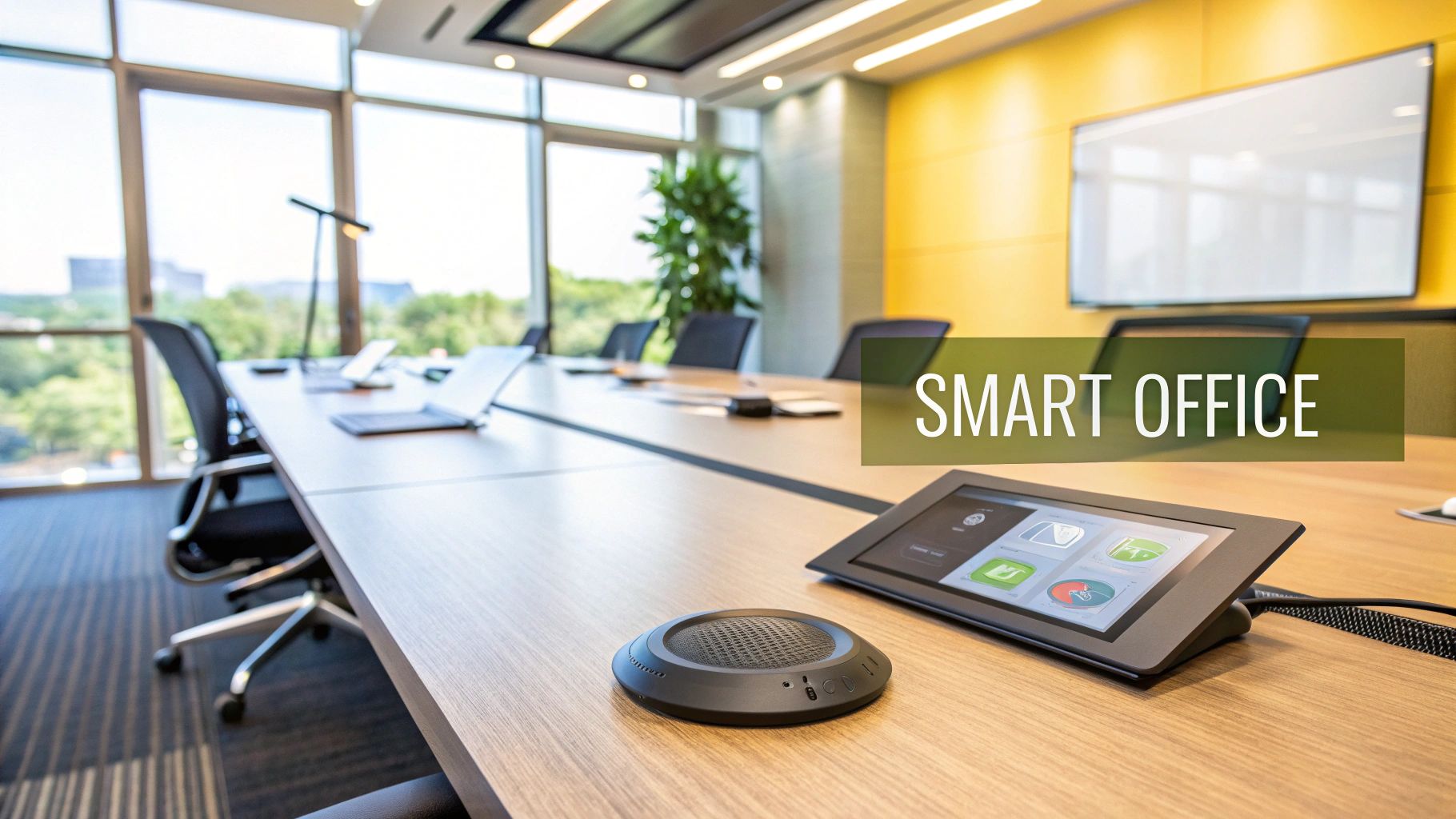
A tech-forward office design seamlessly integrates cutting-edge technology into the fabric of the workspace. This approach creates an intelligent environment that enhances productivity, supports hybrid work, and showcases a company’s innovative spirit. By embedding technology into the design, businesses can streamline operations, improve collaboration, and future-proof their physical space.
A successful tech-forward design feels intuitive, not intrusive, balancing advanced systems with human-centric comfort. The key is making the technology disappear into the design.
Actionable Implementation Strategies
Effective technology integration requires meticulous planning from the outset to ensure a clean, functional result.
- Plan Infrastructure Early: Work with designers to map out power outlets, data ports, and cable routing during the initial design phase to prevent unsightly wires and costly retrofitting.
- Conceal and Integrate: Technology should support the design, not dominate it. We design custom cabinetry and millwork to discreetly house servers, cables, and control systems.
- Practical Example: In a recent project, we built a media wall with recessed screens and speakers hidden behind acoustically transparent fabric panels. This provided a high-performance AV setup that looked like a simple, textured wall when not in use.
- Smart Environmental Controls: Implement automated lighting, climate control, and smart-booking systems for meeting rooms. These improve energy efficiency and provide a frictionless experience.
- Human-Centric Tech Placement: Ensure all screens, cameras, and interactive displays are positioned ergonomically to make technology a natural extension of the workflow.
9. Collaborative Hub Design
A collaborative hub design moves beyond generic meeting rooms to create an ecosystem of spaces engineered for teamwork and creativity. This approach integrates various zones with diverse furniture and interactive surfaces to cultivate a culture of spontaneous interaction. It is one of the most dynamic office interior design ideas for companies that thrive on collective input.
From our experience, the goal is to make collaboration the path of least resistance by providing teams with the ideal environment for any group task.
Actionable Implementation Strategies
To create effective collaborative hubs, you must cater to different modes of teamwork. A one-size-fits-all approach rarely works.
- Zone Diversity: Designate distinct zones: informal lounge areas with soft seating for casual chats, high-top tables for quick stand-up meetings, and project rooms equipped with whiteboards for deep-dive sessions.
- Interactive Surfaces: Integrate writable surfaces like glass walls, whiteboard paint, and mobile easels to encourage visual thinking.
- Practical Example: For a software development firm, we installed floor-to-ceiling magnetic glass whiteboards in their project rooms, allowing teams to visualise entire coding sprints and workflows.
- Flexible Furniture: Utilise modular seating, movable tables, and lightweight stools that can be easily reconfigured. We can design custom millwork like tiered seating or multi-functional furniture units that adapt to a team’s needs.
- Acoustic & Visual Privacy: Managing noise is crucial. For designs focused on fostering teamwork, exploring new ways of rethinking shared spaces with freestanding booths and pods can offer acoustic isolation without sacrificing accessibility.
10. Branded Signature Office Design
A Branded Signature Office Design transforms your physical workspace into a living embodiment of your company's identity and values. It moves beyond simple logos on walls, using architectural language, materials, and custom elements to tell your brand's story. This approach creates a powerful, immersive environment that reinforces your mission for employees and leaves a lasting impression on clients.
A successful branded office design is authentic and consistently communicates what your company stands for, making it one of the most impactful office interior design ideas for building a strong corporate culture.
Actionable Implementation Strategies
To effectively translate your brand into a physical space, the design narrative must be coherent and purposeful.
- Develop a Design Narrative: Work with designers to create a storyline for the space. For example, a tech startup's story might be "disruption and connection," translated through dynamic lines and collaborative hubs.
- Integrate Brand Colours: Use your brand palette thoughtfully. Apply primary colours to key architectural features or furniture, while using secondary tones for accents.
- Custom Brand Elements: This is where a brand comes to life. We design and build custom carpentry that embodies the brand.
- Practical Example: For a maritime logistics company, we designed and built a reception counter shaped like a ship's hull, using reclaimed teak wood and brushed steel accents. It instantly communicated their industry and commitment to quality.
- Commissioned Artwork: Invest in original art or graphics from local artists that reflect your brand values, whether it’s innovation, community, or sustainability.
11. Sustainable Green Office Design
Sustainable green office design integrates environmental responsibility into every facet of the workspace. This office interior design idea prioritises the use of sustainable materials, energy efficiency, and waste reduction. It is a powerful way to align your physical space with corporate sustainability goals, creating a healthier environment that can attract and retain talent who share those values.
We've seen growing demand from clients who understand that sustainability is not just good for the planet, but also for their brand reputation and bottom line through long-term energy savings.
Actionable Implementation Strategies
Implementing a sustainable design is about making deliberate, eco-friendly choices.
- Eco-Friendly Materials: Choose materials with a low environmental impact. This includes reclaimed or salvaged woods, recycled metals, and low-VOC (Volatile Organic Compound) paints and finishes.
- Energy and Water Conservation: Invest in high-efficiency systems, such as smart LED lighting with motion sensors and water-saving fixtures in pantries and restrooms.
- Practical Example: On a recent project, we specified carpets made from recycled fishing nets and used low-VOC paint throughout the office, significantly improving indoor air quality from day one.
- Design for Durability: Create a timeless design with durable materials to reduce the need for frequent renovations, minimising future waste.
- Sustainable Custom Carpentry: Partnering with a firm that prioritises sustainability is key. We source FSC-certified wood from responsible suppliers and use low-VOC finishes in our custom carpentry. This ensures your bespoke furniture is both beautiful and environmentally sound. You can learn more about our commitment on our services page.
12. Flexible Modular Office Design
A flexible modular office design uses adaptable, movable components to allow spaces to be quickly reconfigured. This design philosophy champions versatility, enabling businesses to adjust their environment to suit different team sizes or project needs without major renovations. It is a forward-thinking solution that maximises space efficiency and future-proofs the office.
This concept is increasingly requested by fast-growing companies where the ability to scale and pivot is crucial. Modularity allows them to transform a collaborative zone into private workstations or a training room in minutes.
Actionable Implementation Strategies
Success with modular design hinges on balancing flexibility with a cohesive, high-quality aesthetic.
- Invest in Quality Systems: Opt for durable modular furniture and partitions that can withstand frequent reconfiguration while maintaining a premium look.
- Plan Infrastructure for Adaptability: Ensure power outlets, data ports, and lighting are planned to support various layouts. Floor-based power grids are an excellent solution.
- Establish a 'Kit of Parts': Define a core set of modular elements (desks, screens, storage units) that share a consistent design language to ensure visual harmony.
- Custom Modular Solutions: We design and fabricate bespoke modular components that don't compromise on style.
- Practical Example: For a co-working space, we created a system of movable planters on castors that double as space dividers and storage units. These can be easily repositioned to create semi-private team zones or open up the floor for events.
12 Office Interior Design Ideas Comparison
| Design Type | Implementation complexity | Resource requirements | Expected outcomes | Ideal use cases | Key advantages |
|---|---|---|---|---|---|
| Open Plan Office Layout | Medium | Flexible furniture, acoustic treatments, moderate fit-out cost | Increased collaboration and space efficiency; higher noise risk | Startups, tech teams, collaborative departments | Promotes spontaneous interaction; easily reconfigurable |
| Biophilic Office Design | Medium–High | Plants, natural materials, daylighting, ongoing maintenance | Improved wellbeing, reduced stress, better air quality | Firms prioritizing wellness, sustainability-minded companies | Boosts employee health and creativity; strong visual appeal |
| Activity-Based Working (ABW) | High | Diverse furniture, booking/IT systems, clear wayfinding | Flexible use of space; supports varied work modes; change management needed | Hybrid organizations, consultancies, large teams | Maximizes utilization; supports multiple work styles |
| Minimalist Office Design | Low–Medium | High-quality selective furnishings, hidden storage, disciplined upkeep | Calm, focused environment; low visual distraction | Professional services, focused knowledge work | Timeless, low-maintenance aesthetic; efficient use of resources |
| Industrial Modern Office Design | Medium | Exposed finishes, metal/wood elements, acoustic balancing | Distinctive, authentic aesthetic; may need warmth additions | Creative agencies, renovated loft spaces, startups | Memorable character; cost-effective reuse of existing fabric |
| Wellness-Focused Office Design | High | Ergonomic furniture, wellness rooms, air/lighting systems | Improved physical and mental health; reduced absenteeism | Companies investing in employee health and retention | Measurable wellbeing gains; talent attraction and retention |
| Modern Luxury Office Design | Very High | Premium materials, bespoke millwork, expert execution | Strong brand impression; high client impact; ongoing upkeep | Law firms, finance, luxury brands, executive spaces | Projects prestige and quality; long-term material value |
| Tech-Forward Office Design | High | Integrated AV/IoT, connectivity, IT support, ongoing updates | Enhanced collaboration, automation, data-driven optimization | Tech firms, remote/hybrid teams, innovation centers | Future-proofing; improves meeting efficiency and analytics |
| Collaborative Hub Design | Medium–High | Writable surfaces, modular furniture, ample square footage | Faster cross-team collaboration and ideation; noise trade-offs | Design studios, product teams, innovation labs | Encourages creativity and visible project progress |
| Branded Signature Office Design | High | Custom carpentry, branded elements, design strategy | Strong cultural alignment and memorable client experience | Consumer brands, companies emphasizing identity | Reinforces brand and employee pride; differentiates competitively |
| Sustainable Green Office Design | High | FSC/reclaimed materials, energy systems, certification costs | Lower environmental impact, long-term operating savings | Organizations with ESG goals, sustainability-focused firms | Reduces carbon footprint; can qualify for incentives |
| Flexible Modular Office Design | Medium | Modular partitions, mobile furniture, quick-disconnect tech | Rapid reconfiguration and scalability; possible cohesion trade-offs | Growing companies, co-working, dynamic teams | High adaptability; reduces need for major renovations |
From Idea to Reality: Crafting Your Perfect Office
We have journeyed through a diverse landscape of office interior design ideas, from the collaborative energy of Open Plan layouts to the serene principles of Biophilic Design. We explored the strategic flexibility of Activity-Based Working, the focused calm of Minimalism, and the sophisticated appeal of Modern Luxury. Each of these twelve concepts offers a unique framework for building a workspace that does more than just house your team; it actively supports your business objectives.
The core takeaway is this: there is no single "best" design. The most impactful office environments are not born from a template but are thoughtfully composed by blending multiple ideas. Imagine a space that combines the modularity of a Flexible Design with the integrated systems of a Tech-Forward office, all while adhering to the eco-conscious principles of a Sustainable Green build. This synthesis is where true innovation happens.
Moving Beyond the Blueprint
The transition from a compelling concept to a high-performance physical space hinges entirely on execution. A brilliant idea for a Branded Signature Office remains just an idea without the masterful craftsmanship required to bring its unique identity to life through custom installations. Similarly, a Wellness-Focused design relies on expert knowledge of ergonomic principles and acoustic control to be effective.
This is why the quality of materials, the finesse of the carpentry, and the intelligence of the spatial planning are not afterthoughts; they are the very foundation of a successful design.
Key Insight: The ultimate value of any office interior design idea is realised not in its conception, but in its execution. The difference between a functional office and an inspirational one lies in the quality of the build, the precision of the finishes, and the bespoke details that align the space perfectly with its users.
Your Actionable Next Steps
To transform your vision into reality, follow a structured path:
- Define Your ‘Why’: Before settling on a style, clarify your primary goals. Are you optimising for deep focus, fostering cross-departmental collaboration, or aiming to attract top-tier talent? Your core objectives should be the compass guiding all your design decisions.
- Audit Your Current Space: Identify what works and what doesn't in your existing office. Where do bottlenecks occur? Which areas are underutilised? This practical analysis provides a crucial starting point for any redesign.
- Synthesise and Customise: Select elements from the various office interior design ideas that best address your specific needs. A hybrid approach that borrows from two or three distinct concepts often yields the most tailored and effective results.
- Engage with Experts: Partnering with a design and build firm that specialises in bespoke solutions is the most critical step. True customisation, particularly in carpentry and joinery, allows you to create unique, multi-functional elements that perfectly fit your workflow and brand identity, ensuring no square metre is wasted.
Ultimately, investing in a meticulously planned and expertly crafted office is an investment in your people and your future. It's about creating an environment that not only reflects your company’s values but also empowers your team to do their best work, day after day.
Ready to translate these office interior design ideas into a tangible, high-performance workspace in Singapore? With over four decades of expertise, KIVO Custom Carpentry And Interior Design Services specialises in turning ambitious visions into impeccably crafted realities. Let us help you build an office that is as functional as it is inspiring.