Getting the keys to your new 4 room BTO is a massive milestone, but the real work is just beginning. Before diving into Pinterest boards, the most critical step is figuring out what you actually need from your space. This isn't about chasing trends; it's about building a home that actively makes your daily life easier.
Laying the Foundation for a Successful Renovation
The first thing we do with any client is create a practical design brief. Forget aesthetics for a moment; this is all about how you live. It’s a deep dive into your daily routines, your habits, and what drives you crazy about your current living situation.
This brief becomes our roadmap. It keeps the project on track and ensures the end result is a home designed around you, not the other way around. Knowing where to begin with home design anchors your vision in reality before you even speak to a contractor.
Defining Your Lifestyle Needs
Walk through a typical day in your mind, but picture it happening in your new BTO. This simple exercise grounds your design choices in practicality, preventing you from creating a show-flat that’s impossible to live in.
Here are some real-life scenarios we work through with clients:
- The Avid Home Cook: If you cook daily, a tiny, closed-off kitchen is a non-starter. We would prioritise an open-concept layout with a durable quartz island for extra prep space and design deep, accessible drawers for pots and pans right next to the stove.
- The Remote Worker: Do you need a dedicated office or a flexible workspace? A desk crammed into a bedroom corner often leads to clutter. A better solution could be converting a spare room or designing a custom "work-closet" in the living area that hides your setup when 5 PM hits.
- The Entertainment Host: If you love having friends over, the living room must be functional. This means a custom TV console designed to hide messy wires and planning for flexible seating, like a built-in bench with storage underneath, instead of bulky individual chairs.
Distinguishing Wants from Needs
With a clear picture of your daily life, it's time to sort your wishlist into "must-haves" and "nice-to-haves." This is essential for keeping your budget in check.
A "must-have" is something your home can't function without. A "nice-to-have" is a bonus. Nailing down must-haves first ensures your core needs are met, no matter what.
Here’s how this typically breaks down in project discussions:
- Must-Haves:
- Full-height wardrobe with specific compartments for long dresses or folded shirts.
- Sufficient electrical sockets near the bed, sofa, and kitchen countertop (a common oversight).
- A kitchen layout with a logical "work triangle" between the fridge, sink, and stove.
- Nice-to-Haves:
- The fluted panel feature wall you saw on Instagram.
- A rainfall shower system in the common bathroom.
- Integrated smart home lighting.
This groundwork is the most valuable thing you can do at the start. The brief acts as our guide, preventing costly mid-renovation changes and ensuring your new BTO is a home that truly works for you.
Decoding the Budget for Your BTO Transformation

Let's talk about the budget. Discussing money can feel daunting, but transparency is key to a stress-free renovation 4 room bto project. You should know exactly where every dollar is going from day one.
Moving beyond vague estimates is critical. Based on recent projects and material costs, a comprehensive renovation for a 4-room BTO in 2024/2025 typically falls between S$51,000 and S$61,800. For more extensive work involving significant layout changes, it's not uncommon to see budgets in the S$55,000–S$70,000 range. This is why a detailed breakdown isn't just helpful—it's essential.
Where Does the Money Actually Go?
Renovation costs vary because the scope of work differs. A cosmetic refresh will cost much less than a project involving major hacking. Your budget is primarily funnelled into a few core areas that make your home functional and safe.
- Hacking and Masonry: This covers taking down walls for an open-concept living area or building new ones for a home office. It also includes practical work like constructing shower kerbs and solid bases for kitchen cabinets.
- Plumbing and Electrical Works: These are the invisible essentials. This means running new pipes for a rain shower, relocating a sink, or adding extra power sockets so you're not constantly searching for an extension cord.
- Flooring and Tiling: This sets the stage for your home's look and feel. It includes laying durable tiles in the bathrooms and kitchen, plus installing materials like vinyl throughout the rest of your flat.
To help you visualise this, here’s a typical cost allocation for a 4-room BTO project.
Estimated Cost Breakdown for a 4 Room BTO Renovation
| Work Category | Estimated Percentage of Total Budget | Typical Cost Range (S$) | Key Considerations |
|---|---|---|---|
| Design & Professional Fees | 5-10% | S$2,500 - S$7,000 | Varies based on whether you engage an ID firm vs. a contractor. |
| Hacking & Masonry | 10-15% | S$5,000 - S$10,500 | Depends heavily on layout changes. Hacking more walls increases cost. |
| Carpentry & Custom Joinery | 35-45% | S$18,000 - S$31,500 | The largest expense. Includes wardrobes, kitchen cabinets, TV consoles. |
| Plumbing & Electrical | 10-15% | S$5,000 - S$10,500 | More power points or rerouting pipes will push this cost higher. |
| Flooring & Tiling | 8-12% | S$4,000 - S$8,400 | Material choice (e.g., large-format tiles vs. vinyl) is a key factor. |
| Painting & Finishing | 5-8% | S$2,500 - S$5,600 | Includes plastering, protective coverings, and the paint job itself. |
| Miscellaneous & Buffer | 5-10% | S$2,500 - S$7,000 | A buffer for unforeseen issues, haulage, cleaning, and permits. |
This table is a guide, but it clearly shows where the bulk of the investment lies. Understanding this helps you make smarter decisions with your designer.
The Carpentry Component: A Major Investment
Custom carpentry almost always takes the biggest slice of the budget in a renovation 4 room bto project, typically accounting for 35-45% of the total spend. That figure might seem steep, but this is where your flat is transformed into a home tailored to your lifestyle.
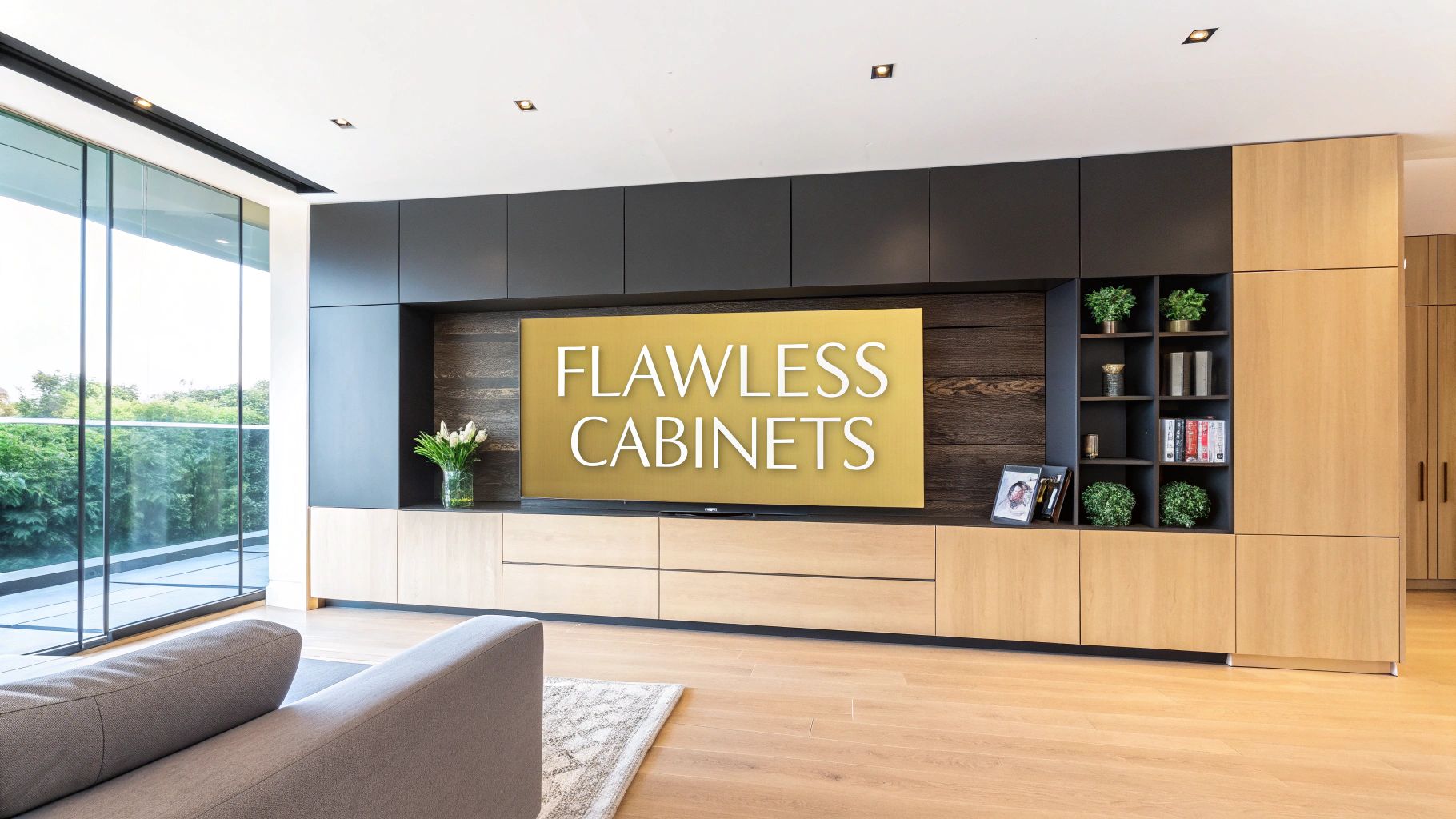
This investment covers everything from a floor-to-ceiling wardrobe that maximises storage to a sleek, integrated TV console that keeps your living room organised. The real value is in the precision—cabinets built to your exact dimensions, leaving no awkward gaps or wasted space. When planned properly, good carpentry pays for itself in sheer functionality.
If you're looking for a deeper dive into painting expenses, this guide on interior painting costs is a great resource.
Don't Forget the Hidden Costs
What often catches homeowners by surprise are the smaller, less glamorous expenses. These items are essential for a smooth project but are frequently left out of initial quotes. Budgeting for them from day one prevents financial shocks later.
Commonly Overlooked Expenses:
- Haulage and Debris Removal: All hacked concrete and construction waste has to go somewhere, and proper disposal has a fee.
- Permit Application Fees: Work involving structural walls, plumbing, or windows requires HDB permits, which have application costs.
- Professional Cleaning: After weeks of work, your new home will be covered in dust. A post-renovation chemical wash and deep clean is non-negotiable.
- Temporary Protection: We lay corrugated sheets to protect your new flooring and surfaces from scratches and dings while work is ongoing.
Knowing these costs upfront allows you to build a realistic budget. A clear financial roadmap lets you discuss priorities with confidence, ensuring your renovation 4 room bto journey is as stress-free as it should be.
Smart Space Planning and Custom Carpentry

The standard 90-square-metre layout of a 4-room BTO is your blank canvas. While it's a good starting point, smart space planning elevates it from a collection of rooms into a home that feels both expansive and intuitive. We think about how you’ll actually move through and live in the space every single day.
A well-designed home has a natural traffic flow. We analyse the pathways—from the front door to the kitchen, from the living room to the bedrooms—to eliminate awkward bottlenecks. The goal is a layout that feels open and logical.
Creating Multi-Functional Zones
In a compact BTO, every square foot must be functional. One of the best strategies is to design multi-functional zones that adapt to your needs. This is about weaving different activities into a single, cohesive space.
- Integrated Dining: A custom dining bench built against a wall can double as extra seating for guests, saving space compared to a full set of chairs.
- Work-Life Separation: A sleek console table behind your sofa can be a display area on weekends but easily morphs into a compact workstation during the week.
- Flexible Guest Space: In a spare room, a Murphy bed that folds into a custom cabinet system can transform the space from a home office into a guest room in minutes.
The Power of Bespoke Carpentry
This brings us to the hero of most renovation 4 room bto projects: custom carpentry. While off-the-shelf furniture has its place, bespoke solutions unlock your flat’s potential. They are designed to your exact dimensions, eliminating wasted space and delivering functionality you can't buy in a store.
Bespoke carpentry isn't just about building cabinets; it's a strategic tool for solving spatial challenges. It lets you hide clutter, create storage in unexpected places, and build a home that feels perfectly organised.
The budget for this is significant. For a typical 4-room BTO flat, where total costs might land between S$35,000 to S$55,000, carpentry often takes the biggest slice of the pie. In many of our projects, custom joinery can account for 40-50% of the total spend. It's a necessary investment to make the most of the longer walls and larger spaces available in this flat type.
You can find more details on how these costs stack up and check out some helpful BTO completion guides for 2025 on renovationcontractorsingapore.com.
Smart Carpentry Solutions for Every Room
Here are some custom carpentry solutions we frequently implement to solve common storage and space headaches in a 4-room BTO.
In the Living Room
The living area is your home’s first impression, so keeping it clutter-free is key.
- The Integrated TV Console: A custom, wall-mounted console is a game-changer. We design them to hide routers, game consoles, and a mess of cables, creating a clean focal point. Extending it with display shelving or closed cabinets provides extra storage.
- Concealed Bomb Shelter Door: The bomb shelter door is a necessity but often an eyesore. We can hide it behind a feature wall, like fluted panels or a secret cabinet door, that blends it into the overall design.
In the Master Bedroom
Storage is king in the bedroom, and this is where custom work shines.
- Floor-to-Ceiling Wardrobes: A freestanding wardrobe almost always leaves an awkward, dust-collecting gap at the top. A custom-built, full-height wardrobe uses every inch of vertical space, effectively doubling your storage and giving the room a cleaner, built-in look.
- Platform Storage Beds: A platform bed with built-in drawers or hydraulic lift mechanisms can hold more than a small wardrobe. It's the perfect hiding spot for luggage, extra bedding, and winter clothes, freeing up your main wardrobe.
By focusing on intelligent space planning and investing wisely in custom carpentry, you can turn a standard BTO layout into a highly functional, spacious, and personal home.
Getting the Project Timeline and Management Right
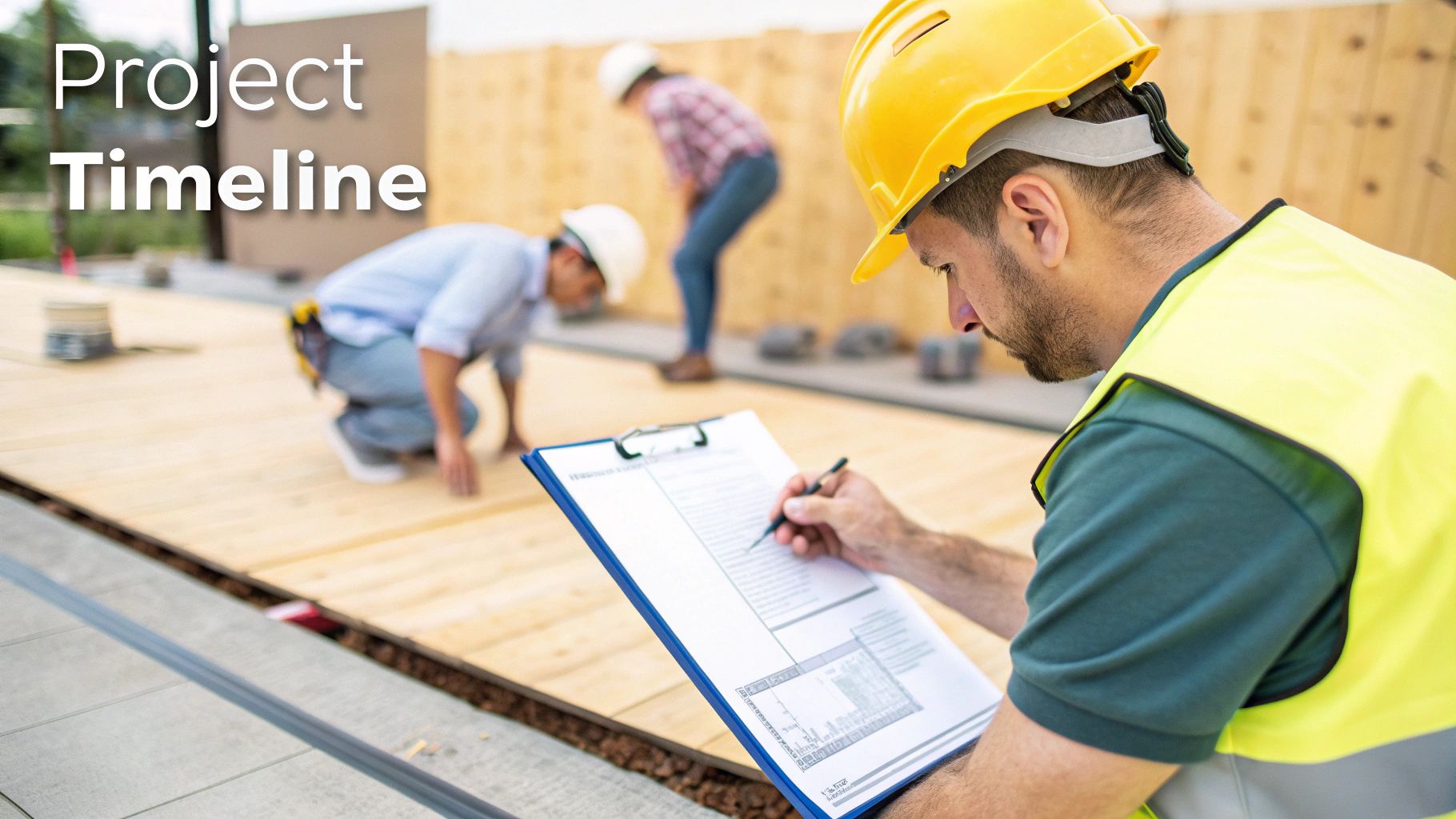
Once your design is locked in and the budget is approved, we move to the execution phase. A well-managed project turns a potentially chaotic period into a clear, predictable process.
For a typical renovation 4 room bto project without major wall hacking, a realistic timeline is about 8 to 10 weeks. This schedule is carefully phased to ensure work flows logically and we avoid costly do-overs.
The Standard Renovation Sequence
There’s a method to renovation. Work is sequenced from the messiest jobs to the most delicate finishing touches.
Here’s the usual flow of works for a BTO flat:
- Protection and Demolition (Week 1–2): First, we protect areas not part of the renovation. Then comes the hacking of any walls, floors, or unwanted fixtures. It’s the dustiest stage.
- Masonry and Wet Works (Week 2–3): We build the foundations for your new space: new partition walls, shower kerbs, and waterproofing in the bathrooms and kitchen.
- MEP – Electrical and Plumbing (Week 3–4): MEP stands for Mechanical, Electrical, and Plumbing. Electricians run new wiring for lights and power points, while plumbers lay new pipes inside the walls before they’re sealed.
- Finishing and Carpentry (Week 4–7): The visual transformation begins. This includes plastering walls, putting up the false ceiling, painting, and laying flooring. Your custom-built carpentry, like kitchen cabinets and wardrobes, will also be installed.
- Final Touches and Handover (Week 8–10): We’re on the home stretch. This involves installing light fixtures, taps, and showerheads. After a deep chemical clean, we’ll do a joint inspection with you to sort out any final touch-ups before the official handover.
Managing Delays and Keeping Things Realistic
Even with a meticulous plan, hiccups can happen. A good project manager anticipates roadblocks and handles them proactively. Communication is everything.
A project timeline is a roadmap, not a rigid script. A professional team builds in small buffers for common issues. Transparency about potential delays is the cornerstone of a healthy client-designer relationship.
From our experience, here are common reasons for delays:
- Permit Approvals: Getting permits from HDB can sometimes take longer than anticipated.
- Material Shipments: Supply chain issues for a specific tile or laminate can push the schedule back.
- Unforeseen Site Conditions: Hacking might reveal uneven flooring that needs extra work to correct.
Why a Strong Partnership is Non-Negotiable
A successful renovation is a team effort. The relationship with your design firm should be built on clear communication and mutual trust. We keep you in the loop with regular updates through a dedicated group chat, complete with photos and progress reports. We also schedule key site visits at important milestones—like after demolition and before carpentry installation—so you can see the progress for yourself.
These walkthroughs keep you informed and empowered, ensuring the final result of your renovation 4 room bto is exactly the home you envisioned.
Choosing Your Finishes, Materials, and Design Partner
This is where your renovation 4 room bto comes to life. You get to choose the textures, colours, and surfaces you'll interact with daily. These choices define your home's personality and durability. Just as crucial is picking the right team. Your design partner is your guide, project manager, and creative collaborator.
Selecting the Right Materials for Your Lifestyle
Every material has practical pros and cons. Let's walk through common choices for 4-room BTOs.
For Your Floors: Vinyl vs. Tiles
This is one of the first big decisions.
- Vinyl Flooring (LVT): Popular for a reason, vinyl is warmer and softer underfoot than tiles, a big plus for families with kids. It’s also incredibly easy to maintain. Modern designs offer stunningly realistic wood grains that bring warmth to a room.
- Porcelain Tiles: If you're looking for durability, this is it. Tiles are scratch-proof, completely waterproof, and will likely outlast everything else. Many also love that they feel cool to the touch. The only real downside is that grout lines need upkeep.
Your choice boils down to what you value most. If comfort and easy upkeep are top priorities for living areas and bedrooms, vinyl is a fantastic choice. For wet areas like the kitchen and bathrooms, the resilience of tiles is tough to beat.
Here's a quick rundown of the most common flooring options.
Popular Flooring Options for 4 Room BTOs Compared
| Material | Durability | Maintenance Level | Average Cost (per sq ft) | Best For |
|---|---|---|---|---|
| Vinyl (LVT) | Good | Low | S$6 - S$9 | Living rooms and bedrooms; homeowners seeking comfort and warmth. |
| Porcelain Tiles | Excellent | Low-Moderate | S$10 - S$15 | Kitchens, bathrooms, and high-traffic areas; maximum durability. |
| Engineered Wood | Good | Moderate | S$8 - S$12 | Homeowners wanting the authentic feel of real wood with better stability. |
| Laminate | Moderate | Low | S$4 - S$7 | Budget-conscious projects; offers a good look for a lower price. |
The best floor is one that fits seamlessly into your daily routine.
For Your Carpentry: Laminates and Surfaces
The laminates you select for your wardrobes and kitchen cabinets set the visual tone. We're seeing a move away from plain colours towards laminates with rich textures that mimic natural materials like linen or subtle wood grains. Always ask for high-pressure laminates (HPL), as they offer better resistance to wear and tear.
For your kitchen countertop, it's usually a face-off between two materials:
- Quartz: The reliable workhorse. As an engineered stone, it’s non-porous, meaning you don't have to panic about coffee or curry stains. It's tough and comes in a huge array of patterns.
- Sintered Stone: Think of this as Quartz 2.0. It's made from natural minerals fused under immense heat, making it even tougher. You can place hot pans directly on it, and it's virtually scratch-proof. This next-level performance comes with a higher price tag.
Finding the Right Interior Design Firm
Let's talk about choosing your partner. A slick Instagram feed is nice, but you need a firm with a solid track record of delivering quality work.
Here’s a no-nonsense checklist:
- Dig Into Their Portfolio: Look past the wide-angle "wow" shots. Zoom in. Are the carpentry joints clean? Is the tiling grout neat? Are the paint lines crisp? A great firm shows off the details because that's where quality lies.
- Hunt for Real-World Reviews: Don't just read testimonials on their homepage. Check independent review platforms. Consistent feedback about clear communication and good project management is a massive green flag.
- Gauge Their Communication Style: During your first meeting, are they really listening? A good designer asks thoughtful questions about how you live. They should walk you through their process in a way that makes you feel confident.
- Demand a Transparent Quote: A vague, one-page quote is a red flag. A professional firm will give you a detailed breakdown that itemises everything. This transparency is the bedrock of a good working relationship.
Making these decisions carefully—from the texture of your cabinets to the team you hire—is what turns a standard BTO flat into a home that not only looks incredible but feels uniquely yours.
Your Top 4-Room BTO Renovation Questions, Answered
Starting your first big renovation is a mix of excitement and uncertainty. Over the years, we've noticed homeowners planning a renovation for their 4-room BTO ask the same set of questions.
Here are the most common queries with straightforward answers based on our experience.
Do I Really Need an HDB Permit?
Yes, but not for everything. The moment your plans involve anything affecting the building’s structure or public safety, you'll need approval from the Housing & Development Board (HDB). Your interior designer is responsible for submitting these applications.
A simple breakdown:
- Permit Needed: Hacking walls, moving a doorway, changing window placements, or shifting any plumbing and electrical points.
- No Permit Needed: Purely cosmetic work like painting, building cabinets, laying vinyl floors, or swapping light fittings.
We always flag permit-required works during the design stage to build approval time into the project timeline.
My Budget Is Tight. What Should I Focus On First?
With a limited budget, put your money where it matters most: things that impact your daily life and the home's core function.
Your top priority should be high-quality carpentry for essential storage, especially in the kitchen and master bedroom. Well-planned cabinets and wardrobes improve daily life by keeping clutter at bay. After that, allocate a decent budget for good flooring and a professional paint job. These set the entire mood of your home.
You can save a surprising amount by holding off on complex false ceilings, intricate feature walls, or pricey smart home gadgets. These are upgrades you can add later.
How Do I Keep My Renovation From Dragging On?
The single biggest factor in keeping your project on schedule is locking in all your design and material choices before hacking starts. Last-minute indecision over tiles or laminates is the number one cause of delays, creating a domino effect on the entire schedule.
Working with a reliable firm that provides a detailed work schedule is crucial. A good project manager keeps you updated and builds a small time buffer into the schedule for hiccups.
One last pro-tip: try to avoid starting your renovation right before a major holiday like Chinese New Year. Many suppliers and subcontractors take long breaks, which can bring work to a halt. A well-timed start makes a world of difference.
At KIVO, we don’t just build homes; we build relationships founded on clarity and craftsmanship. If you’re ready to get started on your renovation, we’re here to walk you through every step. Explore our custom carpentry and interior design services to see how we can bring your dream space to life.