
Planning a new kitchen is exciting, but the first question on everyone's mind is always: "How much will my kitchen renovation cost?"
Here in Singapore, a complete kitchen renovation typically ranges from SGD 8,000 to SGD 35,000. Of course, high-end projects with premium materials and bespoke features can easily exceed this. This isn't a fixed price but a flexible range where your choices in materials, design complexity, and property size determine the final figure.
Understanding Your Kitchen Renovation Costs In Singapore
A clear grasp of the costs is the first step to setting a realistic budget and creating a kitchen you’ll love. The final price tag is a combination of materials, labour, design intricacy, and even your property type.
Before diving deep into planning, it’s helpful to see how costs break down. This ultimate guide to kitchen renovation costs offers a great overview of budgeting principles that apply anywhere.
In Singapore, your property type is a major factor influencing your budget from the start. Each home has unique layouts and constraints, which directly impact the scope—and cost—of the renovation.
Cost Ranges By Property Type
From our experience with clients, renovation budgets vary significantly based on the home. The functional needs of a compact HDB kitchen are very different from those of a spacious kitchen in a landed property.
- HDB Flats: Renovations here usually focus on maximising a smaller footprint with clever storage solutions and durable, practical materials. For example, a common request is a pull-out pantry next to the fridge to use every inch of vertical space.
- Condominiums: Owners often aim for a mid-range to high-end finish, balancing premium materials like quartz countertops with a stylish, efficient layout. Integrated appliances for a seamless look are a popular trend.
- Landed Properties: These projects typically have the largest budgets, allowing for bespoke designs, luxury appliances, and sometimes structural changes like creating an open-concept kitchen with a large island.
Costs can vary dramatically. A basic refresh for an HDB flat might start from SGD 8,000 to SGD 15,000. Condo owners could budget SGD 18,000–30,000 for a solid mid-range renovation. For landed homes, a standard renovation typically falls between SGD 25,000–40,000, with luxury transformations easily exceeding SGD 60,000.
A renovation is more than a cost; it’s an investment in your home’s value and daily life. The goal is to align your vision with a budget that suits your property and lifestyle.
To make it clearer, here’s an overview of what to expect based on your property type.
Estimated Kitchen Renovation Costs By Property Type
This table provides a realistic starting point for what to budget for a basic, mid-range, or luxury kitchen renovation in Singapore.
| Property Type | Basic Renovation | Mid-Range Renovation | Luxury Renovation |
|---|---|---|---|
| HDB Flat | SGD 8,000 - 15,000 | SGD 15,000 - 25,000 | SGD 25,000+ |
| Condominium | SGD 15,000 - 20,000 | SGD 20,000 - 35,000 | SGD 35,000+ |
| Landed Property | SGD 25,000 - 40,000 | SGD 40,000 - 60,000 | SGD 60,000+ |
These figures are a solid foundation for your planning. Now, let’s break down where that money actually goes.
Where Your Renovation Budget Actually Goes
Knowing the total cost is one thing, but understanding the breakdown of every dollar is where you gain control. A renovation quote is a puzzle of smaller pieces; understanding each one helps you prioritise your spending.
Think of your budget as a pie chart where the biggest slices are almost always carpentry, countertops, appliances, and labour. The size of each slice depends on your choices.
Here’s how a typical kitchen renovation budget breaks down.
Typical Kitchen Renovation Budget Allocation
| Expense Category | Percentage of Total Budget |
|---|---|
| Carpentry (Cabinets, Islands) | 30-35% |
| Labour & Installation | 25-35% |
| Appliances | 10-15% |
| Countertops | 10-15% |
| Plumbing & Electrical | 5-10% |
| Tiling, Flooring & Finishes | 5-7% |
| Permits & Miscellaneous | 1-3% |
This shows that carpentry and labour are the heavy hitters. Let's explore what drives costs in each area.
Carpentry: The Foundation Of Your Kitchen
Custom carpentry is often the largest line item because it defines your kitchen's look, feel, and flow. This includes all cabinets, drawers, and built-in features like a pantry or island. For a new BTO flat, clients often allocate SGD 5,000–SGD 10,000 for carpentry alone.
- Material: Plywood with a laminate finish is a reliable and cost-effective choice. Premium options like solid wood or high-end veneers will increase the cost.
- Complexity: A simple run of shaker-style cabinets is more affordable than a design with intricate details or specialised fittings like pull-out pantry systems. For example, adding a single Blum Space Tower pull-out can add SGD 800-1,200 to the cost but provides exceptional storage convenience.
- Finish: A standard laminate is budget-friendly. A premium high-gloss or finger-proof surface moves into a higher price bracket.
The more bespoke your carpentry vision, the larger its share of the budget.
Countertops: Durability Meets Design
Your countertop is the kitchen's workhorse, balancing aesthetics with resilience. The price difference between materials can significantly impact your budget.
A good quality laminate is wallet-friendly. However, many clients prefer engineered quartz for its durability and premium feel, which can cost from SGD 120–SGD 300 per square foot. This choice can easily double this part of your budget compared to laminates. For a standard HDB kitchen, this could mean the difference between a SGD 1,500 laminate countertop and a SGD 4,000 quartz one.
Your countertop is a perfect example of the budget versus luxury trade-off. A beautiful quartz slab is a stunning centrepiece, but a well-chosen laminate can free up thousands for other priorities, like better appliances or lighting.
Appliances And Fittings: The Functional Core
Appliances are another major part of your kitchen renovation cost. The options range from basic standalone models to fully integrated, high-end European brands.
A standard set (hob, hood, oven) might cost around SGD 2,500. However, clients seeking a seamless aesthetic often opt for integrated refrigerators and dishwashers, which can quickly add SGD 6,500–SGD 10,000 or more to the total. This isn't just about brand names; it's about advanced functionality and flawless integration with your design.
Labour And Other Essentials: The Unseen Costs
A significant portion of your budget goes to the skilled professionals who bring your vision to life. Labour typically accounts for 25-35% of the total project cost.
This "unseen" category covers essential work:
- Hacking and Tiling: Removing old tiles and laying new ones for the floor and backsplash.
- Plumbing: Rerouting pipes for a new sink location or connecting a new dishwasher.
- Electrical Work: Adding power points for new appliances or installing feature lighting.
- Painting and Finishing: The final touches that complete the look.
Across Singapore, kitchen projects average around SGD 20,000. Understanding this breakdown of materials, appliances, and labour is key to managing that final number. For a closer look, you can explore in-depth analyses of local renovation costs.
Don’t Get Caught Out by These Hidden Costs
It's easy to focus on the big-ticket items like cabinets and countertops, but less obvious costs can inflate your budget if you aren't prepared. Understanding these from the start is key to creating a budget that holds up.
One of the biggest factors we see is the difference between renovating a resale HDB flat versus a new BTO unit. Upgrading an older kitchen is often more expensive than starting with a blank slate.
The Real Cost of a Resale HDB Kitchen
A resale flat has a history, which often means updating core infrastructure to meet today's standards.
Here’s what typically drives up the cost:
- Heavy-Duty Hacking: Older layouts were designed for a different era. Creating open, functional spaces often requires hacking away old walls and floor tiles, which is labour-intensive.
- A Complete Rewiring Job: A resale kitchen almost always needs total rewiring to safely handle modern appliances like induction hobs and built-in ovens. This is a non-negotiable for safety.
- Fresh Plumbing: Old, corroded pipes are a risk. We typically replace the plumbing system, rerouting pipes and installing new fixtures to prevent future leaks.
These foundational tasks are essential but add a layer of cost not present in a new BTO project.
The "blank slate" of a BTO is a huge budget advantage. With a resale flat, you have to pay to deconstruct the old before you can build the new. That adds time and money.
Structural Changes and Permit Pains
Thinking of knocking down a wall for an open-concept kitchen? Any renovation involving structural changes requires official approval and extra costs.
Whether you’re in an HDB or a condo, you need approval from the HDB or your condo’s management (MCST). This requires professional drawings and adherence to strict building codes. Permit applications and professional services can add SGD 1,000–SGD 2,000 before any work begins. Approval delays can also disrupt your project schedule.
The GST Surprise
A common oversight is the Goods and Services Tax (GST). When you get a quote from a GST-registered company, the final bill will include this tax. On a SGD 30,000 renovation, that’s another SGD 2,700 on top (at the current 9% rate).
Always ask your interior designer if GST is included in their initial estimate to avoid a budget shock at the end.
Data shows that resale HDB kitchen renovations can cost up to 40% more than BTOs, largely due to essential rewiring and tiling. With projects lasting 4-12 weeks and 60% facing permit delays, working with a transparent partner is crucial to avoid "cheap quote traps" that can see your budget balloon by 30-50% with unexpected fees. You can dig deeper into kitchen renovation expenses in Singapore.
How To Save Money Without Sacrificing Style
Achieving a high-end look doesn't always require a high-end budget. It's about making smart, strategic decisions with materials, layout, and timing to manage your kitchen renovation costs without compromising the final result.
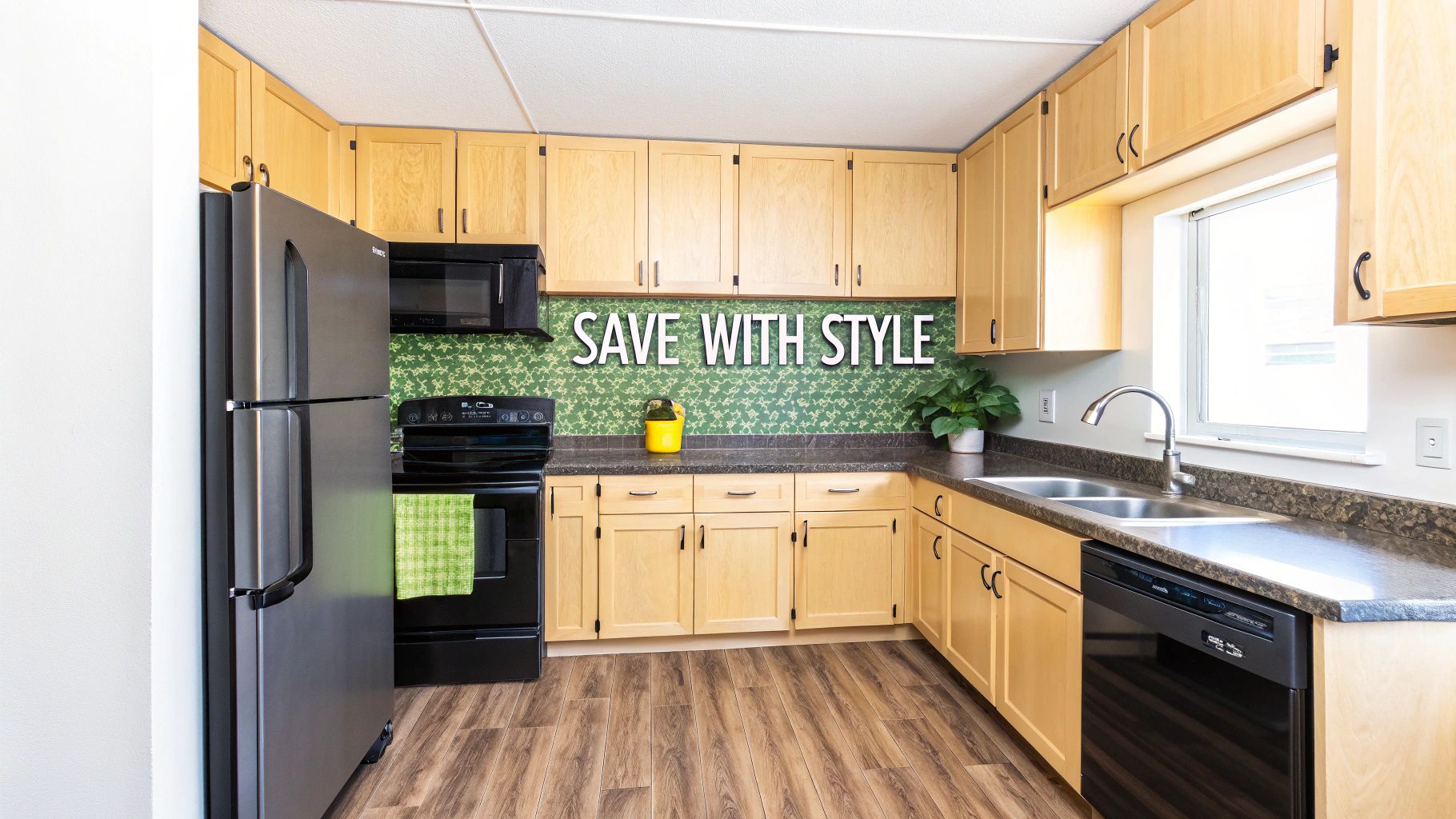
The trick is to focus your spending on key areas to make every dollar count towards a beautiful and functional kitchen.
Embrace High-Quality Alternatives
Clever material selection is one of the smartest ways to control your budget. Modern high-pressure laminates are a game-changer for both cabinetry and countertops. We’ve used laminates that convincingly replicate the grain of natural wood or the veining of marble, giving clients a premium look for a fraction of the cost. This choice alone can free up thousands of dollars.
Choosing a high-quality laminate over natural stone doesn't mean settling. It's a financially savvy choice that lets you invest more in other areas that matter, like feature lighting or better appliances.
The same applies to flooring. High-end vinyl or porcelain tiles are incredibly durable and come in endless styles that mimic everything from warm hardwood to polished concrete, giving you a stylish foundation without the hefty price tag.
Keep Your Existing Layout
If there’s one golden rule for keeping labour costs down, it's this: stick with your kitchen’s existing layout.
Moving your sink, hob, or fridge might seem simple, but it triggers an expensive chain reaction:
- Plumbing: Shifting a sink means rerouting water supply and drainage pipes, adding significant labour costs.
- Electrical Work: Moving an oven or adding new outlets requires rewiring, which can be complex and expensive.
- Gas Lines: Relocating a gas hob is a specialised task that requires a licensed professional, adding another layer of cost.
By working with your current footprint, you avoid these major expenses. Instead, you can invest that budget into high-impact visual upgrades like new cabinets, countertops, and a fresh backsplash.
Phase Your Renovation Strategically
A full renovation doesn't have to happen all at once. If your budget is tight, consider phasing the project. This allows you to address urgent needs now while planning and saving for future upgrades.
Start by focusing on the essentials. This could mean installing new, functional cabinetry and durable countertops first. You can live with older appliances for another year and replace them when finances allow. For example, a client recently installed their dream cabinetry and countertops but kept their existing fridge and oven, planning to upgrade to an integrated set in two years. This made the initial financial hit much more manageable.
Knowing When And Where To Splurge
While managing your kitchen renovation costs is important, some investments provide value far beyond their initial price. Knowing where to spend a little extra can transform how your kitchen functions, feels, and even boosts your property's long-term value.
Think about the parts of your kitchen you use most: the cabinets you open daily, the countertop where you prep meals, and the storage that keeps everything organised. Investing in these workhorses is where you'll feel the biggest difference.
Invest In Bespoke Carpentry
If there’s one place to invest, it’s in high-quality, bespoke carpentry. This is the architectural backbone of your kitchen. Unlike standard cabinets, custom work is built to the exact dimensions of your room, eliminating awkward gaps and wasted corners.
For a recent condominium project, we designed floor-to-ceiling cabinets that concealed a pantry and appliance garage. This single decision turned a compact kitchen into a sleek, highly efficient workspace.
Choosing custom carpentry is an investment in craftsmanship. It's the difference between a kitchen that simply 'fits' and one that feels thoughtfully designed and perfectly tailored to your lifestyle.
This is your chance to get exactly what you want, from clever internal organisers to the precise finish. It’s a significant part of the budget—often 30-35%—but its tailored function and durability deliver value for years.
Elevate Your Space With Premium Countertops
Your countertop is a major visual statement. Splurging on a premium material like engineered quartz or sintered stone can elevate the entire kitchen. These materials offer superior durability and heat resistance compared to budget-friendly options.
Think of your countertop as functional art. We often encourage clients to select their countertop early, as its character can guide other choices like cabinet colour or backsplash tiles. A high-quality slab not only withstands daily use but also holds its appeal, which is a major plus for resale value.
Prioritise Innovative Solutions
Smart splurges on innovative solutions can make your kitchen a pleasure to use. These thoughtful upgrades solve daily frustrations and streamline your routines.
Here are a few high-impact investments to consider:
- Smart Storage Systems: Go beyond basic shelves. Think pull-out pantries, corner cabinet solutions like LeMans units, or integrated drawer organisers. These make every inch of space accessible and usable.
- High-Performance Ventilation: A powerful yet quiet cooker hood is a game-changer, especially in open-concept layouts common in Singapore. It effectively removes grease, smoke, and odours, keeping your home fresh.
- Quality Fittings: Soft-close hinges and drawer runners from trusted brands like Blum make a world of difference. They provide smooth, silent operation that feels luxurious while preventing wear and tear on your cabinetry.
Strategic splurges are about putting your money where it counts most. By investing in custom carpentry, premium surfaces, and functional innovations, you're not just adding to your kitchen renovation costs—you're investing in a better daily experience and lasting value.
How To Plan Your Budget And Choose The Right Partner
A successful kitchen transformation comes down to two things: a solid financial plan and the right team. Getting these right from the start is the secret to managing your kitchen renovation costs and ensuring a rewarding process.

Your first step is to create a detailed budget. Itemise every expected expense, from carpentry and countertops down to appliances and labour. This project roadmap will help you make informed decisions when choosing materials and features.
Building Your Financial Safety Net
A critical yet often overlooked part of any renovation budget is the contingency fund. This is a financial cushion for unforeseen issues. No matter how well-planned, surprises can occur, especially in older resale properties.
We always advise our clients to set aside 10-15% of their total budget for contingencies. This fund isn’t for last-minute upgrades; it’s a safety net for issues like discovering hidden plumbing problems or needing unexpected electrical work behind a wall.
Having this buffer means you can handle curveballs without derailing the project or compromising on your design. It turns a potential crisis into a manageable hiccup.
Selecting The Right Interior Design Partner
With your budget sorted, it's time to choose your partner. Get a few quotes, but look beyond the final price. The cheapest quote is rarely the best value.
A trustworthy partner will provide a transparent, detailed scope of work. This document should leave no room for guesswork, clearly outlining every task, material specification, and associated cost.
Here’s what to look for:
- Detailed Scope: The quote should specify everything from the type of plywood used in cabinets to the brand of soft-close hinges.
- Clear Communication: A good firm establishes a clear communication rhythm, providing regular updates and being available for questions.
- Verified Portfolio: Look for a portfolio of finished projects that match your desired style and quality, and check for genuine client testimonials.
At Kivo, our process is built on clarity. We use detailed 3D visualisations to show you exactly what your new kitchen will look like before any work begins. This prevents expensive misunderstandings and ensures the final result perfectly matches your expectations. As you plan for new appliances, consulting resources like estimated appliance lifespan tables can also help you make informed, long-term decisions.
Got Questions About Your Kitchen Renovation? We've Got Answers
As you plan your kitchen renovation, questions are bound to arise. We've compiled answers to the most common queries we receive from homeowners in Singapore.
How Long is This Actually Going to Take?
A typical kitchen renovation in a Singaporean home takes 4 to 8 weeks, from the start of hacking to the final handover.
This timeframe can vary based on:
- Scope of Work: A simple cosmetic update might take a couple of weeks, while a full renovation involving hacking, moving plumbing, and custom carpentry will be on the longer end of that scale.
- Permit Approvals: If your renovation requires approval from HDB or your condo's MCST, this can add several weeks to the timeline before work begins.
- Material Lead Times: Specific tiles or imported appliances may have longer delivery times, which can extend the project schedule.
Can I Still Cook in My Kitchen During the Reno?
For a full renovation, the honest answer is no. Your kitchen will be a work zone without a functional sink, power, or appliances.
We advise clients to set up a temporary kitchen elsewhere. A microwave, a portable induction hob, and a mini-fridge in the dining area can be a lifesaver. Planning your meals ahead of time makes the process much less stressful.
The smoothest renovations happen when homeowners are prepared for the temporary disruption. Planning your meal strategy beforehand makes a world of difference.
Why Are the Quotes I'm Getting So Different?
Receiving wildly different quotes for the same job can be confusing. The price difference usually comes down to the details behind the numbers.
- Material Quality: One quote might be for standard laminate cabinets, while another specifies premium, moisture-resistant plywood with top-of-the-line Blum fittings. Materials significantly impact cost and durability.
- Labour and Craftsmanship: A firm with its own in-house carpenters and skilled tradespeople has better quality control and a different cost structure than one that subcontracts every job to the lowest bidder.
- Hidden Omissions: A suspiciously low quote might be missing key items. Does it include rerouting plumbing or adding new electrical points? A detailed, line-by-line quote is the mark of a transparent firm and ensures you are comparing apples with apples.
Ready to create your dream kitchen with a team that values transparency as much as craftsmanship? At KIVO, we blend artisan quality with a clear, straightforward process to bring your vision to life.
Let's build a space that’s not just beautiful, but perfectly suited to you.