So, you’re trying to figure out the renovation kitchen cost in Singapore. It's the first question every homeowner asks, and the honest answer is: it depends entirely on your property type, the size of your kitchen, and the scope of your vision.
Based on our experience with clients, a straightforward refresh for a new HDB kitchen can start from around S$8,000. For a more comprehensive overhaul, especially in a resale flat, you could be looking at S$25,000 or more. If you own a condominium, the starting point is typically higher due to larger spaces and more complex work, generally ranging from S$15,000 to S$50,000+.
A Snapshot of Your Potential Investment
Before you start creating mood boards, it’s crucial to understand the potential investment. Knowing these cost brackets helps set realistic expectations from day one. Think of it less as a single price and more as a spectrum influenced by your property, ambition, and material choices.
Whether you're in an HDB flat or a condo, the final figure will differ. Condos often have larger footprints and fewer renovation restrictions, which can increase costs for materials and labour. HDB renovations, on the other hand, must adhere to specific guidelines, which can shape both the design and the budget.
To give you a clearer picture, let's break down the costs into common tiers. This will help you align your vision with a practical financial plan right from the start.
Comparing Renovation Tiers
Here’s a practical look at what you can expect to invest in your kitchen renovation, based on your property type and project complexity.
Typical Kitchen Renovation Budget Ranges in Singapore
| Project Tier | Typical HDB Cost Range (SGD) | Typical Condo Cost Range (SGD) | Scope of Work |
|---|---|---|---|
| Economy | S$8,000 – S$15,000 | S$15,000 – S$25,000 | Basic carpentry, laminate countertops, essential plumbing & electrical. Best for new BTOs. |
| Mid-Range | S$16,000 – S$25,000 | S$26,000 – S$40,000 | Quality quartz tops, more custom cabinetry, full tiling, better fittings. Common for resale flats. |
| Premium / Luxury | S$26,000+ | S$41,000+ | High-end materials (e.g., sintered stone), bespoke carpentry, premium appliances, layout changes. |
These figures are a solid starting point. An Economy tier typically involves refreshing surfaces, basic carpentry using standard laminates, and new essential fittings. Moving up to a Mid-Range project allows for better materials like quartz countertops, more extensive custom cabinetry, and perhaps minor layout adjustments.
The Premium tier is where a complete transformation happens—think high-end appliances, fully bespoke carpentry with advanced mechanisms, luxurious finishes, and significant layout changes. For a wider view on renovation costs beyond our shores, some homeowners find it useful to check out external guides on how much a kitchen renovation costs.
Transparency is key in any renovation project. We provide detailed quotes that break everything down, so you see exactly where your investment is going, ensuring there are no surprises along the way.
This overview should give you the financial bearings for your project. Next, we'll dive deeper into what actually drives these costs—from materials to labour—so you can make smart, informed decisions for the kitchen you’ve always wanted.
Breaking Down Your Renovation Bill Item by Item
A renovation quote can seem overwhelming, filled with line items and industry jargon. Understanding these components is the first step to controlling your budget and making choices that align with your priorities.
Think of your quote as the recipe for your new kitchen. Each ingredient contributes to the final outcome and cost.
Let's dissect the key components you’ll find on a typical quote. We'll show you where your money goes and how decisions in one area can impact the entire project. This knowledge empowers you to have a productive discussion with our team about what truly matters to you.
Custom Carpentry: The Heart of Your Kitchen Budget
Custom carpentry is almost always the largest expense in a kitchen renovation, typically accounting for 40% to 60% of the total budget. This isn’t just about cabinets; it’s about creating storage solutions perfectly tailored to your space and lifestyle.
Costs are calculated per-foot-run (PFR), the industry standard for measurement. The price per foot, however, varies significantly based on the materials and finishes you select.
- Practical Example: A standard 10-foot run of top and bottom cabinets using good-quality laminates might start from S$3,500. If you opt for premium Fenix laminates with their anti-fingerprint and soft-touch properties, the cost for the same length could increase to S$4,800 or more, before adding internal mechanisms.
- Internal Fittings: The real functionality comes from within. Adding components like Blum soft-closing hinges, pull-out pantry systems (from S$400), or corner "magic basket" units (from S$600) enhances usability. While they add to the initial cost, they significantly improve the day-to-day experience of using your kitchen. Many of our clients find these upgrades to be worth every cent for the convenience they offer.
Countertops: Where Style Meets Durability
Your countertop is the kitchen's primary work surface. It must be both aesthetically pleasing and durable enough to withstand daily use. This is another major cost driver, and your material choice is critical.
| Countertop Material | Typical Price Range (per foot run) | Best For |
|---|---|---|
| Laminate | S$60 - S$90 | The most budget-conscious projects and light-use areas. |
| Quartz | S$110 - S$180 | The best all-rounder for durability, low maintenance, and style. Our most recommended choice. |
| Sintered Stone | S$150 - S$250+ | High-end projects wanting superior heat and scratch resistance. |
| Natural Stone (Marble) | S$200 - S$400+ | Luxury aesthetics where the owner accepts higher maintenance. |
- Practical Example: For an average HDB kitchen requiring 15 feet of countertop, a mid-range quartz surface would cost approximately S$2,000 - S$2,500. In contrast, a beautiful high-end sintered stone for a larger condo kitchen could easily exceed S$4,500. This single decision has a massive impact on both the look and long-term usability of your space.
The Essential Works: Hacking, Tiling, Plumbing, and Electrical
Before the beautiful elements come in, foundational work must be done to ensure your kitchen functions safely and reliably. These costs are often non-negotiable, particularly when renovating an older resale flat.
Do not underestimate the cost of foundational work. Proper plumbing and electricals are not just about convenience; they are about the long-term safety and integrity of your home. Cutting corners here often leads to much costlier problems later.
Here’s a practical breakdown of what’s involved:
- Hacking and Demolition: This involves removing old cabinets, tiles, and fixtures. For a standard kitchen, this typically costs between S$800 and S$2,000, including haulage and disposal fees.
- Tiling (Masonry): This covers your floor and backsplash. Labour and materials for a standard backsplash might range from S$700 to S$1,500. Re-tiling the floor could add another S$1,500 to S$3,000, depending on the area and tile choice.
- Plumbing: This includes running new pipes for your sink and dishwasher and installing taps. Budget between S$500 and S$1,200 for standard plumbing works.
- Electrical Works: This is crucial for adding lighting points, power sockets for appliances, and ensuring everything is wired safely. Costs typically range from S$600 to S$1,500, depending on the number of new points required.
By understanding these individual components, you can see how a "simple" kitchen makeover involves many moving parts, each with its own cost. This transparency is key to planning a project that aligns with your vision and budget.
Budgeting for an HDB Kitchen Renovation
Renovating a kitchen in an HDB flat presents a unique set of challenges and opportunities. With over 80% of Singaporeans living in HDBs, we have extensive experience in transforming these compact spaces into highly functional and stylish kitchens. The goal is always to maximize every square foot while adhering to HDB guidelines and your budget.
Your budget will be shaped by the flat's age (BTO vs. resale), your chosen layout, and material selections. The key is to make every decision count without overspending.
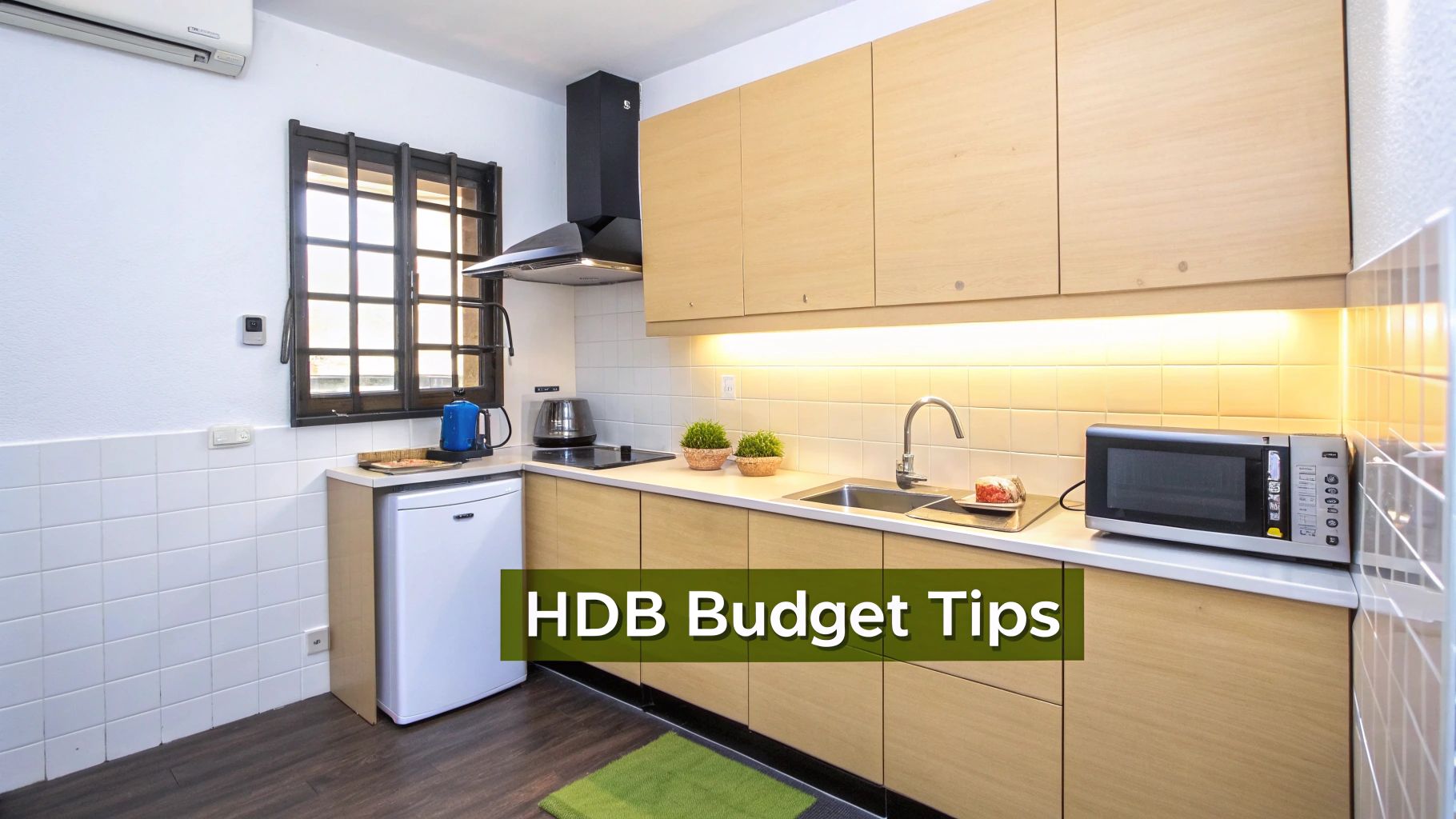
Understanding HDB Renovation Cost Tiers
The final cost for an HDB kitchen renovation can vary significantly based on your project's scope. For a basic but functional update, you're typically looking at S$8,000 to S$15,000. This generally covers essential carpentry, a laminate countertop, and standard fittings.
If you're aiming for a more polished look, a mid-range budget of S$15,000 to S$25,000 will afford you higher-quality materials like quartz countertops, more extensive custom cabinetry, and integrated appliances. For a premium transformation with bespoke features and designer finishes, costs can easily exceed S$25,000. To get a better feel for what these price brackets include, you can dig deeper into Singapore kitchen renovation pricing.
A few HDB-specific factors can significantly impact your final cost:
- BTO vs. Resale: A new BTO flat is a blank canvas, often saving you thousands on hacking and demolition. A resale flat, however, may require extensive work, including removing old fixtures, re-tiling, and overhauling plumbing and electrical systems, which can add S$3,000 - S$6,000 or more to the bill.
- HDB Guidelines: HDB has strict regulations, particularly regarding the hacking of walls, which can limit layout changes. All works must be performed by HDB-licensed contractors, ensuring safety and quality standards.
Smart Strategies for HDB Kitchens
A smaller kitchen doesn't mean you have to compromise on style or function. Based on our experience, the key to a successful HDB kitchen is clever space planning and strategic material choices.
A common request from our clients is to make their kitchen feel bigger and brighter. An effective strategy is using light-coloured laminates for cabinetry and a reflective backsplash material like glass or glossy tiles. These surfaces bounce light around the room, creating an illusion of spaciousness.
In an HDB kitchen, smart storage isn’t a luxury—it’s a necessity. Investing in well-designed carpentry, such as pull-out larders, corner carousels, and vertical drawer organisers, can dramatically increase storage capacity without expanding the physical footprint.
Practical Cost-Saving Examples
Making informed decisions can help you manage your budget effectively without sacrificing quality. Here are a few actionable examples:
- Prioritise Your Carpentry: You don't need premium fittings in every cabinet. Invest in a high-quality pull-out system for heavy pots and pans where it matters most, but use standard shelving in less frequently accessed upper cabinets to save costs.
- Choose Lookalike Materials: Love the marble aesthetic but not the price or maintenance? High-quality quartz or sintered stone countertops offer a similar look with superior durability for less. Similarly, modern vinyl flooring can beautifully replicate the appearance of wood or tiles at a lower cost.
- Rethink the Backsplash: While a full-height backsplash is visually striking, you can save on materials and labour by tiling only the critical splash zones behind the hob and sink. For the remaining wall area, a high-quality, washable kitchen paint is a practical and cost-effective solution.
Ultimately, a successful HDB kitchen renovation is about making strategic choices—knowing where to invest for long-term value and where you can be savvy to save.
Planning Your Condo Kitchen Renovation Budget
Renovating a condo kitchen offers a different set of opportunities compared to an HDB flat. Condos typically feature larger layouts and fewer structural restrictions, allowing for more expansive and creative designs. This freedom and space are key factors that shape the overall budget.
A larger kitchen naturally requires more materials—flooring, countertops, and cabinetry. However, it also allows for features that can transform the space, such as a statement kitchen island, a walk-in pantry, or an open-concept design that seamlessly integrates with the living area. A clear trend we see among our condo clients is the desire to create a true 'heart of the home'—a kitchen designed for both everyday cooking and entertaining.
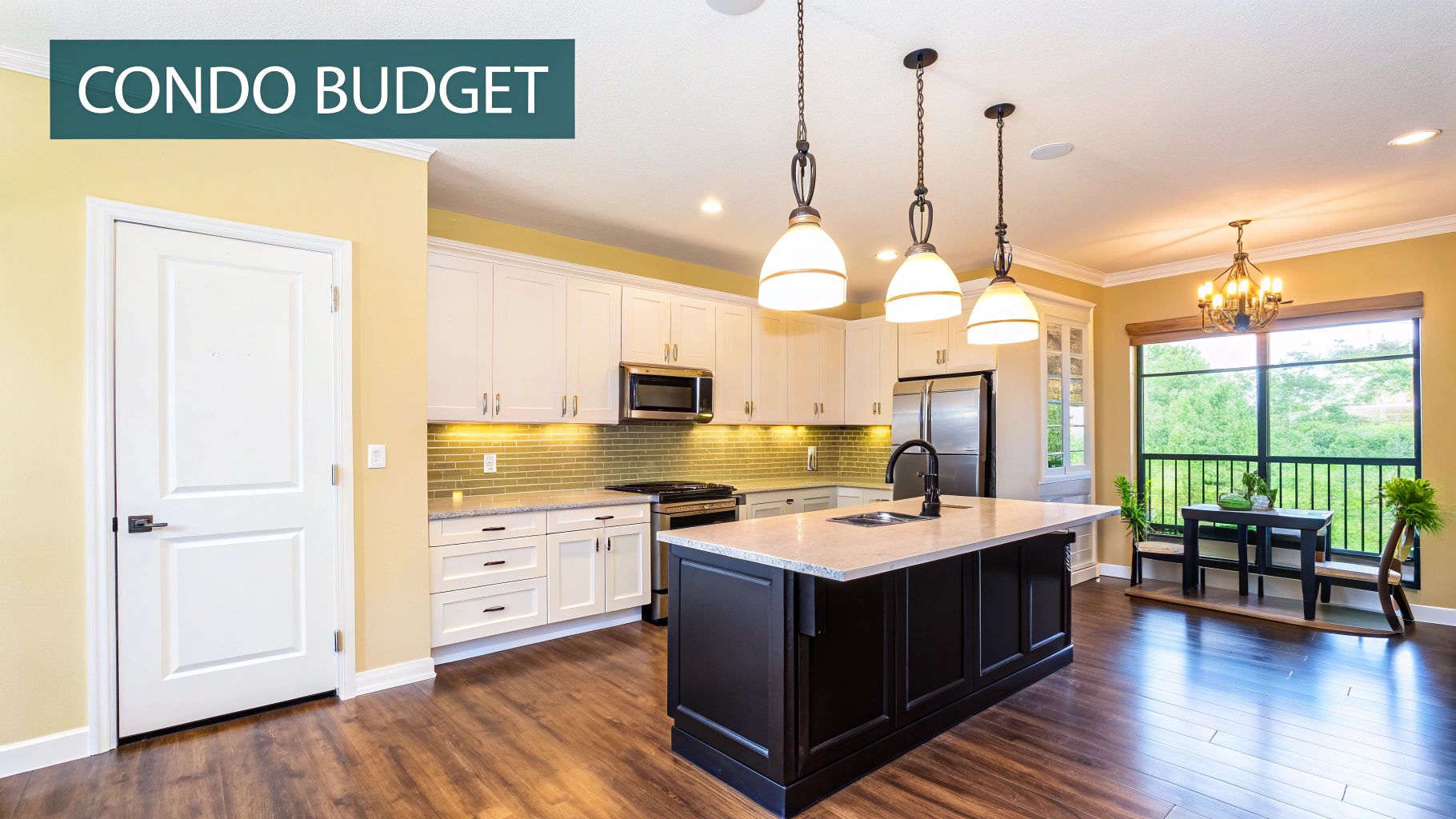
Unpacking Condo Kitchen Renovation Costs
The investment for a condo kitchen reflects its expanded potential. For a mid-range project, the typical renovation kitchen cost Singapore condo owners should budget for is between S$18,000 to S$30,000. For a luxurious transformation with premium elements like marble islands, integrated smart appliances, or a custom wine chiller, high-end renovations can easily range from S$30,000 to S$45,000 and beyond.
This is a noticeable step up from a standard HDB project for several reasons.
Condo kitchens are often larger, and their open layouts can require 25-30% more materials. More complex L- or U-shaped designs can add S$5,000 to S$10,000 in carpentry alone. However, a well-executed renovation is a smart investment that can enhance your property’s value. For more on these figures, this helpful guide to Singapore renovation costs is a great resource.
Key Cost Drivers in Condo Renovations
A few specific elements significantly influence a condo kitchen budget. Understanding them helps you allocate your funds for the greatest impact.
- Kitchen Islands: An island is one of the most requested features we encounter. It serves as a focal point for food prep, casual dining, and social gatherings. However, it's a significant investment, involving custom carpentry, countertop material, and often new electrical and plumbing lines. A well-designed island can add anywhere from S$4,000 to S$10,000+ to the final bill.
- Premium Appliances and Integration: Condo renovations often feature high-end, built-in appliances like ovens, microwaves, and dishwashers for a sleek, seamless look. The cost of the appliances, combined with the precision carpentry required for perfect integration, is a major budget consideration.
- Material and Finish Selections: With more surface area to cover, your choice of materials has a greater impact on the total cost. Opting for natural stone, designer tiles, or premium laminates across a larger kitchen will scale the budget accordingly.
A common oversight is underestimating the cost of "small" additions. For instance, incorporating an under-counter wine chiller involves more than just the appliance cost. You must also account for the specialised carpentry and a dedicated power point, all of which contribute to the final tally.
A Smart Investment in Your Property
While the initial outlay for a condo kitchen renovation is higher, it’s important to view it as an investment, not just an expense. A thoughtfully designed, high-quality kitchen not only enhances your daily life but also adds tangible value to your property.
When it comes time to sell, a modern and functional kitchen is a powerful selling point that can attract better offers and facilitate a quicker sale. It signals that the home has been well-maintained and thoughtfully upgraded, justifying a premium price.
The Three Key Factors Driving Your Final Cost
Understanding your kitchen renovation cost in Singapore isn't about finding a single magic number. It's about recognizing the key decisions that shape your final bill. Every quote is a direct reflection of the choices you make across three core areas.
These are the main dials you can turn to control your renovation budget. Adjusting any one of them will directly impact the total investment. An open discussion about these three points with your designer at the outset is the most effective way to align your vision with your budget.
1. Kitchen Size and Layout Complexity
The physical footprint of your kitchen is the starting point for any budget. A larger kitchen requires more materials and labour, which naturally increases costs. However, layout complexity is just as important as square footage.
- Simple Layout: A straightforward galley kitchen in a 3-room HDB is one of the most cost-effective layouts. It typically consists of two parallel rows of cabinets, which is efficient for carpentry and installation.
- Complex Layout: An open-concept U-shaped kitchen with a large island in a condo is at the other end of the spectrum. This design requires significantly more custom carpentry for the island and peninsula counters. Achieving the open concept often involves hacking walls and rerouting electrical and plumbing lines, adding substantial cost before any cabinetry is installed.
A common point of confusion is the cost of a kitchen island. It’s not just another cabinet; it's a mini-project. It requires its own countertop, specialised carpentry, and often dedicated electrical points or plumbing for a prep sink. Each of these elements adds a separate line item to your quote.
2. Material and Finish Selections
This is where you have the most direct control over your budget. Your choice of materials involves a constant balance of aesthetics, durability, and cost. From the countertops to the cabinet laminates, every selection has a price tag.
Let’s illustrate with a practical example for a standard 15-foot kitchen:
- Countertops: A quality laminate countertop might cost around S$1,300. Upgrading to a durable and popular mid-range material like quartz could increase that to S$2,500. Opting for the premium look and heat resistance of sintered stone can easily push the cost beyond S$4,000.
- Cabinetry Finishes: Standard laminates are a solid, budget-friendly choice. However, if you choose premium finishes like Fenix, known for its anti-fingerprint and soft-touch properties, expect your carpentry bill to increase by 20-30%.
These decisions apply to every surface, from your backsplash (e.g., ceramic tiles vs. a seamless quartz slab) to your flooring (e.g., vinyl vs. porcelain tiles). Every choice is a trade-off, and being informed helps you allocate your funds where they matter most to you.
3. The Overall Scope of Work
Finally, the scope of your project determines the extent of the transformation. Are you planning a simple cosmetic facelift or a complete gut-and-rebuild? The answer will dramatically alter your final kitchen renovation cost in Singapore.
- Limited Scope (Cosmetic): This might involve retaining the existing layout while replacing cabinet doors, countertops, and the backsplash. This approach avoids costly hacking, masonry, and utility relocation.
- Full Scope (Overhaul): This means tearing everything out and starting from scratch. It includes hacking old tiles and cabinets, extensive masonry for new floors and walls, re-wiring for new lighting and appliances, and re-running plumbing. This foundational work can easily account for 25-40% of the total budget in a resale home. The more you alter the kitchen's "bones," the higher the cost for these essential works will be.
Bringing Your Dream Kitchen to Life with a Clear Process
Achieving your dream kitchen without budget overruns requires more than just a great design; it demands a clear, collaborative process from start to finish. A successful renovation is built on open communication and meticulous planning, which is the best way to avoid misunderstandings and costly surprises.
At KIVO, we begin by translating your ideas into detailed 3D visualizations. This is a critical step, not a fancy extra. It allows you to virtually walk through your new kitchen, giving you a tangible feel for the space before any work begins. This process provides the confidence to approve the final layout, materials, and finishes, knowing they are exactly what you want.
Meticulous Project Management
Once the design is finalized, our focus shifts to flawless execution. Our project management approach ensures you are kept informed with regular updates and a clear timeline. We coordinate all trades—carpenters, plumbers, electricians—to ensure a smooth and efficient process that respects both your time and your investment.
This hands-on management allows us to identify and address potential issues before they become problems, keeping your project on track and within the agreed-upon budget.
A clear process isn't just about schedules and blueprints; it's about building a partnership based on trust. When you're fully informed and involved at every stage, the final result is a space that truly feels like your own.
Getting a feel for the aesthetic you're after can be a huge help. For some practical tips and to see what's possible, it’s worth exploring some kitchen staging ideas. Seeing different styles can spark some great inspiration and help you nail down what you truly want to achieve.
Our commitment is simple: to deliver a stunning kitchen that not only matches your vision but is also the result of a seamless, stress-free journey. Often, the real difference between a good kitchen and a dream kitchen is the quality of the process that got you there.
Ready to start the conversation? Schedule a no-obligation consultation with our team today, and let's explore how we can bring your ideal kitchen to life.
Still Have Questions About Kitchen Renovation Costs?
It's completely normal to have a lot of questions when you're thinking about a kitchen renovation. It’s a big project! To help clear things up, here are answers to a few common queries we get from homeowners in Singapore.
How Long Will My Kitchen Renovation Actually Take?
This is the big question, and the answer really hinges on how much work you're planning. A simple cosmetic refresh—think a new coat of paint, updated handles, and maybe a new countertop—could be wrapped up in 2 to 3 weeks.
But if you're going for a full-blown transformation that involves hacking down walls, custom-building all your carpentry from scratch, and shifting plumbing around, you’ll want to set aside 4 to 6 weeks.
A few things can stretch that timeline:
- Hacking and Tiling: The more demolition and masonry work involved, the longer it will take. This is often the dustiest and noisiest part of the job.
- Custom Carpentry: Good things take time. Your custom cabinets are built off-site, and this fabrication process alone can take a few weeks before they even arrive.
- Permit Approvals: Getting the green light from HDB or your condo management is a crucial first step that can influence when the work can even begin.
Can I Save Money by Managing the Renovation Myself?
Going the DIY route and managing your own contractors can seem like a great way to cut costs, as you'd avoid paying for a designer or project manager. However, this path is packed with potential pitfalls.
You'd be the one juggling every single trade—the hackers, the tilers, the plumbers, the electricians, and the carpenters. It's your job to make sure their work is up to standard, on schedule, and that everyone knows what the others are doing.
Honestly, trying to coordinate multiple contractors without prior experience can easily lead to expensive mistakes, miscommunications, and frustrating delays. The fee for an experienced designer or project manager often pays for itself by preventing these very problems, ensuring the entire process runs smoothly from start to finish.
Do I Really Need a Permit for My Kitchen Renovation?
For some types of work, absolutely. In Singapore, you can't just start tearing things down. You'll need to get a permit from HDB or your condo's management (MCST) if you plan on:
- Hacking any walls, whether they're structural or not.
- Moving your sink or other plumbing fixtures to a new location.
- Making major changes to the electrical wiring.
Trying to skip this step is a bad idea. If you get caught, you could be ordered to undo all the work at your own expense. It’s a costly and stressful headache you don’t need. We take care of all the paperwork and applications to make sure your renovation is fully compliant and above board.
Ready to stop guessing and get a clear, detailed breakdown for your own kitchen project? At KIVO, we believe in transparent quotes and expert guidance to bring your dream kitchen to life—without any budget surprises.