Getting the keys to your new HDB flat is exciting, but the blank walls and bare floors can be daunting. An HDB renovation package is a popular starting point for many new homeowners in Singapore. It bundles essential renovation works—like tiling, basic plumbing, and painting—into a single, fixed-price deal, providing a clear roadmap for the foundational work.
But what does a package really get you, and how do you choose the right one? Based on our experience with countless HDB projects, this guide cuts through the noise to give you actionable insights and practical examples, helping you make informed decisions for your home.
What an HDB Renovation Package Actually Includes
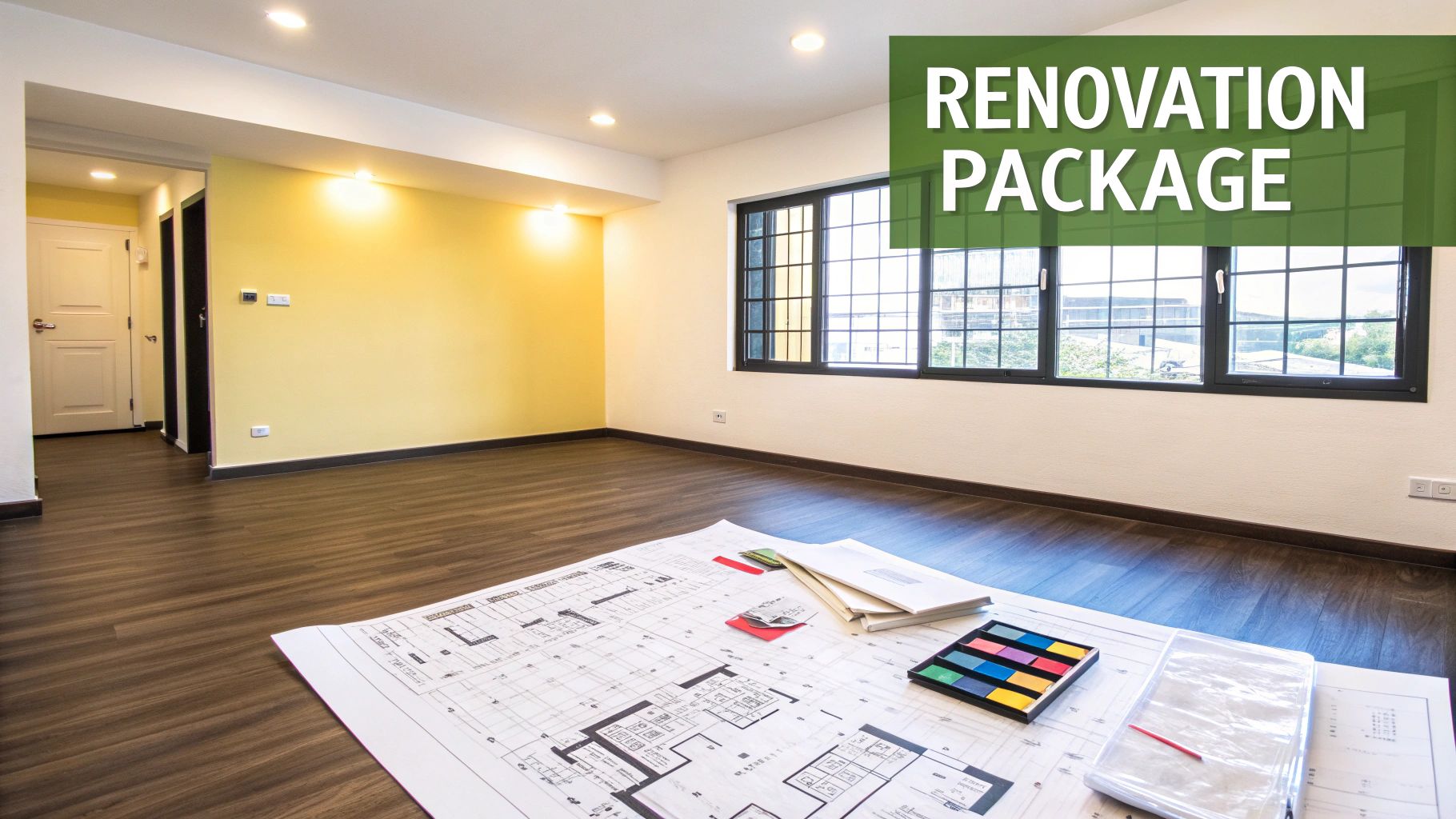
A renovation package is not about decorative items like curtains or sofas. Its purpose is to cover the heavy-lifting—the structural and finishing works that transform a bare unit into a liveable space. The core idea is to bundle the non-negotiable jobs into one predictable cost.
Packages for new BTO flats are designed for building from scratch. For resale flats, the scope is naturally larger, often including hacking and demolition, which adds complexity and cost.
The Essential Building Blocks
While offerings vary between firms, a standard HDB renovation package typically covers the fundamentals required to make your home functional.
- Masonry and Wet Works: This includes building shower kerbs, constructing a cabinet base for the kitchen and fridge, and applying waterproofing membranes in wet areas. A practical example is the cement base for your washing machine. This isn't just for stability; it elevates the machine, protecting it from water damage during floor washing.
- Tiling Works: This covers the supply and labour for tiling floors and walls in the kitchen and bathrooms. Packages will usually specify a budget for tiles, for instance, "$3.00 psf." If you choose tiles that cost $3.50 psf, you just pay the $0.50 difference.
- Plumbing Works: This involves connecting inlet/outlet pipes for sinks, washing machines, and storage heaters. It also includes the labour to install your toilet bowls and bathroom accessories. Note that the fixtures themselves (taps, sinks, heater) are usually purchased separately.
- Painting Works: A standard package will cover the painting of all internal walls and ceilings using well-known brands like Nippon or Dulux. This typically includes a sealer and two coats of paint.
Carpentry and Electrical Scope
Beyond the basics, most packages include carpentry and electrical work, which is where you start to see your home’s personality emerge.
A well-structured renovation package should offer transparency. It clearly separates the must-haves, like plumbing, from the aesthetic choices, like carpentry design. This distinction empowers homeowners to allocate their budget where it matters most to them.
A common inclusion is a 20-foot top and bottom kitchen cabinet set. This is a practical length for a standard 4-room HDB kitchen, providing a solid foundation for storage. Some packages might also include a basic 5-foot casement wardrobe for the master bedroom.
Electrical works in a package are usually itemised by points. For example, a package might include creating 10 new lighting points or 5 double socket points. If you need an extra socket for your gaming console or a dedicated point for a water dispenser, each additional point will be charged as an add-on. It's crucial to plan your electrical layout early to avoid unexpected costs.
Breaking Down HDB Renovation Costs: BTO vs Resale
Your budget is the most critical tool in your renovation. The single biggest factor influencing the cost isn't just the flat size; it's whether you're starting with a brand-new BTO or an older resale flat.
We often get asked, "Why do resale renovations cost so much more?" The answer lies in the preparatory work required before any design work can begin. A BTO is a clean slate. A resale flat often requires significant stripping and repair work. This isn't optional—it's essential for safety, longevity, and a quality finish.

Why Resale HDB Renovations Cost More
Renovating a BTO is like painting on a fresh canvas. A resale renovation is like restoring an old painting; you first need to strip away old layers and repair the canvas itself.
This "restoration" for a resale flat involves:
- Hacking and Demolition: Tearing out old floor and wall tiles, dismantling built-in wardrobes, and removing old kitchen cabinetry. This is a labour-intensive process that also includes haulage fees for debris disposal.
- Complete Electrical Rewiring: In flats over 20 years old, existing wiring often can't support the load of modern appliances like air fryers, powerful hair dryers, and multiple computers running simultaneously. A full rewiring is a critical safety upgrade.
- Plumbing Overhaul: Old, concealed pipes can corrode and lead to leaks. Replacing the entire plumbing system from the start prevents costly water damage issues later on.
- Making Good: After hacking, surfaces are never perfectly smooth. "Making good" involves re-plastering walls and applying a floor screed to create a level base for new finishes. This adds significant labour and material costs.
The core difference is simple: a BTO renovation is primarily about adding to a space. A resale renovation involves a significant phase of subtracting and repairing before you can even begin adding. This is why you can expect resale projects to cost 30-50% more than a BTO of the same size.
Estimated Costs by Flat Type
To give you a realistic starting point for your financial planning, here are typical budget ranges based on our project experience.
Estimated HDB Renovation Costs BTO vs Resale
| HDB Flat Type | BTO Renovation Cost Range (SGD) | Resale Renovation Cost Range (SGD) |
|---|---|---|
| 3-Room | $34,200 – $57,000 | $45,000 – $75,000 |
| 4-Room | $55,000 – $70,000 | $70,000 – $100,000 |
| 5-Room | $65,000 – $93,500 | $85,000 – $120,000+ |
These figures serve as a practical baseline. Your final cost will depend on the complexity of your design, the grade of materials chosen, and the extent of the work. For a more detailed look into how these numbers are calculated, you might find an expert guide on estimating construction costs useful.
Planning Your Budget Effectively
When budgeting for a renovation package for hdb, your flat type is the starting point. If you have a resale flat, allocate a significant portion of your budget to the essential hacking, rewiring, and re-plumbing works.
With a BTO, you can channel more funds directly into the elements that define your lifestyle—custom carpentry, high-quality finishes, and unique design features that make the space your own. Understanding this distinction is the first step toward a successful renovation that stays on budget.
Navigating HDB Renovation Rules and Permits
An HDB renovation is governed by a clear set of regulations designed to ensure safety and protect the building's structural integrity. Understanding these rules isn't about bureaucracy; it's about ensuring your project proceeds smoothly without costly delays.
HDB categorises renovation work into two types: those that require a permit and those that do not. Your contractor must be registered with HDB to apply for these permits.

Works That Require an HDB Permit
Any work that could potentially affect the building's structure or your neighbours requires an HDB permit. While your designer or contractor handles the submission, as the homeowner, you are ultimately responsible for compliance.
Permits are mandatory for:
- Hacking Walls: Even for non-structural walls, a permit is needed to ensure no load-bearing elements are accidentally compromised.
- Replacing Flooring: If you are hacking existing floor tiles, a permit is required. This work can impact the floor slab and the waterproofing layer below.
- Bathroom Works: Major changes in the bathroom, especially those affecting waterproofing membranes, require a permit to prevent leaks to the unit below.
- Window Replacement: Replacing windows requires HDB approval to ensure the new windows and installation method meet safety standards.
- Air-Conditioner Installation: Installing an outdoor compressor unit needs a permit to ensure it is placed in an approved location and installed safely.
Works That Do Not Require a Permit
Many common renovation tasks are considered cosmetic and do not need a formal permit, allowing work to start more quickly.
Examples of permit-free works include:
- Painting: Painting internal walls and ceilings.
- Flooring Overlay: Laying vinyl or laminate flooring over existing tiles.
- Carpentry: Building and installing custom wardrobes, kitchen cabinets, and feature walls.
- Electrical Works: Adding new power sockets or lighting points.
- Plumbing Fixture Replacement: Changing taps, sinks, or showerheads without altering the pipe layout.
Understanding the permit requirements is a shared responsibility. While your contractor handles the submission, your awareness prevents misunderstandings and ensures every part of your renovation package for HDB is fully compliant, safeguarding you from potential penalties and project halts.
Your Role and Responsibilities
Your primary responsibility is to hire the right team. HDB maintains an official Directory of Renovation Contractors, and only firms on this list are authorised to carry out renovations in HDB flats.
Engaging an unregistered contractor can lead to a stop-work order and a requirement to reinstate the property at your own expense. Before signing a contract, always verify that your interior design firm works with HDB-registered contractors for the construction phase. This is standard practice at Kivo, as it provides a fundamental layer of security and accountability for every project.
Choosing the Right Renovation Package and Firm
Selecting an HDB renovation package is about more than comparing prices; it's about finding a trustworthy partner. A low price can often conceal vague terms, low-quality materials, or hidden costs that emerge later.
The key is to look for transparency. A reliable quotation is never just a lump sum. It is a detailed, itemised breakdown of every task, specifying materials, quantities, and costs.
Decoding the Quotation
A detailed quote empowers you to make informed decisions and compare offers accurately. A vague line item like "Kitchen Works: $15,000" is a red flag. A proper quote will break this down into:
- Length of carpentry (e.g., 20ft top/bottom cabinets)
- Countertop material (e.g., specific brand of quartz)
- Internal cabinet finishes (e.g., coloured PVC vs. white)
- Hardware (e.g., brand of soft-closing hinges)
- Separate line items for tiling, plumbing, and electrical works.
Use this checklist when comparing quotations:
- Material Specifications: Does the quote specify brands and models? For laminates, it should name the supplier (e.g., Lamitak, EDL). For countertops, it should state the brand and series.
- Scope of Work: Are quantities clearly defined? Carpentry must state the length in feet. Tiling should specify the price cap (psf) for the tiles included.
- Exclusions: What is not included? Common exclusions are lighting fixtures, bathroom accessories, haulage fees, and chemical washing. Knowing these upfront prevents budget overruns.
Spotting Hidden Costs and Vague Promises
Hidden costs often hide in omissions. For example, a package might include kitchen cabinets but exclude the plumbing labour to connect the sink and tap. Electrical works are a classic area for this; a package might offer "10 lighting points," but the cost to run the necessary PVC casing for the wiring might be an unexpected extra charge.
A transparent firm builds a partnership based on clarity. The best quotations are educational documents that explain every cost, empowering you to control your budget instead of being surprised by it.
Always ask about the cost of potential upgrades. If you want a premium quartz countertop instead of the standard one, how is the price difference calculated? A reputable firm will have a clear pricing structure for such add-ons. Be wary of any company that is hesitant to provide these details in writing.
Key Questions for Your Potential Firm
Vetting the firm's credentials and processes is as important as the price. When shortlisting firms, being prepared with the right questions is vital; you might find this list of essential questions to ask contractors helpful.
Here are the non-negotiable questions to ask:
- Are you an HDB-licensed contractor? Ask for their license number and verify it on the HDB directory. This is non-negotiable.
- What does your warranty cover and for how long? A standard warranty is 12 months and should cover workmanship. Request a sample warranty document to review the terms and exclusions.
- How do you manage projects and communicate updates? Will there be a dedicated project manager? What is the communication protocol (e.g., a WhatsApp group, site meetings)?
- What is your payment schedule? A typical schedule involves a down payment followed by progress payments at key milestones (e.g., upon completion of masonry, carpentry). A firm demanding over 50% upfront before significant work has started is a major red flag.
- Can you provide references or show us ongoing projects? A confident firm will be happy to let you speak with past clients or visit a current worksite.
Choosing the right firm means finding a team that prioritises transparency, clear communication, and has the portfolio to back up their claims. We believe an informed client is a happy client, which is why we ensure our quotations and processes are meticulously detailed from the start.
The HDB Renovation Timeline from Start to Finish
Understanding the typical renovation timeline helps you manage expectations, plan your move-in, and coordinate deliveries. On average, an HDB renovation takes eight to twelve weeks from design confirmation to handover. A simple BTO project will be on the shorter end, while a full resale overhaul will take longer.
Phase 1: Nailing Down the Design (2 to 4 Weeks)
This foundational phase turns your ideas into a concrete plan. You'll work closely with your interior designer to refine your vision.
- Defining the Vibe: Finalise the design theme, colour palette, and mood board.
- Mapping it Out: Your designer will create detailed 2D floor plans to optimise the layout and flow.
- Bringing it to Life: Review realistic 3D renderings to visualise the final outcome.
- Choosing the Details: Select materials such as laminates, countertops, tiles, and vinyl flooring.
This phase concludes with your official sign-off on the final design and quotation.
Phase 2: Permits and Prep Work (1 to 3 Weeks)
Once the design is locked in, your contractor submits the necessary renovation permit applications to HDB. Approval can take one to three weeks. This period is used for project scheduling, coordinating with subcontractors (electricians, plumbers), and ordering materials with long lead times, ensuring a smooth start to the construction phase.
Phase 3: The Renovation Grind (5 to 8 Weeks)
This is where the physical transformation happens. The work is carefully sequenced, starting with the messiest jobs.
- Demolition and Masonry (1-2 weeks): Hacking of walls and floors, followed by construction of new structures (e.g., cabinet bases) and waterproofing.
- Electrical and Plumbing (1 week): Running of new wiring and pipes while walls and ceilings are accessible.
- Carpentry Fabrication (2-3 weeks, usually off-site): Your custom cabinets and wardrobes are built in a workshop while on-site work proceeds.
- Finishing Works (1-2 weeks): Plastering, painting, installation of false ceilings, and lighting fixtures.
- Installation and Handover (1 week): Final installation of carpentry, countertops, and plumbing fixtures, followed by a thorough chemical wash and joint inspection before the official handover.
Let’s be real—delays can happen, and it's frustrating. The usual suspects are unforeseen issues discovered after hacking, shipping delays for specific materials, or longer-than-expected approval times. The best way to navigate these bumps is to keep the lines of communication wide open with your project manager.
Fortunately, the industry is becoming more efficient. All new HDB flats are now built using methods that have boosted productivity by over 25% compared to a decade ago. This improved initial quality provides a better starting point for renovations. You can learn more about this initiative in Singapore’s Built Environment Industry Transformation Map.
Going Beyond the Package with Custom Design
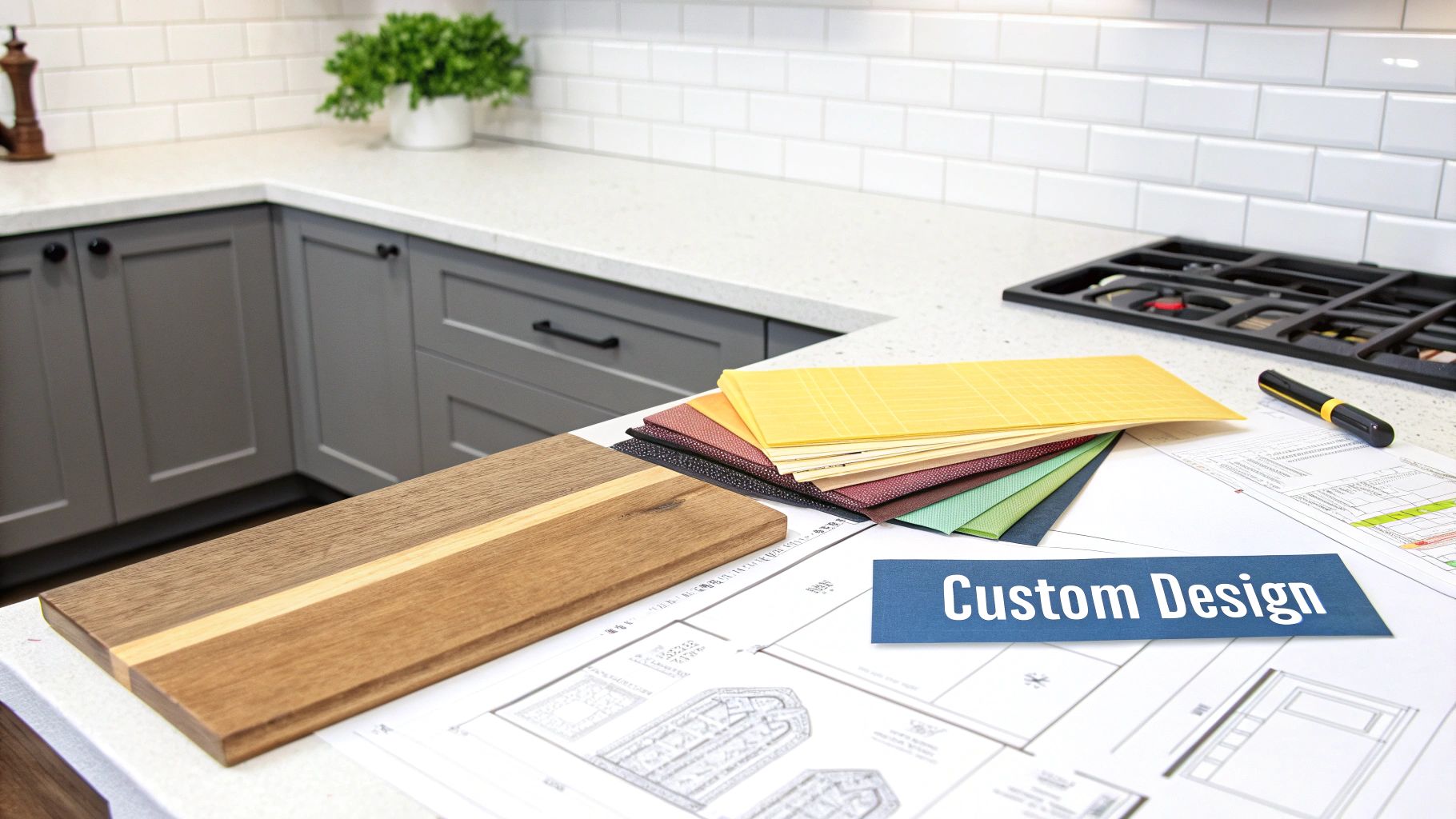
A renovation package is an excellent starting point, providing a solid, cost-effective foundation. However, a house truly becomes a home when it is tailored to your lifestyle. This is where bespoke design elevates a standard package into a personalised space.
Think of a package as a good off-the-rack suit. Custom design is the equivalent of bespoke tailoring, where every detail is crafted to fit you perfectly. It’s about creating a home that not only looks great but functions intuitively for you and your family.
From Standard Layouts to Personalised Sanctuaries
Custom design solves the unique challenges of your lifestyle that a standard layout cannot. With work-from-home being a permanent feature for many, a dedicated workspace is a common request from our clients.
- Integrated Home Office: Instead of a loose desk, we can design a full-height feature wall in the living room that integrates a fold-down work surface, concealed storage for documents, and built-in power outlets. When not in use, it seamlessly blends into the cabinetry.
- Multi-Functional Bedroom: In a smaller room, a custom platform bed can incorporate deep storage drawers. The headboard can be designed to extend into a slim, floating desk by the window, maximising a compact footprint.
This level of personalisation transforms a generic room into a high-performance space that adapts to your needs.
The Art of Custom Carpentry and Smart Planning
Custom carpentry is the cornerstone of bespoke design. It allows us to create solutions that fit your space perfectly, eliminating wasted corners and awkward gaps—something off-the-shelf furniture can never achieve.
Consider the kitchen. A package may offer a standard 20-foot cabinet run. But for a passionate home baker, we can design much more.
Custom design is a dialogue between your lifestyle and your living space. It’s our job to translate your daily routines, passions, and aspirations into a physical environment that supports and enhances them.
With smart planning, we can:
- Design a dedicated pantry with pull-out drawers for easy access to ingredients.
- Incorporate a custom baking station with a lower countertop height, perfect for kneading dough.
- Build a custom kitchen island that doubles as a prep area and a breakfast counter, a practical solution for modern 3-room or 4-room HDB layouts.
This approach to evolving living spaces is not new. Singapore's public housing has continuously adapted, with initiatives like the Selective En Bloc Redevelopment Scheme (SERS) redeveloping older estates since 1995 to introduce modern layouts. You can learn more about how Singapore’s housing renewal schemes have shaped modern HDB living.
At KIVO, we use the solid foundation of a renovation package and elevate it with design intelligence and true craftsmanship. By understanding your story, we go beyond renovating a flat—we create a home that is an authentic reflection of you.
Got Questions About HDB Renovation Packages? We've Got Answers
Even with a detailed plan, practical questions will arise. Here are clear, straightforward answers to some of the most common queries we receive about HDB renovation packages.
Can I Use an HDB Renovation Loan for the Full Package Cost?
The HDB renovation loan is a useful financing option, but it has limitations. The loan is currently capped at SGD 30,000 and is intended for essential works that improve the flat's liveability.
This typically covers:
- Tiling and flooring
- Electrical and plumbing works
- Painting and basic carpentry
It does not cover furnishings, smart home devices, or high-end appliances. If your renovation package for HDB exceeds the $30,000 limit or includes non-essential items, you will need to pay the difference with cash or a separate bank loan.
What’s the Real Difference Between a Contractor and an ID Package?
This is a critical choice. A contractor's package is focused on execution. You provide the detailed plans, and they build it. This is suitable if you have a clear design vision and are confident in managing the project, including coordinating different tradespeople, yourself.
An interior designer (ID) package, like those we offer at KIVO, is a comprehensive solution. It includes construction plus the entire design and project management process:
- Design conceptualisation and space planning
- Detailed 3D visualisations
- Material and finishes selection
- End-to-end project management and coordination
While an ID package involves a higher investment, you are paying for professional expertise that prevents costly mistakes, ensures a cohesive design, and saves you the time and stress of managing the project.
What Happens If I Find Defects After the Renovation Is Done?
A reputable firm will always stand by its work. The industry standard is a 12-month warranty covering workmanship defects arising from the renovation.
Think of a warranty as more than just a piece of paper. It’s a firm’s commitment to quality and your peace of mind. Make sure it's clearly spelled out in your contract before you sign anything.
If you discover an issue, such as a misaligned cabinet door or peeling paint, document it with photos and inform your firm. They should schedule a visit to assess and rectify the problem. Reliable after-sales support is a key indicator of a professional and trustworthy renovation partner.
At KIVO, we believe a great renovation is built on two things: crystal-clear communication and a transparent partnership from day one. Our bespoke interior design services go far beyond a standard package, ensuring every inch of your home is thoughtfully designed and expertly crafted.
Ready to turn your HDB flat into a space that truly feels like you? Explore our services at KIVO and let’s start the conversation.