
Planning to renovate your Singapore home? The first question is always about the cost. For a new 4-room HDB BTO, a realistic starting point is typically between S$40,000 and S$55,000. If you've bought a resale flat of the same size, that figure can easily jump by 40% or more due to the extensive preliminary work required.
But these numbers are just the beginning of your budgeting journey.
Understanding Your Starting Budget

Before diving into material choices and design concepts, it's essential to establish a solid financial baseline. The cost of renovating a home in Singapore varies significantly based on your property’s type, age, and size.
A new BTO flat is like a clean canvas, ready for your vision with minimal prep. A resale property, however, often requires significant restoration before any new work can begin. Understanding these core differences is the first practical step toward building a budget that holds up.
Key Cost Determinants
The biggest factor influencing your budget is the condition of your property. A new BTO provides a fresh start with new walls, floors, and basic fittings, meaning your budget is allocated directly to design, carpentry, and finishes.
Renovating a resale HDB is a different ballgame, often involving substantial preparatory work.
From our experience, the most significant cost variable is whether a flat is new or resale. Resale HDBs often require extensive hacking, re-plastering, and updating core systems, making them inherently more expensive to renovate than brand-new units.
The cost difference can be substantial. For instance, a 4-room HDB BTO renovation might start around S$40,000, but a resale counterpart could easily exceed S$60,000 before factoring in extensive design customisations. You can learn more about how property age impacts your renovation budget to get a deeper understanding.
A Quick Financial Snapshot
To provide a clearer financial picture, we've compiled a general guide based on average project costs. This table offers a practical starting point for your financial planning.
Average Renovation Cost in Singapore by Property Type
Here’s a quick reference guide to the estimated renovation costs for common property types in Singapore. Use these figures to help set a realistic initial budget.
| Property Type | Average Renovation Cost (SGD) |
|---|---|
| New HDB BTO (3-Room) | S$35,000 - S$48,000 |
| New HDB BTO (4-Room) | S$40,000 - S$55,000 |
| New HDB BTO (5-Room) | S$45,000 - S$65,000 |
| Resale HDB (3-Room) | S$45,000 - S$60,000 |
| Resale HDB (4-Room) | S$55,000 - S$75,000 |
| Resale HDB (5-Room) | S$65,000 - S$90,000 |
| New Condominium | S$50,000 - S$80,000 |
| Resale Condominium | S$70,000 - S$120,000+ |
Note: These are baseline estimates. Your final costs will depend on design complexity, material selection, and the scope of work.
Why Resale Renovations Are More Expensive
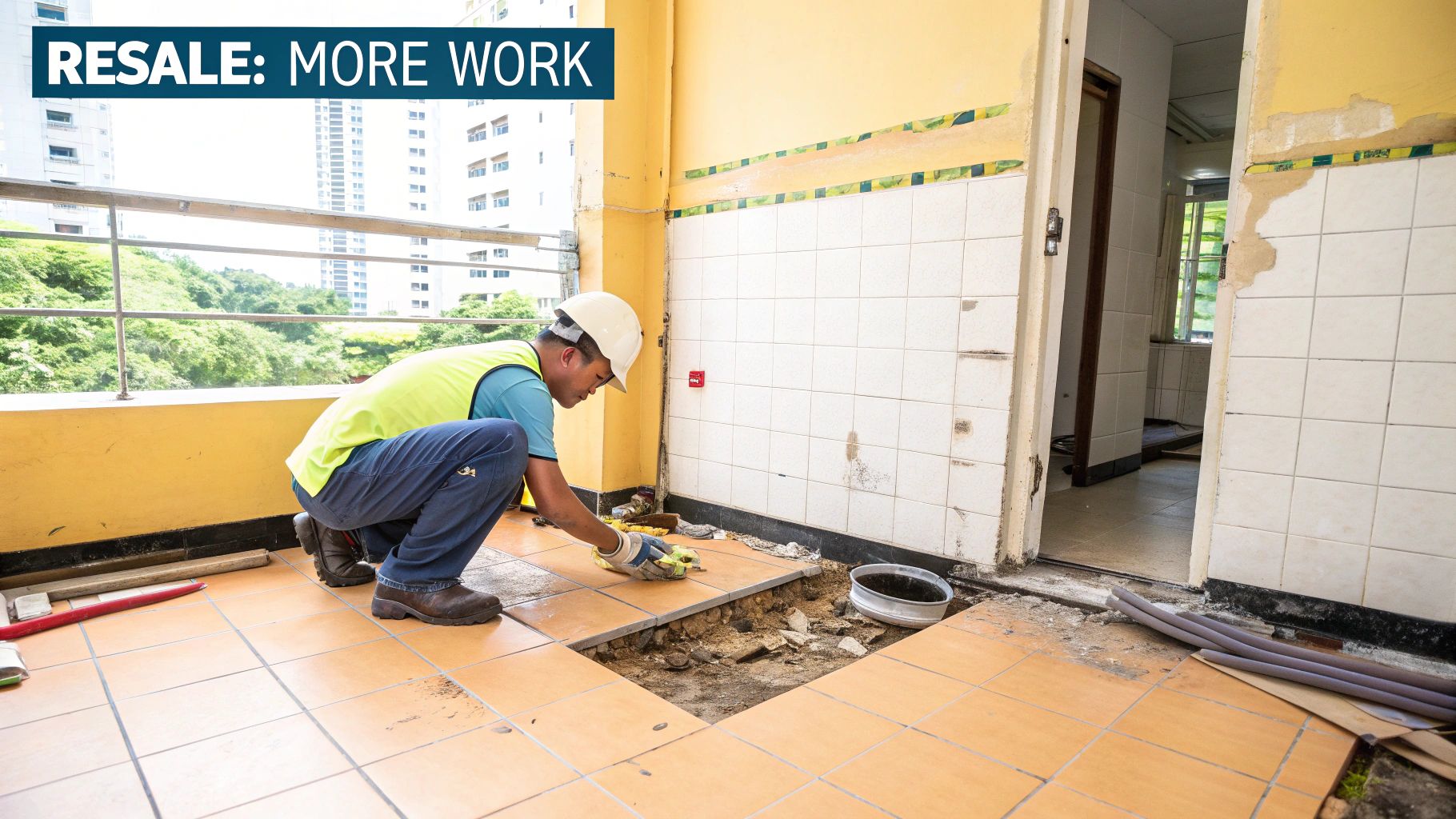
Many homeowners experience sticker shock when the renovation quote for their resale flat comes in significantly higher than that for a BTO. The elevated renovation Singapore cost isn’t about lavish finishes; it's driven by the extensive foundational work required before any aesthetic improvements can begin.
A resale renovation involves two distinct phases: deconstruction, then reconstruction. While a BTO is ready for building, a resale property must first be stripped down, a labour-intensive process that adds considerable cost from the outset.
The Cost of Demolition and Disposal
Before your new kitchen can take shape, the old one must be completely removed. This "hacking" process is a primary cost driver in resale projects.
It typically includes:
- Hacking walls: Removing non-structural walls to create modern, open-concept layouts.
- Removing floor and wall tiles: A tedious process of chipping away old tiles in kitchens, bathrooms, and living areas.
- Dismantling built-in carpentry: Tearing out dated wardrobes, kitchen cabinets, and feature walls.
- Haulage and disposal: All demolition debris must be transported and disposed of according to regulations, a process that incurs significant fees.
For a standard 4-room HDB, hacking and disposal alone can easily add S$4,000 to S$7,000 to your bill—a cost BTO owners largely avoid.
Overhauling Core Systems
The most significant budget items are often hidden behind walls and under floors. In a flat that's several decades old, electrical and plumbing systems are typically outdated and may not meet current safety standards.
Upgrading core systems is not optional—it is essential for the safety and long-term functionality of your home. We almost always recommend a full electrical rewiring in older resale flats to safely support modern appliances and prevent fire hazards.
This is a major undertaking. Electricians may need to lay new wiring throughout the entire home, while plumbers replace old, corroded pipes to prevent leaks and improve water pressure. This intensive work adds thousands to the final cost but is crucial for peace of mind.
Rectifying Wear and Tear
Years of occupancy leave their mark. Unlike a pristine BTO, a resale unit comes with a history of wear and tear that must be addressed before cosmetic upgrades can begin.
Common rectification works include:
- Re-plastering walls: After removing old tiles or wallpaper, walls are often uneven and damaged. They require a fresh skim coat of plaster to achieve a smooth, paint-ready surface.
- Levelling floors: Once old flooring is hacked away, the subfloor is rarely perfectly level. It must be screeded to ensure new vinyl or tiles can be laid flat and securely.
- Waterproofing: The waterproof membrane in bathrooms and kitchens degrades over time. This must be redone to prevent leaks that could damage your unit and your neighbours' property.
Each of these repair jobs adds labour and material costs. A BTO renovation is about building up; a resale renovation is about tearing down and rectifying first. This fundamental difference explains the significant price gap.
Breaking Down Your Renovation Bill by Scope of Work

Understanding the total renovation Singapore cost is useful, but the real power lies in knowing where each dollar goes. A detailed quotation provides a transparent breakdown, allowing you to see how individual choices impact the overall budget. This line-item view helps you identify major cost centres so you can decide where to invest and where to be more economical.
From Hacking to Handover: A Cost Overview
Every stage of a renovation, from demolition to final handover, carries specific costs tied to labour, materials, and complexity. The following guide outlines what you can expect to pay for common works in a typical 4-room HDB flat, empowering you to make informed financial decisions.
Estimated Costs for Common Renovation Works
This price list for common renovation tasks provides a practical tool for budgeting specific parts of your project.
| Type of Work | Estimated Cost Range (For a 4-Room HDB) |
|---|---|
| Hacking & Demolition | S$4,000 - S$7,000 |
| Masonry & Tiling | S$10,000 - S$18,000 |
| Carpentry (Kitchen) | S$9,000 - S$15,000 |
| Carpentry (Wardrobes) | S$2,500 - S$4,500 per wardrobe |
| Plumbing Works | S$2,000 - S$4,000 |
| Electrical Works | S$4,000 - S$7,000 |
| Painting Services | S$1,500 - S$2,800 |
| Doors & Windows | S$3,000 - S$6,000 |
| Flooring (Vinyl/Laminate) | S$4,000 - S$6,500 |
Note: These are estimates. Final costs depend on your specific project requirements and material selections.
This table provides a solid foundation. Now, let’s explore why these price ranges can be so wide.
The Nuances Within Each Category
The broad price ranges reflect the significant impact of material choices and installation complexity.
For example, with masonry work, your choice of tiles is a key factor:
- Standard Ceramic Tiles: A reliable, budget-friendly option.
- Large-Format Tiles (over 600x600mm): Require more skilled labour and specialised tools for a flawless finish, increasing labour costs by 20-30%.
- Intricate Patterns (e.g., herringbone): Laying tiles in complex patterns is a meticulous, time-consuming job that will be reflected in the final bill.
The same principle applies to carpentry. A simple wardrobe with flat-panel doors and a standard laminate finish is the most affordable option. However, if you opt for trendy fluted panels or a premium wood veneer, both material and labour costs will increase.
Every design decision has a cost implication. A seemingly minor choice, like selecting a premium laminate over a standard one for kitchen cabinets, can add hundreds or even thousands of dollars to your final carpentry bill.
Similarly, the cost of electrical works depends on more than just the number of power points. Concealing wires within a concrete wall is far more labour-intensive than running them through a false ceiling. Integrating smart home features or specialised lighting will also increase costs.
Understanding these details enables more productive conversations with your interior designer. You can strategically allocate your budget to high-impact areas—like quality kitchen carpentry or a stunning feature wall—while making more economical choices elsewhere. This transforms budgeting from a guessing game into a strategic planning process.
The Hidden Factors That Influence Your Final Cost
Beyond the quoted labour and materials, several less obvious factors can significantly impact your final renovation bill. Understanding these is crucial for accurately forecasting the total renovation Singapore cost and avoiding budget overruns. Your choices in materials, design complexity, and even external market conditions can shape the final price.
Your Choice of Materials
Material selection is one of the most significant and variable cost drivers. Two kitchens may appear similar, but the one using premium materials can easily cost twice as much. It's a balance between aesthetics, durability, and budget.
For instance, a standard quartz countertop is a durable and popular choice. However, upgrading to a premium sintered stone surface, known for its superior heat and scratch resistance, can dramatically increase the price per square foot. This single decision could add thousands to your kitchen budget.
Here’s a practical comparison of common material choices:
- Flooring: High-end vinyl offers the look of hardwood at a lower cost, while genuine teak or marble is a significant investment.
- Carpentry Finishes: Standard laminates are affordable and durable. Premium options like Fenix laminates (known for being anti-fingerprint) or real wood veneers will increase material and workmanship costs.
- Fixtures: Designer taps, imported lighting, and branded sinks can cost several times more than their standard, functional counterparts.
The Complexity of Your Design
A simple, straightforward design is always more budget-friendly than one with intricate details and custom features. Complexity requires more skilled labour, specialised tools, and, critically, more time.
A curved feature wall, for example, is significantly more challenging to construct and plaster than a standard flat wall. The same applies to recessed shelving or concealed doorways, which demand high precision from carpenters and increase labour costs. Based on our experience with clients, features like fluted panels or intricate joinery often add more to the bill than expected due to the meticulous craftsmanship required.
A design that looks simple can be surprisingly complex to execute. The more non-standard a feature is—such as curves, unconventional angles, or detailed patterns—the more you should budget for the skilled labour needed to bring it to life.
External Market Forces
Your renovation budget is directly influenced by the broader economy. Fluctuations in global supply chains, shipping costs, and raw material prices can cause quotes to vary over time.
For example, the costs of core materials like cement, steel, and copper wiring are subject to global and local market trends. These prices can shift, impacting your overall budget, especially for larger projects or older resale flats requiring extensive foundational work. For more insight, you can review Singapore's consumer price indices on SingStat.
Understanding these three drivers—materials, design complexity, and market forces—provides a more realistic financial outlook and facilitates productive discussions with your interior designer to balance your vision with your budget.
Smart Strategies for Budgeting Your Renovation
A successful home transformation starts with a solid, realistic financial plan. Effectively managing your renovation Singapore cost requires a strategic approach from the outset, focusing on priorities, planning for contingencies, and understanding payment structures. A well-defined budget is your roadmap, enabling confident decision-making that balances your dream home with financial comfort.
Separating Needs from Wants
The first step is to create two lists: 'must-haves' and 'nice-to-haves'. This simple exercise is fundamental to keeping your budget grounded and focused.
Must-Haves (The Essentials): These are the non-negotiable elements your home needs to function well. This includes adequate kitchen storage, effective waterproofing in bathrooms, safe electrical wiring, and durable flooring in high-traffic areas. These form the core of your budget.
Nice-to-Haves (The Desires): This list includes features you'd love if the budget allows, such as a designer feature wall, a luxurious rain shower system, or integrated smart home lighting.
Allocate your funds to the 'must-haves' first. Any remaining budget can then be applied to your 'nice-to-haves', prioritising those that offer the most value to you.
The Importance of a Contingency Fund
Renovations, especially in older resale flats, can present unexpected challenges. Hacking away old tiles might reveal a damaged wall needing re-plastering, or you might discover outdated plumbing that requires immediate replacement.
This is why a contingency fund is essential. We always advise clients to set aside 10-15% of their total renovation budget for unforeseen issues. This isn't 'extra' money; it's a planned safety net that prevents unexpected problems from derailing your project or forcing you to compromise on essentials.
Consider it renovation insurance. If you don't use it, you have a bonus for furniture. But if you need it, you'll be relieved it's there.
Understanding Payment Schedules and Financing
Managing cash flow is as crucial as setting the budget. Renovation payments in Singapore are typically staggered across key milestones, making them more manageable.
A common payment schedule looks like this:
- 10% Deposit: Paid upon signing the contract.
- 40% Commencement Fee: Due before hacking and tiling begins to cover initial materials and labour.
- 40% Mid-Project Payment: Usually paid once carpentry is fabricated and ready for installation.
- 10% Final Payment: Paid upon project completion and handover.
This structure aligns payments with on-site progress. For an HDB flat, the process typically takes 8 to 12 weeks. To manage these payments, you can explore options like the HDB Renovation Loan (up to S$30,000) or bank loans, which offer larger sums at potentially higher interest rates. Researching financing options is a key part of planning, and this ultimate HDB BTO renovation cost guide is a great resource.
How to Save Money Without Sacrificing Quality
Achieving a beautiful home renovation doesn't require breaking the bank. With strategic planning and smart choices, you can lower the overall renovation Singapore cost without compromising on the final look or long-term quality. The key is to make your budget work smarter for you.
The secret lies in knowing where to save and where to invest. Some decisions yield significant savings with minimal aesthetic impact, while cutting corners in the wrong areas can lead to costly problems later.
Make Smart Material Swaps
One of the most effective ways to manage costs is to choose alternative materials that offer a high-end look for less. Today's market provides excellent options that mimic luxury materials with impressive accuracy and durability.
For example, while solid hardwood is timeless, high-quality vinyl flooring can provide a similar aesthetic, is more water-resistant, and is easier to maintain at a much lower cost. We frequently recommend this to clients seeking a practical yet stylish solution.
Other effective swaps include:
- Laminates over Veneers: For carpentry, high-pressure laminates are a durable and cost-effective alternative to real wood veneers. They are available in a vast range of colours and textures, including realistic wood grains.
- Quartz over Marble: Natural marble is beautiful but porous and requires significant maintenance. A good quality quartz countertop offers a similar luxurious feel, is far more durable, and comes with a more accessible price tag.
Prioritise High-Impact Zones
Not every part of your home requires the most expensive finishes. A smart budgeting strategy is to allocate more funds to the areas you use most—those that have the biggest impact on your daily life and your home's value, typically the kitchen and master bathroom.
By investing in key features in high-traffic areas—such as durable kitchen countertops or premium shower fittings—and using more standard finishes elsewhere, you create a sense of luxury where it counts most.
For example, invest in quality custom carpentry for the kitchen, the heart of the home. You can then save by choosing standard, off-the-shelf storage for a guest room or study. This balanced approach ensures your budget is used for maximum impact.
Invest in Quality Workmanship for Essentials
While seeking savings, there are two areas where you should never compromise: plumbing and electrical work. These are the hidden lifelines of your home, and any issues can escalate into disastrous and expensive problems.
Hiring qualified, experienced plumbers and electricians is a long-term investment. Correct installation from the start prevents future leaks, short circuits, and the need for costly repairs that involve hacking down walls. Think of it as an investment in the safety and longevity of your home—a cost that pays for itself many times over in peace of mind.
Answering Your Lingering Renovation Questions
Let's address some of the most common questions homeowners have about renovation costs in Singapore. This final section aims to provide clarity and help you move forward with your plans confidently.
How Much Should I Really Budget for a 4-Room HDB BTO Renovation?
For a new 4-room BTO, a realistic starting budget is between S$40,000 to S$55,000. This range typically covers all essentials for a modern and functional home.
This budget generally includes:
- Standard kitchen carpentry.
- Wardrobes for all bedrooms.
- Flooring for the bedrooms.
- Essential plumbing and electrical works.
- A fresh coat of paint throughout the home.
The final cost depends on your personal style. A minimalist design will likely fall on the lower end, while a project with premium materials and extensive custom carpentry will trend towards the S$55,000 mark or higher.
Are the Interior Designer’s Fees Part of the Renovation Cost?
This varies by firm. Some companies bundle their design, consultation, and project management fees into the total renovation cost. Others itemise these professional service fees separately.
It is essential to request a detailed, itemised quotation to understand exactly what you are paying for. Transparency is a cornerstone of a healthy client-designer relationship.
We believe in being upfront and typically itemise our design and management fees to provide a clear breakdown of all costs. Always ensure you understand this before signing any contract.
What Are the Most Common Unexpected Costs I Should Brace For?
In resale flats, the most common surprises are found behind old walls and fixtures. It's frequent to discover that a wall needs complete re-plastering after hacking off old tiles.
Other common issues include faulty plumbing or unsafe electrical wiring that requires immediate replacement, and failing waterproofing in bathrooms. This is precisely why a contingency fund of 10-15% of your total budget is not just recommended—it's essential. It acts as a buffer that prevents a minor issue from becoming a major financial crisis.
Can I Save Cash by Sourcing My Own Materials or Contractors?
While this may seem like a cost-saving measure, it can often backfire, costing more in time, stress, and money. If you source your own tiles and they arrive late or are incorrect, it can disrupt the entire project schedule and may void your contractor's warranties.
Similarly, hiring separate contractors for different tasks (e.g., one for tiling, another for carpentry) can lead to coordination problems and disputes over responsibility when issues arise, leaving you caught in the middle.
An interior design firm acts as a single point of contact, managing all aspects of the project, from material procurement to coordinating trades. This unified management ensures a smoother process, clear accountability, and often prevents costly mistakes in the long run.
Ready to transform your vision into a beautifully crafted reality? At KIVO, we combine decades of artisan experience with a commitment to transparent partnership, ensuring your renovation journey is seamless and your new space is nothing short of exceptional. Discover bespoke interior design with KIVO.