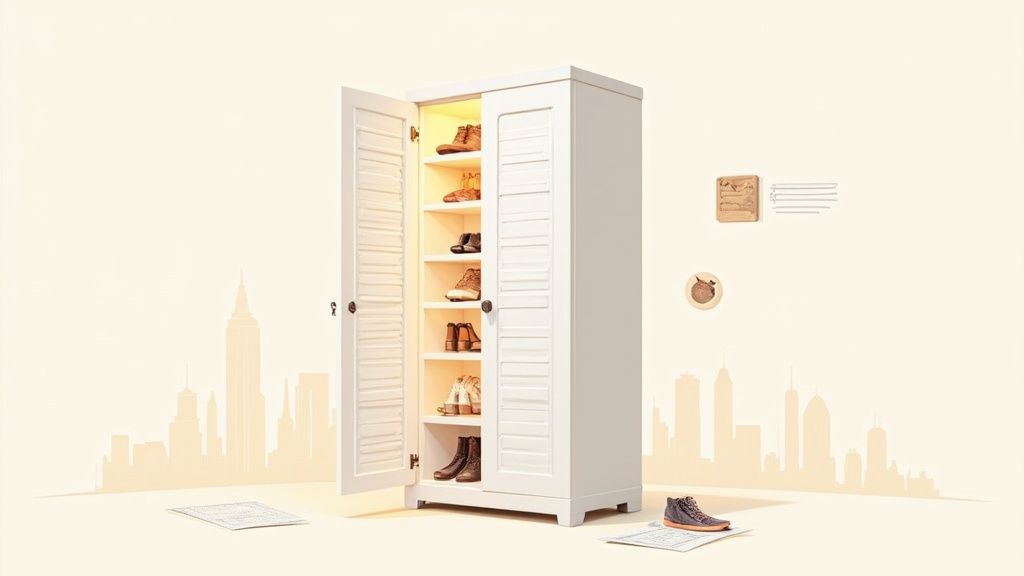
Let's be honest, a good shoe cabinet does more than just hide your shoes. It's the secret to an organised, welcoming entryway—that sigh of relief when you walk in and everything has its place. It turns a chaotic threshold into a calm start (and end) to your day.
Starting Your Custom Shoe Cabinet Journey
If you're living in an HDB flat, you know the struggle of shoe clutter in the entryway is real. A custom shoe cabinet sounds like the perfect fix, but getting from idea to finished product takes a bit of planning. This is especially true when you're working around tricky spots like a DB box or just a plain awkward layout.
The real work begins long before you even think about calling a contractor. It starts with you, your space, and your shoes.
Think of it this way: you wouldn't design a kitchen without knowing what appliances you need. The same logic applies here. You need to take a proper inventory of your shoe collection first. This simple step is the foundation for creating a cabinet that’s not just beautiful but actually works for your life.
The First Step: Prepping for the Contractor
Before you can get a quote or even have a productive chat with a professional, you need to do a little homework. This isn't just about measuring the wall; it's about figuring out the internal needs of the cabinet. A successful project is all about clear communication, and walking in with solid numbers and requirements saves a world of headaches and costly changes down the line.
Here’s your pre-meeting checklist:
Do a Shoe Count: Get all your shoes out and sort them. How many pairs of sneakers, heels, boots, and sandals are we talking about? Be honest!
Measure Your Biggest Pair: Find your longest and tallest pair of shoes. This is your non-negotiable measurement for shelf depth and height. For example, a men's size 11 shoe typically needs a depth of about 33-35 cm.
Plan for the Future: Nobody stops buying shoes. Factor in about 20-25% of extra space for new additions. This ensures your beautiful new cabinet doesn't become too small in a year.
When you bring this level of detail to a contractor, you're no longer just talking about a vague idea. You're presenting a clear, actionable plan. This sets the stage for a smooth project that solves your storage problem perfectly.
Planning and Measuring for a Perfect Fit
Before you even think about materials or styles, the journey to a flawless custom shoe cabinet begins with a simple measuring tape. Seriously. This initial planning stage is the single most important step. A perfect design is one that fits your space, your shoes, and your daily routine without compromise, and getting that right starts now.
A common headache for many HDB homeowners is the electrical Distribution Board (DB) box, which is often located smack-bang in the entryway—exactly where you want your shoe cabinet. But this isn't a deal-breaker. In fact, building around it is a great opportunity for some clever, integrated design. The trick is to plan for safe and easy access while squeezing function out of every available centimetre.
Navigating the HDB DB Box Challenge
Your DB box must be accessible for maintenance or emergencies, no two ways about it. Your shoe cabinet design has to work around this non-negotiable feature.
First, measure the DB box itself. Then, swing its little door fully open to see how much clearance it needs. A good rule of thumb is to leave at least 30-40 cm of clear space in front of it. Your carpenter will likely build a dedicated door or a neat removable panel into the cabinet, allowing the DB box door to open at least 90 degrees.
When you talk to your contractor, make it crystal clear that easy access to the DB box is a top priority. This ensures safety and compliance are baked into your design from the get-go, not as an afterthought.
Once the DB box requirements are sorted, you can measure the total width, height, and depth available for the rest of the cabinet. Don't forget to think vertically! That awkward space above the DB box is often wasted, but it’s perfect for storing seasonal shoes or other items you don't need every day. This simple approach turns a design constraint into a smart storage win.
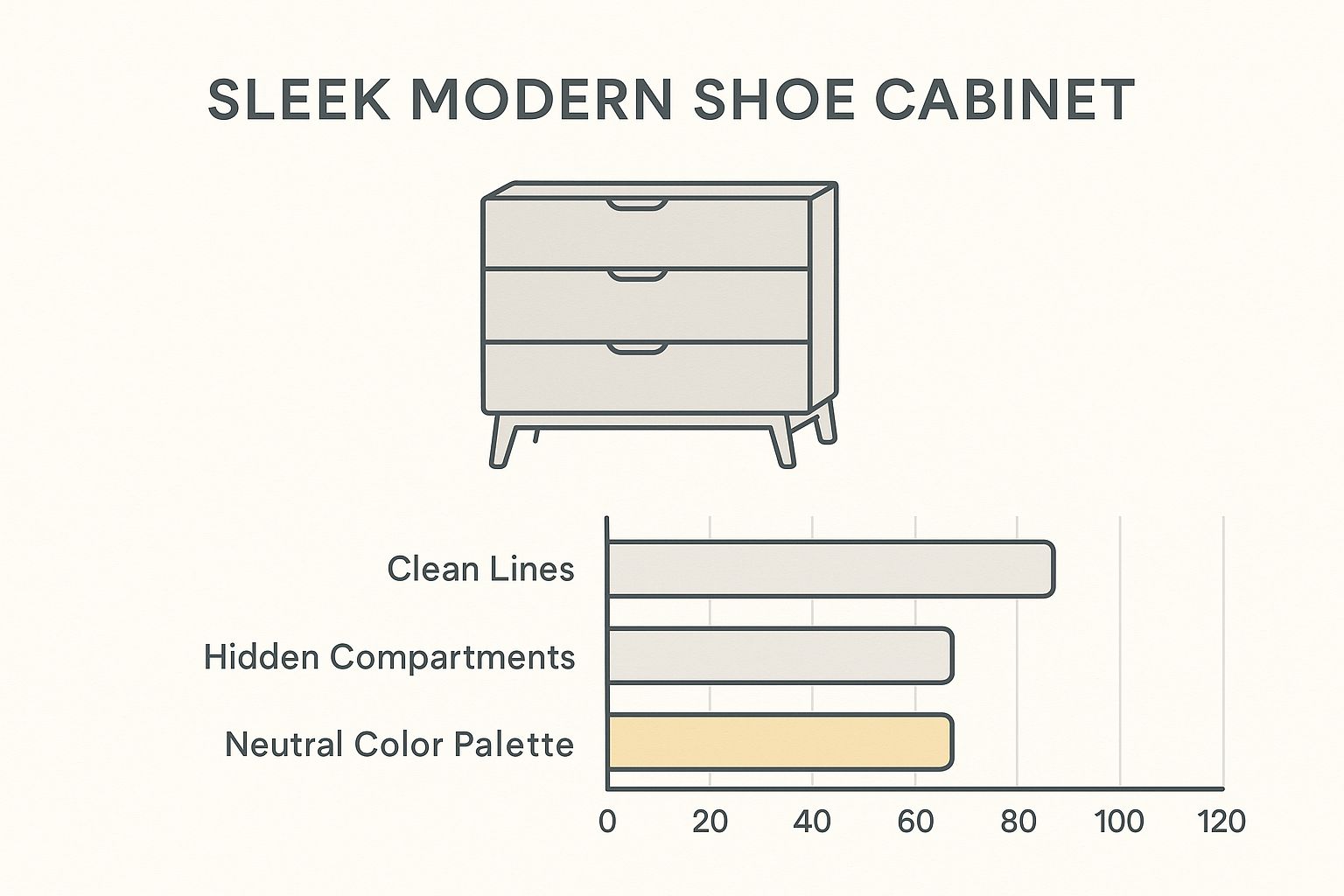
As you can see, a well-planned design can look seamless and minimalist while hiding a surprising amount of practical storage. It just flows with the space.
Taking a Shoe Inventory
Now that you know your spatial limits, it's time to figure out what's going inside. A cabinet designed for slender stilettos is going to be a disaster if you live in bulky sneakers. This is where a quick "shoe inventory" saves the day.
Categorise Your Collection: Group your shoes by type—trainers, formal shoes, sandals, boots, heels. This gives you a clear picture of the different kinds of storage you actually need.
Measure Your Largest Pair: Find your tallest boots and your longest sneakers. For example, a men's size 11 shoe often needs a shelf depth of around 33-35 cm. The height of your tallest boots will determine the spacing for at least one or two dedicated shelves.
Count and Project: Tally up the pairs in each category. This is crucial: add 20-25% extra space to your final count. This is for future purchases. A cabinet that’s completely full on day one is already too small.
This is the kind of detailed information your carpenter will love. Armed with these specifics, they can design shelving that’s perfectly optimised for your collection. Instead of generic, evenly spaced shelves, you can have varied heights: shorter slots for flats and sandals, taller sections for heels and high-tops. This tailored approach prevents wasted space and makes sure every pair has a proper home.
Creative Shoe Cabinet Styles for HDB Homes
Once you've got your measurements and a clear idea of how many pairs you need to wrangle, the fun part begins. It’s time to choose a shoe cabinet design that not only fits your space but actually elevates your entryway. In HDB homes where every centimetre counts, the right style can turn a cluttered corridor into a streamlined, welcoming space. We’re not just hiding shoes here; we're talking about smart design that solves real-world storage headaches.
Let's dive into some popular and practical styles that work beautifully within the typical constraints of a Singaporean flat. Each one offers a clever solution to the common challenges of limited space and the need for pure functionality.
The Space-Saving Floating Cabinet
A floating or wall-mounted shoe cabinet is a fantastic trick for creating an illusion of space in a narrow entryway. By lifting the cabinet off the floor, you expose more of the flooring, which instantly makes the area feel larger and less cramped.
But this design is more than just a visual sleight of hand. The open space underneath is incredibly practical—perfect for stashing guest slippers, the shoes you wear every day, or even letting your robot vacuum pass through. It makes cleaning the floor a breeze, too. The main thing to keep in mind is its load-bearing capacity; it must be securely anchored to a solid wall and is generally better suited for smaller shoe collections.
The Maximising Full-Height Design
When you're short on floor space, the only way to go is up. A full-height shoe cabinet design stretches from floor to ceiling, making the most of every last bit of vertical real estate. This style is the ultimate storage powerhouse, an absolute lifesaver for large families or serious sneakerheads.
You can dedicate the upper, harder-to-reach shelves for seasonal footwear like boots or those special occasion shoes you only pull out a few times a year. The only potential downside is that a floor-to-ceiling unit can feel a bit imposing in a very small entryway. You can easily counter this by using lighter colours, adding mirrored doors, or integrating open display niches to break up the visual bulk.
The Corridor-Friendly Tilt-Out Cabinet
For those ultra-narrow HDB corridors where a normal cabinet door would just block the walkway, the slim tilt-out shoe cabinet is a genius move. Instead of swinging outwards, the doors tilt forward at an angle, revealing cleverly stacked compartments inside.
This design is a true space-saver, with some models being as slim as 17-20 cm deep. It's the perfect shoe cabinet for tight spots behind the main door or along a walkway, keeping your footwear completely hidden and out of the way.
The trade-off here is that these compartments are best suited for flatter footwear—think sneakers, sandals, and dress shoes. Bulkier items like high-top sneakers or ankle boots might be a tight squeeze, so it’s important to check the internal clearance against your own shoe collection.
The Multipurpose Cabinet with Seating
Why settle for just storage when you can have comfort, too? Integrating a seating bench into your shoe cabinet is a popular and seriously functional choice. It gives you a convenient spot to sit while putting on or taking off your shoes—a small luxury you'll come to appreciate every single day.
This multifunctional approach can be designed in a few different ways:
A dedicated nook: An open section carved out of a full-height cabinet, complete with a cushioned seat.
An extended low cabinet: A lower-height cabinet that doubles as a bench along its entire length.
A pull-out seat: A sneaky hidden bench that can be tucked away when you don't need it.
This design often needs a bit more horizontal space, but it neatly combines two pieces of furniture into one, creating a clean, integrated look that’s both practical and stylish.
The Rise of Smart Shoe Cabinets
Modern living in Singapore has brought a growing appetite for tech-savvy features in our furniture. The global smart shoe cabinet market is projected to grow significantly, reflecting a clear trend towards home automation and optimised living, driven by the need for efficient storage in compact urban homes. You can learn more about the growing market for smart furniture by reading this market analysis report.
This integration of tech offers solutions perfectly suited to our tropical climate. Think built-in ventilation fans to circulate air and prevent mould, or deodorising functions to keep everything fresh. Another popular feature is motion-sensor LED lighting that illuminates the interior as you open the door, making it effortless to find the perfect pair, even in a dimly lit entryway.
Choosing Materials Built For Our Climate
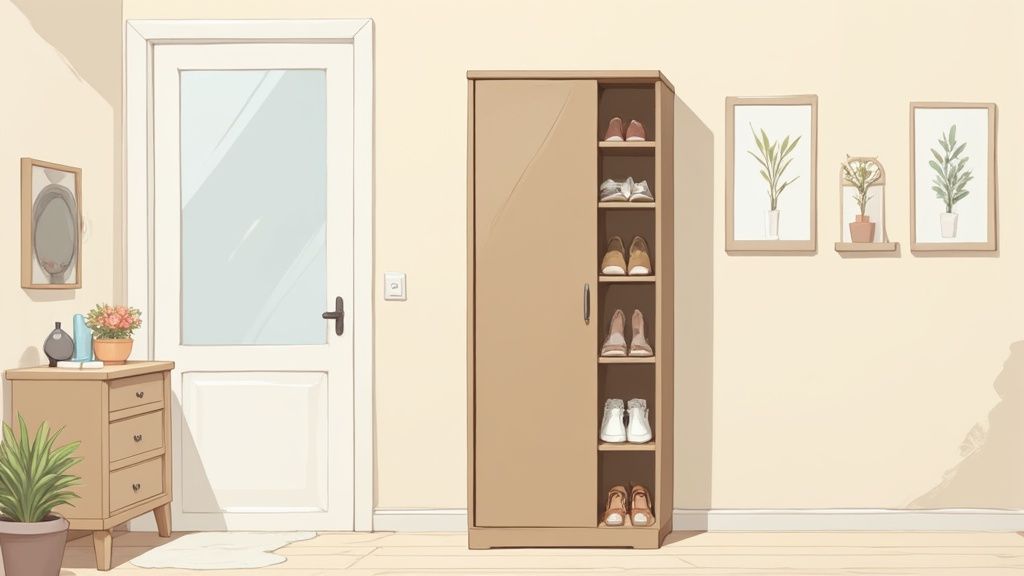
Alright, you’ve mapped out the style and figured out the perfect dimensions for your new shoe cabinet. Now comes the real make-or-break decision: choosing the right materials. This is about more than just looks. In Singapore’s relentless humidity, your material choice is the difference between a cabinet that stands proud for years and one that’s a warped, mouldy mess in a few months.
Think of it this way: the material is the very skeleton of your cabinet. It dictates how durable it is, how much upkeep it’ll need, and of course, the final cost. Getting this part right is non-negotiable, and it’s where a good chat with your contractor becomes invaluable. They’ve seen it all and can guide you to the best options for your entryway and budget.
The Workhorse Material: Plywood
When it comes to custom carpentry in Singapore, plywood is the undisputed champion. There’s a solid reason for its popularity. It’s made by pressing together thin layers of wood veneers, with the grain of each layer running at a right angle to the one below it. This simple but clever cross-graining technique makes plywood incredibly strong and, crucially, very resistant to the warping and shrinking that our climate loves to inflict on wood.
Your contractor will likely bring up moisture-resistant (MR) grade plywood. While it's not completely waterproof, it’s engineered to handle humidity far better than standard versions, making it the perfect core material for a shoe cabinet that's built to last.
Budget-Friendly and Premium Alternatives
While plywood often hits that perfect sweet spot between price and performance, it’s not your only option. Depending on your priorities, a couple of other materials might be a better fit.
Medium-Density Fibreboard (MDF): Created from wood fibres bonded with resin, MDF has a perfectly smooth surface with no grain, making it a dream to paint. It’s also easier on the wallet. The big catch? Standard MDF absolutely hates water. It will swell up and fall apart if it gets wet. If you go with MDF, you must use a moisture-resistant grade and ensure it’s perfectly sealed on all sides with a good quality laminate or paint.
Solid Wood: For sheer natural beauty, nothing comes close to solid wood. Timeless choices like teak are naturally tough against moisture and pests, making them a premium, long-lasting option. The main drawback here is the price tag. Solid wood costs a fair bit more than plywood or MDF, and it needs a bit more care over the years to keep it from cracking.
A well-built shoe cabinet design prioritises function over pure form. While the exterior finish is what you see, the core material is what ensures your investment stands up to Singapore’s demanding climate for years to come.
To help you weigh your options, here’s a quick comparison of the most common materials used for custom shoe cabinets in Singapore.
Material Comparison for Custom Shoe Cabinets

Choosing the core is half the battle; the other half is deciding on its "skin."
Finishing Touches: Laminates and Veneers
The finish you choose is what everyone will see and touch. It’s also your cabinet’s first line of defence against daily scuffs and spills.
Laminates are, by far, the most popular choice for custom shoe cabinets here. They’re a multi-layered synthetic product that’s bonded to the plywood or MDF core with intense heat and pressure. The benefits are huge: they come in an endless variety of colours and textures (including some incredibly realistic wood grains), are tough as nails, scratch-resistant, and a breeze to clean.
Wood veneers, on the other hand, are actual thin slices of real wood. They give you the authentic look and feel of solid wood but at a fraction of the cost. A veneer finish is perfect if you’re after a more luxurious, natural vibe. Just keep in mind they are more delicate than laminates and can get scratched or damaged by water if they aren’t properly sealed and looked after.
Working With a Contractor Step by Step
Bringing your ideal shoe cabinet design to life involves a clear, practical process. For HDB homeowners, this often means tackling the common challenge of building around the entryway DB box. Here’s an actionable, step-by-step guide to engaging a contractor and turning your vision into a perfectly fitted reality.
Think of it as a team effort. You’re bringing the vision and the practical needs of your shoe collection, while your contractor brings the technical skill and craftsmanship. The secret to success? It all comes down to clear communication and setting expectations right from the get-go.
Step 1: Measure Your Needs (Literally)
Before you contact anyone, start with your shoes. This crucial first step ensures the final cabinet is truly functional.
Take a Shoe Inventory: Count all your pairs and group them by type (sneakers, heels, boots).
Measure Key Pairs: Find your longest shoe (e.g., a men’s size 11 needs about 33-35 cm depth) and your tallest shoe (like high-top sneakers or boots). These measurements dictate the minimum shelf depth and height.
Measure Your Space: Note the total width, height, and depth available for the cabinet. Measure the DB box and the clearance it needs to open fully. This data is essential for the next step.
Step 2: Prepare Your Project Brief
Pull all your ideas together into a project brief. This document ensures every potential contractor understands exactly what you want, leading to more accurate quotes.
Include Your Measurements: Provide the space dimensions and your shoe measurements.
Add Inspiration Photos: Attach images of designs you like. Do you want a floating cabinet? Tilt-out doors? A built-in bench?
State Preferences: Note your preferred materials (e.g., plywood) and finishes (e.g., laminate).
This focus on custom residential solutions is a huge part of the local furniture scene. With Singapore's urban population density sitting at around 8,358 persons per square kilometre, making every inch of space count is non-negotiable. This has pushed local designers and carpenters to master functional, sleek furniture that fits perfectly into compact HDB homes. You can dive deeper into Singapore's furniture market trends in this detailed report.
Step 3: Find and Vet Potential Contractors
With your brief ready, shortlist two or three contractors. Ask for recommendations or browse online portfolios of local carpentry firms.
Check Their Work: Look for a strong portfolio with similar custom projects.
Read Reviews: See what past clients say about their quality and reliability.
Request Detailed Quotes: A professional will provide a breakdown of costs for materials, labour, and finishes. A good contractor will ask clarifying questions about your brief, especially regarding the DB box and how to ensure safe, easy access.
Step 4: From Quotation to Contract
Don't just look at the final price. Compare the detailed quotations to ensure they are for the same scope of work and quality of materials.
Before you agree to anything, insist on a formal contract or a detailed work order. This document is your safety net. It should clearly spell out the project scope, final design drawings (ideally with 3D renderings), material specs, total cost, payment schedule, and an estimated timeline for completion. A contract protects both you and the contractor and is essential for any custom project.
Step 5: Fabrication and Installation
Most of the construction happens at the carpenter's workshop, keeping mess at your home to a minimum. Once fabricated, the pieces are brought to your home for assembly. Be present during installation to address any questions. After it’s built, do a thorough check: open all doors, inspect finishes, and ensure the structure is solid before making the final payment.
Maintaining Your Cabinet for Long-Term Use
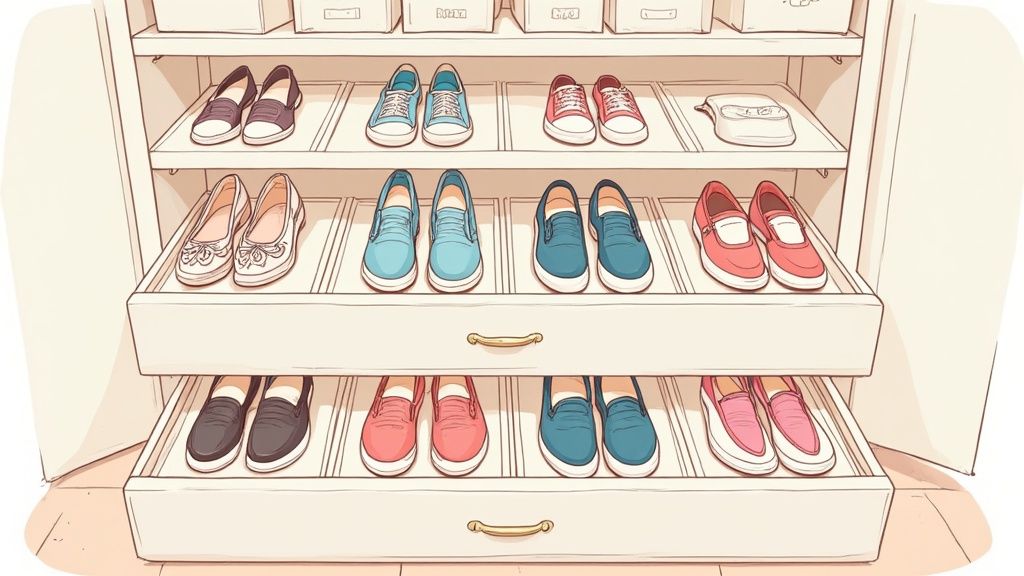
You’ve invested in a beautiful, custom shoe cabinet. It’s more than just storage; it’s a statement piece that streamlines your daily routine. But to keep it looking and working like new, a little consistent care goes a long way. Think of it less as a chore and more as protecting your investment.
Great maintenance isn’t about big, time-consuming tasks. It’s about the small, regular habits that preserve its quality, from the finish on the doors to the smooth glide of the drawers. And it all starts with knowing what your cabinet is made of, because you wouldn’t clean a delicate wood veneer the same way you’d scrub a tough laminate surface.
Caring for Surfaces and Hardware
Most custom cabinets today use laminate finishes, and for good reason—they’re incredibly durable and easy to maintain. A simple wipe-down with a soft, damp cloth and a gentle, non-abrasive cleaner is all you need. Just steer clear of harsh chemicals or scouring pads that could dull the finish or leave behind tiny scratches.
If you’ve opted for the warmth of wood veneers, a slightly gentler approach is needed. Dust it regularly with a microfibre cloth, moving in the direction of the wood grain to pick up everything. For a deeper clean, use a proper wood-safe cleaner sparingly and make sure to dry the surface right away. You don't want any moisture creeping into the wood.
And don’t forget the hardware! Those soft-close hinges and drawer runners are the unsung heroes of your cabinet. Every few months, give them a quick check to ensure the screws are tight and wipe down the mechanisms. Getting rid of dust buildup is key to keeping them operating smoothly for years.
Keeping Your Cabinet Organised
A tidy interior is just as important as a gleaming exterior. When a cabinet gets cluttered, it’s not just harder to find what you’re looking for—your shoes can end up scuffed and misshapen from being crammed in.
Here’s a simple rule I always share with clients for maintaining order: "one in, one out." When a new pair of shoes comes home, an old pair has to go. It’s a fantastic way to prevent that slow, creeping clutter that takes over even the best-designed spaces.
To make the most of your cabinet's layout, try these simple strategies:
Do a Seasonal Swap: In Singapore, this might mean rotating your heavy-duty rain boots or formal event shoes. Store the pairs you rarely use on the higher, less accessible shelves. This frees up prime, easy-to-reach spots for your everyday footwear.
Use Internal Dividers: Adjustable shelves are great, but tools like shoe stackers or small dividers can practically double your storage capacity, especially for flatter shoes like sneakers, loafers, and sandals.
Create Dedicated Zones: Give every shoe a home. Group your footwear by type—work shoes here, casual sneakers there, formal heels in this section. It turns the morning rush of finding the right pair into a quick, effortless grab-and-go.
Combating Odours Effectively
In our humid Singapore climate, keeping musty smells at bay can feel like a constant battle. Good ventilation is your cabinet’s first line of defence, but a few simple additions can make a huge difference.
Pop a few activated charcoal bags or cedar blocks inside your cabinet. Charcoal is a powerhouse at absorbing both moisture and odours, while cedar is a natural pest repellent that leaves behind a fresh, clean scent. Just remember to refresh or replace them every few months to keep them working their magic. It’s a small habit that ensures your cabinet—and your shoes—always smell fresh.
Frequently Asked Questions
As you nail down the final details of your shoe cabinet, a few practical questions are bound to pop up. Let’s tackle some of the most common queries we hear from HDB homeowners, so you can move forward with total confidence.
How Much Clearance Do I Need For My HDB DB Box?
This is a big one, and it's all about safety and access. While there isn't a rigid law for residential carpentry, the industry gold standard is to leave at least 30-40 cm of clearance in front of the DB box. This gives technicians enough elbow room to work safely without being crammed into a tight spot.
More importantly, your cabinet design has to let the DB box door swing open completely—usually a full 90 degrees. This could be a simple cabinet door or even a fully removable panel. Whatever you choose, double-check this critical detail with your contractor. The last thing you want is a beautiful cabinet that blocks essential access.
Are Open Shelves A Good Idea In Singapore?
Open shelves are fantastic for ventilation, which is a huge plus in our humid climate for preventing mould and musty smells. But let's be honest: they can also make your entryway look messy in a heartbeat and are total dust magnets.
The sweet spot for many homeowners is a hybrid design. Think slatted doors or panels with mesh inserts. This clever workaround gives you that crucial airflow to keep shoes fresh while keeping everything neatly tucked away. It’s the best of both worlds—tidy looks without the stuffiness.
A hybrid approach can work wonders. Consider a design with a few open shelves for your daily-wear shoes and closed sections for the rest of your collection. This gives you both convenience and a clean aesthetic.
What Is A Realistic Budget For A Custom HDB Shoe Cabinet?
There's no one-size-fits-all answer here, as the final price tag really depends on the size, materials, and any special features you add.
As a general guide, for a standard full-height, 3-4 door cabinet made from quality plywood with a laminate finish, you should plan for a budget between S$1,200 and S$2,500.
Of course, that number will climb if you start adding premium touches. Opting for a wood veneer finish, building in a seating bench, or incorporating features like LED lighting will naturally increase the cost. It’s always a smart move to get detailed quotes from at least two or three different contractors to see how their pricing and what they offer stack up.
Ready to create a shoe cabinet that perfectly fits your space and style? The expert team at KIVO Custom Carpentry And Interior Design Services specialises in crafting bespoke storage solutions that blend beauty with function. Learn more about how we can transform your entryway by visiting our website.