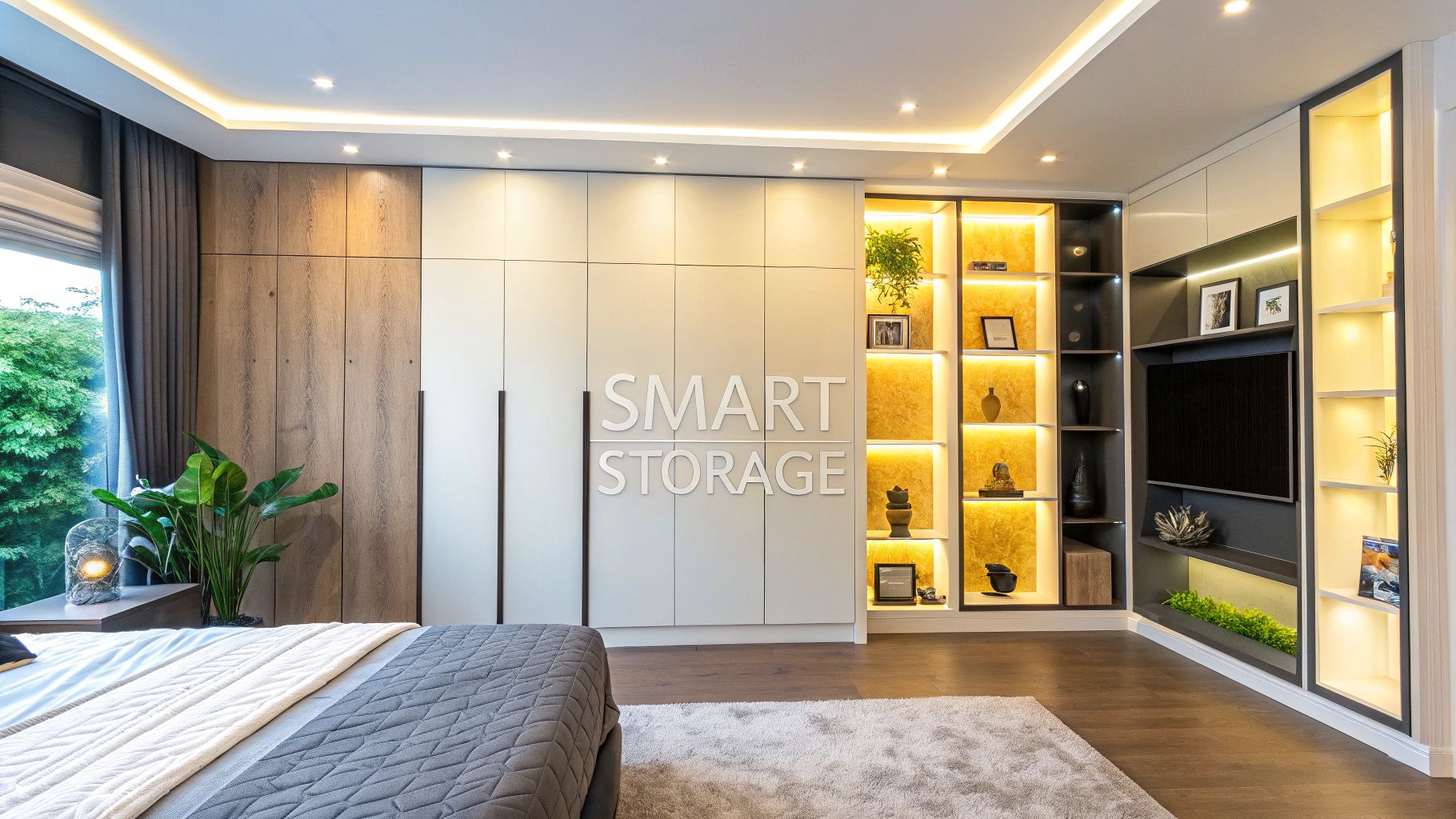
In Singapore, where every square metre is precious, a built-in wardrobe isn't just furniture—it's a strategic investment in your home's functionality and flow. It integrates seamlessly with your room's architecture, eliminating awkward gaps and creating a polished, cohesive look that a freestanding cabinet simply cannot achieve. It's about transforming essential storage into a design feature that enhances both your daily life and your home's value.
Why Built-In Wardrobes Are a Smart Choice for Singapore Homes
Opting for a built-in wardrobe is one of the most practical decisions for homeowners in Singapore, especially within the typical layouts of HDB flats and condos. A standalone cupboard often leaves dust-collecting gaps on the sides and top. In contrast, a custom-fitted design utilises every centimetre, from floor to ceiling and wall to wall.
This complete integration makes a room feel larger, less cluttered, and more intentionally designed.
Based on our experience with clients, there's a clear trend towards customised storage solutions. Homeowners are increasingly prioritising efficient, personalised spaces that cater directly to their lifestyles. This shift reflects a smarter approach to living in our dense urban environment, where maximising space is key.
Maximising Space and Functionality
The primary advantage of a built-in wardrobe is its ability to solve spatial challenges. Think of it as reclaiming unused real estate within your own walls. Here’s what that looks like in practice:
- Go Vertical: By extending the wardrobe to the ceiling, you gain valuable storage for items not used daily, such as luggage, extra bedding, or seasonal clothing.
- Customised From the Inside Out: The interior is designed around your specific wardrobe and routine. Instead of generic compartments, we map out dedicated spots for long dresses, folded knitwear, accessory trays, and pull-out shoe racks.
- A Perfect Match: The wardrobe's materials and style are selected to complement your room's existing design, creating a unified and high-end aesthetic.
Actionable Example: We recently worked on a 4-room HDB flat in Punggol where the master bedroom had an awkward wall with an off-centre window. Instead of trying to fit a standard wardrobe, we designed a built-in unit that wrapped around the window. This transformed the wall into a multi-functional feature, incorporating full-height storage and a cosy window seat. A single piece of carpentry solved their storage problem and created a new reading nook, completely changing the room's dynamic.
For homeowners looking to get the most out of their space, exploring small room decorating ideas to maximize style and space often leads directly to built-in solutions. These custom pieces are architectural upgrades that simplify daily life and add tangible value to your property.
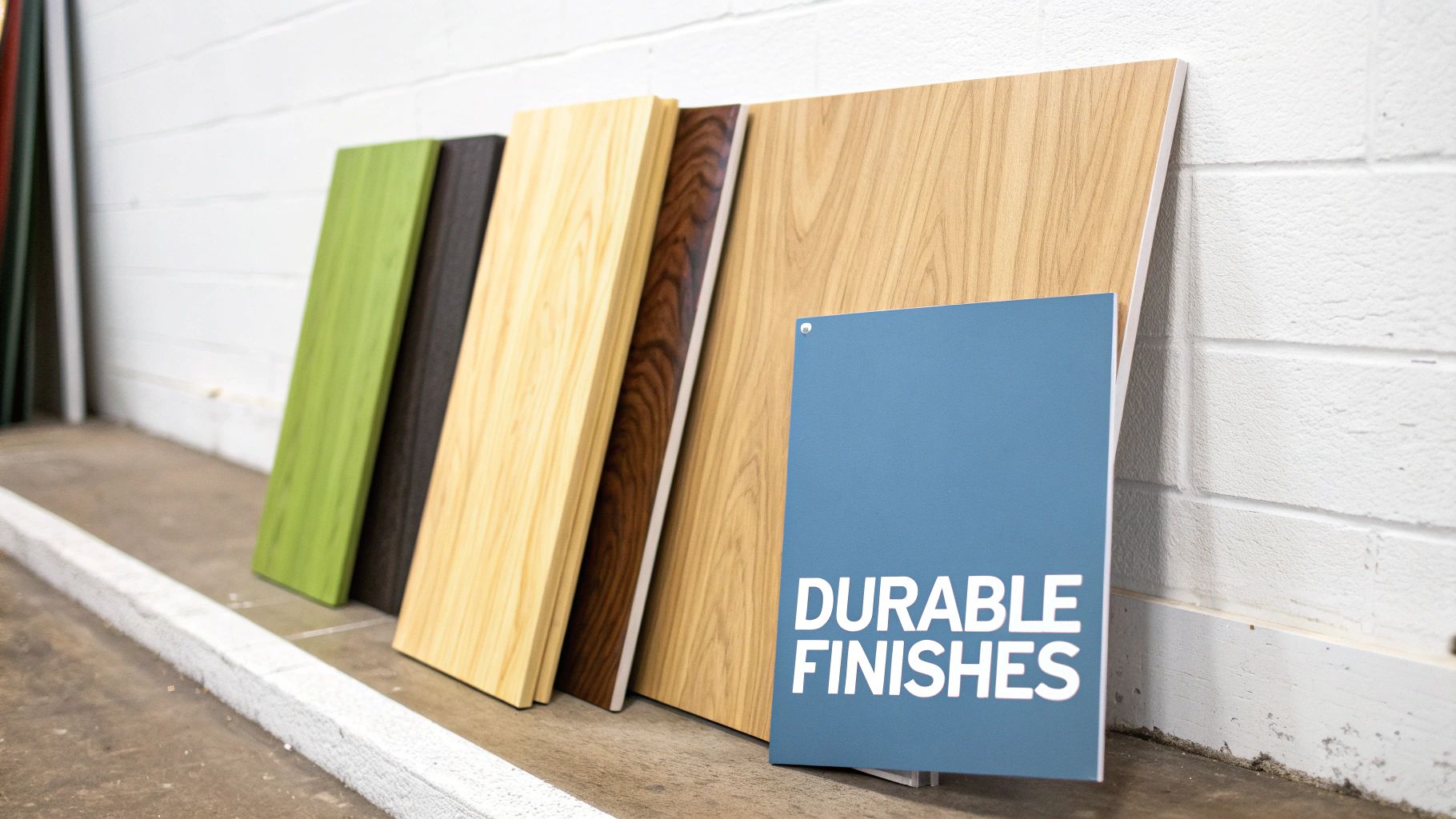
Choosing the Right Materials and Finishes for Durability
The look, feel, and lifespan of your built-in wardrobe come down to two critical decisions: the core material for the structure and the finish for the exterior. Getting this right is crucial, especially in Singapore's relentless humidity. A smart choice from the start ensures your wardrobe remains sturdy and looks great for years.
Core Materials: The Foundation of Your Wardrobe
The core material is the skeleton of your wardrobe—it provides strength and longevity. While you won't see it daily, choosing a robust material is non-negotiable for a lasting investment. The two most common options you'll encounter in Singapore are plywood and Medium-Density Fibreboard (MDF).
High-quality plywood is our standard recommendation for wardrobe carcasses. It’s made by layering thin wood veneers with their grains at right angles and bonding them with powerful adhesives. This cross-grain structure makes it incredibly strong and, most importantly, highly resistant to warping from moisture—an essential feature for Singapore's climate.
On the other hand, there is MDF. It's an engineered wood product made from wood fibres, wax, and resin, pressed into dense sheets. While its smooth surface is ideal for spray painting, it tends to absorb moisture like a sponge. Over time, MDF can swell, sag, and lose structural integrity, making it an unsuitable choice for a long-term singapore built in wardrobe.
Actionable Insight: For the internal structure of a wardrobe, always prioritise moisture resistance. While high-grade plywood may have a higher upfront cost, its durability in our climate prevents costly repairs and replacements, making it the more economical choice in the long run.
Deciding on the right core material can seem complex, but focusing on performance in our local climate makes the choice clear. Here's a quick comparison.
Comparing Common Wardrobe Materials for Singapore Homes
| Material | Best For | Pros | Cons | Estimated Cost Level |
|---|---|---|---|---|
| High-Quality Plywood | Wardrobe carcasses and shelving in humid environments like Singapore. | Excellent structural strength; superior moisture and warp resistance; holds screws and fasteners securely. | Higher upfront cost; surface isn't as smooth as MDF for painting. | $$ |
| MDF | Decorative panels or dry areas; furniture that requires a perfectly smooth painted finish. | Very smooth surface ideal for paint; lower cost than plywood; consistent density with no voids. | Prone to swelling and sagging in high humidity; heavy; doesn't hold screws as well. | $ |
| Particle Board | Budget-friendly, temporary, or low-use furniture; not recommended for built-ins. | The cheapest option available; lightweight. | Lowest durability; very susceptible to moisture damage and disintegration; sags easily. | $ |
For a built-in wardrobe designed to last decades in Singapore, plywood is the undisputed winner for the core structure. It's an investment in durability and peace of mind.
Finishes: Defining Your Wardrobe's Style
The finish is what you see and touch daily—it’s the 'skin' that defines your wardrobe's aesthetic. This is where you can match the design to your room's decor. The most popular and practical options we recommend are laminates, veneers, and acrylics.
Each offers a unique look and its own advantages, allowing you to find the perfect balance between style, maintenance, and budget.
High-Pressure Laminates (HPL)
Laminates are the workhorse of wardrobe finishes. These multi-layered synthetic sheets are bonded to the plywood core using intense heat and pressure, offering an unbeatable mix of toughness and design versatility.
- Vast Design Options: Laminates are available in thousands of colours, patterns, and textures, from solid matte colours and high-gloss sheens to realistic wood grains.
- Exceptional Durability: They are scratch-resistant, waterproof, and easy to clean, making them ideal for busy households.
- Cost-Effective: Laminates provide a high-end look without the premium price of natural materials.
Actionable Example: For a condo in Tampines, we used a dark, matte-finish laminate to create a bold, modern wardrobe that became the bedroom's focal point. In a landed property in Siglap, a light oak-grain laminate brought warmth and a timeless Scandinavian feel to the space.
Wood Veneers
If you love the authentic beauty of natural wood, veneers are an excellent choice. A veneer is a thin slice of real wood bonded to the plywood core, providing the genuine grain and texture of timber without the cost and weight of solid wood.
Veneers can be stained and polished to enhance their natural patterns, adding organic elegance. However, they require more care than laminates and are more susceptible to scratches or water damage if not properly sealed.
Acrylic Panels
For an ultra-sleek, contemporary look, acrylic finishes are ideal. These panels offer a high-gloss, reflective surface similar to glass, which can make a room feel larger and brighter. They come in a wide range of solid colours and are known for their sharp, clean aesthetic.
While stunning, the high-gloss surface of acrylic can show fingerprints and smudges, requiring regular wiping. It also comes at a higher price point compared to standard laminates.
Ultimately, the best material and finish for your singapore built in wardrobe depend on your personal style, daily use, and budget.
How to Plan Your Wardrobe Dimensions and Layout
A beautiful wardrobe is useless if it isn't functional. The success of any Singapore built in wardrobe hinges on the smart planning of its dimensions and internal layout before any construction begins. Getting these measurements right ensures the wardrobe feels like it was truly made for you.
The goal is to create an intuitive storage system. This starts with a practical assessment of your belongings and an understanding of basic ergonomic principles.
Standard Dimensions Every Homeowner Should Know
While every wardrobe we build is custom, we begin with industry-standard dimensions based on typical clothing sizes and comfortable reach. These ensure your belongings are accessible and well-maintained.
Here are the essential measurements we use for nearly every project:
- Overall Wardrobe Depth: The ideal depth is 600mm (24 inches). This allows clothes on hangers to hang freely without being crushed when the doors are closed. For tight spaces, we can reduce this to 550mm, but any less will require angling hangers.
- Hanging Space Height: This depends entirely on your clothing. For a full-length section for dresses or long coats, you need 1600-1800mm of clear vertical space. For shirts and blouses, a double-hanging system is highly efficient; each section requires about 1000-1100mm.
- Drawer Height: For folded items like T-shirts, drawers 150-200mm deep are perfect. Deeper drawers can become disorganised. Shallower drawers are excellent for accessories like belts, socks, or ties.
These dimensions are the foundation of good wardrobe ergonomics, preventing clothes from dragging or getting creased.
Tailoring the Layout to Your Lifestyle
Once the basic dimensions are set, we customize the layout based on your personal clothing collection. A wardrobe for a corporate professional with dozens of suits will differ significantly from one for someone with a large collection of casual dresses.
Actionable Tip: Take a quick inventory of your clothes before meeting your designer. What do you have the most of?
- Lots of Dresses or Long Coats? Dedicate at least one full-length hanging section. A 600mm wide column is usually sufficient.
- Mainly Shirts, Blouses, and Trousers? A double-hanging system will be your most efficient use of space, instantly doubling your hanging capacity.
- A Fan of Knitwear and Jeans? Prioritise drawers and open shelving. Drawers keep stacks tidy, while shelves are great for bulky sweaters.
A common planning mistake is over-allocating hanging space when most clothes are folded. We advise clients to physically measure their items. If you have 2 metres of folded clothes and only 0.5 metres of hanging items, your new wardrobe layout should reflect that 4:1 ratio.
Space Planning for HDB Flats and Condos
The type of home you live in influences the design. In Singapore, we frequently work with the unique constraints of HDB BTOs and condominiums.
For a typical HDB master bedroom, vertical space is your greatest asset. We almost always design wardrobes that extend to the ceiling. The top compartments, or lofts, are perfect for storing bulky, seldom-used items like luggage or winter clothes, freeing up valuable floor space.
In newer condos with lower ceilings, a wider wardrobe that incorporates a vanity table or a small TV console can create a multi-functional feature wall. This integration makes the room feel more cohesive and intentionally designed, transforming a simple storage unit into a piece of architectural furniture.
Designing Smart Internal Storage and Organisation
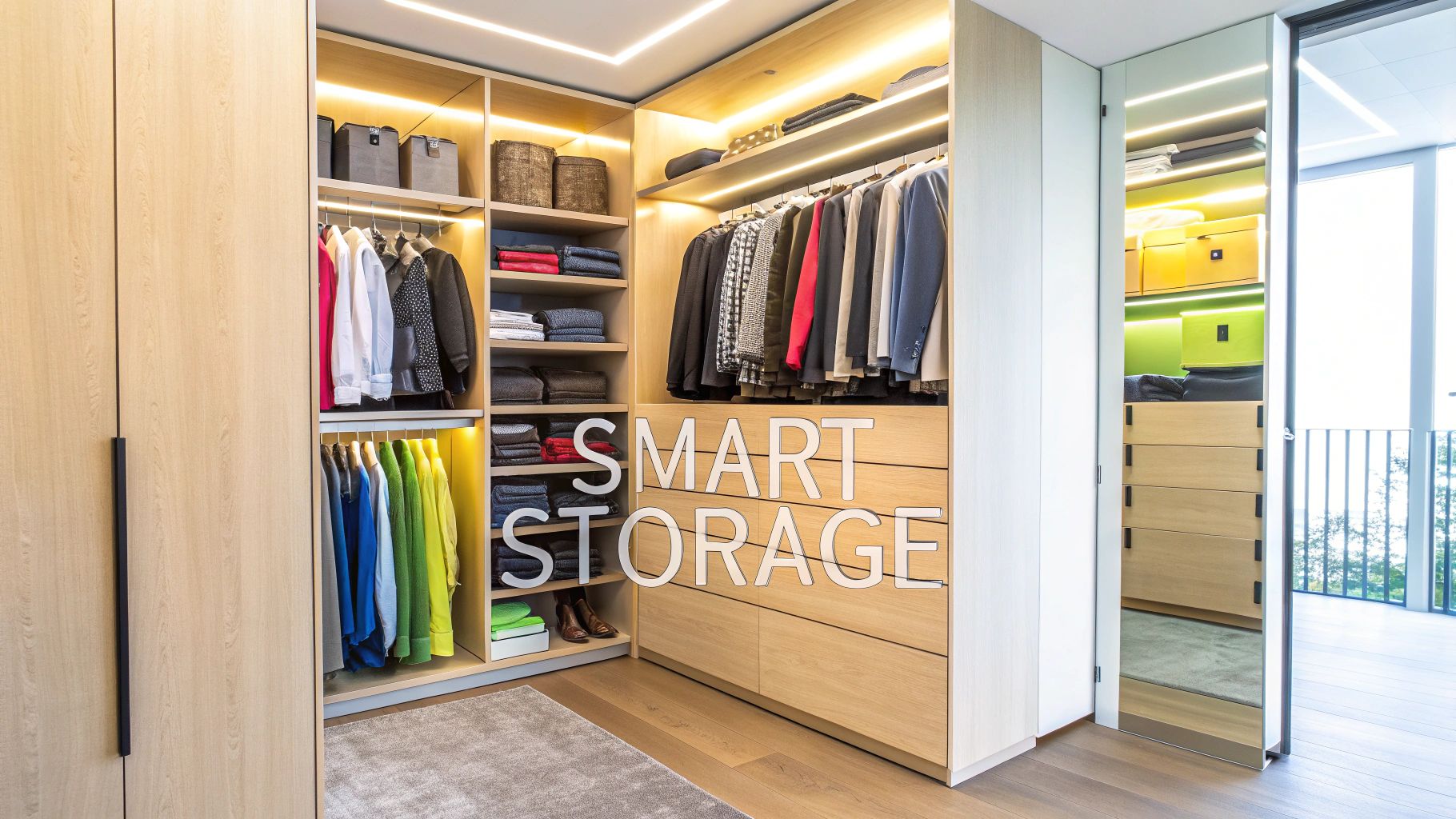
The exterior of a Singapore built in wardrobe sets the style, but the interior is what simplifies your daily routine. Clever organisation and quality hardware transform a simple box into a highly functional and personal storage system.
Details like the smooth glide of a drawer or the silent click of a door create a premium feel. These aren't minor add-ons; they are core components that dictate the quality and lifespan of your wardrobe. Investing in high-quality hardware is one of the smartest decisions you can make.
High-Quality Hardware: The Unsung Hero
High-quality hardware is the foundation of a wardrobe that functions flawlessly. These moving parts endure daily use, and choosing good ones from the start prevents future frustration.
- Soft-Closing Hinges: These are a non-negotiable standard for us. They prevent doors from slamming shut, reducing noise and wear on the frame. It's a small touch that adds a sense of quiet luxury.
- Full-Extension Drawer Runners: Standard runners only open about three-quarters of the way. Full-extension runners allow the drawer to slide out completely, providing full visibility and access to everything inside. No more digging for items at the back.
The global demand for functional parts like these is growing. The wardrobe storage hardware market, valued at USD 13,750.25 million in 2024, is projected to expand significantly. Drawer slides alone account for 34.7% of this market, showing how much homeowners value accessible storage. You can explore more insights on the wardrobe hardware market.
Clever Accessories to Maximise Every Inch
Beyond essential hardware, a range of accessories can be integrated to give every item a proper home. This is where a custom wardrobe truly surpasses off-the-shelf solutions.
These accessories turn chaotic corners into efficient storage zones.
Actionable Tip: Think about your biggest storage frustrations. Is it a tangled mess of ties? A jumble of watches? By identifying these pain points, we can integrate specific solutions—like drawer dividers or specialised racks—that make the entire wardrobe work better for you.
Here are a few of the most impactful accessories we recommend:
- Pull-Out Trouser Racks: Keep trousers neatly hung and crease-free. They slide out for easy selection without disturbing other clothes.
- Dedicated Accessory Trays: Custom dividers in a shallow drawer create perfect spots for watches, jewellery, belts, and sunglasses, keeping them organised and protected.
- Pull-Down Hanger Lifts: For wardrobes that extend to the ceiling, these mechanisms bring the high hanging rail down to a comfortable height, making the upper space fully usable.
The Impact of Integrated Lighting
One of the most transformative features is integrated LED lighting. It’s a practical touch that feels incredibly luxurious. Imagine motion-activated strip lights that illuminate the interior the moment you open the door, making it easy to see everything at a glance.
This is brilliant for highlighting specific areas like shoe racks or accessory drawers. It not only improves visibility but also adds a sophisticated, high-end feel. Good lighting means you can easily distinguish your navy suit from your black one on dark mornings.
Figuring Out the Cost of a Custom Wardrobe in Singapore
Budgeting for a new Singapore built in wardrobe is more straightforward than it might seem. The final cost depends on three key factors: size, materials, and the internal features you choose.
In Singapore, carpentry work is typically priced per-foot-run (PFR). This is calculated by multiplying the length of the wardrobe in feet by a set rate. This rate varies based on the quality of materials and the complexity of the design.
What Goes Into the Per-Foot-Run (PFR) Rate?
The PFR rate generally covers the basic structure of your wardrobe: the plywood carcass, standard shelves, a hanging rod, and simple swing doors with a standard laminate finish.
In Singapore, you can expect this base rate to fall between S$220 and S$350 per foot.
So, for a standard 6-foot wardrobe, a basic cost estimate would be:
6 ft x S$280 (average PFR) = S$1,680
This is your starting point. Customisations and upgrades will build upon this base cost.
The Key Factors That Really Drive the Price
The base PFR rate is just the beginning. A few key decisions will have the biggest impact on your final budget. Understanding the factors that influence the overall custom closet installation cost can help you plan effectively.
These are the main cost drivers:
- Material and Finish Choices: While standard laminates are included in the base price, upgrading to premium finishes like wood veneers, acrylic panels, or textured laminates will increase the PFR.
- The Type of Doors: Simple swing doors are the most budget-friendly option. Sliding doors, especially those with high-quality track systems, will cost more. Decorative designs like fluted panels or doors with glass inlays also add to the price.
- Internal Organisation and Accessories: This is where the budget can vary significantly. Each drawer, pull-out tray, or specialised rack is an add-on to the base PFR price. A wardrobe with ten drawers will naturally be more expensive than one with just two.
A Practical Example: Costing Out a 6-foot HDB Wardrobe
Let's break down a real-world scenario for a 6-foot wardrobe:
The Basic Build (Budget-Friendly): Standard laminate finish, swing doors, 2-3 drawers, and basic hanging rods.
- Estimated Cost: S$1,600 - S$2,100
The Mid-Range Mix (Most Popular): Premium laminate, soft-closing hardware, a mix of 4-6 drawers, and perhaps a pull-out trouser rack.
- Estimated Cost: S$2,200 - S$3,000
The Premium Package (High-End): Veneer or acrylic finish, extensive internal organisation (8+ drawers), specialised pull-out accessories, and integrated LED lighting.
- Estimated Cost: S$3,200 and up
This demonstrates that even for the same size wardrobe, your choices in finishes and functionality shape the final investment. This allows you to have a productive discussion with your designer about where to allocate your budget to get the features that matter most to you.
Our Process: From Your Idea to Flawless Installation
Bringing your dream built-in wardrobe to life should be an exciting and collaborative process. A clear, structured approach is key to turning a concept into a perfectly fitted piece of furniture that you'll love for years.
The demand for custom wardrobes is growing, with the Asia-Pacific market projected to expand at a rate of 5.5% annually between 2025 and 2033. Singapore is at the forefront of this trend as homeowners seek personalised solutions for modern living. You can read more about the custom wardrobe market trends to see how this demand is shaping the industry.
Step 1: Understanding Your Needs
The journey begins with a detailed consultation. We discuss more than just dimensions; we want to understand your daily routines and storage frustrations. Do you need more hanging space for dresses? Do you have a growing shoe collection? This allows us to design a wardrobe truly built around you.
Step 2: Visualising the Design
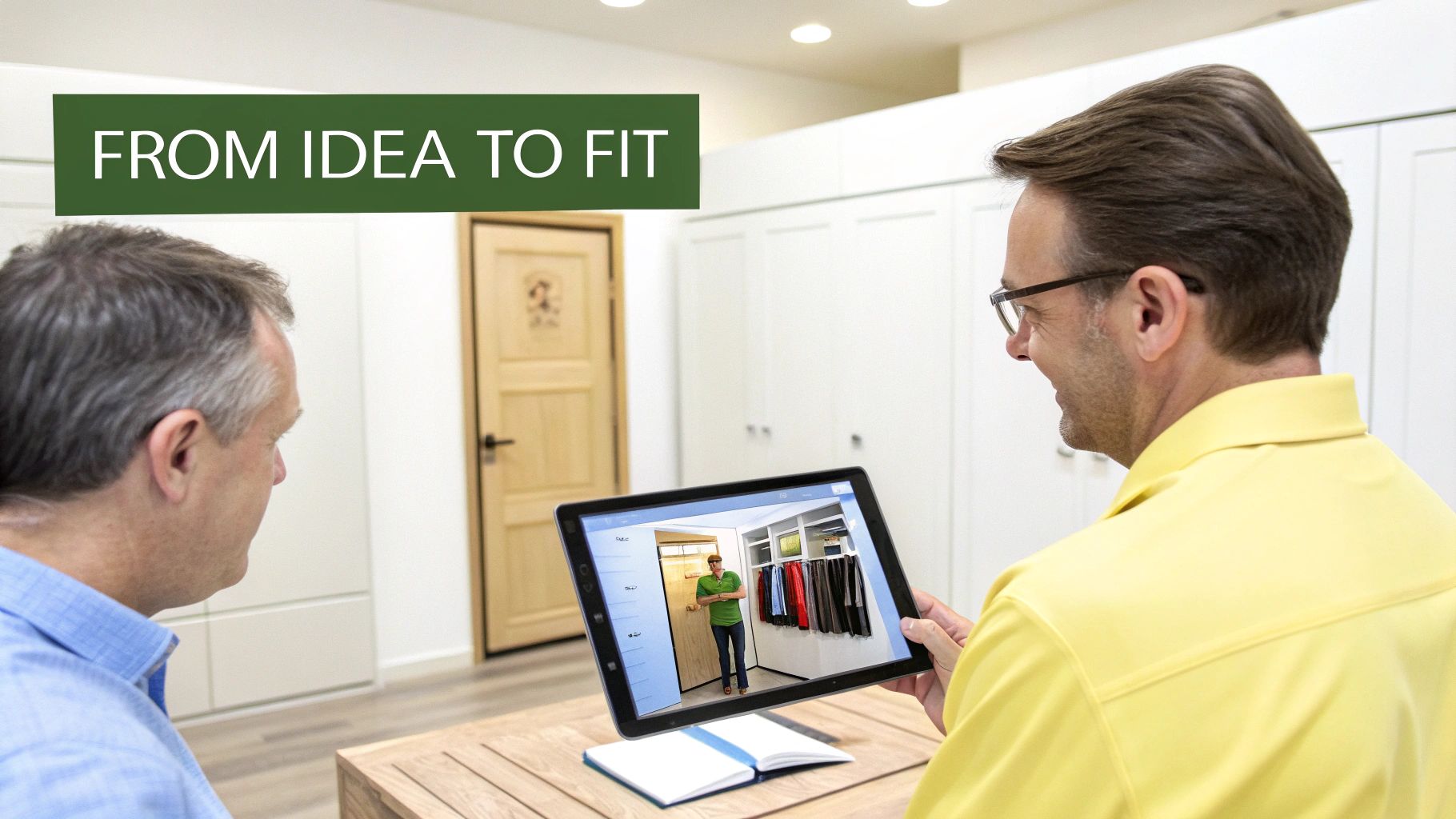
Next, we translate our discussion into a detailed 3D rendering. This powerful tool allows you to see exactly how your new wardrobe will look and function in your room before any materials are ordered. You can experiment with finishes, review the internal layout, and make adjustments, removing all guesswork from the process.
Seeing the design in 3D is often the "aha!" moment for our clients. It transforms abstract ideas into a concrete plan, allowing you to make decisions with confidence.
Step 3: Fabrication and Installation
Once you approve the design, our skilled carpenters begin crafting every component in our local workshop. Using precise measurements and your chosen materials, they ensure the highest quality.
Finally, our professional installation team brings the finished pieces to your home. We work efficiently and cleanly to assemble and fit your new Singapore built in wardrobe, ensuring it integrates seamlessly with your room's architecture for a flawless finish.
Your Built-in Wardrobe Questions, Answered
Planning a custom wardrobe often brings up questions. To help you get started, here are straightforward answers to common queries from Singaporean homeowners, based on our direct experience.
How Long Does a Custom Project Take?
From design approval to final installation, a custom Singapore built in wardrobe project typically takes four to six weeks. This includes three to four weeks for fabrication in our workshop, followed by a surprisingly fast on-site installation, which usually takes just one to three days. Complex designs or special materials might adjust this timeline slightly, but we always provide a clear schedule upfront.
What Is the Best Wardrobe Material for Singapore's Humidity?
This is a crucial question for ensuring longevity. For the internal structure (the carcass), we exclusively recommend high-quality plywood. Its layered construction offers superior resistance to moisture and warping in our climate. For doors and exterior panels, laminates are a practical and stylish choice. They are non-porous, easy to clean, and available in a vast range of designs.
Actionable Insight: A common mistake is choosing materials based on looks alone, ignoring our tropical climate. Using plywood for the structure and laminate for the doors provides the ideal combination of durability and design freedom.
Can I Integrate Other Furniture Into the Wardrobe?
Absolutely. This is a key advantage of customisation. We often design wardrobes that seamlessly incorporate a dressing table, a compact study desk, or a media console. This integrated approach is a game-changer for maximising space, especially in HDB bedrooms, where creating a single multi-functional feature wall can make the room feel larger and less cluttered.
Does a Built-in Wardrobe Add Value to My Property?
Yes, a professionally designed and installed built-in wardrobe is considered a permanent fixture and a significant home upgrade. Potential buyers view it as a valuable, move-in-ready feature that adds essential storage and a touch of sophistication. It enhances the property's overall appeal and can positively impact its market value.
Ready to create a wardrobe that’s perfectly designed for your space and lifestyle? At KIVO Custom Carpentry And Interior Design Services, we combine decades of craftsmanship with a clear, collaborative process to bring your vision to life. Visit us at kivo.com.sg to start your design journey today.