When planning a kitchen in Singapore, the goal is always to balance style, function, and durability against our humid climate. This guide shares practical insights from our experience, helping you create a kitchen that's not just beautiful but works for your lifestyle. We'll cover everything from choosing materials that resist moisture to designing a layout that maximizes every inch in your HDB flat or condo.
Your Practical Guide to Kitchen Cabinets in Singapore
Designing your kitchen cabinets is the most critical part of any renovation. It's more than just choosing a colour; you're building the functional heart of your home. A well-designed kitchen improves your daily workflow, adds significant storage, and increases your property's value, whether it's a BTO flat or a private condominium.
The process begins with an honest assessment of how you and your family cook and live. For instance, if you frequently host gatherings, you'll need more countertop space for food prep. If you're an avid baker, you'll want dedicated storage for bulky appliances. From there, we can determine the best layouts, materials, and hardware to solve real-world challenges like a small footprint or the constant battle with moisture.
Why Your Kitchen Design Matters
Singaporean homeowners are investing more in creating modern, space-savvy kitchens built to last. Market data supports this observation, showing a 9.31% import growth rate for kitchen furniture between 2023 and 2024. This isn't just a statistic; it reflects a clear demand for higher quality and better design. For a deeper look at market specifics, you can review this detailed industry report.
This guide offers practical advice drawn from our experience on countless local projects. Our goal is to equip you with the knowledge to plan a kitchen that truly feels custom-made for you. We will focus on the essentials to ensure your investment is a lasting one:
- Climate-Proof Materials: Selecting surfaces and internal structures that withstand humidity without warping or deteriorating.
- Space-Efficient Layouts: Making every square foot count, a necessity in compact HDB and condo kitchens.
- Informed Budgeting: Understanding where your money goes so you can make smart decisions that add genuine value.
By focusing on these fundamentals, you’re not just renovating a room—you’re creating a central, functional hub for your home.
Choosing Cabinet Materials That Last in Singapore's Climate
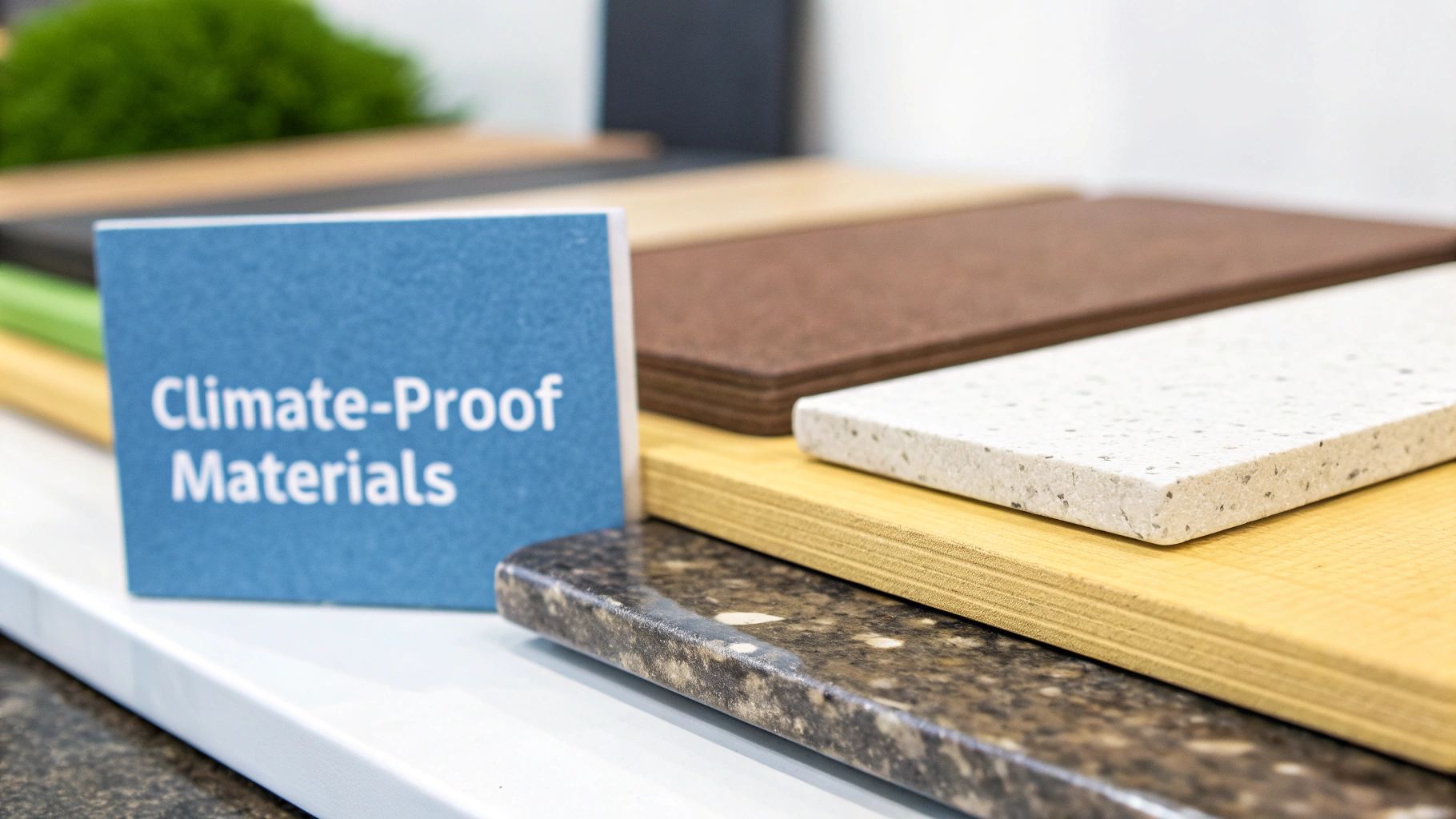
In Singapore, humidity isn't just a weather condition—it's a constant factor that impacts our homes. Your kitchen, with its daily steam, heat, and moisture, is particularly vulnerable. This makes your choice of cabinet material the single most important decision for ensuring your kitchen remains functional and attractive for years, avoiding common issues like warping, peeling laminate, or mould growth.
The structural frame of any kitchen cabinet is its carcass. This unseen component must support heavy plates and appliances while resisting moisture from within. Cheaper options like MDF (Medium-Density Fibreboard) are prone to swelling and degradation in our climate, often leading to costly replacements down the road.
This is why we build our cabinets almost exclusively with a moisture-resistant plywood core. Unlike particleboard (essentially compressed wood chips), plywood is constructed from multiple cross-laminated layers of wood veneer. This structure provides superior strength and resistance to humid conditions.
The Best Core Material: Plywood
We use high-grade, moisture-resistant (MR) plywood specifically engineered for damp environments. It is treated to repel water and prevent delamination—a common failure point when exposed to steam from cooking or a sink.
Think of it as the foundation of your kitchen. Investing in a quality plywood carcass is a non-negotiable for a lasting singapore kitchen cabinet design.
For the visible surfaces—the doors and panels that define your kitchen's style—several excellent options offer both aesthetics and durability.
Laminates: The most popular choice in Singapore, and for good reason. High-pressure laminates (HPL) offer an unbeatable combination of toughness, design variety, and ease of maintenance. Modern laminates realistically mimic materials like wood, stone, or fabric, while being highly resistant to scratches and moisture.
Solid Wood: For a timeless, natural aesthetic, solid woods like teak or nyatoh are beautiful choices. However, they come at a premium and require diligent maintenance to prevent warping. A professional sealing process is essential.
Durable Countertop Pairings
Your countertop is just as critical as your cabinets. It needs to withstand daily use while complementing your design.
In our experience, the most successful kitchen designs are those where durability is never an afterthought. A beautiful kitchen that starts to fail after a few years due to poor material choices is a frustrating and costly problem to fix.
Two materials consistently perform best in Singapore kitchens: quartz and sintered stone. Quartz is an engineered stone that is non-porous, meaning it resists stains from coffee, wine, or curry without needing to be sealed. Its durability and vast range of colours make it a practical and stylish workhorse.
Sintered stone is a newer material gaining popularity for its exceptional resilience. Created by fusing minerals under extreme heat and pressure, it produces a surface that is virtually indestructible—it resists heat, scratches, and UV rays, making it a premium, high-performance option.
Choosing the right materials from the start is the key to creating a kitchen you will enjoy using for years to come.
Cabinet Material Comparison for Singaporean Homes
To simplify your decision, here is a breakdown of the most common materials we use. This table helps you weigh the pros and cons based on your lifestyle and budget.
| Material | Humidity Resistance | Durability | Typical Cost Range | Best For |
|---|---|---|---|---|
| Laminate (on Plywood) | High | Very Good | $$ - $$$ | Versatile, low-maintenance kitchens for busy families. |
| Solid Wood | Moderate | Good (with proper sealing) | $$$$ - $$$$$ | Classic, high-end kitchens where natural aesthetics are key. |
| Veneer (on Plywood) | Good | Good | $$$ - $$$$ | Achieving a real-wood look on a more moderate budget. |
| Acrylic | Excellent | Good | $$$ - $$$$ | Sleek, modern kitchens with a high-gloss, seamless finish. |
| Stainless Steel | Excellent | Excellent | $$$$ - $$$$$ | Industrial or professional-style kitchens that need ultimate hygiene and durability. |
Ultimately, the best choice depends on your priorities. Laminates offer the best all-around value and practicality for most Singaporean homes, while materials like solid wood and stainless steel cater to more specific aesthetic goals and functional demands.
Popular Kitchen Cabinet Styles We See in Singapore Homes
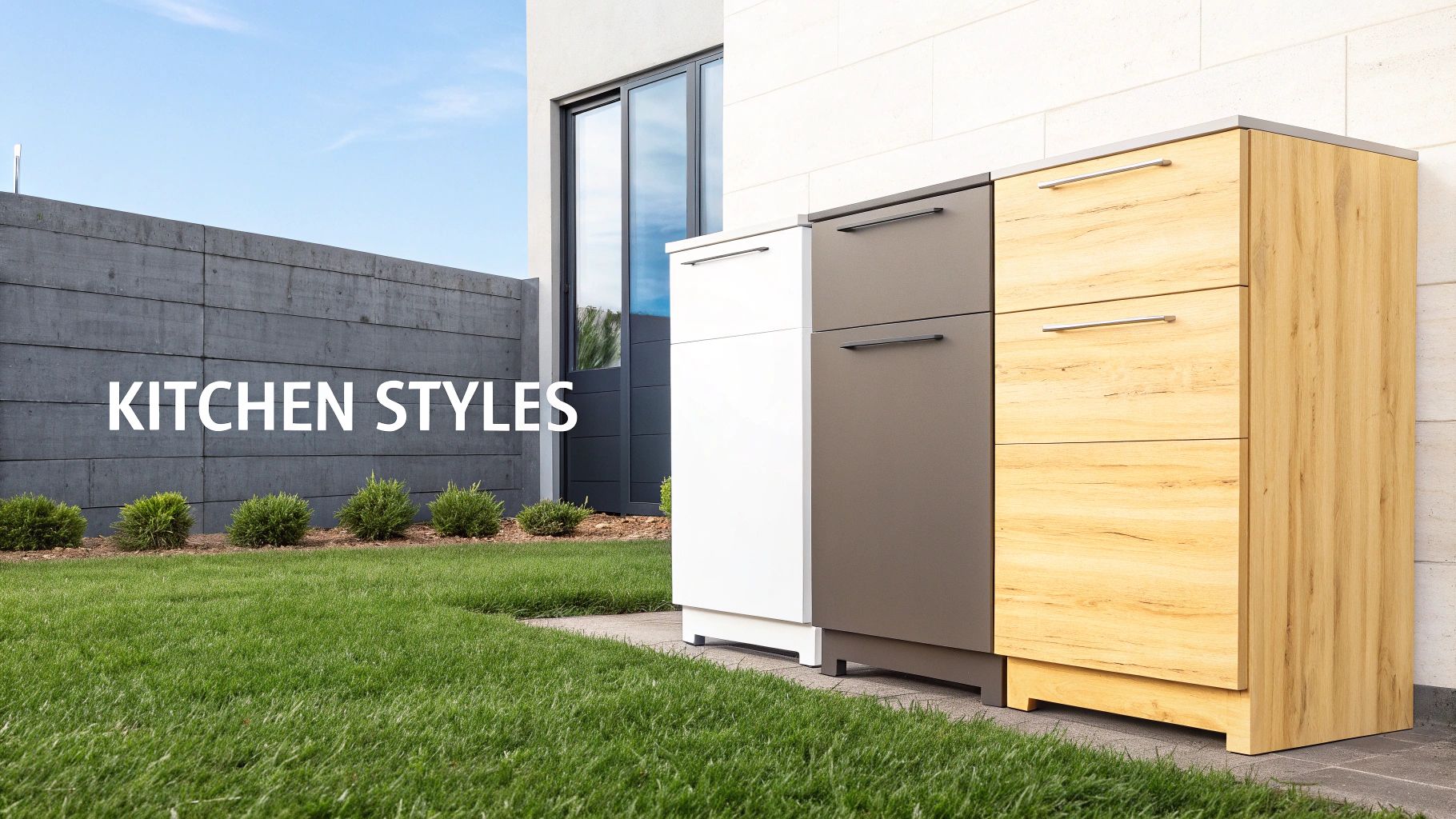
When clients describe their ideal kitchen, three words consistently come up: clean, functional, and timeless. The best Singapore kitchen cabinet design is always tailored to our local context—especially the need to maximize space in an HDB flat or condo.
Based on our project experience, there has been a clear shift away from ornate or heavy designs. The overwhelming preference is for styles that create a sense of space and calm. This reflects a broader trend toward modern, minimalist furniture that enhances functionality in compact homes. You can see how these preferences shape Singapore's furniture sector on Statista.
A few styles have proven to be particularly effective and enduring in Singaporean homes.
The Rise of Sleek Minimalism
Minimalism is more than an aesthetic; it's a practical solution for smaller kitchens. This style focuses on clean lines, uncluttered surfaces, and the elimination of unnecessary ornamentation.
A key feature is the use of handle-less cabinets. Whether achieved with integrated finger pulls, push-to-open mechanisms, or a recessed G-channel, removing handles creates a smooth, unbroken visual plane. This simple change can make a compact kitchen feel significantly larger and less cluttered—a huge advantage in a typical BTO layout.
Scandinavian Warmth and Functionality
A close relative of minimalism, the Scandinavian style introduces a warmer, more natural element. It shares the same principles of simplicity and function but incorporates organic textures and a softer colour palette.
- Key Elements: Light wood tones (like ash or light oak), matte white or soft grey cabinets, and a design that maximizes natural light.
- Practical Application: A design we often implement is pairing crisp white upper cabinets with light wood-laminate lower cabinets. This two-tone approach keeps the space feeling bright and airy while the wood adds warmth, preventing the room from feeling sterile.
The driving force behind a great Scandi kitchen is 'hygge'—that feeling of cosy contentment. It's about designing a space that’s not just efficient but is genuinely a warm, inviting place you want to be in every day.
Industrial Edge for Urban Living
For those seeking a kitchen with more character, the industrial style offers a raw, urban aesthetic. It draws inspiration from warehouses and lofts, celebrating materials that are typically concealed. It's a look that can be adapted to feel sophisticated rather than stark.
Key features usually include:
- Exposed Textures: Using laminates that convincingly mimic concrete, dark-grained wood, or even blackened steel.
- Bold Accents: Incorporating matte black hardware, exposed track lighting, and open shelving with simple metal frames.
- Strategic Pairing: The key to a liveable industrial kitchen is balance. We always soften the look with warmer elements, such as a wood-finish countertop or warm under-cabinet lighting, to keep it from feeling too harsh.
Trending Features We Integrate
Beyond these broad styles, clients are increasingly requesting specific features that enhance both aesthetics and utility.
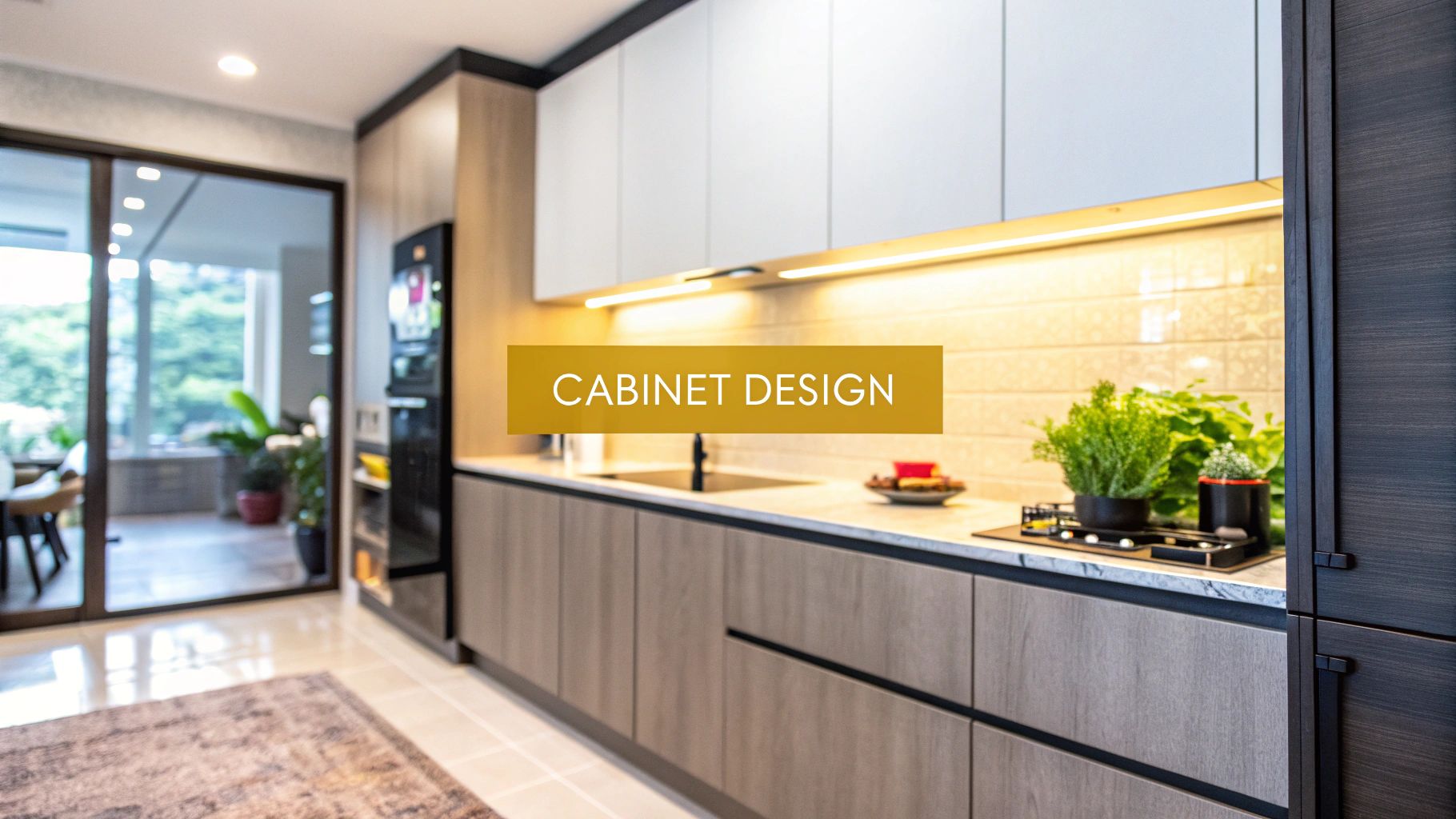
Two-Tone Cabinetry has become a mainstream request. It's an excellent way to add depth and visual interest without overwhelming a small space. The most common combination we build involves light-coloured upper cabinets to maintain an open feel, grounded by a darker or more textured colour for the base cabinets.
Clever Storage Integration is another top priority. Homeowners want clutter-free countertops. This means designing cabinets that actively organize their contents. We frequently build in features like full-height pull-out pantries, "magic corner" systems for blind corners, and deep, integrated drawers for pots and pans to ensure every inch of cabinet space is smart and accessible.
Designing Smart Layouts for HDB and Condo Kitchens
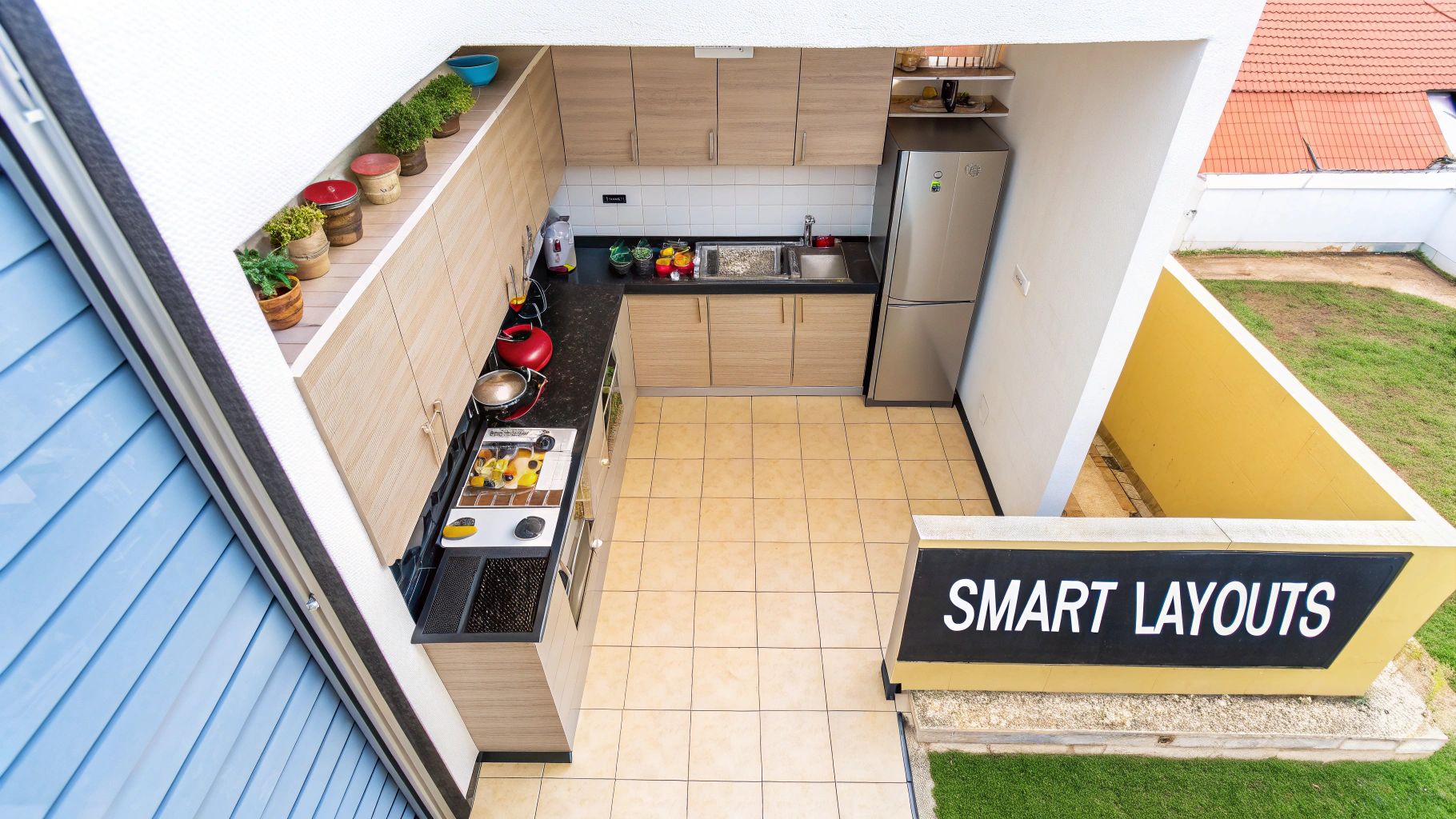
In Singapore, where space is a premium, an efficient kitchen layout is a necessity, not a luxury. The goal is to create a space that feels organised and allows for easy movement, regardless of the size of your HDB flat or condo. A smart layout is the foundation of every successful Singapore kitchen cabinet design.
The key to a good layout is workflow. Before discussing aesthetics, we analyze how you actually use your kitchen. The answers to questions like "Do you cook alone or with others?" and "Do you need more prep space or quick meal assembly areas?" shape the entire design.
This process is guided by the kitchen work triangle, a principle that creates a clear, efficient path between the three primary work zones: the refrigerator (storage), the sink (cleaning), and the hob (cooking). An effective work triangle minimizes wasted steps and makes kitchen tasks feel seamless.
Mastering Common Kitchen Layouts
Different floor plans require different solutions. In our experience, most HDB and condo kitchens can be optimized using one of three classic layouts.
1. The Galley Kitchen
Common in older HDB flats, this layout features two parallel runs of cabinets with a central walkway. It's highly efficient for a single user, keeping everything within easy reach. We recommend a walkway width of at least 1.2 metres to ensure comfortable movement and prevent obstruction from open doors.
2. The L-Shape Kitchen
One of the most versatile layouts, particularly for open-plan BTO flats. By using two adjoining walls, it frees up the rest of the room for a dining area or an island, creating an excellent work triangle and a more social kitchen environment.
3. The U-Shape Kitchen
For kitchens with more space, the U-shape offers maximum storage and counter area. Utilizing three walls, it creates a highly functional, self-contained work zone ideal for serious home cooks or families who need ample room for appliances and food prep.
A well-planned layout is more than just arranging boxes. It's about choreographing movement. The best designs feel intuitive, almost as if the kitchen anticipates your next step before you even take it.
Maximising Every Inch of Your Space
Once the core layout is established, the next step is to optimize your cabinets. In compact Singapore homes, vertical storage is essential.
- Go Floor-to-Ceiling: We design full-height cabinetry that extends to the ceiling, eliminating the dusty, unused gap found above standard cabinets. This adds valuable storage for less frequently used items like festive bakeware or large serving platters.
- Integrate Smart Storage: We utilize clever solutions like pull-out pantry units, LeMans corner systems, and deep drawers with custom dividers to make awkward corners accessible. These mechanisms bring contents to you, ensuring you can see and reach everything easily.
- Choose Scaled Appliances: Selecting appliances that fit the scale of your kitchen is crucial. A large refrigerator can overwhelm a small space and disrupt workflow. Integrated appliances, concealed behind cabinet panels, offer a clean, seamless look.
By combining an efficient layout with intelligent storage, even the smallest kitchen can become a beautiful, highly functional workspace. It’s not about having more space—it’s about making the most of the space you have.
Nailing Down Your Kitchen Cabinet Renovation Budget
Setting a clear, realistic budget is the most important first step in any kitchen renovation. It guides every decision, from material selection to design complexity.
In Singapore, kitchen cabinet costs are determined by several key factors. Understanding these will help you interpret quotes and allocate your funds effectively.
The primary cost factor is the length of your cabinetry, measured and priced in per-foot-run (PFR). This unit represents the total linear length of your top and bottom cabinets. Naturally, a larger kitchen in a condo will require more cabinetry—and thus have a higher starting cost—than a compact BTO kitchen.
However, the PFR price is just the baseline. The materials, finishes, and hardware you choose are the "upgrades" that will ultimately determine your final cost.
What Really Drives the Cost?
Let’s break down the three main elements that will influence your final bill.
- Cabinetry Length (PFR): The total linear footage. A typical HDB kitchen requires between 20 to 30 feet of cabinetry.
- Materials and Finishes: This is where you have the most control over your budget. A standard laminate finish on a moisture-resistant plywood core offers the best balance of durability and cost-effectiveness for most Singapore homes. Opting for premium finishes like FENIX laminates, real wood veneers, or high-gloss acrylics will increase the PFR rate.
- Hardware and Mechanisms: This includes hinges, drawer runners, handles, and internal organizers. Standard soft-closing hardware is a cost-effective and reliable choice. Upgrading to high-end systems from brands like Blum or Häfele offers superior durability and smoother operation but comes at a higher price.
So, How Much Should You Actually Budget?
Based on our experience with standard HDB kitchen projects, here are some realistic budget ranges to help you plan.
- The Smart Refresh (S$4,000 - S$7,000): This budget typically covers standard laminate cabinets on a solid plywood core with quality soft-closing hardware. It’s an excellent choice for a significant aesthetic and functional upgrade without a major financial outlay.
- The Custom Mid-Range (S$7,000 - S$12,000): This is the most common range for homeowners seeking a personalized kitchen. It allows for premium laminates, clever internal storage solutions like pull-out pantries, and often includes a quality quartz countertop. This is where you achieve a truly customised and highly functional Singapore kitchen cabinet design.
- The High-End Overhaul (S$12,000+): At this level, you can incorporate top-tier features like sintered stone countertops, premium hardware systems throughout, and detailed custom carpentry such as fluted panels or fully integrated appliance housing.
These ranges reflect the growing demand for customization and value, a trend seen across the region. While the ready-to-assemble (RTA) cabinet market is growing at nearly 5.8% annually due to low cost, many homeowners prefer the superior fit and quality of semi-custom and fully bespoke cabinets. You can read more about these regional market trends on Research and Markets.
When you get a quote, don't just skip to the total at the bottom. A good, transparent quote will break everything down: the cost per foot, the exact brand of materials and hardware being used, and any extra work like plumbing or electrical. That level of detail is the sign of a contractor you can trust.
Understanding these cost drivers will enable you to review quotations confidently, knowing where to invest for durability and where you can save, ensuring you get the best value for your budget.
Navigating Your Bespoke Design Journey
A custom kitchen renovation should be an exciting creative process, not a stressful project. A bespoke approach is a partnership, transforming your vision and daily needs into a perfectly crafted reality.
It is a collaborative, step-by-step process designed to deliver a kitchen that is uniquely yours, on time and within budget.
The journey begins with a conversation. We sit down with you to understand not just your aesthetic preferences, but how you live. Do you need more storage for a growing family? Is your current workflow inefficient? This initial consultation forms the foundation of your project.
From Concept to Creation
Once we have a clear understanding of your goals, we translate them into tangible designs.
- Initial Design & Space Planning: We develop a preliminary layout focused on solving your key challenges, mapping out the most efficient workflow and proposing smart storage solutions.
- 3D Visualisation: We believe you should see your kitchen before it’s built. Using detailed 3D renderings, we bring the design to life, allowing you to visualize materials, colours, and finishes in your space. We refine these details with you until they are perfect.
- Material Selection: With the design finalized, we guide you through choosing the right materials. We present a curated selection of laminates, countertops, and hardware that align with your aesthetic and budget, explaining the practical benefits of each option.
This collaborative approach ensures there are no surprises. It is about building a design with you, not just for you. As you navigate your bespoke design journey for kitchen cabinets, you might find parallels in other fields that emphasize custom solutions, such as exploring bespoke design principles that focus on tailored user experiences.
The Value of Professional Project Management
The final phase is turning the approved design into a physical reality. This is where expert project management is crucial.
A great design is only as good as its execution. Our role is to manage every single detail—from coordinating with our carpenters to overseeing the final installation—ensuring the quality we promised on paper is the quality you get in your home.
We handle all logistics, scheduling our team of skilled carpenters and installers to execute your bespoke Singapore kitchen cabinet design with precision. Throughout fabrication and installation, we provide regular updates so you are always informed.
This streamlined management results in a smoother, faster renovation, free from the common headaches of coordinating multiple contractors. Our ultimate goal is to deliver a beautiful, functional kitchen that fits your life perfectly.
Answering Your Top Kitchen Cabinet Questions
A kitchen renovation brings up many questions. Here are practical answers to the most common queries we receive from Singaporean homeowners to help you plan with clarity.
How Long Does a Kitchen Cabinet Project Typically Take?
Once the design and materials are finalized, the fabrication and installation of your new cabinets typically take 4 to 6 weeks.
This timeline is for the carpentry work alone. If your renovation includes hacking, retiling, or major plumbing and electrical work, the overall project will take longer. We always provide a detailed project schedule at the outset so you know what to expect from start to finish.
What Is the Most Durable Material for HDB Kitchens?
For the vast majority of HDB kitchens in Singapore, we recommend a high-quality, moisture-resistant plywood core with a durable laminate finish. This combination offers the best defence against our humid climate and daily wear.
Plywood provides excellent structural integrity that resists warping. Modern high-pressure laminates are available in a huge range of styles, are easy to clean, and are highly resistant to scratches and moisture. It’s a practical, long-lasting solution that provides excellent value.
Do I Need an HDB Permit to Replace My Kitchen Cabinets?
In most cases, you do not need an HDB permit for carpentry work like replacing kitchen cabinets, as long as you are not altering the flat's structure. If you are simply replacing old cabinets with new ones in the same layout, a permit is usually not required.
However, you will need a permit if your renovation involves:
- Hacking any walls.
- Moving your sink or stove, as this involves altering plumbing and gas pipes.
If your new Singapore kitchen cabinet design includes these changes, a licensed contractor must submit the plans to HDB for approval. We handle all regulatory submissions for our clients to ensure a smooth and compliant process.
How Can I Get More Storage in My Small BTO Kitchen?
Maximizing storage in a compact BTO kitchen is about smart design, not just adding more cupboards.
Our primary strategy is to install full-height cabinets that extend to the ceiling. This utilizes valuable vertical space for storing less frequently used items. We also integrate smart pull-out systems for corner cabinets and design custom-fit solutions like narrow spice racks or slim pantries to make use of every nook. Often, simply replacing deep shelves with well-organized drawers can dramatically increase both storage capacity and accessibility without changing the kitchen's footprint.
Ready to create a kitchen that perfectly fits your lifestyle and space? The team at KIVO combines decades of artisan experience with modern design principles to build beautiful, functional kitchens that last. Start your design journey with us today.