Thinking about renovating the two most functional rooms in your HDB flat? Juggling separate contractors for tiling, plumbing, and carpentry can be overwhelming. This is where a toilet and kitchen renovation package offers a practical solution—it bundles all essential services under a single, experienced project manager, simplifying the entire process.
This integrated approach means you get a clearer timeline, a more unified design, and better control over your budget from day one.
What's the Real Value in a Combined Package?
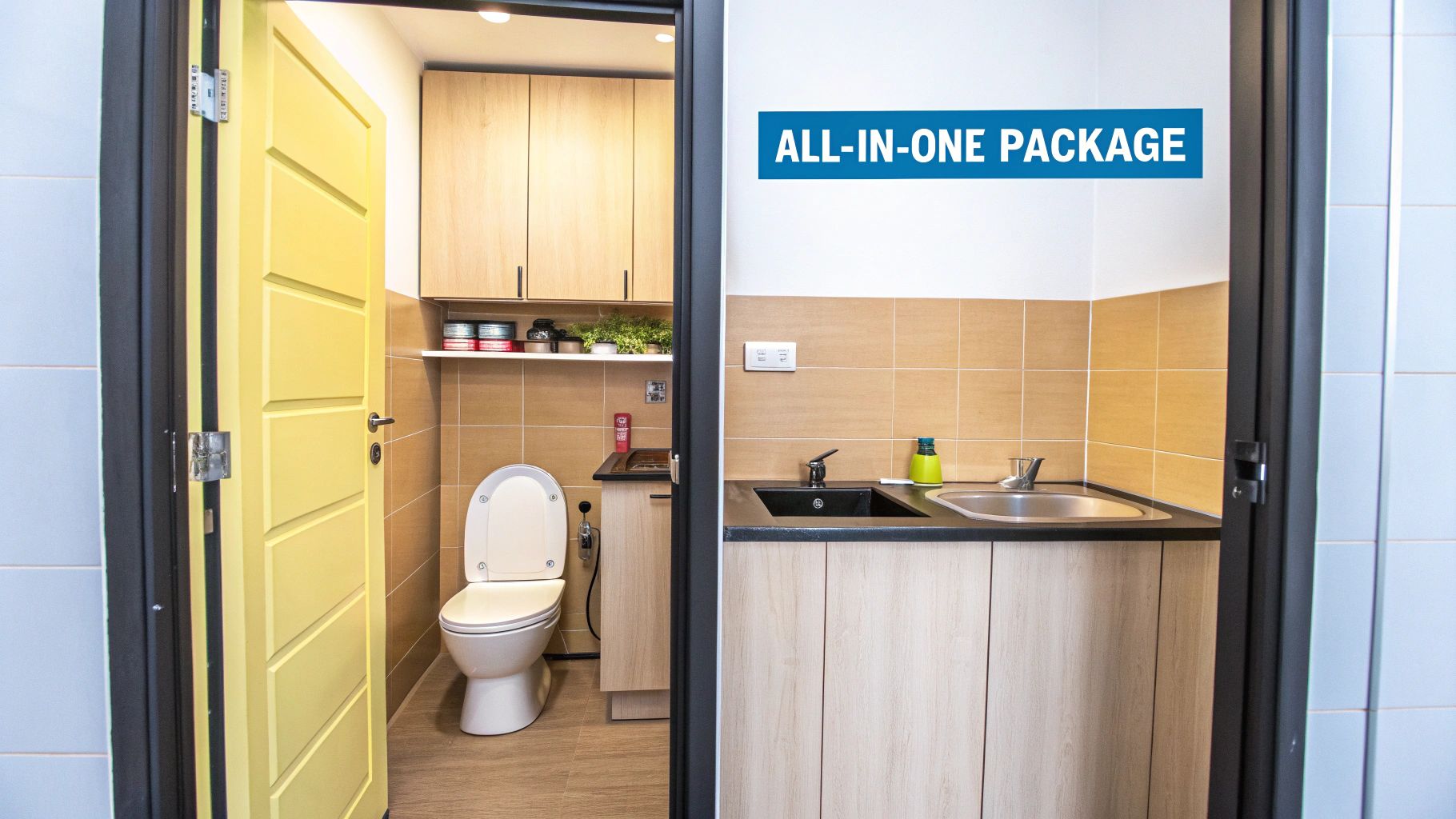
Opting for a combined toilet and kitchen renovation package is more than a matter of convenience; it’s a strategic decision. These two spaces are the most complex areas in any HDB flat, filled with intricate plumbing, electrical wiring, and extensive tiling. Tackling them together under a unified plan provides significant advantages over renovating them separately.
From our experience managing countless projects across Singapore, homeowners who choose a package consistently report a less stressful renovation. The primary reason is having a single point of contact. Instead of you trying to coordinate schedules between the tiler, plumber, and carpenter, one project manager handles all logistics and quality control. This prevents the miscommunications that often lead to delays and costly rework.
The Core Benefits for HDB Homeowners
So, why is this approach so popular among Singaporean homeowners? The benefits go beyond simple convenience.
- Practical Cost Savings: Bundling services almost always results in a better price. Contractors can allocate resources more efficiently, purchase materials in bulk for both areas, and schedule their teams to work concurrently. For example, the same team that hacks the kitchen floor can immediately move to the toilet, saving on mobilisation costs.
- A Seamless Design Flow: Using the same design team for your kitchen and toilets ensures a harmonious aesthetic. This allows for a consistent design language through matching colour palettes, complementary tile selections, and coherent fixture styles. A practical example would be using the same quartz countertop remnant from the kitchen to create a matching vanity top in the toilet.
- Quicker Turnaround Time: Much of the heavy work—demolition, masonry, and plumbing—can be done in overlapping phases. This condensed schedule means less disruption to your daily life and allows you to reclaim your home much faster.
- Hassle-Free Permit Process: Navigating HDB and BCA regulations can be complex. An experienced firm managing a renovation package handles all necessary permit applications, ensuring every aspect of the project is compliant from the start.
In our experience, clients find that a well-executed renovation in these key areas significantly improves their daily quality of life and boosts property value. A functional, modern kitchen and a clean, well-designed toilet are major assets for any home.
A common concern is whether a package limits customisation. The opposite is true. A good package provides a clear framework for the scope of work—hacking, tiling, waterproofing, and carpentry—but you retain full control over the aesthetic choices. You still select the specific tiles, countertops, and fittings that reflect your personal style and budget.
Here’s a practical overview of what you can typically expect to be included.
Standard Inclusions in a Renovation Package
| Service Category | Kitchen Inclusions | Toilet Inclusions |
|---|---|---|
| Demolition & Masonry | Hacking of existing floor/wall tiles, cabinet removal. | Hacking of existing floor/wall tiles, removal of old fittings. |
| Plumbing & Electrical | Installation of new sink, tap, and drainage pipes. New lighting and power points. | Installation of new toilet bowl, basin, shower set. New water heater points. |
| Tiling & Waterproofing | Laying of new floor and wall tiles. Waterproofing membrane application. | Laying of new floor and wall tiles. Two-layer waterproofing. |
| Carpentry & Fittings | Fabrication and installation of top/bottom kitchen cabinets and countertop. | Installation of vanity cabinet, mirror, and basic accessories. |
Ultimately, a toilet and kitchen renovation package is a strategic investment focused on maximizing your home's value with kitchen and bathroom upgrades. It simplifies a complex process, providing a clear path to the beautiful, practical, and high-value home you've been dreaming of, without the typical renovation headaches.
Breaking Down Renovation Package Costs
Determining the exact cost of a toilet and kitchen renovation package is like pricing a car; the final figure depends on the model, features, and finishes you select. Your renovation budget is shaped by every decision you make along the way.
The primary factors influencing the cost are the size of your flat, the materials you choose, and the overall scope of work. A renovation for a 3-room HDB will have a different cost base than one for a 5-room flat due to differences in floor area and required cabinet length. Similarly, a cosmetic refresh will be significantly less expensive than a full overhaul involving hacking walls.
Key Cost Drivers in Your Renovation
Several specific elements will significantly impact your final quote. Understanding these helps you allocate your budget effectively.
- Material Selection: This is the largest variable. For example, choosing a premium sintered stone countertop over a standard solid surface, or opting for large-format Italian porcelain tiles instead of basic ceramic ones, will increase costs.
- Carpentry Scope: The extent of custom carpentry is a major cost factor. This includes the linear footage of your kitchen cabinets, the addition of features like Blum soft-closing mechanisms or pull-out pantry systems, and the inclusion of a vanity cabinet in the toilet.
- Hacking and Masonry: If your plan includes hacking existing walls or floors, the cost will rise due to increased labour, disposal services, and potential re-routing of plumbing or electrical wiring.
- Fixtures and Fittings: The brands selected for taps, sinks, toilet bowls, and shower sets can vary widely in price. A Grohe rain shower system, for instance, will have a different price point than a standard shower set.
When it comes to materials, the kitchen countertop alone can account for a significant portion of the budget. The engineered stone countertops cost varies, so understanding the differences between brands like Silestone, Caesarstone, and others helps you make an informed decision.
Realistic Budget Ranges for HDB Flats
So, what is a realistic budget for a combined kitchen and toilet package in Singapore? Based on current market conditions and our project data, here are some practical figures.
For a typical 4-room HDB BTO, a full home renovation can range from S$51,000 to S$61,800. These figures reflect post-pandemic price adjustments, influenced by labour shortages and material cost increases. For packages, a standard kitchen renovation often starts around S$10,888, while a combined package for a kitchen and two bathrooms typically begins near S$18,888.
A practical tip we always share with clients is to set aside a contingency fund of 10-15% of the total renovation cost. This buffer is crucial for addressing unforeseen issues, like discovering hidden pipes during hacking, or for accommodating last-minute upgrades you decide you can't live without.
To provide more clarity, here’s how different material choices can impact the final investment for a typical 4-room HDB.
Project Example Cost Impact
| Budget Tier | Typical Material Choices | Estimated Package Cost | Key Features & Trade-offs |
|---|---|---|---|
| Basic | Laminate countertops, ceramic tiles, standard fittings. | S$15,000 - S$20,000 | Focuses on functionality and durability with clean, modern, but standard materials. Custom carpentry is limited. |
| Mid-Tier | Quartz countertops, porcelain tiles, mid-range branded fittings (e.g., Grohe, American Standard). | S$20,000 - S$30,000 | Offers a balance of aesthetics and performance. Includes more custom features like soft-closing hinges and a well-designed vanity. |
| Premium | Sintered stone, large format tiles, designer fixtures (e.g., Hansgrohe, Kohler). | S$30,000+ | Delivers a luxury finish with extensive customisation, premium materials, and potentially smart home integrations. |
A trustworthy interior design partner will provide a detailed quotation breaking down every cost. This transparency is essential—it eliminates surprises and ensures you know exactly where your investment is going.
Mapping Your Renovation Timeline from Start to Finish
A smooth renovation depends on a clear and predictable schedule. While a combined toilet and kitchen renovation package involves many moving parts, every project follows a logical sequence. Understanding this timeline helps you plan accordingly and reduces the anxiety of the unknown.
Think of it as a step-by-step assembly process; you can't install cabinets before the walls are tiled. Each phase builds on the last, from demolition to the final touches. A typical combined renovation for an HDB flat takes 6 to 8 weeks, although this can vary based on project complexity and material availability.
The Phased Approach to Renovation
We structure every project into distinct stages to ensure efficiency and quality control, preventing trades from interfering with one another.
Phase 1: Design and Approvals (1-2 Weeks)
This is the foundational planning stage. We finalise 3D drawings, help you select all materials (tiles, laminates, countertops), and submit all necessary permit applications to HDB. No physical work can begin until we receive official approval.Phase 2: Demolition and Site Prep (3-5 Days)
The transformation begins. Our team will carefully demolish existing structures, hack away old tiles, and remove outdated fixtures. We also implement protection for surrounding areas to minimise dust and disruption to the rest of your home.Phase 3: Masonry and Wet Works (1-2 Weeks)
With a clean slate, the foundational "wet works" commence. This includes applying waterproofing membranes in the kitchen and toilets, laying new floor and wall tiles, and constructing any necessary concrete bases for cabinets. This phase requires adequate curing time to ensure long-term durability.
This structured workflow is designed for quality. For example, rushing the waterproofing and screeding stage can lead to future issues—an expensive and disruptive problem to fix later.
From Structure to Finishes
Once the foundational work is complete and properly cured, we move to the installation phase, where your vision starts to become a reality.
Phase 4: Plumbing and Electrical Works (1 Week)
With the new layout defined by the tiling, our licensed plumbers and electricians begin their work. They run new water pipes for sinks and showers and install wiring for lights, power sockets, and appliances. This must be completed before any false ceilings or cabinets are installed.Phase 5: Carpentry and Painting (1-2 Weeks)
A major milestone: your custom-fabricated kitchen cabinets and vanity units are installed. This is a meticulous process requiring precise fitting and alignment. Following carpentry installation, painters will apply the initial coats to ceilings and walls.Phase 6: Final Installations and Handover (1 Week)
The project is nearly complete. This final week involves installing countertops, fitting glass shower screens, connecting sinks and taps, and mounting light fixtures. After a thorough professional cleaning, we conduct a joint inspection with you before officially handing over your new kitchen and toilets.
A common cause for delays is the lead time for custom-ordered materials, such as specific countertop slabs or imported tiles. We mitigate this by placing orders for all long-lead items during Phase 1, ensuring they arrive on-site precisely when needed.
Understanding this timeline helps you prepare for key milestones, such as knowing when to arrange for appliance delivery or when to make alternative cooking arrangements. A well-managed schedule is the backbone of a successful toilet and kitchen renovation package.
Choosing Materials for Style and Durability
The materials you select define the character and longevity of your new kitchen and toilets. The right choice involves balancing your desired aesthetic with the practical demands of a busy Singaporean household.
This is about more than just appearance; it’s about performance. Your kitchen countertop must resist stains, heat, and scratches, while your toilet flooring needs to be slip-resistant and easy to clean. Based on our experience, we guide clients towards materials that deliver both beautiful design and everyday functionality.
The Heart of the Kitchen: Countertops
The kitchen countertop is the hardest-working surface in your home. It needs to be durable, hygienic, and visually appealing. Two materials consistently stand out for their superior performance:
- Quartz: This engineered stone is a top performer. Composed of natural quartz crystals and resin, it is non-porous, meaning it resists stains from coffee, wine, and curry without requiring any sealing. It also offers consistent patterns, perfect for achieving a clean, modern aesthetic.
- Sintered Stone: A newer innovation, sintered stone is created by fusing natural minerals under extreme heat and pressure. This results in a surface that is virtually indestructible—highly resistant to scratches, heat, and UV rays, making it suitable for heavy use.
While natural stones like granite and marble are beautiful, they are porous and require regular sealing to prevent stains—a maintenance task many busy homeowners prefer to avoid.
Material selection is a significant driver of renovation costs. A basic toilet and kitchen renovation package might include laminates, while premium packages often feature quartz or sintered stone. For a deeper dive into how different materials affect costs, you can explore detailed guides on HDB kitchen renovation costs.
Here is a practical comparison of popular countertop choices.
Kitchen Countertop Material Comparison
| Material | Pros | Cons | Average Cost (per foot run) |
|---|---|---|---|
| Quartz | Non-porous, stain-resistant, durable, low maintenance, wide colour range | Can be damaged by extreme heat, not suitable for outdoors | S$120 - S$200 |
| Sintered Stone | Extremely durable, heat & scratch resistant, UV-stable, waterproof | Higher price point, requires specialised installers | S$180 - S$300 |
| Granite | Unique natural patterns, heat resistant, very durable | Porous (requires sealing), can be prone to chipping | S$100 - S$250 |
| Laminate | Most affordable, huge variety of designs, easy to clean | Not heat or scratch resistant, can delaminate over time | S$30 - S$80 |
The best countertop is one that aligns with your cooking habits, maintenance tolerance, and budget.
Cabinet Finishes for a Lasting Impression
Your kitchen cabinets set the tone for the entire room. The finish affects not only the look but also the ease of cleaning and durability. Two popular and practical finishes we often recommend are:
- Laminates: Modern high-pressure laminates (HPL) are available in a vast range of colours, textures, and patterns, including convincing wood grains and stone effects. They are durable, scratch-resistant, and easy to wipe down, making them an excellent, budget-friendly choice.
- Acrylics: For a sleek, high-gloss finish, acrylic is a great option. It creates a seamless, reflective surface that enhances light and gives the space a modern feel. Acrylic is also moisture-resistant and its colour will not fade over time.
A practical tip from our experience: avoid using a matte or flat paint finish in high-traffic kitchens and bathrooms. While stylish, these finishes are difficult to clean and show fingerprints and water marks easily. A semi-gloss or satin finish is far more durable and washable.
Smart Flooring Solutions for Kitchen and Toilets
Flooring in wet areas requires careful consideration of safety and maintenance. The ideal material should be water-resistant, slip-resistant, and durable.
Here are the top contenders for HDB flats:
Porcelain Tiles: A classic for good reason. Porcelain is denser and less porous than ceramic, making it highly water-resistant and durable. With modern printing technology, porcelain can mimic natural stone, wood, or concrete. For toilets, we always specify tiles with a suitable slip-resistance rating for safety.
Homogeneous Tiles: This is a type of full-body porcelain tile where the colour and pattern run through the entire thickness. This means any chips are far less noticeable, making them incredibly durable for high-traffic areas.
Luxury Vinyl Tiles (LVT): Modern LVT is 100% waterproof, comfortable underfoot, and provides good sound absorption. It is an excellent choice for kitchens and can be installed with minimal grout lines, simplifying cleaning.
Ultimately, selecting materials for your toilet and kitchen renovation package is about making informed choices that match your lifestyle. Focusing on durability and low maintenance from the outset ensures your renovated spaces will remain beautiful and functional for years to come.
How to Select the Right Renovation Partner
Choosing the right interior design firm is the single most important decision in your renovation journey. It determines whether the process is smooth and successful or fraught with delays and unexpected costs. The goal is to find a partner who understands your vision, protects your investment, and has the expertise to execute flawlessly.
A strong partnership is built on trust, clear communication, and a proven track record. Here is a practical checklist to help you select a reliable firm.
Verify Credentials and Insurance
Before reviewing portfolios, verify the essentials that protect you as a homeowner.
- HDB Registered Renovation Contractor (RRC): This is a mandatory requirement for HDB renovations. An RRC license confirms the firm is knowledgeable about and compliant with HDB’s strict regulations, ensuring the safety and integrity of your property. You can verify a firm's status on the official HDB website.
- Adequate Insurance Coverage: Ask for proof of public liability insurance. This protects you financially in case of accidental property damage or on-site injuries. A professional firm will readily provide this documentation.
These credentials are a clear indicator of professionalism and accountability.
Scrutinise Their Portfolio and Workmanship
A portfolio offers a direct look into a firm's quality and attention to detail. Don't just browse the finished photos; examine them closely for consistency and craftsmanship.
Look for precision in the details: are grout lines perfectly straight? Are cabinet doors aligned flawlessly? Is the paint finish smooth and even? These details are the hallmarks of quality workmanship. If possible, ask to visit an ongoing project to see their work firsthand.
The true quality of a firm’s work is hiding in the details they think you won’t notice. Perfect alignment, clean finishing, and impeccable tiling are the signatures of true experts.
When reviewing their portfolio for a toilet and kitchen renovation package, ensure they have experience relevant to your flat type. If you live in a 3-room HDB, look for successful projects of a similar scale.
Read Genuine Client Testimonials
Client reviews provide unfiltered insights into a firm's process and customer service. Look beyond the curated testimonials on their website and check independent platforms like Google and Qanvast.
Identify patterns in feedback. Do clients consistently praise their project management and communication? Or are there recurring complaints about surprise costs and missed deadlines? Note how the firm responds to any negative feedback; a professional and constructive response demonstrates a commitment to client satisfaction.
Evaluate Communication and Contracts
From your initial consultation, you should feel that your needs are understood. A good interior designer asks insightful questions to grasp not just your aesthetic preferences but also your lifestyle.
The contract is your ultimate protection. A vague, one-page quote is a significant red flag. A detailed contract demonstrates transparency and thorough planning.
Your Renovation Contract Must Include:
- A Detailed Scope of Work: Every task, from hacking and tiling to plumbing and painting, should be explicitly listed.
- Material Specifications: It should specify the brand, model, and colour for all materials and fittings. For example, "Brand X Quartz Countertop, Model Y, Colour Z."
- A Clear Payment Schedule: Payments should be linked to project milestones (e.g., 20% upon completion of masonry), not arbitrary dates.
- Project Timeline: This should outline key phases with projected start and end dates, including a final handover date.
- Warranty Information: The contract should clearly state the terms of the workmanship and material warranties.
A comprehensive contract is the blueprint for a successful partnership, ensuring both parties are aligned from day one.
Got Questions About Renovation Packages? We’ve Got Answers
It’s natural to have questions before starting a major home renovation. Here, we address the most common queries we receive from homeowners considering a toilet and kitchen renovation package to help you proceed with confidence.
Let's clarify everything from potential extra costs to HDB permit requirements.
Are There Any Hidden Costs I Should Expect?
This is a primary concern for many homeowners. With a reputable firm, there should be no hidden costs. However, there can be unforeseen costs.
A hidden cost is an item a contractor intentionally omits from a quote to appear cheaper. An unforeseen cost is an issue that cannot be identified until work begins. For example, discovering severely corroded pipes behind a wall after hacking or finding that the existing concrete floor screed is unsuitable for tiling and needs to be redone.
A professional team will immediately inform you of such issues. They will explain the problem, propose a solution, and provide a variation order detailing the additional costs for your approval before proceeding with the extra work. A good contract will outline how these situations are managed.
What Permits Are Needed From HDB?
HDB approval is essential for renovations in Singapore. A combined toilet and kitchen overhaul will require several permits, particularly if it involves hacking.
Your interior design partner should manage this entire process for you. Common permits needed include:
- Hacking Permits: Required for removing any walls (even non-structural ones) or existing floor and wall tiles.
- Plumbing and Electrical Permits: Necessary for any alterations to sanitary pipes or the addition of new electrical points.
- Window Replacement Permits: If you plan to replace windows in your kitchen, a specific permit is required.
Your firm is responsible for submitting the necessary drawings and paperwork to HDB and obtaining approval before any renovation work commences.
How Are Material and Workmanship Warranties Handled?
Warranties protect your investment. They typically come in two forms:
- Material Warranties: These are provided by the manufacturers of the products. For instance, your quartz countertop supplier may offer a 10-year warranty against manufacturing defects. Your designer should provide you with all official warranty documents upon project completion.
- Workmanship Warranties: This is the guarantee provided by your interior design firm on the quality of their installation and labour. Most reputable firms in Singapore offer a workmanship warranty of at least 12 months, covering issues like peeling paint, faulty cabinet hinges, or tiling defects.
Ensure that warranty terms—what is covered, the duration, and the claim process—are clearly stated in your contract.
Can I Supply My Own Fixtures or Appliances?
Absolutely. Many homeowners have specific preferences for items like taps, sinks, toilet bowls, or kitchen appliances. We regularly work with clients who choose to source these items themselves.
The key is clear communication. Inform your designer early in the planning stage about the items you intend to purchase. You will need to provide them with the technical specifications so they can ensure the plumbing, electrical points, and carpentry are designed to accommodate them perfectly.
You will also need to coordinate delivery dates with the project schedule. Your project manager will advise you on the exact date your items need to be on-site for installation.
Ready to transform your home with a seamless and beautiful renovation? The team at KIVO has the experience and craftsmanship to bring your vision to life. Explore our interior design services today and start your journey towards a more functional and inspiring living space.