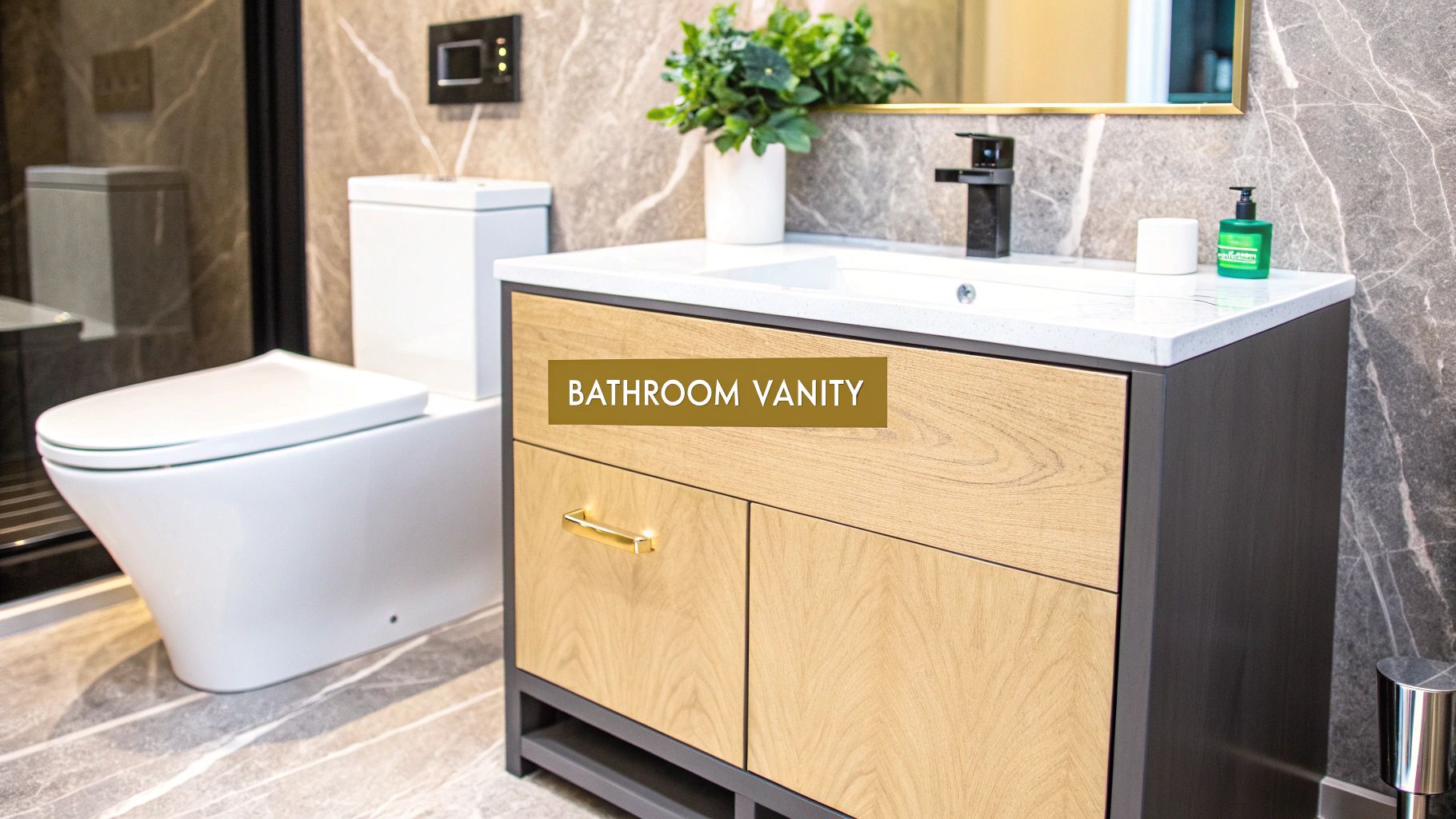
A toilet and sink cabinet is a practical bathroom essential, combining a basin with much-needed storage into one neat fixture. For anyone living in a compact Singapore home, it’s the functional core of the room, cleverly hiding away plumbing while keeping toiletries organised and out of sight. My goal here is to give you actionable insights, based on our experience with clients, to help you make the best choice.
Why the Right Vanity Is a Game Changer for Your Bathroom
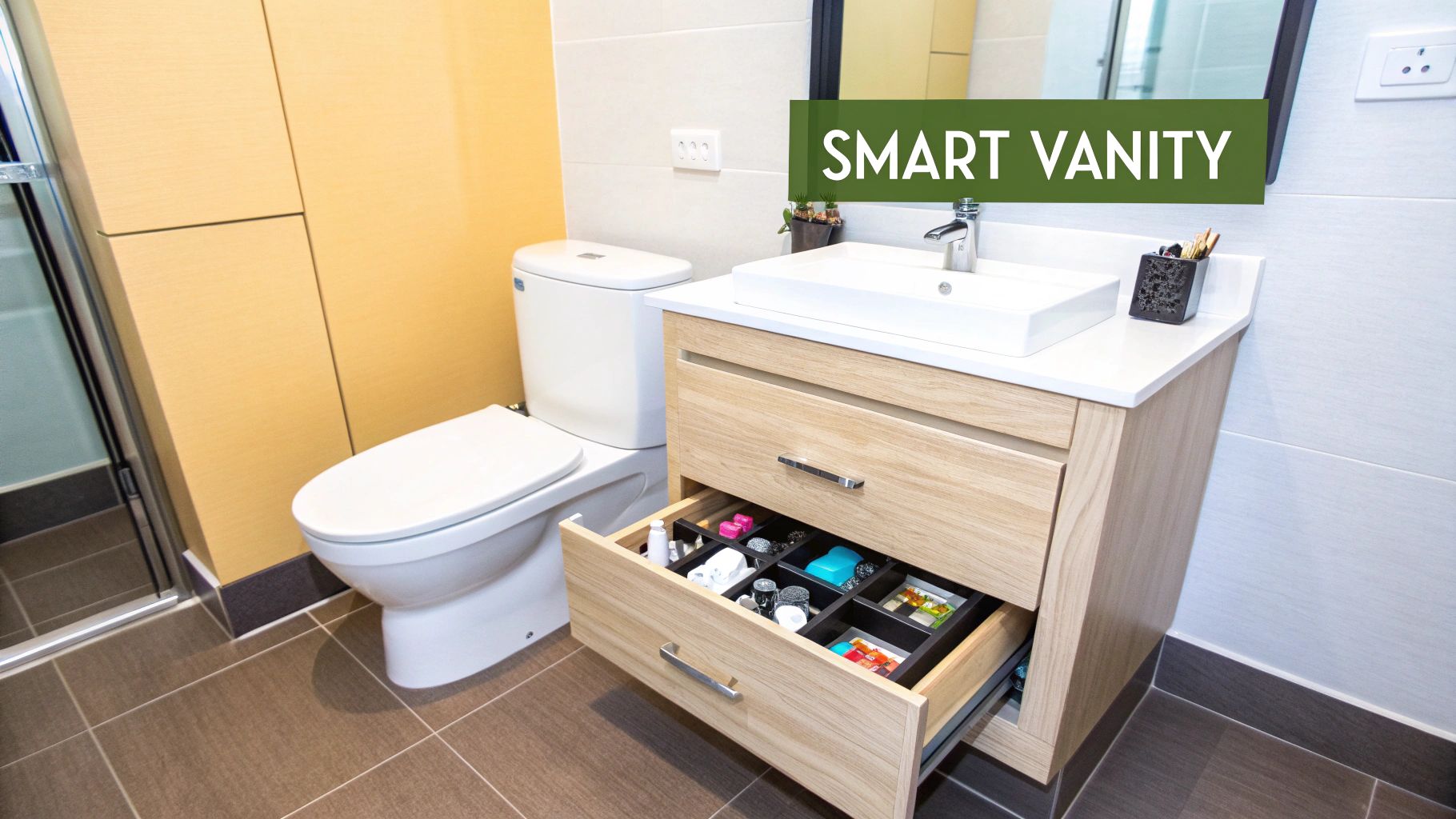
The bathroom vanity—or toilet and sink cabinet—is much more than just a place to wash your hands. Think of it as the hardest-working piece of furniture in the room. Its dual role is to provide a functional wash area and crucial storage, a huge challenge in the often-limited space of HDB flats and condominiums.
A well-chosen vanity acts as the central organising hub of your bathroom. It’s where you stash everything from daily toiletries and towels to cleaning supplies, preventing cluttered countertops and creating a serene, tidy environment. This isn’t just about looking good; it’s about making your daily routine feel calmer and more efficient.
More Than Just Storage
Beyond its practical side, the right vanity sets the entire design tone for your bathroom. It’s the anchor piece that influences all other style choices, from the tiles on the wall to the taps you choose. A sleek, wall-mounted cabinet can make a small bathroom feel larger and more modern, while a classic freestanding unit can add a touch of timeless elegance.
The impact of a great toilet and sink cabinet even extends to your home's overall value. A thoughtfully designed bathroom is a major selling point for any property, and a high-quality vanity signals smart use of space and an eye for detail.
Key Functional Benefits
A well-designed vanity immediately elevates your bathroom by:
- Maximising Space: It cleverly transforms the area under the sink from dead space into valuable storage.
- Concealing Plumbing: Say goodbye to unsightly pipes and P-traps. Everything is hidden away for a cleaner, more polished look.
- Improving Organisation: With designated drawers and shelves, everything has its place, making your morning and evening routines run that much smoother.
Actionable Insight: Choosing a vanity isn’t just a practical decision; it's a design statement that defines the functionality and character of your bathroom. The right piece integrates storage, style, and utility, transforming an ordinary room into a well-organised sanctuary.
Finding this perfect balance can feel complex. That's why understanding your options—from dimensions and materials to the benefits of custom solutions—is the first step toward creating a bathroom that truly works for you. For those undertaking larger projects, a comprehensive basement bathroom remodeling guide can provide valuable insights into transforming your space and enhancing your vanity's impact.
What’s Trending in Singapore Bathrooms?
It’s no surprise that the demand for thoughtfully designed toilet and sink cabinets is skyrocketing in Singapore. From our direct experience, homeowners are increasingly seeing their bathrooms not just as functional washrooms, but as personal sanctuaries—a place to unwind and recharge. This shift in thinking is completely changing renovation expectations.
We’ve seen a clear pattern in what our clients are asking for. First and foremost, they want materials that can stand up to Singapore's humidity. But beyond just being durable, there's a growing desire for those refined touches that used to be considered luxuries.
The New Standard of Sophistication
These days, good looks and smooth functionality go hand-in-hand. Homeowners aren't just looking for basic storage anymore; they expect a seamless, high-end experience every time they open a drawer or cabinet. This has pushed a few key features from "nice-to-have" to "must-have."
- Soft-Close Everything: The jarring bang of a cabinet door is officially a thing of the past. Quality soft-close hinges and drawer runners are now a non-negotiable for a quiet, gentle user experience.
- Integrated Lighting: A little bit of smart lighting built into or around the vanity can make a world of difference. It brings a touch of hotel luxury, improves visibility for your morning routine, and casts a soft, ambient glow that makes the whole room feel more inviting.
- Clever Storage Solutions: We’re talking custom internal organisers, handy pull-out trays, and designated compartments for everything. The goal is to keep countertops clear and make sure every item has its place and is easy to find.
This focus on detail isn't just about making things look good; it's about genuinely improving the quality of day-to-day life. A well-designed toilet and sink cabinet can completely transform a bathroom's usability and even add to the property's resale value.
The Market Numbers Don't Lie
This trend is backed by some serious market data. In Singapore’s fast-paced property scene, the bathroom vanities market has seen explosive import growth, jumping at a compound annual growth rate (CAGR) of 17.95% in recent years. This boom perfectly mirrors the city’s ongoing urban development and shows just how much homeowners are willing to invest in premium storage that fits seamlessly into modern homes. You can dive deeper into the Singapore bathroom vanities market trends here.
This data just confirms what we see every day: a toilet and sink cabinet is no longer an afterthought. It's a cornerstone of a well-planned renovation.
Actionable Insight: Investing in a high-quality toilet and sink cabinet is really an investment in two things: your daily comfort and your home’s long-term value. It’s all part of a bigger shift towards creating smarter, more personalised living spaces across Singapore.
Choosing the right cabinet means understanding these new expectations. It’s about finding that sweet spot between durability against humidity, maximising every inch of storage, and adding a touch of class that elevates the entire bathroom. By focusing on quality materials and intelligent design, you ensure your bathroom will be a stylish, functional retreat for many years to come.
Mastering Your Bathroom Layout and Dimensions
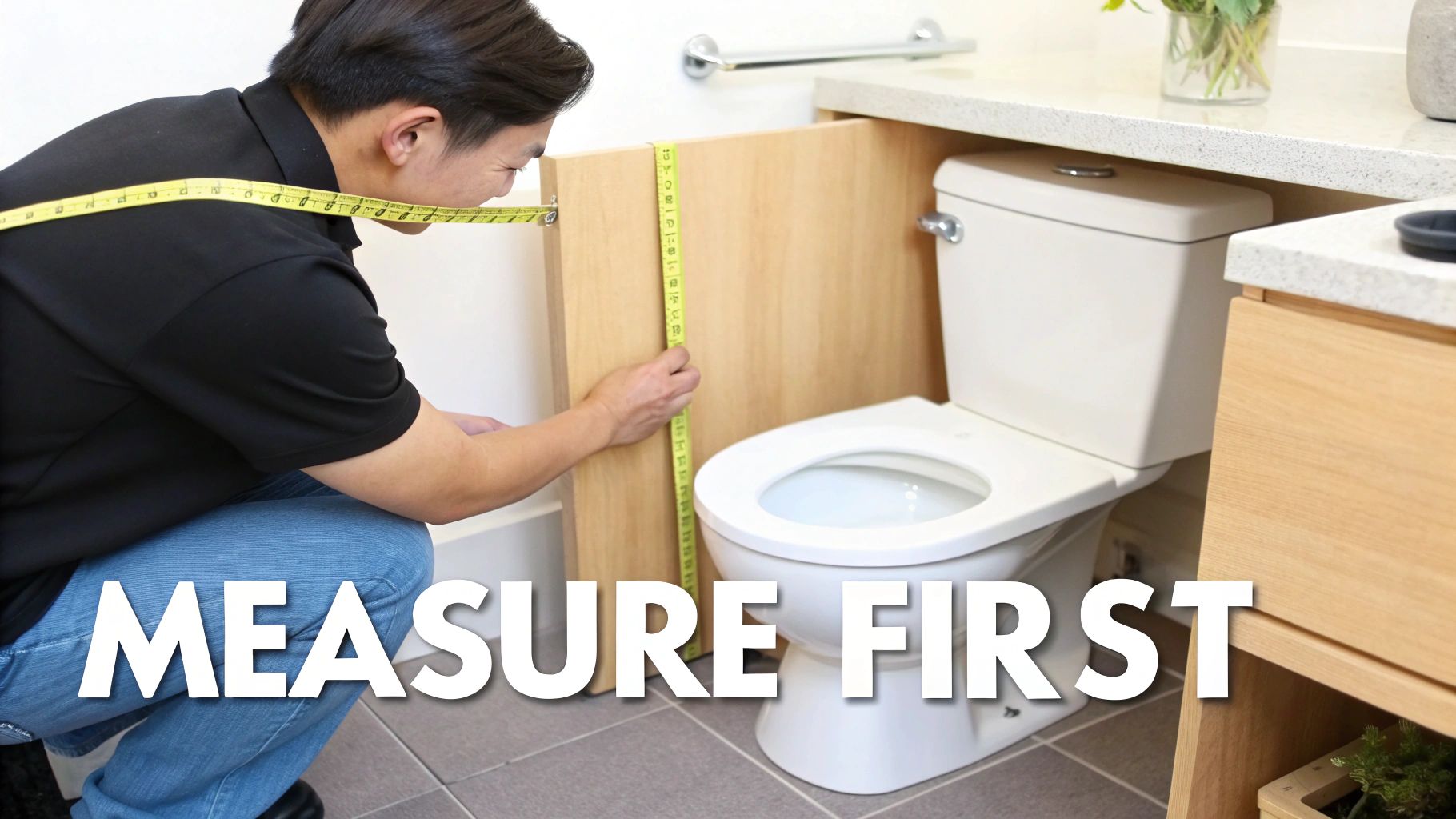
Before you even think about colours or finishes, the single most important tool for your new toilet and sink cabinet is the humble tape measure. In any bathroom renovation, fit isn't just a detail—it's everything. Getting the layout right from the start ensures your new vanity improves the room’s flow instead of turning it into a cramped, awkward obstacle course.
Proper measurement is about more than just the width, depth, and height of the available space. You need to account for crucial clearance zones. Can the bathroom door swing fully open without smacking the corner of your new cabinet? Is there enough room for drawers to pull out completely without hitting the toilet or shower screen?
Think of it as choreographing a dance; every piece needs enough room to move without clashing. These practical considerations are the bedrock of a truly functional bathroom.
Planning for Real-World Use
To make sure your new layout works in practice, you need to map out these key clearances. A good rule of thumb is to leave at least 60 cm of clear floor space in front of the vanity. This gives you enough room to stand comfortably, bend over the sink, or open lower cabinets without feeling squashed.
You also need to pay close attention to the relationship between the vanity and the toilet. A minimum of 40 cm from the centreline of the toilet to the side of the cabinet is essential. This simple measurement prevents the space from feeling uncomfortably tight and makes daily use and cleaning far easier.
Common Vanity Types for Singaporean Homes
Choosing the right style of toilet and sink cabinet is key to making the most of your space. Each type offers different benefits, especially for the typical HDB or condominium bathroom where every centimetre counts.
- Floating (Wall-Mounted) Cabinets: These are fixed directly to the wall, leaving the floor clear. This creates an illusion of a bigger, airier room, making them a fantastic choice for smaller bathrooms. Bonus: cleaning the floor is a breeze.
- Freestanding Cabinets: These units stand on the floor, much like a traditional piece of furniture. They usually offer the most storage, with deep drawers and cupboards perfect for family bathrooms where storage is always in demand.
- Corner Vanities: Designed specifically to tuck into a 90-degree corner, these are brilliant space-savers. They turn an otherwise awkward or wasted spot into a fully functional area, which is a lifesaver in unusually shaped or very compact bathrooms.
The best choice for your home will balance your storage needs with your available footprint, creating a bathroom that feels both organised and spacious.
Comparing Vanity Cabinet Types for Singapore Homes
With bathroom space often at a premium in Singapore, picking the right vanity is crucial. This table breaks down the most common options to help you decide which one best suits your home's style and functional needs.
| Vanity Type | Best For | Pros | Cons |
|---|---|---|---|
| Floating | Small bathrooms, minimalist designs, and easy cleaning. | Creates a sense of space; makes floor cleaning simple; modern look. | Less storage capacity; requires strong wall support for installation. |
| Freestanding | Family bathrooms, traditional aesthetics, and maximising storage. | Offers ample storage; easy to install; wide range of styles. | Can feel bulky in small spaces; may make the room feel smaller. |
| Corner | Awkward layouts, very small powder rooms, or guest bathrooms. | Excellent space-saver; turns unused corners into functional areas. | Limited storage and counter space; fewer style options available. |
Ultimately, the best vanity is one that solves your storage problems without creating new movement problems. Consider how you use the space daily before making a final decision.
Actionable Insight: The most beautiful toilet and sink cabinet will fail if it disrupts the natural flow of your bathroom. Prioritising accurate measurements and clearance planning is the difference between a stylish obstacle and a seamless, functional centrepiece.
This focus on smart design is a growing trend. Singapore's bathroom hardware sector continues to expand, driven by homeowners looking for clever fixtures. With the average HDB bathroom measuring just 2-3 square metres, renovations are increasingly focused on efficient, space-saving storage. You can explore more on these cabinet market trends and forecasts.
A well-planned layout isn't just about where the cabinet will sit; it's about how you'll move around it every single day. Taking the time to measure meticulously and visualise the final setup is the most important step towards a successful renovation.
Selecting Materials Built to Last in a Humid Climate
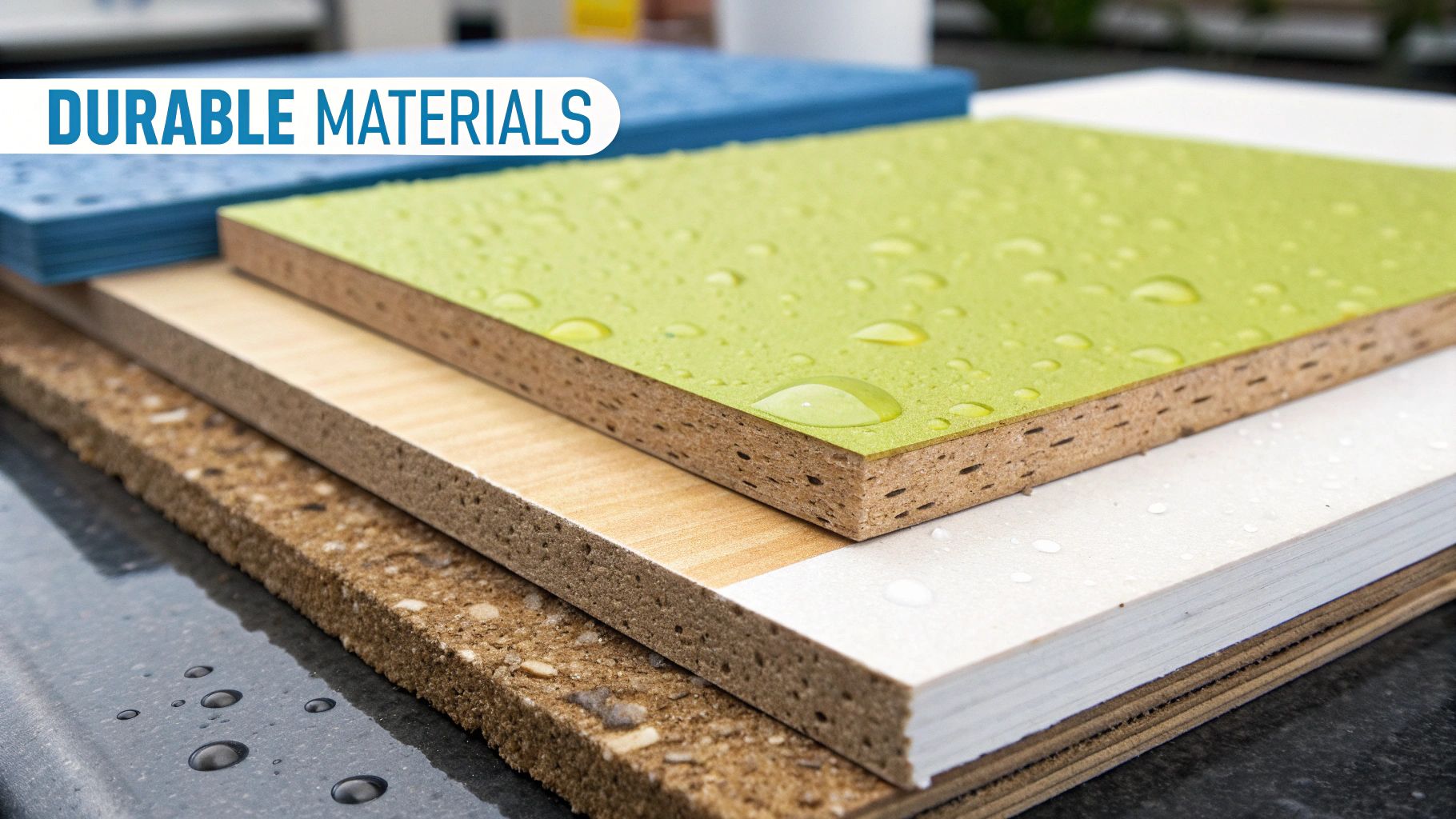
Here in Singapore, the constant battle against humidity is a reality for every homeowner. This is never more true than in the bathroom, where the wrong material choice for your toilet and sink cabinet can lead to absolute disaster.
A vanity that looks stunning in a dry showroom can quickly warp, swell, or peel when exposed to daily steam and splashes. That’s why selecting the right materials isn't just about looks—it’s a long-term investment in durability.
The core of your vanity cabinet is its foundation. Many off-the-shelf options use Medium-Density Fibreboard (MDF) or particleboard because they're cheaper, but these materials are like sponges in our climate. They soak up moisture, leading to irreversible damage and a much shorter lifespan.
Actionable Insight: For the relentless humidity of a Singaporean bathroom, there is no substitute for high-quality, moisture-resistant solid plywood. It’s engineered to withstand damp conditions without compromising structural integrity, making it the superior foundation for any lasting toilet and sink cabinet.
This is exactly why we almost exclusively recommend solid plywood for our custom carpentry. Unlike its cheaper counterparts, it holds its shape and strength, ensuring your investment stays as functional and beautiful as the day we installed it.
Choosing Your Cabinetry Core Material
The material inside your cabinet is just as important as the finish you see on the outside. Understanding the difference is key to making a smart decision that saves you from costly replacements down the road.
- High-Moisture-Resistant (HMR) Solid Plywood: This is the gold standard for bathroom cabinetry. Multiple layers of wood veneers are bonded with waterproof glue, creating an incredibly stable and strong panel that laughs off warping and moisture. It’s the ideal core for any long-lasting bathroom fixture.
- Medium-Density Fibreboard (MDF): Made from compressed wood fibres, standard MDF is a magnet for water damage. While moisture-resistant versions are available, they still don’t offer the same level of protection as solid plywood, especially if the surface gets scratched or chipped.
- Particleboard: This is your most budget-friendly option, but it's also the least durable. It’s essentially wood chips bonded with resin. Any direct water contact causes it to swell and crumble fast, making it a terrible choice for any area near a sink or shower.
Selecting a Hardwearing Countertop
The countertop is the real workhorse of your vanity, putting up with everything from water splashes to toothpaste and cosmetic spills. Your choice here affects both durability and the overall aesthetic.
- Engineered Quartz: A client favourite for good reason. Quartz is non-porous, meaning it resists stains, bacteria, and moisture. It’s incredibly durable, needs very little maintenance, and comes in a huge range of colours and patterns that can mimic natural stone without the headache.
- Sintered Stone: A newer material that's taking the design world by storm, sintered stone is manufactured under extreme heat and pressure, making it nearly indestructible. It is completely waterproof, highly resistant to scratches and heat, and perfect for a high-use family bathroom.
- Ceramic or Porcelain: A classic, reliable choice. Ceramic tops are often integrated with the sink for a seamless, clean look. They are totally waterproof, a breeze to clean, and very affordable, though they can be prone to chipping from heavy impacts.
The Unseen Heroes: Hardware and Fittings
Finally, never, ever underestimate the small details. The hinges, drawer runners, and handles are the moving parts you interact with every single day. In a humid bathroom, cheap metal hardware will inevitably rust, causing drawers to stick and doors to sag.
This is why we insist on using premium hardware from trusted brands like Blum. Their high-quality stainless steel and advanced coatings ensure that hinges and runners glide smoothly for years, resisting corrosion and providing that satisfying, silent soft-close. It’s a small component that makes a massive difference in the daily experience and longevity of your cabinet.
Unlocking Your Bathroom's Potential with Custom Carpentry
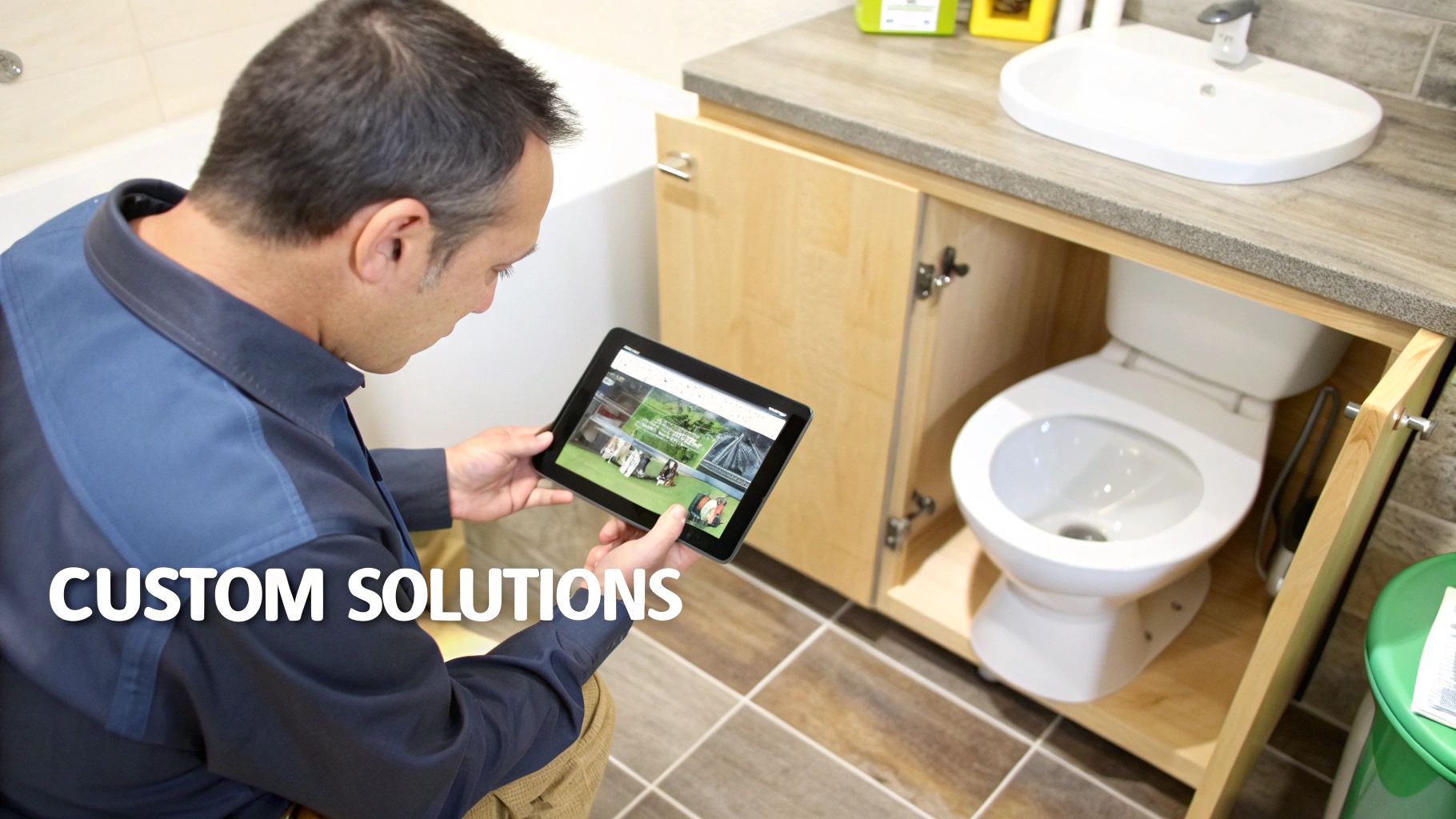
Sometimes, an off-the-shelf vanity just won’t do the job. Maybe your HDB bathroom has an awkward nook, a support column in a strange spot, or you’ve got a specific design vision that standard units can’t possibly bring to life.
This is where custom carpentry stops being a luxury and becomes a practical, problem-solving necessity. A bespoke toilet and sink cabinet is designed to solve these exact headaches. It’s built to the millimetre, ensuring not a single inch of precious bathroom space is wasted. It’s a solution that works with your room’s unique quirks, not against them.
Why Go Custom for Your Toilet and Sink Cabinet
Going custom is about more than just storage; it’s about creating a piece that’s perfectly woven into your lifestyle and your bathroom’s specific layout. You get a level of precision and personalisation that ready-made furniture simply can't match.
- Perfect Fit for Awkward Spaces: A custom cabinet can be built around pipes, tucked into corners, or scribed perfectly to uneven walls, giving you a seamless, truly built-in look.
- Complete Design Freedom: You’re in control of every single detail. From the exact shade of the laminate finish to the style of the handles, you can ensure the vanity perfectly complements your tiles, taps, and overall aesthetic.
- Lifestyle-Specific Features: Need a hidden laundry hamper? An integrated charging socket for your electric toothbrush? Or maybe a pull-out step for the kids? Customisation makes it happen.
This tailored approach is quickly becoming the new standard. The Asia-Pacific region's bathroom cabinets market holds a massive 39% global share, and the demand for combined toilet and sink cabinets is set to grow at a 7.2% CAGR. In Singapore, while single-door units have long been popular in high-rise living, we’re now seeing a huge surge in demand for custom multi-door options as homeowners look for more organised, personal spaces.
Visualising Your Perfect Cabinet Before It’s Built
One of the most powerful tools in our design process is 3D visualisation. Before a single piece of plywood is even cut, we create a detailed, photorealistic render of your proposed cabinet. This isn’t just a simple sketch; it’s a digital prototype of your future bathroom.
This process lets you:
- See the final look in context, making sure it fits perfectly with the rest of your bathroom design.
- Fine-tune every detail, from the height of the countertop to the internal drawer layout.
- Approve the design with total confidence, which means no guesswork or unwelcome surprises on installation day.
Actionable Insight: 3D visualisation bridges the gap between imagination and reality. It empowers you to make informed decisions, ensuring the final custom piece is not just what you asked for, but exactly what you envisioned.
For instance, a recent client had a narrow master bathroom with very little wall space. Using 3D renders, we designed a slim-depth, wall-to-wall floating vanity that maximised storage without making the walkway feel cramped. We also added a matching tall cabinet right beside the toilet for vertical storage—a solution that would have been impossible with standard units.
Real-World Examples of Customisation
Custom carpentry opens up a world of functional possibilities. We’ve designed units with hidden compartments for cleaning supplies, integrated recessed lighting for a soft ambient glow, and even tailored drawer depths specifically for a client’s favourite brand of skincare products.
These small, personal touches are what elevate a bathroom from merely functional to truly exceptional. It’s all about creating a space that works effortlessly for you. To dig deeper into design ideas and custom solutions, check out resources like Timbercloud's blog for custom carpentry insights. By working with a design firm, you get a partner who is dedicated to translating your unique needs into a beautifully crafted, highly practical centrepiece for your bathroom.
How Much Does a New Toilet and Sink Cabinet Cost?
Figuring out the budget is one of the first, and most important, steps in any bathroom renovation. When it comes to a new toilet and sink cabinet here in Singapore, the final price tag is really a mix of your own choices—from the materials you pick to the complexity of the installation.
A good budget starts with knowing exactly where your money is going. The biggest chunks will almost always be the cabinet’s core material, the countertop you fall in love with, the quality of the hardware (think hinges and drawer runners), and whether you grab something off-the-shelf or go for a fully custom-built piece.
Breaking Down the Costs
So, let's get into the nitty-gritty. What are the main things that will make the final bill go up or down?
- Cabinet Materials: For our humid Singapore climate, using high-moisture-resistant solid plywood is a no-brainer. It costs more upfront than standard MDF or particleboard, but it saves you from the headache of dealing with warped, mouldy cabinets a few years down the track.
- Countertop Selection: An integrated ceramic top is usually the most wallet-friendly option. If you decide to upgrade to a sleek engineered quartz or a premium sintered stone, the cost will climb, but so will the durability and style factor.
- Hardware and Fittings: It's tempting to save a few dollars here, but trust me, it's not worth it. Choosing high-quality, corrosion-resistant hardware from brands like Blum adds a bit to the initial cost but saves you from the sheer frustration of rusty hinges and sticky drawers later on.
- Ready-Made vs. Custom: Off-the-shelf units are definitely cheaper, but you’re stuck with their standard sizes and limited designs. A custom-built cabinet, on the other hand, is made to fit your bathroom perfectly and can be personalised to your heart's content, though it naturally comes at a higher price.
Estimated Budget for Toilet and Sink Cabinets in Singapore
To give you a clearer picture for your financial planning, here’s a general breakdown of what you can expect to spend on different types of vanity units. These estimates cover the materials and basic installation, but remember that more complex projects can shift the numbers.
| Cabinet Type | Typical Price Range (SGD) | Key Cost Factors |
|---|---|---|
| Ready-Made Unit | $300 – $800 | Basic materials (MDF/particleboard), simple hardware, standard sizes. Installation may be an additional cost. |
| Mid-Range Custom | $900 – $1,800 | Solid plywood core, laminate finish, quality quartz countertop, and reliable soft-closing hardware. |
| Premium Custom | $2,000+ | High-end materials like sintered stone, premium brand fittings, and complex design features (e.g., integrated lighting). |
This table should serve as a solid starting point. Your final quote will always depend on the specifics of your design and the unique conditions of your bathroom.
Don't Forget the Potential Hidden Costs
Beyond the price of the cabinet itself, there are often a few other expenses that can pop up during installation. It’s smart to factor these into your total budget to avoid any nasty surprises.
Actionable Insight: The most common oversight we see in bathroom renovation budgets is not accounting for plumbing and tiling adjustments. Moving a water pipe just a few centimetres can mean hacking the wall, which then requires retiling the entire affected area.
Be ready for a few potential add-ons, such as:
- Plumbing Modifications: Re-routing water supply lines or waste pipes to match your new cabinet's layout.
- Tiling Work: Patching up or completely retiling walls and floors, especially if the new cabinet has a different footprint than the old one.
- Electrical Work: Adding new power points for things like integrated cabinet lighting, backlit mirrors, or shaver sockets.
- Disposal Fees: The cost to haul away and properly dispose of your old vanity and any construction debris.
By keeping all these elements in mind, you can put together a comprehensive budget that gets you a beautiful, functional toilet and sink cabinet that will last for years—all without the stress of unexpected bills.
Got Questions About Bathroom Vanities? We’ve Got Answers.
When you’re planning a bathroom refresh, the vanity is almost always a hot topic. It’s the functional heart of the space, after all. Here are some straightforward answers to the questions we hear most often from Singaporean homeowners.
What’s the Best Sink Cabinet Material for a Humid HDB Bathroom?
In Singapore's climate, there's a clear winner: high-quality, moisture-resistant solid plywood. Forget about particleboard or standard MDF, which are notorious for swelling and peeling when they meet our humidity.
Solid plywood is built to last. When we finish it with a high-pressure laminate (HPL), it becomes incredibly durable, waterproof, and a breeze to clean. Think of it as a smart, long-term investment that won't give you headaches down the road.
How Much Space Should I Leave Around My Vanity?
For comfortable, everyday use, you’ll want at least 60 cm of clear floor space in front of your vanity. If you’re placing it next to the toilet, make sure there’s a minimum of 40 cm from the toilet’s centreline to the side of the cabinet.
But here’s the most crucial check: can your cabinet doors and drawers swing open completely without banging into the bathroom door, shower screen, or the toilet itself? A professional can map this out perfectly, even in the tightest of layouts.
Can I Swap My Old Pedestal Sink for a Vanity Cabinet?
Absolutely! This is one of the smartest upgrades you can make to instantly boost your storage. But it’s not just a simple swap-out. Your existing plumbing will need a professional look-over.
The water supply and waste pipes might need to be shifted to tuck neatly inside the new cabinet. This could involve some minor hacking and tiling work on the wall and floor, but a good plumber or designer can walk you through the cleanest way to get it done.
Actionable Insight: The real magic of replacing a pedestal sink is turning that wasted floor space into practical, hidden storage. It’s a simple change that can completely transform how you use your bathroom, especially in smaller apartments where every centimetre is precious.
Are Floating Vanities a Good Idea for Small Bathrooms?
They’re a brilliant choice. By mounting the cabinet to the wall, floating vanities create the illusion of a bigger, airier room simply because you can see the floor underneath. It instantly makes the space feel less cluttered and makes mopping the floor so much easier.
While you might sacrifice a tiny bit of storage compared to a floor-standing unit, the visual payoff is huge. Just be sure your wall is strong enough to support it—that’s a non-negotiable first step.
Ready to create a bathroom that perfectly balances style and function? The team at KIVO brings decades of expertise in custom carpentry and interior design to create bespoke solutions for your home. Schedule your consultation with us today and let’s start designing your dream space.