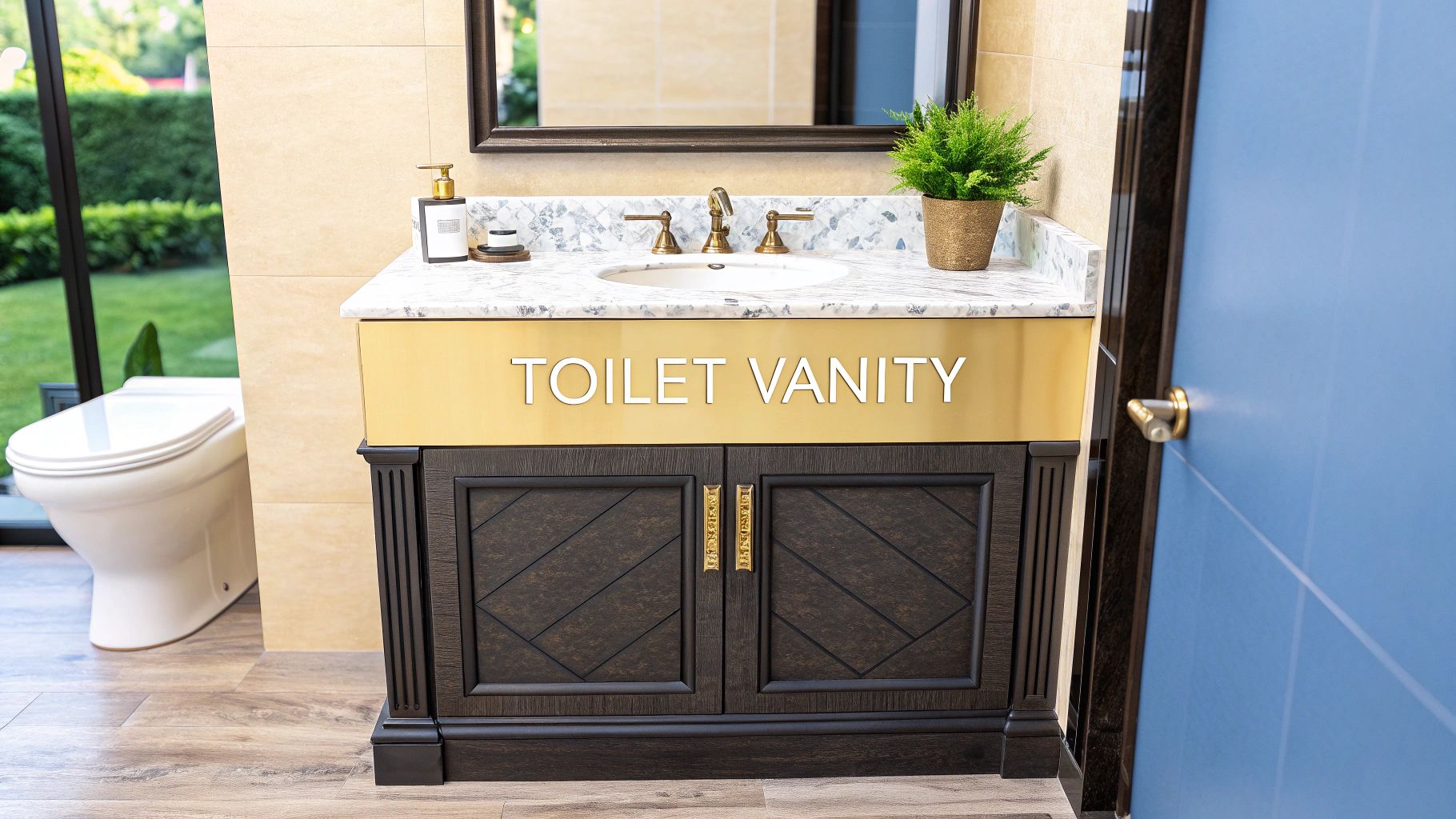
A toilet vanity cabinet is much more than just a place to put your sink. It’s the hardworking centrepiece of modern bathroom design, neatly combining a sink, countertop, and storage into one seamless, elegant unit. It goes beyond pure function, becoming a core design element that keeps your essentials organised and truly defines the room's entire feel.
The Modern Centrepiece of a Singapore Bathroom
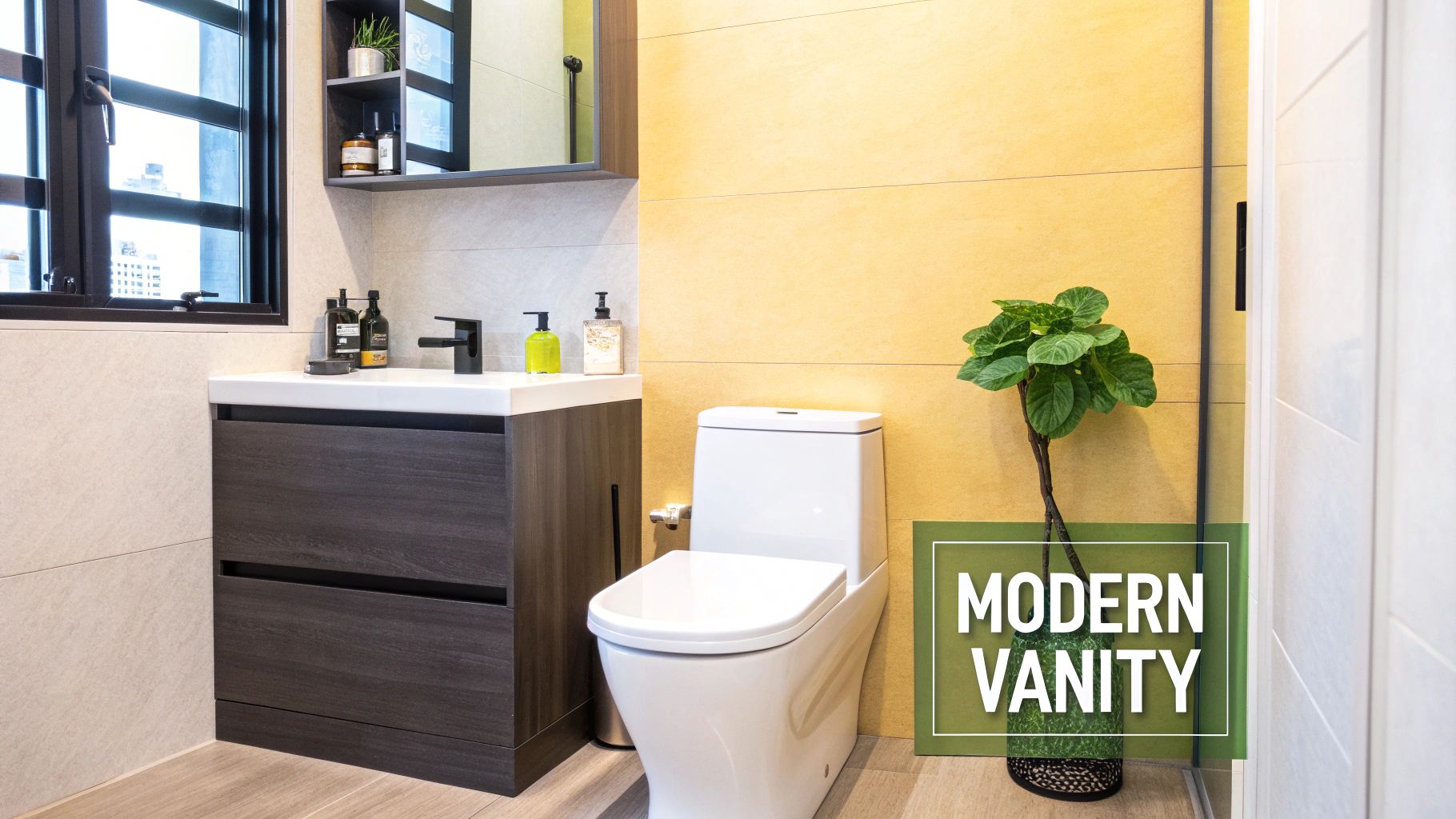
Long gone are the days when the vanity was just a spot to wash your hands. Today, it's the functional and aesthetic anchor of the bathroom. This is especially true in Singapore’s space-conscious homes, from HDB flats to condominiums, where every single design choice has to deliver maximum impact. Getting the right vanity isn't just a small detail; it's a critical decision that dictates both how you use the space and how it looks.
A thoughtfully chosen cabinet can transform a cramped, cluttered bathroom into an organised, stylish sanctuary. It makes the most of every square inch, giving you essential storage that keeps countertops clear and your daily routines running smoothly. It’s amazing how this one piece of furniture can influence the entire atmosphere of the room.
Beyond a Simple Fixture
Try thinking of the vanity not as a standalone item, but as the foundation of your bathroom's design. It sets the tone for everything else—the tiles you choose, the lighting you install, and the accessories that complete the look.
A well-designed vanity cabinet doesn't just hold a sink; it elevates the entire bathroom experience. It’s the difference between a purely functional room and a personal retreat that adds tangible value to your home.
In our experience with clients all across Singapore, we've seen a dramatic shift in expectations. Homeowners now need their vanity to wear multiple hats. It has to be a storage workhorse, a design statement, and a durable fixture that can stand up to our humid local climate without falling apart.
This guide moves beyond generic advice. We want to give you practical, actionable insights drawn from our years of crafting bespoke bathroom solutions right here in Singapore. We’ll walk you through how to:
- Select materials that are resilient against Singapore's high humidity, so you can avoid common issues like warping and mould.
- Choose the perfect size for your specific layout, whether you're working with a compact common toilet or a spacious master ensuite.
- Unlock the potential of custom designs to solve unique spatial challenges and create storage that fits your life perfectly.
- Realistically budget for your project by understanding the different factors that influence the final cost.
By focusing on these key areas, you'll be able to choose a toilet vanity cabinet that isn't just beautiful but is perfectly suited to your home and lifestyle.
Finding the Perfect Fit for Your Bathroom Layout
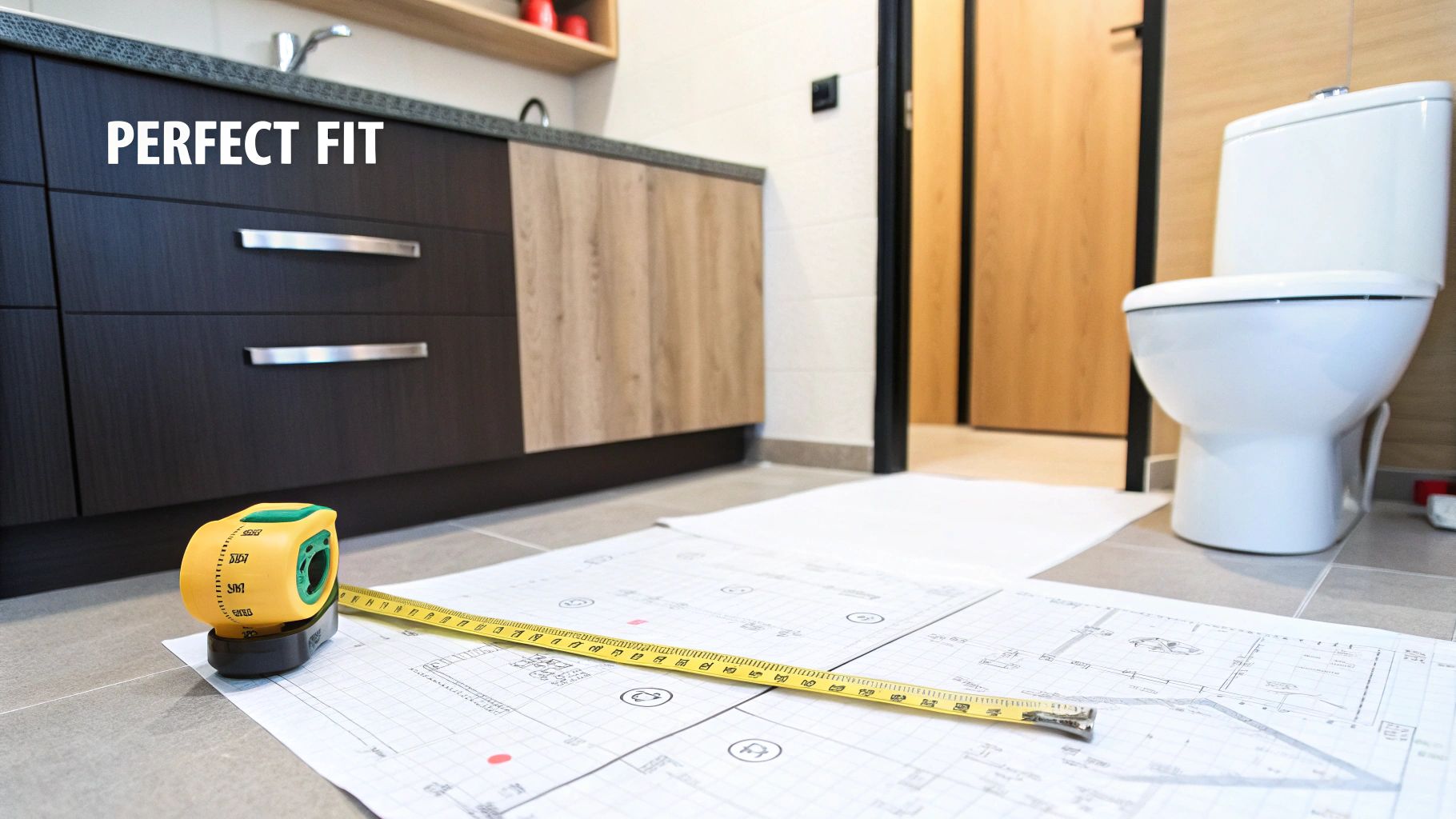
Choosing the right size for your toilet vanity cabinet is less about making a unit fit and more about mastering the proportions of your bathroom. Think of it like a perfectly tailored suit—the right fit doesn't just look good on its own; it enhances everything around it, creating a sense of balance and effortless flow.
An oversized vanity will make a compact HDB toilet feel cramped and cluttered. On the flip side, an undersized one looks lost and awkward in a spacious master bathroom. The real goal is to strike that sweet spot between beautiful form and everyday function, ensuring your daily routine is seamless and the room feels open and inviting.
It all starts with accurate measurements and a solid understanding of how you move within the space.
Mastering Your Measurements
Before you even think about falling in love with a particular design, it's time to grab the tape measure. Getting this part right prevents a world of headaches and costly mistakes down the line. Remember, you’re not just measuring the wall; you’re mapping out the usable, three-dimensional area.
Here’s a practical checklist:
- Total Width: Measure the wall space where you plan to place the vanity. Note the maximum width, but avoid filling this edge-to-edge for a more balanced look.
- Essential Clearance: Leave at least 15 cm on either side if it’s between two walls. If it's next to the toilet, a minimum of 20-30 cm is crucial for comfort and easy cleaning. For example, if your wall space is 120 cm, aim for a vanity around 90-100 cm wide.
- Traffic Flow: Ensure a clear pathway of at least 75 cm in front of the vanity. This allows you to open doors and drawers fully without blocking the walkway.
This careful approach ensures your new vanity doesn’t just fit—it belongs. To see how these measurements play into the bigger picture, an ultimate guide to planning a bathroom renovation can offer broader layout strategies.
Single vs Double Sinks
The choice between a single or double sink is a big one, directly impacting the vanity size you'll need. It's one of the first things we discuss with our clients.
A single sink vanity is the versatile workhorse, perfect for the majority of Singaporean bathrooms. Widths typically range from 60 cm to 90 cm, offering plenty of counter space and storage for powder rooms, guest bathrooms, or common toilets. A 75 cm single vanity, for instance, hits a great balance, providing a generous basin while still leaving enough surface area for your daily essentials.
A double sink vanity is a true touch of luxury that demands more real estate, generally requiring a minimum width of 150 cm. This is the magic number that allows for two fully functional sink areas without making the countertop feel cramped. They are a game-changer for master bathrooms shared by couples, completely streamlining those busy morning routines. Anything less than 150 cm really starts to compromise the whole point of having two sinks in the first place.
The real luxury of a double vanity isn’t just having two taps; it’s the personal space and dedicated storage it gives each person. It transforms a shared bathroom from a point of congestion into a zone of parallel efficiency.
Standard Dimensions for Singaporean Homes
To help you get a clearer picture of what might work in your space, we've put together a simple table outlining common vanity sizes and where they fit best in typical Singaporean homes. This is a great starting point for your planning.
Table: Standard Toilet Vanity Cabinet Sizes and Their Best Fit
| Vanity Width Range | Best For (Room Type) | Sink Configuration | Typical Storage Solution |
|---|---|---|---|
| 60-75 cm | Compact HDB Common/Guest Toilets | Single Sink | Two-door cabinet, possibly with one top drawer |
| 76-120 cm | Standard HDB Master, Condo Common | Single Sink (Spacious) | A mix of drawers and cabinet doors |
| 121-150 cm | Larger Condo Master, Landed Property | Single or Compact Double | Generous drawers, pull-out organisers |
| 150 cm+ | Spacious Master En-suites | Double Sink (Standard) | "His & Hers" drawer stacks, central cabinet |
While these standard sizes provide a useful framework, the beauty of custom carpentry is that you're never locked into off-the-shelf dimensions. We can design a toilet vanity cabinet that perfectly utilises every centimetre of your unique space, turning awkward corners or tight spots into functional, beautiful storage.
Choosing Materials That Withstand Singapore's Climate
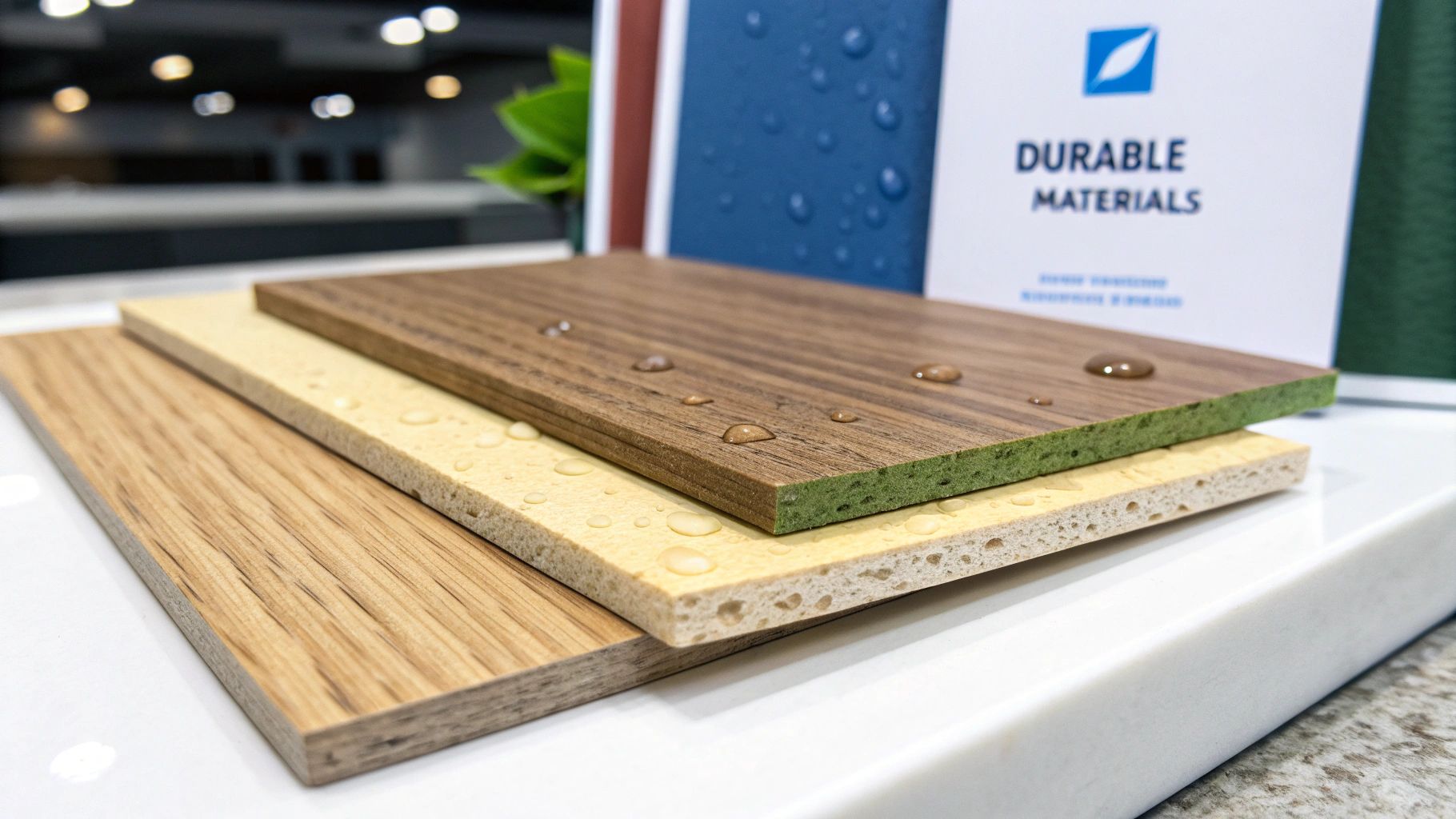
In Singapore, your bathroom is in a constant battle with humidity. This relentless moisture is the number one enemy of bathroom furniture, and it's ruthless—leading to warped wood, peeling laminates, and stubborn mould that seems to appear overnight.
So, when it comes to your toilet vanity cabinet, choosing the right materials isn't just about looks. It's a long-term investment in durability and, frankly, your peace of mind. An unsuitable material might look stunning for a few months, but it won't be long before it shows signs of wear in our climate.
This is why we always guide our clients toward options engineered specifically to resist moisture and hold their shape for years. Good material science is the foundation that ensures your final piece is as resilient as it is beautiful.
The growing sophistication of toilet vanity cabinets here mirrors Singapore's own evolution, with custom carpentry turning everyday bathrooms into personal luxury retreats. It's a booming space; market forecasts put the Singapore cabinet market, including vanities, at a projected value of SGD 250 million. This growth is fuelled by homeowners who are renovating with a smarter eye, demanding materials that deliver both style and serious longevity. You can learn more about these insights into the Singapore cabinet market.
The Best Core Materials for Your Cabinet Carcass
Think of the carcass as the skeleton of your vanity—it’s the main box structure and its functional backbone. It needs to be strong, stable, and above all, incredibly resistant to moisture.
While solid wood feels like a premium choice, many types are notorious for warping and swelling in our climate. That’s why we work with high-performance engineered materials instead.
- Marine-Grade Plywood: This is our top recommendation for any wet area, period. Unlike standard plywood, it’s bonded with waterproof glue. This is critical because it stops the layers from separating (delaminating) even with constant exposure to steam and splashes. It's exceptionally strong and holds screws tightly, making it a rock-solid foundation for any custom design.
- Moisture-Resistant MDF (MR-MDF): A huge leap from standard Medium-Density Fibreboard, MR-MDF is treated with a special moisture-repelling resin. While not completely waterproof like marine plywood, it performs incredibly well in humid bathrooms. Its biggest advantage? It provides a perfectly smooth surface, which is the ideal canvas for flawless paint or laminate finishes.
Choosing between marine plywood and MR-MDF often comes down to the final look you're after. Plywood gives you superior strength and water resistance, while MR-MDF offers a flawless base for those sleek, modern paint colours.
Selecting a Durable and Stylish Countertop
The countertop is the workhorse of your vanity. It has to handle daily water splashes, soap spills, and contact with all sorts of toiletries. The two most important qualities here are durability and non-porosity.
Quartz is an engineered stone that mixes natural quartz crystals with resin. The result is a surface that is completely non-porous. This means it won't absorb water, harbour bacteria, or stain easily. Its consistent patterns and colours make it a huge favourite for achieving that clean, contemporary aesthetic.
Sintered Stone is a newer material that's quickly gaining popularity, and for good reason. It’s made by fusing natural minerals under extreme heat and pressure—a process that mimics how natural stone is formed over millennia. This creates an ultra-durable, non-porous slab that’s resistant to almost everything: heat, scratches, and even UV light, so its colour won't fade over time. We often recommend it for clients who want the luxurious look of natural stone without any of the maintenance headaches.
Hardware and Finishes That Last
The final touches—your handles, hinges, and drawer runners—are just as crucial as the main materials. In a humid bathroom, low-quality metal hardware can rust, pit, and tarnish in just a few months, completely ruining the look of your beautiful new cabinet.
We only specify hardware with finishes designed to shrug off moisture:
- PVD (Physical Vapour Deposition) Coating: This is an advanced process that bonds the finish to the metal at a molecular level. It creates a surface that is unbelievably resistant to corrosion, tarnishing, and scratches. A PVD-coated brass or stainless steel finish offers a lustre that truly lasts.
- Stainless Steel (Grade 304): This specific grade contains chromium and nickel, giving it fantastic corrosion resistance. It’s a reliable, practical, and stylish choice for modern and minimalist designs.
By carefully selecting every single component—from the internal carcass to the external handles—we build a toilet vanity cabinet that doesn't just look exceptional on day one, but is engineered to stand the test of time in Singapore's demanding climate.
Unlocking Your Bathroom's Potential with Customisation
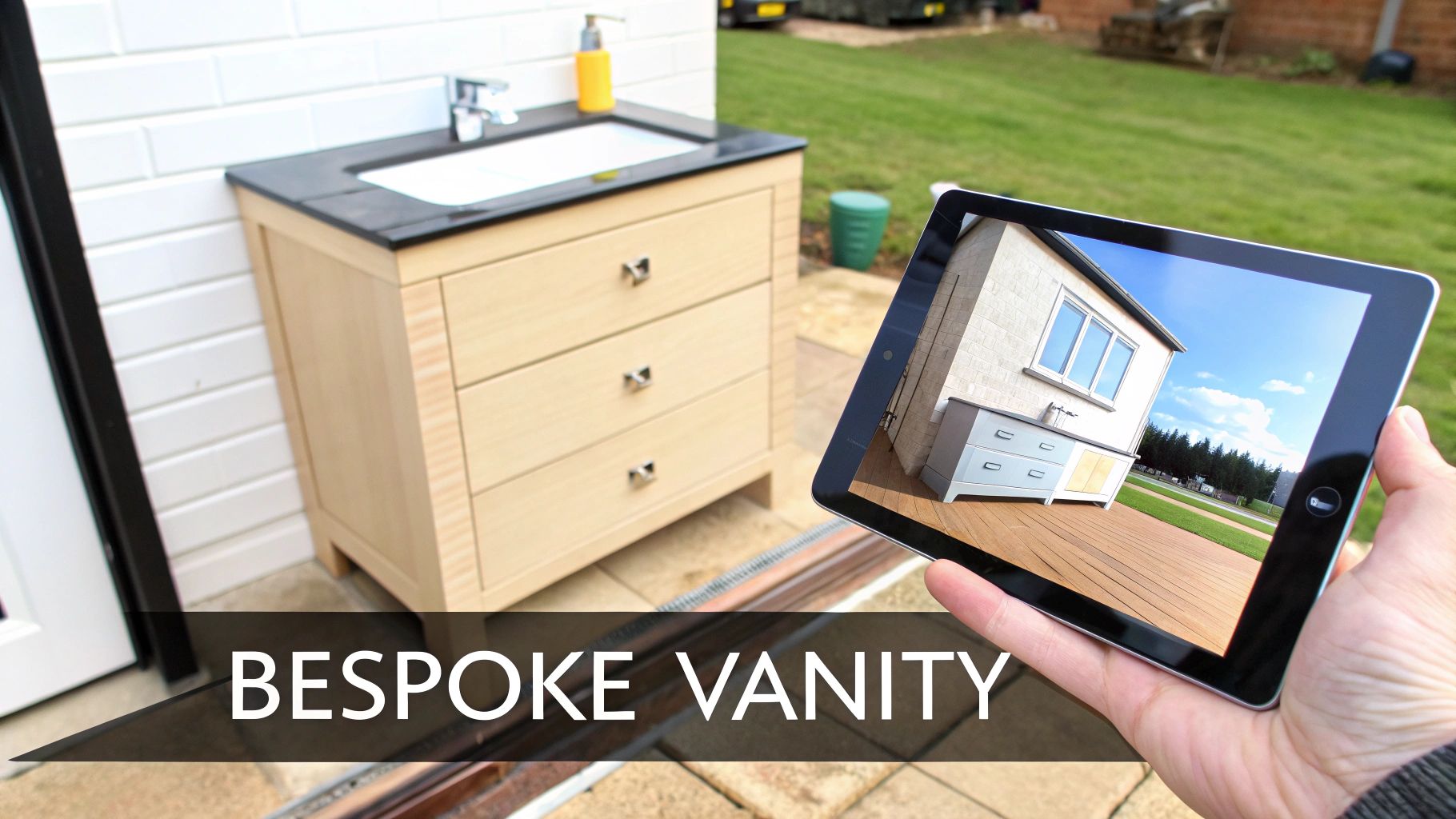
Off-the-shelf vanities are made for predictable spaces. The problem is, many Singaporean homes—from compact BTO flats to architecturally unique condos—are anything but predictable. A ready-made solution often feels like you’re forcing a square peg into a round hole. It’s a compromise.
This is where custom carpentry really comes into its own. A bespoke toilet vanity cabinet isn’t just about getting a "good fit." It’s about creating a smart, fully integrated piece of furniture, meticulously crafted to solve tricky spatial puzzles with elegance and precision.
Solving Unique Spatial Challenges
Many bathrooms, particularly in older HDB flats or oddly shaped condos, come with quirks that standard vanities just can’t accommodate. Think awkwardly placed pipes, non-standard wall niches, or unconventional room dimensions. These are common headaches we see all the time.
A custom-built solution turns these frustrations into opportunities. We can design a vanity that perfectly hides exposed plumbing, slots seamlessly into a recessed wall, or even wraps around a corner to squeeze out every last centimetre of usable space. This tailored approach gives you a clean, built-in look that a store-bought unit could never achieve.
Customisation isn’t just about making something fit. It’s about transforming a room’s limitations into its most defining and functional features. A well-designed vanity doesn’t just occupy space; it completes it.
Intelligent Storage Tailored to Your Life
While a perfect fit gets us started, true customisation is about designing smart storage that works for your lifestyle, not against it. It's the difference between having generic shelves and having a highly organised system built around your daily routines.
We work closely with you to understand exactly what you need to store and how you use your bathroom. This lets us build in thoughtful features that make everyday life just a little bit easier.
- Dedicated Cosmetic Drawers: We can design shallow drawers with custom dividers to keep makeup and skincare organised and within easy reach. No more cluttered countertops.
- Integrated Laundry Hampers: A simple tilt-out cabinet can cleverly hide a laundry basket, keeping used towels and clothes out of sight without taking up precious floor space.
- Hidden Charging Stations: Imagine a concealed power outlet inside a drawer—the perfect spot to charge an electric shaver or toothbrush while keeping messy wires hidden away.
- Appliance Pull-Outs: We can create a special pull-out section with heat-resistant holders to safely store hairstyling tools like dryers and straighteners, even when they're still warm.
It’s these small, personalised details that elevate a custom toilet vanity cabinet from a simple fixture to an essential part of your home.
Our Customisation Process Step by Step
Creating a bespoke piece is a collaborative journey. We make sure you’re involved and informed at every stage, from the first sketch to the final, flawless installation. Our process is designed to turn your vision into a beautifully crafted reality.
- Initial Design Consultation: It all begins with a chat. We’ll discuss your needs, style preferences, and the specific challenges of your space. We take precise measurements and walk you through material options and potential features.
- 3D Visualisation and Rendering: We then translate our conversation into a detailed 3D model. This helps you see exactly how the vanity will look in your bathroom, complete with your chosen materials and finishes. You can review the design, ask for changes, and approve every detail before we move forward.
- Artisan Fabrication: Once the design is locked in, our skilled carpenters get to work in our workshop. Using the high-quality, moisture-resistant materials we selected together, they meticulously craft each component of your vanity.
- Professional Installation: Our experienced team handles the final installation with care and precision, ensuring a perfect fit and seamless connection to your existing plumbing and electrical points. We coordinate everything to make the process smooth and hassle-free.
This thoughtful, step-by-step approach ensures your finished vanity isn’t just another piece of furniture, but a permanent, functional upgrade to your home.
Exploring Popular Design Styles for Modern Homes
Choosing a toilet vanity cabinet is as much an act of personal expression as it is a practical decision. Here in Singapore, our clients are consistently drawn to designs that offer a sense of calm, order, and quiet luxury. It’s a natural reaction to our fast-paced city life—the bathroom needs to be a personal retreat, a place to decompress.
The styles that truly last are those that beautifully balance clean aesthetics with smart functionality. It’s not just about looks; it's about how the vanity helps create an uncluttered, spacious feeling. Getting that balance right is the secret to a bathroom that feels both modern and timeless.
The Rise of Minimalist Scandinavian Design
Scandinavian design is less a trend and more a way of life built on simplicity, minimalism, and function. For a bathroom, this means vanities with crisp, clean lines, beautiful light wood tones like oak or ash, and absolutely no fussy details. We find this style is a go-to for making smaller HDB bathrooms feel significantly brighter and more open.
The floating vanity is the perfect example. Lifting the cabinet off the floor creates an unbroken line of sight, which tricks the eye into seeing a larger room. When you pair it with a simple white countertop and minimalist tapware, a Scandinavian-style toilet vanity cabinet becomes an understated, elegant focal point.
Japandi Warmth and Natural Textures
Japandi, that gorgeous blend of Japanese minimalism and Scandi function, is a style we love bringing to life for clients who crave warmth and tranquillity. It’s an aesthetic that celebrates natural materials, fine craftsmanship, and the beauty in imperfection (a concept known as wabi-sabi).
When it comes to a toilet vanity cabinet, this translates into a focus on rich textures and organic shapes.
- Fluted Wood Panels: Adding vertical wood slats to cabinet doors introduces a sophisticated texture that brings visual interest without making the space feel busy.
- Natural Stone Countertops: A countertop with soft, organic veining is a wonderful way to bring a little piece of nature indoors.
- Muted Colour Palettes: Think earthy tones, gentle greys, and warm beiges. These colours work together to create a calming, spa-like atmosphere.
Japandi is proof that minimalism doesn't have to feel cold or stark. It’s all about creating a space that feels intentional, uncluttered, and deeply connected to the natural world, transforming a purely functional room into a sanctuary.
Modern Luxury and Sophisticated Finishes
For anyone dreaming of a high-end, hotel-inspired bathroom, the modern luxury style is the perfect match. This approach is all about bold materials, sleek forms, and premium finishes that radiate elegance. It’s an especially popular choice for master bathrooms in larger condominiums and landed properties.
This style often embraces darker colour palettes—charcoal grey, deep navy, or rich walnut—which are then contrasted with striking metallic accents like brushed gold or matte black hardware. A wall-to-wall floating vanity with integrated LED under-lighting can create a truly dramatic, high-end look while also providing soft, ambient light. The magic is in the details: seamless handleless drawers, a slim-profile sintered stone top, and perfectly integrated sinks.
This desire for elevated design is part of a larger trend we're seeing in Singapore. Residential projects now account for 72% of the market share for bathroom vanities, a market valued at around SGD 110 million. This boom is fuelled by homeowners who are ready to invest more in creating premium, personalised spaces. You can explore the full research on the bathroom cabinets market to dig deeper into these trends.
A Realistic Cost Guide to Toilet Vanity Cabinets
Let’s talk money. Figuring out what you should realistically spend on a new toilet vanity cabinet is the first, and arguably most important, step in planning your bathroom renovation. Here in Singapore, prices can swing wildly, so it’s smart to know what your budget can actually get you.
Think of it like choosing your daily commute. You could take the bus, grab a taxi, or book a private car. They all get you where you need to go, but the experience, comfort, and final bill will be worlds apart.
The final price tag on your vanity isn't just one number. It’s a mix of factors: the size, the core materials you choose, how complex the design is, and the quality of the handles and hinges. This breakdown will help you plan your investment and avoid any nasty surprises down the road.
Breaking Down the Budget Tiers
To make sense of it all, we can sort vanities into three main camps, each with a typical price range you’ll find in Singapore.
Off-the-Shelf Units: These are the ready-made, grab-and-go options from big-box stores. They’re fast and wallet-friendly but offer next to no flexibility in size, material, or style.
Semi-Custom Options: This is the happy medium. You get to pick from a set menu of sizes, finishes, and hardware. It allows for a bit of personalisation without the price tag of a fully bespoke piece.
Fully Bespoke Solutions: This is where we at KIVO really shine. A fully bespoke toilet vanity cabinet is crafted from scratch to your exact needs. It fits your space like a glove, matches your aesthetic perfectly, and features clever storage built around your life.
This approach means you get exactly what you want, built with superior materials and craftsmanship that can stand up to Singapore’s humid climate. If you're looking for a wider view of project expenses, this expert guide to bathroom renovation costs is an excellent resource.
Estimated Cost Breakdown for a Toilet Vanity Cabinet in Singapore
Here's a handy table to give you a clearer picture of what to expect at different price points. It's a guide to help you align your budget with your bathroom aspirations.
| Vanity Tier | Typical Price Range (SGD) | Key Features | Best For |
|---|---|---|---|
| Off-the-Shelf | $300 – $800 | Basic materials (standard MDF), standard sizes, limited designs. | Quick fixes, rental properties, or very tight budgets. |
| Semi-Custom | $800 – $2,000 | Better materials (e.g., moisture-resistant MDF), choice of colours and hardware. | Homeowners who want some personalisation without a fully custom design. |
| Fully Bespoke | $2,000 – $5,000+ | Premium materials (marine-grade plywood), custom dimensions, unique designs, high-end hardware. | Discerning homeowners seeking a perfect fit, superior quality, and personalised storage. |
Remember, these are ballpark figures. The final cost for a bespoke piece will always depend on the specifics of your design—the materials, the complexity, and the finishes you choose.
Hidden Costs to Factor In
It’s easy to forget that the cabinet itself is just one piece of the puzzle. To get it installed properly, you'll need to budget for a few other essential services.
The total investment in a new vanity includes not just the unit, but the skilled labour required to install it correctly. Budgeting for plumbing and potential electrical work from the start ensures a smooth, seamless project without unexpected expenses.
Always make sure you've accounted for these extras:
- Installation Fees: A professional carpenter ensures a flawless fit and finish. It's not something you want to skimp on.
- Plumbing Work: You'll need a licensed plumber to connect the new sink and tap. This is non-negotiable for ensuring everything works perfectly and meets regulations.
- Electrical Work: Planning to add integrated lighting or power outlets inside a drawer? You'll need a certified electrician to handle the wiring safely.
- Haulage and Disposal: Don't forget the cost of having your old, tired vanity removed and properly disposed of.
Common Questions About Toilet Vanity Cabinets
As you get closer to finalising your bathroom renovation, it's completely normal for a few last-minute questions to come up. Choosing the right toilet vanity cabinet is a big decision, and you should feel 100% confident in your choice. To help clear things up, we've put together some straightforward answers to the questions we hear most often from homeowners in Singapore.
What Is the Difference Between a Floating and Freestanding Vanity?
A floating (or wall-mounted) vanity attaches directly to the wall, leaving open space underneath. This clever design trick makes a bathroom feel instantly bigger and airier—not to mention, cleaning the floor is a breeze. It’s an incredibly popular choice for modern HDB bathrooms for exactly this reason.
On the other hand, a freestanding vanity stands on the floor like a traditional piece of furniture. It often offers a bit more internal storage and gives the room a more classic, established feel. The right choice really comes down to your storage needs, the size of your bathroom, and the overall style you're aiming for. We find ourselves recommending floating vanities a lot to clients who want to maximise that sense of space in a smaller room.
How Long Does a Custom Toilet Vanity Cabinet Take to Install?
A fully bespoke vanity project, from our first chat to the final installation, typically takes between four to eight weeks. This timeline covers everything: the initial design consultation, creating detailed 3D models for you to approve, sourcing the perfect materials, handcrafting the cabinet in our workshop, and finally, the on-site installation.
Sure, picking up an off-the-shelf unit is faster, but a custom piece is a true investment in quality, durability, and a flawless fit. We always lay out a detailed project schedule right at the start, so you know exactly what to expect every step of the way.
Can I Install a New Vanity Without Changing My Plumbing?
While it’s technically possible, it’s highly unlikely to work out well, especially if you’re changing the vanity’s size or style. It's incredibly rare for a new sink and tap to line up perfectly with the existing water and drainage pipes in the wall.
To get a professional, leak-free finish that will last for years, we always insist on bringing in a licensed plumber. As part of our complete service, we coordinate with our trusted plumbing partners to make sure every connection is done right and meets all of Singapore's regulations.
What Is the Best Way to Maintain My New Vanity?
Keeping your new vanity looking its best is actually quite simple and just depends on the materials. For most wood and laminate surfaces, all you need is a soft, damp cloth and a mild, non-abrasive cleaner. If you've chosen a durable stone countertop like quartz, just be sure to wipe up spills quickly to prevent any chance of staining.
But the single most important thing? Ensure your bathroom has good ventilation to handle Singapore's humidity. This one simple habit is the best way to protect your beautiful new vanity for years to come. We also give every client a detailed care guide tailored specifically to the materials used in their project.
Ready to create a bathroom that perfectly balances style and function? The team at KIVO is here to bring your vision to life with a bespoke toilet vanity cabinet crafted just for you. Start your design journey with us today.