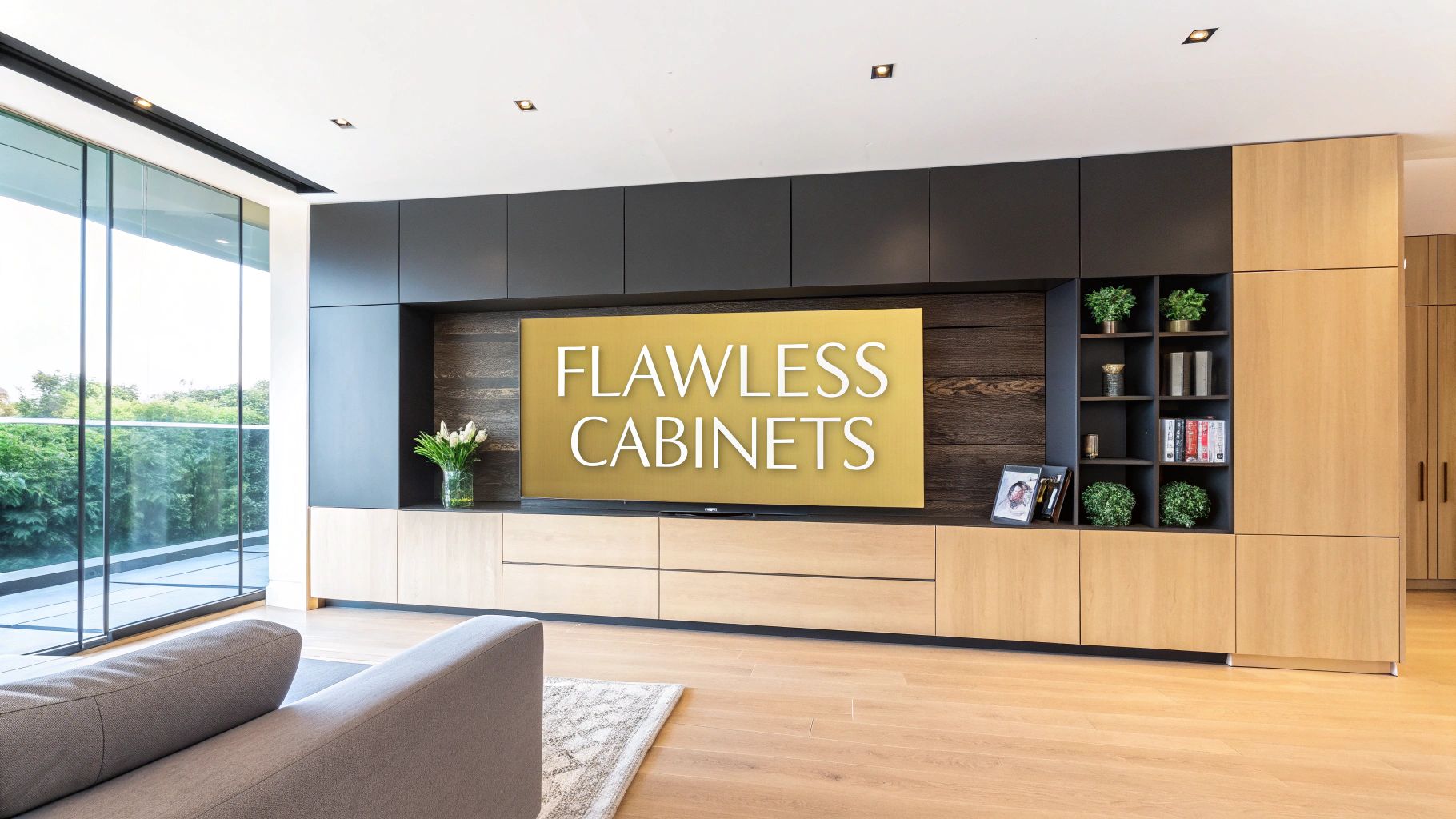
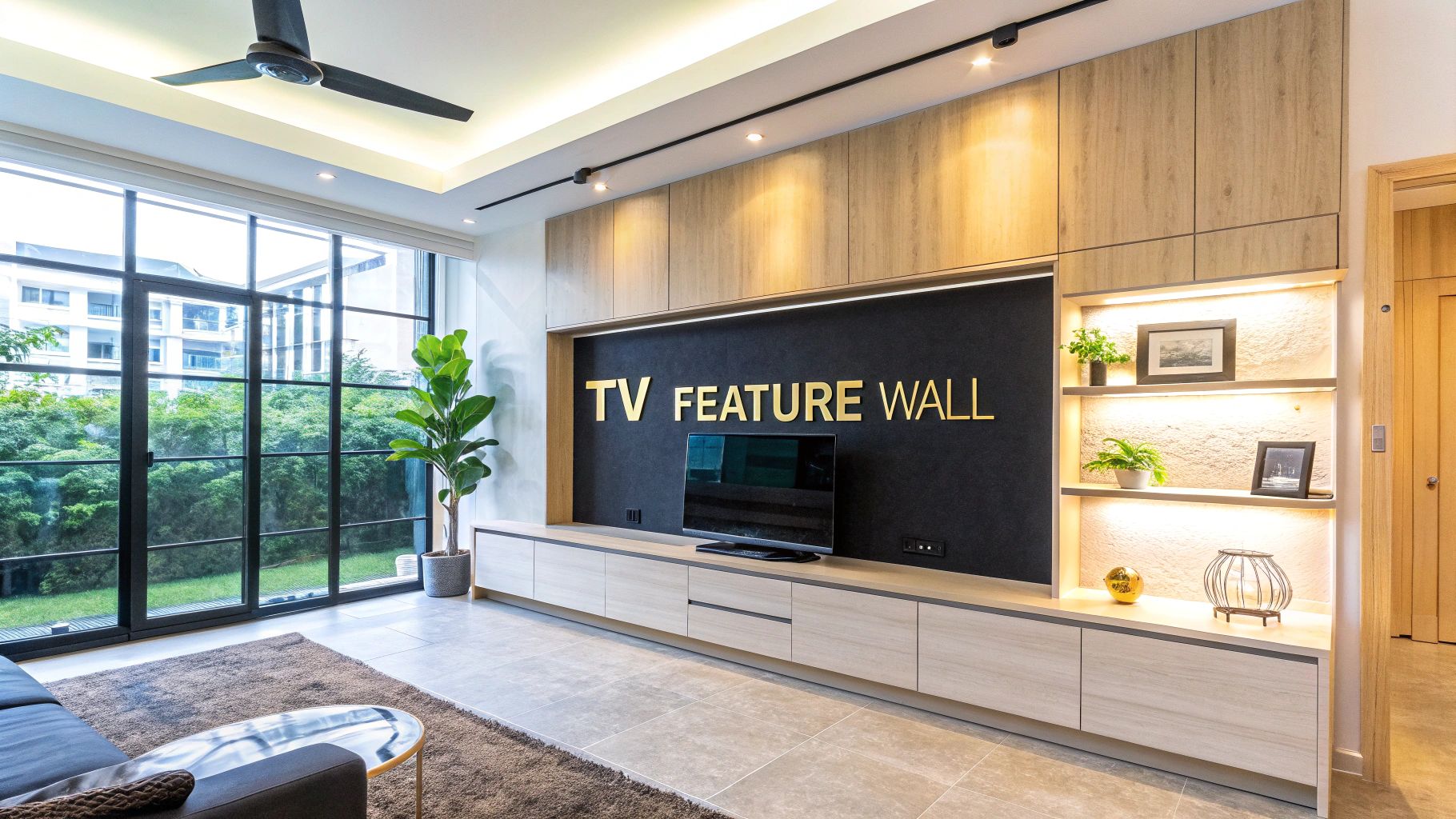
A well-designed TV feature wall in a Singapore home is more than a backdrop for your screen. It's the hardest-working piece of carpentry in your living room—a multifunctional centrepiece that conceals wires, adds smart storage, and creates a stunning focal point. From our experience with countless HDB and condo projects, it's the single most impactful upgrade for blending seamless function with personal style.
Why a Feature Wall is No Longer Just a Luxury in Singapore Homes
Staring at a tangled mess of cables from your TV, soundbar, and gaming console? You’re not alone. For many of us in HDB flats and condos where space is a premium, the TV area quickly becomes the epicentre of clutter. This is exactly where a thoughtfully designed TV feature wall makes all the difference.
This isn't just about mounting a panel behind the television. It's a custom-built, integrated solution that solves real-world problems and transforms the entire feel of your living space.
More Than Just a Pretty Backdrop
Think of it as your living room's command centre. A bespoke feature wall is crafted to solve the spatial and storage challenges we face in Singapore homes. Whether you're in a 4-room BTO or a larger condo, the right design can make a room feel bigger, tidier, and far more sophisticated.
We've seen it time and again: a well-executed feature wall completely elevates a home. It's your chance to inject personality through different materials, lighting, and layouts, all while ticking off practical, must-have functions.
Here’s a practical rundown of what a custom feature wall delivers:
- Conceal the Chaos: It masterfully hides all unsightly wires, power points, and media boxes within its structure, giving you a clean, polished look.
- Integrate Smart Storage: Instead of a separate TV console, custom cabinetry provides a dedicated spot for everything from your PS5 and sound system to remote controls and board games.
- Create a Focal Point: It properly anchors the living room, drawing the eye and giving the space a clear sense of purpose and style.
- Set the Mood: With integrated lighting like recessed LED strips, you can instantly create the perfect ambience for a movie night or a quiet evening in.
We often see clients try to solve clutter with off-the-shelf furniture, but it rarely works. The right TV feature wall doesn't just hold your electronics; it holds the room together. It turns a functional necessity into a statement of design that reflects how you live.
Ultimately, investing in a custom TV feature wall is about creating a space that is both beautiful and incredibly functional. It streamlines your daily life by giving everything a place, allowing you to relax and enjoy your home without the visual noise of tangled cables and mismatched furniture. It's a purposeful upgrade that pays dividends in both aesthetics and liveability.
Step 1: Planning Your Feature Wall with Precision
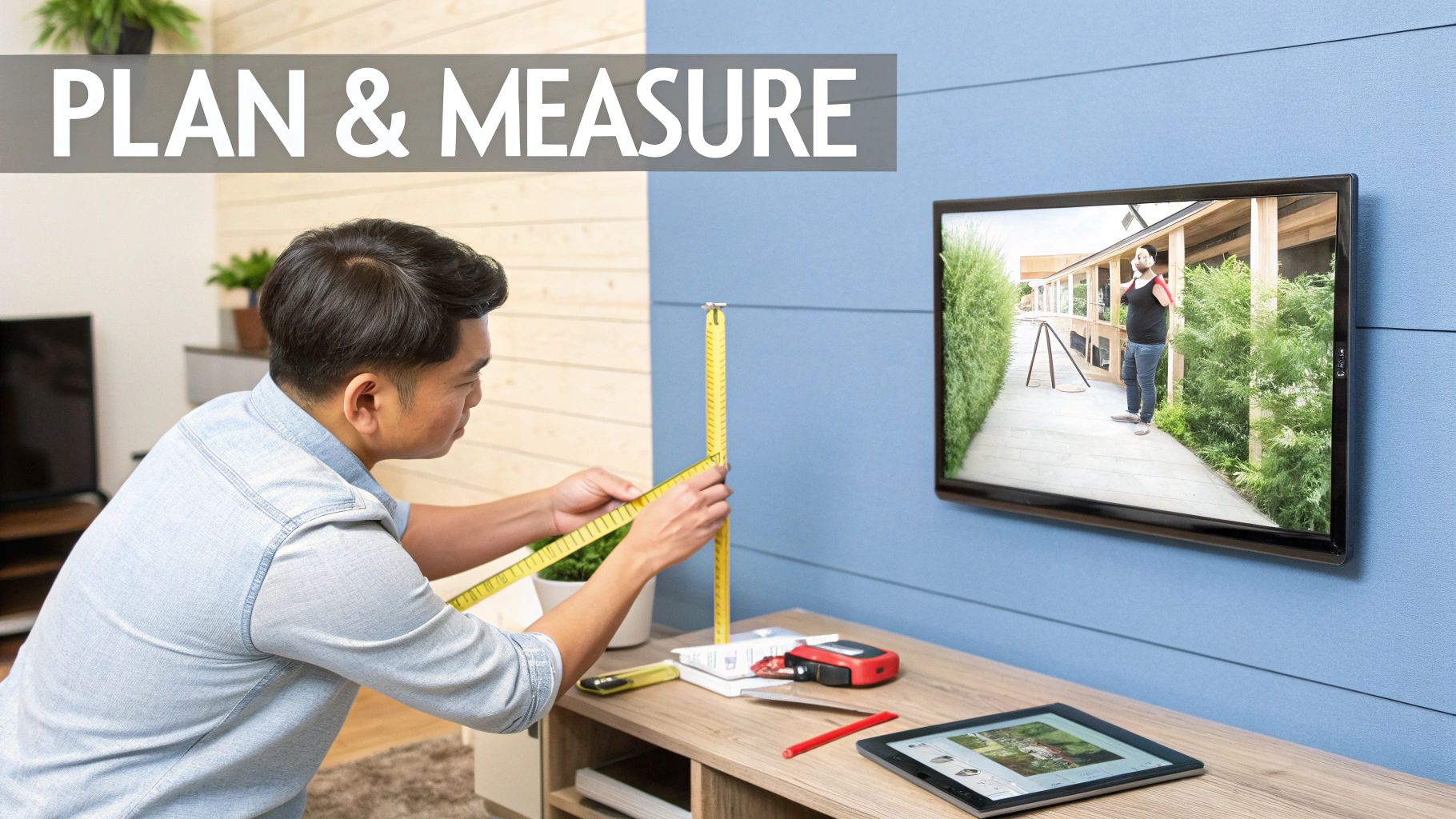
Before a single material is chosen, the most crucial work happens. It’s all in the planning. This is what separates a generic feature wall from one that genuinely elevates your living room. It’s about making it work perfectly for your home’s layout and your family’s lifestyle, not just copying a design from Pinterest.
The first practical step? Measure your space. In Singapore homes, where every centimetre counts, you can't afford to guess. Grab a measuring tape and get the exact width and height of the wall. Note the location of existing power outlets and any structural features like beams. This simple step informs every decision that follows.
Sizing Up Your Space and Screen
With wall dimensions in hand, consider the TV. The goal is a perfect balance where the screen doesn't overpower the wall or look comically small. A common mistake we see is homeowners buying a massive 75-inch TV for a 3-metre viewing distance, forcing everyone to turn their heads to see the action.
A reliable rule of thumb for comfortable viewing is a distance of 1.5 to 2.5 times the diagonal screen size. For a 65-inch TV, your sofa should be about 2.5 to 4 metres away. This isn't just about aesthetics; it's about avoiding eye strain. There’s a science to finding optimal TV positioning, and it pays to get it right.
The demand for bigger screens is a key reason custom feature walls are so popular. Singapore's television market is projected to reach USD 141.28 million by 2025, driven by our desire for a cinema experience at home. We constantly see client requests for integrating large screens—often 55 to 75 inches—into compact HDB living rooms. With 4K now standard, average screen sizes have jumped by over 15% in the past five years, challenging us to design solutions that house these giants without overwhelming the room.
Defining Your Wall’s Primary Functions
With the TV size sorted, ask yourself: what is this feature wall really for? Is it purely for aesthetics, or does it need to be a storage workhorse? Answering this now will save you a world of regret later.
We walk clients through a practical checklist to define their needs. Ask yourself these questions:
- What devices need a home? List everything: PlayStation 5, Nintendo Switch, soundbar, Wi-Fi router, remote controls. Do you want open shelves for display, or concealed cabinets to hide everything? For a recent client with two young kids, we designed deep, soft-closing drawers specifically to store game controllers and DVDs.
- What needs power? Count every single device that needs to be plugged in. We recommend planning for at least 2-3 extra outlets for future gadgets.
- What do you want to display? Family photos, art, or travel souvenirs? We can design integrated niches with accent lighting to create a personal gallery.
- What about sound? Will you use a simple soundbar or a full 5.1 surround-sound system? The design may need to accommodate specific speaker dimensions. For a recent audiophile client, we incorporated acoustically transparent fabric panels into the cabinet doors so the speakers were hidden but the sound quality was unaffected.
By defining the wall's purpose upfront—whether it’s a minimalist frame for the TV or an all-in-one entertainment and storage hub—you provide a crystal-clear brief. This ensures your TV feature wall isn't just a pretty face, but a perfect fit for how you actually live.
This clarity becomes the blueprint for success. A detailed plan covering measurements, TV size, and functional needs ensures the final build is exactly what you envisioned, preventing expensive changes and disappointments down the road.
Step 2: Choosing Materials That Work for Singapore's Climate
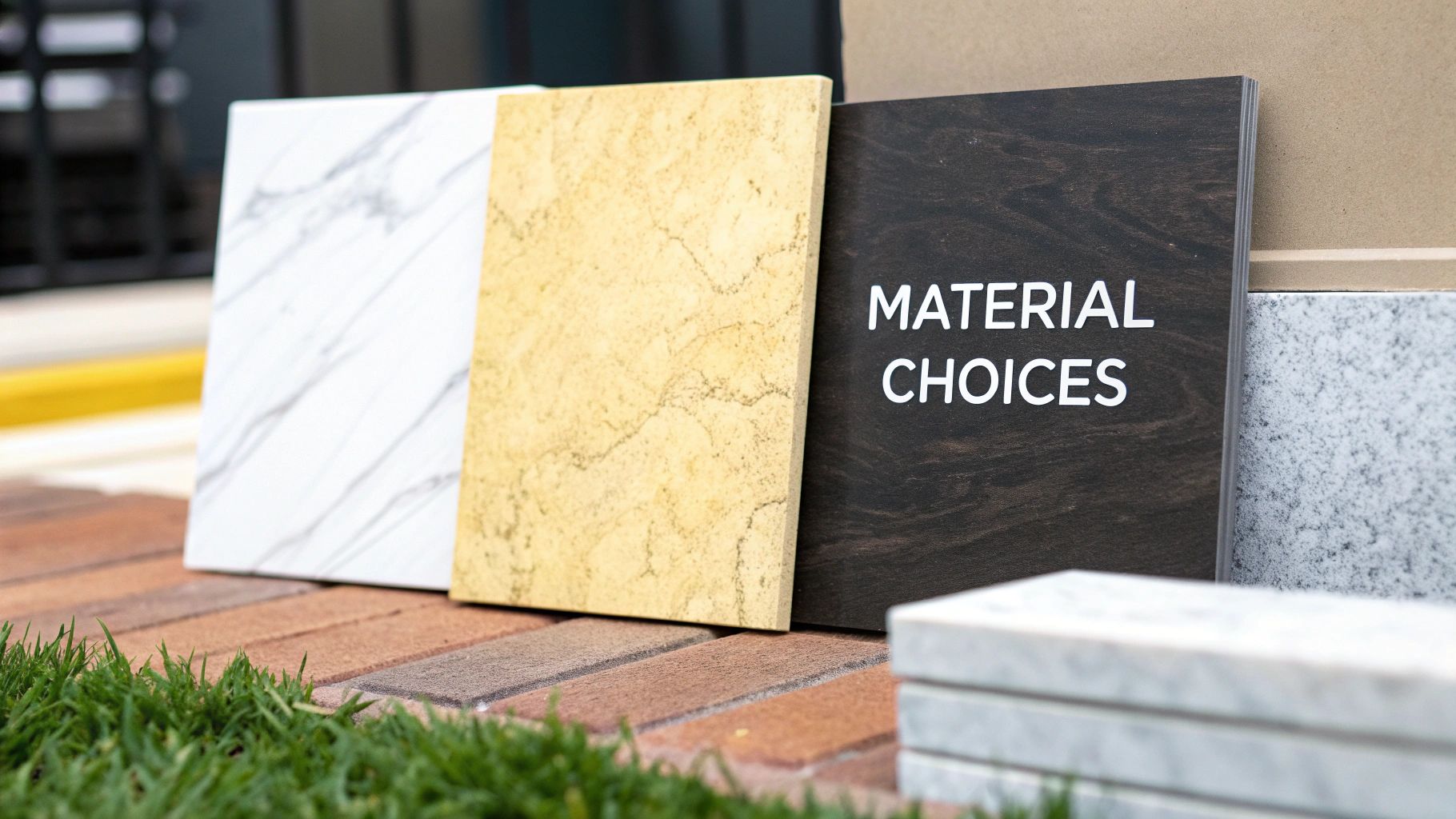
The materials you choose are the soul of your TV feature wall. They set the tone for your living room and must stand up to daily life. In Singapore's humid climate, it's a constant balance between aesthetics and practicality. We focus on materials that are not just stunning but also resilient enough for our local conditions.
The Practical Choice: High-Pressure Laminates (HPL)
For a TV feature wall in Singapore, high-pressure laminates (HPL) are the most popular and practical choice. Modern laminates are a world away from the plasticky surfaces of the past. Today's technology allows them to beautifully mimic everything from natural wood grain and stone textures to sleek brushed metal, offering incredible design flexibility at an accessible price point.
Their non-porous, sealed surface makes them incredibly durable and easy to maintain—a quick wipe-down is all it takes. This resilience is a huge advantage for families with young kids, as they handle scratches and minor knocks far better than natural materials.
The Trendy Choice: Fluted Panels
Fluted panels have surged in popularity, bringing texture and modern sophistication to a room. The vertical grooves create a beautiful play of light and shadow, which can make a wall feel taller and more dynamic. It’s an instant architectural upgrade.
They come in various materials, from natural wood veneers to durable laminates, so they can fit into almost any style—from minimalist Scandinavian to contemporary luxe. For example, a light oak fluted panel adds warmth and calm, while a dark walnut or charcoal finish can create a dramatic, moody backdrop.
Practical Tip: Avoid using fluted panels on the entire wall, especially in smaller HDB flats, as it can feel overwhelming. A more effective strategy we often use is to apply them as an accent—for instance, on the cabinet doors or as a vertical strip next to a smooth laminate surface. This creates a balanced and visually interesting composition.
The Luxury Choice: Sintered Stone and Marble
For a premium, high-end look, natural marble and its engineered counterpart, sintered stone, are the top contenders. Marble brings timeless, one-of-a-kind beauty, but its porous nature requires regular sealing to prevent stains—a higher-maintenance choice.
This is where sintered stone excels. It's an engineered surface made from natural minerals fused under intense heat and pressure, perfectly replicating the look of luxurious marble but with superior performance. It’s non-porous (so no stains from spills!), and highly resistant to scratches and heat. For many clients, sintered stone is the perfect compromise: the jaw-dropping elegance of marble without the maintenance headaches.
Feature Wall Material Comparison for Singapore Homes
Choosing the right material boils down to weighing aesthetics, durability, maintenance, and budget. Here’s a simple side-by-side comparison to help you decide.
| Material | Aesthetic & Style | Durability & Maintenance | Estimated Cost (per sq. ft.) |
|---|---|---|---|
| Laminates | Highly versatile; mimics wood, stone, and solid colours. Ideal for modern, minimalist, or Scandinavian styles. | Excellent. Scratch- and stain-resistant. Low maintenance—just wipe with a damp cloth. | S$15 - S$25 |
| Fluted Panels | Adds texture and verticality. Perfect for creating a contemporary, luxe, or Japanese-inspired look. | Varies by base material (wood, laminate, MDF). Can accumulate dust in grooves; requires occasional brushing. | S$20 - S$35 |
| Sintered Stone | Luxurious and sleek. Mimics natural stone like marble with precision. Great for modern luxury and hotel-inspired designs. | Exceptional. Non-porous, highly resistant to scratches, stains, and heat. Very low maintenance. | S$30 - S$50+ |
| Natural Marble | Timeless and unique. Each slab is one-of-a-kind. Conveys classic elegance and opulence. | Moderate. Porous and susceptible to staining and scratching. Requires periodic sealing. | S$40 - S$75+ |
Ultimately, the best material for you is one that fits your personal style, your lifestyle, and the amount of upkeep you’re willing to commit to. By understanding these key differences, you can make a confident choice that you'll be happy with for a long time.
Step 3: Integrating Technology for a Seamless Experience
A stunning feature wall can be instantly ruined by a jungle of tangled wires. The real magic of a custom-built TV feature wall in Singapore lies in what you don't see—the clever, seamless integration of all your technology. This is where beautiful design meets effortless function.
Meticulous planning at this stage is crucial. The goal is simple: create a clean, future-proof entertainment hub where you can just sit down, press a button, and enjoy yourself without a single messy cable in sight.
Smart Cable Management Strategies
The secret to that coveted wire-free look is planning the cable routes before construction begins. We design the feature wall's internal structure to act as a hidden highway for all your wiring. This isn't just about stuffing cables behind a panel; it's a strategic approach to concealment and future accessibility.
Properly planned home smart wiring solutions are essential. We map out every connection point in advance.
Here’s our practical approach:
- Integrated Conduits: We run PVC pipes or flexible conduits inside the wall’s framework. This allows you to easily pull through new or replacement HDMI, Ethernet, and power cords in the future without tearing the wall apart.
- Recessed Niches: Power sockets and data ports are tucked away in recessed boxes behind the TV and inside cabinets. This allows the TV to sit flush against the wall and eliminates awkward gaps from bulky plugs.
- Custom Cable Channels: For soundbars or satellite speakers, we often build dedicated channels into the panels to run speaker wires discreetly from your AV receiver to their exact mounting spot.
Housing Your Entertainment Devices
A modern living room is more than just a TV. It’s home to gaming consoles, sound systems, and streaming boxes. A well-designed feature wall needs to house all of this, while also keeping everything cool and easy to access.
This trend mirrors Singapore's tech-savvy renovation culture. Data shows that 65% of recent condo renovations included TV feature upgrades, driven by smart TV adoption expected to hit 72% of households by 2025. In our work, this translates to designs with dedicated soundbar niches and even integrated acoustic panelling for better audio.
Critical Tip: Don't forget ventilation. High-performance devices like a PlayStation 5 or an AV receiver generate significant heat. Without proper airflow, their lifespan and performance will be compromised.
To solve this, we design cabinets with effective ventilation. This could mean slotted shelving, discreet vents at the back of the console, or even installing silent, thermostat-controlled fans for high-power setups.
Planning for Tomorrow's Technology
Technology moves fast. The last thing you want is a beautiful feature wall that’s obsolete in five years. Future-proofing is a core part of our design philosophy.
We build in adaptability using a few key strategies:
- Accessible Panels: We design removable back panels or access points inside the cabinetry. This makes it simple to get to your wiring when you need to add or change a device later.
- Extra Space: We always recommend leaving a bit of extra space in your conduits and cabinets. An empty slot today could be perfect for tomorrow's must-have gadget.
- Modular Design: In some cases, adjustable shelving offers the flexibility to reconfigure your storage as your tech collection grows and changes.
By thinking ahead, we ensure your feature wall isn't just a stylish addition for today, but a functional and adaptable centrepiece for your home for years to come.
Budgeting and Finding the Right Partner
Let's talk numbers and process. This is where your vision becomes a tangible plan. Commissioning a custom TV feature wall in Singapore is a significant investment in your home's value and your daily enjoyment. It’s important to have a clear picture of the costs and the journey ahead.
So, what should you budget? The final cost boils down to three main factors: size, material choices, and design complexity.
For a simple, well-designed feature wall using quality laminates, you could be looking at a starting point of around S$2,500. For more ambitious designs with premium materials—think full-height sintered stone, integrated LED lighting, or extensive custom storage—the investment can range from S$8,000 to over S$15,000.
This reflects how we use our living rooms now. With stunning 4K TVs making up 45% of the market (up from 22% in 2019), homeowners want a setup that does their screen justice. Industry reports show over 35% of renovation projects in 2023-2024 included a custom TV console as families look to create a dedicated, clutter-free entertainment hub. You can dig deeper into local TV market trends over on Statista.
The KIVO Process: From Concept to Completion
Working with a professional firm should feel like a partnership. We've refined our process to be transparent and collaborative, so you feel confident at every stage.
Here’s how we turn an idea into a finished reality:
- 1. Initial Consultation & Brief: We listen. We discuss your lifestyle, aesthetic preferences, what the wall needs to do (storage, display), and your budget.
- 2. Design & 3D Visualisation: We translate our conversation into a detailed 3D rendering. This is a game-changer because you see exactly how the feature wall will look in your home, allowing for tweaks before any work begins.
- 3. Material Selection: With the design locked in, we guide you through our library of materials—from durable laminates and chic fluted panels to elegant sintered stone—to find the perfect combination.
- 4. Off-site Fabrication: Our carpenters build everything in our workshop. This minimizes dust and disruption in your home while maintaining strict quality control.
- 5. On-site Installation: The final step. Our team brings the finished components for assembly, handles all electrical work, and performs final touch-ups to ensure a perfect fit.
Why Professional Project Management is Crucial
A TV feature wall is a mini-project involving electricians, carpenters, and sometimes painters. Without a manager coordinating these moving parts, things can get messy, leading to delays and costly mistakes.
Think of a project manager as the conductor of an orchestra. They ensure every specialist—the electrician, the carpenter, the painter—plays their part at exactly the right time. The result is a smooth, harmonious process from start to finish.
This coordination is what separates a stress-free experience from a renovation nightmare. It ensures your project stays on schedule, on budget, and delivers the high-quality finish you expect.
Your Top Questions About TV Feature Walls, Answered
To wrap up, let's address the questions we hear most often from Singaporean homeowners. These answers come directly from our years of on-the-ground experience.
How Long Does It Take to Build a Custom TV Feature Wall?
On average, set aside four to eight weeks for the entire process, from our initial design chat to the final handover.
Here’s a realistic breakdown:
- Design & 3D Visualisation: 1–2 weeks
- Material Sourcing & Confirmation: 1 week
- Carpentry Fabrication (Off-site): 2–4 weeks
- On-site Installation & Finishing: 3–5 days
The most time-consuming part—the fabrication—happens in our workshop, keeping the disruption in your home to an absolute minimum.
Can a Feature Wall Be Installed in a Rented Home?
It's possible, but first, check your tenancy agreement. Major structural changes are usually not allowed. However, we can design semi-permanent or freestanding feature walls that have minimal contact with existing walls, often relying on just a few anchor points for stability. You get the built-in look without permanent alterations.
What Is the Best Way to Clean and Maintain My Feature Wall?
Maintenance is usually straightforward. For most laminates, a wipe with a slightly damp microfibre cloth is sufficient. Avoid harsh chemical cleaners as they can damage the finish.
Practical Tip: For premium surfaces, use a pH-neutral cleaner for sintered stone or marble to protect the sealant. For textured surfaces like fluted panels, a vacuum with a soft brush attachment is best for getting dust out of the grooves.
How Much Does a TV Feature Wall Cost in Singapore?
The budget for a TV feature wall in Singapore varies. A straightforward design using quality laminates for a standard HDB wall might start from around S$2,500.
A more complex project with premium materials like sintered stone, integrated LED lighting, fluted panels, and custom storage typically falls between S$8,000 to over S$15,000. The final cost is a direct reflection of the wall's size, the materials selected, and the complexity of the carpentry work.
Ready to transform your living space with a feature wall that perfectly blends style and function? The team at KIVO is here to guide you through every step. Contact us today for a consultation and let’s start designing the centrepiece of your home.