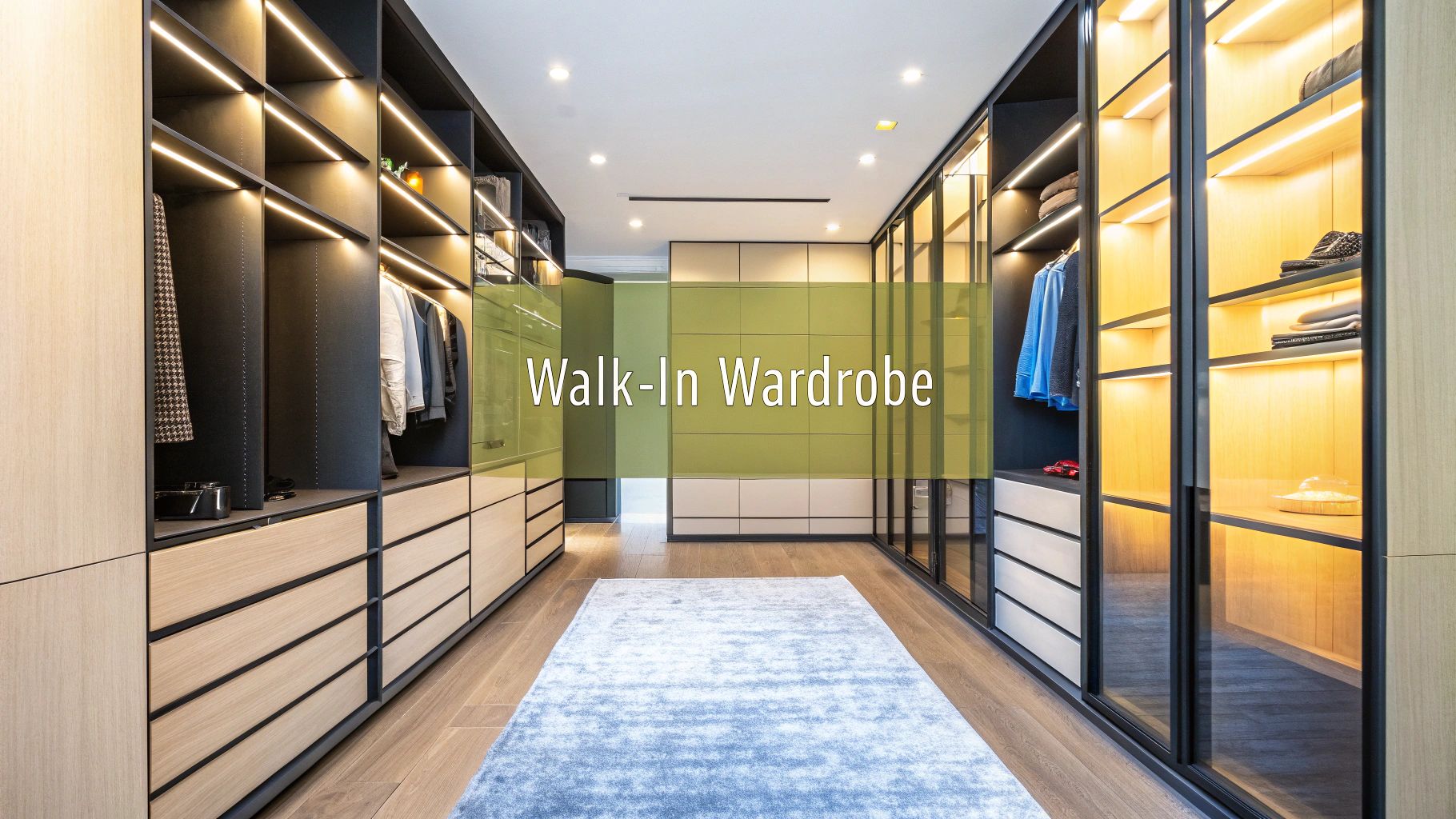
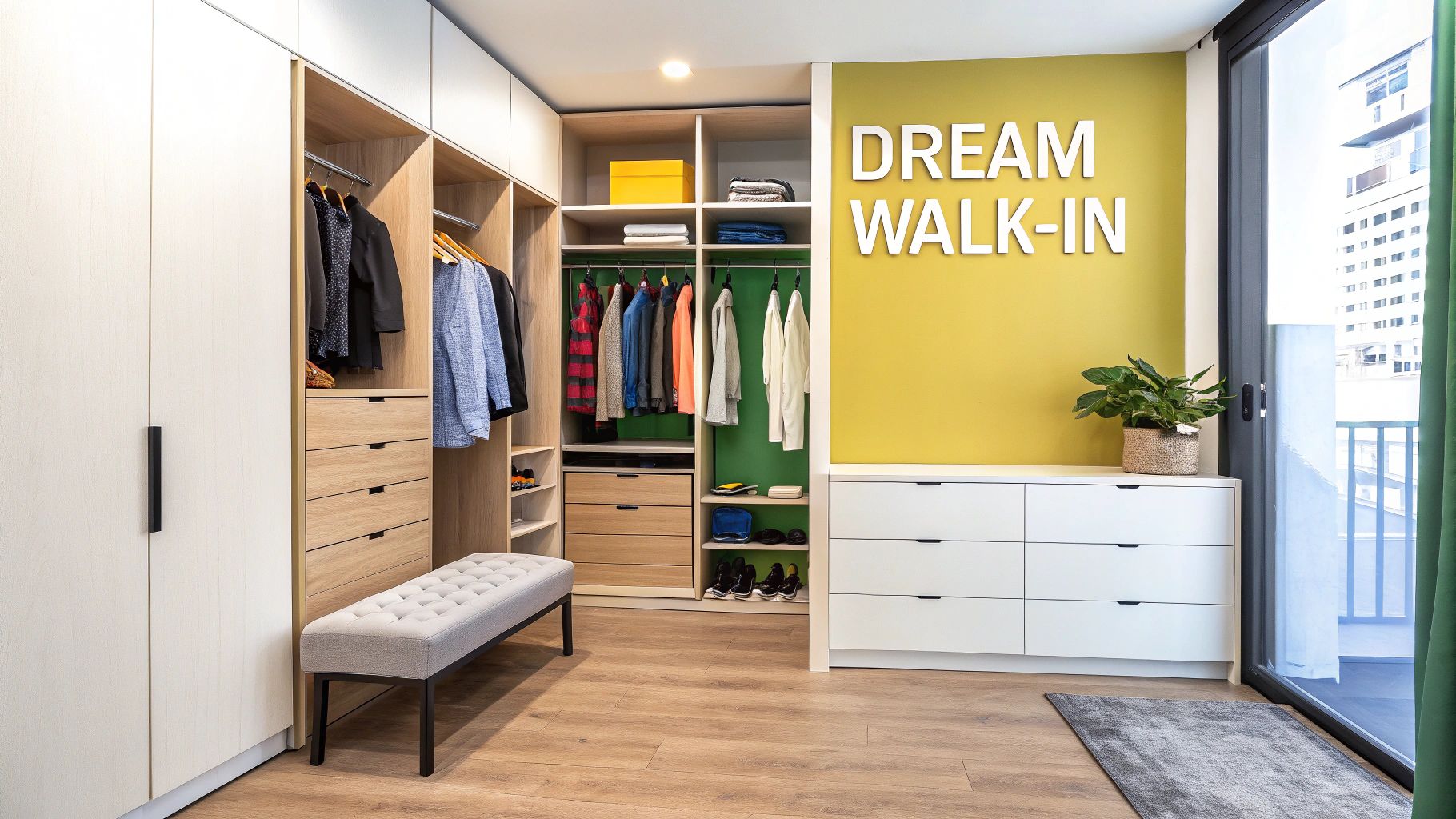
Stepping into a space designed just for you, where every item has a designated home—that’s the appeal of a custom walk in wardrobe in Singapore. This is no longer just a luxury feature in magazines; it's a practical, achievable upgrade for many homeowners.
More than just storage, it's about creating a personal sanctuary that streamlines your daily routine and adds tangible value to your property.
What a Walk In Wardrobe Can Do for Your Home
A well-designed walk-in wardrobe isn't just a big closet; it's an intentional space that elevates how you live. For many in Singapore, where every square foot is precious, dedicating an entire room to clothes might sound excessive. However, a properly planned walk-in can make your home feel more organised and spacious by consolidating clutter into one beautifully functional area.
This isn’t a fleeting trend. The demand for thoughtful storage solutions is growing. From our experience with clients, there's a clear shift: homeowners are increasingly willing to invest in functional, beautiful storage that suits their lifestyle. This observation aligns with market projections, such as a compound annual growth rate of about 4.2% from 2020 through 2026 for Singapore's wardrobe market. For more insights on custom wardrobe solutions, visit kivo.com.sg.
It’s More Than Just a Big Closet
What separates a standard closet from a personal haven? Customisation that fits your life. This guide moves beyond aesthetics to provide actionable insights for creating a functional walk-in wardrobe in Singapore, whether you live in an HDB, a condo, or a landed property.
We’ll break down what you need to know:
- Actionable Layouts: How to maximise space in common HDB and condo floor plans.
- Durable Materials: Choosing finishes that withstand Singapore’s humidity without warping.
- Realistic Budgeting: A practical look at what a custom build costs.
- The Design Process: A step-by-step roadmap from initial sketch to final installation.
By the end, you'll have a clear understanding of the key decisions needed to turn your idea into a functional and beautiful reality.
Designing a Layout That Fits Your Space
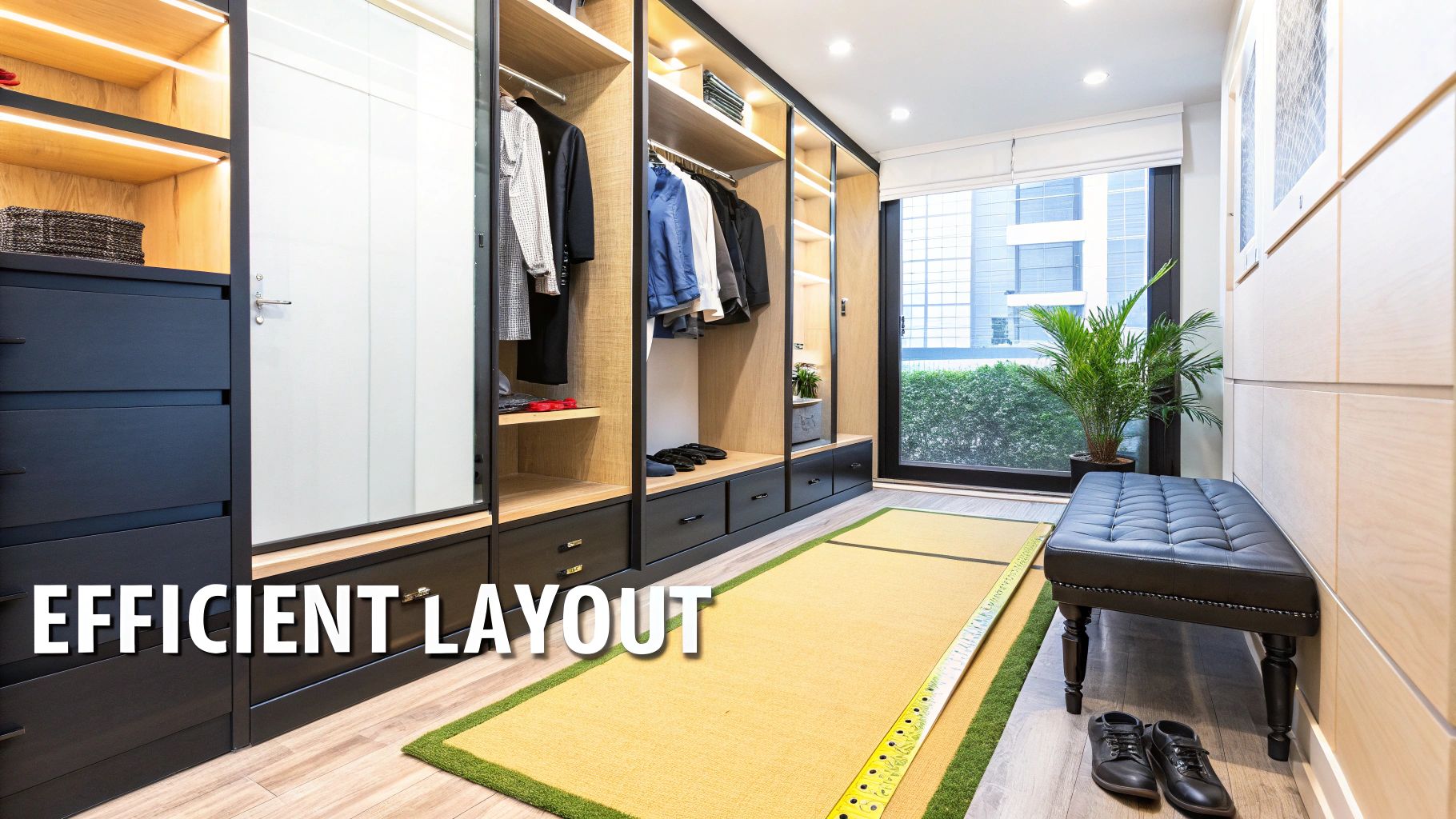
Before dreaming about finishes, we must focus on the layout—the foundation of a successful walk-in wardrobe in Singapore. A poor layout results in a cramped, frustrating space, regardless of its beauty. A great layout feels intuitive and makes your daily routine effortless.
The most critical measurement is the walkway: the clear path needed to move, open drawers, and get dressed without feeling confined.
Actionable Tip: Plan for a minimum walkway of 75cm (about 2.5 feet). Anything less makes the space feel tight, especially if two people use it simultaneously. This single dimension dictates much of the final design, ensuring your wardrobe is a comfortable sanctuary, not just a storage unit.
Core Wardrobe Dimensions
Next is the depth of the wardrobe cabinets themselves. This is determined by the standard clothes hanger.
For proper hanging, a depth of 60cm (about 2 feet) is essential. This allows suits, dresses, and shirts to hang freely without being crushed or protruding into the walkway. Cutting corners here compromises the wardrobe's primary function.
Choosing Your Layout Configuration
With core numbers locked in—75cm for the walkway and 60cm for cabinet depth—we can explore layout options. The right choice depends on your room's size and shape, a common challenge in Singapore homes.
Here’s a quick breakdown we share with clients to compare common layouts.
Walk In Wardrobe Layout Comparison for Singapore Homes
| Layout Type | Minimum Room Size (Approx.) | Best For | Key Advantage |
|---|---|---|---|
| Single-Sided | 1.5m x 2m | Small or narrow rooms, master bedroom partitions. | Most space-efficient, maximises open floor area. |
| Galley (Two-Sided) | 2.1m x 2.5m | Rectangular rooms, pass-through spaces. | Doubles storage capacity in an efficient corridor style. |
| L-Shaped | 2.5m x 2.5m | Square-shaped rooms, converting a spare bedroom. | Creates an open feel with excellent corner access. |
| U-Shaped | 3m x 3m | Dedicated spare rooms, luxury master suites. | Maximum storage potential with a boutique-like feel. |
These layouts are a starting point; true functionality comes from tailoring them to your specific floor plan and lifestyle. For more inspiration, exploring different walk in closet layout ideas can help you visualise the possibilities.
Practical Layouts for Singaporean Homes
How do these configurations work in a typical HDB or condo? Based on our projects, certain layouts are a natural fit for local architecture.
- Practical Example (4-Room HDB): Homeowners often convert the smallest bedroom (around 3m x 3.5m) into a walk-in. An L-shaped or an efficient U-shaped layout works perfectly. You can fit two 2.3m storage runs and one 3m run while maintaining a clear, comfortable walkway.
- Practical Example (New Condo): Master bedrooms may not be large enough for a separate room. A galley-style walk-in is a popular solution. We often build a partition wall behind the headboard, creating an integrated closet space that doesn't shrink the bedroom's feel. It turns a constraint into a sophisticated feature.
Choosing Materials That Last in Our Climate
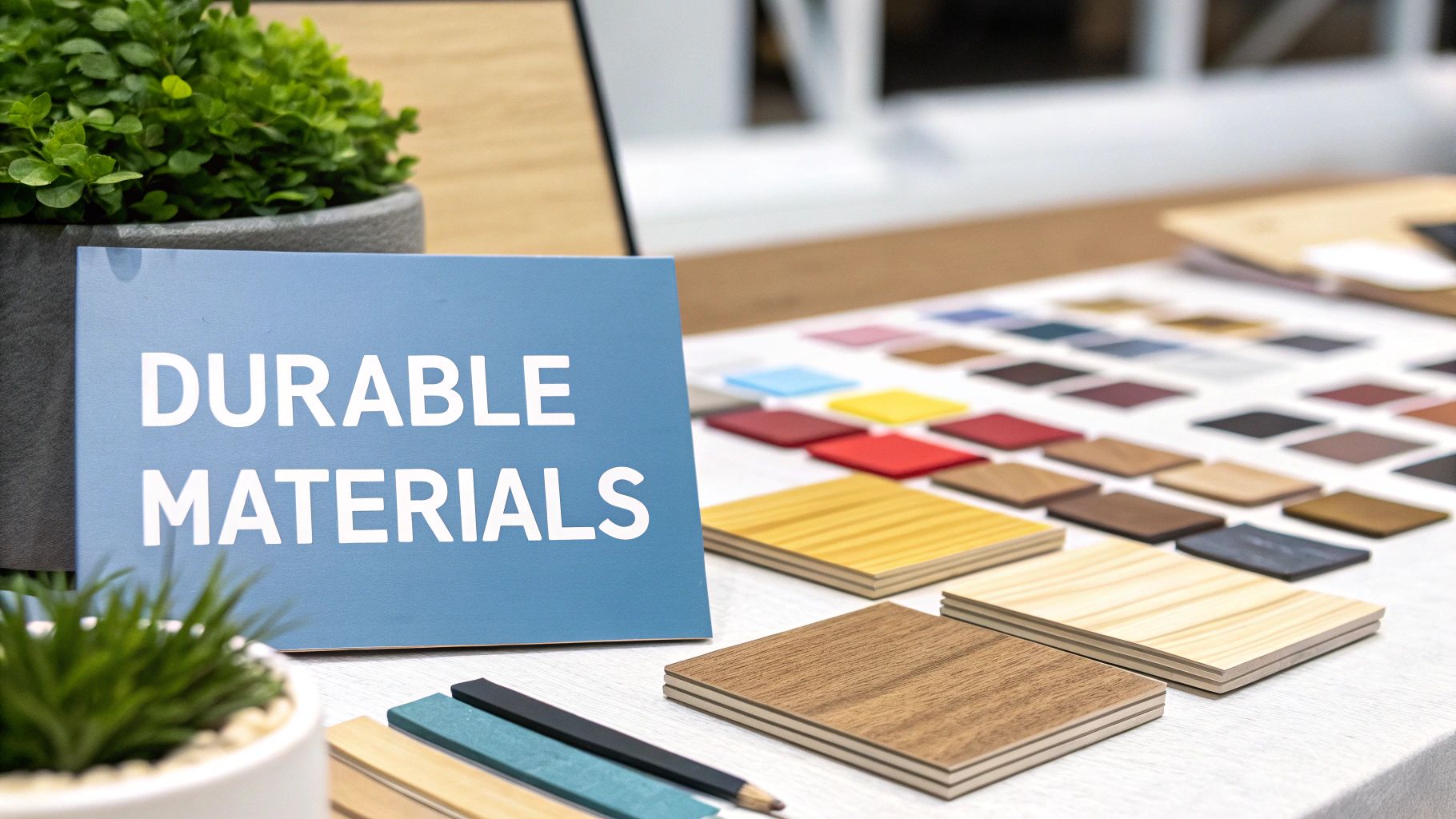
A beautiful layout is only one part of the equation. In Singapore, where humidity regularly exceeds 80%, material choice is about survival, not just aesthetics. The wrong material can warp, swell, or grow mould, turning your dream wardrobe into a costly problem.
The conversation starts with the core structure. The material used for the wardrobe’s carcass (the internal frame and shelves) determines its lifespan and strength.
The Carcass Core Material Showdown
In Singapore's custom carpentry, the debate often comes down to Medium-Density Fibreboard (MDF) versus Plywood. They can look identical when finished, but their performance in our climate is vastly different.
MDF, made from compressed wood fibres, has a smooth surface ideal for spray painting. Its critical weakness is moisture; standard MDF acts like a sponge.
Plywood is built from thin layers of wood veneer glued together. In our professional experience, high-quality, moisture-resistant plywood is the only sensible choice for a durable walk in wardrobe in Singapore. It offers superior structural integrity and resistance to warping.
Actionable Insight: We exclusively recommend moisture-resistant plywood for wardrobe carcasses. The slightly higher initial cost is an investment that prevents expensive repairs or replacements later. It is the most practical choice for our tropical environment.
Finishes: The Style and Substance
With a sturdy core, we move to the finish—the surface you see and touch daily. It defines your wardrobe's style and provides the first line of defence against wear and tear.
High-Pressure Laminates (HPL)
HPLs are the workhorses of interior design in Singapore, created by fusing layers of paper and resin under high pressure.
- Durability: Highly resistant to scratches, stains, and heat.
- Variety: Nearly endless options in colours, patterns, and textures, from solid colours to realistic wood grains.
- Maintenance: Easy to clean, perfect for a high-use area like a wardrobe.
Wood Veneers
For those who love the authentic warmth of real wood, veneers are the premium choice. A thin slice of actual hardwood is bonded to the plywood core.
- Aesthetics: Offers the natural beauty and unique grain patterns of real wood.
- Feel: Adds a timeless elegance that elevates the entire room.
- Consideration: Requires more care and is a higher-cost option than laminates.
Melamine
A budget-friendly alternative to HPL, melamine is another type of laminate. While providing a clean, modern look, it's thinner and less impact-resistant. It's a viable option for tight budgets but may not withstand heavy, long-term use as well.
Practical Tip: Mix and match materials. Use tough, cost-effective laminates for internal shelving and a stunning wood veneer for external doors to achieve a perfect blend of performance, style, and budget.
Smart Lighting and Features for a Modern Wardrobe
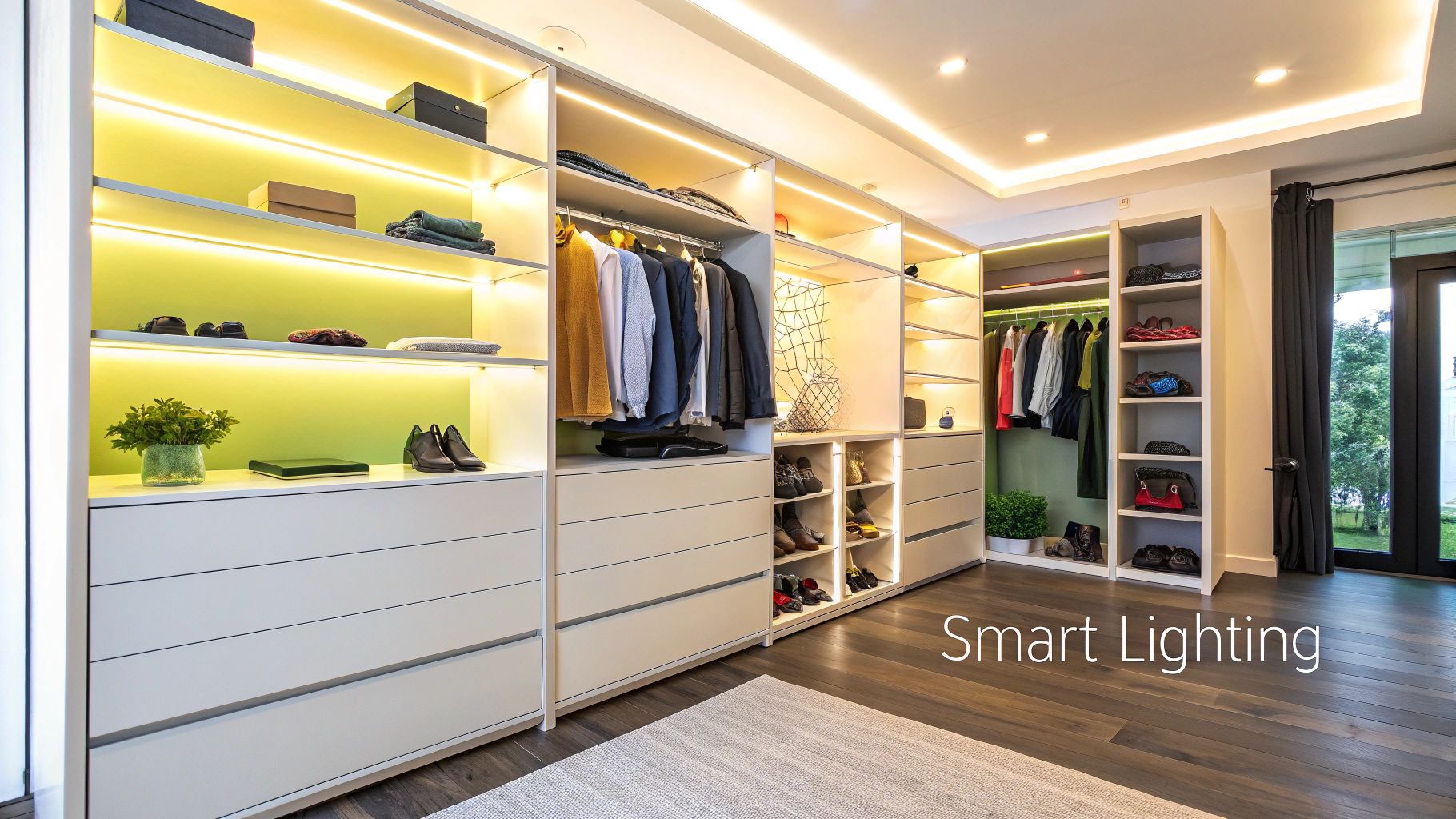
A great layout and durable materials are the bones of your wardrobe; thoughtful details bring it to life. The right lighting and features transform a storage space into a personal boutique, making your daily routine feel organised and luxurious.
Good lighting is non-negotiable. It’s about more than seeing your clothes; it’s about setting the mood and ensuring colours appear true. We always design with a layered lighting approach to avoid harsh shadows and dark corners.
Creating a Layered Lighting Scheme
A well-lit wardrobe combines different types of lighting, each with a specific job.
- Ambient Lighting: General illumination. For a walk-in wardrobe in Singapore, ceiling-mounted recessed lights are a sleek choice, providing an even glow.
- Task Lighting: This is where functionality shines. We install integrated LED strips inside cabinets, along hanging rods, and within drawers. They often feature sensors, turning on automatically when a door or drawer is opened.
- Accent Lighting: The finishing touch. Use it to highlight a handbag collection on open shelves or a favourite pair of shoes, adding personality.
When mapping out illumination, proper planning recessed lighting is key to preventing dark spots and ensuring your entire collection is beautifully lit.
Must-Have Wardrobe Accessories
Clever internal fittings truly elevate a custom wardrobe. These are the features we consistently recommend because they solve common storage problems and maximise every inch.
- Pull-Out Trouser Racks: Keep trousers neat and crease-free, sliding out for easy access.
- Dedicated Tie and Scarf Organisers: A shallow drawer with dividers or a slide-out rack prevents a tangled mess.
- Velvet-Lined Jewellery Trays: Integrated into a drawer, these protect watches, rings, and necklaces from scratches.
- Full-Extension Drawers: Unlike standard drawers, these pull all the way out, giving you a complete view of everything inside.
Actionable Insight: An organised wardrobe isn't about having more space; it's about using space more intelligently. These built-in features are small investments that pay off daily in convenience.
The Importance of Ventilation
A crucial but often overlooked detail for our climate is ventilation. In Singapore's humidity, a sealed wardrobe can become a breeding ground for mustiness and mould.
We build subtle ventilation solutions into our designs, such as louvred doors or strategic gaps in cabinetry. For a more active approach, a small, quiet dehumidifier placed inside can make a world of difference in protecting your investment and keeping clothes fresh.
So, How Much Does a Walk-in Wardrobe Cost in Singapore?
Let’s address the most common question: "What's the real cost of a walk-in wardrobe in Singapore?" The honest answer is there's no single price. The final cost depends on size, materials, and the custom details you choose.
Understanding the budget from the start is key to creating a wardrobe you love without financial surprises. It helps you decide where to invest and where to be practical.
This is a significant home investment, a sentiment shared by many Singaporeans. The bedroom furniture market, including custom wardrobes, is projected to reach US$81.88 million by 2026. This reflects a trend towards prioritising personalised, high-quality furniture. You can explore these Singapore furniture market trends to understand the evolving local design scene.
Breaking Down the Costs: The Per-Foot-Run (PFR) Method
In custom carpentry, we often start with a "per-foot-run" (PFR) estimate. It’s a simple way to get a baseline cost based on your wardrobe's total length, which we then adjust based on your specific choices.
Here’s a realistic price guide based on our project experience in Singapore:
- Entry-Level Budget ($250 - $350 PFR): A great starting point. This typically includes standard-sized cabinets with a plywood core and melamine or basic laminate finishes, featuring a straightforward layout of shelves and hanging rods.
- Mid-Range Budget ($350 - $500 PFR): The most popular choice. This budget allows for a wide range of high-quality, high-pressure laminates and more sophisticated fittings like soft-closing drawers and custom organisers.
- High-End Budget ($500+ PFR): For a luxurious finish. This tier includes premium materials like real wood veneers, tinted glass doors, and high-end European hardware from brands like Blum or Hafele, plus fully customised interiors with integrated LED lighting.
What Really Drives the Final Price?
While PFR provides a ballpark figure, a few key decisions shape the final invoice.
Actionable Insight: The biggest cost drivers are your choice of materials and the complexity of internal fittings. A spacious wardrobe with quality laminates is often more budget-friendly than a smaller one packed with intricate drawers, glass displays, and specialised pull-out mechanisms.
Key factors to keep in mind:
- Materials & Finishes: Premium wood veneer or fluted glass doors will cost more than standard high-pressure laminates.
- Internal Configurations: More drawers, dividers, and specialised racks add to the cost due to extra materials, labour, and assembly.
- Hardware: Quality hinges and drawer runners make a huge difference in daily use. Top-tier brands cost more but guarantee smooth, durable operation.
- Integrated Features: Add-ons like built-in LED lighting, dehumidifiers, or a hidden safe will increase the project cost.
From Our First Chat to Your Finished Wardrobe
Creating a custom walk-in wardrobe should be an exciting, collaborative process. Our approach is built on clear communication, ensuring you are involved from our first conversation to the final installation.
The process begins with a simple chat. We listen to understand your needs, lifestyle, current storage challenges, and your vision for the space.
Step 1: The Initial Consultation and Design Brief
This first meeting is about understanding your world. We’ll ask practical questions to get the design right:
- What’s your collection? Long dresses, suits, sneakers? We need to know what we are designing storage for.
- What’s your routine? How you get ready helps us determine the most logical placement for everything.
- What about the future? We design with future needs in mind, allowing your collection space to grow.
From this, we create a detailed design brief—our shared game plan ensuring we’re aligned before any design work begins.
Step 2: Detailed 3D Visualisation
This is where your vision comes to life. Using your floor plan and our brief, we create detailed 3D renderings of the proposed walk-in wardrobe. This is a photorealistic preview that lets you step inside your future space.
A 3D model is a powerful tool. It lets you virtually ‘walk through’ the wardrobe, check clearances, and see how materials look in your home’s lighting. It removes the guesswork.
We can tweak the layout, experiment with finishes, and adjust configurations together until every detail is perfect. This digital-first approach aligns with homeowner expectations, reflecting a wider trend where omnichannel transactions accounted for 57.6% of total retail spending in Singapore in 2022. You can learn more about Singapore's advanced retail landscape and how it shapes consumer expectations.
Step 3: Material Selection and Fabrication
Once you approve the 3D design, we select materials. You can see and feel samples of our high-moisture resistant plywood, laminates, and veneers. We’ll guide you through the pros and cons of each, helping you find the right balance of style, durability, and budget.
With materials confirmed, our carpenters begin fabrication off-site in our workshop. This ensures precision and minimises dust and disruption in your home.
Step 4: Precision Installation and Handover
The final step is on-site installation. Our professional in-house team handles the assembly with meticulous care. Because everything is pre-fabricated to exact measurements, the process is clean, quick, and organised.
We treat your home with respect, ensuring a smooth installation. After a final quality check and thorough clean-up, we’ll walk you through your new wardrobe, explain any special features, and share care tips before handing over your new space.
Answering Your Walk In Wardrobe Questions
Over the years, we've found that a few questions consistently come up. Here are straightforward answers to the most common queries.
Can I Really Fit a Walk In Wardrobe in My HDB Flat?
Yes, absolutely. It’s a common misconception that HDB flats are too small. With smart, bespoke planning, it’s entirely achievable.
- Practical Solution 1: Convert a spare bedroom. This allows for a generous L-shaped or U-shaped layout.
- Practical Solution 2: If you want to keep the master bedroom intact, we can build a sleek partition wall to create a galley-style walk-in. The key is customisation that makes the most of every inch, especially vertical space.
How Long Does the Whole Process Take?
From our first meeting to final installation, the process typically takes 6 to 10 weeks. We provide a clear schedule from the start.
- Design Finalisation (1-2 weeks): We finalise the layout, materials, and 3D models.
- Fabrication (4-6 weeks): Our carpenters craft every component in our local workshop.
- On-site Installation (2-4 days): Our team assembles everything in your home with precision.
How Do I Stop Mould from Growing in Singapore's Climate?
This is a valid concern we address from the beginning. We start by using high-quality, moisture-resistant plywood for the core structure.
Actionable Maintenance Tips:
- Promote Air Circulation: We can incorporate ventilated doors, but simply leaving doors ajar occasionally helps.
- Use Moisture Absorbers: Renewable moisture absorbers are a simple, effective tool.
- Keep it Clean: A regular wipe-down with a dry microfibre cloth prevents dust buildup, which can trap moisture.
What’s the Real Difference Between a Walk In and a Reach In?
It comes down to space, access, and experience. A 'reach-in' is the standard closet where you stand outside and reach in. They are practical for smaller rooms.
A 'walk-in' is a small room or dedicated space you physically enter. It provides storage on multiple walls, space for a dressing area, and a more organised, boutique-like feel where everything is visible at a glance.
While a reach-in wardrobe is functional, a walk-in wardrobe elevates your space into a personal sanctuary, streamlining how you get ready each day.
Ready to create a personal sanctuary that perfectly organises your life? The team at KIVO combines decades of craftsmanship with thoughtful design to build walk-in wardrobes that are as beautiful as they are functional. Let's start the conversation about your dream space today.