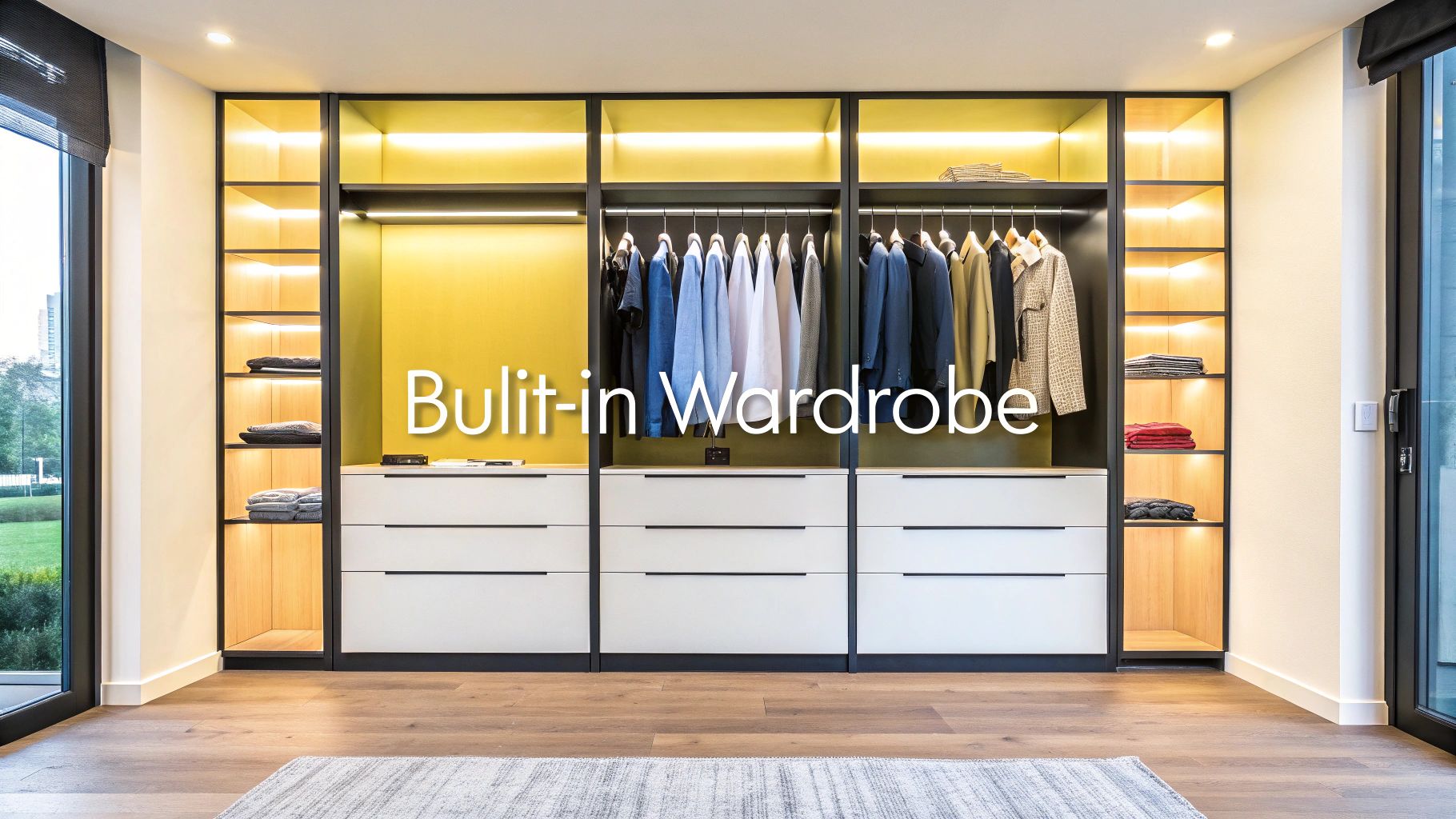
In Singapore, a wardrobe built in is far more than just a place to hang your clothes; it's a strategic design decision, especially when you're trying to maximise every inch of living space. Freestanding wardrobes almost always leave awkward gaps and rarely use the full height of a room. A built-in solution, by contrast, is crafted to fit your room's architecture perfectly, creating a clean, seamless, and surprisingly expansive feel. For HDBs and condos alike, it’s an investment that pays off in both function and form.
Why a Wardrobe Built In Is the Ultimate Space Saver
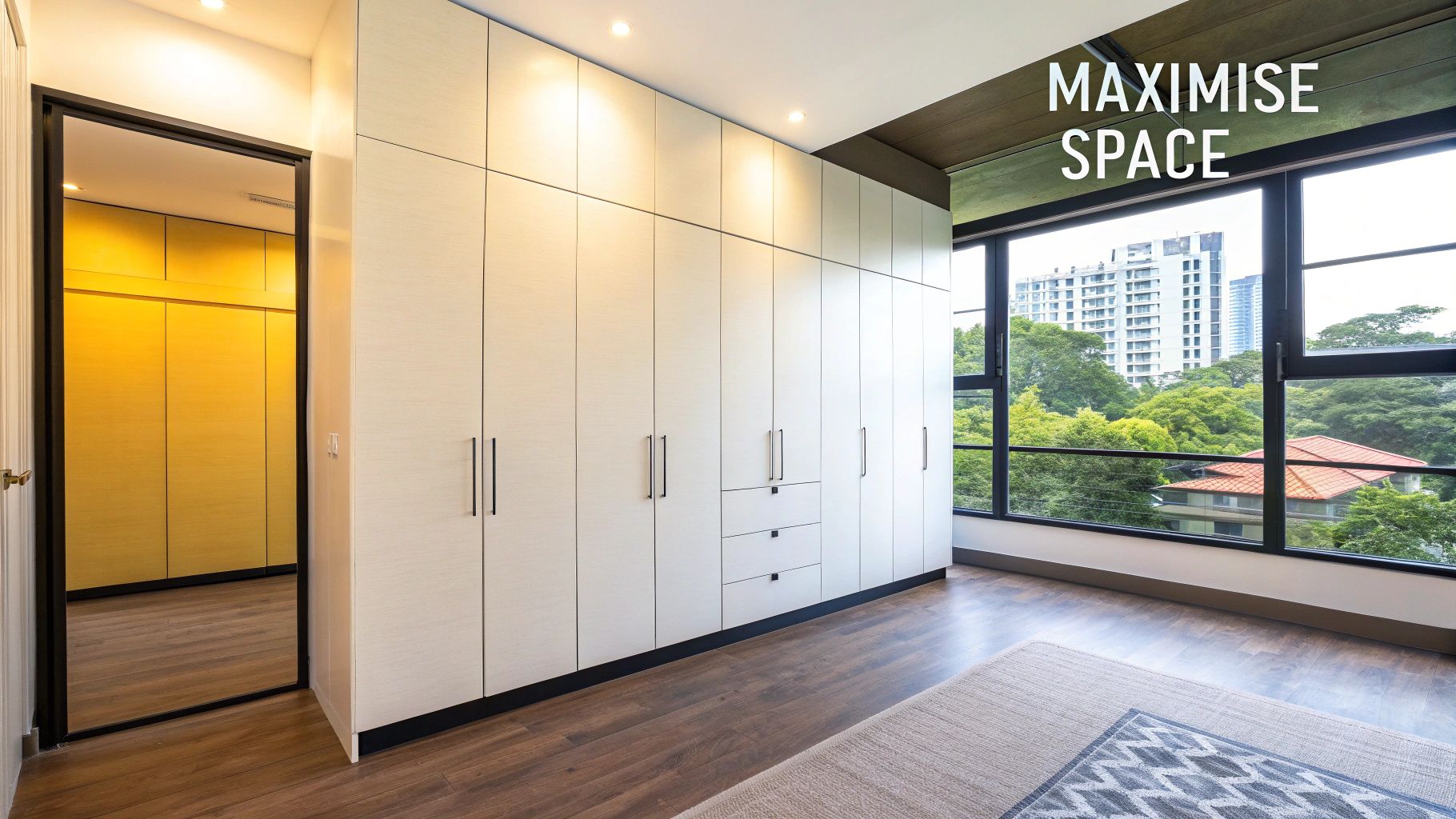
In a city where space is a premium, every square metre in your home needs to work hard. This is exactly why the demand for built-in wardrobes has surged, particularly with over 80% of residents living in HDB flats where efficient layouts are essential. Custom carpentry turns these spatial challenges into brilliant design opportunities.
A built-in wardrobe excels precisely where off-the-shelf options fail. It’s designed from the ground up to fit the exact dimensions of your room, conquering tricky corners, sloped ceilings, or structural beams that would otherwise be wasted space.
Maximising Every Inch
Think of a built-in wardrobe as a bespoke suit for your room. Instead of a one-size-fits-all piece that never quite fits, it’s crafted to use the full floor-to-ceiling height. This vertical approach not only doubles your storage capacity but also draws the eye upward, making the entire room feel taller and more open.
For example, a client with a typical 3-room BTO flat had a freestanding wardrobe that left a 30cm gap at the top—a magnet for dust. By designing a custom wardrobe built in, we eliminated that gap. The new full-height unit provided the perfect spot for their luggage and seasonal items, all while maintaining a polished, clean-lined look.
This practical approach is essential for creating an organised home. It's a key advantage that makes built-ins perfect for designing innovative ideas for multifunctional spaces where every corner must be functional.
Creating a Cohesive and Integrated Look
Beyond sheer practicality, a wardrobe built in significantly elevates your home’s aesthetic. Because it’s constructed as part of the room’s structure, it provides a streamlined, uncluttered appearance that freestanding furniture simply can't replicate. You get to choose the doors, finishes, and hardware to perfectly align with your interior design, whether you’re aiming for minimalist, Scandinavian, or modern luxury.
This seamless integration helps create a calmer atmosphere. Moreover, it can boost your property’s resale value. Potential buyers don’t see it as just furniture; they see a custom wardrobe built in as a permanent, high-value upgrade that signals thoughtful design and efficient living.
Crafting Your Ideal Wardrobe Layout and Style
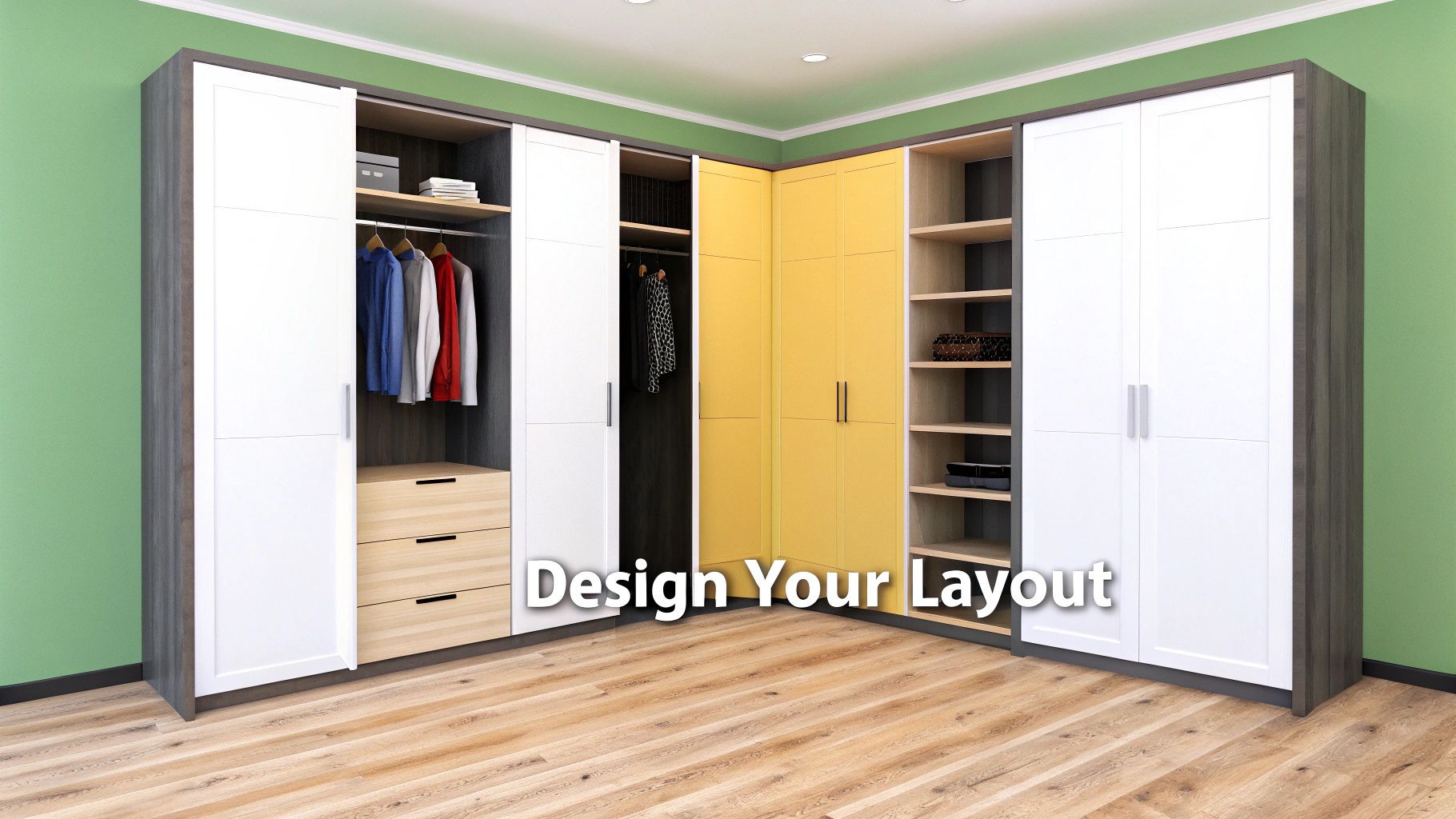
Before we discuss finishes or door handles, the first step in designing a great built-in wardrobe is defining the layout. This is the functional skeleton of your storage, and it dictates how you’ll move around and access your belongings every day. It’s less about just cramming storage into a corner and more about making your daily routine effortless.
Once that blueprint is finalised, we move to the style. This is where your wardrobe transitions from a practical unit into a beautiful piece of integrated furniture that defines the room's character.
Choosing the Right Layout for Your Room
The best layout always starts with the room itself—its dimensions, its quirks, and its architectural features. We begin by assessing the space to find a configuration that feels natural and maximises every square inch without making the room feel crowded.
Here are a few popular layouts we often build for our clients in Singapore:
- Straight or Linear: This is the most common layout for a reason. It runs along a single wall, making it incredibly versatile. It works in almost any bedroom, delivering a clean, streamlined look. Actionable Tip: To prevent a long linear wardrobe from looking monolithic, break up the facade with a mix of door styles or an open display niche.
- L-Shaped: Got an awkward corner? An L-shaped wardrobe is the perfect solution. It wraps around two adjacent walls, providing an enormous amount of storage. It’s an excellent choice for master bedrooms where you need a combination of hanging space, drawers, and shelving. Actionable Tip: Ensure the corner unit is fitted with specialised hardware like a carousel or pull-out shelves to make the deep space fully accessible.
- Galley or Walk-Through: This is the ultimate setup for a dedicated walk-in wardrobe or a passageway leading to an ensuite bathroom. It features two parallel runs of wardrobes, creating a chic, boutique-like experience. Actionable Tip: Maintain a minimum clearance of 90cm between the two sides to ensure comfortable movement and allow drawers to open fully.
Each layout has its own strength. A linear design is a space-saving classic, while an L-shape transforms a tricky corner into a storage powerhouse. The galley offers a level of organisation that’s second to none, provided you have the space.
Aligning Style with Your Home's Aesthetic
With the layout finalised, it’s time to choose a style that integrates with your overall design theme. A built-in wardrobe is a major visual element, so its aesthetic must feel intentional and cohesive.
Based on our experience with client expectations, certain styles work beautifully in Singaporean homes. The Scandinavian theme, for instance, remains a perennial favourite. With its light woods, clean lines, and focus on practical simplicity, it creates a wonderfully bright and airy feel.
Alternatively, a minimalist wardrobe often uses handleless, flat-panel doors in quiet, neutral tones like white, grey, or black. This style is about creating a calm, uncluttered look where the wardrobe almost disappears into the wall. For those wanting a touch of glamour, modern luxury designs can incorporate rich, dark wood grains, smoked glass doors, integrated LED lighting, and metallic accents in brass or black.
The doors and finishes you choose are more than just decorative details; they set the entire mood of the room. A fluted panel door adds texture and depth, while a glossy laminate finish bounces light around and makes a space feel bigger.
To help you visualise how different styles come together, here is a practical comparison.
Choosing Your Built-In Wardrobe Style
A comparison of popular wardrobe styles to help you find the perfect fit for your Singaporean home's aesthetic.
| Style | Key Characteristics | Best For | Common Materials |
|---|---|---|---|
| Scandinavian | Light wood tones, simple lines, and an emphasis on function and brightness. | Creating a calm, airy, and uncluttered atmosphere. Ideal for HDBs and condos. | Light oak or ash laminates, white panels, simple black or wood handles. |
| Minimalist | Flat-panel, handleless doors, neutral colour palette (white, grey, black), seamless look. | Making a room feel larger and more serene by reducing visual noise. | Matte or glossy laminates, push-to-open mechanisms, integrated handles. |
| Modern Luxury | Darker woods, metallic accents (gold, brass, black), smoked glass, integrated lighting. | Making a sophisticated statement in master bedrooms or walk-in closets. | Dark walnut laminates, tinted glass, aluminium frames, leather pulls. |
| Industrial | Raw textures, metal frames, exposed hardware, often mixing wood with black metal. | Adding an edgy, urban character to a space. Works well in loft-style homes. | Black powder-coated metal, wood-look laminates, exposed screws, track doors. |
Ultimately, the goal is to create a built-in wardrobe that isn’t just a functional workhorse but also a beautiful centrepiece. By carefully balancing both layout and style, you ensure the final design is perfectly tailored to your space, your needs, and your personal taste.
Choosing Materials and Hardware That Last
A beautiful wardrobe is more than just its doors. The real secret to a wardrobe that lasts for decades lies beneath the surface—in the quality of its core materials and the hardware that makes it work. Especially here in Singapore’s humid climate, picking the right components isn’t just about looks; it's a practical decision that ensures your investment stands up to daily use and the weather.
Think of a custom wardrobe as a complete system. The internal structure (carcass) is the skeleton. The finish is the protective skin. The hardware (hinges, runners, handles) are the joints you interact with every single day. Getting these three elements right creates a wardrobe that feels as good as it looks.
The Foundation: Picking the Right Core Material
The core of any custom wardrobe is its carcass. For Singapore's tropical environment, we almost always work with two specific types of engineered wood, each with its own strengths.
Plywood: This is our go-to for high-quality, long-lasting wardrobes. Plywood is made by layering thin sheets of wood veneer, with the grain of each layer running in a different direction. This cross-grain construction gives it incredible strength and, most importantly, far better resistance to moisture and warping—a must-have feature for Singaporean homes.
Medium-Density Fibreboard (MDF): MDF is made from wood fibres, wax, and resin, fused with heat and pressure. The result is a panel with a perfectly smooth surface, making it an excellent base for paint finishes. However, its main drawback is its susceptibility to swelling if exposed to significant moisture over time.
While both have their uses, we almost always recommend high-grade, moisture-resistant plywood for wardrobe carcasses. It provides a strong, reliable foundation that won't bow or deform over the years.
The Protective Skin: What You Need to Know About Finishes
A wardrobe’s finish does more than set the style; it's a critical protective barrier for the wood inside. The most practical and popular choice for built-in wardrobes is high-pressure laminate (HPL).
Laminates are multi-layered sheets fused together under intense heat and pressure. This process creates an incredibly tough surface that resists scratches, is easy to clean, and handles humidity without issue. Plus, they come in a nearly infinite range of colours, textures, and patterns—from realistic wood grains to solid colours and sleek stone effects. This means you can get any look you want without sacrificing durability.
Interestingly, homeowners are also exploring tougher materials. Recent data from local firms shows that metal built-in wardrobes are gaining traction, now accounting for about 40% of installations due to their unmatched durability in humid conditions. This trend points to a growing demand for robust, long-lasting solutions paired with modern features like soft-close hinges. You can dive deeper into these trends in this detailed report on the built-in wardrobe market.
The Deal-Breaker: Why Quality Hardware is Non-Negotiable
If the wardrobe carcass is the skeleton, then the hardware is the joints. This is one area where you should never cut corners. Investing in premium hardware from trusted brands is what separates a decent wardrobe from a truly luxurious one.
You touch, pull, and hear the hardware every single day. The silent, smooth glide of a drawer or the soft, satisfying click of a closing door—these are the details that define a high-quality custom build.
Let's focus on the two most critical components:
Hinges: These dictate how your wardrobe doors feel every time you open and close them. We insist on using soft-close hinges as a standard feature. They prevent doors from slamming shut, which not only feels more refined but also reduces long-term stress on the frame. Brands like Blum or Hettich are the industry standard for a reason—they're built to last.
Drawer Runners: The mechanism your drawers slide on is just as crucial. You want smooth, full-extension runners that let you pull the drawer all the way out to see what's in the back. Just like with hinges, soft-close versions are the benchmark for high-end carpentry, ensuring drawers shut gently and quietly with just a nudge.
By focusing on high-quality plywood, protective laminates, and reliable hardware, you’re not just building a wardrobe. You're commissioning a piece of functional furniture engineered to perform flawlessly in Singapore's climate, giving you satisfaction and reliability for years to come.
Unlocking Smart Storage and Interior Customisation
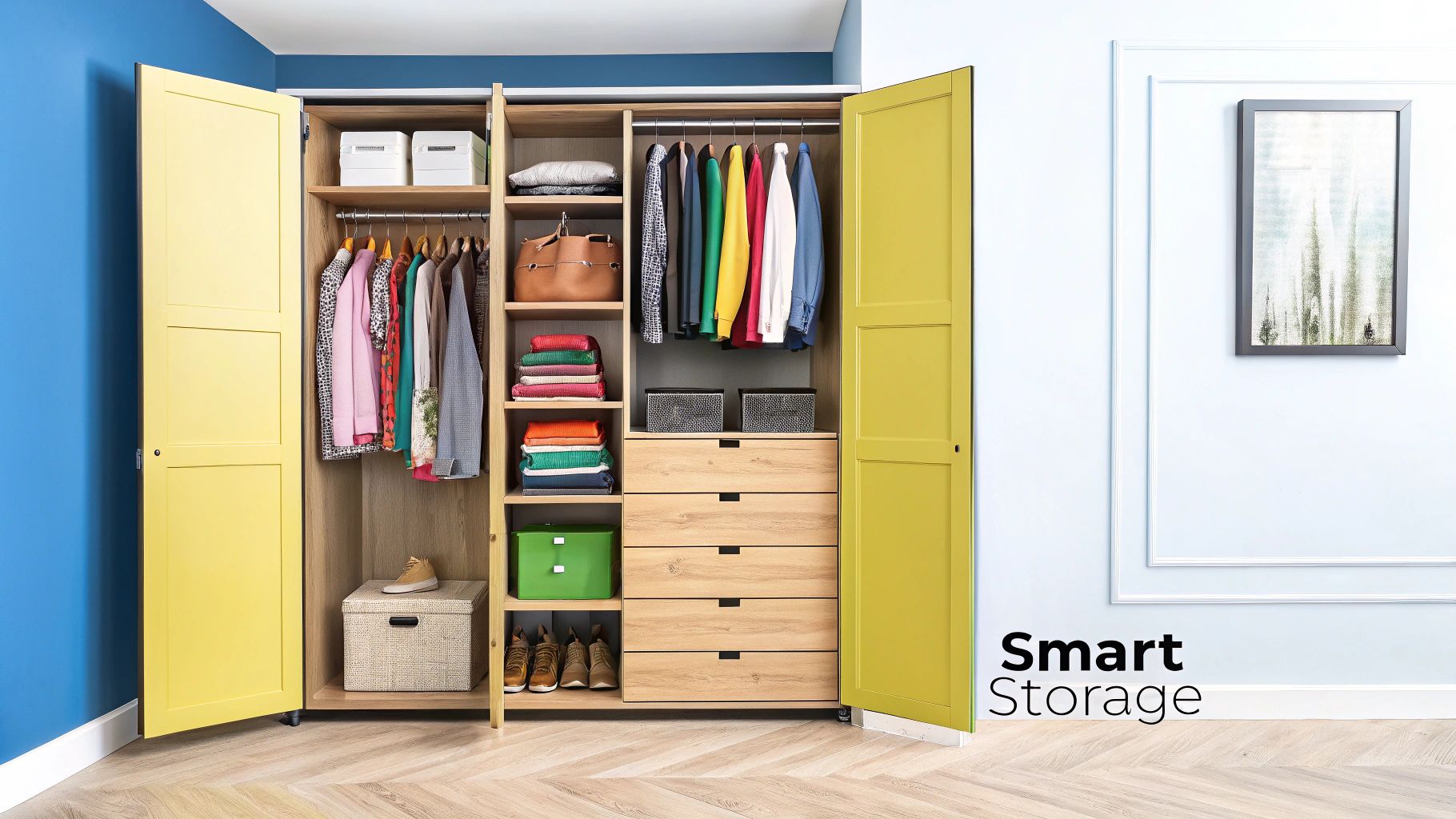
A beautiful exterior is only half the story. The real magic of a custom wardrobe built in is what’s on the inside—the clever, thoughtful features that turn a simple box into an organisational powerhouse, designed specifically for your life. This is where we go beyond basic shelves and hanging rods to engineer a system that genuinely makes your daily routine simpler.
The aim is to give every single item you own a designated home. When everything has its place, clutter vanishes, and getting ready in the morning becomes a calm, easy experience. It’s all about creating a wardrobe that works for you.
From Chaos to Order: A Problem-Solution Approach
Over the years, we've tackled nearly every storage challenge imaginable. The best way to design a wardrobe’s interior is to pinpoint common frustrations and then build specific, targeted solutions for them. This practical approach ensures that every feature we add serves a real purpose.
Here are a few examples from our client projects:
The Problem: High shelves are hard to reach, turning the top third of your wardrobe into a black hole for rarely used items.
The Solution: A pull-down rail (pantograph). This mechanism lets you store clothes high up and then effortlessly bring the entire rail down to eye level, instantly doubling your usable hanging space.
The Problem: Belts, ties, and scarves become a tangled mess in a drawer, making it impossible to find the one you need.
The Solution: A slide-out accessories rack. These dedicated inserts come with hooks and compartments, neatly displaying your entire collection so you can see everything at a glance.
The Problem: Dark, cramped corners hide your clothes from view, leading you to wear the same few outfits repeatedly.
The Solution: Integrated LED lighting. We can install motion-activated or switch-operated light strips along dividers or under shelves to illuminate your entire collection. It feels like a high-end boutique and makes finding things effortless.
These aren't just fancy add-ons; they are strategic upgrades that solve everyday problems.
Specialised Inserts for Every Lifestyle
Beyond these core fixes, the world of interior customisation is full of specialised components. The key is to select the ones that match what you actually own. It’s about getting a personalised fit, not just filling the space with gadgets.
Take a moment to inventory your belongings and identify what causes the most clutter.
A truly great wardrobe built in anticipates your needs. It’s not just about storage volume; it's about storage intelligence. It’s the velvet-lined drawer that protects your watches and the modular dividers that keep your gym gear separate from your work shirts.
Consider these highly effective options:
- Pull-Out Trouser Racks: Keep trousers and jeans perfectly organised and crease-free on individual, non-slip bars.
- Modular Drawer Dividers: Create custom-sized sections within drawers for smaller items like socks, undergarments, or rolled-up t-shirts.
- Velvet-Lined Jewellery Trays: We can integrate shallow drawers with soft, sectioned inserts to protect delicate necklaces, rings, and watches from scratches and tangles.
- Hidden Safe Compartments: For valuables, we can build a discreet, concealed safe right into the wardrobe’s structure, blending it seamlessly with other drawers.
To really get a feel for how these custom features will come together in your space, using 3D modeling for interior design can be incredibly helpful. It allows you to see exactly how every component will fit and function before a single piece of wood is cut. By planning every drawer, shelf, and rail with care, you end up with a wardrobe that’s not just built for your space, but built for your life.
Budgeting and Planning Your Wardrobe Project
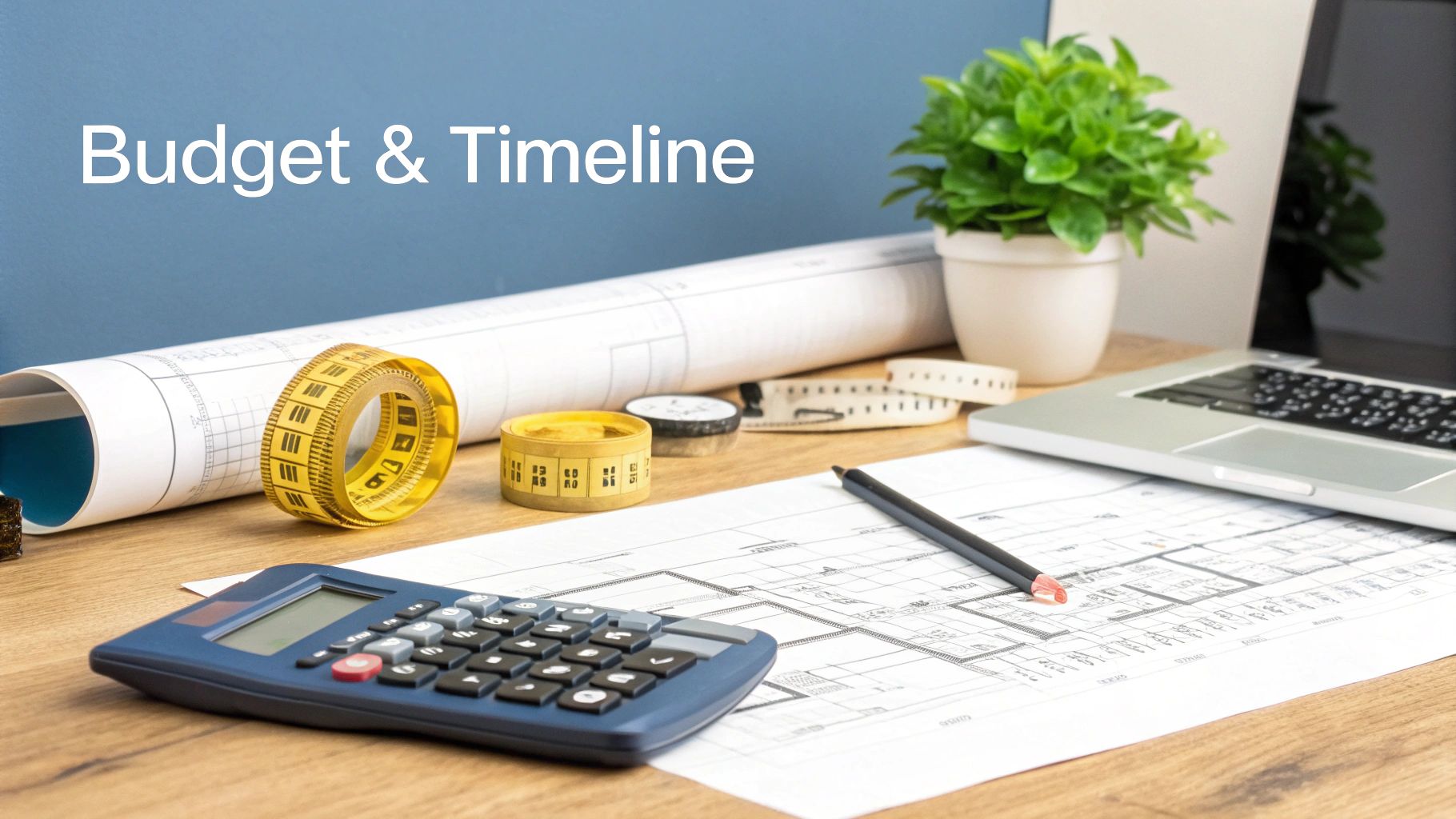
Embarking on a custom wardrobe built in project is exciting, but having a solid grip on costs and timelines is what ensures a stress-free experience. A clear plan is your best tool, making sure your dream design and your budget remain aligned. No surprises, just a smooth process from start to finish.
The final price tag isn't a single number; it's a sum of all the decisions you make along the way. Everything from the overall dimensions to the choice of handles will shape the total investment.
Breaking Down the Costs
In Singapore, the primary cost driver is size. Custom carpentry is usually priced by the per-foot-run (PFR). This serves as a starting point—a straightforward way to get a baseline estimate before adding custom features.
Beyond size, three key factors will significantly shape the final bill:
- Material Grade: While standard MDF is an option, investing in high-quality, moisture-resistant plywood is a smart long-term decision in our humid climate. It costs more upfront but offers superior durability.
- Hardware Selection: This is a major factor. Choosing premium soft-close hinges or smooth drawer runners from trusted European brands will add to the cost, but it completely transforms the daily user experience.
- Internal Complexity: A simple setup with shelves and hanging rods is the most budget-friendly. The moment you add pull-out trouser racks, integrated LED lighting, or custom-divided drawers, the price will increase accordingly.
A common oversight is focusing only on the doors and finishes. Don't forget that up to 40% of the cost can be in the interior mechanisms and fittings that make the wardrobe function smoothly.
So, what should you expect to pay? For a typical HDB bedroom, a professionally crafted wardrobe built in usually lands between SGD 3,000 and SGD 8,000. With thousands of flats being renovated each year, this is a reliable range. The custom furniture market is always evolving, and as detailed in this report on Southeast Asia's furniture industry, trends like virtual design consultations are becoming standard. Of course, a sprawling walk-in closet for a condo with high-end features will naturally have a higher budget.
Mapping Out the Project Timeline
A custom wardrobe doesn't just appear overnight. It follows a clear, structured path from our first conversation to the final installation. While every project is unique, here’s a typical schedule you can expect when working with a professional firm.
| Phase | Description | Typical Duration |
|---|---|---|
| 1. Design & Consultation | We'll meet, measure your space, brainstorm layouts, and select materials and finishes together. | 1 – 2 weeks |
| 2. 3D Visualisation & Refinement | Our team creates detailed 3D models so you can see exactly how it will look. We'll refine it until it's perfect. | 1 week |
| 3. Off-Site Fabrication | This is where the magic happens. Our carpenters begin building your wardrobe in our workshop. | 2 – 4 weeks |
| 4. On-Site Assembly | Our installation crew comes to your home to assemble all the prefabricated components. | 2 – 5 days |
All in all, this entire process—from a rough idea to a fully installed wardrobe—usually takes about 4 to 7 weeks. Understanding these stages helps you plan accordingly, ensuring the journey to your new organised space is as smooth as possible.
Choosing Your Professional Partner: Designer vs. Contractor
Once you've envisioned your perfect built-in wardrobe, the next crucial step is deciding who will bring it to life. This choice typically boils down to two main paths: working with a full-service interior design firm or hiring a direct carpentry contractor.
There's no single "right" answer. The best choice depends on the scale of your project and how much hands-on guidance you're looking for.
The Role of an Interior Design Firm
An interior designer acts as both the architect and project manager for your space. When we work with a client, we don't just see a wardrobe; we see the entire room as a cohesive vision. Our job is to understand your lifestyle—not just your storage needs—and ensure every element works together beautifully.
This means we consider how the wardrobe's finish pairs with the flooring, or where lighting should be placed to perfectly illuminate the interior. We handle everything, from initial concepts and material selection to coordinating tradespeople and overseeing the final installation. You get a single point of contact and the peace of mind that the final result will be polished and seamless.
When to Work with a Direct Contractor
Hiring a direct carpentry contractor is a great option if you already have a very clear, detailed plan. If you know the exact layout you want, have already chosen your materials, and have precise measurements ready, a skilled contractor can execute your vision perfectly.
This route can often be more budget-friendly as you aren't paying for comprehensive design and project management services. However, be prepared to take on the project manager role yourself. You'll be responsible for coordinating schedules, sourcing materials if needed, and ensuring the final build matches what you envisioned.
At its core, the difference is about scope. An interior designer curates the entire experience and ensures everything looks cohesive. A contractor provides the technical skill to build a pre-determined design.
To help make the decision easier, let's break down what each professional brings to the table.
Interior Designer vs. Direct Contractor for Your Wardrobe
Here’s a clear comparison to help you decide on the right professional partner for your built-in wardrobe project.
| Aspect | Interior Design Firm | Direct Carpentry Contractor |
|---|---|---|
| Design Input | Holistic design concepts, space planning, material curation, and 3D visualisation. | Executes an existing plan; minimal to no design input provided. |
| Project Management | Complete oversight of the entire project, including scheduling and vendor coordination. | You are responsible for managing the project and coordinating with other trades. |
| Cost Structure | Includes fees for design, management, and fabrication. Often higher initial cost. | Primarily covers labour and materials for fabrication and installation. Potentially lower cost. |
| Aesthetic Cohesion | Ensures the wardrobe complements the entire room's style, lighting, and finishes. | Focuses solely on building the wardrobe according to the provided specifications. |
| Best For | Homeowners seeking expert guidance, a seamless process, and a fully integrated design. | Clients with a clear, finalised design who are comfortable managing the project themselves. |
Ultimately, whether you choose an interior designer or a contractor depends on your confidence in your own design vision and how much time you're willing to invest in managing the project. Both paths can lead to a stunning built-in wardrobe—it's just a matter of picking the one that best suits your needs.
Got Questions? We’ve Got Answers
To wrap things up, let's tackle a few of the most common questions we hear from homeowners in Singapore. Getting clear, practical answers is the best way to plan your project with confidence.
How Do I Clean and Maintain My New Built-In Wardrobe?
Keeping your new wardrobe in top shape is straightforward. For the laminate surfaces we use—which are incredibly durable—all you need is a soft, damp cloth and a touch of mild cleaner. Avoid harsh chemicals or abrasive sponges, as they can dull the finish over time.
For the inside, a quick vacuum of the corners and drawer runners every few months keeps everything gliding smoothly. Actionable Tip: Place dehumidifiers (like Thirsty Hippo) inside your wardrobe and change them regularly. This helps combat Singapore’s humidity and protects your clothes and the wardrobe's interior.
Can a Built-In Wardrobe Be Moved if I Relocate?
This is a great question because it gets to the heart of what "built-in" means. A true built-in wardrobe is custom-designed and constructed to fit the exact dimensions and quirks of a specific room. It’s secured directly to the walls, floor, and sometimes ceiling, making it a permanent part of the home's architecture.
Because it's so precisely tailored to one space, a built-in wardrobe isn’t designed to be dismantled and moved. Attempting to do so would almost certainly damage the components and result in a poor fit in a new home. It’s better to view it as a valuable upgrade that adds to the property's appeal and functionality.
What Is the Difference Between a Built-In and a Pole System Wardrobe?
The main difference lies in the core structure. A traditional built-in wardrobe is constructed with a full carcass—solid sides, a top, a bottom, and a back panel. This fully enclosed box offers excellent protection from dust and provides that substantial, classic, fully-fitted look.
A pole system, on the other hand, uses vertical metal poles as its main support structure, with shelves, drawers, and rails mounted directly onto them. It offers more flexibility for future adjustments and has a more open, airy, modern feel. The trade-off is that it doesn't provide the same level of dust protection as a fully enclosed built-in wardrobe.
Ready to create a wardrobe that’s perfectly tailored to your space and lifestyle? The team at KIVO is here to bring your vision to life with expert craftsmanship and thoughtful design.