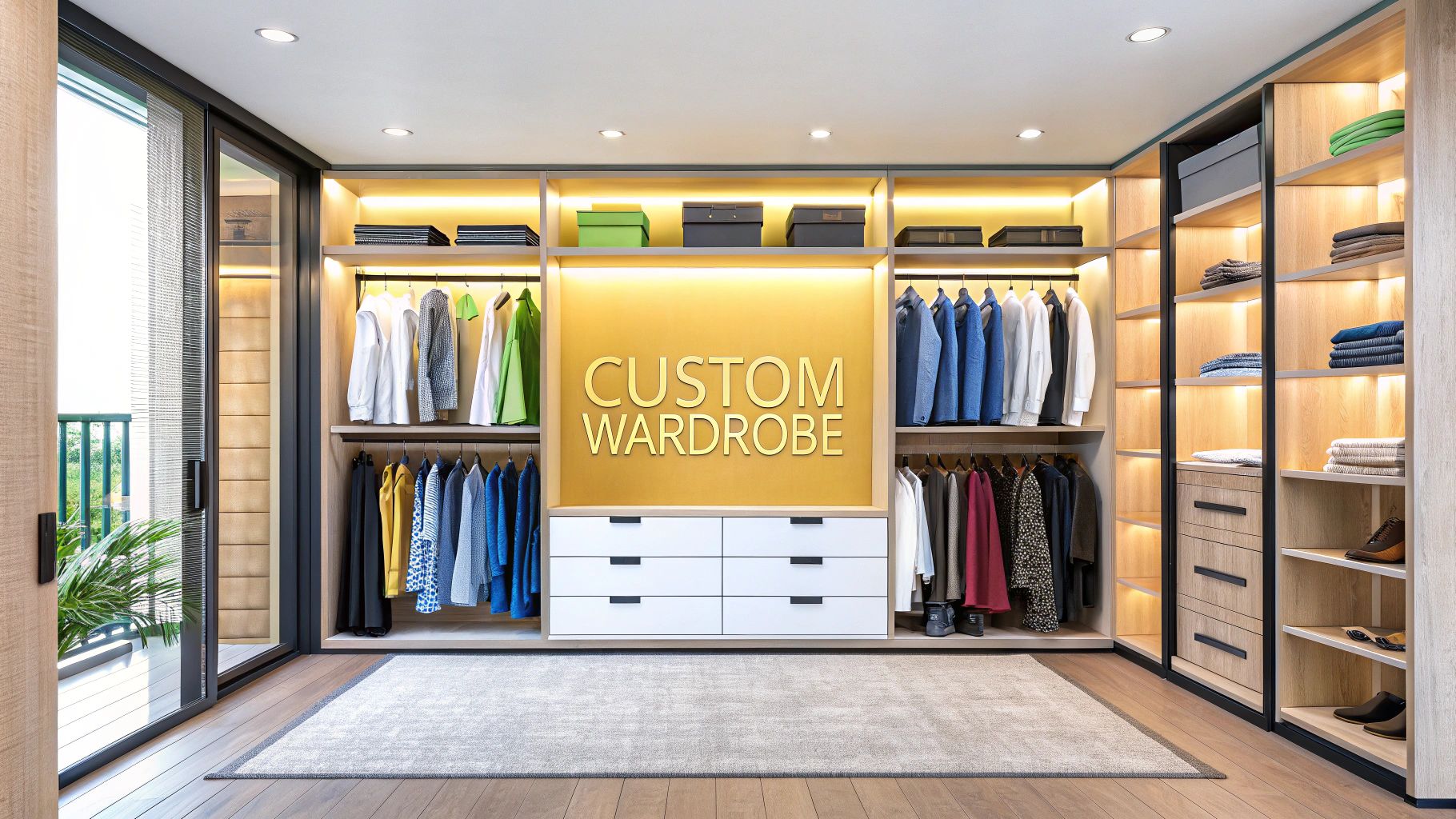
A great wardrobe built in design doesn't start with hammers and saws. It begins with a hard look at your lifestyle. This is all about diving deep into your daily routines and storage habits to create something that solves real organisational problems, making sure every centimetre works for you.
Defining Your Storage Needs Before You Build
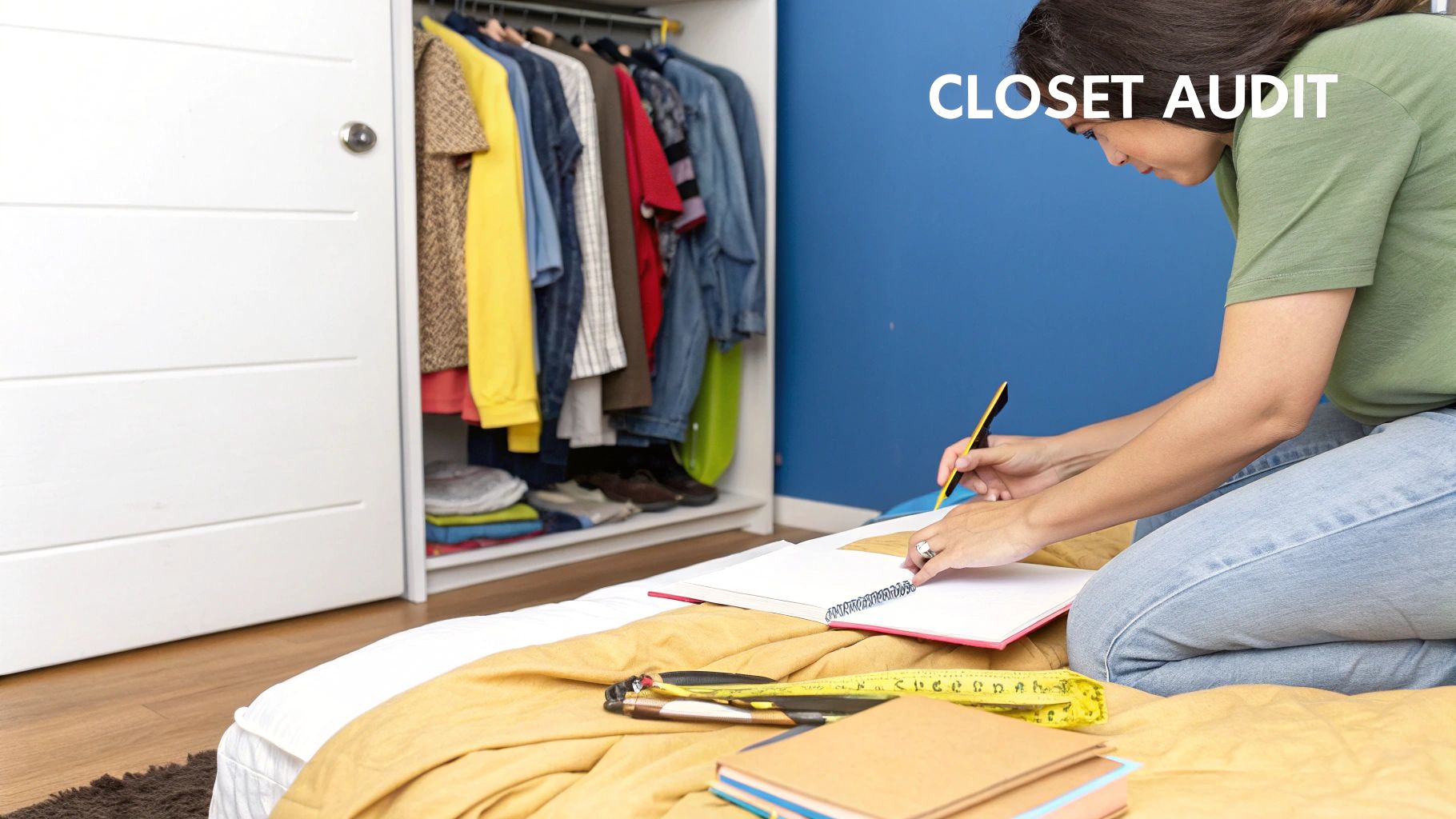
Before a single sketch is drawn, the most important job is figuring out exactly what you need to store. It’s a common mistake to underestimate how much you own, which leads to a custom wardrobe that looks beautiful but doesn’t truly function. We walk every client through a 'closet audit' to move past guesswork and build a plan based on facts.
This audit is a practical inventory of everything you own. It's not just about counting shirts; it's about understanding different categories and how you actually use them. This detailed approach is the foundation of a good design, whether you're working with a spacious master bedroom or a compact HDB flat.
Conducting a Practical Closet Audit
First, take everything out of your current closet. This visual reset helps you see the true volume of your collection and, just as importantly, spot what you no longer need. From there, sort everything into clear categories.
- Hanging Clothes: Split these into full-length items (dresses, long coats, suits) and half-length ones (shirts, blouses, folded trousers). This is a crucial distinction because full-length clothing needs uninterrupted vertical space—a detail that’s surprisingly easy to overlook. For instance, a client who primarily wears suits to work required significantly more full-length hanging space than one who works from home in casual wear.
- Folded Items: Group together your sweaters, t-shirts, and jeans. Ask yourself if you prefer stacking them on open shelves for easy access or tucking them away in drawers for a tidier look. Activewear, for example, is often better stored rolled in drawers for a quick grab-and-go.
- Footwear: Line up all your shoes. Are they mostly flats, heels, or boots? This will determine whether you need flat shelves, angled shoe racks, or taller cubbies to fit everything neatly.
- Accessories: Don’t forget the small stuff. Bags, belts, scarves, and ties are often the biggest sources of clutter. They benefit from specialised storage like shallow drawers with dividers or a series of dedicated hooks.
When you can quantify your needs—for example, realising you need 120cm of full-length hanging space but only 60cm for folded sweaters—you’re creating the essential blueprint for a truly custom built-in wardrobe. This data gets rid of assumptions and guarantees the final design will fit your life perfectly.
Measuring and Mapping Your Physical Space
With your inventory done, it's time to meticulously measure the space. Grab a reliable tape measure and record the height, width, and depth of the area. It’s always a good idea to take measurements at a few different points, as walls and floors in Singapore homes are rarely perfectly straight.
Beyond the basic dimensions, you need to map out any potential obstructions. These are the fixed elements that your wardrobe design will have to work around.
- Power Outlets and Switches: Pinpoint their exact locations. Do you want them accessible inside the wardrobe for charging, or will your carpenter need to work around them?
- Structural Beams or Bulkheads: These can affect the internal height and dictate your layout options.
- Window or Door Casings: Make sure your new wardrobe doors will have enough clearance to open fully without hitting anything.
- Skirting Boards: For a seamless, floor-to-ceiling fit, these will likely need to be removed.
Properly defining your storage needs is critical, and looking into smart studio condo design ideas to maximize a small space can offer brilliant strategies for making the most of compact layouts. This upfront planning ensures your investment actually solves your specific storage headaches, transforming your room into a more organised, serene space. By taking the time to audit and measure, you lay the foundation for a wardrobe that isn't just built-in, but built for you.
Designing a Wardrobe Layout That Works for You
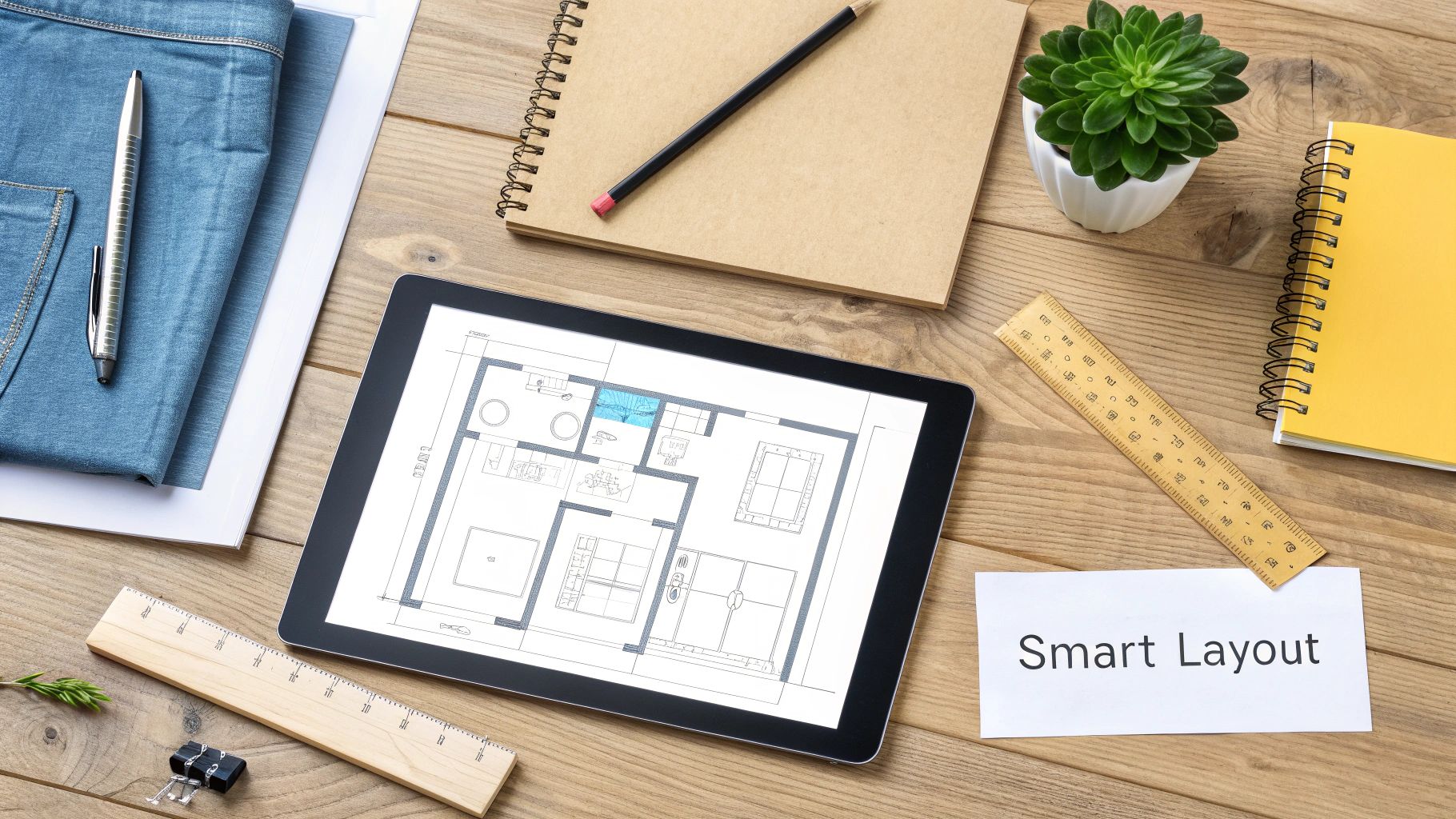
You’ve taken stock of everything you own. Now comes the part where we turn that practical list into a wardrobe layout that genuinely works for you. This is where we translate your needs into a beautiful and functional storage space. Our goal is to maximise every centimetre, something we know is crucial for homeowners in Singapore's HDB flats and condominiums.
A great layout isn't just about cramming everything in. It's about creating a natural flow that makes getting ready in the morning feel effortless. We design a space that’s intuitive, keeping your bedroom calm and clutter-free by thinking carefully about ergonomics, accessibility, and the unique shape of your room.
Maximising Space with Smart Configurations
The shape and size of your room are the biggest clues for figuring out the best wardrobe configuration. Forget trying to force a standard rectangular wardrobe into an awkward space; we look at layouts that embrace the room's architecture.
Here are a few configurations we often suggest to our clients:
- L-Shaped Wardrobes: This is a fantastic way to make a corner work for you. An L-shaped design gives you heaps of storage and can even create a mini dressing zone. We can fit the corner unit with clever hardware, like rotating carousels or pull-out systems, so no space is wasted and every item is easy to reach.
- Galley-Style Wardrobes: If you've got a narrow room or a walk-through space, installing parallel wardrobes on opposite walls creates an incredibly efficient galley layout. It gives you a massive amount of storage while keeping a clear path, almost like having your own dedicated walk-in closet.
- Integrated Designs: In modern Singaporean homes, blending the wardrobe with other furniture is a popular request. We often build a small vanity table or a compact study nook right into the wardrobe system. This creates a clever multi-functional piece that saves precious floor space and keeps everything organised in one spot.
Ergonomics: The Key to Daily Convenience
A truly great wardrobe built in design is one you barely have to think about. It just works. That comes down to ergonomics—how you physically interact with it every day. Placing items at the right height and depth makes a huge difference. No more excessive bending, stretching, or rummaging.
We always design with a clear hierarchy of access, putting your most-used items in the most convenient spots.
The most valuable real estate in your wardrobe is the space between your eye level and your waist. This is where your everyday shirts, trousers, and frequently used drawers should live. Items you use less often can go higher up, and heavy, seasonal things are best stored down below.
To put this into practice, we stick to some simple ergonomic guidelines:
- Hanging Rod Height: We typically position a top hanging rod around 2000mm to 2100mm from the floor. For a double-hang setup, the lower rod sits at about 1050mm, ensuring most adults can comfortably reach both.
- Drawer Placement: The best drawers are the ones you don't have to stoop to open. We aim to keep the top of the highest drawer no more than 1200mm from the floor.
- Shelf Depth: Deep shelves can quickly become a "black hole" where clothes disappear. A depth of 350mm to 400mm is perfect for folded items, letting you see everything at a glance.
The demand for this kind of functional design is really taking off. In Singapore's property market, where space is a luxury, built-in wardrobes are a cornerstone of modern living. In fact, market analysis shows the local wardrobes market is set to grow steadily, driven by this desire for custom storage solutions. It’s a clear sign that people are investing in homes that are not just beautiful, but incredibly practical too.
Clever Solutions for Modern Lifestyles
Beyond the basics of shelves and drawers, we love incorporating features that solve those little everyday storage annoyances. Once you have a good sense of your layout, it's worth exploring different frameworks; guides on effective Closet Organization Systems can offer some great ideas.
From our experience, these are the thoughtful additions clients appreciate most:
- Pull-Down Rails: Have high ceilings? A pull-down rail (or pantograph) is a game-changer. It lets you use the full vertical height of your wardrobe for hanging clothes while keeping them easy to access with a simple pull of a handle.
- Integrated Lighting: Motion-activated LED strips inside drawers or along hanging rails are a small luxury that makes a big difference. They illuminate your collection, making it easy to find what you're looking for without flicking on the main room lights.
- Specialised Compartments: Custom dividers in shallow drawers are perfect for organising smaller accessories like ties, belts, watches, and jewellery. It’s the best way to stop those items from ending up in a tangled mess.
By combining the right configuration with solid ergonomic principles and these clever features, we design a wardrobe that is so much more than just storage—it becomes an effortless part of your daily routine.
Selecting Materials and Finishes That Endure
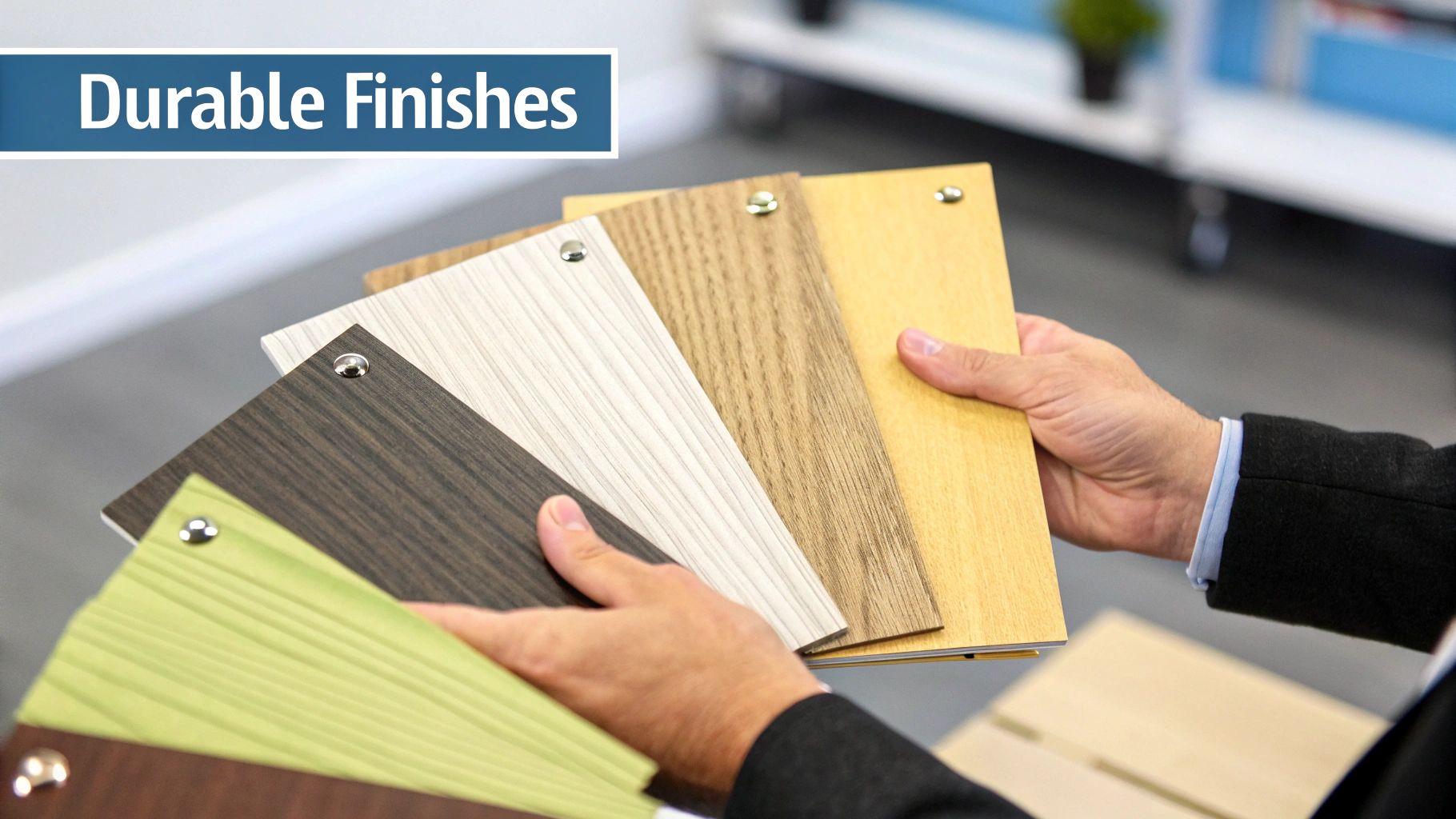
The long-term success of your built-in wardrobe really comes down to the materials you choose. A beautiful design can quickly fall flat if the materials can't handle daily use and, more importantly, Singapore’s humid climate. Getting this right means your investment will look great and function perfectly for years.
The foundation of any built-in is its internal structure—what we call the carcass. This is the unseen framework holding everything together, so its durability is non-negotiable. We've found that a few core materials consistently perform best in our local environment.
Choosing the Right Core Material
For a climate like Singapore's, moisture resistance isn't just a feature; it's a necessity. This is where high-quality plywood really proves its worth. It's built from multiple layers of wood veneer glued together, which makes it incredibly strong and far less likely to warp or swell from humidity compared to other options.
Medium-Density Fibreboard (MDF), on the other hand, gives you a flawlessly smooth surface—perfect for that sleek, painted look. However, standard MDF is like a sponge in damp conditions. If you're set on a painted finish, we always insist on using a higher-grade moisture-resistant (MR) MDF, especially for older homes or rooms with less ventilation.
Then there's particleboard. It’s the most budget-friendly option, but we generally advise against using it for the main structure of a custom wardrobe. It’s highly prone to moisture damage and doesn't hold screws securely over time, which eventually leads to sagging shelves and wonky doors.
The real-world difference is clear: a wardrobe built with quality plywood will maintain its structural integrity for decades, while one made from standard particleboard might start showing signs of wear and tear within a few years, especially at the base where moisture can accumulate.
Selecting Finishes for Style and Practicality
With the core structure locked in, the finish is what brings the wardrobe's look and feel to life. This is your chance to inject personal style, but practicality should always be front of mind.
Most of our clients in Singapore are looking for finishes that offer the best of both worlds: durability and great aesthetics.
- High-Pressure Laminates (HPL): This is, by far, the most popular choice for good reason. Modern laminates come in a huge range of colours, textures, and patterns—including incredibly convincing wood grains and fabric effects. They are tough, scratch-resistant, and a breeze to clean, making them ideal for a piece of furniture you use every single day.
- Wood Veneers: For anyone who loves the genuine warmth of real wood, veneers are a fantastic option. A thin slice of real wood is applied to a stable plywood base, giving you that luxurious solid-wood look without the risk of warping. We often use this for feature panels or in master bedrooms where a touch of elegance is desired.
- Paint Finishes: A sprayed lacquer or paint finish creates a seamless, high-end look that's perfect for minimalist or classic designs. This requires a perfectly prepared MDF surface and a professional application to get that flawless, durable coat.
There’s also a growing interest in sustainable materials in Singapore. People are making more eco-conscious choices, which is driving a market that blends high-end craftsmanship with environmental responsibility. According to Statista, the Closets market is projected to hit US$81.88m in 2026, thanks to a 4.2% CAGR in wardrobes that prioritise sustainability. We're seeing more clients ask for things like recycled MDF or low-VOC finishes, which aligns with broader green building trends. You can find more details about this growing market for built-in closets online.
Before we move on, let's quickly compare the most common materials you'll encounter for your wardrobe's structure.
Comparing Popular Wardrobe Materials
This table breaks down the key characteristics of materials commonly used for built-in wardrobes in Singapore, helping you choose the best option for your budget and needs.
| Material | Pros | Cons | Best For |
|---|---|---|---|
| Plywood | Excellent structural strength, superior moisture resistance, holds screws tightly. | Surface can be slightly uneven, higher cost than MDF or particleboard. | The main carcass of any wardrobe in Singapore’s climate, especially for long-term durability. |
| Moisture-Resistant MDF | Perfectly smooth surface ideal for painting, denser than particleboard. | Heavier than plywood, susceptible to damage if the surface is deeply scratched. | Wardrobes with a sprayed paint or lacquer finish, and for decorative door fronts. |
| Particleboard | Most affordable option. | Low moisture resistance, prone to sagging over time, doesn't hold screws well. | Temporary solutions or very low-budget projects where long-term durability isn't the primary concern. |
Ultimately, choosing plywood for the internal structure is almost always the smartest long-term investment for our climate.
Hardware: The Finishing Touches That Matter
Hardware is what you interact with daily, and quality here makes a huge difference. Skimping on hinges or drawer runners is a mistake you’ll feel every time you open a door. It’s the difference between a wardrobe that feels solid and one that feels flimsy.
We consider these hardware elements absolutely essential for a premium experience:
- Soft-Close Hinges: These are non-negotiable and standard in all our projects. They stop doors from slamming shut, protecting the frame and cutting down on noise. It’s a little touch of quiet luxury.
- Smooth-Gliding Drawer Runners: Always opt for full-extension runners that let the drawer pull all the way out, so you can see everything inside. Undermount runners are hidden from view, giving a cleaner, more modern look than side-mounted ones.
- Handles and Knobs: This is your chance to add a final decorative touch. From sleek, recessed pulls for a minimalist vibe to elegant brass knobs for a classic feel, the right handle completes the design. Make sure they feel comfortable and substantial in your hand.
By carefully thinking through the core material, finish, and hardware, you create a wardrobe that isn’t just visually stunning but is also a lasting, functional asset to your home.
Adding Lighting and Smart Features
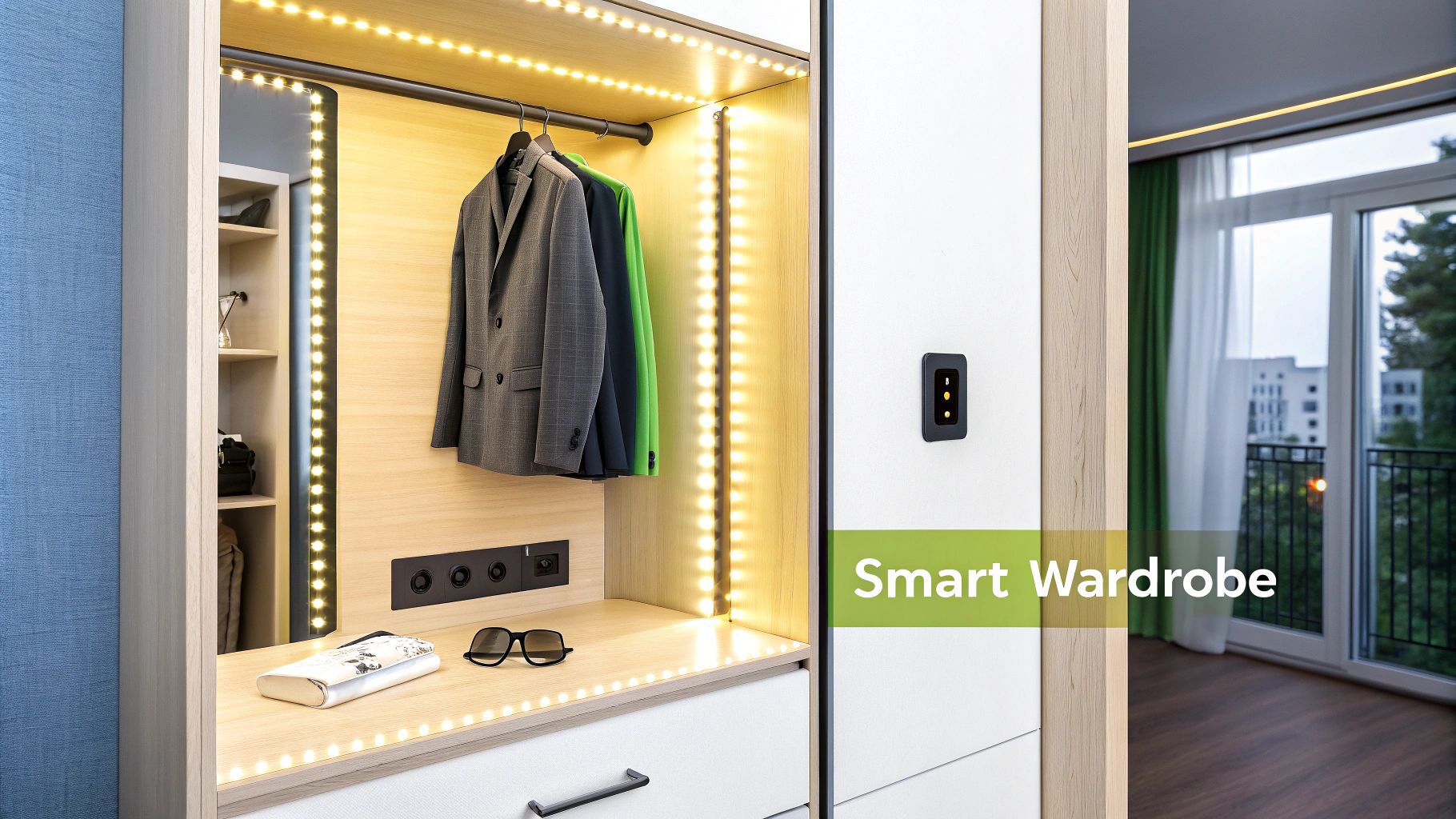
A great wardrobe built in design does more than just hold your clothes; it should anticipate your needs. The right lighting and a few clever features can completely change the experience of getting ready, turning a simple storage space into something far more responsive and intelligent.
It’s these thoughtful details that take a wardrobe from just being practical to feeling genuinely luxurious. We’ve seen a big shift in what our clients are asking for. It's no longer just about shelves and rails. People want a wardrobe that actually makes their daily routine simpler with well-placed tech and smart additions that solve everyday annoyances.
Practical and Beautiful Lighting Solutions
If there's one feature that has the biggest impact, it's good lighting. It instantly elevates your wardrobe from a dark box into something that feels more like a high-end boutique, making it a breeze to find exactly what you're looking for.
But placement is everything. The goal is to light up the contents without creating harsh glare or awkward shadows.
We always recommend a layered approach for the best results:
- Task Lighting: This is your non-negotiable for visibility. We typically install recessed LED strips vertically along the inner sides of the wardrobe frame. This lights everything up from top to bottom, finally letting you tell the difference between your navy and black trousers.
- Motion-Activated Lights: A small touch that delivers big on convenience. Sensors flick the lights on the moment you open the door and turn them off after you close it. It feels seamless and saves you fumbling for a switch in the dark.
- Ambient Lighting: For walk-in wardrobes or designs with glass doors, a soft glow from back-panel lighting can look stunning. It turns the whole wardrobe into a display piece, beautifully highlighting your favourite bags or shoes.
A classic mistake we see is a single light installed at the top centre. This just casts shadows down over everything below the first shelf, making it impossible to see. Vertical side lighting is almost always a better solution for even, useful illumination.
Going Beyond Storage with Smart Additions
Today’s built-in wardrobes are becoming multi-functional hubs, designed for modern life. The requests we get now go far beyond simple storage, showing a clear desire for a space that is organised, secure, and ready for our connected lives.
These luxury customisations are really shaping Singapore's interior design landscape. We're seeing a huge demand among homeowners for these bespoke solutions, which is a key driver in the local wardrobes market—part of the larger US$81.88m Closets segment. In many HDB upgrades, we're now incorporating features like velvet-lined drawers and hidden safes as standard. You can explore more on Singapore's furniture market trends here.
Functional Features Our Clients Request Most
Based on the projects we've completed, a few smart features have become clear favourites for their sheer practicality. They solve specific problems and add a real layer of refinement to the finished wardrobe.
Here are some of the most popular integrations:
- Integrated Charging Points: A discreet power outlet or USB port hidden inside a drawer is perfect for charging phones and smartwatches overnight, keeping messy cables out of sight.
- Hidden Safes: For securing valuables like passports, jewellery, or important documents, a small safe bolted securely within the wardrobe’s structure offers incredible peace of mind.
- Dehumidifier Rods: An absolute essential in Singapore’s climate. These low-wattage heated rods gently circulate warm, dry air, preventing musty smells and protecting delicate fabrics and leather from moisture damage.
- Pull-Out Mirrors: A full-length mirror that slides out only when you need it is a brilliant space-saver. It means you don't need a separate free-standing mirror, keeping the bedroom feeling open and uncluttered.
- Valet Rods: A simple but incredibly useful pull-out rod. It gives you a temporary spot to hang tomorrow's outfit or place your dry-cleaning before putting it all away.
By weaving these elements into your wardrobe built in design, you create a piece of furniture that is perfectly in tune with your life. It’s an investment in convenience, organisation, and making every day just a little bit easier.
Bringing Your Wardrobe Design to Life
So, how does an idea for the perfect wardrobe actually become a beautifully finished piece in your bedroom? It's a journey, but a well-structured one. Understanding the path from start to finish takes the guesswork out of the process and makes for a smooth, collaborative project.
It all unfolds in a few key phases, each one building on the last. It kicks off with a simple chat and ends with your new wardrobe, installed and ready to go. Our whole aim is to make this journey completely transparent and predictable for you.
From Initial Chat to 3D Model
The whole thing gets rolling with an in-depth design consultation. This is where we properly sit down and hash out everything we've talked about so far—your storage needs, layout ideas, and material preferences. We’ll listen to what you have in mind and chip in with practical advice based on our experience in countless Singaporean homes.
After that chat, our team gets to work turning our discussion into something you can actually see. We create detailed 3D renderings of the proposed wardrobe. This step is a game-changer because it lets you see exactly how the final piece will look and feel in your room. You can get a sense of the proportions, double-check the finish, and confirm every last detail of the internal layout before a single piece of wood is cut.
Think of the 3D model as your chance to make any and all adjustments. Seeing the design visually often sparks new ideas or flags things you might want to change. It's far easier (and cheaper!) to tweak a digital model than it is to alter a physical cabinet later on.
Once you’re 100% happy with the 3D designs and give us the green light, we move from the screen to the workshop.
Off-Site Craftsmanship and On-Site Assembly
With the design locked in, our craftsmen take over in our workshop. This off-site fabrication is a massive part of how we work. It means the bulk of the messy, noisy work—all the cutting, assembling, and finishing—happens away from your home. This keeps the disruption to your daily life to an absolute minimum.
Every single component, from the main structure to the individual drawer boxes and door fronts, is meticulously crafted in this controlled environment. This is how we ensure a higher quality of workmanship and a much more precise finish.
The final stage is bringing it all together on-site. Our professional installers will arrive with all the completed parts. They’ll first prep the space, which might mean removing old furniture or skirting boards to get that perfect, seamless fit. Then, they assemble the wardrobe piece by piece, securing it firmly and making sure everything is perfectly level and aligned.
The installation itself usually takes 2 to 4 days, depending on how big and complex your wardrobe is. Our team is trained to work cleanly and efficiently, aiming to get the job done with as little fuss as possible.
What to Expect for Timelines and Budget
"How long will it all take?" is one of the first questions we usually get. From the day you sign off on the design to the final installation, you can generally expect the entire process to take between 4 to 6 weeks.
Here’s a rough breakdown:
- Design & 3D Modelling: 1–2 weeks
- Workshop Fabrication: 2–3 weeks
- On-Site Installation: 2–4 days
Of course, budgeting is just as important. The final cost of a custom built-in wardrobe really comes down to a few key factors. The main cost drivers are the overall size, your choice of core materials (plywood is a premium, super-durable option), the exterior finish (laminates are budget-friendly, while veneers or paint cost more), and the quality of the hardware you choose. A wardrobe with lots of complex drawers and accessories will also naturally cost more than a simpler layout with more open shelving.
We’ll always provide a detailed, itemised quote so you can see exactly where your investment is going. No surprises, just clarity from start to finish.
Your Built-in Wardrobe Questions, Answered
Planning a custom wardrobe brings up a lot of questions. Drawing from our years of experience designing and building storage for Singaporean homes, here are straightforward answers to the things homeowners ask us most.
How Much Should a Custom Built-in Wardrobe Cost in Singapore?
The final price tag for a built-in wardrobe can swing quite a bit, depending on how big it is, the materials you choose, and what you want inside.
For a standard full-height wardrobe in an HDB flat, you can expect to start around S$250 per foot run (pfr). This typically covers a simple layout using quality laminates.
But if you're picturing something more luxurious—think high-end veneers, plenty of soft-closing drawers, and integrated LED lighting—the cost could easily climb to S$500 pfr or more. Special features like pull-out trouser racks, built-in dehumidifiers, or even a hidden safe will also add to the investment. We always provide a detailed, itemised quote after finalising the 3D design, so you’ll see exactly where every dollar goes.
How Long Will the Whole Wardrobe Project Take?
From the moment you give the green light on the final design to the last screw being tightened, the entire process usually takes about 4 to 6 weeks.
Here’s a rough breakdown of what that looks like:
- Design & 3D Renders: Getting the details just right takes about 1 to 2 weeks. This includes all the back-and-forth discussions and tweaks to perfect your design.
- Workshop Fabrication: Once you’ve signed off, our carpenters get to work crafting all the components in our workshop. This off-site fabrication phase takes 2 to 3 weeks.
- On-site Installation: The final assembly in your home is surprisingly quick, usually taking between 2 to 4 days, depending on the wardrobe's size and complexity.
What’s the Best Wardrobe Material for Singapore’s Humid Weather?
In Singapore's climate, material choice is everything. For the internal structure of a wardrobe, we almost exclusively use high-quality plywood. Its layered construction makes it far more resistant to moisture and less prone to warping than MDF or particleboard. It’s simply built to last here.
For the exterior finish, high-pressure laminates (HPL) are a fantastic, practical choice. They’re non-porous, incredibly durable, a breeze to clean, and available in a massive range of colours and textures.
If you have your heart set on the rich look of real wood, there’s a great solution. Technological veneers applied over a stable plywood core give you that beautiful, luxurious aesthetic without the risk of warping in our humidity. It’s the perfect blend of natural beauty and long-term performance.
Ready to create a wardrobe that’s perfectly tailored to your space and lifestyle? At KIVO, our team specialises in custom carpentry and interior design, turning your vision into a beautifully crafted reality.